



Flurbiprofen
Based on 4 publication(s) in Google Scholar
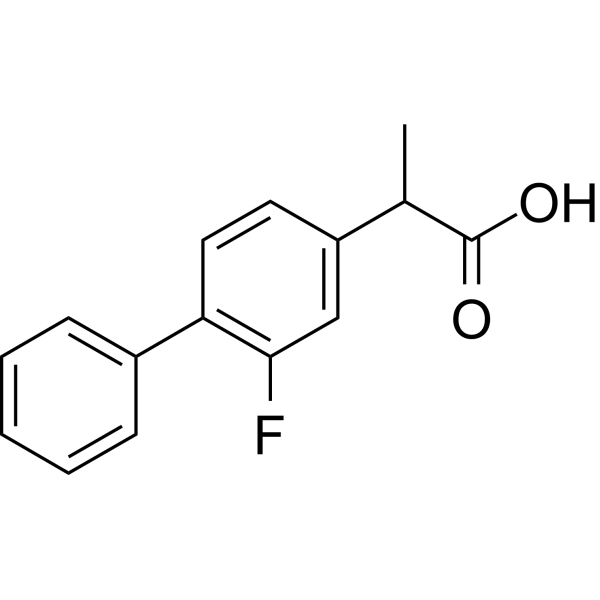
Flurbiprofen (dl-Flurbiprofen) is a potent, orally active nonsteroidal anti-inflammatory agent (NSAIA/NSAID), with antipyretic and analgesic activities. Flurbiprofen is commonly used for the research of inflammatory diseases, including osteoarthritis and rheumatoid arthritis. Flurbiprofen is a non-selective cyclooxygenase (COX) inhibitor that can be used for the research of colorectal cancer.
Nur für Forschungszwecke. Wir verkaufen nicht an Patienten.
- Reinheit : 99.95%
- CAS. Nr.: 5104-49-4
- Formel: C15H13FO2
- Molecular Weight:244.26
-
Speicherung:
Store at room temperature 3 years.
In solvent -80°C, 2 years , -20°C, 1 year

To place orders, for customer services and technical support, please contact: MedChemExpress USA
Tel: 609-228-6898 E-mail: [email protected] [email protected]


-
 Biologische Aktivität
-
Chemical Information
-
Lösungsmittel & Löslichkeit
- Protokoll
- Reinheit & Dokumentation
- Verweise
-
 Help & FAQs


-
HY-78131
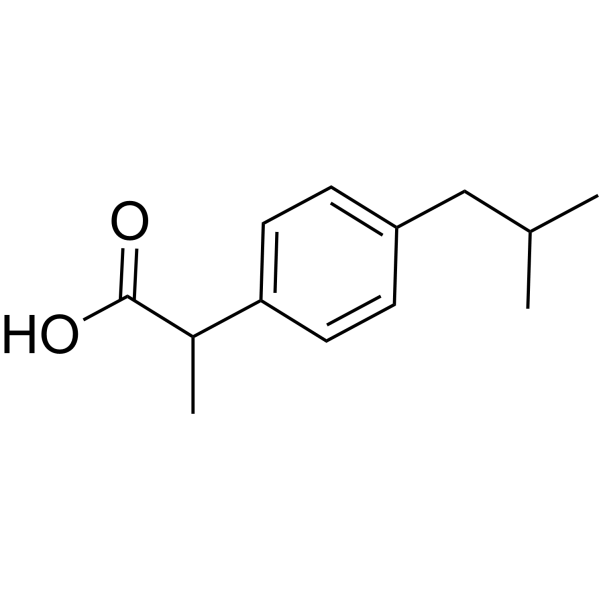
IbuprofenCOX-1 Inhibitor -
HY-14397
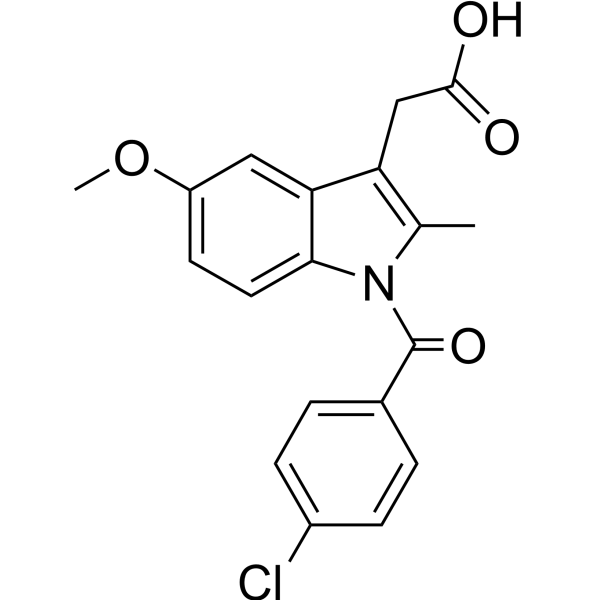
IndomethacinCOX1/2 Inhibitor -
HY-B0227
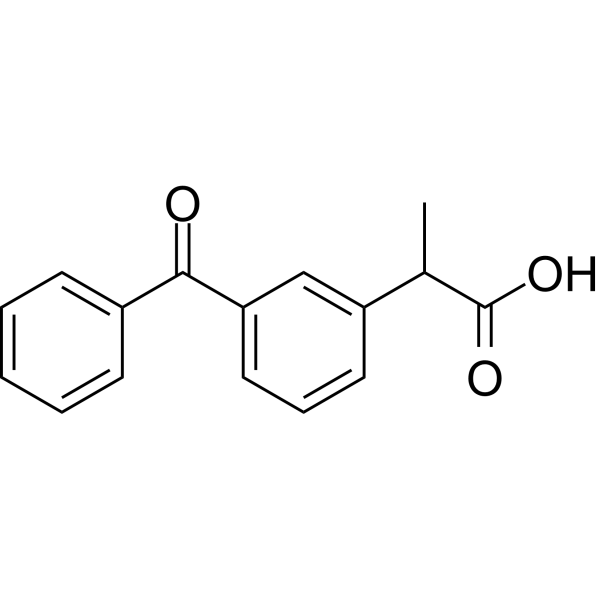
KetoprofenAnti-inflammatory agent -
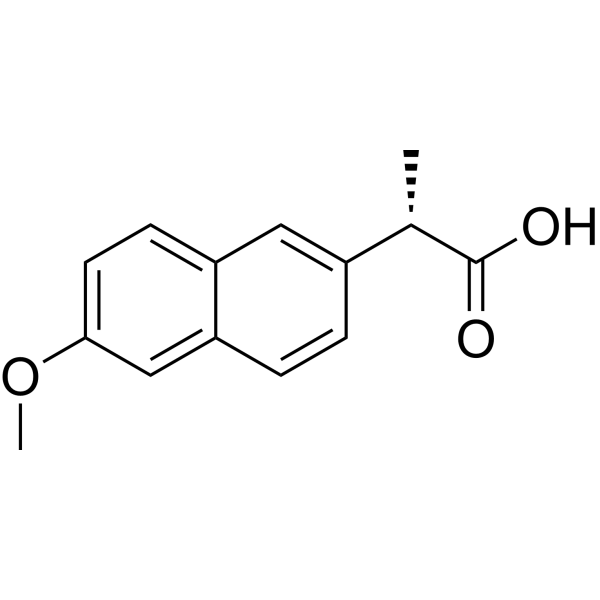
HY-15030
NaproxenCOX Inhibitor -
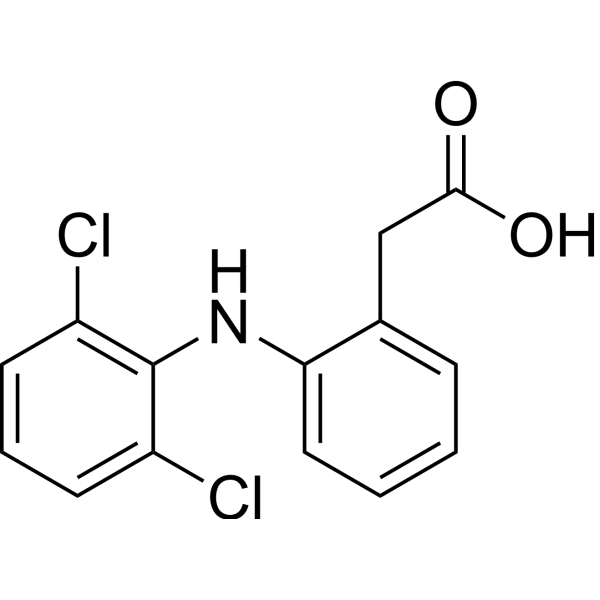
HY-15036
DiclofenacCOX Inhibitor -
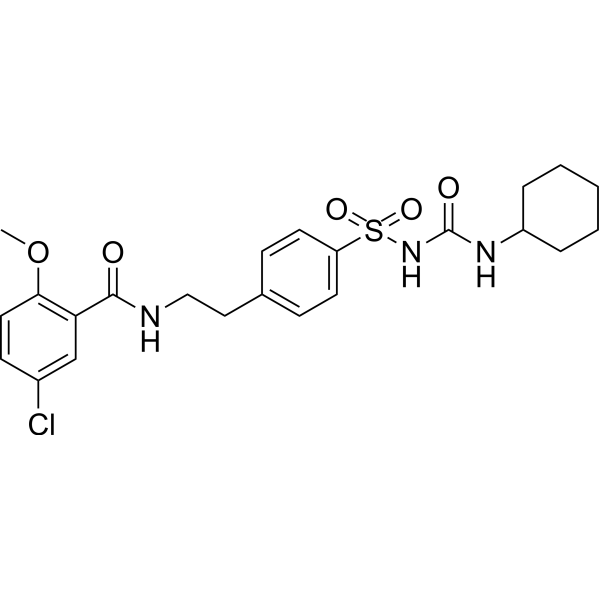
HY-15206
GlibenclamideKATP Inhibitor -
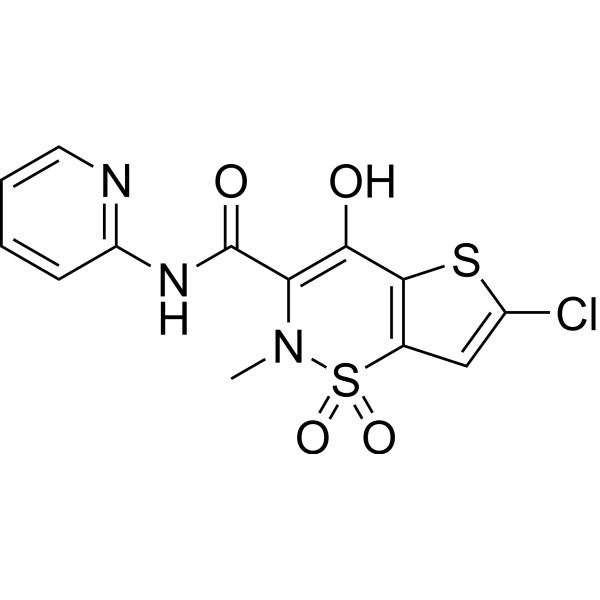
HY-B0367
LornoxicamCOX Inhibitor -
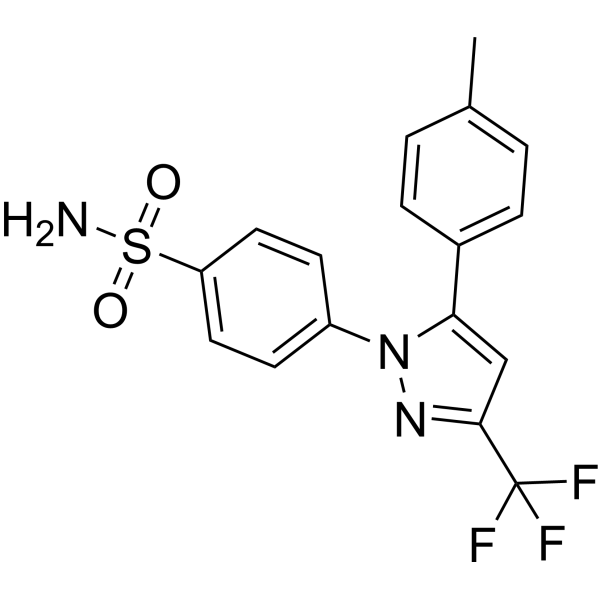
HY-14398
CelecoxibCOX-2inhibitor -

HY-10582R
Flurbiprofen (Standard)COX Inhibitor -
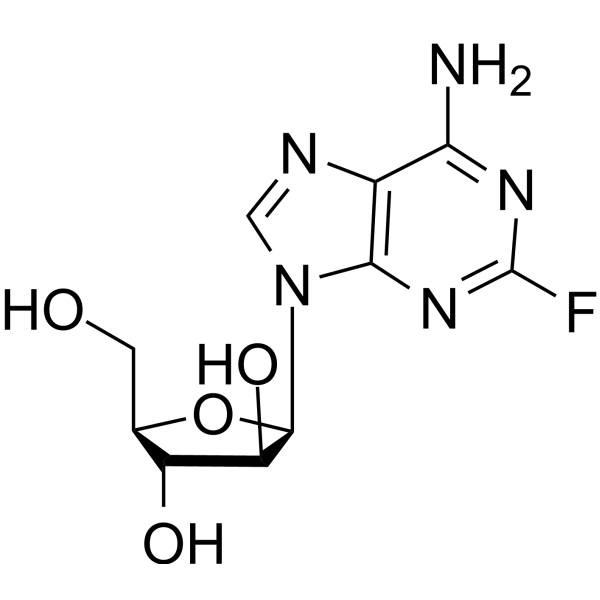
HY-B0069
FludarabineDNA Synthesis Inhibitor -
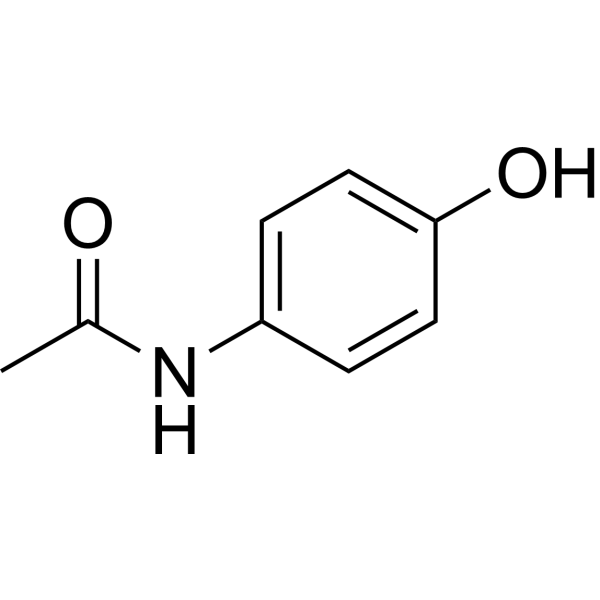
HY-66005
AcetaminophenCOX-2 Inhibitor -
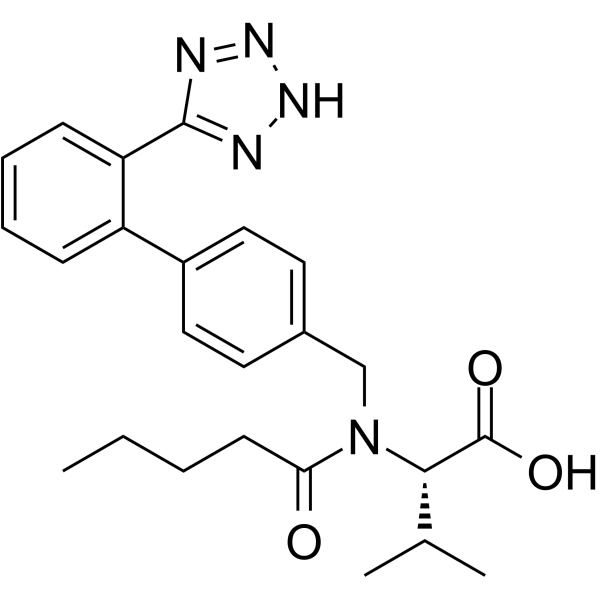
HY-18204
ValsartanAngiotensin II Receptor Antagonist
Publications Citing Use of MedChemExpress (MCE) Flurbiprofen
More

Biologische Aktivität
Beschreibung
IC50 & Target
[1]|
COX |
COX-1 |
COX-2 |
Cellular Effect
|
Cell Line

|
Type | Value | Description | References |
|---|---|---|---|---|
| CHO | IC50 |
1.5 μM
Compound: Flurbiprofen
|
TP_TRANSPORTER: inhibition of Adefovir uptake in OAT1-expressing CHO cells
TP_TRANSPORTER: inhibition of Adefovir uptake in OAT1-expressing CHO cells
|
[PMID: 10991954] |
| Microglia | IC50 |
100 nM
Compound: Flurbiprofen
|
Antineuroinflammatory activity in LPS-stimulated rat microglia cells assessed as inhibition of PMA-stimulated TXB2 release preincubated for 15 mins measured 70 mins after PMA challenge
Antineuroinflammatory activity in LPS-stimulated rat microglia cells assessed as inhibition of PMA-stimulated TXB2 release preincubated for 15 mins measured 70 mins after PMA challenge
|
[PMID: 22153874] |
| Microglia | IC50 |
100 nM
Compound: Flurbiprofen
|
Antiinflammatory activity against LPS-induced rat Primary neonatal microglia assessed as inhibition in TXB2 generation preincubated for 20 mins followed by PMA-stimulation and measured after 70 mins by immunoassay
Antiinflammatory activity against LPS-induced rat Primary neonatal microglia assessed as inhibition in TXB2 generation preincubated for 20 mins followed by PMA-stimulation and measured after 70 mins by immunoassay
|
[PMID: 32282204] |
| Microglia | IC50 |
100 nM
Compound: Flurbiprofen
|
Antineuroinflammatory activity in rat brain neonatal microglia
Antineuroinflammatory activity in rat brain neonatal microglia
|
[PMID: 24279991] |
In Vitro
Flurbiprofen (2-20 nM; 12-48 hours) significantly decreases SW620 cells proliferation in a concentration- and time-dependent manner[1].
Flurbiprofen (10 nM; 24 hours) decreases COX-2 expression[1].
Flurbiprofen (10 nM; 24 hours) inhibits the expression of inflammatory factors by inhibiting COX-2[1].
Flurbiprofen (10 nM; 24 hours) promotes the apoptosis of colorectal cancer cells by inhibiting COX-2[1].
MedChemExpress (MCE) has not independently confirmed the accuracy of these methods. They are for reference only.
-
Cell Line:SW620 cells
-
Concentration:2 nM, 4 nM, 10 nM, 20 nM
-
Incubation Time:12 hours, 24 hours, 48 hours
-
Result:Inhibited colorectal cancer cell proliferation.
-
Cell Line:SW620 cells
-
Concentration:10 nM
-
Incubation Time:24 hours
-
Result:Significantly decreased the protein and mRNA levels of COX-2.
-
Cell Line:SW620 cells
-
Concentration:10 nM
-
Incubation Time:24 hours
-
Result:Decreased COX-2 mRNA expression levels
-
Cell Line:SW620 cells
-
Concentration:10 nM
-
Incubation Time:24 hours
-
Result:Significantly decreased the expression of Bcl2 and significantly increased the expression of Bax and cleaved-caspase3, with no effect on total caspase-3.
In Vivo
Flurbiprofen (10 mg/kg; i.p.; daily; for 6 days) attenuates high-fat diet-induced obesity in mice[3].
MedChemExpress (MCE) has not independently confirmed the accuracy of these methods. They are for reference only.
-
Animal Model:Rat[2]
-
Dosage:0.3 mg/kg, 0.6 mg/kg, 1.2 mg/kg, 2.4 mg/kg, 4.8 mg/kg
-
Administration:Oral administration, 4-5 dosages
-
Result:Inhibited the acute inflammation.
Clinical Trial
| NCT Number | Sponsor | Condition | Start Date |
Phase
|
|---|---|---|---|---|
| NCT01329991 | 2011-05 | PHASE1 |


Chemical Information
-
CAS. Nr. 5104-49-4
-
Appearance Solid
-
Molecular Weight 244.26
-
Formel C15H13FO2
-
Color White to light yellow
-
SMILES
FC1=C(C2=CC=CC=C2)C=CC(C(C)C(O)=O)=C1
-
Synonyms
dl-Flurbiprofen
-
Versand
Room temperature in continental US; may vary elsewhere.
-
Speicherung
Store at room temperature 3 years
In solvent -80°C 2 years -20°C 1 year


Publications (4)
-
Journal Impact Factor
-
Most Recent
-
Int J Biol Macromol
Reticuline isomerase AKR1B1 with aldo-keto reductase activity and detoxification function from the insect Blaps rhynchopetera. [Abstract]2026 Mar:352:151224. PMID: 41791543 -
Microbiol Spectr
Repurposing flufenamic acid as a putative PmrB-directed adjuvant to restore colistin activity in Klebsiella pneumoniae. [Abstract]2026 Mar 17:e0362025. PMID: 41842337 -
Immunobiology
2025 Mar;230(2):152867. PMID: 39847998 -


Lösungsmittel & Löslichkeit
In Vitro:
DMSO : ≥ 100 mg/mL (409.40 mM; Hygroscopic DMSO has a significant impact on the solubility of product, please use newly opened DMSO)
* "≥" means soluble, but saturation unknown.
Please refer to the solubility information to select the appropriate solvent. Once prepared, please aliquot and store the solution to prevent product inactivation from repeated freeze-thaw cycles.
Storage method and period of stock solution: -80°C, 2 years; -20°C, 1 year. When stored at -80°C, please use it within 2 years. When stored at -20°C, please use it within 1 year.
Please refer to the solubility information to select the appropriate solvent. Once prepared, please aliquot and store the solution to prevent product inactivation from repeated freeze-thaw cycles.
Storage method and period of stock solution: -80°C, 2 years; -20°C, 1 year. When stored at -80°C, please use it within 2 years. When stored at -20°C, please use it within 1 year.
Konzentration (Stammlösung) × Volumen (Stammlösung) = Konzentration (Ziellösung) × Volumen (Ziellösung)
In Vivo:
Select the appropriate dissolution method based on your experimental animal and administration route.
- For the following dissolution methods, please ensure to first prepare a clear stock solution using an In Vitro approach and then sequentially add co-solvents:
- To ensure reliable experimental results, the clarified stock solution can be appropriately stored based on storage conditions. As for the working solution for In Vivo experiments, it is recommended to prepare freshly and use it on the same day.
- The percentages shown for the solvents indicate their volumetric ratio in the final prepared solution. If precipitation or phase separation occurs during preparation, heat and/or sonication can be used to aid dissolution.
Add each solvent one by one: 10% DMSO 40% PEG300 5% Tween-80 45% Saline
Solubility: ≥ 2.5 mg/mL (10.23 mM); Clear solution
This protocol yields a clear solution of ≥ 2.5 mg/mL (saturation unknown).
Taking 1 mL working solution as an example, add 100 μL DMSO stock solution (25.0 mg/mL) to 400 μL PEG300, and mix evenly; then add 50 μL Tween-80 and mix evenly; then add 450 μL Saline to adjust the volume to 1 mL.
Preparation of Saline: Dissolve 0.9 g sodium chloride in ddH₂O and dilute to 100 mL to obtain a clear Saline solution.
Add each solvent one by one: 10% DMSO 90% (20% SBE-β-CD in Saline)
Solubility: ≥ 2.5 mg/mL (10.23 mM); Clear solution
This protocol yields a clear solution of ≥ 2.5 mg/mL (saturation unknown).
Taking 1 mL working solution as an example, add 100 μL DMSO stock solution (25.0 mg/mL) to 900 μL 20% SBE-β-CD in Saline, and mix evenly.
Preparation of 20% SBE-β-CD in Saline (4°C, storage for one week): 2 g SBE-β-CD powder is dissolved in 10 mL Saline, completely dissolve until clear.
In Vivo Dissolution Calculator
Please enter the basic information of animal experiments:
-
-
-
-
Recommended: Prepare an additional quantity of animals to account for potential losses during experiments.
Please enter your animal formula composition:
-
%DMSO +
Recommended: Keep the proportion of DMSO in working solution below 2% if your animal is weak.
-
%+
-
+%Tween-80 + +
-
%Saline +
The co-solvents required include: DMSO, . All of co-solvents are available by MedChemExpress (MCE). , Tween 80. All of co-solvents are available by MedChemExpress (MCE).
Working solution concentration: 0.22 mg/mL
Method for preparing stock solution: mg drug dissolved in μL DMSO. Stock solution concentration: mg/mL.
1. Take μL DMSO stock solution;
2. Add μL .
μL , mix evenly;
3. Then add μL Tween 80, mix evenly;
4. Then add μL
Please ensure that the stock solution in the first step is dissolved to a clear state, and add co-solvents in sequence. You can use ultrasonic heating (ultrasonic cleaner, recommended frequency 20-40 kHz), vortexing, etc. to assist dissolution.


Reinheit & Dokumentation
-
Data Sheet (279 KB)
-
SDS (647 KB)
- English - EN (647 KB)
- Français - FR (647 KB)
- Deutsch - DE (647 KB)
- Norwegian - NO (647 KB)
- Español - ES (647 KB)
- Swedish - SV (647 KB)
- Italian - IT (647 KB)
- Korean - KR (647 KB)
- Portuguese - PT (647 KB)
-
Handling Instructions (2659 KB)
Verweise
[1]. Xiaobo Wang, et al. Flurbiprofen suppresses the inflammation, proliferation, invasion and migration of colorectal cancer cells via COX2. Oncol Lett. 2020 Nov; 20(5): 132. [Content Brief]
[2]. E M Glenn, et al. The pharmacology of 2-(2-fluoro-4-biphenylyl)propionic acid (flurbiprofen). A potent non-steroidal anti-inflammatory drug. Agents Actions. 1973 Nov;3(4):210-6. [Content Brief]
[3]. Hosoi, T., et al., Flurbiprofen ameliorated obesity by attenuating leptin resistance induced by endoplasmic reticulum stress. EMBO Mol Med, 2014. [Content Brief]


Complete Stock Solution Preparation Table
Please refer to the solubility information to select the appropriate solvent. Once prepared, please aliquot and store the solution to prevent product inactivation from repeated freeze-thaw cycles.
Storage method and period of stock solution: -80°C, 2 years; -20°C, 1 year. When stored at -80°C, please use it within 2 years. When stored at -20°C, please use it within 1 year.
| Optional Solvent | Concentration Solvent Mass | 1 mg | 5 mg | 10 mg | 25 mg |
|---|---|---|---|---|---|
| DMSO | 1 mM | 4.0940 mL | 20.4700 mL | 40.9400 mL | 102.3500 mL |
| 5 mM | 0.8188 mL | 4.0940 mL | 8.1880 mL | 20.4700 mL | |
| 10 mM | 0.4094 mL | 2.0470 mL | 4.0940 mL | 10.2350 mL | |
| 15 mM | 0.2729 mL | 1.3647 mL | 2.7293 mL | 6.8233 mL | |
| 20 mM | 0.2047 mL | 1.0235 mL | 2.0470 mL | 5.1175 mL | |
| 25 mM | 0.1638 mL | 0.8188 mL | 1.6376 mL | 4.0940 mL | |
| 30 mM | 0.1365 mL | 0.6823 mL | 1.3647 mL | 3.4117 mL | |
| 40 mM | 0.1023 mL | 0.5117 mL | 1.0235 mL | 2.5587 mL | |
| 50 mM | 0.0819 mL | 0.4094 mL | 0.8188 mL | 2.0470 mL | |
| 60 mM | 0.0682 mL | 0.3412 mL | 0.6823 mL | 1.7058 mL | |
| 80 mM | 0.0512 mL | 0.2559 mL | 0.5117 mL | 1.2794 mL | |
| 100 mM | 0.0409 mL | 0.2047 mL | 0.4094 mL | 1.0235 mL |


Flurbiprofen Related Classifications
HY-10582 Related Classifications
 Powered by Bioz