



SDMA
Based on 4 publication(s) in Google Scholar
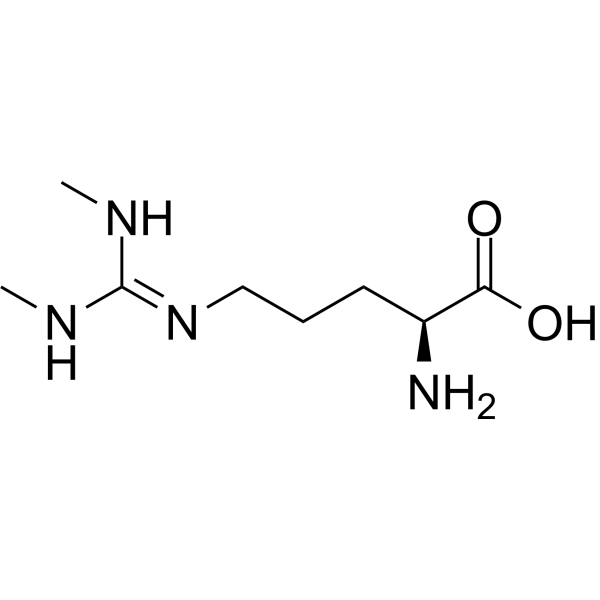
SDMA (Symmetric dimethylarginine) is an endogenous inhibitor of nitric oxide (NO) synthase activity. SDMA, a novel kidney biomarker, permits earlier diagnosis of kidney disease than traditional creatinine testing.
Nur für Forschungszwecke. Wir verkaufen nicht an Patienten.
- Reinheit : 98.0%
- CAS. Nr.: 30344-00-4
- Formel: C8H18N4O2
- Molecular Weight:202.25
-
Speicherung:Powder -20°C, 3 years , 4°C, 2 years ; In solvent -80°C, 6 months , -20°C, 1 month

To place orders, for customer services and technical support, please contact: MedChemExpress USA
Tel: 609-228-6898 E-mail: [email protected] [email protected]


-
 Biologische Aktivität
-
Chemical Information
-
Lösungsmittel & Löslichkeit
- Protokoll
- Reinheit & Dokumentation
- Verweise
-
 Help & FAQs


-
HY-113216
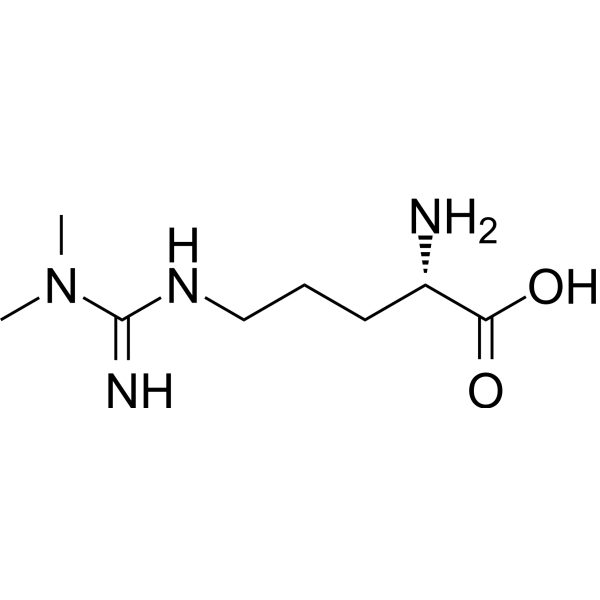
Asymmetric dimethylarginineEndogenous Metabolite -
HY-101410S
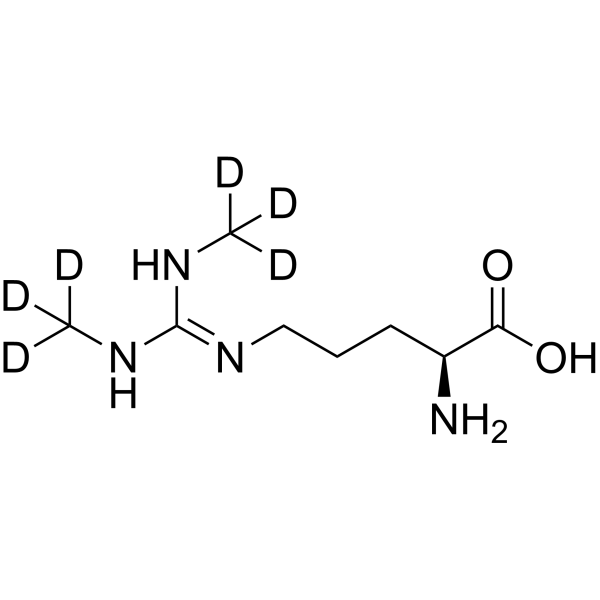
SDMA-d6Stable Isotope -

HY-113216R
Asymmetric dimethylarginine (Standard)Endogenous Metabolite -
HY-B1352
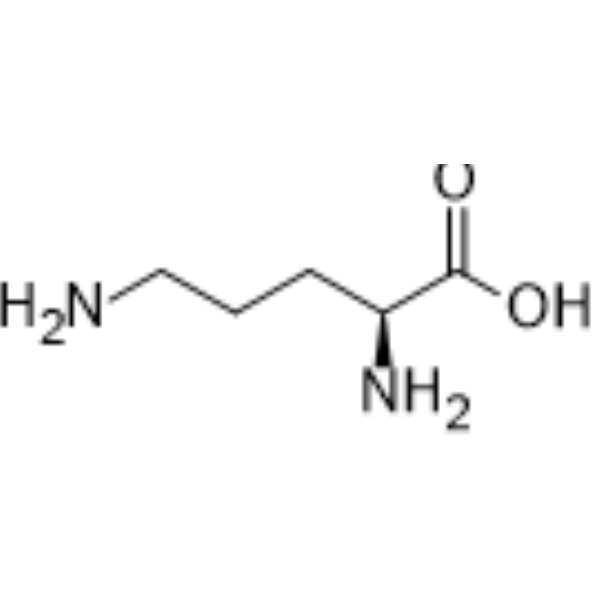
L-OrnithineAmino Acid -
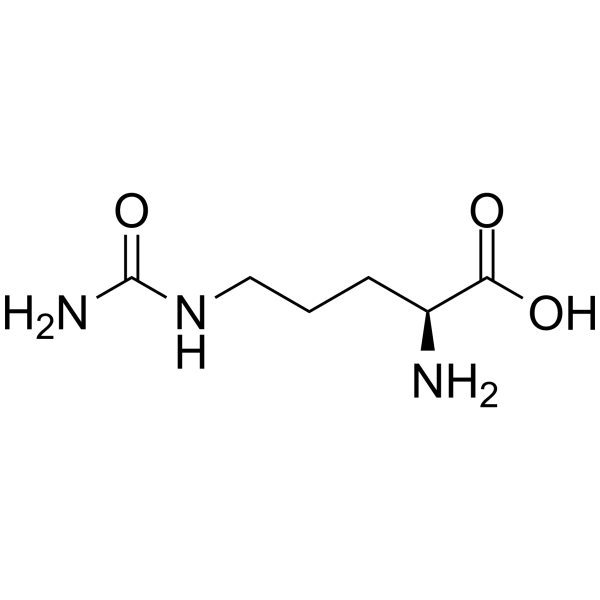
HY-N0391
L-CitrullineEndogenous Metabolite -
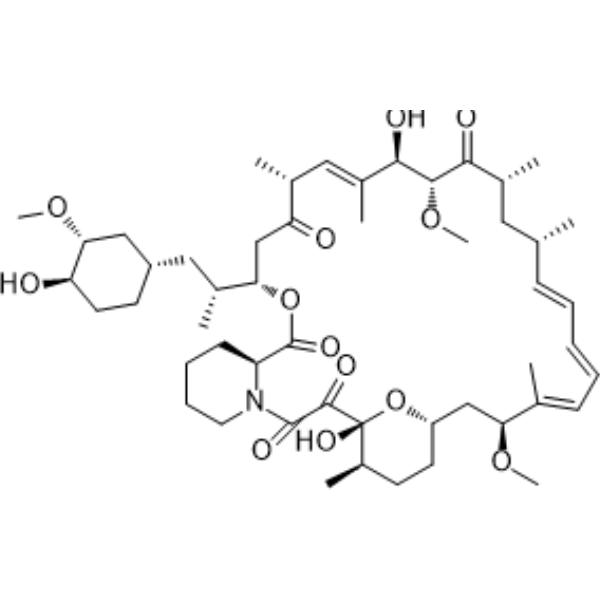
HY-10219
RapamycinmTOR Inhibitor -
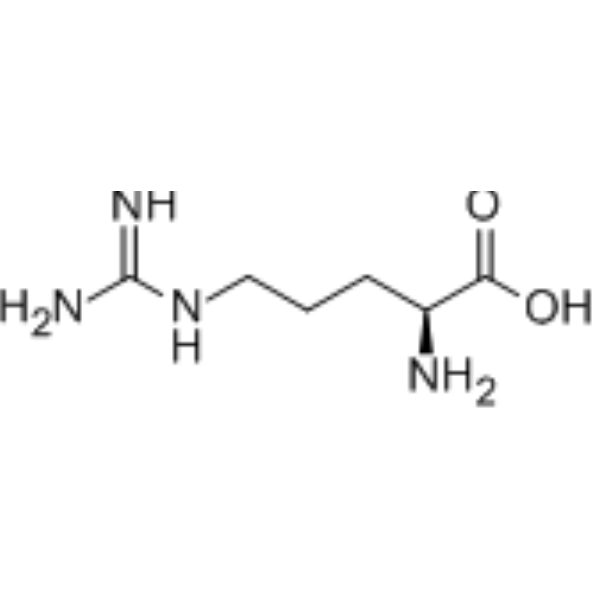
HY-N0455
L-ArginineeNOS Substrate -

HY-101410R
SDMA (Standard)NO Synthase Inhibitor -
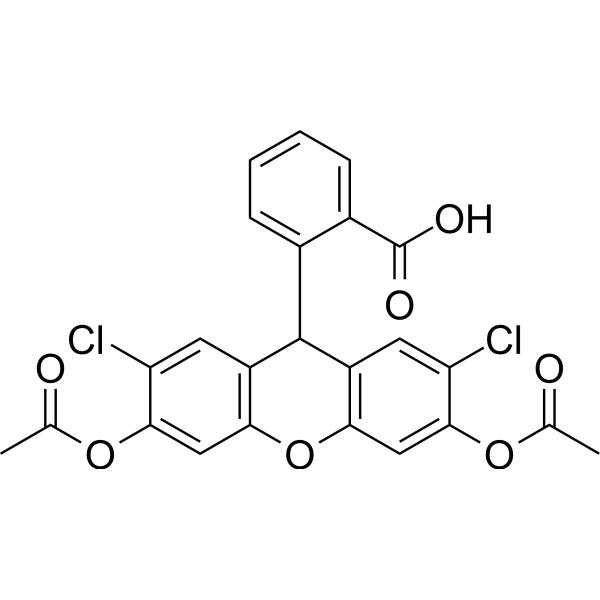
HY-D0940
H2DCFDAROS-Sensitive Probe -
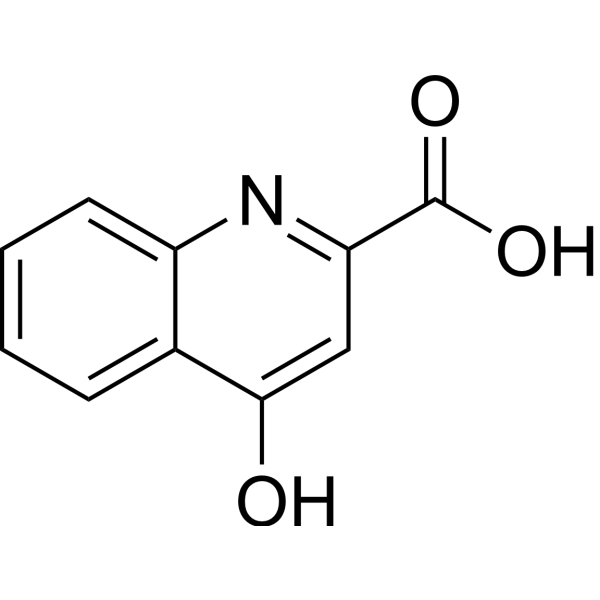
HY-100806
Kynurenic acidiGluR/α7 nAChR Antagonist -
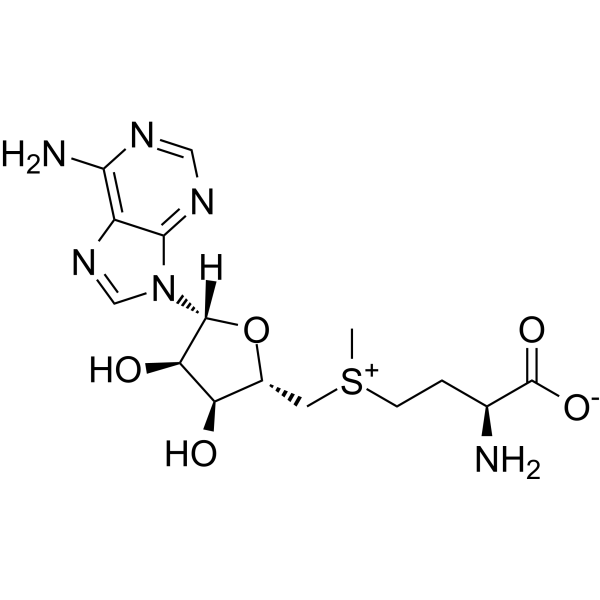
HY-B0617
S-Adenosyl-L-methionineMethyl Group Donor -
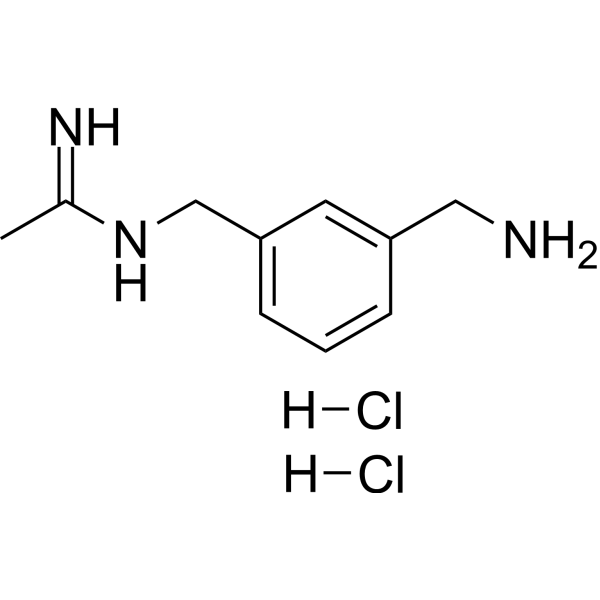
HY-18731
1400W DihydrochlorideNO Synthase Inhibitor
Publications Citing Use of MedChemExpress (MCE) SDMA
MoreAlle Endogenous Metabolite Isoform-spezifische Produkte anzeigen
More

Biologische Aktivität
Beschreibung
IC50 & Target
|
Human Endogenous Metabolite |
In Vitro
SDMA is the structural isomer of the cardiovascular risk marker asymmetric dimethylarginine, as an endogenous marker of renal function. SDMA does not directly inhibit NOS but is a competitor of arginine transport. SDMA is primarily eliminated by renal excretion and is a promising endogenous marker of glomerular filtration rate[1].
SDMA inhibits dose dependently the NO synthesis in intact endothelial cells, whereas it has no effect on protein expression of NOS[1].
SDMA is involved in the inflammatory process of chronic kidney disease, activating NF-κB and resulting in enhanced expression of IL-6 and TNF-α[2].
MedChemExpress (MCE) has not independently confirmed the accuracy of these methods. They are for reference only. Further protocols information, click here.
In Vivo
Chronic SDMA infusion leads to a significant increase of SDMA levels in mice, but the GFR did not change at 4 weeks. No histological changes are observed, particularly no effect on fibrosis or endothelias nitric oxide synthase expression. There is neither an effect of SDMA on systolic blood pressure nor on ejection fraction[4].
MedChemExpress (MCE) has not independently confirmed the accuracy of these methods. They are for reference only.


Chemical Information
-
CAS. Nr. 30344-00-4
-
Appearance Solid
-
Molecular Weight 202.25
-
Formel C8H18N4O2
-
Color White to off-white
-
SMILES
N[C@@H](CCC/N=C(NC)/NC)C(O)=O
-
Synonyms
Symmetric dimethylarginine; NG,NG'-Dimethyl-L-arginine
-
Structure Classification
-
Versand
Room temperature in continental US; may vary elsewhere.
-
Speicherung
Powder -20°C 3 years 4°C 2 years In solvent -80°C 6 months -20°C 1 month


Publications (4)
-
Journal Impact Factor
-
Most Recent
-
Cell Metab
Lighting up arginine metabolism reveals its functional diversity in physiology and pathology. [Abstract]2025 Jan 7;37(1):291-304.e9. PMID: 39413790 -
Int J Biol Macromol
Molecular basis of BACE1 modulation revealed by machine learning, molecular simulations, and experimental validation. [Abstract]2026 May 6:152409. PMID: 42103119 -
Int J Biol Macromol
Structural and dynamic characterization of papain-like protease ligand recognition using integrated computational and biochemical approaches. [Abstract]2026 Mar 18:355:151493. PMID: 41861871 -
EMBO Rep
Tudor-based proteomic strategy pan-specifically enriches and identifies protein arginine methylation. [Abstract]2025 Oct 20. PMID: 41116072


Lösungsmittel & Löslichkeit
In Vitro:
DMSO : 67.5 mg/mL (333.75 mM; Need ultrasonic; Hygroscopic DMSO has a significant impact on the solubility of product, please use newly opened DMSO)
H2O : 50 mg/mL (247.22 mM; ultrasonic and warming and heat to 60°C)
Please refer to the solubility information to select the appropriate solvent. Once prepared, please aliquot and store the solution to prevent product inactivation from repeated freeze-thaw cycles.
Storage method and period of stock solution: -80°C, 6 months; -20°C, 1 month. When stored at -80°C, please use it within 6 months. When stored at -20°C, please use it within 1 month.
* Note: If you choose water as the stock solution, please dilute it to the working solution, then filter and sterilize it with a 0.22 μm filter before use.
Please refer to the solubility information to select the appropriate solvent. Once prepared, please aliquot and store the solution to prevent product inactivation from repeated freeze-thaw cycles.
Storage method and period of stock solution: -80°C, 6 months; -20°C, 1 month. When stored at -80°C, please use it within 6 months. When stored at -20°C, please use it within 1 month.
* Note: If you choose water as the stock solution, please dilute it to the working solution, then filter and sterilize it with a 0.22 μm filter before use.
Konzentration (Stammlösung) × Volumen (Stammlösung) = Konzentration (Ziellösung) × Volumen (Ziellösung)
In Vivo:
Select the appropriate dissolution method based on your experimental animal and administration route.
- For the following dissolution methods, please ensure to first prepare a clear stock solution using an In Vitro approach and then sequentially add co-solvents:
- To ensure reliable experimental results, the clarified stock solution can be appropriately stored based on storage conditions. As for the working solution for In Vivo experiments, it is recommended to prepare freshly and use it on the same day.
- The percentages shown for the solvents indicate their volumetric ratio in the final prepared solution. If precipitation or phase separation occurs during preparation, heat and/or sonication can be used to aid dissolution.
Add each solvent one by one: 10% DMSO 40% PEG300 5% Tween-80 45% Saline
Solubility: ≥ 2.5 mg/mL (12.36 mM); Clear solution
This protocol yields a clear solution of ≥ 2.5 mg/mL (saturation unknown).
Taking 1 mL working solution as an example, add 100 μL DMSO stock solution (25.0 mg/mL) to 400 μL PEG300, and mix evenly; then add 50 μL Tween-80 and mix evenly; then add 450 μL Saline to adjust the volume to 1 mL.
Preparation of Saline: Dissolve 0.9 g sodium chloride in ddH₂O and dilute to 100 mL to obtain a clear Saline solution.
Add each solvent one by one: 10% DMSO 90% (20% SBE-β-CD in Saline)
Solubility: ≥ 2.5 mg/mL (12.36 mM); Clear solution
This protocol yields a clear solution of ≥ 2.5 mg/mL (saturation unknown).
Taking 1 mL working solution as an example, add 100 μL DMSO stock solution (25.0 mg/mL) to 900 μL 20% SBE-β-CD in Saline, and mix evenly.
Preparation of 20% SBE-β-CD in Saline (4°C, storage for one week): 2 g SBE-β-CD powder is dissolved in 10 mL Saline, completely dissolve until clear.
For the following dissolution methods, please prepare the working solution directly:
It is recommended to prepare fresh solutions and use them promptly within a short period of time.
The percentages shown for the solvents indicate their volumetric ratio in the final prepared solution. If precipitation or phase separation occurs during preparation, heat and/or sonication can be used to aid dissolution.
Add each solvent one by one: PBS
Solubility: 120 mg/mL (593.33 mM); Clear solution; Need ultrasonic
In Vivo Dissolution Calculator
Please enter the basic information of animal experiments:
-
-
-
-
Recommended: Prepare an additional quantity of animals to account for potential losses during experiments.
Working solution concentration: 0.22 mg/mL
This product has good water solubility, please refer to the measured solubility data in water/PBS/Saline for details.

Protokoll
-
Nephrotoxicity Study
This protocol assesses nephrotoxicity by combining functional kidney injury readouts, urinary/tissue injury biomarkers, and renal histopathology. Serum creatinine and BUN reflect impaired kidney function, while KIM-1, NGAL, clusterin, osteopontin, IL-18, cystatin C, nephrin, Oat5, urinary protein, glucose, and alkaline phosphatase have been used to detect tubular injury in cisplatin-, gentamicin-, and acetaminophen-induced nephrotoxicity models.


Reinheit & Dokumentation
-
Data Sheet (282 KB)
-
SDS (396 KB)
- English - EN (396 KB)
- Français - FR (396 KB)
- Deutsch - DE (396 KB)
- Norwegian - NO (396 KB)
- Español - ES (396 KB)
- Swedish - SV (396 KB)
- Italian - IT (396 KB)
- Korean - KR (396 KB)
- Portuguese - PT (396 KB)
-
Handling Instructions (2659 KB)
Verweise
[1]. Bode-Böger SM,et al. Symmetrical dimethylarginine: a new combined parameter for renal function and extent ofcoronary artery disease. [Content Brief]
[2]. Schepers E, et al. Symmetric dimethylarginine as a proinflammatory agent in chronic kidney disease.Clin J Am Soc Nephrol. 2011 Oct;6(10):2374-83. [Content Brief]
[3]. Nabity MB, et al. Symmetric Dimethylarginine Assay Validation, Stability, and Evaluation as a Marker for the EarlyDetection of Chronic Kidney Disease in Dogs. J Vet Intern Med. 2015 Jul-Aug;29(4):1036-44. [Content Brief]
[4]. Veldink H, et al. Effects of chronic SDMA infusion on glomerular filtration rate, blood pressure, myocardial function and renal histology in C57BL6/J mice. Nephrol Dial Transplant. 2013 Jun;28(6):1434-9. [Content Brief]


Complete Stock Solution Preparation Table
Please refer to the solubility information to select the appropriate solvent. Once prepared, please aliquot and store the solution to prevent product inactivation from repeated freeze-thaw cycles.
Storage method and period of stock solution: -80°C, 6 months; -20°C, 1 month. When stored at -80°C, please use it within 6 months. When stored at -20°C, please use it within 1 month.
| Optional Solvent | Concentration Solvent Mass | 1 mg | 5 mg | 10 mg | 25 mg |
|---|---|---|---|---|---|
| H2O / DMSO | 1 mM | 4.9444 mL | 24.7219 mL | 49.4438 mL | 123.6094 mL |
| 5 mM | 0.9889 mL | 4.9444 mL | 9.8888 mL | 24.7219 mL | |
| 10 mM | 0.4944 mL | 2.4722 mL | 4.9444 mL | 12.3609 mL | |
| 15 mM | 0.3296 mL | 1.6481 mL | 3.2963 mL | 8.2406 mL | |
| 20 mM | 0.2472 mL | 1.2361 mL | 2.4722 mL | 6.1805 mL | |
| 25 mM | 0.1978 mL | 0.9889 mL | 1.9778 mL | 4.9444 mL | |
| 30 mM | 0.1648 mL | 0.8241 mL | 1.6481 mL | 4.1203 mL | |
| 40 mM | 0.1236 mL | 0.6180 mL | 1.2361 mL | 3.0902 mL | |
| 50 mM | 0.0989 mL | 0.4944 mL | 0.9889 mL | 2.4722 mL | |
| 60 mM | 0.0824 mL | 0.4120 mL | 0.8241 mL | 2.0602 mL | |
| 80 mM | 0.0618 mL | 0.3090 mL | 0.6180 mL | 1.5451 mL | |
| 100 mM | 0.0494 mL | 0.2472 mL | 0.4944 mL | 1.2361 mL |
* Note: If you choose water as the stock solution, please dilute it to the working solution, then filter and sterilize it with a 0.22 μm filter before use.


SDMA Related Classifications
HY-101410 Related Classifications
 Powered by Bioz