



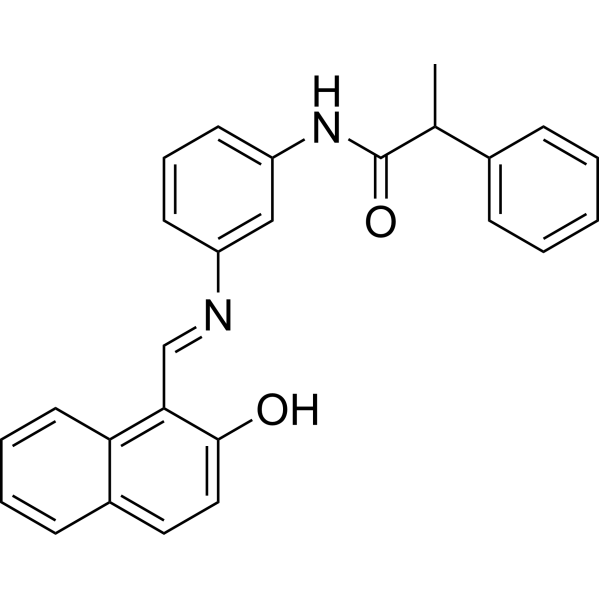
Salermide
Based on 4 publication(s) in Google Scholar
Salermide is an inhibitor of Sirt1 and Sirt2; can cause strong cancer-specific apoptotic cell death.
For research use only. We do not sell to patients.
- Purity : 98.0%
- CAS No.: 1105698-15-4
- Formula: C26H22N2O2
- Molecular Weight:394.47
-
Storage:Powder -20°C, 3 years , 4°C, 2 years ; In solvent -80°C, 2 years , -20°C, 1 year

To place orders, for customer services and technical support, please contact: MedChemExpress USA
Tel: 609-228-6898 E-mail: [email protected] [email protected]


-
 Biological Activity
-
Chemical Information
-
Solvent & Solubility
- Protocols
- Purity & Documentation
- References
-
 Help & FAQs


-
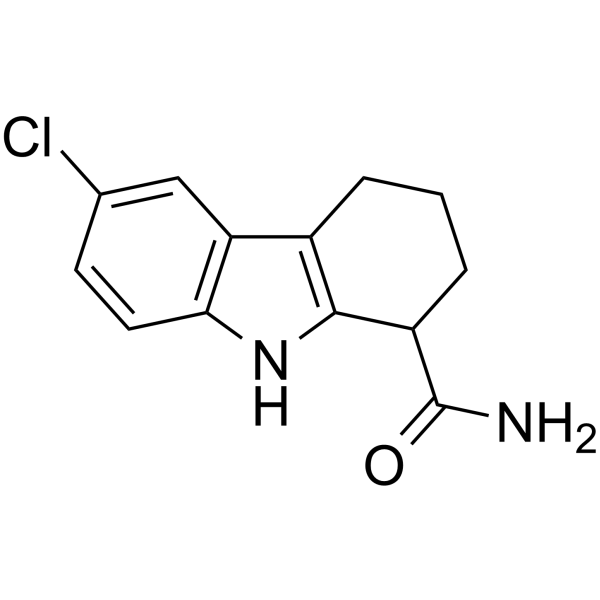
HY-15452
SelisistatSirT1/Sir2 Inhibitor -
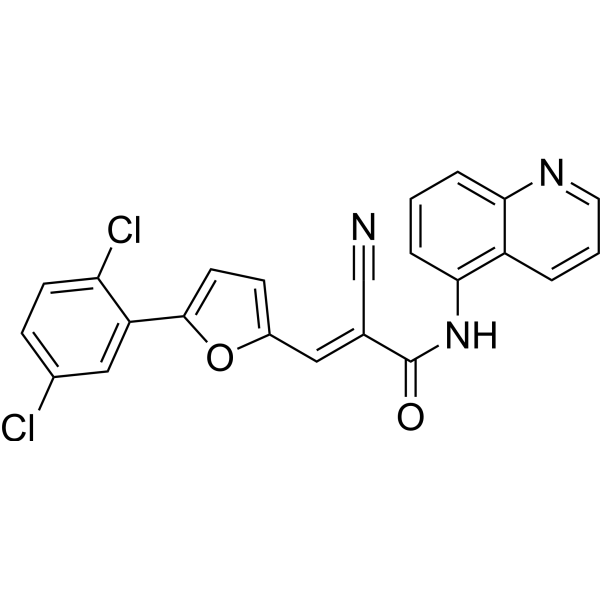
HY-100578
AGK2SIRT2 Inhibitor -
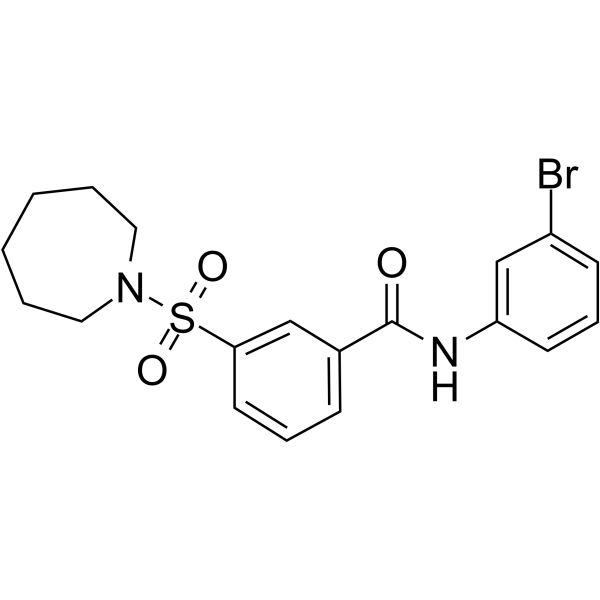
HY-16691
AK-7Sirtuin Inhibitor -
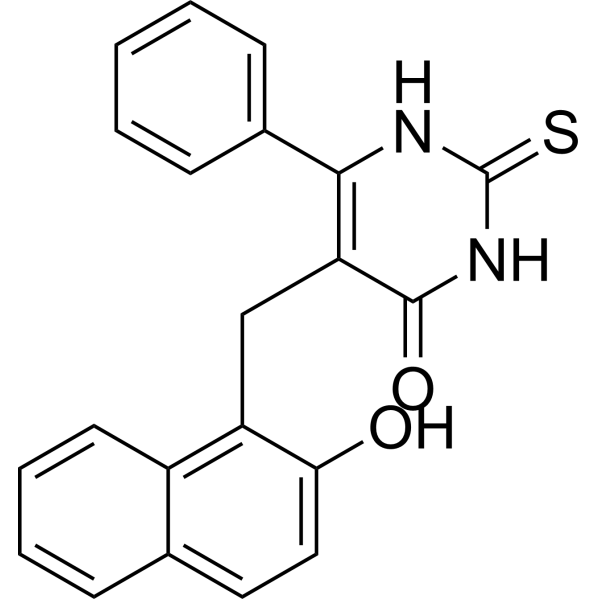
HY-100732
CambinolSIRT1/2 Inhibitor -
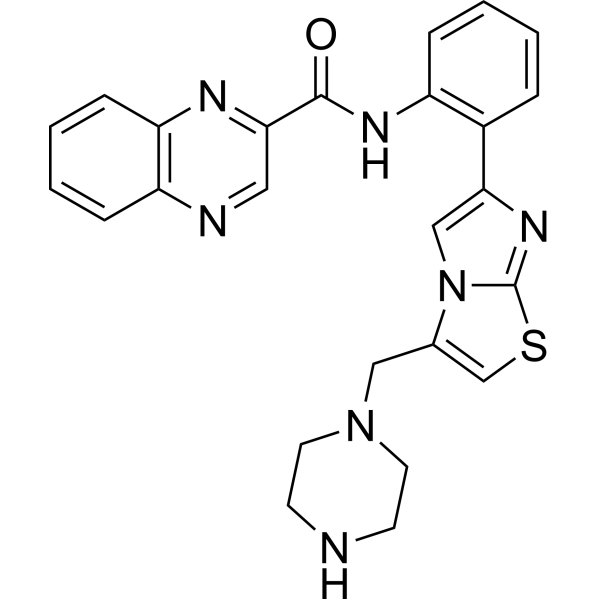
HY-10532
SRT 1720SIRT1 Activator -
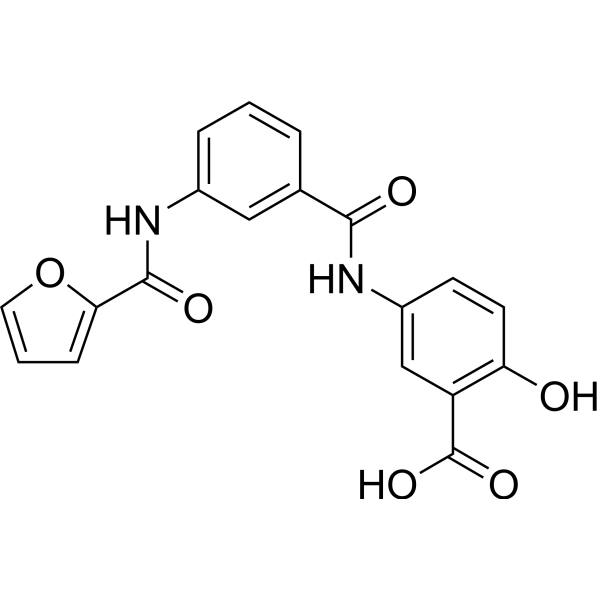
HY-107454
OSS_128167SIRT6 Inhibitor -
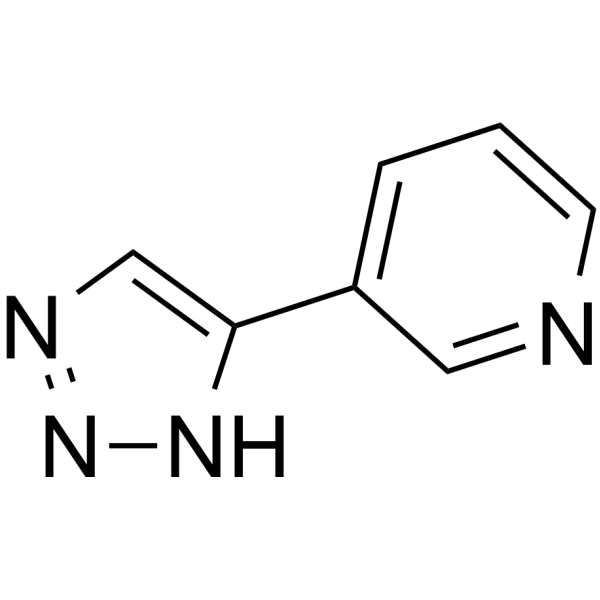
HY-108331
3-TYPSIRT3 Inhibitor -
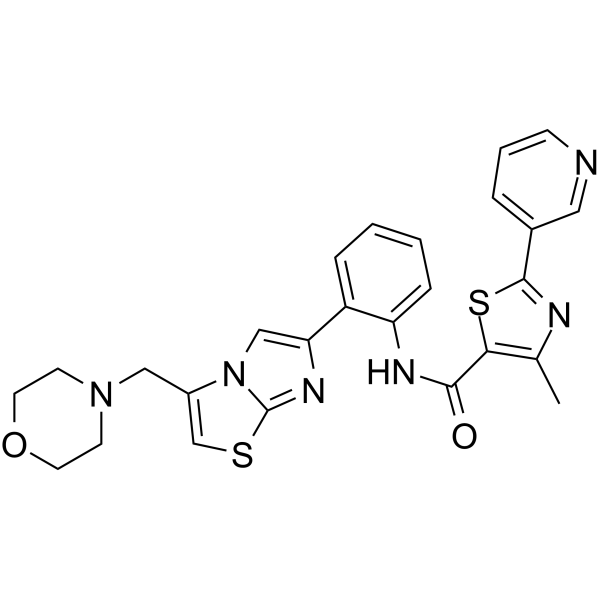
HY-15262
SRT 2104SIRT1 Activator -
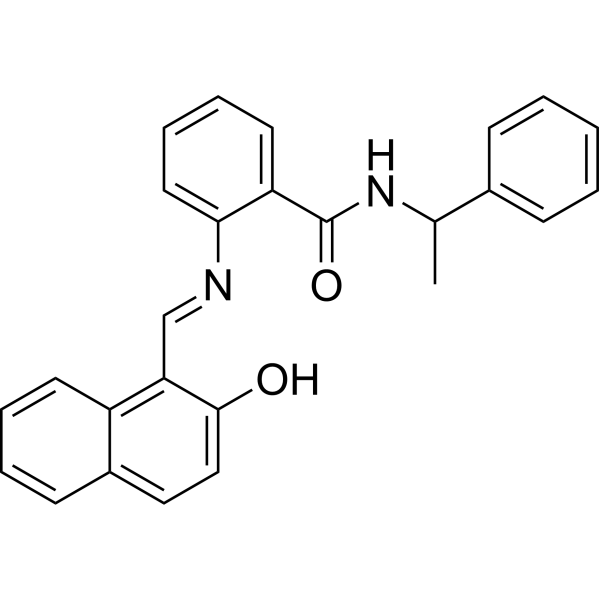
HY-13515
SirtinolSirtuin Inhibitor -
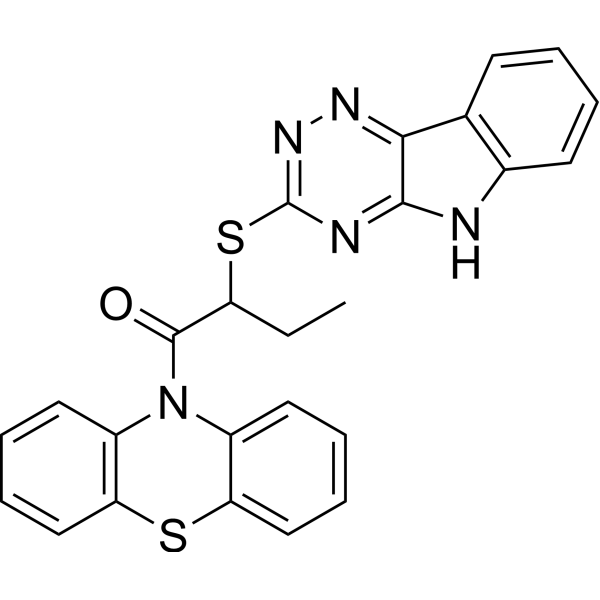
HY-15869
InauhzinSirtuin Inhibitor -
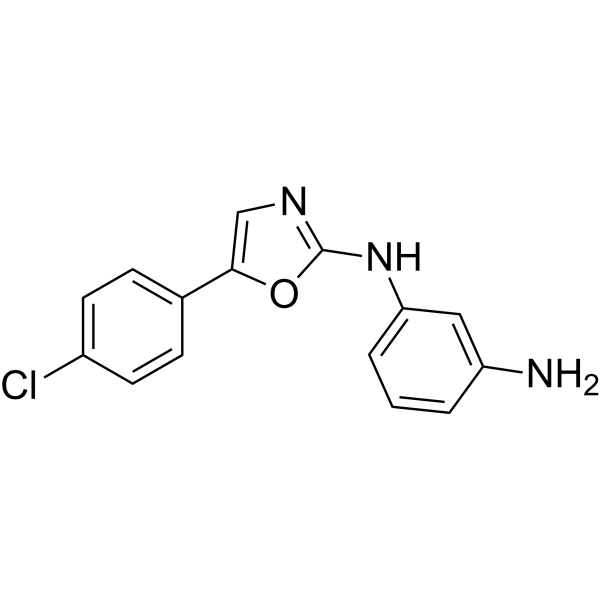
HY-135899
SIRT7 inhibitor 97491SIRT7 Inhibitor -
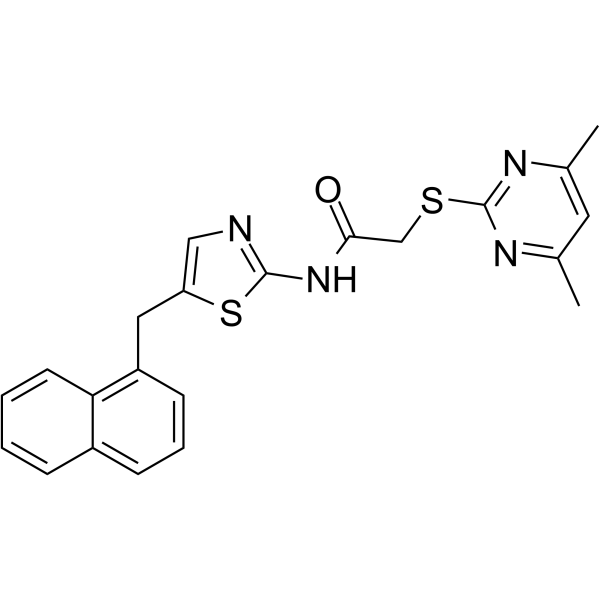
HY-100591
SirReal2Sirt2 Inhibitor
Publications Citing Use of MedChemExpress (MCE) Salermide
More

Biological Activity
Description
IC50 & Target
Salermide Salermide [1]|
SIRT1 |
SIRT2 |
In Vitro
Salermide shows a dose-dependent inhibition that rises to 80% at 90 μM and 25 μM against Sirt1 and Sirt2, respectively. Salermide can prompt tumour-specific cell death in a wide range of human cancer cell lines derived from leukaemia (MOLT4, KG1A, K562), lymphoma (Raji), colon (SW480) and breast (MDA-MB-231). Incubation with 100 μM Salermide alone resulted in an increase of cytosolicactivated caspase 3 and a decrease of mitochondrialcytochrome. Salermide alone can induce apoptosis through both extrinsic and intrinsic pathways. Salermide had several antitumorigenic advantages over the earlier described class III HDAC inhibitors: firstly, it mimics the universal proapoptotic effect on cancer samples exhibited by the classical class I, II and IV HDAC inhibitors, and secondly, its proapoptotic effect is cancer-specific[1].
MedChemExpress (MCE) has not independently confirmed the accuracy of these methods. They are for reference only.
In Vivo
MedChemExpress (MCE) has not independently confirmed the accuracy of these methods. They are for reference only.


Chemical Information
-
CAS No. 1105698-15-4
-
Appearance Solid
-
Molecular Weight 394.47
-
Formula C26H22N2O2
-
Color White to off-white
-
SMILES
O=C(NC1=CC=CC(/N=C/C2=C3C=CC=CC3=CC=C2O)=C1)C(C)C4=CC=CC=C4
-
Shipping
Room temperature in continental US; may vary elsewhere.
-
Storage
Powder -20°C 3 years 4°C 2 years In solvent -80°C 2 years -20°C 1 year


Publications (4)
-
Journal Impact Factor
-
Most Recent
-
Cell Rep
2025 Apr 16;44(5):115572. PMID: 40249703 -
-
Mol Cell Proteomics
Celastrol Protects From Cholestatic Liver Injury Through Modulation of SIRT1-FXR Signaling. [Abstract]2019 Mar;18(3):520-533. PMID: 30617157 -
J Cell Mol Med
2020 Jan;24(1):488-510. PMID: 31680473


Solvent & Solubility
In Vitro:
DMSO : ≥ 50 mg/mL (126.75 mM; Hygroscopic DMSO has a significant impact on the solubility of product, please use newly opened DMSO)
* "≥" means soluble, but saturation unknown.
Please refer to the solubility information to select the appropriate solvent. Once prepared, please aliquot and store the solution to prevent product inactivation from repeated freeze-thaw cycles.
Storage method and period of stock solution: -80°C, 2 years; -20°C, 1 year. When stored at -80°C, please use it within 2 years. When stored at -20°C, please use it within 1 year.
Please refer to the solubility information to select the appropriate solvent. Once prepared, please aliquot and store the solution to prevent product inactivation from repeated freeze-thaw cycles.
Storage method and period of stock solution: -80°C, 2 years; -20°C, 1 year. When stored at -80°C, please use it within 2 years. When stored at -20°C, please use it within 1 year.
Concentration (start) × Volume (start) = Concentration (final) × Volume (final)
In Vivo:
Select the appropriate dissolution method based on your experimental animal and administration route.
- For the following dissolution methods, please ensure to first prepare a clear stock solution using an In Vitro approach and then sequentially add co-solvents:
- To ensure reliable experimental results, the clarified stock solution can be appropriately stored based on storage conditions. As for the working solution for In Vivo experiments, it is recommended to prepare freshly and use it on the same day.
- The percentages shown for the solvents indicate their volumetric ratio in the final prepared solution. If precipitation or phase separation occurs during preparation, heat and/or sonication can be used to aid dissolution.
In Vivo Dissolution Calculator
Please enter the basic information of animal experiments:
-
-
-
-
Recommended: Prepare an additional quantity of animals to account for potential losses during experiments.
Please enter your animal formula composition:
-
%DMSO +
Recommended: Keep the proportion of DMSO in working solution below 2% if your animal is weak.
-
%+
-
+%Tween-80 + +
-
%Saline +
The co-solvents required include: DMSO, . All of co-solvents are available by MedChemExpress (MCE). , Tween 80. All of co-solvents are available by MedChemExpress (MCE).
Working solution concentration: 0.22 mg/mL
Method for preparing stock solution: mg drug dissolved in μL DMSO. Stock solution concentration: mg/mL.
1. Take μL DMSO stock solution;
2. Add μL .
μL , mix evenly;
3. Then add μL Tween 80, mix evenly;
4. Then add μL
Please ensure that the stock solution in the first step is dissolved to a clear state, and add co-solvents in sequence. You can use ultrasonic heating (ultrasonic cleaner, recommended frequency 20-40 kHz), vortexing, etc. to assist dissolution.


Purity & Documentation
-
Data Sheet (277 KB)
-
SDS (393 KB)
- English - EN (393 KB)
- Français - FR (393 KB)
- Deutsch - DE (393 KB)
- Norwegian - NO (393 KB)
- Español - ES (393 KB)
- Swedish - SV (393 KB)
- Italian - IT (393 KB)
- Korean - KR (393 KB)
- Portuguese - PT (393 KB)
-
Handling Instructions (2659 KB)
References


Complete Stock Solution Preparation Table
Please refer to the solubility information to select the appropriate solvent. Once prepared, please aliquot and store the solution to prevent product inactivation from repeated freeze-thaw cycles.
Storage method and period of stock solution: -80°C, 2 years; -20°C, 1 year. When stored at -80°C, please use it within 2 years. When stored at -20°C, please use it within 1 year.
| Optional Solvent | Concentration Solvent Mass | 1 mg | 5 mg | 10 mg | 25 mg |
|---|---|---|---|---|---|
| DMSO | 1 mM | 2.5350 mL | 12.6752 mL | 25.3505 mL | 63.3762 mL |
| 5 mM | 0.5070 mL | 2.5350 mL | 5.0701 mL | 12.6752 mL | |
| 10 mM | 0.2535 mL | 1.2675 mL | 2.5350 mL | 6.3376 mL | |
| 15 mM | 0.1690 mL | 0.8450 mL | 1.6900 mL | 4.2251 mL | |
| 20 mM | 0.1268 mL | 0.6338 mL | 1.2675 mL | 3.1688 mL | |
| 25 mM | 0.1014 mL | 0.5070 mL | 1.0140 mL | 2.5350 mL | |
| 30 mM | 0.0845 mL | 0.4225 mL | 0.8450 mL | 2.1125 mL | |
| 40 mM | 0.0634 mL | 0.3169 mL | 0.6338 mL | 1.5844 mL | |
| 50 mM | 0.0507 mL | 0.2535 mL | 0.5070 mL | 1.2675 mL | |
| 60 mM | 0.0423 mL | 0.2113 mL | 0.4225 mL | 1.0563 mL | |
| 80 mM | 0.0317 mL | 0.1584 mL | 0.3169 mL | 0.7922 mL | |
| 100 mM | 0.0254 mL | 0.1268 mL | 0.2535 mL | 0.6338 mL |


Salermide Related Classifications
HY-101073 Related Classifications
 Powered by Bioz