



Talazoparib
Based on 118 publication(s) in Google Scholar
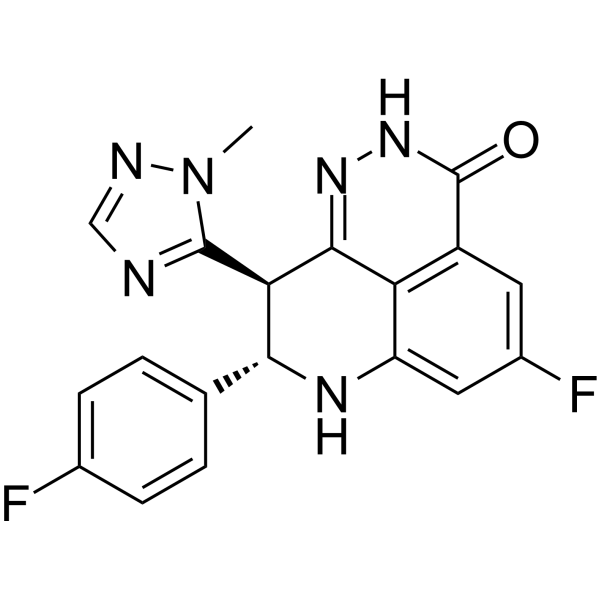
Talazoparib (BMN-673) is a highly potent, orally active PARP1/2 inhibitor.Talazoparib inhibits PARP1 and PARP2 enzyme activity with Kis of 1.2 nM and 0.87 nM, respectively. Talazoparib has antitumor activity.
For research use only. We do not sell to patients.
- Purity : 99.85%
- CAS No.: 1207456-01-6
- Formula: C19H14F2N6O
- Molecular Weight:380.35
-
Storage:Powder -20°C, 3 years , 4°C, 2 years ; In solvent -80°C, 1 year , -20°C, 6 months

To place orders, for customer services and technical support, please contact: MedChemExpress USA
Tel: 609-228-6898 E-mail: [email protected] [email protected]


-
 Biological Activity
-
Chemical Information
-
Solvent & Solubility
- Protocols
- Purity & Documentation
- References
-
 Help & FAQs


-
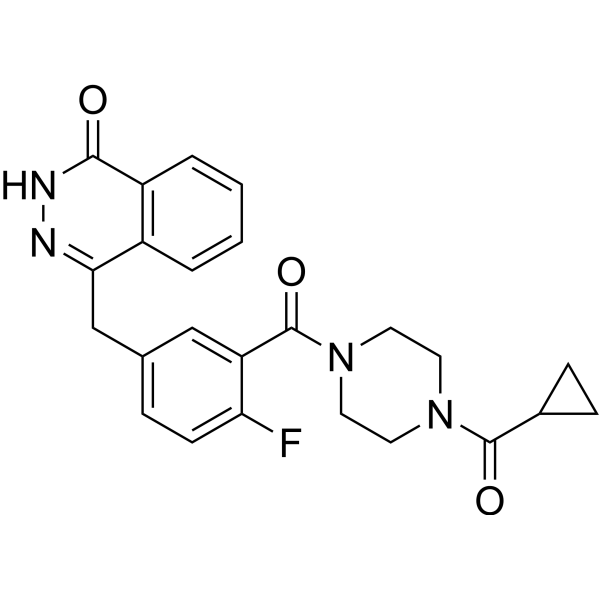
HY-10162
OlaparibPARP Inhibitor -
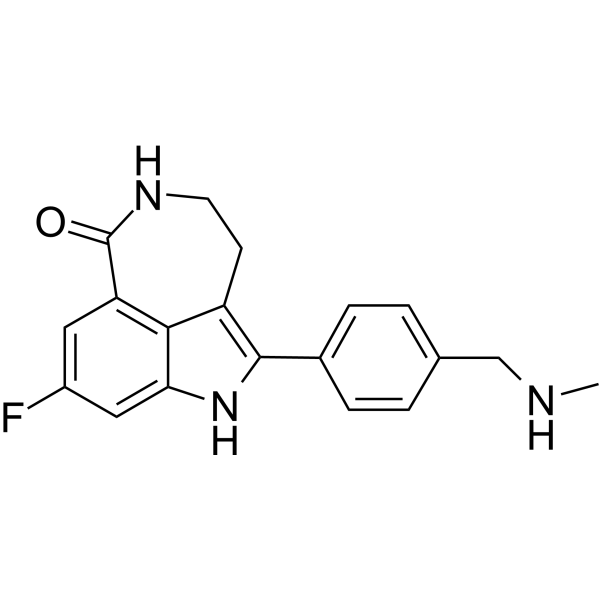
HY-10617A
RucaparibPARP Inhibitor -
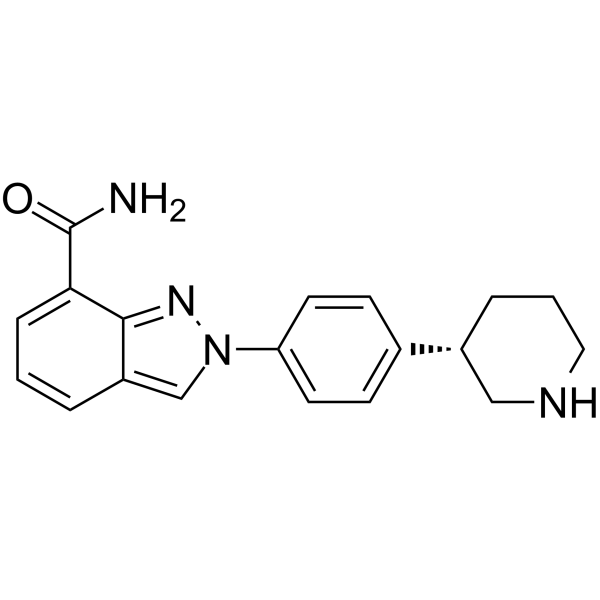
HY-10619
NiraparibPARP Inhibitor -
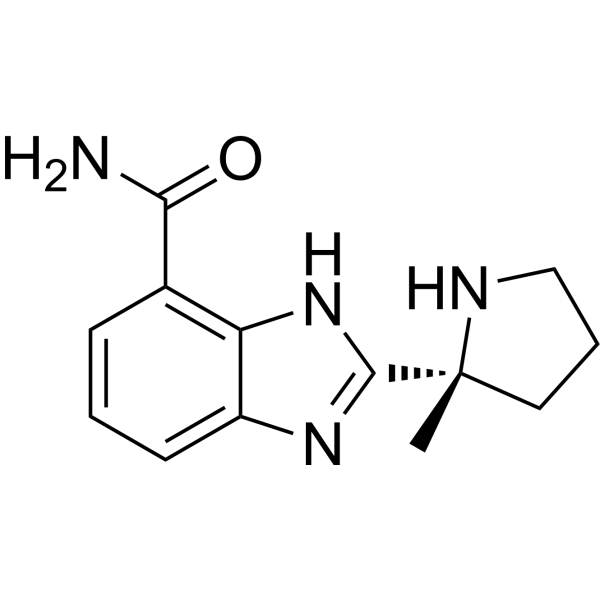
HY-10129
VeliparibPARP Inhibitor -
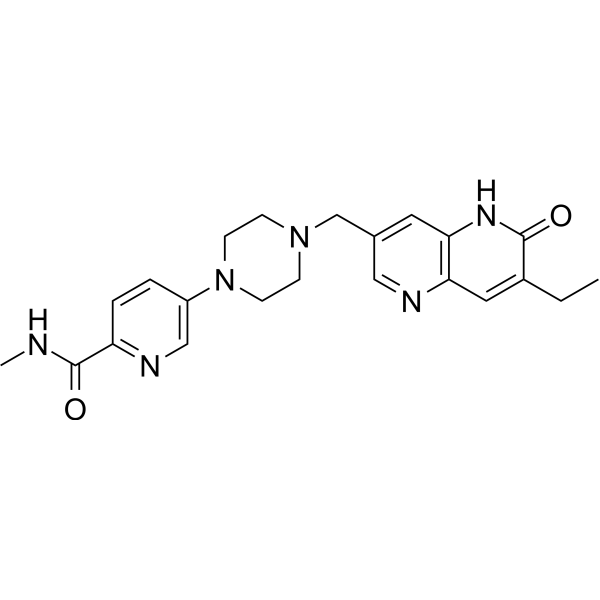
HY-132167
SaruparibPARP Inhibitor -
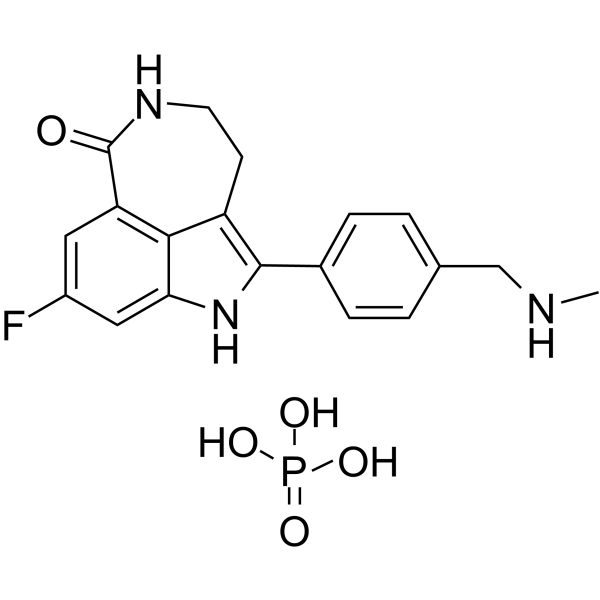
HY-10617
Rucaparib phosphatePARP Inhibitor -
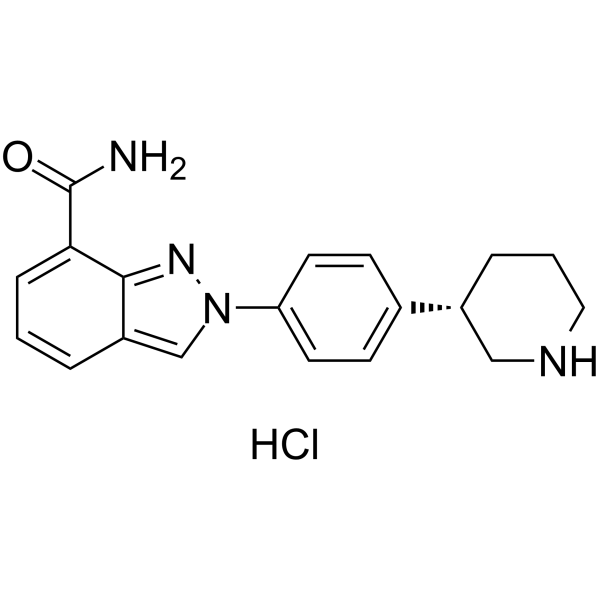
HY-10619A
Niraparib hydrochloridePARP Inhibitor -
HY-104044
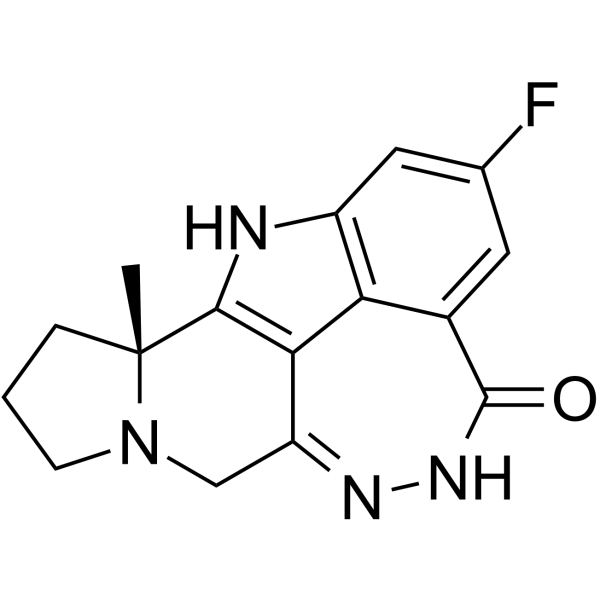
PamiparibPARP1/2 Inhibitor -
HY-19323
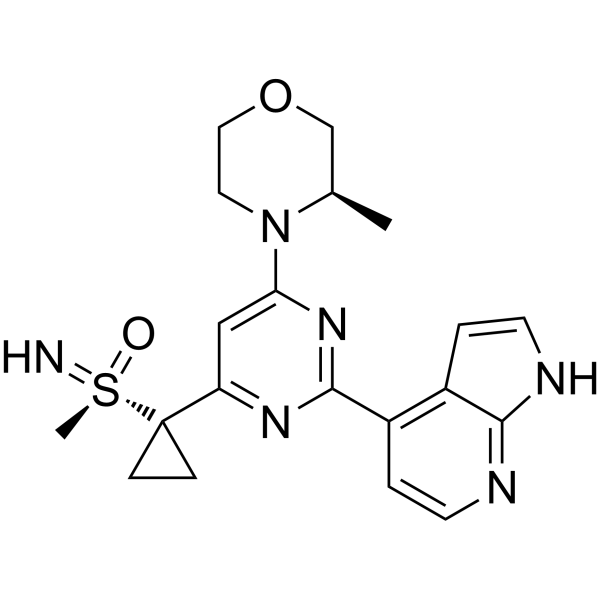
CeralasertibATR Inhibitor -
HY-13629
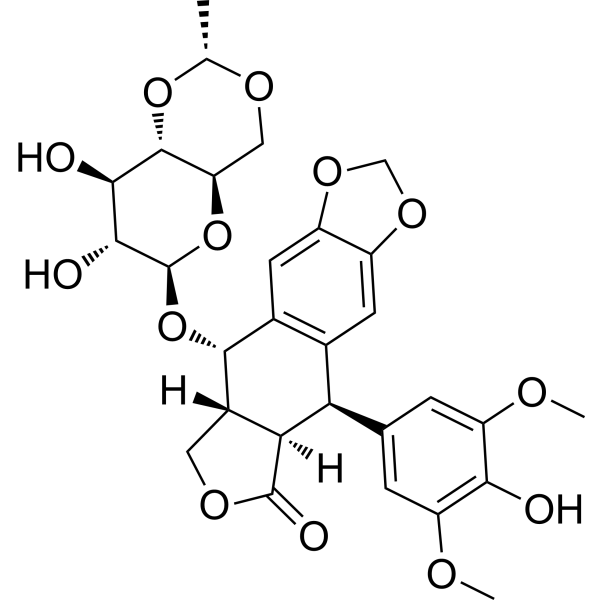
EtoposideTopoisomerase II Inhibitor -
HY-114778
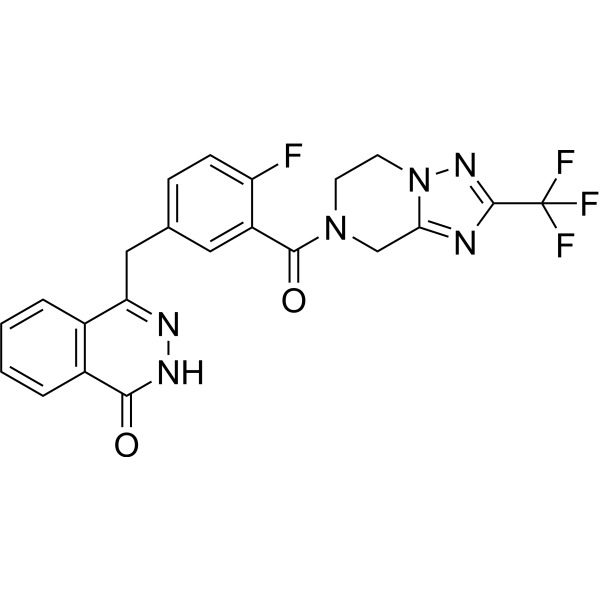
FluzoparibPARP1 Inhibitor -
HY-15142
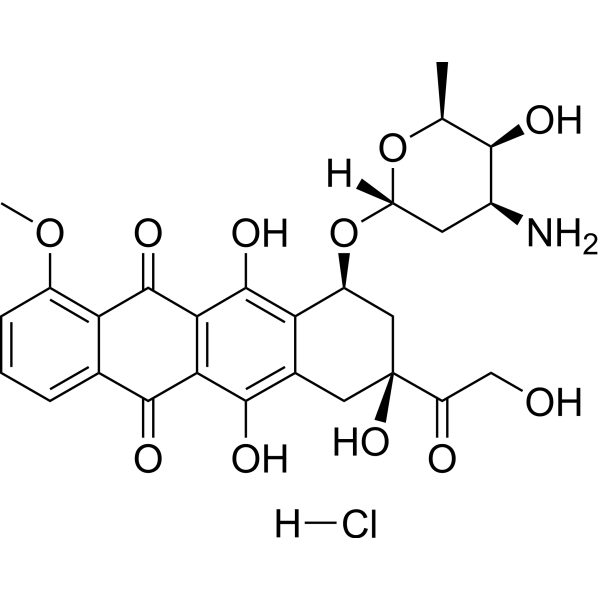
Doxorubicin hydrochlorideTopoisomerase Inhibitor
Publications Citing Use of MedChemExpress (MCE) Talazoparib
More- Cancer Cell. 2020 Dec 14;38(6):844-856.e7. [Abstract]
- Cancer Discov. 2022 Aug 5;12(8):1904-1921. [Abstract]
- Cancer Discov. 2017 Sep;7(9):984-998. [Abstract]
- Nat Cancer. 2022 Oct;3(10):1211-1227. [Abstract]
- Nat Genet. 2022 Dec;54(12):1983-1993. [Abstract]
- Cancer Res. 2026 Sep 8. [Abstract]
- Cancer Res. 2026 Sep 28.
- Cancer Res. 2025 May 14. [Abstract]
- Cancer Res. 2023 Nov 15;83(22):3813-3826. [Abstract]
- Cancer Res. 2021 Jul 1;81(13):3480-3494. [Abstract]
- Drug Resist Updat. 2026 Jan:84:101319. [Abstract]
- Nat Commun. 2026 Feb 12;17(1):1214. [Abstract]
- Nat Commun. 2025 May 12;16(1):4239. [Abstract]
- Nat Commun. 2023 Dec 9;14(1):8161. [Abstract]
- Nat Commun. 2019 Jun 11;10(1):2556. [Abstract]
- ACS Nano. 2025 May 13;19(18):17929-17940. [Abstract]
- Mol Cell. 2017 May 18;66(4):503-516.e5. [Abstract]
- Theranostics. 2020 Jul 25;10(21):9477-9494. [Abstract]
- J Clin Invest. 2025 Apr 15;135(12):e181879. [Abstract]
- J Clin Invest. 2021 Jun 1;131(11):e146256. [Abstract]
- Adv Sci (Weinh). 2026 Jul 13:e76141.
- Adv Sci (Weinh). 2024 Sep;11(34):e2400140. [Abstract]
- Adv Sci (Weinh). 2024 May;11(19):e2307940. [Abstract]
- Sci Adv. 2026 Jun 26;12(26):eadz3351. [Abstract]
- Sci Adv. 2026 May 22;12(21):eaec2231. [Abstract]
- Sci Adv. Sci Adv. 2025 Apr 25;11(17):eadu0847. [Abstract]
- Sci Adv. 2022 Feb 18;8(7):eabl9794. [Abstract]
- Cancer Lett. 2026 Feb 4;642:218300.
- Cancer Lett. 2026 Apr 1:642:218300. [Abstract]
- Cancer Lett. 2022 Oct 10:546:215851. [Abstract]
- Cancer Lett. 2021 Apr 10:503:197-212. [Abstract]
- Cancer Lett. 2021 Mar 1:500:208-219. [Abstract]
- EBioMedicine. 2020 Sep:59:102923. [Abstract]
- EBioMedicine. 2018 Dec:38:47-56. [Abstract]
- Clin Cancer Res. 2026 Jul 13. [Abstract]
- Clin Cancer Res. 2017 Feb 15;23(4):1001-1011. [Abstract]
- Cell Death Discov. 2026 Jul 2.
- NPJ Precis Oncol. 2025 Nov 21;9(1):373. [Abstract]
- NPJ Precis Oncol. 2025 Mar 12;9(1):69. [Abstract]
- Proc Natl Acad Sci U S A. 2025 Jun 17;122(24):e2426660122. [Abstract]
- Oncogene. 2021 Oct;40(43):6143-6152. [Abstract]
- Oncogene. 2017 Aug 17;36(33):4682-4691. [Abstract]
- Br J Cancer. 2024 Jul;131(2):231-242. [Abstract]
- ACS Appl Mater Interfaces. 2019 Apr 3;11(13):12342-12356. [Abstract]
- Cell Rep. 2024 Jul 18;43(8):114522. [Abstract]
- Cell Rep. 2023 Oct 16;42(10):113256. [Abstract]
- J Med Chem. 2023 Sep 14;66(17):12284-12303. [Abstract]
- Cancer Cell Int. 2023 Jun 27;23(1):128. [Abstract]
- Mol Cancer Ther. 2026 Jul 15:10.1158/1535-7163.MCT-26-0182.
- Mol Cancer Ther. 2025 Jul 2. [Abstract]
- JCI Insight. 2026 Jun 30;11(16):e192686.
- Sustain Chem Pharm. 2026 Feb 9.
- Biochem Pharmacol. 2025 May:235:116843. [Abstract]
- Cell Biosci. 2024 Feb 6;14(1):20. [Abstract]
- Bioeng Transl Med. 2019 Jun 14;4(2):e10131. [Abstract]
- J Cell Biol. 2026 Aug 3;225(8):e202409149.
- Drug Des Devel Ther. 2020 Feb 25:14:783-793. [Abstract]
- Oncogenesis. 2025 Mar 1;14(1):4. [Abstract]
- Radiother Oncol. 2021 Apr:157:175-181. [Abstract]
- Pharmaceuticals (Basel). 2026 Sep 28;19(10):1538.
- Biomolecules. 2025 Jul 17;15(7):1035. [Abstract]
- Int J Mol Sci. 2022 Nov 18;23(22):14338. [Abstract]
- Int J Mol Sci. 2020 Feb 11;21(4):1185. [Abstract]
- Bioinformatics. 2022 Sep 15;38(18):4395-4402. [Abstract]
- Mol Pharm. 2026 Jun 8.
- Int J Cancer. 2024 Jul 15;155(2):203-210. [Abstract]
- Sci Rep. 2023 Feb 27;13(1):3334. [Abstract]
- Neoplasia. 2019 Sep;21(9):863-871. [Abstract]
- Oncol Rep. 2019 Nov;42(5):2097-2107. [Abstract]
- Biomedicines. 2026 May;14(5):949.
- BMC Cancer. 2022 Mar 23;22(1):312. [Abstract]
- Invest New Drugs. 2021 Oct;39(5):1213-1221. [Abstract]
- Front Oncol. 2021 Jul 9:11:681441. [Abstract]
- DNA Repair. 2019 Jan:73:64-70. [Abstract]
- Am J Cancer Res. 2024 Jan 15;14(1):378-389. [Abstract]
- Genes (Basel). 2023 Jun 20;14(6):1295. [Abstract]
- Am J Cancer Res. 2020 Aug 1;10(8):2649-2676. [Abstract]
- Biomed Res Int. 2023 Feb 6:2023:7891753. [Abstract]
- PLoS One. 2026 Apr 3;21(4):e0345514.
- PLoS One. 2024 Apr 16;19(4):e0302130. [Abstract]
- FEBS Open Bio. 2025 Dec 5. [Abstract]
- Biochem Biophys Res Commun. 2025 Aug 30:776:152203. [Abstract]
- Oncol Lett. 2025 Jan 7;29(3):128. [Abstract]
- Integr Biol (Camb). 2019 Apr 1;11(4):130-141. [Abstract]
- Data Brief. 2021 Sep 22:38:107394. [Abstract]
- Biomed Pharmacother. 2026 Sep:202:119803.
- Biomed Pharmacother. 2026 Sep 3:203:119891. [Abstract]
- Preprints. 2026 Jul 7.
- Res Connect. 2026 May 28.
- Duke University. 2026.
- bioRxiv. 2026 Feb 18:2026.02.16.706212. [Abstract]
- bioRxiv. 2026 Jan 13.
- bioRxiv. 2026 Jan 15:2026.01.15.699545. [Abstract]
- Princeton University. 2025.
- bioRxiv. 2025 Dec 5.
- bioRxiv. 2025 Nov 4:2025.11.03.686423. [Abstract]
- bioRxiv. 2025 Sep 30:2025.09.30.679484. [Abstract]
- bioRxiv. 2025 July 08.
- University of Pittsburgh. 2024.
- bioRxiv. 2024 Nov 26:2024.11.21.624591. [Abstract]
- bioRxiv. 2024 Jul 10:2024.07.09.602803. [Abstract]
- Research Square Preprint. 2024 Feb 2.
- J Pers Med. 2023 Aug 27;13(9):1315. [Abstract]
- bioRxiv. 2023 Jun 28.
- bioRxiv. 2023 Jun 22:2023.06.22.544406. [Abstract]
- bioRxiv. 2023 Apr 17.
- Research Square Print. January 4th, 2023.
- Oxid Med Cell Longev. 2022 Jul 14:2022:8279269. [Abstract]
- Patent. US20220054606A1.
- bioRxiv. April 22, 2021.
- University of London. 2021 Sep.
- Patent. US20210030680A1.
- University of Montreal. 2020 Jun.
- Patent. US20200129476A1
- Patent. US20200078369A1
- Patent. US20180362972A1.
- Patent. US20180263995A1.
- Methods Mol Biol. 2018:1711:351-398. [Abstract]
 Customer Validation & Images

-
In Vivo Efficacy Study
-
Cell Proliferation/Viability Assay
-
Cell Imaging/Staining
-
2D/3D Cell Culture and Differentiation
-
Cell Imaging/Staining


Biological Activity
Description
IC50 & Target
[1]|
PARP2 0.87 nM (Ki) |
PARP1 1.2 nM (Ki) |
Cellular Effect
|
Cell Line

|
Type | Value | Description | References |
|---|---|---|---|---|
| CAPAN-1 | EC50 |
5 nM
Compound: (8S,9R)-47; BMN 673; Talazoparib
|
Cytotoxicity against BRCA2-deficient human Capan1 cells
Cytotoxicity against BRCA2-deficient human Capan1 cells
|
[PMID: 26652717] |
| CAPAN-1 | IC50 |
1.8 nM
Compound: 5; BMN-673
|
Antiproliferative activity against human Capan1 cells after 7 days by CCK8 or SRB assay
Antiproliferative activity against human Capan1 cells after 7 days by CCK8 or SRB assay
|
[PMID: 28692916] |
| CAPAN-1 | IC50 |
686.09 nM
Compound: TP
|
Antiproliferative activity against human Olaparib-resistant CAPAN-1 cells assessed as cell proliferation inhibition incubated for 7 days by SRB assay
Antiproliferative activity against human Olaparib-resistant CAPAN-1 cells assessed as cell proliferation inhibition incubated for 7 days by SRB assay
|
[PMID: 37605459] |
| CAPAN-1 | IC50 |
7.77 nM
Compound: TP
|
Antiproliferative activity against human CAPAN-1 cells assessed as cell proliferation inhibition incubated for 7 days by SRB assay
Antiproliferative activity against human CAPAN-1 cells assessed as cell proliferation inhibition incubated for 7 days by SRB assay
|
[PMID: 37605459] |
| CAPAN-1 | IC50 |
906.45 nM
Compound: TP
|
Antiproliferative activity against human Talazoparib-resistant CAPAN-1 cells assessed as cell proliferation inhibition incubated for 7 days by SRB assay
Antiproliferative activity against human Talazoparib-resistant CAPAN-1 cells assessed as cell proliferation inhibition incubated for 7 days by SRB assay
|
[PMID: 37605459] |
| DLD-1 | IC50 |
0.002 μM
Compound: 4
|
Antiproliferative activity against human DLD-1 deficient in BRCA-2 cells measured after 7 days
Antiproliferative activity against human DLD-1 deficient in BRCA-2 cells measured after 7 days
|
[PMID: 34570508] |
| DLD-1 | IC50 |
0.003 μM
Compound: Talazoparib
|
Cytotoxicity against human DLD-1 cells with BRCA2 knockout assessed as reduction in cell proliferation incubated for 5 days by sulforhodamine B analysis
Cytotoxicity against human DLD-1 cells with BRCA2 knockout assessed as reduction in cell proliferation incubated for 5 days by sulforhodamine B analysis
|
[PMID: 37484567] |
| DLD-1 | IC50 |
0.004 μM
Compound: Talazoparib
|
Cytotoxicity against human DLD1 cells expressing BRCA2 knockout assessed as reduction in cell proliferation incubated for 4 hrs under oxic condition followed by incubation for 5 days under oxic condition by sulforhodamine B staining based analysis
Cytotoxicity against human DLD1 cells expressing BRCA2 knockout assessed as reduction in cell proliferation incubated for 4 hrs under oxic condition followed by incubation for 5 days under oxic condition by sulforhodamine B staining based analysis
|
[PMID: 37484567] |
| DLD-1 | IC50 |
0.006 μM
Compound: Talazoparib
|
Cytotoxicity against human DLD1 cells expressing BRCA2 knockout assessed as reduction in cell proliferation incubated for 4 hrs under hypoxic condition followed by incubation for 5 days under oxic condition by sulforhodamine B staining based analysis
Cytotoxicity against human DLD1 cells expressing BRCA2 knockout assessed as reduction in cell proliferation incubated for 4 hrs under hypoxic condition followed by incubation for 5 days under oxic condition by sulforhodamine B staining based analysis
|
[PMID: 37484567] |
| DLD-1 | IC50 |
0.122 μM
Compound: Talazoparib
|
Cytotoxicity against human DLD-1 cells expressing BRCA2 assessed as reduction in cell proliferation incubated for 5 days by sulforhodamine B analysis
Cytotoxicity against human DLD-1 cells expressing BRCA2 assessed as reduction in cell proliferation incubated for 5 days by sulforhodamine B analysis
|
[PMID: 37484567] |
| DLD-1 | IC50 |
0.65 μM
Compound: Talazoparib
|
Cytotoxicity against human DLD1 cells assessed as reduction in cell proliferation incubated for 4 hrs under oxic condition followed by incubation for 5 days under oxic condition by sulforhodamine B staining based analysis
Cytotoxicity against human DLD1 cells assessed as reduction in cell proliferation incubated for 4 hrs under oxic condition followed by incubation for 5 days under oxic condition by sulforhodamine B staining based analysis
|
[PMID: 37484567] |
| DLD-1 | IC50 |
0.86 μM
Compound: Talazoparib
|
Cytotoxicity against human DLD1 cells assessed as reduction in cell proliferation incubated for 4 hrs under hypoxic condition followed by incubation for 5 days under oxic condition by sulforhodamine B staining based analysis
Cytotoxicity against human DLD1 cells assessed as reduction in cell proliferation incubated for 4 hrs under hypoxic condition followed by incubation for 5 days under oxic condition by sulforhodamine B staining based analysis
|
[PMID: 37484567] |
| HCC1395 | IC50 |
0.46 nM
Compound: Talazoparib
|
Anticancer activity against human HCC1395 cells assessed as cell growth inhibition
Anticancer activity against human HCC1395 cells assessed as cell growth inhibition
|
[PMID: 38838546] |
| HCT-116 | IC50 |
0.009 μM
Compound: Talazoparib
|
Cytotoxicity against human HCT-116 cells assessed as reduction in cell proliferation incubated for 4 hrs under oxic condition followed by incubation for 5 days under oxic condition by sulforhodamine B staining based analysis
Cytotoxicity against human HCT-116 cells assessed as reduction in cell proliferation incubated for 4 hrs under oxic condition followed by incubation for 5 days under oxic condition by sulforhodamine B staining based analysis
|
[PMID: 37484567] |
| HCT-116 | IC50 |
0.013 μM
Compound: Talazoparib
|
Cytotoxicity against human HCT-116 cells assessed as reduction in cell proliferation incubated for 4 hrs under hypoxic condition followed by incubation for 5 days under oxic condition by sulforhodamine B staining based analysis
Cytotoxicity against human HCT-116 cells assessed as reduction in cell proliferation incubated for 4 hrs under hypoxic condition followed by incubation for 5 days under oxic condition by sulforhodamine B staining based analysis
|
[PMID: 37484567] |
| HCT-116 | IC50 |
0.018 μM
Compound: Talazoparib
|
Cytotoxicity against human HCT-116 cells expressing N-terminally truncated POR/copGFP/puramycin resistance genes assessed as reduction in cell proliferation incubated for 4 hrs under hypoxic condition followed by incubation for 5 days under oxic condition
Cytotoxicity against human HCT-116 cells expressing N-terminally truncated POR/copGFP/puramycin resistance genes assessed as reduction in cell proliferation incubated for 4 hrs under hypoxic condition followed by incubation for 5 days under oxic condition
|
[PMID: 37484567] |
| HCT-116 | IC50 |
0.019 μM
Compound: Talazoparib
|
Cytotoxicity against human HCT-116 cells expressing N-terminally truncated POR/copGFP/puramycin resistance genes assessed as reduction in cell proliferation incubated for 4 hrs under oxic condition followed by incubation for 5 days under oxic condition by
Cytotoxicity against human HCT-116 cells expressing N-terminally truncated POR/copGFP/puramycin resistance genes assessed as reduction in cell proliferation incubated for 4 hrs under oxic condition followed by incubation for 5 days under oxic condition by
|
[PMID: 37484567] |
| HEK293 | IC50 |
4.95 nM
Compound: 2; BMN-673
|
Cytotoxicity against HEK293 cells assessed as inhibition of cell viability
Cytotoxicity against HEK293 cells assessed as inhibition of cell viability
|
[PMID: 33120078] |
| LoVo | EC50 |
2.5 nM
Compound: 9, BMN 673
|
Inhibition of PARP in human LoVo cells assessed as inhibition of hydrogen peroxide-induced PARylation treated for 30 mins prior to incubation with H2O2 for 5 mins by fluorescence analysis
Inhibition of PARP in human LoVo cells assessed as inhibition of hydrogen peroxide-induced PARylation treated for 30 mins prior to incubation with H2O2 for 5 mins by fluorescence analysis
|
[PMID: 25761096] |
| LoVo | EC50 |
2.51 nM
Compound: (8S,9R)-47; BMN 673; Talazoparib
|
Inhibition of PARP in human LoVo cells assessed as inhibition of poly(ADP)-ribose polymerization for 30 mins by fluorescence assay
Inhibition of PARP in human LoVo cells assessed as inhibition of poly(ADP)-ribose polymerization for 30 mins by fluorescence assay
|
[PMID: 26652717] |
| LoVo | GI50 |
4 nM
Compound: (8S,9R)-47; BMN 673; Talazoparib
|
Potentiation of temozolomide-induced cytotoxicity in human LoVo cells assessed as temozolomide GI50 at 0.4 uM after 5 days by Celltiter-Glo assay
Potentiation of temozolomide-induced cytotoxicity in human LoVo cells assessed as temozolomide GI50 at 0.4 uM after 5 days by Celltiter-Glo assay
|
[PMID: 26652717] |
| MDA-MB-157 | IC50 |
0.37 nM
Compound: Talazoparib
|
Anticancer activity against human MDA-MB-157 cells assessed as cell growth inhibition
Anticancer activity against human MDA-MB-157 cells assessed as cell growth inhibition
|
[PMID: 38838546] |
| MDA-MB-436 | IC50 |
0.012 nM
Compound: 2; BMN-673
|
Cytotoxicity against human MDA-MB-436 cells assessed as inhibition of cell viability incubated for 14 days with three intermittent intervals by CellTiterGlo luminescence assay
Cytotoxicity against human MDA-MB-436 cells assessed as inhibition of cell viability incubated for 14 days with three intermittent intervals by CellTiterGlo luminescence assay
|
[PMID: 33120078] |
| MDA-MB-436 | IC50 |
0.38 nM
Compound: 2; BMN-673
|
Cytotoxicity against human MDA-MB-436 cells assessed as inhibition of cell viability incubated for 4 days by CellTiterGlo luminescence assay
Cytotoxicity against human MDA-MB-436 cells assessed as inhibition of cell viability incubated for 4 days by CellTiterGlo luminescence assay
|
[PMID: 33120078] |
| MDA-MB-436 | IC50 |
0.7 nM
Compound: 5; BMN-673
|
Antiproliferative activity against human MDA-MB-436 cells after 7 days by CCK8 or SRB assay
Antiproliferative activity against human MDA-MB-436 cells after 7 days by CCK8 or SRB assay
|
[PMID: 28692916] |
| MRC5 | EC50 |
0.31 μM
Compound: (8S,9R)-47; BMN 673; Talazoparib
|
Cytotoxicity against human MRC5 cells
Cytotoxicity against human MRC5 cells
|
[PMID: 26652717] |
| MX1 | EC50 |
0.3 nM
Compound: (8S,9R)-47; BMN 673; Talazoparib
|
Cytotoxicity against BRCA1-deficient human MX1 cells
Cytotoxicity against BRCA1-deficient human MX1 cells
|
[PMID: 26652717] |
| SUM149PT | EC50 |
1.6 nM
Compound: Talazoparib
|
Cytotoxicity against BRCA1-deficient human SUM149 cells measured after 6 days by microscopic analysis
Cytotoxicity against BRCA1-deficient human SUM149 cells measured after 6 days by microscopic analysis
|
[PMID: 31042381] |
| SUM149PT | EC50 |
23.2 nM
Compound: Talazoparib
|
Cytotoxicity against BRCA1-proficient human SUM149 cells measured after 6 days by microscopic analysis
Cytotoxicity against BRCA1-proficient human SUM149 cells measured after 6 days by microscopic analysis
|
[PMID: 31042381] |
| V79 | IC50 |
5011.4 nM
Compound: 5; BMN-673
|
Cytotoxicity against BRCA2 expressing Chinese hamster V79 cells after 3 days by CCK8 or SRB assay
Cytotoxicity against BRCA2 expressing Chinese hamster V79 cells after 3 days by CCK8 or SRB assay
|
[PMID: 28692916] |
In Vitro
Talazoparib shows an EC50 of 2.51 nM in cellular PARylation assay[1].
Talazoparib shows EC50s of 0.3 nM, 5 nM and 0.31 for MX-1 cells (BRCA1 mutant), Capan-1 cells (BRCA2 mutant) and MRC-5 cells (normal)[1].
MedChemExpress (MCE) has not independently confirmed the accuracy of these methods. They are for reference only.
In Vivo
Talazoparib exhibits moderate oral bioavailability (rat 56%) and Cmax (rat 7948 ng/mL) following oral administration (rat 10 mg/kg)[1]. Talazoparib exhibits the terminal elimination half-life (rat 2.25 h) due to plasma clearance (2 mL/min/kg) following intravenous administration (rat 5 mg/kg)[1].
MedChemExpress (MCE) has not independently confirmed the accuracy of these methods. They are for reference only.
-
Animal Model:Female athymic nu/nu mice (8-10 weeks old), with MX-1 xenograft-bearing mice[1]
-
Dosage:0.33 mg/kg
-
Administration:Oral gavage, once daily, for 28 days
-
Result:Significantly inhibited xenograft MX-1 tumor growth.
-
Animal Model:Sprague-Dawley rats[1]
-
Dosage:5mg/kg for i.v.; 10 mg/kg for oral (Pharmacokinetic Analysis)
-
Administration:Intravenous administration and oral administration
-
Result:Oral bioavailability (56%), Cmax (7948 ng/mL), T1/2 (2.25 h).


Chemical Information
-
CAS No. 1207456-01-6
-
Appearance Solid
-
Molecular Weight 380.35
-
Formula C19H14F2N6O
-
Color White to off-white
-
SMILES
O=C1NN=C2C3=C1C=C(F)C=C3N[C@H](C4=CC=C(F)C=C4)[C@H]2C5=NC=NN5C
-
Synonyms
BMN-673; LT-673
-
Shipping
Room temperature in continental US; may vary elsewhere.
-
Storage
Powder -20°C 3 years 4°C 2 years In solvent -80°C 1 year -20°C 6 months


Publications (118)
-
Journal Impact Factor
-
Most Recent
-
Cancer Cell
Elevated CXorf67 Expression in PFA Ependymomas Suppresses DNA Repair and Sensitizes to PARP Inhibitors. [Abstract]2020 Dec 14;38(6):844-856.e7. PMID: 33186520
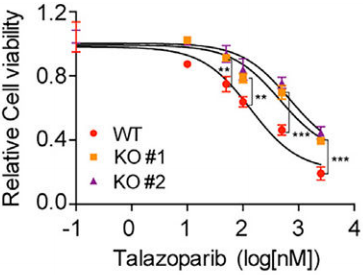
Talazoparib purchased from MedChemExpress. Usage Cited in: Cancer Cell. 2020 Dec 14;38(6):844-856.e7. [Abstract]
Talazoparib (0.1–1250 nM, 5 days) suppressed the viability of CXorf67-WT and -KO Daoy C67 cells.
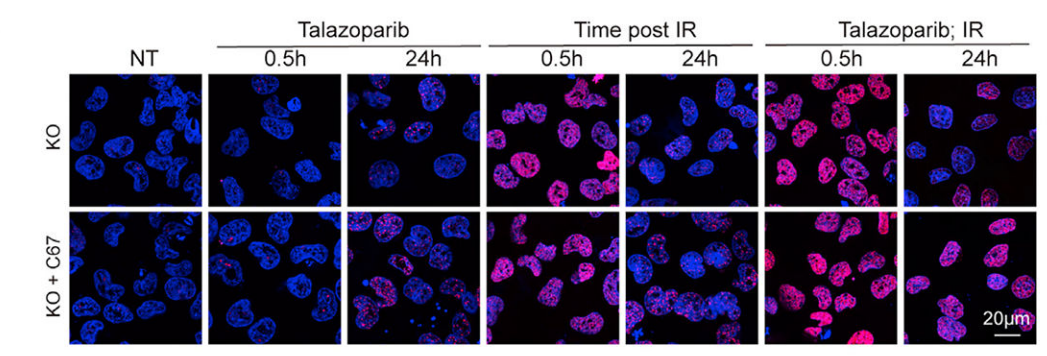
Talazoparib purchased from MedChemExpress. Usage Cited in: Cancer Cell. 2020 Dec 14;38(6):844-856.e7. [Abstract]
Talazoparib (5 nM, 0.5 or 24 h) combined with IR (2 Gy) resulted in further increases in γ-H2AX foci.
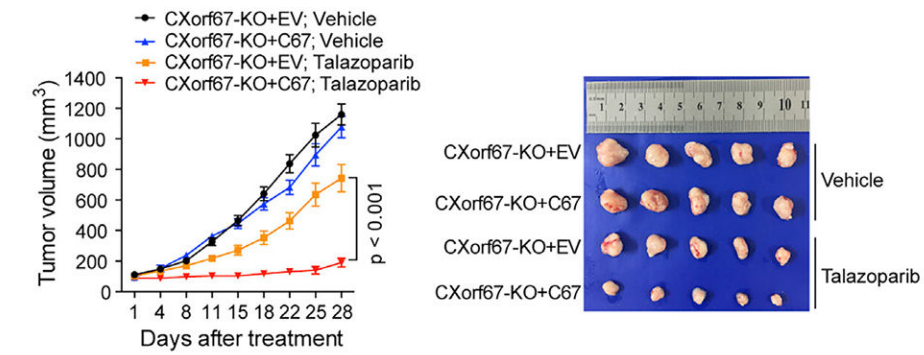
Talazoparib purchased from MedChemExpress. Usage Cited in: Cancer Cell. 2020 Dec 14;38(6):844-856.e7. [Abstract]
Talazoparib (0.33 mg/kg, p.o., once a day for 5 days per week for 84 days) inhibited tumor growth in C67-KO and C67-re-expressing Daoy cells xenograft tumor models.
-
Cancer Discov
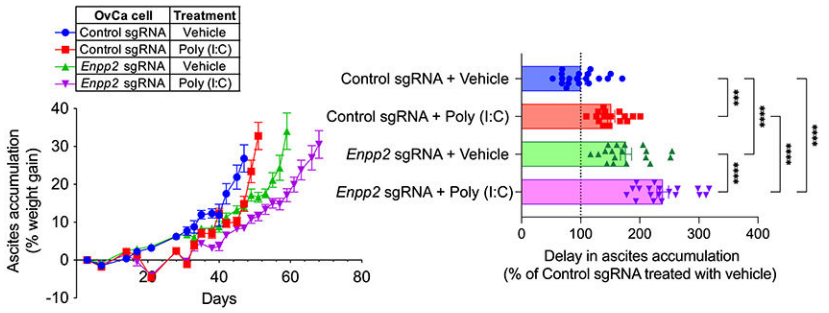
Tumor-Derived Lysophosphatidic Acid Blunts Protective Type I Interferon Responses in Ovarian Cancer. [Abstract]2022 Aug 5;12(8):1904-1921. PMID: 35552618
Talazoparib purchased from MedChemExpress. Usage Cited in: Cancer Discov. 2022 Aug 5;12(8):1904-1921. [Abstract]
Talazoparib (0.33 mg/kg, p.o., 70 days) diminished ascites accumulation and extended survival by ~30% in mice bearing ATX-sufficient OvCa.
-
Cancer Discov
Secondary Somatic Mutations Restoring RAD51C and RAD51D Associated with Acquired Resistance to the PARP Inhibitor Rucaparib in High-Grade Ovarian Carcinoma. [Abstract]2017 Sep;7(9):984-998. PMID: 28588062 -
Nat Cancer
Targeting the ALK-CDK9-Tyr19 kinase cascade sensitizes ovarian and breast tumors to PARP inhibition via destabilization of the P-TEFb complex. [Abstract]2022 Oct;3(10):1211-1227. PMID: 36253486
Talazoparib purchased from MedChemExpress. Usage Cited in: Nat Cancer. 2022 Oct;3(10):1211-1227. [Abstract]
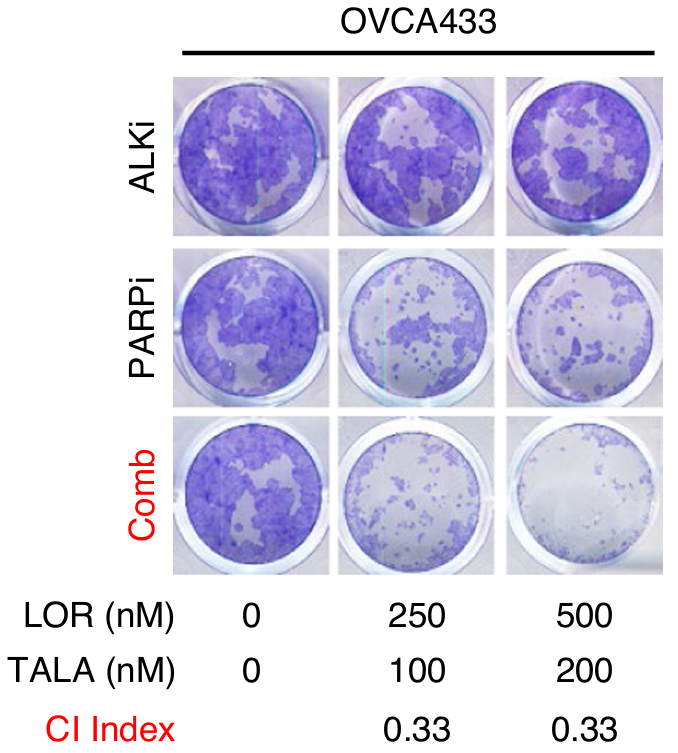
Representative images of clonogenic assay results in PARP inhibitor (PARPi)-resistant OVCA433 cell in the presence of the indicated inhibitor for 12 d. ALKi, ALK inhibitor; LOR, Lorlatinib (250-500 nM); TALA, Talazoparib (100-200 nM); Comb, combination of Lorlatinib and Talazoparib.
Talazoparib purchased from MedChemExpress. Usage Cited in: Nat Cancer. 2022 Oct;3(10):1211-1227. [Abstract]
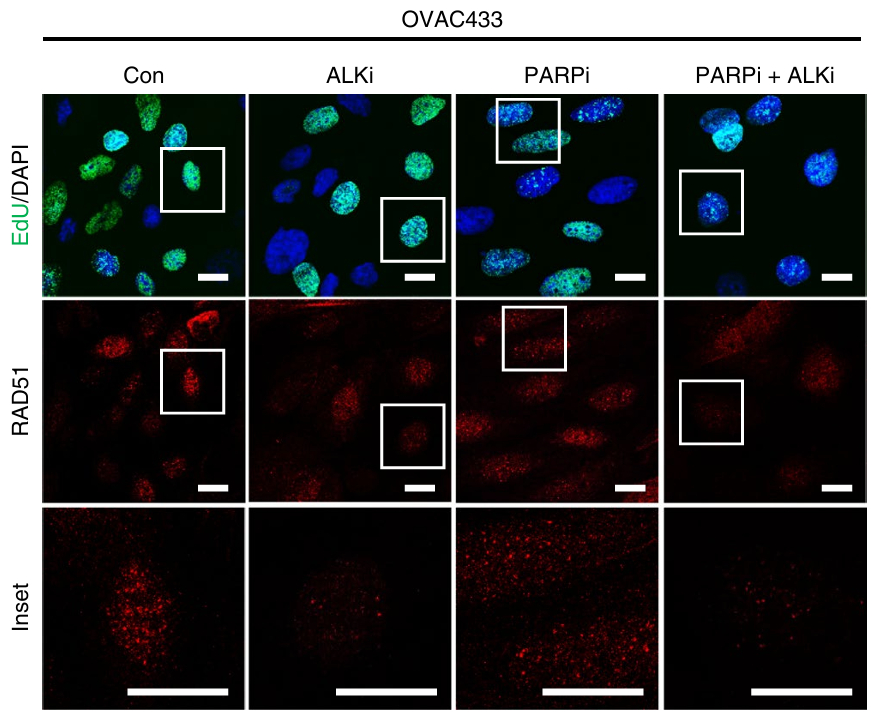
Representative images of RAD51 with EdU/DAPI staining in OVCA433 cell treated with 0.25 μM PARP inhibitor (PARPi; Talazoparib) or 0.5 μM ALK inhibitor (ALKi; Lorlatinib), either alone or in combination, for 48 h.
-
Nat Genet
Multiparametric and accurate functional analysis of genetic sequence variants using CRISPR-Select. [Abstract]2022 Dec;54(12):1983-1993. PMID: 36471068 -
Cancer Res
Detection of Single-Stranded DNA Gaps Reveals a Functional Biomarker of Therapeutic Response. [Abstract]2026 Sep 8. PMID: 42708806 -
-
Cancer Res
SMARCA4 loss increases RNA Polymerase II pausing and elevates R-loops to inhibit BRCA1-mediated repair in ovarian cancer. [Abstract]2025 May 14. PMID: 40366633 -
Cancer Res
SETD2 Deficiency Confers Sensitivity to Dual Inhibition of DNA Methylation and PARP in Kidney Cancer. [Abstract]2023 Nov 15;83(22):3813-3826. PMID: 37695044 -
Cancer Res
Loss of SDHB Promotes Dysregulated Iron Homeostasis, Oxidative Stress, and Sensitivity to Ascorbate. [Abstract]2021 Jul 1;81(13):3480-3494. PMID: 34127497 -
Drug Resist Updat
ZBP1 antagonizes MRE11-mediated DNA end resection and confers synthetic lethality to PARP inhibition in ovarian cancer. [Abstract]2026 Jan:84:101319. PMID: 41192279 -
Nat Commun
Human iPSC-based Modeling of Pulmonary Fibrosis Reveals p300/CBP Inhibition Suppresses Alveolar Transitional Cell State. [Abstract]2026 Feb 12;17(1):1214. PMID: 41680175 -
Nat Commun
HR eye & MMR eye: one-day assessment of DNA repair-defective tumors eligible for targeted therapy. [Abstract]2025 May 12;16(1):4239. PMID: 40355434 -
Nat Commun
Inhibition of host PARP1 contributes to the anti-inflammatory and antitubercular activity of pyrazinamide. [Abstract]2023 Dec 9;14(1):8161. PMID: 38071218 -
Nat Commun
Exploiting interconnected synthetic lethal interactions between PARP inhibition and cancer cell reversible senescence. [Abstract]2019 Jun 11;10(1):2556. PMID: 31186408 -
ACS Nano
2025 May 13;19(18):17929-17940. PMID: 40304271 -
Mol Cell
2017 May 18;66(4):503-516.e5. PMID: 28525742 -
Theranostics
Molecular signatures of BRCAness analysis identifies PARP inhibitor Niraparib as a novel targeted therapeutic strategy for soft tissue Sarcomas. [Abstract]2020 Jul 25;10(21):9477-9494. PMID: 32863940 -
J Clin Invest
Precision screening facilitates clinical classification of BRCA2-PALB2 binding variants with benign and pathogenic functional effects. [Abstract]2025 Apr 15;135(12):e181879. PMID: 40232841 -
J Clin Invest
Eliminating hypoxic tumor cells improves response to PARP inhibitors in homologous recombination-deficient cancer models. [Abstract]2021 Jun 1;131(11):e146256. PMID: 34060485 -
-
Adv Sci (Weinh)
2024 Sep;11(34):e2400140. PMID: 38973255 -
Adv Sci (Weinh)
In Situ Formation of Fibronectin-Enriched Protein Corona on Epigenetic Nanocarrier for Enhanced Synthetic Lethal Therapy. [Abstract]2024 May;11(19):e2307940. PMID: 38482976 -
Sci Adv
Patient-derived organoids across cancers reveal conserved tumor heterogeneity and actionable therapeutic vulnerabilities. [Abstract]2026 Jun 26;12(26):eadz3351. PMID: 42361179 -
Sci Adv
53BP1 orchestrates sequence feature of RAG targets to balance DNA repair outcomes during V(D)J recombination. [Abstract]2026 May 22;12(21):eaec2231. PMID: 42172328 -
Sci Adv
Acute BRCAness induction and AR pathway blockage through CDK12/7/9 degradation enhances PARP inhibitor sensitivity in prostate cancer. [Abstract]Sci Adv. 2025 Apr 25;11(17):eadu0847. PMID: 40267193 -
Sci Adv
RB1 loss overrides PARP inhibitor sensitivity driven by RNASEH2B loss in prostate cancer. [Abstract]2022 Feb 18;8(7):eabl9794. PMID: 35179959 -
-
Cancer Lett
2026 Apr 1:642:218300. PMID: 41651400 -
Cancer Lett
Pentagalloylglucose disrupts the PALB2-BRCA2 interaction and potentiates tumor sensitivity to PARP inhibitor and radiotherapy. [Abstract]2022 Oct 10:546:215851. PMID: 35926819 -
Cancer Lett
XPO1 inhibition synergizes with PARP1 inhibition in small cell lung cancer by targeting nuclear transport of FOXO3a. [Abstract]2021 Apr 10:503:197-212. PMID: 33493586 -
Cancer Lett
Fucoidan-coated nanoparticles target radiation-induced P-selectin to enhance chemoradiotherapy in murine colorectal cancer. [Abstract]2021 Mar 1:500:208-219. PMID: 33232787 -
EBioMedicine
Molecular correlates of sensitivity to PARP inhibition beyond homologous recombination deficiency in pre-clinical models of colorectal cancer point to wild-type TP53 activity. [Abstract]2020 Sep:59:102923. PMID: 32799124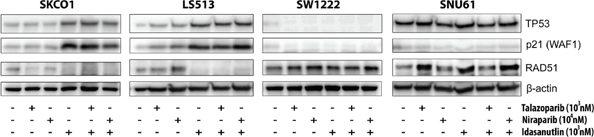
Talazoparib purchased from MedChemExpress. Usage Cited in: EBioMedicine. 2020 Sep:59:102923. [Abstract]
Western Blot analyses of TP53, p21 and RAD51 in PARP inhibitor sensitive (SKCO1 and LS513) and resistant cell lines (SW1222 and SNU61) after treatment with Talazoparib for 48 h. Talazoparib decreases RAD51 protein expression in the two TP53 wild-type cell lines SKCO1 and LS513.
-
EBioMedicine
High PARP-1 expression predicts poor survival in acute myeloid leukemia and PARP-1 inhibitor and SAHA-bendamustine hybrid inhibitor combination treatment synergistically enhances anti-tumor effects. [Abstract]2018 Dec:38:47-56. PMID: 30472087 -
Clin Cancer Res
The pharmacological profile of ART6043, a first-in-class clinical DNA polymerase theta polymerase domain inhibitor potentiating PARP inhibitor efficacy. [Abstract]2026 Jul 13. PMID: 42440368 -
Clin Cancer Res
Drug-Driven Synthetic Lethality: Bypassing Tumor Cell Genetics with a Combination of AsiDNA and PARP Inhibitors. [Abstract]2017 Feb 15;23(4):1001-1011. PMID: 27559053 -
-
NPJ Precis Oncol
Integrative profiling strategies to guide personalized therapy in mantle cell lymphoma: a pilot study. [Abstract]2025 Nov 21;9(1):373. PMID: 41272086 -
NPJ Precis Oncol
Targeting USP8 causes synthetic lethality through degradation of FGFR2 in ARID1A-deficient ovarian clear cell carcinoma. [Abstract]2025 Mar 12;9(1):69. PMID: 40074856 -
Proc Natl Acad Sci U S A
2025 Jun 17;122(24):e2426660122. PMID: 40489618 -
Oncogene
2021 Oct;40(43):6143-6152. PMID: 34508175 -
Oncogene
PARP inhibitors enhance replication stress and cause mitotic catastrophe in MYCN-dependent neuroblastoma. [Abstract]2017 Aug 17;36(33):4682-4691. PMID: 28394338 -
Br J Cancer
PARP inhibition leads to synthetic lethality with key splicing-factor mutations in myelodysplastic syndromes. [Abstract]2024 Jul;131(2):231-242. PMID: 38806724 -
ACS Appl Mater Interfaces
Micellar Formulation of Talazoparib and Buparlisib for Enhanced DNA Damage in Breast Cancer Chemoradiotherapy. [Abstract]2019 Apr 3;11(13):12342-12356. PMID: 30860347 -
Cell Rep
2024 Jul 18;43(8):114522. PMID: 39028621 -
Cell Rep
Differential DNA damage repair and PARP inhibitor vulnerability of the mammary epithelial lineages. [Abstract]2023 Oct 16;42(10):113256. PMID: 37847590 -
J Med Chem
YCH1899, a Highly Effective Phthalazin-1(2 H)-one Derivative That Overcomes Resistance to Prior PARP Inhibitors. [Abstract]2023 Sep 14;66(17):12284-12303. PMID: 37605459 -
Cancer Cell Int
WEE1 and PARP-1 play critical roles in myelodysplastic syndrome and acute myeloid leukemia treatment. [Abstract]2023 Jun 27;23(1):128. PMID: 37370065 -
-
Mol Cancer Ther
Harnessing senolytics and PARP inhibition to expand the antitumor activity of CDK4/6 inhibitors in prostate cancer. [Abstract]2025 Jul 2. PMID: 40601842 -
-
-
Biochem Pharmacol
Discovery of Bi-magnolignan as a novel BRD4 inhibitor inducing apoptosis and DNA damage for cancer therapy. [Abstract]2025 May:235:116843. PMID: 40024351 -
Cell Biosci
Co-Packaged PARP inhibitor and photosensitizer for targeted photo-chemotherapy of 3D ovarian cancer spheroids. [Abstract]2024 Feb 6;14(1):20. PMID: 38321470 -
Bioeng Transl Med
Layer-by-layer nanoparticles for novel delivery of cisplatin and PARP inhibitors for platinum-based drug resistance therapy in ovarian cancer. [Abstract]2019 Jun 14;4(2):e10131. PMID: 31249881 -
-
Drug Des Devel Ther
Metabolic Stability Assessment of New PARP Inhibitor Talazoparib Using Validated LC-MS/MS Methodology: In silico Metabolic Vulnerability and Toxicity Studies. [Abstract]2020 Feb 25:14:783-793. PMID: 32158196 -
Oncogenesis
STAG2 expression imparts distinct therapeutic vulnerabilities in muscle-invasive bladder cancer cells. [Abstract]2025 Mar 1;14(1):4. PMID: 40025053 -
Radiother Oncol
X-ray on chip: Quantifying therapeutic synergies between radiotherapy and anticancer drugs using soft tissue sarcoma tumor spheroids. [Abstract]2021 Apr:157:175-181. PMID: 33516789 -
-
Biomolecules
Co-Inhibition of PARP and STAT3 as a Promising Approach for Triple-Negative Breast Cancer. [Abstract]2025 Jul 17;15(7):1035. PMID: 40723906 -
Int J Mol Sci
Talazoparib Does Not Interact with ABCB1 Transporter or Cytochrome P450s, but Modulates Multidrug Resistance Mediated by ABCC1 and ABCG2: An in Vitro and Ex Vivo Study. [Abstract]2022 Nov 18;23(22):14338. PMID: 36430819 -
Int J Mol Sci
2020 Feb 11;21(4):1185. PMID: 32053991 -
Bioinformatics
Automatic DNA replication tract measurement to assess replication and repair dynamics at the single molecule level. [Abstract]2022 Sep 15;38(18):4395-4402. PMID: 35881697 -
-
Int J Cancer
PARP1 expression predicts PARP inhibitor sensitivity and correlates with metastatic potential and overall survival in melanoma. [Abstract]2024 Jul 15;155(2):203-210. PMID: 38619111 -
Sci Rep
Inhibition of nicotinamide dinucleotide salvage pathway counters acquired and intrinsic poly(ADP-ribose) polymerase inhibitor resistance in high-grade serous ovarian cancer. [Abstract]2023 Feb 27;13(1):3334. PMID: 36849518 -
Neoplasia
AsiDNA Treatment Induces Cumulative Antitumor Efficacy with a Low Probability of Acquired Resistance. [Abstract]2019 Sep;21(9):863-871. PMID: 31362243 -
Oncol Rep
PI3K p110α inhibition sensitizes cervical cancer cells with aberrant PI3K signaling activation to PARP inhibitor BMN673. [Abstract]2019 Nov;42(5):2097-2107. PMID: 31545455 -
-
BMC Cancer
PARP inhibitors chemopotentiate and synergize with cisplatin to inhibit bladder cancer cell survival and tumor growth. [Abstract]2022 Mar 23;22(1):312. PMID: 35321693 -
Invest New Drugs
Discovery of MTR-106 as a highly potent G-quadruplex stabilizer for treating BRCA-deficient cancers. [Abstract]2021 Oct;39(5):1213-1221. PMID: 33710464 -
Front Oncol
The Emerging Role of Poly (ADP-Ribose) Polymerase Inhibitors as Effective Therapeutic Agents in Renal Cell Carcinoma. [Abstract]2021 Jul 9:11:681441. PMID: 34307148 -
DNA Repair
Loss of the p12 subunit of DNA polymerase delta leads to a defect in HR and sensitization to PARP inhibitors. [Abstract]2019 Jan:73:64-70. PMID: 30470508 -
Am J Cancer Res
Novel dual action PARP and microtubule polymerization inhibitor AMXI-5001 powerfully inhibits growth of esophageal carcinoma both alone and in combination with radiotherapy. [Abstract]2024 Jan 15;14(1):378-389. PMID: 38323288 -
Genes (Basel)
Histone Deacetylases (HDAC) Inhibitor-Valproic Acid Sensitizes Human Melanoma Cells to Dacarbazine and PARP Inhibitor. [Abstract]2023 Jun 20;14(6):1295. PMID: 37372475 -
Am J Cancer Res
AMXI-5001, a novel dual parp1/2 and microtubule polymerization inhibitor for the treatment of human cancers. [Abstract]2020 Aug 1;10(8):2649-2676. PMID: 32905466 -
Biomed Res Int
ATR Inhibitor Synergizes PARP Inhibitor Cytotoxicity in Homologous Recombination Repair Deficiency TK6 Cell Lines. [Abstract]2023 Feb 6:2023:7891753. PMID: 36794257 -
-
PLoS One
Activated NAD+ biosynthesis pathway induces olaparib resistance in BRCA1 knockout pancreatic cancer cells. [Abstract]2024 Apr 16;19(4):e0302130. PMID: 38625917 -
FEBS Open Bio
Anticancer sensitivities and biological characteristics of HCT116 cells resistant to the selective poly(ADP-ribose) glycohydrolase inhibitor. [Abstract]2025 Dec 5. PMID: 41347713 -
Biochem Biophys Res Commun
Loss of DNA replication fork protection by TIMELESS degradation supports oncogene-induced senescence. [Abstract]2025 Aug 30:776:152203. PMID: 40517672 -
Oncol Lett
DNA damage response mutations enhance the antitumor efficacy of ATR and PARP inhibitors in cholangiocarcinoma cell lines. [Abstract]2025 Jan 7;29(3):128. PMID: 39822940 -
Integr Biol (Camb)
Long-term fluorescence hyperspectral imaging of on-chip treated co-culture tumour spheroids to follow clonal evolution. [Abstract]2019 Apr 1;11(4):130-141. PMID: 31172192 -
Data Brief
Preclinical data on co-delivery of temozolomide and talazoparib by fucodain-coated nanoscale metal organic frameworks for colorectal cancer chemoradiation. [Abstract]2021 Sep 22:38:107394. PMID: 34632011 -
-
Biomed Pharmacother
2026 Sep 3:203:119891. PMID: 42691574 -
-
-
-
bioRxiv
Radiation synergizes with BET inhibition to stimulate durable, systemic anti-tumor immunity in murine cancer models. [Abstract]2026 Feb 18:2026.02.16.706212. PMID: 41757027 -
-
bioRxiv
Distinct p21 dynamics drive alternative routes to whole-genome duplication through a common CDK4/6-dependent polyploid G0 state. [Abstract]2026 Jan 15:2026.01.15.699545. PMID: 41648389 -
-
-
bioRxiv
Design and Development of DNA Damage Chemical Inducers of Proximity (DD-CIP) for Targeted Cancer Therapy. [Abstract]2025 Nov 4:2025.11.03.686423. PMID: 41278667 -
bioRxiv
2025 Sep 30:2025.09.30.679484. PMID: 41256515 -
-
-
bioRxiv
Coordinated protein modules define DNA damage responses to carboplatin at single cell resolution in human ovarian carcinoma models. [Abstract]2024 Nov 26:2024.11.21.624591. PMID: 39605494 -
bioRxiv
Acute BRCAness Induction and AR Signaling Blockage through CDK12/7/9 Degradation Enhances PARP Inhibitor Sensitivity in Prostate Cancer. [Abstract]2024 Jul 10:2024.07.09.602803. PMID: 39026842 -
-
J Pers Med
Class I HDAC Inhibition Leads to a Downregulation of FANCD2 and RAD51, and the Eradication of Glioblastoma Cells. [Abstract]2023 Aug 27;13(9):1315. PMID: 37763083 -
-
bioRxiv
Patient-derived tumor organoids with p53 mutations, and not wild-type p53, are sensitive to synergistic combination PARP inhibitor treatment. [Abstract]2023 Jun 22:2023.06.22.544406. PMID: 38076873 -
-
-
Oxid Med Cell Longev
Intrinsic ROS Drive Hair Follicle Cycle Progression by Modulating DNA Damage and Repair and Subsequently Hair Follicle Apoptosis and Macrophage Polarization. [Abstract]2022 Jul 14:2022:8279269. PMID: 35903712 -
-
-
-
-
-
-
-
-
-
Methods Mol Biol
2018:1711:351-398. PMID: 29344898


Solvent & Solubility
In Vitro:
DMSO : 25 mg/mL (65.73 mM; Need ultrasonic; Hygroscopic DMSO has a significant impact on the solubility of product, please use newly opened DMSO)
Please refer to the solubility information to select the appropriate solvent. Once prepared, please aliquot and store the solution to prevent product inactivation from repeated freeze-thaw cycles.
Storage method and period of stock solution: -80°C, 1 year; -20°C, 6 months. When stored at -80°C, please use it within 1 year. When stored at -20°C, please use it within 6 months.
Please refer to the solubility information to select the appropriate solvent. Once prepared, please aliquot and store the solution to prevent product inactivation from repeated freeze-thaw cycles.
Storage method and period of stock solution: -80°C, 1 year; -20°C, 6 months. When stored at -80°C, please use it within 1 year. When stored at -20°C, please use it within 6 months.
Concentration (start) × Volume (start) = Concentration (final) × Volume (final)
In Vivo:
Select the appropriate dissolution method based on your experimental animal and administration route.
- For the following dissolution methods, please ensure to first prepare a clear stock solution using an In Vitro approach and then sequentially add co-solvents:
- To ensure reliable experimental results, the clarified stock solution can be appropriately stored based on storage conditions. As for the working solution for In Vivo experiments, it is recommended to prepare freshly and use it on the same day.
- The percentages shown for the solvents indicate their volumetric ratio in the final prepared solution. If precipitation or phase separation occurs during preparation, heat and/or sonication can be used to aid dissolution.
Add each solvent one by one: 10% DMSO 40% PEG300 5% Tween-80 45% Saline
Solubility: ≥ 2.5 mg/mL (6.57 mM); Clear solution
This protocol yields a clear solution of ≥ 2.5 mg/mL (saturation unknown).
Taking 1 mL working solution as an example, add 100 μL DMSO stock solution (25.0 mg/mL) to 400 μL PEG300, and mix evenly; then add 50 μL Tween-80 and mix evenly; then add 450 μL Saline to adjust the volume to 1 mL.
Preparation of Saline: Dissolve 0.9 g sodium chloride in ddH₂O and dilute to 100 mL to obtain a clear Saline solution.
Add each solvent one by one: 1% DMSO 99% Saline
Solubility: ≥ 0.25 mg/mL (0.66 mM); Clear solution
For the following dissolution methods, please prepare the working solution directly:
It is recommended to prepare fresh solutions and use them promptly within a short period of time.
The percentages shown for the solvents indicate their volumetric ratio in the final prepared solution. If precipitation or phase separation occurs during preparation, heat and/or sonication can be used to aid dissolution.
Add each solvent one by one: 10% DMAc 6% Solutol HS-15 84% PBS
Solubility: 5 mg/mL (13.15 mM); Suspended solution; Need ultrasonic
In Vivo Dissolution Calculator
Please enter the basic information of animal experiments:
-
-
-
-
Recommended: Prepare an additional quantity of animals to account for potential losses during experiments.
Please enter your animal formula composition:
-
%DMSO +
Recommended: Keep the proportion of DMSO in working solution below 2% if your animal is weak.
-
%+
-
+%Tween-80 + +
-
%Saline +
The co-solvents required include: DMSO, . All of co-solvents are available by MedChemExpress (MCE). , Tween 80. All of co-solvents are available by MedChemExpress (MCE).
Working solution concentration: 0.22 mg/mL
Method for preparing stock solution: mg drug dissolved in μL DMSO. Stock solution concentration: mg/mL.
1. Take μL DMSO stock solution;
2. Add μL .
μL , mix evenly;
3. Then add μL Tween 80, mix evenly;
4. Then add μL
Please ensure that the stock solution in the first step is dissolved to a clear state, and add co-solvents in sequence. You can use ultrasonic heating (ultrasonic cleaner, recommended frequency 20-40 kHz), vortexing, etc. to assist dissolution.


Purity & Documentation
-
Data Sheet (282 KB)
-
SDS (393 KB)
- English - EN (393 KB)
- Français - FR (393 KB)
- Deutsch - DE (393 KB)
- Norwegian - NO (393 KB)
- Español - ES (393 KB)
- Swedish - SV (393 KB)
- Italian - IT (393 KB)
- Korean - KR (393 KB)
- Portuguese - PT (393 KB)
-
Handling Instructions (2659 KB)
References
[1]. Wang B, et al. Discovery and Characterization of (8S,9R)-5-Fluoro-8-(4-fluorophenyl)-9-(1-methyl-1H-1,2,4-triazol-5-yl)-2,7,8,9-tetrahydro-3H-pyrido[4,3,2-de]phthalazin-3-one (BMN 673, Talazoparib), a Novel, Highly Potent, and Orally Efficacious Poly(ADP-ribose) Polymerase-1/2 Inhibitor, as an Anticancer Agent. J Med Chem. 2016 Jan 14;59(1):335-57. [Content Brief]
[2]. Shen Y, et al. BMN 673, a novel and highly potent PARP1/2 inhibitor for the treatment of human cancers with DNA repair deficiency.Clin Cancer Res. 2013 Sep 15;19(18):5003-15. [Content Brief]


Complete Stock Solution Preparation Table
Please refer to the solubility information to select the appropriate solvent. Once prepared, please aliquot and store the solution to prevent product inactivation from repeated freeze-thaw cycles.
Storage method and period of stock solution: -80°C, 1 year; -20°C, 6 months. When stored at -80°C, please use it within 1 year. When stored at -20°C, please use it within 6 months.
| Optional Solvent | Concentration Solvent Mass | 1 mg | 5 mg | 10 mg | 25 mg |
|---|---|---|---|---|---|
| DMSO | 1 mM | 2.6292 mL | 13.1458 mL | 26.2916 mL | 65.7289 mL |
| 5 mM | 0.5258 mL | 2.6292 mL | 5.2583 mL | 13.1458 mL | |
| 10 mM | 0.2629 mL | 1.3146 mL | 2.6292 mL | 6.5729 mL | |
| 15 mM | 0.1753 mL | 0.8764 mL | 1.7528 mL | 4.3819 mL | |
| 20 mM | 0.1315 mL | 0.6573 mL | 1.3146 mL | 3.2864 mL | |
| 25 mM | 0.1052 mL | 0.5258 mL | 1.0517 mL | 2.6292 mL | |
| 30 mM | 0.0876 mL | 0.4382 mL | 0.8764 mL | 2.1910 mL | |
| 40 mM | 0.0657 mL | 0.3286 mL | 0.6573 mL | 1.6432 mL | |
| 50 mM | 0.0526 mL | 0.2629 mL | 0.5258 mL | 1.3146 mL | |
| 60 mM | 0.0438 mL | 0.2191 mL | 0.4382 mL | 1.0955 mL |


Talazoparib Related Classifications
HY-16106 Related Classifications
 Powered by Bioz