



AP-18
Based on 3 publication(s) in Google Scholar
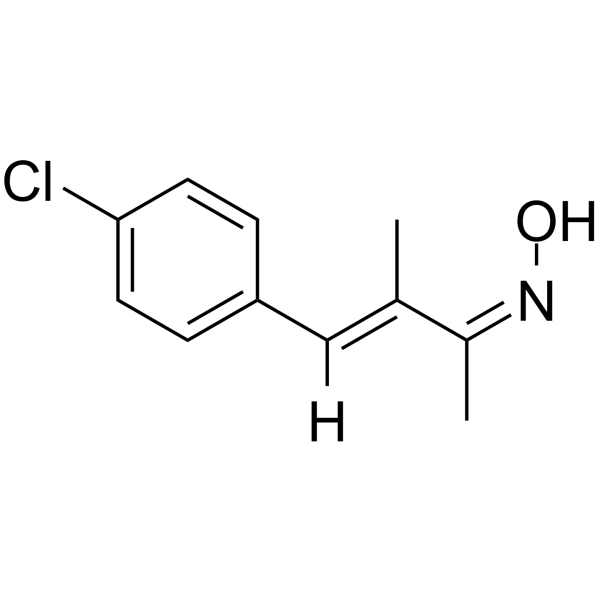
AP-18, a potent and selective TRPA1 inhibitor, blocks activation of TRPA1 by 50 μM Cinnamaldehyde with an IC50 of 3.1 μM and 4.5 μM for human and mouse TRPA1, respectively. AP-18 reverses complete Freund's adjuvant (CFA)-induced mechanical hyperalgesia in mice. AP-18 attenuated 30 μM AITC-induced Yo-Pro uptake in a concentration-dependent manner, with an IC50 of 10.3 μM.
Nur für Forschungszwecke. Wir verkaufen nicht an Patienten.
- Reinheit : 99.61%
- CAS. Nr.: 55224-94-7
- Formel: C11H12ClNO
- Molecular Weight:209.67
-
Speicherung:
4°C, sealed storage, away from moisture and light
* In solvent : -80°C, 6 months; -20°C, 1 month (sealed storage, away from moisture and light)

To place orders, for customer services and technical support, please contact: MedChemExpress USA
Tel: 609-228-6898 E-mail: [email protected] [email protected]


-
 Biologische Aktivität
-
Chemical Information
-
Lösungsmittel & Löslichkeit
- Reinheit & Dokumentation
- Verweise
-
 Help & FAQs


-
HY-18662
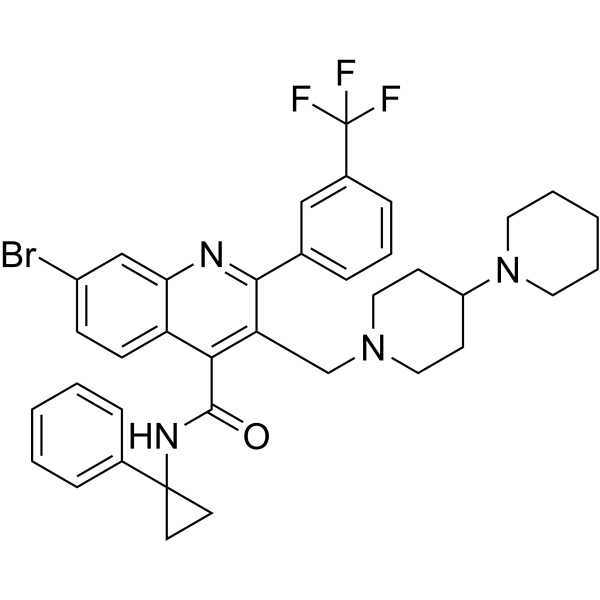
RQ-00203078TRPM8 Antagonist -
HY-15064
HC-030031TRP Channel Inhibitor -
HY-11062
IcilinTRPM8 Agonist -
HY-100720
GSK2193874TRPV4 Antagonist -
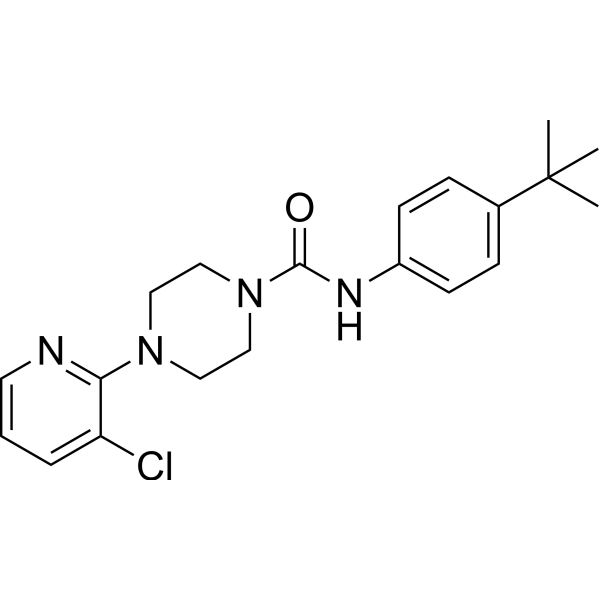
HY-19960
BCTCTRPV1/TRPM8 Antagonist -
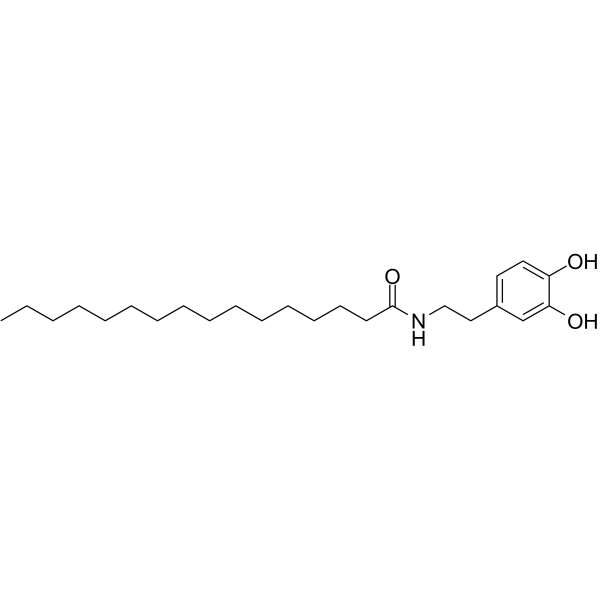
HY-108455
N-Palmitoyl dopamineFatty Acid Dopamide -
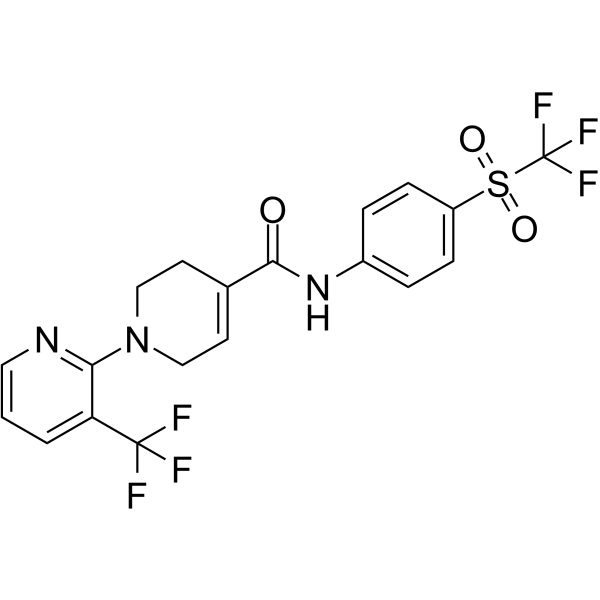
HY-108460
A-784168TRPV1 Inhibitor -
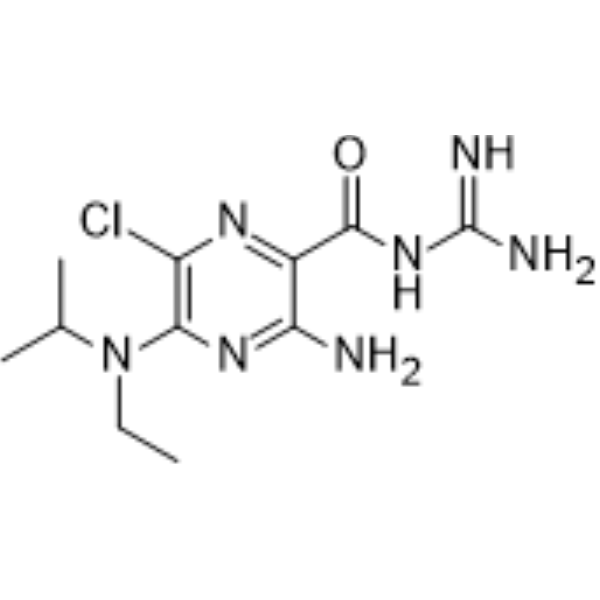
HY-101840
EIPATRPP3 Channel Inhibitor -

HY-15064R
HC-030031 (Standard)TRP Channel Inhibitor -
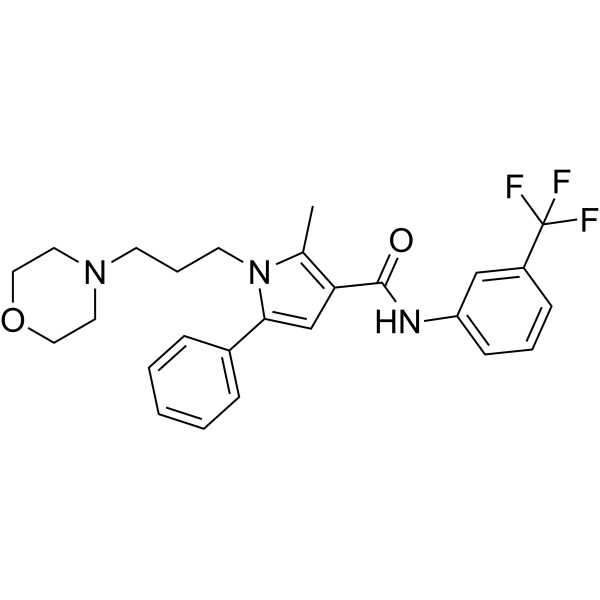
HY-100208
HC-067047TRPV4 Antagonist -
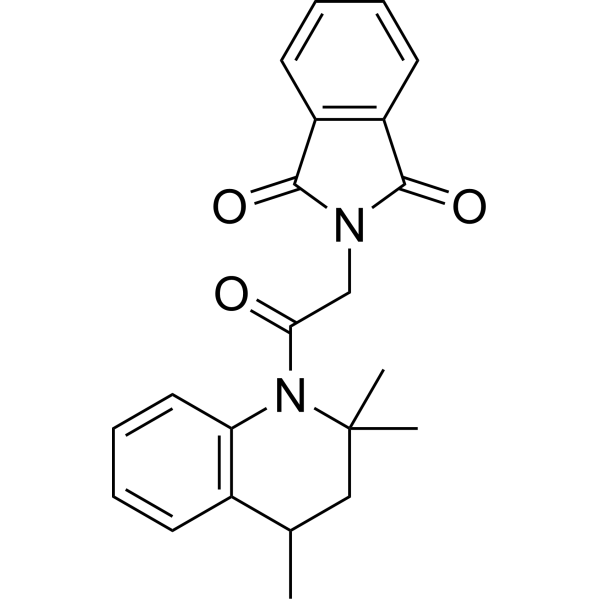
HY-108462
ML-SA1TRPML Agonist -
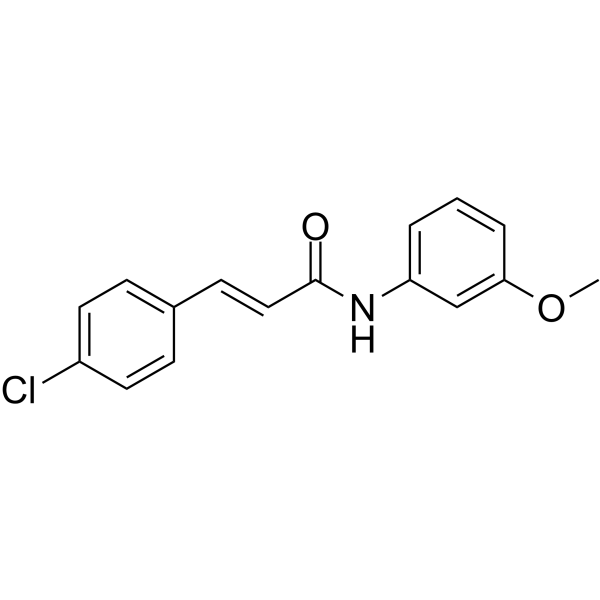
HY-12245
SB-366791VR1/TRPV1 Antagonist
Publications Citing Use of MedChemExpress (MCE) AP-18
More

Biologische Aktivität
Beschreibung
IC50 & Target
[3]|
TRPA1 ~3 μM (IC50) |
Cellular Effect
|
Cell Line

|
Type | Value | Description | References |
|---|---|---|---|---|
| CHO | IC50 |
3.1 μM
Compound: AP18
|
Antagonist activity at human TRPA1 expressed in CHO cells assessed as inhibition of CA-induced increase in calcium influx by Fluo-4 dye based FLIPR analysis in presence of 50 uM CA
Antagonist activity at human TRPA1 expressed in CHO cells assessed as inhibition of CA-induced increase in calcium influx by Fluo-4 dye based FLIPR analysis in presence of 50 uM CA
|
[PMID: 30878828] |
| CHO | IC50 |
3.1 μM
Compound: 114
|
Antagonist activity at human TRPA1 channel expressed in CHO cells assessed as inhibition of cinnamaldehyde-induced intracellular calcium influx
Antagonist activity at human TRPA1 channel expressed in CHO cells assessed as inhibition of cinnamaldehyde-induced intracellular calcium influx
|
[PMID: 20356305] |
| CHO | IC50 |
4.5 μM
Compound: 114
|
Antagonist activity at mouse TRPA1 channel expressed in CHO cells assessed as inhibition of cinnamaldehyde-induced intracellular calcium influx
Antagonist activity at mouse TRPA1 channel expressed in CHO cells assessed as inhibition of cinnamaldehyde-induced intracellular calcium influx
|
[PMID: 20356305] |
| HEK293 | IC50 |
2.8 μM
Compound: 5, AP18 5
|
Antagonist activity at human TRPA1 expressed in HEK293 cells assessed as [45]Ca2+ influx by microbeta plate count
Antagonist activity at human TRPA1 expressed in HEK293 cells assessed as [45]Ca2+ influx by microbeta plate count
|
[PMID: 19945872] |
| HEK293 | IC50 |
4 μM
Compound: AP18
|
Antagonist activity at human TRPA1 expressed in HEK293 cells assessed as inhibition of CA-induced increase in calcium influx incubated for 10 mins prior to CA addition by Fluo-4-AM dye based fluorescence assayy
Antagonist activity at human TRPA1 expressed in HEK293 cells assessed as inhibition of CA-induced increase in calcium influx incubated for 10 mins prior to CA addition by Fluo-4-AM dye based fluorescence assayy
|
[PMID: 30878828] |
| IMR-90 | IC50 |
2.2 μM
Compound: AP18
|
Antagonist activity at human TRPA1 expressed in human IMR90 cells assessed as inhibition of acrolein-induced calcium influx after 40 mins by fluorescence analysis
Antagonist activity at human TRPA1 expressed in human IMR90 cells assessed as inhibition of acrolein-induced calcium influx after 40 mins by fluorescence analysis
|
[PMID: 22325155] |
In Vitro
At concentrations up to 50 μM, AP-18 is unable to appreciably block activation of TRPV1, TRPV2, TRPV3, TRPV4, or TRPM8. AP-18 reversibly blocks mouse TRPA1 responses to iodoacetamide (an irreversible cysteine-alkylating agent) in CHO cells assayed by ratiometric Ca2+ imaging. AP-18 also blocks cold- and mustard-oil-induced activation of mouse TRPA1. AP-18 blocks cinnamaldehyde-induced TRPA1 currents in excised patches from Xenopus oocytes[1].
MedChemExpress (MCE) has not independently confirmed the accuracy of these methods. They are for reference only.
In Vivo
MedChemExpress (MCE) has not independently confirmed the accuracy of these methods. They are for reference only.


Chemical Information
-
CAS. Nr. 55224-94-7
-
Appearance Solid
-
Molecular Weight 209.67
-
Formel C11H12ClNO
-
Color White to off-white
-
SMILES
ClC1=CC=C(/C=C(C)/C(C)=N/O)C=C1
-
Versand
Room temperature in continental US; may vary elsewhere.
-
Speicherung
4°C, sealed storage, away from moisture and light
* In solvent : -80°C, 6 months; -20°C, 1 month (sealed storage, away from moisture and light)


Publications (3)
-
Journal Impact Factor
-
Most Recent
-
J Adv Res
TRPA1-kinase axis polarization: Nepetalactone drives pest repulsion and predator attraction via divergent PKC/CaMKII signaling. [Abstract]2025 Jul 17:S2090-1232(25)00555-7. PMID: 40683383 -
Smart Med
Magnetic Reprogramming of Macrophages Stimulates Phagocytosis of Breast Cancer Cells via a TRPC1-STING Inflammatory Axis. [Abstract]2026 Jun 4;5(3):e70038. PMID: 42549352 -
Pediatr Blood Cancer
2025 Sep;72(9):e31875. PMID: 40556352


Lösungsmittel & Löslichkeit
In Vitro:
DMSO : ≥ 100 mg/mL (476.94 mM; Hygroscopic DMSO has a significant impact on the solubility of product, please use newly opened DMSO)
* "≥" means soluble, but saturation unknown.
Please refer to the solubility information to select the appropriate solvent. Once prepared, please aliquot and store the solution to prevent product inactivation from repeated freeze-thaw cycles.
Storage method and period of stock solution: -80°C, 6 months; -20°C, 1 month (sealed storage, away from moisture and light). When stored at -80°C, please use it within 6 months. When stored at -20°C, please use it within 1 month.
Please refer to the solubility information to select the appropriate solvent. Once prepared, please aliquot and store the solution to prevent product inactivation from repeated freeze-thaw cycles.
Storage method and period of stock solution: -80°C, 6 months; -20°C, 1 month (sealed storage, away from moisture and light). When stored at -80°C, please use it within 6 months. When stored at -20°C, please use it within 1 month.
Konzentration (Stammlösung) × Volumen (Stammlösung) = Konzentration (Ziellösung) × Volumen (Ziellösung)
In Vivo:
Select the appropriate dissolution method based on your experimental animal and administration route.
- For the following dissolution methods, please ensure to first prepare a clear stock solution using an In Vitro approach and then sequentially add co-solvents:
- To ensure reliable experimental results, the clarified stock solution can be appropriately stored based on storage conditions. As for the working solution for In Vivo experiments, it is recommended to prepare freshly and use it on the same day.
- The percentages shown for the solvents indicate their volumetric ratio in the final prepared solution. If precipitation or phase separation occurs during preparation, heat and/or sonication can be used to aid dissolution.
Add each solvent one by one: 10% DMSO 40% PEG300 5% Tween-80 45% Saline
Solubility: 2.5 mg/mL (11.92 mM); Suspended solution; Need ultrasonic
This protocol yields a suspended solution of 2.5 mg/mL. Suspended solution can be used for oral and intraperitoneal injection.
Taking 1 mL working solution as an example, add 100 μL DMSO stock solution (25.0 mg/mL) to 400 μL PEG300, and mix evenly; then add 50 μL Tween-80 and mix evenly; then add 450 μL Saline to adjust the volume to 1 mL.
Preparation of Saline: Dissolve 0.9 g sodium chloride in ddH₂O and dilute to 100 mL to obtain a clear Saline solution.
In Vivo Dissolution Calculator
Please enter the basic information of animal experiments:
-
-
-
-
Recommended: Prepare an additional quantity of animals to account for potential losses during experiments.
Please enter your animal formula composition:
-
%DMSO +
Recommended: Keep the proportion of DMSO in working solution below 2% if your animal is weak.
-
%+
-
+%Tween-80 + +
-
%Saline +
The co-solvents required include: DMSO, . All of co-solvents are available by MedChemExpress (MCE). , Tween 80. All of co-solvents are available by MedChemExpress (MCE).
Working solution concentration: 0.22 mg/mL
Method for preparing stock solution: mg drug dissolved in μL DMSO. Stock solution concentration: mg/mL. * In solvent : -80°C, 6 months; -20°C, 1 month (sealed storage, away from moisture and light)
1. Take μL DMSO stock solution;
2. Add μL .
μL , mix evenly;
3. Then add μL Tween 80, mix evenly;
4. Then add μL
Please ensure that the stock solution in the first step is dissolved to a clear state, and add co-solvents in sequence. You can use ultrasonic heating (ultrasonic cleaner, recommended frequency 20-40 kHz), vortexing, etc. to assist dissolution.


Reinheit & Dokumentation
-
Data Sheet (271 KB)
-
SDS (392 KB)
- English - EN (392 KB)
- Français - FR (392 KB)
- Deutsch - DE (392 KB)
- Norwegian - NO (392 KB)
- Español - ES (392 KB)
- Swedish - SV (392 KB)
- Italian - IT (392 KB)
- Korean - KR (392 KB)
- Portuguese - PT (392 KB)
-
Handling Instructions (2659 KB)
Verweise
[1]. Petrus M, et al. A role of TRPA1 in mechanical hyperalgesia is revealed by pharmacological inhibition. Mol Pain. 2007;3:40. Published 2007 Dec 17. [Content Brief]
[2]. Chen J, et al. Pore dilation occurs in TRPA1 but not in TRPM8 channels. Mol Pain. 2009;5:3. Published 2009 Jan 21. [Content Brief]
[3]. Taylor-Clark TE, et al. Nitrooleic acid, an endogenous product of nitrative stress, activates nociceptive sensory nerves via the direct activation of TRPA1. Mol Pharmacol. 2009;75(4):820-829. [Content Brief]


Complete Stock Solution Preparation Table
Please refer to the solubility information to select the appropriate solvent. Once prepared, please aliquot and store the solution to prevent product inactivation from repeated freeze-thaw cycles.
Storage method and period of stock solution: -80°C, 6 months; -20°C, 1 month (sealed storage, away from moisture and light). When stored at -80°C, please use it within 6 months. When stored at -20°C, please use it within 1 month.
| Optional Solvent | Concentration Solvent Mass | 1 mg | 5 mg | 10 mg | 25 mg |
|---|---|---|---|---|---|
| DMSO | 1 mM | 4.7694 mL | 23.8470 mL | 47.6940 mL | 119.2350 mL |
| 5 mM | 0.9539 mL | 4.7694 mL | 9.5388 mL | 23.8470 mL | |
| 10 mM | 0.4769 mL | 2.3847 mL | 4.7694 mL | 11.9235 mL | |
| 15 mM | 0.3180 mL | 1.5898 mL | 3.1796 mL | 7.9490 mL | |
| 20 mM | 0.2385 mL | 1.1923 mL | 2.3847 mL | 5.9617 mL | |
| 25 mM | 0.1908 mL | 0.9539 mL | 1.9078 mL | 4.7694 mL | |
| 30 mM | 0.1590 mL | 0.7949 mL | 1.5898 mL | 3.9745 mL | |
| 40 mM | 0.1192 mL | 0.5962 mL | 1.1923 mL | 2.9809 mL | |
| 50 mM | 0.0954 mL | 0.4769 mL | 0.9539 mL | 2.3847 mL | |
| 60 mM | 0.0795 mL | 0.3974 mL | 0.7949 mL | 1.9872 mL | |
| 80 mM | 0.0596 mL | 0.2981 mL | 0.5962 mL | 1.4904 mL | |
| 100 mM | 0.0477 mL | 0.2385 mL | 0.4769 mL | 1.1923 mL |


AP-18 Related Classifications
HY-W014421 Related Classifications
 Powered by Bioz