



Spiperone
Based on 3 publication(s) in Google Scholar
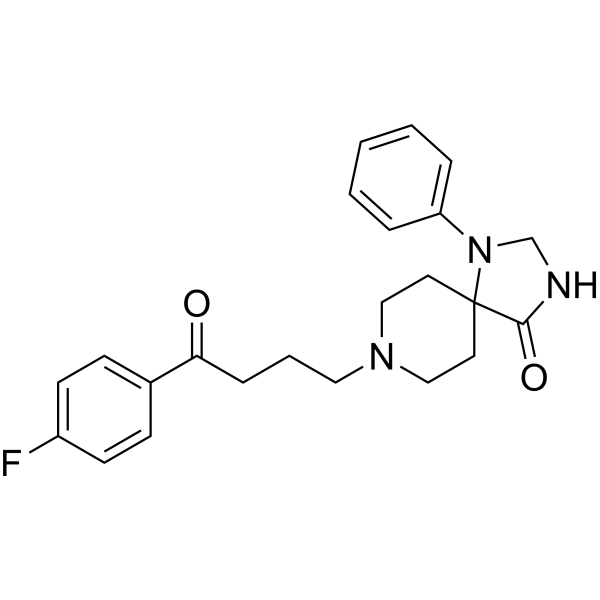
Spiperone (Spiroperidol) is a potent dopamine D2, serotonin 5-HT1A, and serotonin 5-HT2A antagonist. Spiperone is also a labelled ligand for neuroleptic receptors. Spiperone enhances intracellular calcium level and inhibits the Wnt signaling pathway. Spiperone has the potential for the research of neurology diseases.
Nos produits utilisent uniquement pour la recherche. Nous ne vendons pas aux patients.
- Pureté : 99.58%
- CAS No.: 749-02-0
- Formule: C23H26FN3O2
- Masse moléculaire:395.47
-
Stockage:Powder -20°C, 3 years , 4°C, 2 years ; In solvent -80°C, 6 months , -20°C, 1 month

To place orders, for customer services and technical support, please contact: MedChemExpress USA
Tel: 609-228-6898 E-mail: [email protected] [email protected]


-
 Activité biologique
-
Chemical Information
-
Solvant et solubilité
- Protocole
- Pureté et documentation
- Références
-
 Help & FAQs


-
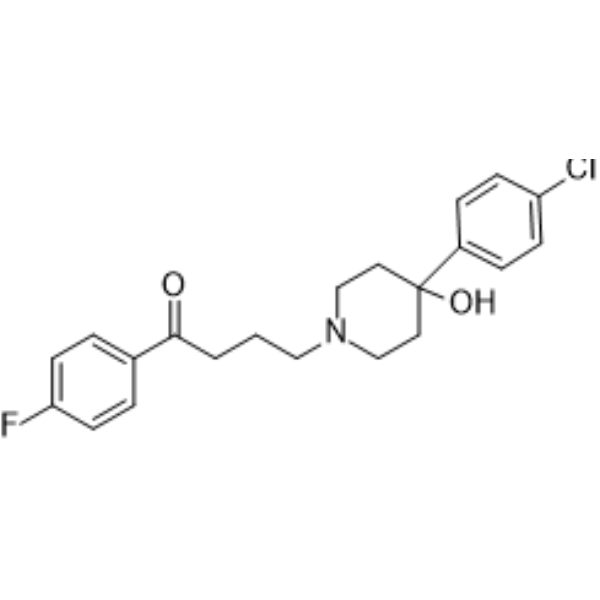
HY-14538
HaloperidolDopamine Receptor Antagonist -
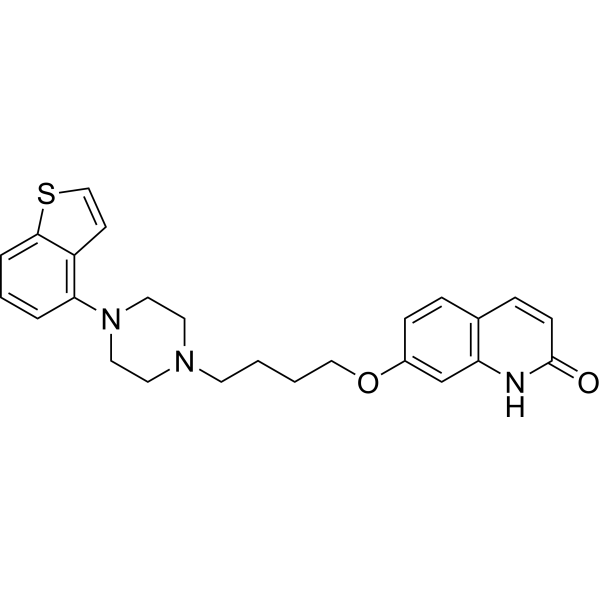
HY-15780
BrexpiprazoleAntipsychotic Agent -
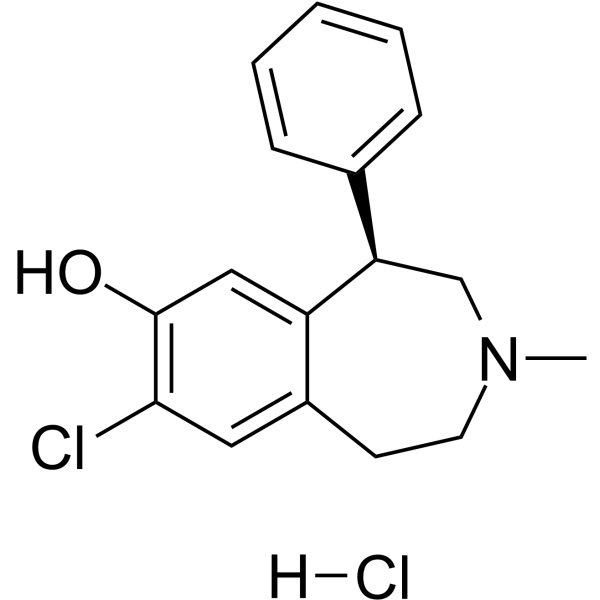
HY-19545A
SCH-23390 hydrochlorideDopamine D1 Receptor Antagonist -
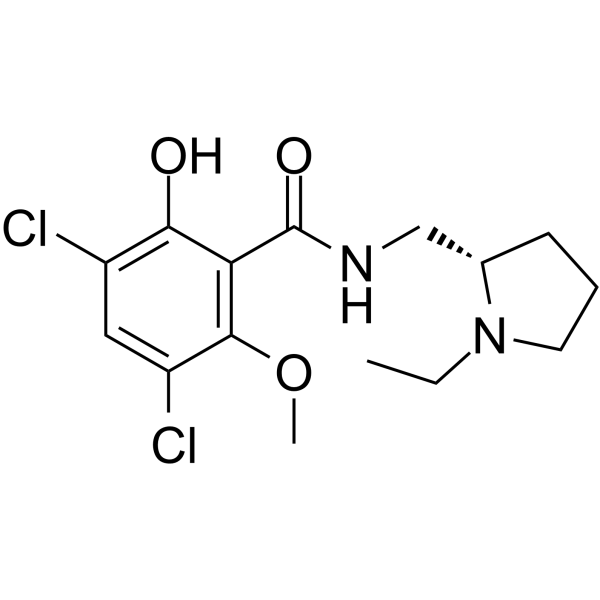
HY-103414
RacloprideDopamine D2/D3 Receptor Antagonist -
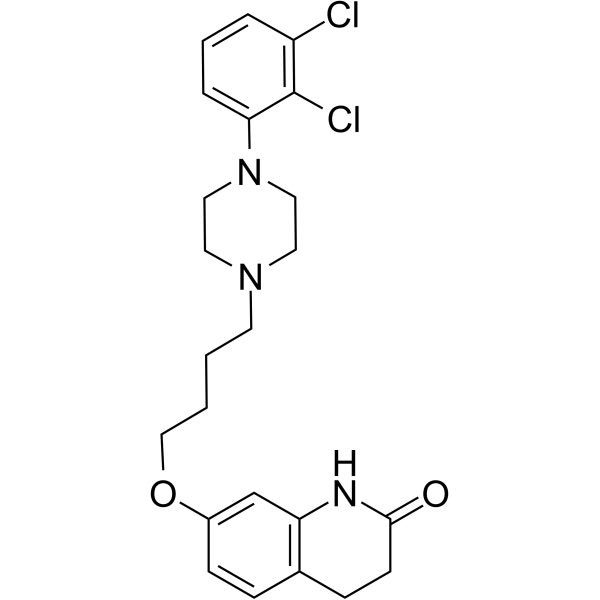
HY-14546
AripiprazoleD2/5-HT1A Agonist -
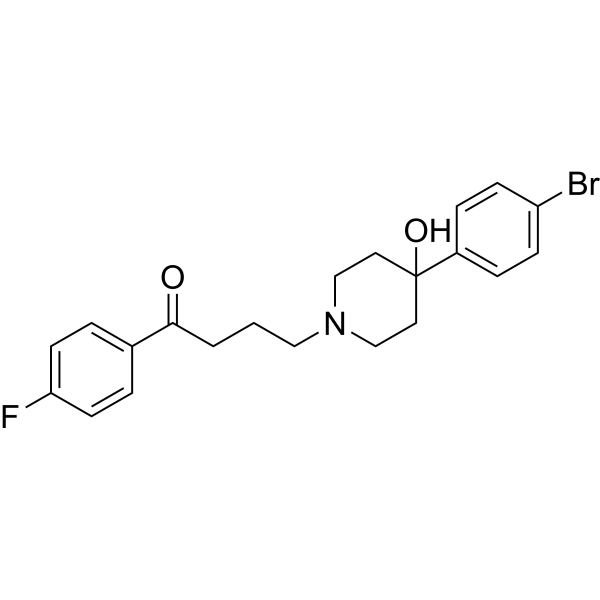
HY-B0901
BromperidolAntipsychotic Agent -
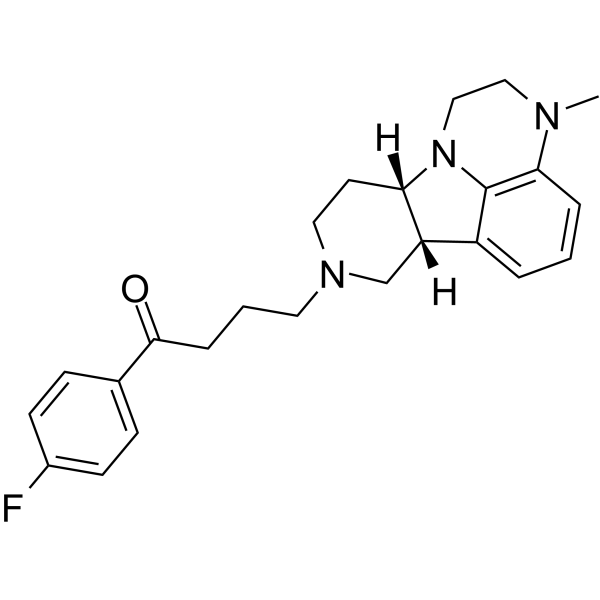
HY-17637
Lumateperone5-HT2A Receptor Antagonist -
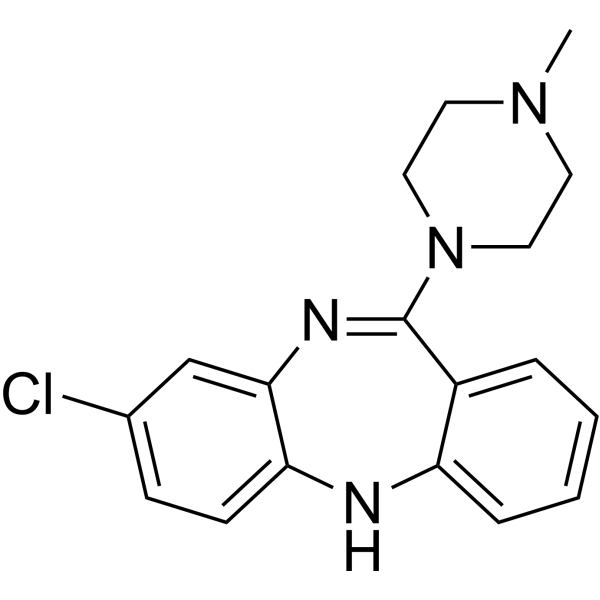
HY-14539
ClozapineAntipsychotic Agent -
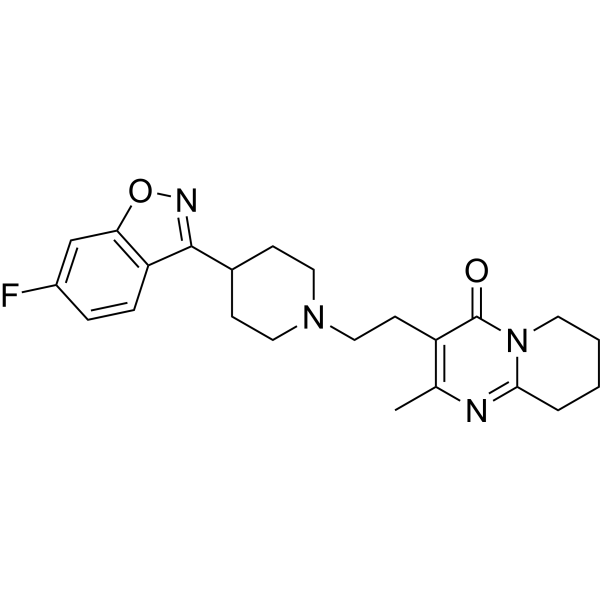
HY-11018
Risperidone5-HT2 Receptor Blocker -
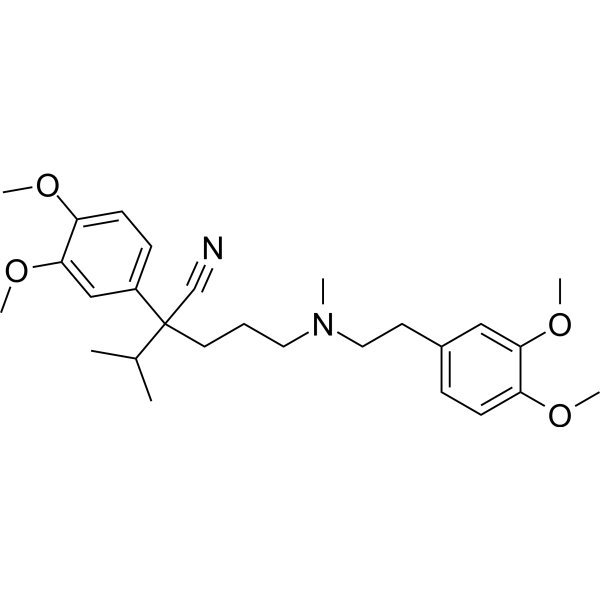
HY-14275
VerapamilCalcium Channel Blocker -
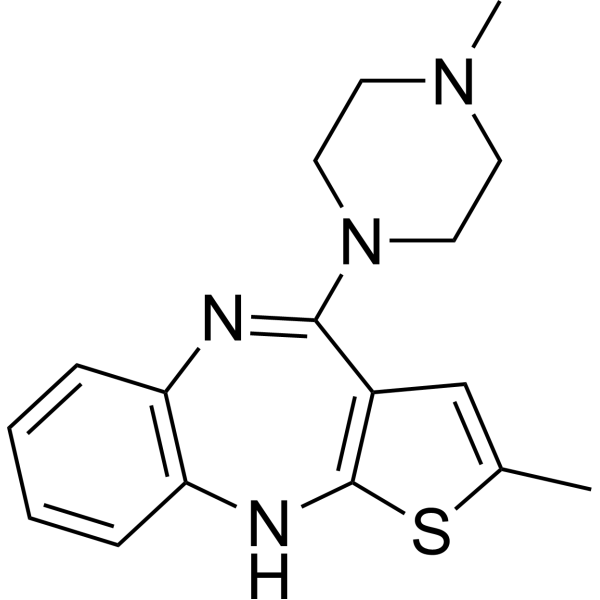
HY-14541
Olanzapine5-HT2/D1/D2 Antagonist -
HY-15763
ErastinFerroptosis Inducer
Publications Citing Use of MedChemExpress (MCE) Spiperone
MoreVoir tous les produits spécifiques à Isoform Dopamine Receptor
MoreVoir tous les produits spécifiques à Isoform 5-HT Receptor
More

Activité biologique
Description
IC50 & Target
|
5-HT1A Receptor |
5-HT2A Receptor |
Cellular Effect
|
Cell Line

|
Type | Value | Description | References |
|---|---|---|---|---|
| CHO | IC50 |
0.25 nM
Compound: Spiperone
|
Displacement of [3H]Spiperone from human recombinant dopamine D2S receptor expressed in CHO cells after 2 hrs
Displacement of [3H]Spiperone from human recombinant dopamine D2S receptor expressed in CHO cells after 2 hrs
|
[PMID: 23403082] |
| CHO | IC50 |
0.36 nM
Compound: Spiperone
|
Displacement of [3H]Spiperone from human recombinant dopamine D3 receptor expressed in CHO cells after 2 hrs
Displacement of [3H]Spiperone from human recombinant dopamine D3 receptor expressed in CHO cells after 2 hrs
|
[PMID: 23403082] |
| CHO-K1 | IC50 |
0.5 nM
Compound: Spiperone
|
Displacement of [3H]Spiperone from human recombinant dopamine D4 receptor expressed in CHOK1 cells after 2 hrs
Displacement of [3H]Spiperone from human recombinant dopamine D4 receptor expressed in CHOK1 cells after 2 hrs
|
[PMID: 23403082] |
| CHO-K1 | IC50 |
97 nM
Compound: Spiperone
|
Antagonist activity at dopamine D3 receptor (unknown origin) expressed in CHOK1 cells coexpressing Galpha15 assessed as inhibition of agonist-induced response incubated for 60 mins in incubator followed by 15 mins at room temperature by FLIPR assay
Antagonist activity at dopamine D3 receptor (unknown origin) expressed in CHOK1 cells coexpressing Galpha15 assessed as inhibition of agonist-induced response incubated for 60 mins in incubator followed by 15 mins at room temperature by FLIPR assay
|
[PMID: 23675993] |
| H4 | EC50 |
>50 μM
Compound: 12f
|
Induction of autophagy in human H4 cells expressing LC3 using DAPI staining after 4 hrs by fluorescence microscopic analysis
Induction of autophagy in human H4 cells expressing LC3 using DAPI staining after 4 hrs by fluorescence microscopic analysis
|
[PMID: 21126871] |
| HEK293 | IC50 |
1.27 nM
Compound: Spiperone
|
Displacement of [3H]Spiprone from human dopamine D2 receptor expressed in HEK293 cells
Displacement of [3H]Spiprone from human dopamine D2 receptor expressed in HEK293 cells
|
[PMID: 22748706] |
In Vitro
Spiperone (5 μM, 24 h) specifically inhibits Wnt signaling by targeting the Wnt/LRP complex in HEK293 cells[4].
Spiperone (1-10 μM, 275-470 s) induces a rise in intracellular calcium levels in HEK293 cells[4].
MedChemExpress (MCE) has not independently confirmed the accuracy of these methods. They are for reference only. Further protocols information, click here.


Chemical Information
-
CAS No. 749-02-0
-
Appearance Solid
-
Masse moléculaire 395.47
-
Formule C23H26FN3O2
-
Color Off-white to light yellow
-
SMILES
O=C1NCN(C2=CC=CC=C2)C13CCN(CCCC(C4=CC=C(F)C=C4)=O)CC3
-
Synonyms
Spiroperidol
-
Livraison
Room temperature in continental US; may vary elsewhere.
-
Stockage
Powder -20°C 3 years 4°C 2 years In solvent -80°C 6 months -20°C 1 month


Publications (3)
-
Journal Impact Factor
-
Most Recent
-
Insect Biochem Mol Biol
Molecular and pharmacological characterization of the dopamine receptors in the oriental fruit fly, Bactrocera dorsalis. [Abstract]2025 May:180:104312. PMID: 40245998 -
J Ocul Pharmacol Ther
2024 Oct;40(8):536-542. PMID: 39206555 -


Solvant et solubilité
In Vitro:
DMSO : 33.33 mg/mL (84.28 mM; ultrasonic and warming and heat to 60°C; Hygroscopic DMSO has a significant impact on the solubility of product, please use newly opened DMSO)
Please refer to the solubility information to select the appropriate solvent. Once prepared, please aliquot and store the solution to prevent product inactivation from repeated freeze-thaw cycles.
Storage method and period of stock solution: -80°C, 6 months; -20°C, 1 month. When stored at -80°C, please use it within 6 months. When stored at -20°C, please use it within 1 month.
Please refer to the solubility information to select the appropriate solvent. Once prepared, please aliquot and store the solution to prevent product inactivation from repeated freeze-thaw cycles.
Storage method and period of stock solution: -80°C, 6 months; -20°C, 1 month. When stored at -80°C, please use it within 6 months. When stored at -20°C, please use it within 1 month.
Concentration (start) × Volume (start) = Concentration (final) × Volume (final)
In Vivo:
Select the appropriate dissolution method based on your experimental animal and administration route.
- For the following dissolution methods, please ensure to first prepare a clear stock solution using an In Vitro approach and then sequentially add co-solvents:
- To ensure reliable experimental results, the clarified stock solution can be appropriately stored based on storage conditions. As for the working solution for In Vivo experiments, it is recommended to prepare freshly and use it on the same day.
- The percentages shown for the solvents indicate their volumetric ratio in the final prepared solution. If precipitation or phase separation occurs during preparation, heat and/or sonication can be used to aid dissolution.
Add each solvent one by one: 10% DMSO 40% PEG300 5% Tween-80 45% Saline
Solubility: ≥ 4.55 mg/mL (11.51 mM); Clear solution
This protocol yields a clear solution of ≥ 4.55 mg/mL (saturation unknown).
Taking 1 mL working solution as an example, add 100 μL DMSO stock solution (45.5 mg/mL) to 400 μL PEG300, and mix evenly; then add 50 μL Tween-80 and mix evenly; then add 450 μL Saline to adjust the volume to 1 mL.
Preparation of Saline: Dissolve 0.9 g sodium chloride in ddH₂O and dilute to 100 mL to obtain a clear Saline solution.
In Vivo Dissolution Calculator
Please enter the basic information of animal experiments:
-
-
-
-
Recommended: Prepare an additional quantity of animals to account for potential losses during experiments.
Please enter your animal formula composition:
-
%DMSO +
Recommended: Keep the proportion of DMSO in working solution below 2% if your animal is weak.
-
%+
-
+%Tween-80 + +
-
%Saline +
The co-solvents required include: DMSO, . All of co-solvents are available by MedChemExpress (MCE). , Tween 80. All of co-solvents are available by MedChemExpress (MCE).
Working solution concentration: 0.22 mg/mL
Method for preparing stock solution: mg drug dissolved in μL DMSO. Stock solution concentration: mg/mL.
1. Take μL DMSO stock solution;
2. Add μL .
μL , mix evenly;
3. Then add μL Tween 80, mix evenly;
4. Then add μL
Please ensure that the stock solution in the first step is dissolved to a clear state, and add co-solvents in sequence. You can use ultrasonic heating (ultrasonic cleaner, recommended frequency 20-40 kHz), vortexing, etc. to assist dissolution.

Protocole
-
Calcium Spark Assay
Calcium sparks are localized, transient increases in intracellular calcium concentration ([Ca2+]i) that occur in cardiac myocytes and represent elementary events underlying excitation-contraction coupling. These events are generated by the coordinated opening of clusters of ryanodine receptors (RyRs) on the sarcoplasmic reticulum membrane, leading to a brief release of Ca2+ into the cytosol. The detection and analysis of calcium sparks provide insights into the mechanisms of calcium handling and signaling in cardiac cells. Imaging techniques using fluorescent calcium indicators such as Fluo-3 are employed to visualize these subcellular calcium transients with high spatial and temporal resolution. The protocol is based on established methodologies described in primary literature for both experimental measurement and automated analysis of calcium sparks.
-
Ca2+ Staining Technique
Ca2+ staining is an experimental technique that utilizes specific fluorescent probes (such as Fluo-4 AM, Fura-2, etc.) to qualitatively or quantitatively detect dynamic changes in intracellular Ca2+ concentrations; this is achieved by monitoring the changes in fluorescent signals generated when these probes bind to free intracellular calcium ions. The underlying principle relies primarily on the presence of chelating groups within the probe's molecular structure that possess high affinity for calcium ions.


Pureté et documentation
-
Fiche technique (274 KB)
-
SDS (557 KB)
- English - EN (557 KB)
- Français - FR (557 KB)
- Deutsch - DE (557 KB)
- Norwegian - NO (557 KB)
- Español - ES (557 KB)
- Swedish - SV (557 KB)
- Italian - IT (557 KB)
- Korean - KR (557 KB)
- Portuguese - PT (557 KB)
-
Instruction de manipulation (2659 KB)
Références
[1]. Metwally KA, et al. Spiperone: influence of spiro ring substituents on 5-HT2A serotonin receptor binding. J Med Chem. 1998;41(25):5084-5093. [Content Brief]
[2]. Palacios JM, et al. [3H]Spiperone binding sites in brain: autoradiographic localization of multiple receptors. Brain Res. 1981 Jun 1;213(2):277-89. [Content Brief]
[3]. Leysen JE, et al. Spiperone: a ligand of choice for neuroleptic receptors. 1. Kinetics and characteristics of in vitro binding. Biochem Pharmacol. 1978 Feb 1;27(3):307-16. [Content Brief]
[4]. Lu D, et al. Spiperone enhances intracellular calcium level and inhibits the Wnt signaling pathway. BMC Pharmacol. 2009 Nov 30;9:13. [Content Brief]


Complete Stock Solution Preparation Table
Please refer to the solubility information to select the appropriate solvent. Once prepared, please aliquot and store the solution to prevent product inactivation from repeated freeze-thaw cycles.
Storage method and period of stock solution: -80°C, 6 months; -20°C, 1 month. When stored at -80°C, please use it within 6 months. When stored at -20°C, please use it within 1 month.
| Optional Solvent | Concentration Solvent Mass | 1 mg | 5 mg | 10 mg | 25 mg |
|---|---|---|---|---|---|
| DMSO | 1 mM | 2.5286 mL | 12.6432 mL | 25.2864 mL | 63.2159 mL |
| 5 mM | 0.5057 mL | 2.5286 mL | 5.0573 mL | 12.6432 mL | |
| 10 mM | 0.2529 mL | 1.2643 mL | 2.5286 mL | 6.3216 mL | |
| 15 mM | 0.1686 mL | 0.8429 mL | 1.6858 mL | 4.2144 mL | |
| 20 mM | 0.1264 mL | 0.6322 mL | 1.2643 mL | 3.1608 mL | |
| 25 mM | 0.1011 mL | 0.5057 mL | 1.0115 mL | 2.5286 mL | |
| 30 mM | 0.0843 mL | 0.4214 mL | 0.8429 mL | 2.1072 mL | |
| 40 mM | 0.0632 mL | 0.3161 mL | 0.6322 mL | 1.5804 mL | |
| 50 mM | 0.0506 mL | 0.2529 mL | 0.5057 mL | 1.2643 mL | |
| 60 mM | 0.0421 mL | 0.2107 mL | 0.4214 mL | 1.0536 mL | |
| 80 mM | 0.0316 mL | 0.1580 mL | 0.3161 mL | 0.7902 mL |


Spiperone Related Classifications
HY-B1371 Related Classifications
 Powered by Bioz