



MRS2957
MRS2957 is a selective P2Y6 receptor agonist. MRS2957 activates Gq-coupled purinergic receptors, increasing phospholipase C, inositol trisphosphate, and intracellular calcium, and indirectly activates AMPK via CaMKKβ, thereby promoting P2Y6-dependent glucose uptake and GLUT4 translocation in skeletal muscle cells and adipocytes. MRS2957 can be used for research on type 2 diabetes.
Para uso exclusivo en investigación. No vendemos a pacientes.
- No. CAS: 1228271-30-4
- Fòrmula: C19H28N5O20P3
- Peso molecular:739.37
-
Almacenamiento:
Please store the product under the recommended conditions in the Certificate of Analysis.


To place orders, for customer services and technical support, please contact: MedChemExpress USA
Tel: 609-228-6898 E-mail: [email protected] [email protected]


-
 Actividad biológica
-
Chemical Information
- Protocolo
- Pureza y Documentación
- Referencias
-
 Help & FAQs


-
HY-15284A
Prasugrel hydrochlorideP2Y12 Receptor Antagonist -
HY-10064
TicagrelorP2Y12 Antagonist -
HY-108658
MRS2500 tetraammoniumP2Y1 Receptor Antagonist -
HY-108660
PSB-0739P2Y12 Receptor Antagonist -
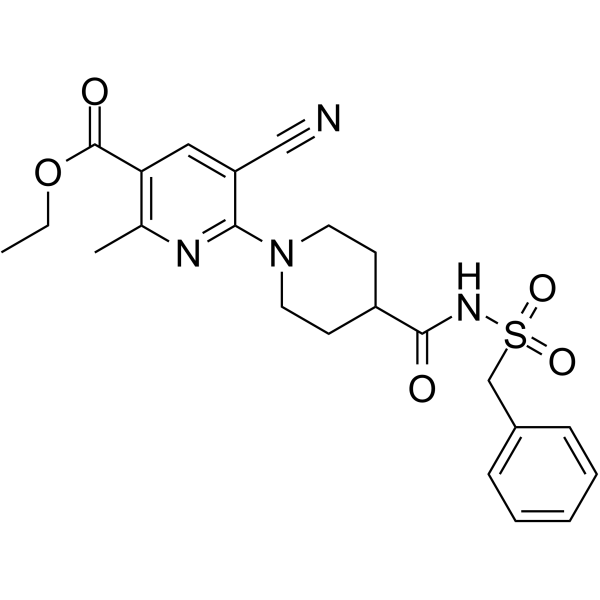
HY-15799
AZD1283P2Y12 Receptor Antagonist -
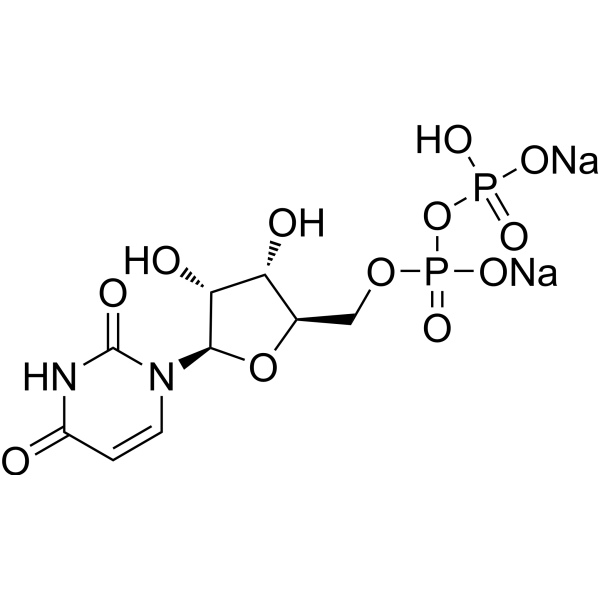
HY-W010832
Uridine-5'-diphosphate disodium saltNucleotide -
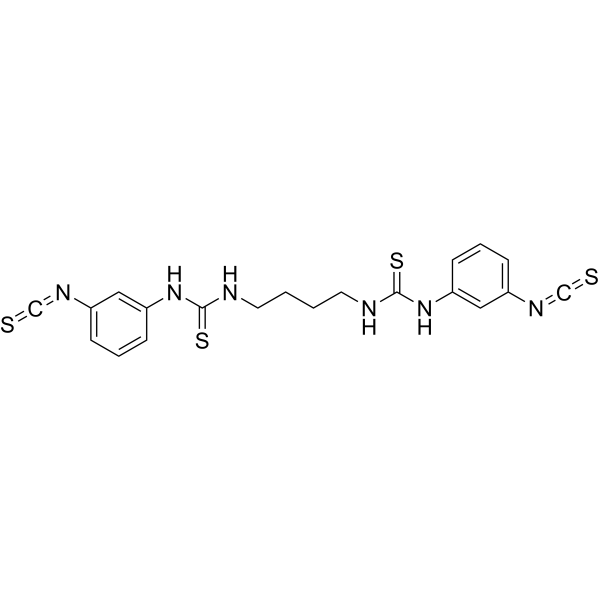
HY-13104
MRS 2578Apoptosis Inducer -
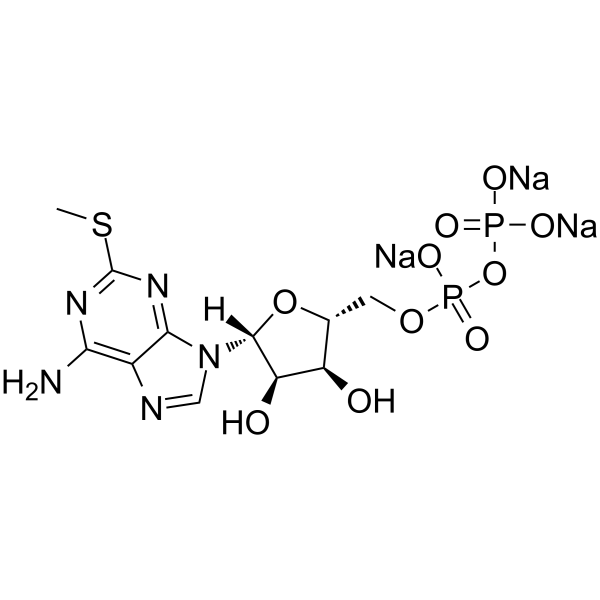
HY-108648
2-MeS-ADP trisodiumP2Y Receptor Agonist -
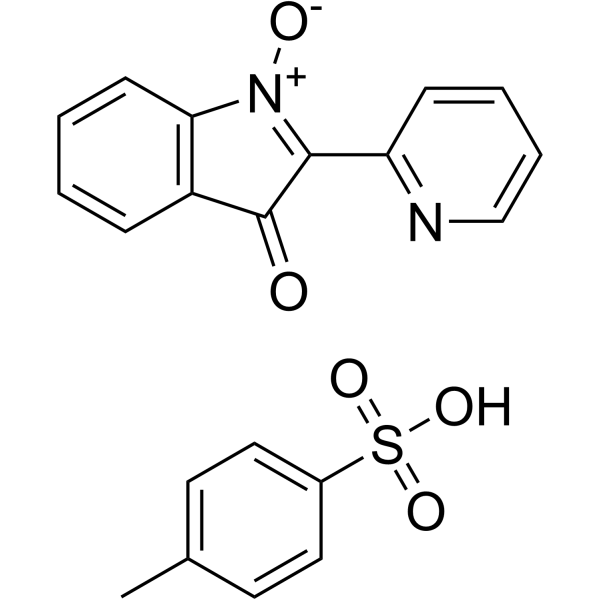
HY-108662
PITP2Y1 Receptor Antagonist -
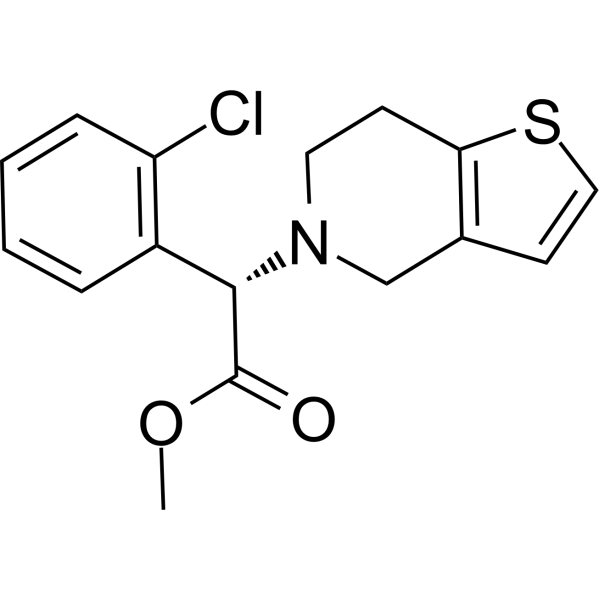
HY-15283
ClopidogrelAntiplatelet Agent -
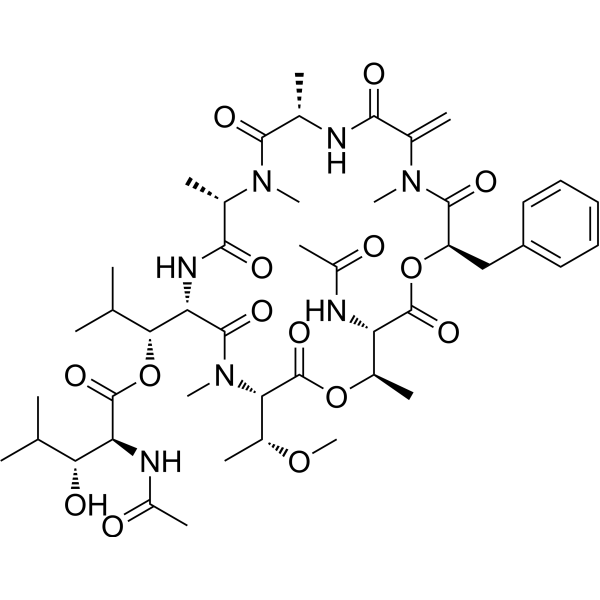
HY-111557
YM-254890Gαq/11 Selective Inhibitor -
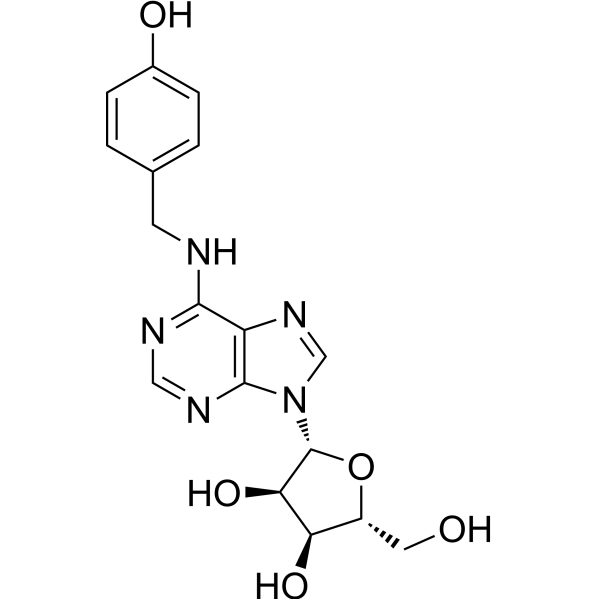
HY-18775
N6-(4-Hydroxybenzyl)adenosineENT1 Inhibitor/A2aR Agonist
Ver todos los productos específicos de isoformas P2Y Receptor
MoreVer todos los productos específicos de isoformas AMPK
MoreVer todos los productos específicos de isoformas Phospholipase
More

Actividad biológica
Descripciòn
IC50 & Target
[2]|
P2Y6 Receptor |
AMPK |
In Vitro
MRS2957 (compound 23) (2 mg/mL) has a half-life of 120 h at pH 1.2 and 23 h in the presence of 1321N1 astrocytoma membranes, while acting as a selective and potent hP2Y6 agonist[6].
MRS2957 (compound 120) (10 μM; 30 min) competes with fluorescent agonist 28 for binding to hP2Y6R in 1321N1 astrocytoma cells[7].
MRS2957 (500 nM; 1 h) increases glucose-stimulated insulin secretion in MIN6 cells under 16.7 mM D-Glucose (HY-B0389) conditions, and MRS2957 (HY-108664)-induced insulin secretion is attenuated by AMPK knockdown and P2Y6R knockdown[2].
MRS2957 (30 min) increases GLUT4 membrane recruitment, and MRS2957 increases glucose uptake and AMPK phosphorylation in C2C12 skeletal muscle cells and 3T3-L1 adipocytes; glucose uptake and AMPK phosphorylation are blocked by MRS2578, and GLUT4 recruitment is blocked by MRS2578 or Compound C[3].
MRS2957 (100 nM; 30 min) stimulates glucose uptake in differentiated C2C12 myotubes and 3T3-L1 adipocytes through P2Y6R- and AMPK-dependent signaling pathways[4].
MRS2957 (100 nM; 1 h) induces AMPK phosphorylation in C2C12 myotubes and 3T3-L1 adipocytes[4].
MRS2957 (60 min) increases GLUT4 recruitment to the plasma membrane in C2C12 myotubes and 3T3-L1 adipocytes[4].
MRS2957 (100-500 nM) stimulates glucose uptake in wild-type mouse primary adipocytes via P2Y6R[4].
MRS2957 (100-500 nM) does not stimulate glucose uptake in primary adipocytes from P2Y6R knockout mice[4].
MRS2957 enhances glucose uptake in differentiated 3T3-L1 mouse adipocytes and primary mouse adipocytes through P2Y6R-dependent AMPK phosphorylation and GLUT4 translocation[5].
MRS2957 (500 nM; 2-60 min) activates AMPK in MIN6 cells, increases pAMPK and pACC, and AMPK phosphorylation reaches a maximum at 15 min, and this response depends on P2Y6R and glucose[2].
MRS2957 (500 nM) activates the P2Y6R-dependent AMPK/ACC signaling pathway in MIN6 β-pancreatic cells, and this activation is blocked by MRS2578[3].
MRS2957 (5 μM; 24 h) promotes the proliferation of NRK-49F rat kidney fibroblasts[1].
MRS2957 (5 μM; 24 h) promotes the migration of NRK-49F rat renal fibroblasts in the scratch assay[1].
MRS2957 (10 μM; 24 h) upregulates the expression of proliferation and pro-fibrotic/myofibroblast marker genes in NRK-49F fibroblasts[1].
MRS2957 (10 μM; 72 h) increases fibronectin and vimentin levels in NRK-49F rat kidney fibroblasts[1].
MRS2957 (500 nM; 15-60 min) induces AMPK phosphorylation in MIN6 cells through intracellular Ca2+ and CaMKKβ signaling pathways, as BAPTA-AM, STO-609, CaMKKβ siRNA, and 2-APB attenuate this response, whereas PI3K, PKC, and L-type Ca2+ channel pathways are not required[2].
MedChemExpress (MCE) has not independently confirmed the accuracy of these methods. They are for reference only.
-
Cell Line:NRK-49F rat renal fibroblasts
-
Concentration:5 μM
-
Incubation Time:24 h
-
Result:Incubation of NRK-49F cells with MRS2957 for 24 h significantly increased cell proliferation compared to controls.
Blockade of the P2Y6R with MRS2578 or chelation of intracellular calcium with BAPTA-AM abolished the effect.
Individual points represented single nuclei; n=4 independent biological experiments.
-
Cell Line:NRK-49F rat renal fibroblasts
-
Concentration:5 μM
-
Incubation Time:24 h
-
Result:Promoted the migration of NRK-49F rat renal fibroblasts in the scratch assay.
-
Cell Line:NRK-49F rat renal fibroblasts
-
Concentration:10 μM
-
Incubation Time:24 h
-
Result:P2Y6R activation by MRS2957 increased expression of genes encoding the proliferation marker MKI67 and the pro-fibrotic markers PDGFRβ, αSMA, fibronectin, vimentin, and collagen 1 in NRK-49F cells.
-
Cell Line:NRK-49F rat renal fibroblasts
-
Concentration:10 μM
-
Incubation Time:72 h
-
Result:Incubation with MRS2957 for 72 h increased abundance of fibronectin and vimentin at the protein level.
Quantification from n=3 independent biological experiments with five technical replicates showed increased expression of both markers.
-
Cell Line:MIN6 mouse pancreatic β-cells
-
Concentration:500 nM
-
Incubation Time:2, 5, 15, 30, 60 min
-
Result:Induced a significant increase in AMPK-α phosphorylation.
The increase was rapid and reached maximal stimulation of approximately 2- to 3-fold at 15 min after exposure.
Also significantly increased phosphorylation of ACC, a downstream marker of AMPK activity, compared with controls.
Pre-incubation with MRS2578 significantly decreased AMPK phosphorylation compared with MIN6 cells exposed only to MRS2957, showing that MRS2957-induced AMPK phosphorylation is dependent on P2Y6R activation.
Between 5.5 mM and 16.7 mM glucose, there was a significant increase in phosphorylation of AMPK by P2Y6R.
-
Cell Line:MIN6 mouse pancreatic β-cells
-
Concentration:500 nM
-
Incubation Time:1 h (MRS2957); 1 h (3.3 mM glucose pre-incubation); 48 h (cell culture); 48 h (siRNA)
-
Result:Significantly increased glucose-stimulated insulin secretion compared with control cells exposed to glucose alone.
Pre-incubation with P2Y6R antagonist MRS2578 significantly decreased insulin secretion induced by MRS2957.
Varying concentrations of MRS2957 (100 nM-10 μM) significantly increased insulin secretion in the presence of 16.7 mM glucose; 500 nM was the lowest concentration to achieve peak effect.
A significant difference between control and MRS2957-exposed MIN6 cells was observed only at high glucose concentration (16.7 mM).
In AMPK-gene-silenced MIN6 cells, MRS2957-enhanced insulin secretion was significantly lower than in control cells.
There was a significant difference in insulin secretion subsequent to MRS2957 exposure between control and P2Y6R siRNA MIN6 cells.
In MRS2957-exposed groups, insulin secretion was similar in P2Y6R siRNA and AMPK siRNA groups.
-
Cell Line:differentiated C2C12 myotubes
-
Concentration:100 nM
-
Incubation Time:1 h
-
Result:Resulted in significant phosphorylation of AMPK in C2C12 myotubes and 3T3-L1 adipocytes.


Chemical Information
-
No. CAS 1228271-30-4
-
Peso molecular 739.37
-
Fòrmula C19H28N5O20P3
-
SMILES
O[C@@H]1[C@H](O)[C@@H](COP(OP(OP(OC[C@H]([C@@H](O)[C@H]2O)O[C@H]2N(C(N3)=O)C=CC3=O)(O)=O)(O)=O)(O)=O)O[C@H]1N(C(N/4)=O)C=CC4=N\OC
-
Envío
Room temperature in continental US; may vary elsewhere.
-
Almacenamiento
Please store the product under the recommended conditions in the Certificate of Analysis.


Pureza y Documentación
Referencias
[3]. Jacobson KA, et al. John Daly Lecture: Structure-guided drug design for adenosine and P2Y receptors.
[6]. Maruoka H, et al. Pyrimidine ribonucleotides with enhanced selectivity as P2Y(6) receptor agonists: novel 4-alkyloxyimino, (S)-methanocarba, and 5'-triphosphate gamma-ester modifications. Journal of medicinal chemistry. 2010 Jun 10;53(11):4488-501. [Content Brief]

Calculators
Concentration (start) × Volume (start) = Concentration (final) × Volume (final)


MRS2957 Related Classifications
HY-108664 Related Classifications
 Powered by Bioz