



Questin

Based on 1 Customer Validation
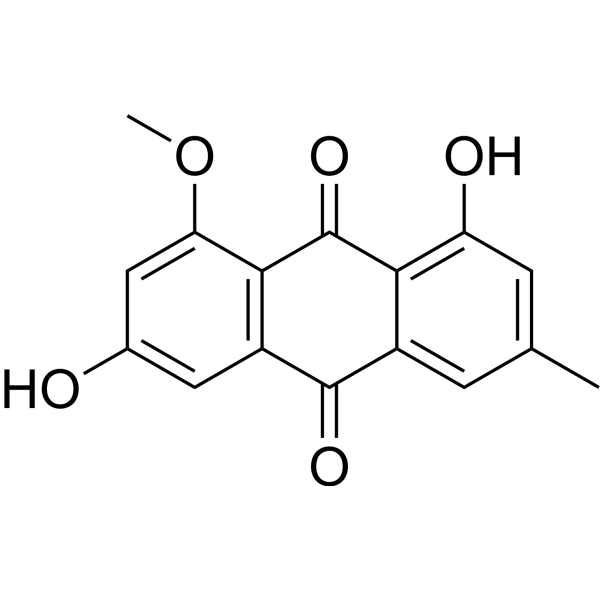
Questin is an anthraquinone compound and antibacterial agent. Questin can be isolated from marine-derived fungi and plants. Questin inhibits Cdc25B phosphatase. Questin exhibits antibacterial activity against V. harveyi, V. anguillarum, V. cholerae, and V. parahemolyticus with MIC values of 31.25 µg/mL, 62.5 µg/mL, 62.5 µg/mL, and 125 µg/mL. Questin displays antiprotozoal activity against the animal protozoan pathogen Tritrichomonas foetus, with a MIC of 12.5 µg/mL. Questin has anticancer activity against lung and colon cancer.
Para uso exclusivo en investigación. No vendemos a pacientes.
- Pureza : 97.75%
- No. CAS: 3774-64-9
- Fòrmula: C16H12O5
- Peso molecular:284.26
-
Almacenamiento:
4°C, protect from light
* In solvent : -80°C, 6 months; -20°C, 1 month (protect from light)

To place orders, for customer services and technical support, please contact: MedChemExpress USA
Tel: 609-228-6898 E-mail: [email protected] [email protected]


-
 Actividad biológica
-
Chemical Information
- Protocolo
- Pureza y Documentación
- Referencias
-
 Help & FAQs



Ver todos los productos específicos de isoformas Parasite
More

Actividad biológica
Descripciòn
In Vitro
Questin exhibits antibacterial activity against V. harveyi, V. anguillarum, V. cholerae, and V. parahemolyticus with MIC values of 31.25 µg/mL, 62.5 µg/mL, 62.5 µg/mL, and 125 µg/mL, respectively[1].
Questin (48 h) strongly inhibits the growth of human colon cancer cells (SW620), with a GI50 value of 0.9 mg/mL[2].
Questin (50-100 μM; 24 h) shows certain toxicity to the human A549 lung cell line and reduces cell viability[3].
Questin displays a moderate level of selective antiprotozoal activity against the animal protozoan pathogen Tritrichomonas foetus, with a MIC of 12.5 µg/mL[5].
MedChemExpress (MCE) has not independently confirmed the accuracy of these methods. They are for reference only.


Chemical Information
-
No. CAS 3774-64-9
-
Appearance Solid
-
Peso molecular 284.26
-
Fòrmula C16H12O5
-
Color Yellow to orange
-
SMILES
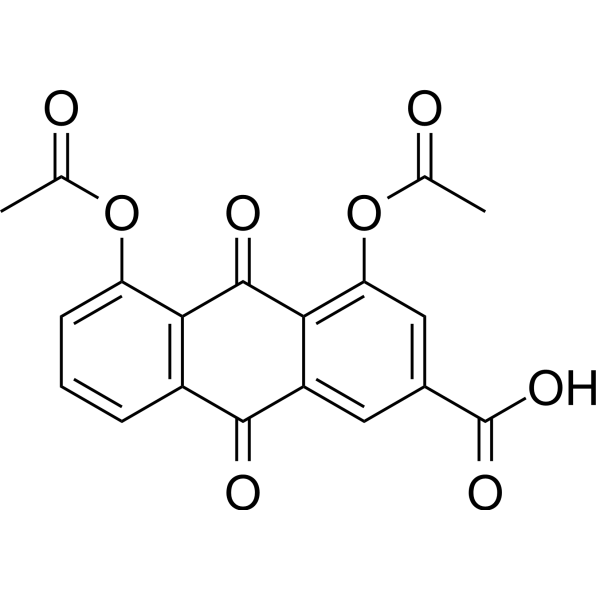
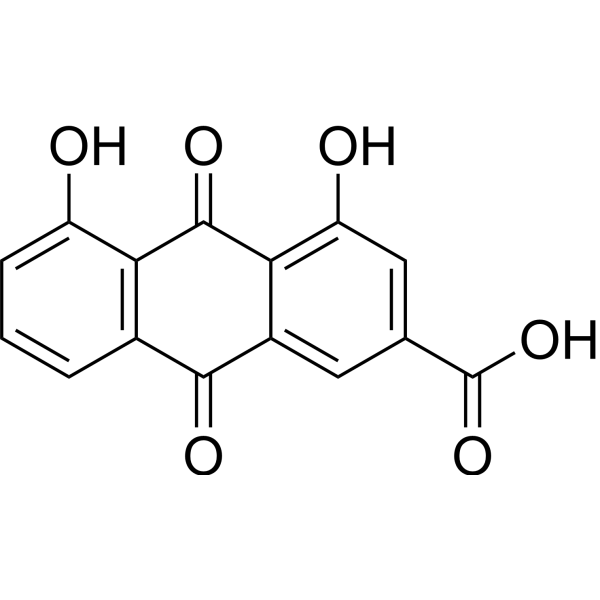
O=C1C2=C(C=C(O)C=C2OC)C(C3=CC(C)=CC(O)=C13)=O
-
Structure Classification
-
Initial Source
marine-derived Aspergillus flavipes?HN4-13
-
Envío
Room temperature in continental US; may vary elsewhere.
-
Almacenamiento
4°C, protect from light
* In solvent : -80°C, 6 months; -20°C, 1 month (protect from light)


Pureza y Documentación
-
Ficha de datos (271 KB)
-
SDS (252 KB)
- English - EN (252 KB)
- Français - FR (252 KB)
- Deutsch - DE (252 KB)
- Norwegian - NO (252 KB)
- Español - ES (252 KB)
- Swedish - SV (252 KB)
- Italian - IT (252 KB)
- Korean - KR (252 KB)
- Portuguese - PT (252 KB)
-
Instrucciones de manejo (2659 KB)
Referencias
[1]. Lei Guo, et al. Optimized production and isolation of antibacterial agent from marine Aspergillus flavipes against Vibrio harveyi. 3 Biotech. 2017 Dec;7(6):383. [Content Brief]
[2]. Choi SG, et al. Anthraquinones, Cdc25B phosphatase inhibitors, isolated from the roots of Polygonum multiflorum Thunb. Nat Prod Res. 2007 May 20;21(6):487-93. [Content Brief]
[3]. Gauthier T, et al. Trypacidin, a spore-borne toxin from Aspergillus fumigatus, is cytotoxic to lung cells. PLoS One. 2012;7(2):e29906. [Content Brief]
[4]. Liu N, et al. Structurally diverse sesquiterpenoids and polyketides from a sponge-associated fungus Aspergillus sydowii SCSIO41301. Fitoterapia. 2019 Jun;135:27-32. [Content Brief]
[5]. Chaudhary NK, et al. Banksialactones and Banksiamarins: Isochromanones and Isocoumarins from an Australian Fungus, Aspergillus banksianus. J Nat Prod. 2018 Jul 27;81(7):1517-1526. [Content Brief]

Calculators
Concentration (start) × Volume (start) = Concentration (final) × Volume (final)


Questin Related Classifications
HY-137990 Related Classifications
 Powered by Bioz