



R-IMPP

Based on 1 Customer Validation
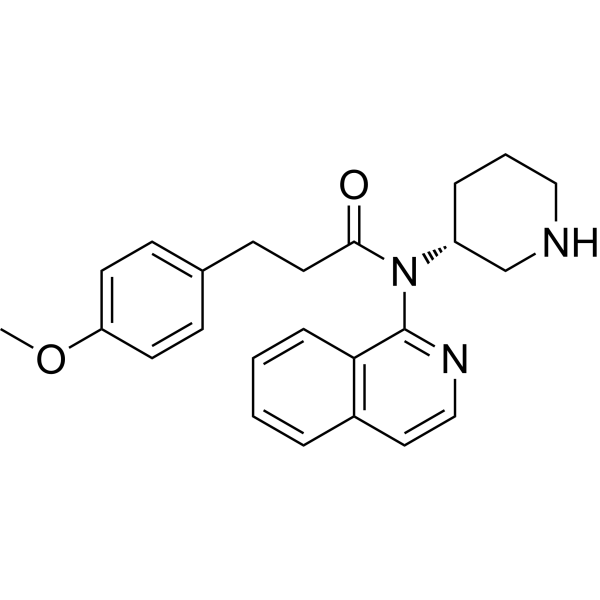
R-IMPP (PF-00932239) is a PCSK9 translation inhibitor and a selective 80S ribosome binder. R-IMPP inhibits the KRAS/MEK/ERK signaling cascade. R-IMPP reduces LPS-induced nuclear translocation of NFkB P65. R-IMPP increases LDL-R levels in cells, promotes LDL-C uptake, and does not alter the secretion of transferrin or albumin. R-IMPP inhibits the growth of colorectal cancer (CRC) cells, organoids and xenografts carrying APC/KRAS mutations, as well as the number and burden of spontaneous mouse tumors. R-IMPP can be used in research related to colorectal cancer with APC/KRAS mutations, hepatic ischemia-reperfusion injury and hypercholesterolemia.
Para uso exclusivo en investigación. No vendemos a pacientes.
- Pureza : 99.93%
- No. CAS: 2133832-83-2
- Fòrmula: C24H27N3O2
- Peso molecular:389.49
-
Almacenamiento:Powder -20°C, 3 years , 4°C, 2 years ; In solvent -80°C, 2 years , -20°C, 1 year

To place orders, for customer services and technical support, please contact: MedChemExpress USA
Tel: 609-228-6898 E-mail: [email protected] [email protected]


-
 Actividad biológica
-
Chemical Information
-
Solvente y solubilidad
- Protocolo
- Pureza y Documentación
- Referencias
-
 Help & FAQs


-
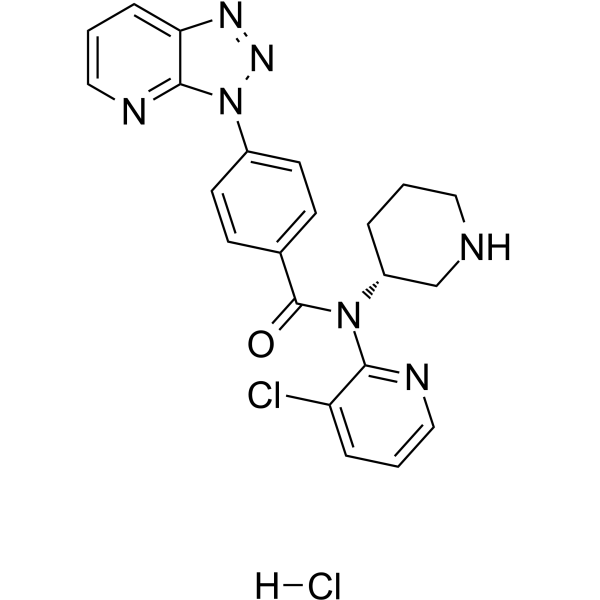
HY-120088A
PF-06446846 hydrochloridePCSK9 Inhibitor -
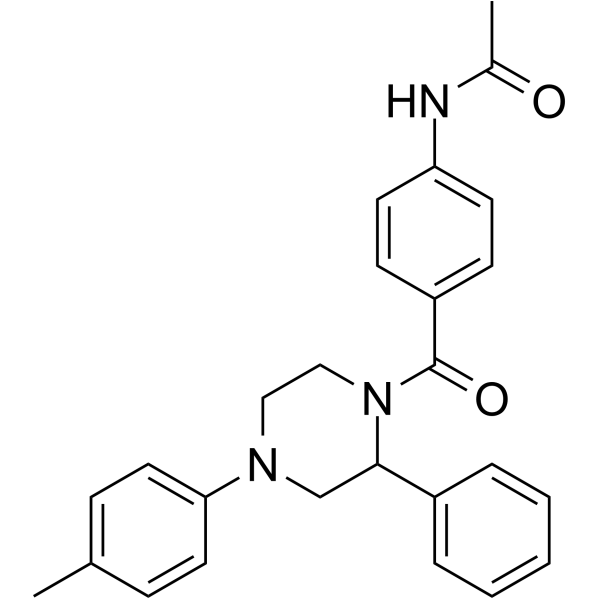
HY-101832
SBC-110736PCSK9 Inhibitor -
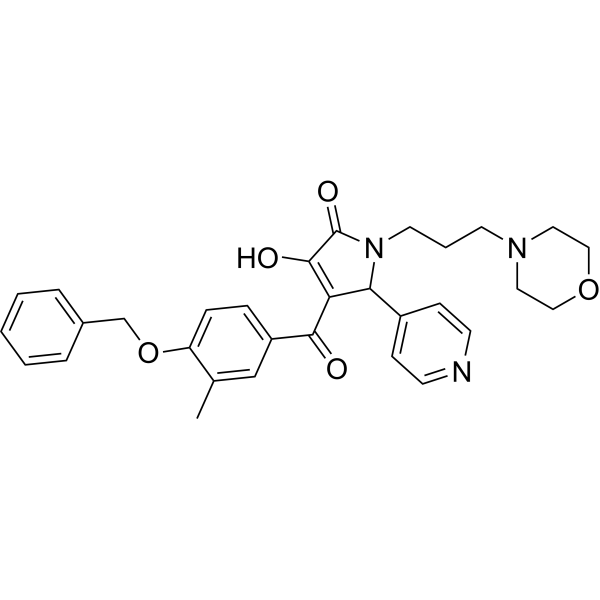
HY-12402
SBC-115076PCSK9 Inhibitor -
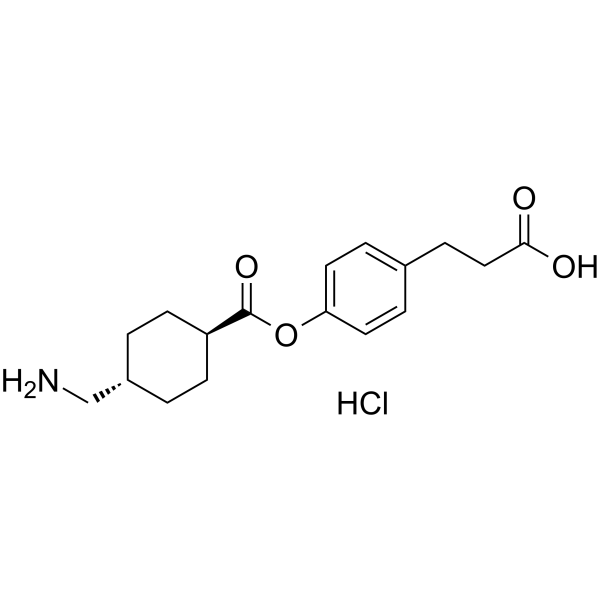
HY-122762
Cetraxate hydrochlorideAnti-Ulcer Agent -
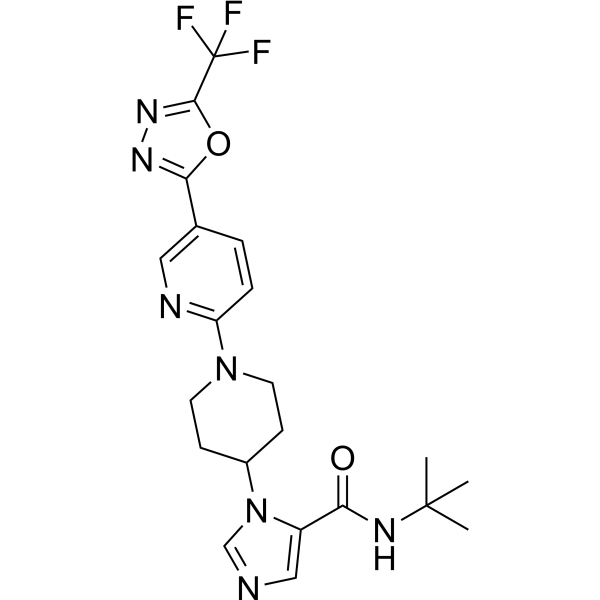
HY-100626
WNK463WNK Inhibitor -
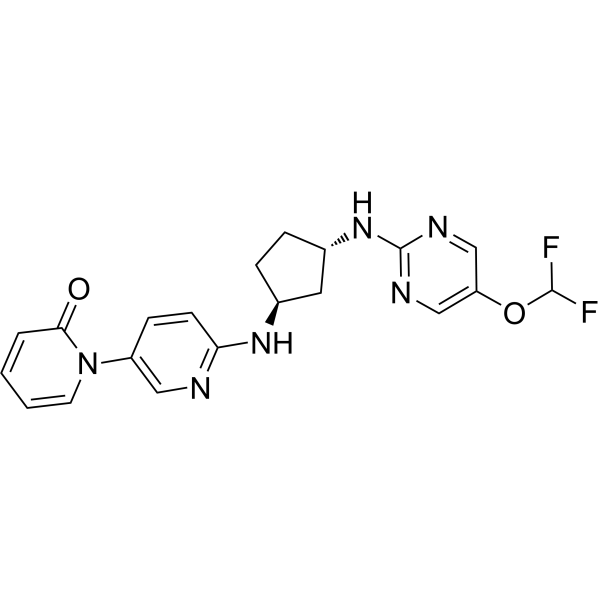
HY-148673
LaroprovstatPCSK9 Inhibitor -
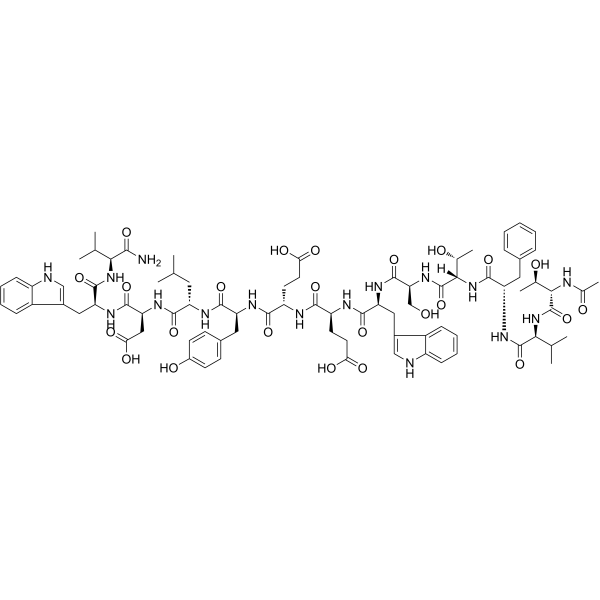
HY-P2276
Pep2-8PCSK9 Inhibitor -

HY-101832R
SBC-110736 (Standard)Reference Standard -
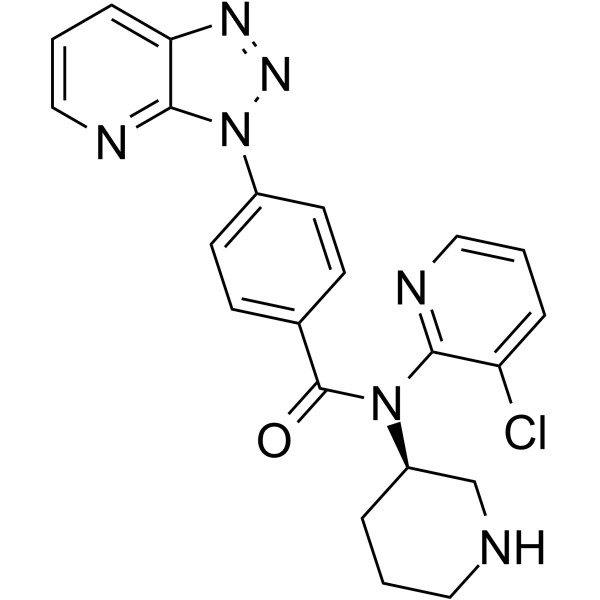
HY-120088
PF-06446846PCSK9 Inhibitor -
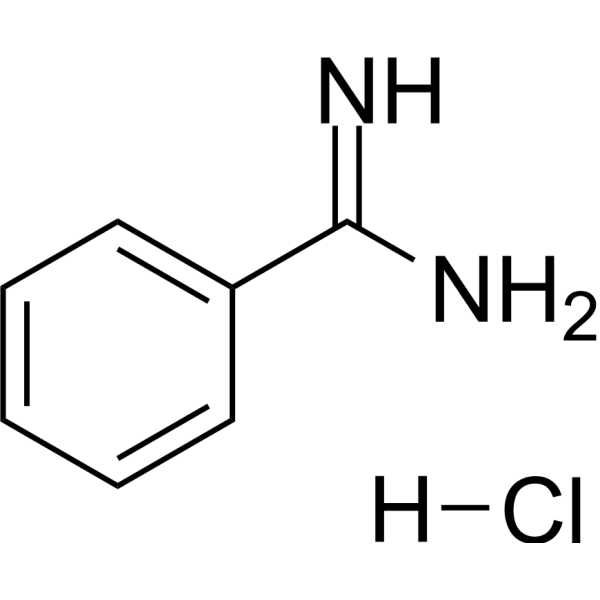
HY-W018781
Benzamidine hydrochlorideSerine Proteases Inhibitor -
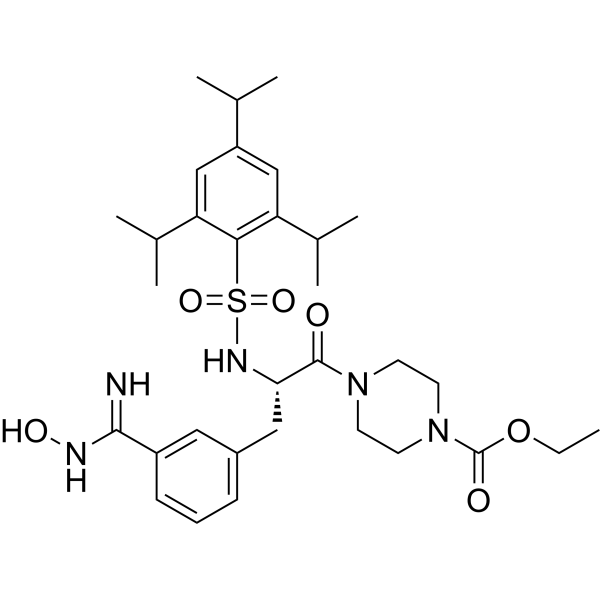
HY-16511
UpamostatSerine Protease Inhibitor -
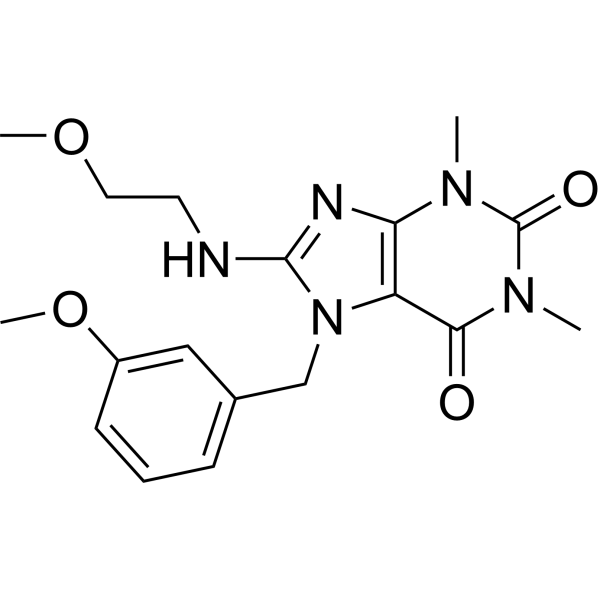
HY-152221
PCSK9-IN-10PCSK9 Inhibitor
Ver todos los productos específicos de isoformas MEK
More

Actividad biológica
Descripciòn
Cellular Effect
|
Cell Line

|
Type | Value | Description | References |
|---|---|---|---|---|
| Bone marrow cell | IC50 |
>20 μM
Compound: 1; PF-00932239
|
Cytotoxicity against rat bone marrow cells assessed as reduction in cell viability after 72 hrs by CellTiter-Glo assay
Cytotoxicity against rat bone marrow cells assessed as reduction in cell viability after 72 hrs by CellTiter-Glo assay
|
[PMID: 29878763] |
| CHO-K1 | IC50 |
<10 μM
Compound: 1; R-IMPP, PF-00932239
|
Inhibition of human recombinant full length ProLabel-tagged PCSK9 expressed in CHO-K1 cells incubated overnight and measured after 3 days by chemiluminescence assay
Inhibition of human recombinant full length ProLabel-tagged PCSK9 expressed in CHO-K1 cells incubated overnight and measured after 3 days by chemiluminescence assay
|
[PMID: 30448414] |
| CHO-K1 | IC50 |
>10 μM
Compound: 1; R-IMPP, PF-00932239
|
Cytotoxicity against CHOK1 cells expressing human recombinant full length ProLabel-tagged PCSK9 after overnight incubation by CellTiter blue assay
Cytotoxicity against CHOK1 cells expressing human recombinant full length ProLabel-tagged PCSK9 after overnight incubation by CellTiter blue assay
|
[PMID: 30448414] |
| CHO-K1 | IC50 |
>10 μM
Compound: 1; R-IMPP, PF-00932239
|
Inhibition of human recombinant PCSK9 expressed in CHO-K1 cells assessed as alkaline phosphatase secretion incubated overnight and measured after 3 days by HTS assay
Inhibition of human recombinant PCSK9 expressed in CHO-K1 cells assessed as alkaline phosphatase secretion incubated overnight and measured after 3 days by HTS assay
|
[PMID: 30448414] |
| CHO-K1 | IC50 |
4.8 μM
Compound: 1; R-IMPP, PF-00932239
|
Inhibition of human recombinant full length ProLabel-tagged PCSK9 expressed in CHO-K1 cells incubated overnight and measured after 3 days by HTS assay
Inhibition of human recombinant full length ProLabel-tagged PCSK9 expressed in CHO-K1 cells incubated overnight and measured after 3 days by HTS assay
|
[PMID: 30448414] |
| CHO-K1 | IC50 |
4.8 μM
Compound: Fig 8, Cpd 80S
|
Inhibition of 80s ribosome in CHOK1 cells assessed as reduction in PL-tagged PCSK9 expression incubated for over night by EFC kit method
Inhibition of 80s ribosome in CHOK1 cells assessed as reduction in PL-tagged PCSK9 expression incubated for over night by EFC kit method
|
[PMID: 31673315] |
| HeLa | IC50 |
8.04 μM
Compound: 1; PF-00932239
|
Binding affinity to 80S ribosome in human HeLa cells lysates using human full length PCSK9 encoding mRNAs assessed as inhibition of PCSK9 mRNA translation after 45 mins by Steady-Glo luciferase reporter gene assay
Binding affinity to 80S ribosome in human HeLa cells lysates using human full length PCSK9 encoding mRNAs assessed as inhibition of PCSK9 mRNA translation after 45 mins by Steady-Glo luciferase reporter gene assay
|
[PMID: 30482620] |
| Huh-7 | IC50 |
2.2 μM
Compound: 13; R-IMPP
|
Inhibition of PCSK9 expression in human HuH7 cells after overnight incubation by ELISA
Inhibition of PCSK9 expression in human HuH7 cells after overnight incubation by ELISA
|
[PMID: 29519739] |
| Huh-7 | IC50 |
2.63 μM
Compound: 1; PF-00932239
|
Binding affinity to 80S ribosome in human HuH7 cells harboring pCMV-truncated human PCSK9 (1 to 152 residues)-proLuc assessed as inhibition of PCSK9 mRNA translation after overnight incubation by luciferase reporter gene assay
Binding affinity to 80S ribosome in human HuH7 cells harboring pCMV-truncated human PCSK9 (1 to 152 residues)-proLuc assessed as inhibition of PCSK9 mRNA translation after overnight incubation by luciferase reporter gene assay
|
[PMID: 29878763] |
| Huh-7 | IC50 |
2.63 μM
Compound: 1; PF-00932239
|
Binding affinity to 80S ribosome in human HuH7 cells harboring human PCSK9 (1 to 152 residues)-proLuc assessed as inhibition of PCSK9 mRNA translation after overnight incubation by luciferase reporter gene assay
Binding affinity to 80S ribosome in human HuH7 cells harboring human PCSK9 (1 to 152 residues)-proLuc assessed as inhibition of PCSK9 mRNA translation after overnight incubation by luciferase reporter gene assay
|
[PMID: 30482620] |
| Huh-7 | IC50 |
8.37 μM
Compound: 1; PF-00932239
|
Binding affinity to 80S ribosome in human HuH7 cells assessed as inhibition of PCSK9 mRNA translation after overnight incubation by ELISA
Binding affinity to 80S ribosome in human HuH7 cells assessed as inhibition of PCSK9 mRNA translation after overnight incubation by ELISA
|
[PMID: 29878763] |
In Vitro
R-IMPP (30-60 μM) inhibits the KRAS/MEK/ERK pathway by reducing the protein levels of p-ERK and cyclin D3 in three APC/KRAS-mutant colorectal cancer cell lines, HCT116, LOVO and SW1116[1].
R-IMPP (40 μM) inhibits the expression of active KRAS protein in SW1116 APC/KRAS mutant colorectal cancer cells[1].
R-IMPP (72 h) inhibits cell viability, with stronger inhibitory potency against APC/KRAS mutant colorectal cancer cell lines (72-hour IC50: 17.6-41.8 μM). In comparison, the 72-hour IC50 is 84.8 μM for wild-type 1CT cells and 57.5 μM for normal NCM460 colon cells[1].
R-IMPP (30-60 μM; 24 h) potently inhibits the expression of PCSK9 protein in AML12 hepatocytes[2].
R-IMPP (60 μM; 24 h) impairs the mitochondrial membrane potential of AML12 hepatocytes, while no such effect is observed at the concentration of 30 μM[2].
R-IMPP attenuates hypoxia/reoxygenation-induced apoptosis of AML12 hepatocytes[2].
R-IMPP potently inhibits PCSK9 secretion in CHO-K1 cells expressing recombinant ProLabel-tagged PCSK9, with an IC50 of 4.8 μM. Meanwhile, it exhibits only extremely low cytotoxicity and no non-universal secretion inhibitory effect[3].
R-IMPP (3-30 μM; overnight pre-treatment) promotes the uptake of AF-LDL by Huh7 cells, with a 47.5% increase in uptake at the concentration of 30 μM[3].
MedChemExpress (MCE) has not independently confirmed the accuracy of these methods. They are for reference only.
-
Cell Line:NCM460 (normal colonic epithelial cells), 1CT (wildtype colonic cells), 1CT-AK, DLD1, HCT116, LOVO, SW1116 (APC/KRAS-mutant CRC cell lines)
-
Concentration:Various concentrations
-
Incubation Time:72 h
-
Result:Exhibited 72-hour IC50 values of 57.5 μM for NCM460, 84.8 μM for 1CT, 41.8 μM for 1CT-AK, 22.5 μM for DLD1, 17.6 μM for HCT116, 26.4 μM for LOVO, and 26.9 μM for SW1116.
Rendered APC/KRAS-mutant CRC cells more sensitive than wildtype or normal colonic cells.
-
Cell Line:human hepatoma Huh7 cells
-
Concentration:10 μM, 30 μM
-
Incubation Time:overnight
-
Result:Caused a dose-dependent increase in LDL-R levels at 10 μM and 30 μM.
Caused a dose-dependent decrease in both pro-PCSK9 and mature PCSK9 levels in cell lysates at 10 μM and 30 μM.
In Vivo
R-IMPP (50 mg/kg; i.p.; 3 times/week) suppresses tumor development in the spontaneous APC/KRAS-mutant CRC mouse model[1].
R-IMPP (50 mg/kg; i.p.) synergizes with Simvastatin (HY-17502) to induce regression of SW1116 APC/KRAS-mutant CRC xenografts in nude mice[1].
MedChemExpress (MCE) has not independently confirmed the accuracy of these methods. They are for reference only.
-
Animal Model:NOD/SCID[1]
-
Dosage:100 mg/kg
-
Administration:i.p.
-
Result:Suppressed growth of SW1116 xenografts, with decreased tumor volume and weight.
Caused no significant decrease in body weight.
-
Animal Model:Apc^{Min/+}Kras^{G12D/+}Villin-Cre[1]
-
Dosage:50 mg/kg
-
Administration:i.p.; 3 times/week
-
Result:Significantly suppressed tumor number and tumor load.
-
Animal Model:Nude[1]
-
Dosage:50 mg/kg
-
Administration:i.p.
-
Result:Triggered tumor regression compared to control or single agent treatments, and reduced tumor weight.
Down-regulated PCSK9 protein and GGPP levels in xenograft tumors.


Chemical Information
-
No. CAS 2133832-83-2
-
Appearance Solid
-
Peso molecular 389.49
-
Fòrmula C24H27N3O2
-
Color Light yellow to yellow
-
SMILES
O=C(N(C1=NC=CC2=C1C=CC=C2)[C@H]3CNCCC3)CCC4=CC=C(OC)C=C4
-
Synonyms
PF-00932239
-
Envío
Room temperature in continental US; may vary elsewhere.
-
Almacenamiento
Powder -20°C 3 years 4°C 2 years In solvent -80°C 2 years -20°C 1 year


Solvente y solubilidad
In Vitro:
DMSO : 100 mg/mL (256.75 mM; Need ultrasonic; Hygroscopic DMSO has a significant impact on the solubility of product, please use newly opened DMSO)
Please refer to the solubility information to select the appropriate solvent. Once prepared, please aliquot and store the solution to prevent product inactivation from repeated freeze-thaw cycles.
Storage method and period of stock solution: -80°C, 2 years; -20°C, 1 year. When stored at -80°C, please use it within 2 years. When stored at -20°C, please use it within 1 year.
Please refer to the solubility information to select the appropriate solvent. Once prepared, please aliquot and store the solution to prevent product inactivation from repeated freeze-thaw cycles.
Storage method and period of stock solution: -80°C, 2 years; -20°C, 1 year. When stored at -80°C, please use it within 2 years. When stored at -20°C, please use it within 1 year.
Concentration (start) × Volume (start) = Concentration (final) × Volume (final)
In Vivo:
Select the appropriate dissolution method based on your experimental animal and administration route.
- For the following dissolution methods, please ensure to first prepare a clear stock solution using an In Vitro approach and then sequentially add co-solvents:
- To ensure reliable experimental results, the clarified stock solution can be appropriately stored based on storage conditions. As for the working solution for In Vivo experiments, it is recommended to prepare freshly and use it on the same day.
- The percentages shown for the solvents indicate their volumetric ratio in the final prepared solution. If precipitation or phase separation occurs during preparation, heat and/or sonication can be used to aid dissolution.
Add each solvent one by one: 10% DMSO 40% PEG300 5% Tween-80 45% Saline
Solubility: ≥ 2.5 mg/mL (6.42 mM); Clear solution
This protocol yields a clear solution of ≥ 2.5 mg/mL (saturation unknown).
Taking 1 mL working solution as an example, add 100 μL DMSO stock solution (25.0 mg/mL) to 400 μL PEG300, and mix evenly; then add 50 μL Tween-80 and mix evenly; then add 450 μL Saline to adjust the volume to 1 mL.
Preparation of Saline: Dissolve 0.9 g sodium chloride in ddH₂O and dilute to 100 mL to obtain a clear Saline solution.
Add each solvent one by one: 10% DMSO 90% (20% SBE-β-CD in Saline)
Solubility: 2.5 mg/mL (6.42 mM); Suspended solution; Need ultrasonic
This protocol yields a suspended solution of 2.5 mg/mL. Suspended solution can be used for oral and intraperitoneal injection.
Taking 1 mL working solution as an example, add 100 μL DMSO stock solution (25.0 mg/mL) to 900 μL 20% SBE-β-CD in Saline, and mix evenly.
Preparation of 20% SBE-β-CD in Saline (4°C, storage for one week): 2 g SBE-β-CD powder is dissolved in 10 mL Saline, completely dissolve until clear.
In Vivo Dissolution Calculator
Please enter the basic information of animal experiments:
-
-
-
-
Recommended: Prepare an additional quantity of animals to account for potential losses during experiments.
Please enter your animal formula composition:
-
%DMSO +
Recommended: Keep the proportion of DMSO in working solution below 2% if your animal is weak.
-
%+
-
+%Tween-80 + +
-
%Saline +
The co-solvents required include: DMSO, . All of co-solvents are available by MedChemExpress (MCE). , Tween 80. All of co-solvents are available by MedChemExpress (MCE).
Working solution concentration: 0.22 mg/mL
Method for preparing stock solution: mg drug dissolved in μL DMSO. Stock solution concentration: mg/mL.
1. Take μL DMSO stock solution;
2. Add μL .
μL , mix evenly;
3. Then add μL Tween 80, mix evenly;
4. Then add μL
Please ensure that the stock solution in the first step is dissolved to a clear state, and add co-solvents in sequence. You can use ultrasonic heating (ultrasonic cleaner, recommended frequency 20-40 kHz), vortexing, etc. to assist dissolution.


Pureza y Documentación
-
Ficha de datos (290 KB)
-
SDS (393 KB)
- English - EN (393 KB)
- Français - FR (393 KB)
- Deutsch - DE (393 KB)
- Norwegian - NO (393 KB)
- Español - ES (393 KB)
- Swedish - SV (393 KB)
- Italian - IT (393 KB)
- Korean - KR (393 KB)
- Portuguese - PT (393 KB)
-
Instrucciones de manejo (2659 KB)
Referencias
[2]. Zhang Y, et al. Blockade of Hepatocyte PCSK9 Ameliorates Hepatic Ischemia-Reperfusion Injury by Promoting Pink1-Parkin-Mediated Mitophagy. Cellular and molecular gastroenterology and hepatology. 2024;17(1):149-169. [Content Brief]
[3]. Petersen DN, et al. A Small-Molecule Anti-secretagogue of PCSK9 Targets the 80S Ribosome to Inhibit PCSK9 Protein Translation. Cell Chem Biol. 2016 Nov 17;23(11):1362-1371. [Content Brief]


Complete Stock Solution Preparation Table
Please refer to the solubility information to select the appropriate solvent. Once prepared, please aliquot and store the solution to prevent product inactivation from repeated freeze-thaw cycles.
Storage method and period of stock solution: -80°C, 2 years; -20°C, 1 year. When stored at -80°C, please use it within 2 years. When stored at -20°C, please use it within 1 year.
| Optional Solvent | Concentration Solvent Mass | 1 mg | 5 mg | 10 mg | 25 mg |
|---|---|---|---|---|---|
| DMSO | 1 mM | 2.5675 mL | 12.8373 mL | 25.6746 mL | 64.1865 mL |
| 5 mM | 0.5135 mL | 2.5675 mL | 5.1349 mL | 12.8373 mL | |
| 10 mM | 0.2567 mL | 1.2837 mL | 2.5675 mL | 6.4187 mL | |
| 15 mM | 0.1712 mL | 0.8558 mL | 1.7116 mL | 4.2791 mL | |
| 20 mM | 0.1284 mL | 0.6419 mL | 1.2837 mL | 3.2093 mL | |
| 25 mM | 0.1027 mL | 0.5135 mL | 1.0270 mL | 2.5675 mL | |
| 30 mM | 0.0856 mL | 0.4279 mL | 0.8558 mL | 2.1396 mL | |
| 40 mM | 0.0642 mL | 0.3209 mL | 0.6419 mL | 1.6047 mL | |
| 50 mM | 0.0513 mL | 0.2567 mL | 0.5135 mL | 1.2837 mL | |
| 60 mM | 0.0428 mL | 0.2140 mL | 0.4279 mL | 1.0698 mL | |
| 80 mM | 0.0321 mL | 0.1605 mL | 0.3209 mL | 0.8023 mL | |
| 100 mM | 0.0257 mL | 0.1284 mL | 0.2567 mL | 0.6419 mL |


R-IMPP Related Classifications
HY-101354 Related Classifications
 Powered by Bioz