



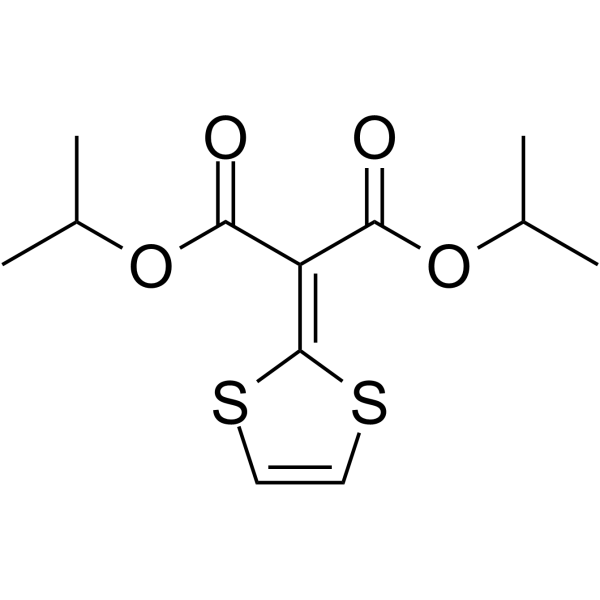
Malotilate

Based on 1 Customer Validation
Malotilate (NKK 105), an orally active hepatotropic agent and an anti-fibrotic substance, selectively inhibits the 5-lipoxygenase (5-LOX) (IC50=4.7 μM). Malotilate prevents the development of hepatocytic injury in alcohol-pyrazole hepatitis by decreasing hepatic acetaldehyde levels and preventing the retention of transferrin in the hepatocytes.
Para uso exclusivo en investigación. No vendemos a pacientes.
- Pureza : 99.47%
- No. CAS: 59937-28-9
- Fòrmula: C12H16O4S2
- Peso molecular:288.38
-
Almacenamiento:Powder -20°C, 3 years , 4°C, 2 years ; In solvent -80°C, 2 years , -20°C, 1 year

To place orders, for customer services and technical support, please contact: MedChemExpress USA
Tel: 609-228-6898 E-mail: [email protected] [email protected]


-
 Actividad biológica
-
Chemical Information
-
Solvente y solubilidad
- Pureza y Documentación
- Referencias
-
 Help & FAQs


-
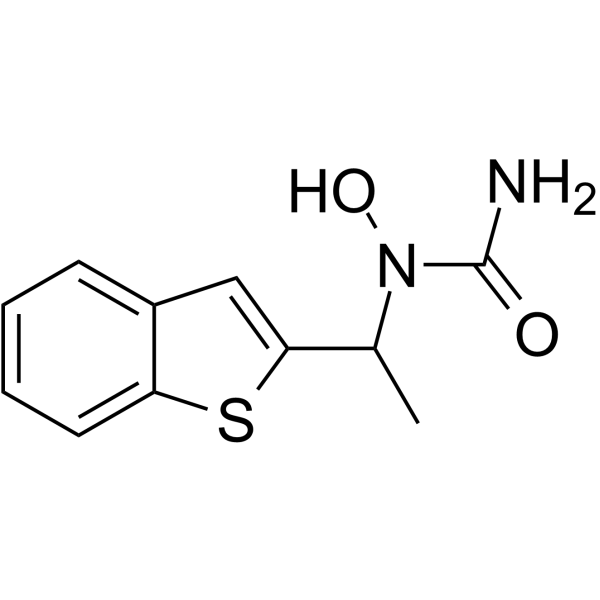
HY-14164
Zileuton5-Lipoxygenase Inhibitor -
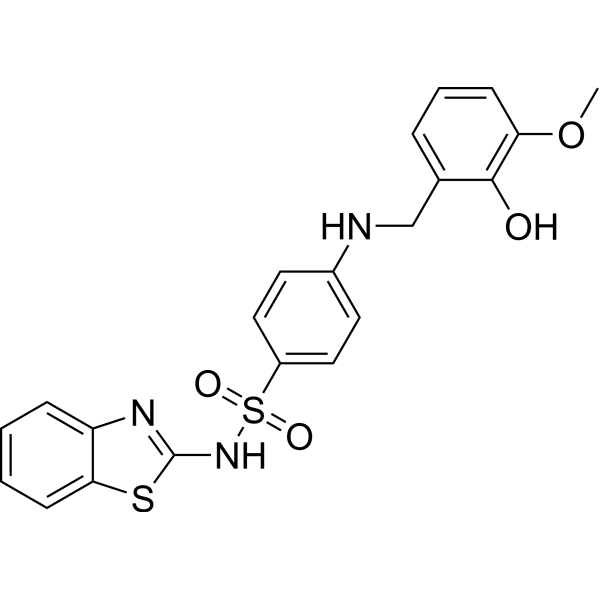
HY-12341
Onvoloxastat12-LOX Inhibitor -
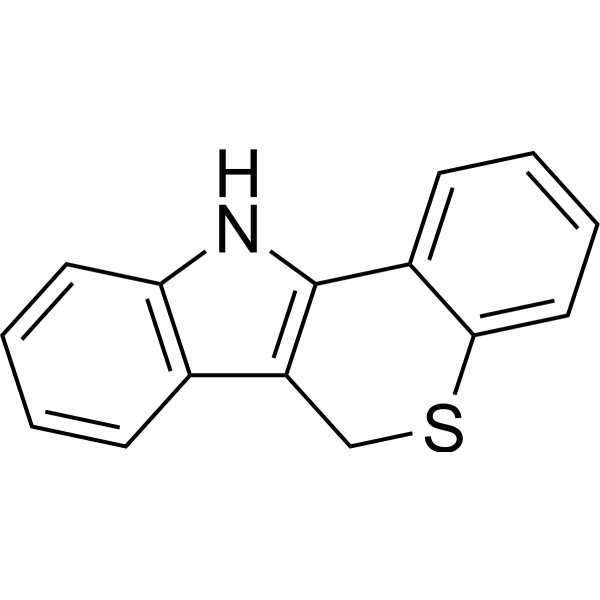
HY-103157
PD14617615-LO Inhibitor -

HY-A0060R
Malotilate (Standard)5-LOX Inhibitor -
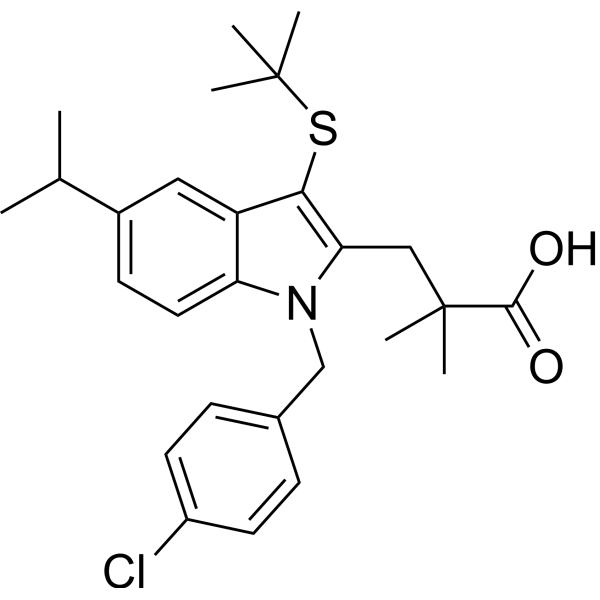
HY-14166
MK-886FLAP Inhibitor -
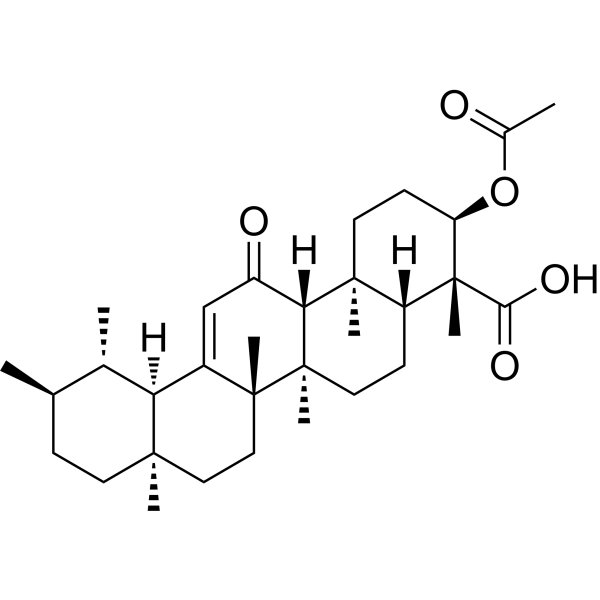
HY-N0892
AKBANrf2 Activator -
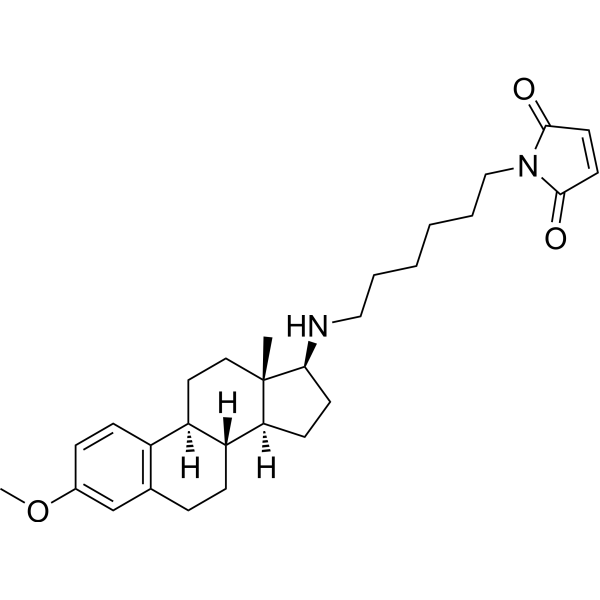
HY-13419
U-73122Phospholipase C Inhibitor -
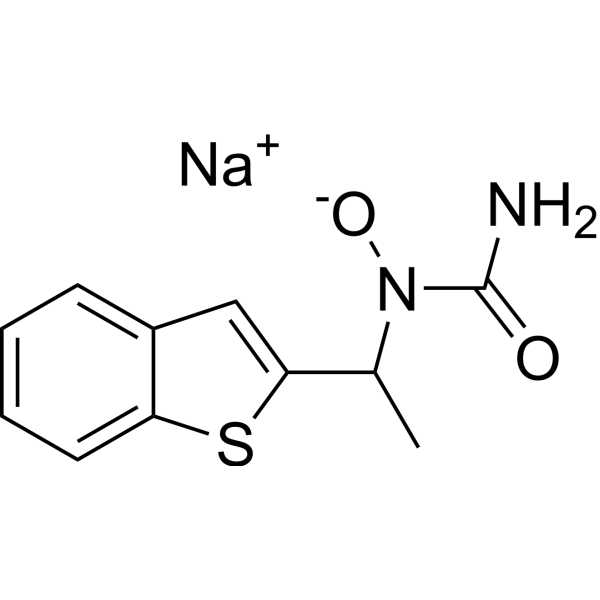
HY-14164A
Zileuton sodium5-lipoxygenase Inhibitor -
HY-N2056
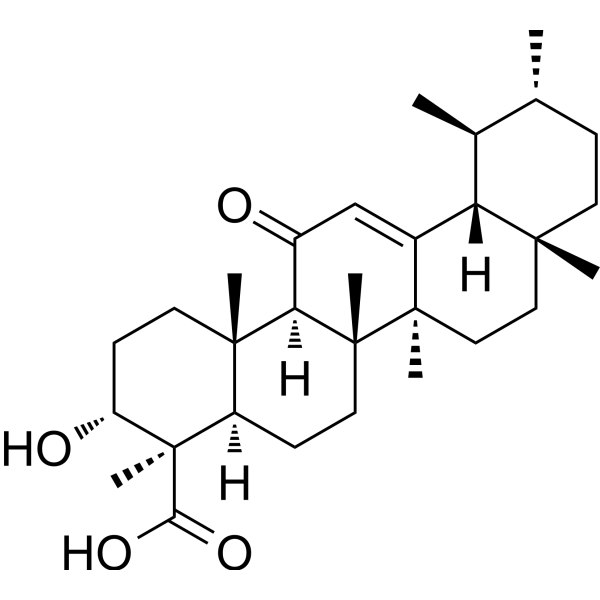
11-Keto-beta-boswellic acidAnti-inflammatory Agent -

HY-N0892R
AKBA (Standard)Nrf2 Activator -
HY-13750
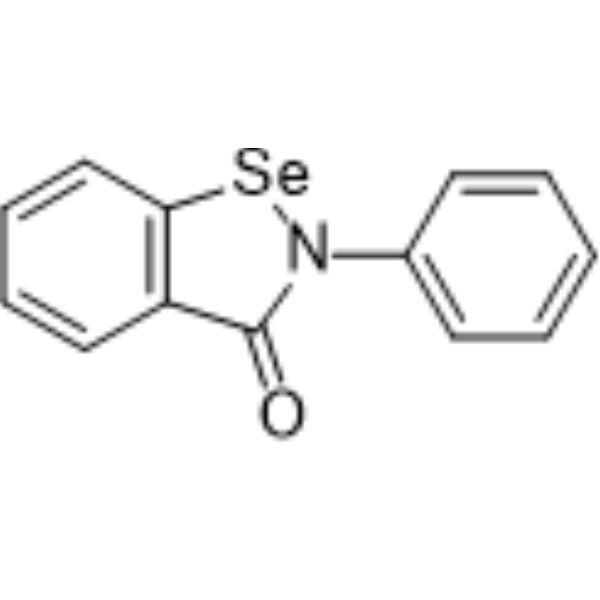
EbselenVDCC Inhibitor -
HY-101051
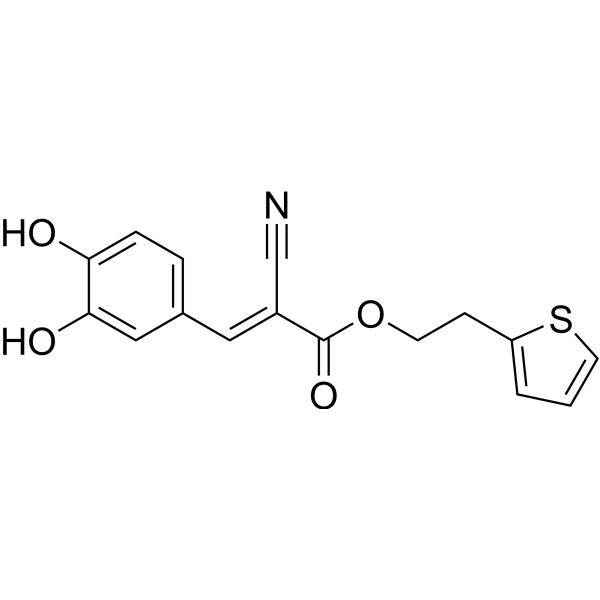
2-TEDC5/12/15-Lipoxygenase Inhibitor


Actividad biológica
Descripciòn
IC50 & Target
|
5-Lipoxygenase 4.7 μM (IC50) |
In Vitro
Malotilate reduces collagen synthesis and cell migration activity of fibroblasts in vitro[3].
Malotilate, an anti-fibrotic substance, selectively inhibited the 5-lipoxygenase, whereas both the 12- and the 15-lipoxygenase pathways are stimulated. Malotilate has been shown to prevent acute experimental liver injury induced by several hepatotoxic compounds, including Ahyl alcohot, Bromobenzene, Carbon tetrachloride, ChIoroform, Dimethylnitrosamine and Thioacetamide[4].
MedChemExpress (MCE) has not independently confirmed the accuracy of these methods. They are for reference only.
In Vivo
MedChemExpress (MCE) has not independently confirmed the accuracy of these methods. They are for reference only.
-
Animal Model:Male rats of the SLC-SD strain (rats with carbon tetrachloride-induced liver damage)[5]
-
Dosage:100 mg/kg
-
Administration:P.o.; daily for 3 days
-
Result:The triglyceride secretion from livers in rats given CCI4 was inhibited to about 40% of the level in the control rats. This inhibition of the triglyceride secretion was completely normalized in response to malotilate administration for 3 days.


Chemical Information
-
No. CAS 59937-28-9
-
Appearance Solid
-
Peso molecular 288.38
-
Fòrmula C12H16O4S2
-
Color Light yellow to yellow
-
SMILES
O=C(OC(C)C)/C(C(OC(C)C)=O)=C1SC=CS\1
-
Synonyms
NKK 105
-
Envío
Room temperature in continental US; may vary elsewhere.
-
Almacenamiento
Powder -20°C 3 years 4°C 2 years In solvent -80°C 2 years -20°C 1 year


Solvente y solubilidad
In Vitro:
DMSO : ≥ 100 mg/mL (346.76 mM; Hygroscopic DMSO has a significant impact on the solubility of product, please use newly opened DMSO)
* "≥" means soluble, but saturation unknown.
Please refer to the solubility information to select the appropriate solvent. Once prepared, please aliquot and store the solution to prevent product inactivation from repeated freeze-thaw cycles.
Storage method and period of stock solution: -80°C, 2 years; -20°C, 1 year. When stored at -80°C, please use it within 2 years. When stored at -20°C, please use it within 1 year.
Please refer to the solubility information to select the appropriate solvent. Once prepared, please aliquot and store the solution to prevent product inactivation from repeated freeze-thaw cycles.
Storage method and period of stock solution: -80°C, 2 years; -20°C, 1 year. When stored at -80°C, please use it within 2 years. When stored at -20°C, please use it within 1 year.
Concentration (start) × Volume (start) = Concentration (final) × Volume (final)
In Vivo:
Select the appropriate dissolution method based on your experimental animal and administration route.
- For the following dissolution methods, please ensure to first prepare a clear stock solution using an In Vitro approach and then sequentially add co-solvents:
- To ensure reliable experimental results, the clarified stock solution can be appropriately stored based on storage conditions. As for the working solution for In Vivo experiments, it is recommended to prepare freshly and use it on the same day.
- The percentages shown for the solvents indicate their volumetric ratio in the final prepared solution. If precipitation or phase separation occurs during preparation, heat and/or sonication can be used to aid dissolution.
Add each solvent one by one: 10% DMSO 40% PEG300 5% Tween-80 45% Saline
Solubility: ≥ 2.5 mg/mL (8.67 mM); Clear solution
This protocol yields a clear solution of ≥ 2.5 mg/mL (saturation unknown).
Taking 1 mL working solution as an example, add 100 μL DMSO stock solution (25.0 mg/mL) to 400 μL PEG300, and mix evenly; then add 50 μL Tween-80 and mix evenly; then add 450 μL Saline to adjust the volume to 1 mL.
Preparation of Saline: Dissolve 0.9 g sodium chloride in ddH₂O and dilute to 100 mL to obtain a clear Saline solution.
Add each solvent one by one: 10% DMSO 90% (20% SBE-β-CD in Saline)
Solubility: ≥ 2.5 mg/mL (8.67 mM); Clear solution
This protocol yields a clear solution of ≥ 2.5 mg/mL (saturation unknown).
Taking 1 mL working solution as an example, add 100 μL DMSO stock solution (25.0 mg/mL) to 900 μL 20% SBE-β-CD in Saline, and mix evenly.
Preparation of 20% SBE-β-CD in Saline (4°C, storage for one week): 2 g SBE-β-CD powder is dissolved in 10 mL Saline, completely dissolve until clear.
In Vivo Dissolution Calculator
Please enter the basic information of animal experiments:
-
-
-
-
Recommended: Prepare an additional quantity of animals to account for potential losses during experiments.
Please enter your animal formula composition:
-
%DMSO +
Recommended: Keep the proportion of DMSO in working solution below 2% if your animal is weak.
-
%+
-
+%Tween-80 + +
-
%Saline +
The co-solvents required include: DMSO, . All of co-solvents are available by MedChemExpress (MCE). , Tween 80. All of co-solvents are available by MedChemExpress (MCE).
Working solution concentration: 0.22 mg/mL
Method for preparing stock solution: mg drug dissolved in μL DMSO. Stock solution concentration: mg/mL.
1. Take μL DMSO stock solution;
2. Add μL .
μL , mix evenly;
3. Then add μL Tween 80, mix evenly;
4. Then add μL
Please ensure that the stock solution in the first step is dissolved to a clear state, and add co-solvents in sequence. You can use ultrasonic heating (ultrasonic cleaner, recommended frequency 20-40 kHz), vortexing, etc. to assist dissolution.


Pureza y Documentación
-
Ficha de datos (274 KB)
-
SDS (393 KB)
- English - EN (393 KB)
- Français - FR (393 KB)
- Deutsch - DE (393 KB)
- Norwegian - NO (393 KB)
- Español - ES (393 KB)
- Swedish - SV (393 KB)
- Italian - IT (393 KB)
- Korean - KR (393 KB)
- Portuguese - PT (393 KB)
-
Instrucciones de manejo (2659 KB)
Referencias
[1]. Matsuda Y, et al. Effects of malotilate on alcoholic liver injury in rats. Alcohol Clin Exp Res. 1988;12(5):665-670. [Content Brief]
[2]. Vermeer MA, Wilson JH, Zijlstra FJ, Vincent JE. Differential effects of malotilate on 5-, 12- and 15-lipoxygenase in human ascites cells. Agents Actions. 1989;26(1-2):252-253. [Content Brief]
[3]. Poeschl A, et al. Malotilate reduces collagen synthesis and cell migration activity of fibroblasts in vitro. Biochem Pharmacol. 1987;36(22):3957-3963. [Content Brief]
[4]. Zijlstra FJ, et al. Differential effects of malotilate on 5-, 12- and 15-lipoxygenase in human ascites cells. Eur J Pharmacol. 1989;159(3):291-295. [Content Brief]
[5]. Wakasugi J, et al. Action of malotilate on reduced serum cholesterol level in rats with carbon tetrachloride-induced liver damage. Jpn J Pharmacol. 1985;38(4):391-401. [Content Brief]


Complete Stock Solution Preparation Table
Please refer to the solubility information to select the appropriate solvent. Once prepared, please aliquot and store the solution to prevent product inactivation from repeated freeze-thaw cycles.
Storage method and period of stock solution: -80°C, 2 years; -20°C, 1 year. When stored at -80°C, please use it within 2 years. When stored at -20°C, please use it within 1 year.
| Optional Solvent | Concentration Solvent Mass | 1 mg | 5 mg | 10 mg | 25 mg |
|---|---|---|---|---|---|
| DMSO | 1 mM | 3.4676 mL | 17.3382 mL | 34.6765 mL | 86.6912 mL |
| 5 mM | 0.6935 mL | 3.4676 mL | 6.9353 mL | 17.3382 mL | |
| 10 mM | 0.3468 mL | 1.7338 mL | 3.4676 mL | 8.6691 mL | |
| 15 mM | 0.2312 mL | 1.1559 mL | 2.3118 mL | 5.7794 mL | |
| 20 mM | 0.1734 mL | 0.8669 mL | 1.7338 mL | 4.3346 mL | |
| 25 mM | 0.1387 mL | 0.6935 mL | 1.3871 mL | 3.4676 mL | |
| 30 mM | 0.1156 mL | 0.5779 mL | 1.1559 mL | 2.8897 mL | |
| 40 mM | 0.0867 mL | 0.4335 mL | 0.8669 mL | 2.1673 mL | |
| 50 mM | 0.0694 mL | 0.3468 mL | 0.6935 mL | 1.7338 mL | |
| 60 mM | 0.0578 mL | 0.2890 mL | 0.5779 mL | 1.4449 mL | |
| 80 mM | 0.0433 mL | 0.2167 mL | 0.4335 mL | 1.0836 mL | |
| 100 mM | 0.0347 mL | 0.1734 mL | 0.3468 mL | 0.8669 mL |


Malotilate Related Classifications
HY-A0060 Related Classifications
 Powered by Bioz