



ASP3026
Based on 6 publication(s) in Google Scholar
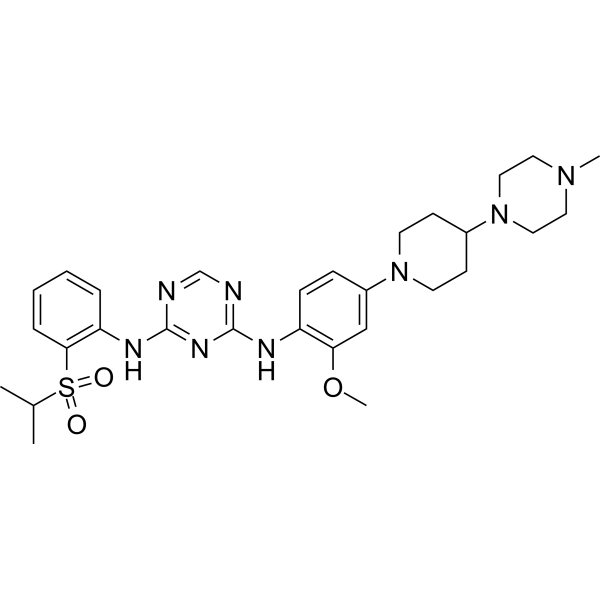
ASP3026 is a selective and orally active inhibitor of anaplastic lymphoma kinase (ALK). ASP3026 is a selective and oral active anaplastic lymphoma kinase (ALK) inhibitor with a IC50 value of 3.5 nM. ASP3026 can inhibit the phosphorylation of IGF-1R, STAT3, AKT and JNK proteins, and induce the cleavage of caspase 3 and PARP. It also inhibited ROS and ACK. ASP3026 can be used in anti-tumor research.
For research use only. We do not sell to patients.
- Purity : 99.88%
- CAS No.: 1097917-15-1
- Formula: C29H40N8O3S
- Molecular Weight:580.74
-
Storage:Powder -20°C, 3 years , 4°C, 2 years ; In solvent -80°C, 2 years , -20°C, 1 year

To place orders, for customer services and technical support, please contact: MedChemExpress USA
Tel: 609-228-6898 E-mail: [email protected] [email protected]


-
 Biological Activity
-
Chemical Information
-
Solvent & Solubility
- Protocols
- Purity & Documentation
- References
-
 Help & FAQs


-
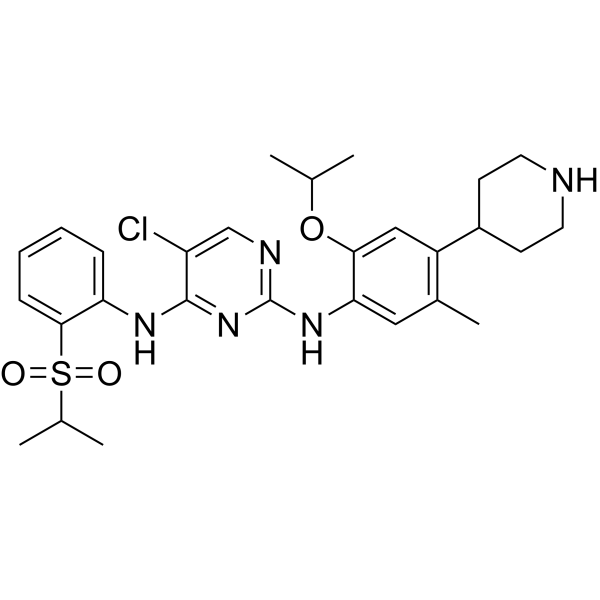
HY-15656
CeritinibALK Inhibitor -
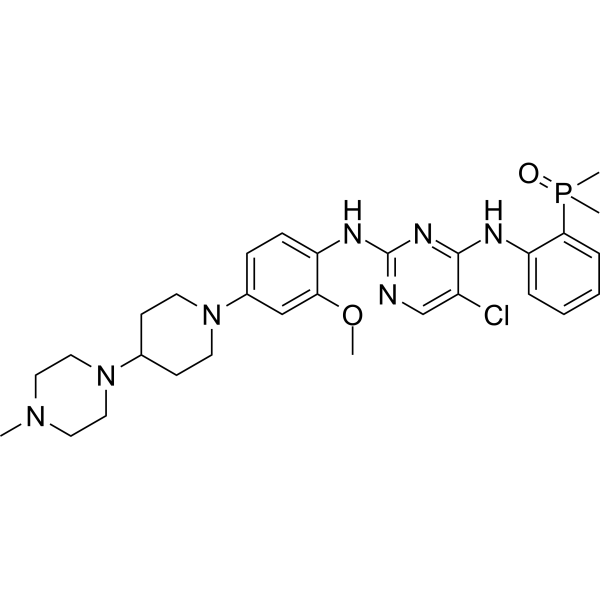
HY-12857
BrigatinibALK Inhibitor -
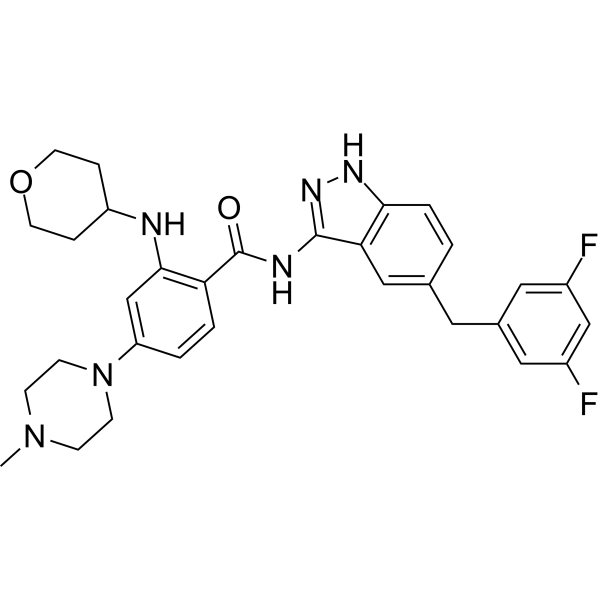
HY-12678
EntrectinibTrk/ROS1/ALK Inhibitor -
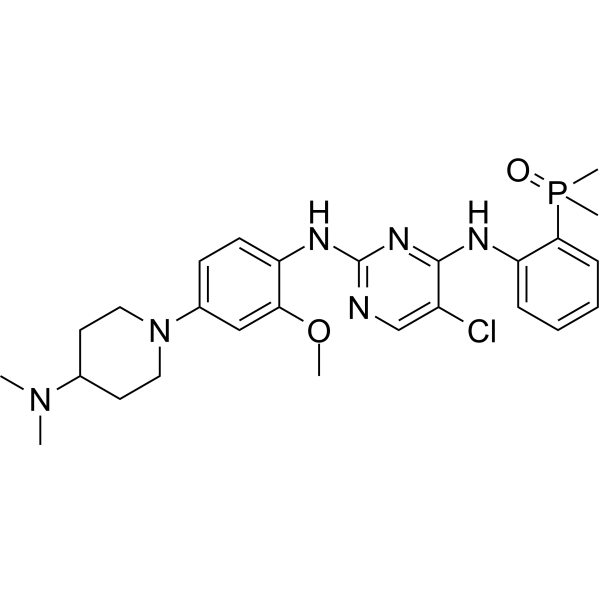
HY-13464
ALK-IN-1ALK/EGFR Inhibitor -
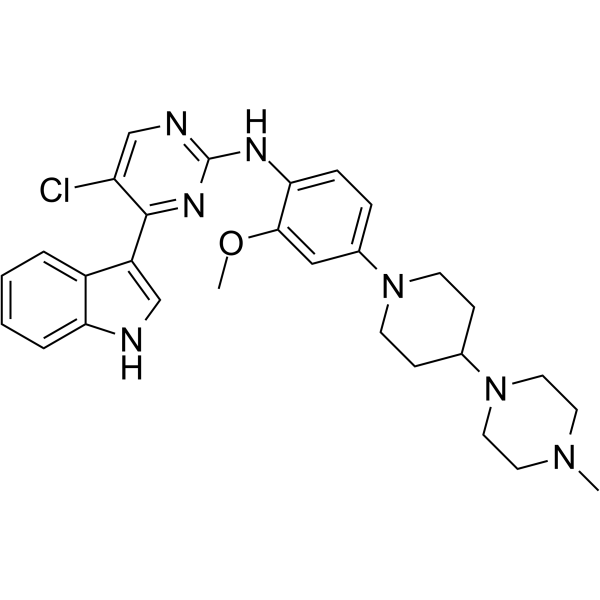
HY-15801
HG-14-10-04ALK/Mutant EGFR Inhibitor -
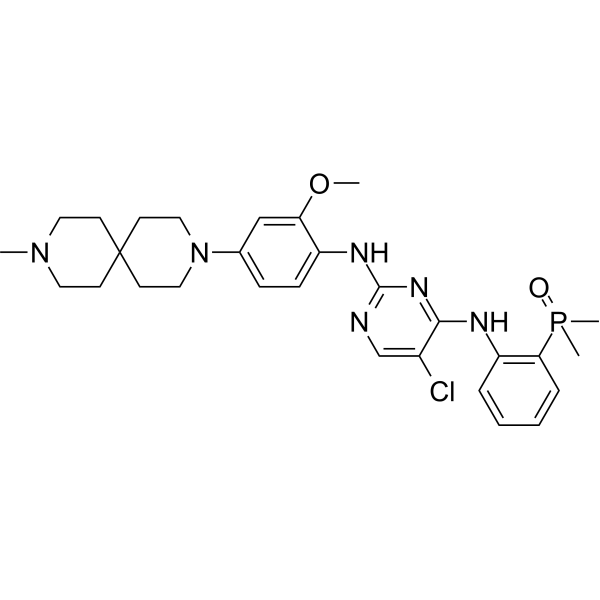
HY-145574
IruplinalkibALK/ROS1 inhibitor -
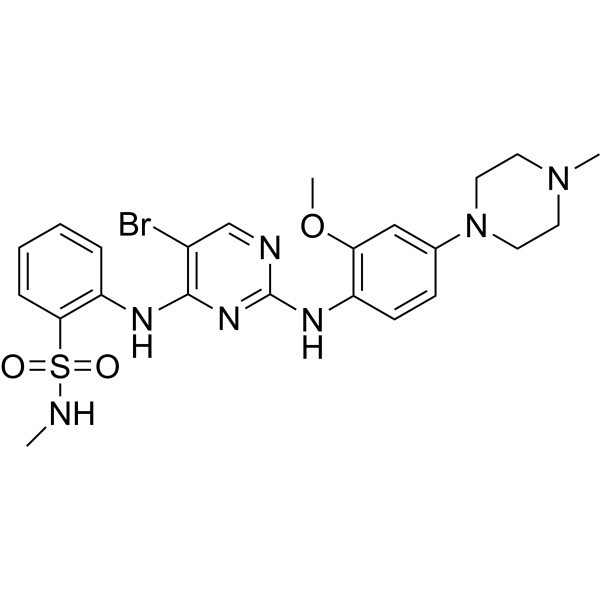
HY-15357
ALK inhibitor 1FAK Inhibitor -
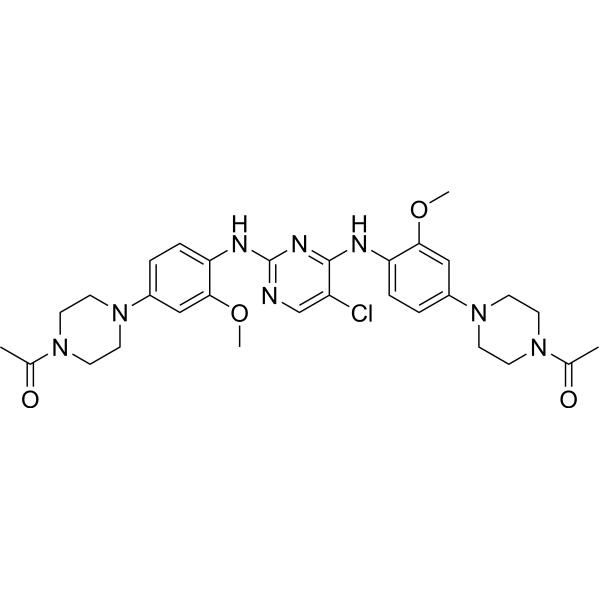
HY-12331
KRCA-0008ALK/Ack1 Inhibitor -
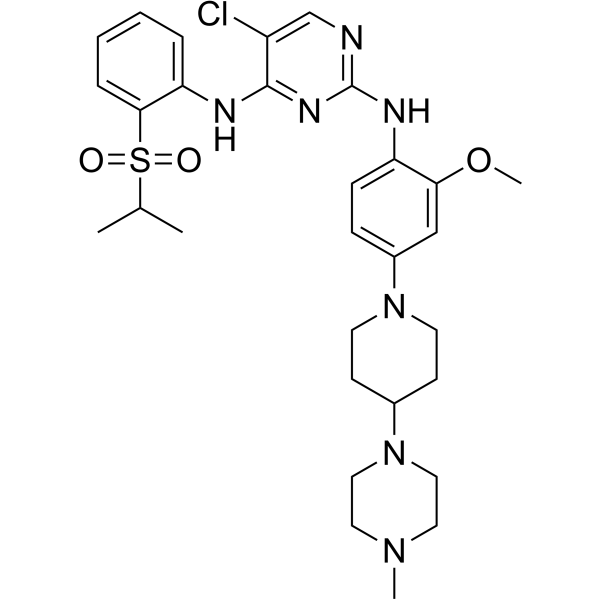
HY-10192
NVP-TAE 684ALK Inhibitor -
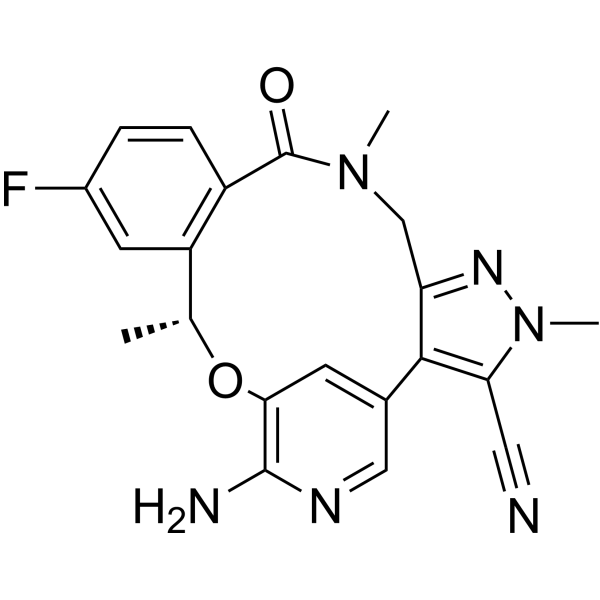
HY-12215
LorlatinibALK/ROS1 Inhibitor -
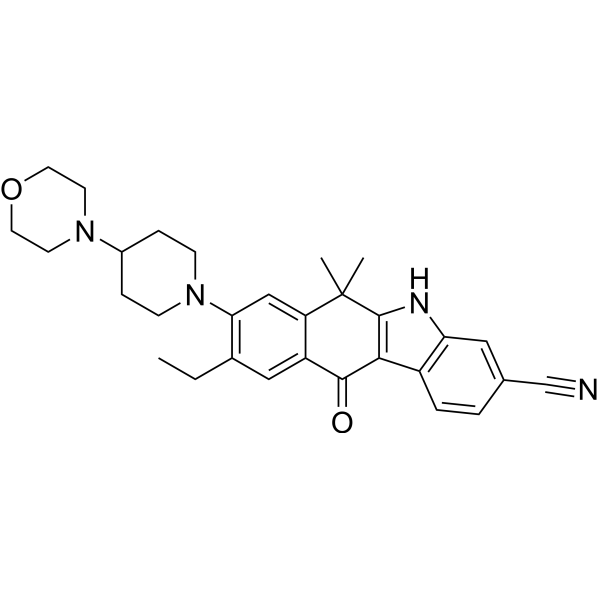
HY-13011
AlectinibALK Inhibitor -

HY-13011R
Alectinib (Standard)ALK Inhibitor
Publications Citing Use of MedChemExpress (MCE) ASP3026
MoreAll Caspase Isoforms
More

Biological Activity
Description
IC50 & Target
|
ROS |
ACK |
Caspase-3 |
PARP1 |
IGF-1R |
STAT3 |
Cellular Effect
|
Cell Line

|
Type | Value | Description | References |
|---|---|---|---|---|
| BaF3 | IC50 |
1508 nM
Compound: 20; ASP3026
|
Cytotoxicity against mouse BaF3 cells expressing human EGFR C797S/T790M/del19 mutant assessed as inhibition of in cell viability measured after 72 hrs by CellTiter-Glo assay
Cytotoxicity against mouse BaF3 cells expressing human EGFR C797S/T790M/del19 mutant assessed as inhibition of in cell viability measured after 72 hrs by CellTiter-Glo assay
|
[PMID: 33243531] |
| BaF3 | IC50 |
17 nM
Compound: 2; ASP3026
|
Inhibition of EML4-fused ALK variant 1 (unknown origin) expressed in mouse BAF3 cells using peptide substrate measured after 1 hr by HTRF assay
Inhibition of EML4-fused ALK variant 1 (unknown origin) expressed in mouse BAF3 cells using peptide substrate measured after 1 hr by HTRF assay
|
[PMID: 30878193] |
| BaF3 | IC50 |
323.9 nM
Compound: 20; ASP3026
|
Cytotoxicity against mouse BaF3 cells expressing human EGFR C797S/del19 mutant assessed as inhibition of in cell viability measured after 72 hrs by CellTiter-Glo assay
Cytotoxicity against mouse BaF3 cells expressing human EGFR C797S/del19 mutant assessed as inhibition of in cell viability measured after 72 hrs by CellTiter-Glo assay
|
[PMID: 33243531] |
| NCI-H2228 | IC50 |
64.8 nM
Compound: Chemical probe: ASP3026
|
Antiproliferative activity against human NCI-H2228 cell spheroids assessed as reduction in cell growth measured after 5 days by celltiter-glo luminescent cell viability assay
Antiproliferative activity against human NCI-H2228 cell spheroids assessed as reduction in cell growth measured after 5 days by celltiter-glo luminescent cell viability assay
|
[PMID: 24419060] |
In Vitro
ASP3026 decreases the viability, proliferation, and colony formation, as well as induced apoptotic cell death of NPM-ALK+ ALCL cells[2].
ASP3026 significantly reduces the proliferation of 293T cells transfected with NPM-ALK mutants that are resistant to Crizotinib (HY-50878) and downregulates tyrosine phosphorylation of these mutants[2].
ASP3026 (1-4 µg/ml, 48 h) is a novel inhibitor of red blood cell membrane scrambling following energy depletion and oxidative stress, thereby counterbalancing suicidal red blood cell death and subsequent development of anemia[3].
ASP3026 (100 nM, 1000 nM, 5 days) inhibits ALK activity in a competitive manner with ATP, and its inhibition profile is different from that of the dual ALK/MET inhibitor Crizotinib (HY-50878)[4].
MedChemExpress (MCE) has not independently confirmed the accuracy of these methods. They are for reference only.
-
Cell Line:NPM-ALK+ ALCL cell, 50-80 μg total proteins
-
Concentration:0.1-2.5 μM
-
Incubation Time:24-72 h
-
Result:Significantly decreased the activity of NPM-ALK tyrosine kinase and the tyrosine phosphorylation levels at Y646 and Y664, and decreased the phosphorylation levels of IGF-IR, STAT3, AKT and JNK proteins, the target proteins of NPM-ALK signal transduction.
Successfully induced the cleavage of caspase 3 and PARP, which further indicated that it induced the apoptosis of NPM-ALK+ ALCL cells.
-
Cell Line:NPM-ALK+ T-cell ALCL cell lines Karpas 299, SU-DHL-1, SUP-M2, SR-786, DEL
-
Concentration:0.1-2.5 μM
-
Incubation Time:24-72 h
-
Result:At 48 h, the IC50 values of SU-DHL-1, SUP-M2, SR-786, Karpas 299 and DEL were 0.4 µM, 0.75 µM, 1.0 µM, 2.5 µM and greater than 3.0 µM, respectively.
Significantly reduced the viability of lymphoma cells than that of T lymphocytes.
At 72 h, the IC50 values of SU-DHL-1, SUP-M2, SR-786, Karpas 299 and DEL were 0.3 µM, 0.75 µM, 0.75 µM, 2.5 µM and 0.5 µM, respectively.
-
Cell Line:NCI-H2228 NSCLC
-
Concentration:100 nM, 1000 nM
-
Incubation Time:5 days
-
Result:Inhibited the growth of ALK-dependent cells.
Inhibited the growth of NCI-H2228 cells with an IC50 value of 64.8 nM.
In Vivo
ASP3026 (10 mg/kg daily for 5 days, p.o.) can enhance the antitumor activity of Paclitaxel (HY-B0015) and Pemetrexed (HY-10820). When used alone, it can induce tumor regression and prolong survival in non-small cell lung cancer model mice, and does not affect the body weight of non-small cell lung cancer model mice[4].
MedChemExpress (MCE) has not independently confirmed the accuracy of these methods. They are for reference only.
-
Animal Model:Female C.B-17 SCID mice of systemic xenograft lymphoma model[2]
-
Dosage:30 mg/kg daily for 10 weeks
-
Administration:p.o.
-
Result:Mice in the ASP3026-interrupted group developed recurrent lymphoma, were subsequently treated with ASP3026 and survived until the end of the study.
Clinical Trial
| NCT Number | Sponsor | Condition | Start Date |
Phase
|
|---|---|---|---|---|
| NCT01329991 | Plexxikon| | 2011-05 | PHASE1 |


Chemical Information
-
CAS No. 1097917-15-1
-
Appearance Solid
-
Molecular Weight 580.74
-
Formula C29H40N8O3S
-
Color White to off-white
-
SMILES
COC(C=C(N1CCC(N2CCN(C)CC2)CC1)C=C3)=C3NC4=NC=NC(NC5=C(S(C(C)C)(=O)=O)C=CC=C5)=N4
-
Shipping
Room temperature in continental US; may vary elsewhere.
-
Storage
Powder -20°C 3 years 4°C 2 years In solvent -80°C 2 years -20°C 1 year


Publications (6)
-
Journal Impact Factor
-
Most Recent
-
Science
2017 Dec 1;358(6367):eaan4368. PMID: 29191878 -
Sci Transl Med
PP2A inhibition is a druggable MEK inhibitor resistance mechanism in KRAS-mutant lung cancer cells. [Abstract]2018 Jul 18;10(450):eaaq1093. PMID: 30021885 -
Pharmaceuticals (Basel)
Therapeutic Implications of Ceritinib in Cholangiocarcinoma beyond ALK Expression and Mutation. [Abstract]2024 Feb 2;17(2):197. PMID: 38399413 -
Cell Physiol Biochem
2017;43(2):507-517. PMID: 28930717 -
-


Solvent & Solubility
In Vitro:
DMSO : 20 mg/mL (34.44 mM; Need ultrasonic; Hygroscopic DMSO has a significant impact on the solubility of product, please use newly opened DMSO)
Please refer to the solubility information to select the appropriate solvent. Once prepared, please aliquot and store the solution to prevent product inactivation from repeated freeze-thaw cycles.
Storage method and period of stock solution: -80°C, 2 years; -20°C, 1 year. When stored at -80°C, please use it within 2 years. When stored at -20°C, please use it within 1 year.
Please refer to the solubility information to select the appropriate solvent. Once prepared, please aliquot and store the solution to prevent product inactivation from repeated freeze-thaw cycles.
Storage method and period of stock solution: -80°C, 2 years; -20°C, 1 year. When stored at -80°C, please use it within 2 years. When stored at -20°C, please use it within 1 year.
Concentration (start) × Volume (start) = Concentration (final) × Volume (final)
In Vivo:
Select the appropriate dissolution method based on your experimental animal and administration route.
- For the following dissolution methods, please ensure to first prepare a clear stock solution using an In Vitro approach and then sequentially add co-solvents:
- To ensure reliable experimental results, the clarified stock solution can be appropriately stored based on storage conditions. As for the working solution for In Vivo experiments, it is recommended to prepare freshly and use it on the same day.
- The percentages shown for the solvents indicate their volumetric ratio in the final prepared solution. If precipitation or phase separation occurs during preparation, heat and/or sonication can be used to aid dissolution.
Add each solvent one by one: 10% DMSO 40% PEG300 5% Tween-80 45% Saline
Solubility: ≥ 2 mg/mL (3.44 mM); Clear solution
This protocol yields a clear solution of ≥ 2 mg/mL (saturation unknown).
Taking 1 mL working solution as an example, add 100 μL DMSO stock solution (20.0 mg/mL) to 400 μL PEG300, and mix evenly; then add 50 μL Tween-80 and mix evenly; then add 450 μL Saline to adjust the volume to 1 mL.
Preparation of Saline: Dissolve 0.9 g sodium chloride in ddH₂O and dilute to 100 mL to obtain a clear Saline solution.
Add each solvent one by one: 10% DMSO 90% (20% SBE-β-CD in Saline)
Solubility: ≥ 2 mg/mL (3.44 mM); Clear solution
This protocol yields a clear solution of ≥ 2 mg/mL (saturation unknown).
Taking 1 mL working solution as an example, add 100 μL DMSO stock solution (20.0 mg/mL) to 900 μL 20% SBE-β-CD in Saline, and mix evenly.
Preparation of 20% SBE-β-CD in Saline (4°C, storage for one week): 2 g SBE-β-CD powder is dissolved in 10 mL Saline, completely dissolve until clear.
In Vivo Dissolution Calculator
Please enter the basic information of animal experiments:
-
-
-
-
Recommended: Prepare an additional quantity of animals to account for potential losses during experiments.
Please enter your animal formula composition:
-
%DMSO +
Recommended: Keep the proportion of DMSO in working solution below 2% if your animal is weak.
-
%+
-
+%Tween-80 + +
-
%Saline +
The co-solvents required include: DMSO, . All of co-solvents are available by MedChemExpress (MCE). , Tween 80. All of co-solvents are available by MedChemExpress (MCE).
Working solution concentration: 0.22 mg/mL
Method for preparing stock solution: mg drug dissolved in μL DMSO. Stock solution concentration: mg/mL.
1. Take μL DMSO stock solution;
2. Add μL .
μL , mix evenly;
3. Then add μL Tween 80, mix evenly;
4. Then add μL
Please ensure that the stock solution in the first step is dissolved to a clear state, and add co-solvents in sequence. You can use ultrasonic heating (ultrasonic cleaner, recommended frequency 20-40 kHz), vortexing, etc. to assist dissolution.


Purity & Documentation
-
Data Sheet (280 KB)
-
SDS (393 KB)
- English - EN (393 KB)
- Français - FR (393 KB)
- Deutsch - DE (393 KB)
- Norwegian - NO (393 KB)
- Español - ES (393 KB)
- Swedish - SV (393 KB)
- Italian - IT (393 KB)
- Korean - KR (393 KB)
- Portuguese - PT (393 KB)
-
Handling Instructions (2659 KB)
References
[1]. Discovery of Iikubo K, et, al. N-{2-Methoxy-4-[4-(4-methylpiperazin-1-yl)piperidin-1-yl]phenyl}-N'-[2-(propane-2-sulfonyl)phenyl]-1,3,5-triazine-2,4-diamine (ASP3026), a Potent and Selective Anaplastic Lymphoma Kinase (ALK) Inhibitor. Chem Pharm Bull (Tokyo). 2018;66(3):251-262. [Content Brief]
[2]. George SK, et, al. The ALK inhibitor ASP3026 eradicates NPM-ALK⁺ T-cell anaplastic large-cell lymphoma in vitro and in a systemic xenograft lymphoma model. Oncotarget. 2014 Jul 30;5(14):5750-63. [Content Brief]
[3]. Bhuyan AAM, et, al. Inhibition of Erythrocyte Cell Membrane Scrambling by ASP3026. Cell Physiol Biochem. 2017;43(2):507-517. [Content Brief]
[4]. Mori M, et al. The selective anaplastic lymphoma receptor tyrosine kinase inhibitor ASP3026 induces tumor regression and prolongs survival in non-small cell lung cancer model mice. Mol Cancer Ther. 2014 Feb;13(2):329-40. [Content Brief]


Complete Stock Solution Preparation Table
Please refer to the solubility information to select the appropriate solvent. Once prepared, please aliquot and store the solution to prevent product inactivation from repeated freeze-thaw cycles.
Storage method and period of stock solution: -80°C, 2 years; -20°C, 1 year. When stored at -80°C, please use it within 2 years. When stored at -20°C, please use it within 1 year.
| Optional Solvent | Concentration Solvent Mass | 1 mg | 5 mg | 10 mg | 25 mg |
|---|---|---|---|---|---|
| DMSO | 1 mM | 1.7219 mL | 8.6097 mL | 17.2194 mL | 43.0485 mL |
| 5 mM | 0.3444 mL | 1.7219 mL | 3.4439 mL | 8.6097 mL | |
| 10 mM | 0.1722 mL | 0.8610 mL | 1.7219 mL | 4.3049 mL | |
| 15 mM | 0.1148 mL | 0.5740 mL | 1.1480 mL | 2.8699 mL | |
| 20 mM | 0.0861 mL | 0.4305 mL | 0.8610 mL | 2.1524 mL | |
| 25 mM | 0.0689 mL | 0.3444 mL | 0.6888 mL | 1.7219 mL | |
| 30 mM | 0.0574 mL | 0.2870 mL | 0.5740 mL | 1.4350 mL |


ASP3026 Related Classifications
HY-13326 Related Classifications
 Powered by Bioz