



Vortioxetine
Based on 11 publication(s) in Google Scholar
Vortioxetine (Lu AA 21004) is an antagonist of 5-HT3A and 5-HT7 receptors (Ki: 3.7 nM, 19 nM) and an inhibitor of serotonin transporter (SERT) (Ki: 1.6 nM), as well as a 5-HT1A agonist and a partial agonist of 5-HT1B (Ki: 15 nM, 33 nM).
For research use only. We do not sell to patients.
- Purity : 98.61%
- CAS No.: 508233-74-7
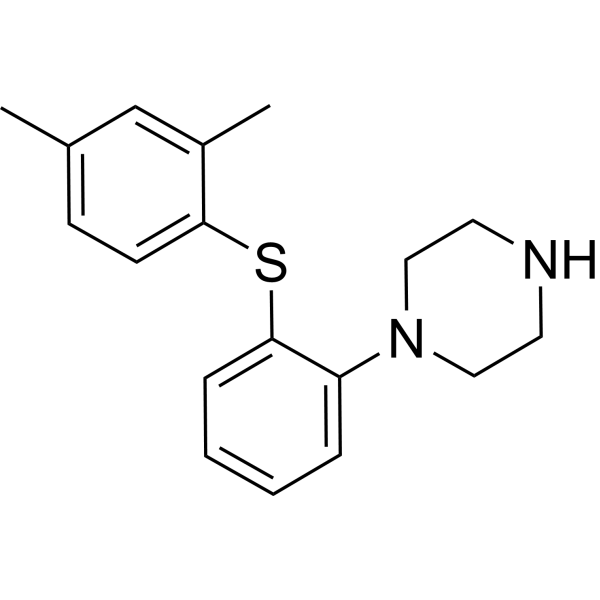
- Formula: C18H22N2S
- Molecular Weight:298.45
-
Storage:Powder -20°C, 3 years , 4°C, 2 years ; In solvent -80°C, 2 years , -20°C, 1 year

To place orders, for customer services and technical support, please contact: MedChemExpress USA
Tel: 609-228-6898 E-mail: [email protected] [email protected]


-
 Biological Activity
-
Chemical Information
-
Solvent & Solubility
- Purity & Documentation
- References
-
 Help & FAQs


-
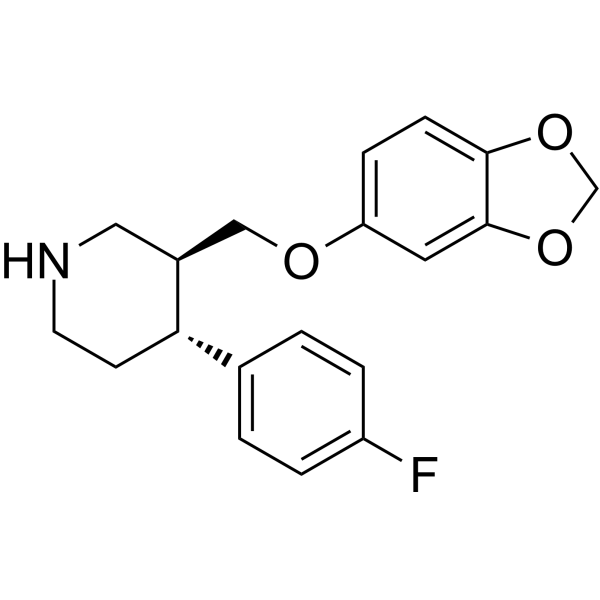
HY-122272
Paroxetine5-HT Inhibitor -
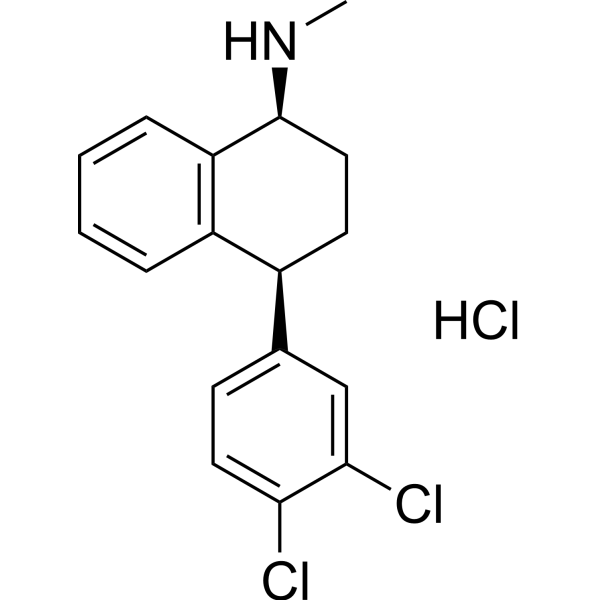
HY-B0176A
Sertraline hydrochlorideSSRI -
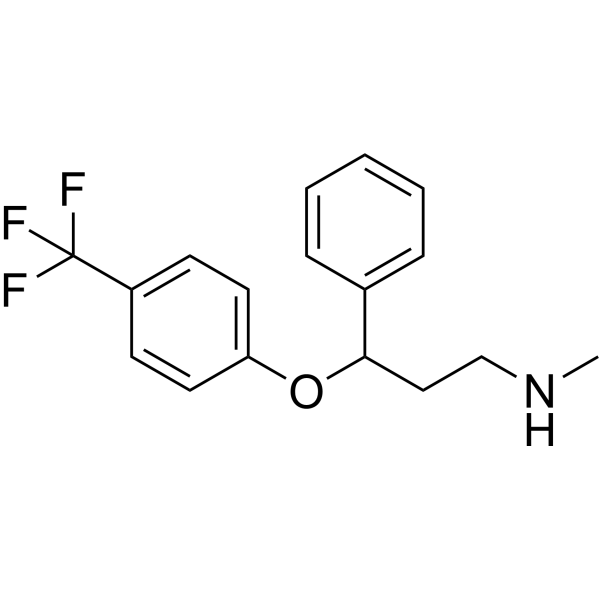
HY-B0102
Fluoxetine -
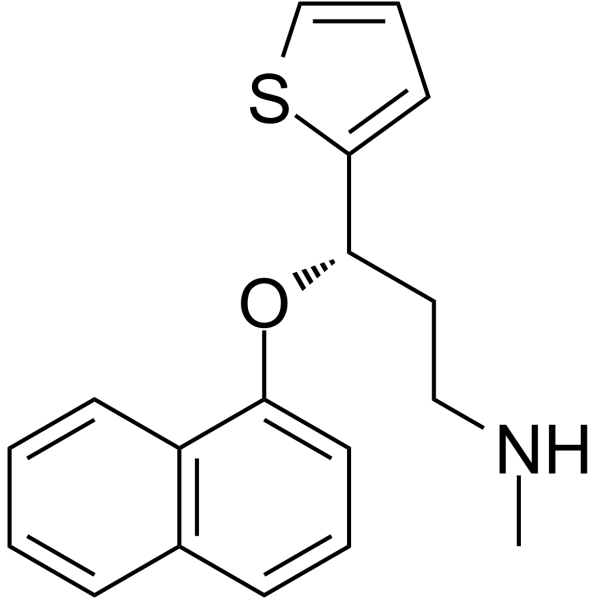
HY-B0161
DuloxetineSerotonin-norepinephrine Reuptake Inhibitor -
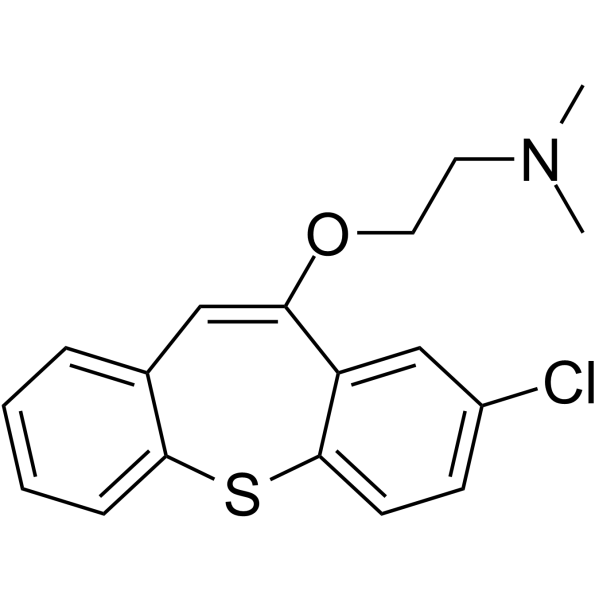
HY-103093
ZotepineAntipsychotic Agent -
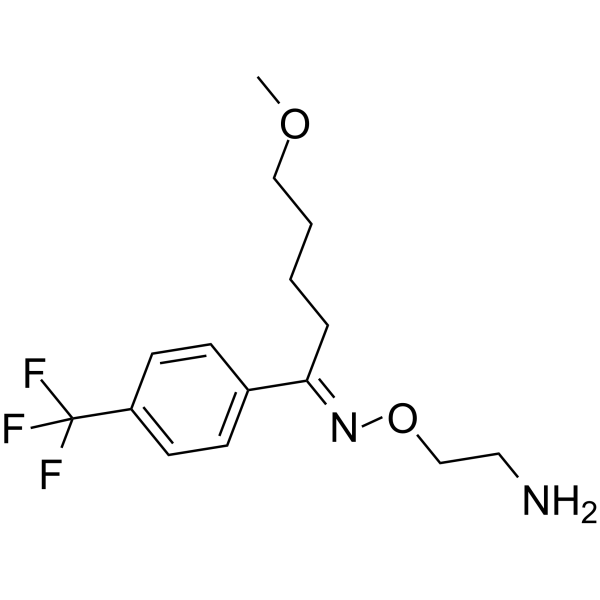
HY-B0103
FluvoxamineSerotonin Transporter Inhibitor -
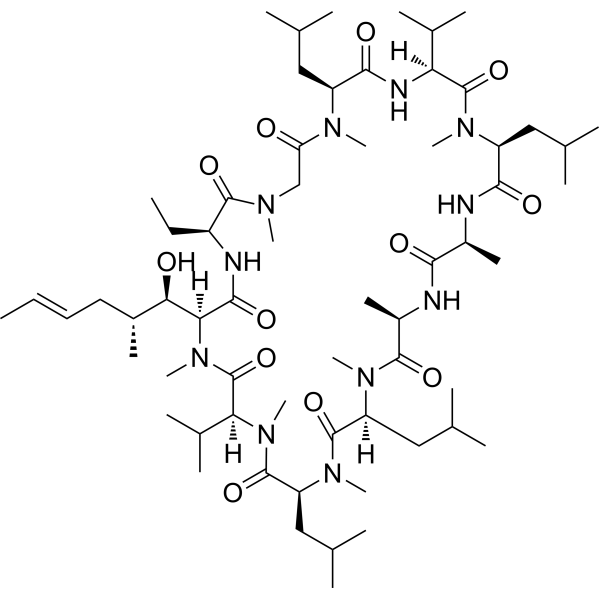
HY-B0579
Cyclosporin ACalcineurin Inhibitor -
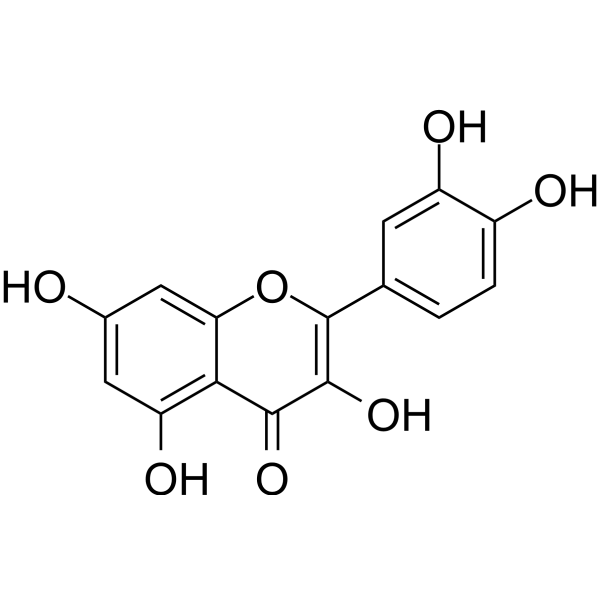
HY-18085
QuercetinFlavonoid Antioxidant -
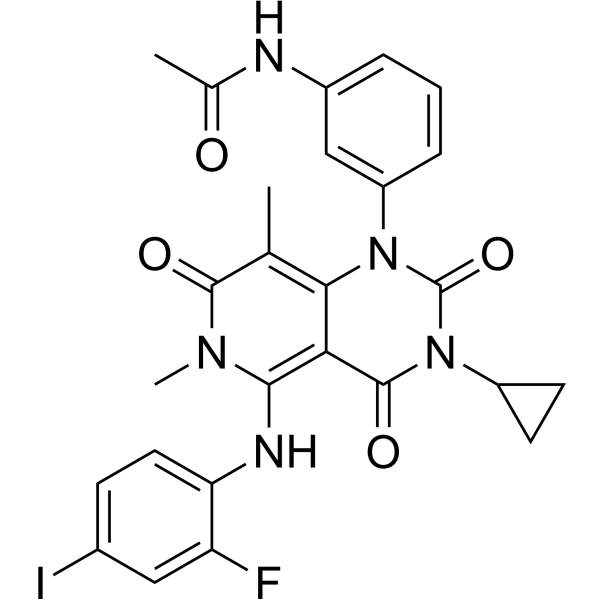
HY-10999
TrametinibMEK Inhibitor -
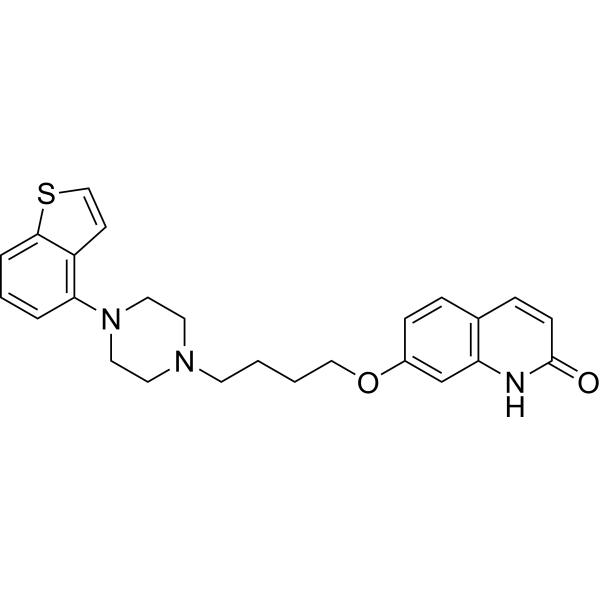
HY-15780
BrexpiprazoleAntipsychotic Agent -
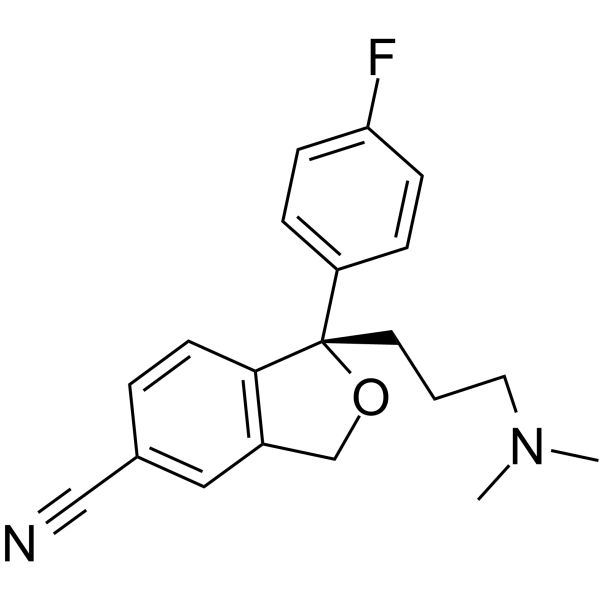
HY-14258
EscitalopramSerotonin Reuptake Inhibitor -
HY-B0196
VenlafaxineSerotonin/Norepinephrine Reuptake Inhibitor
Publications Citing Use of MedChemExpress (MCE) Vortioxetine
More- Nature. 2023 Dec;624(7992):672-681. [Abstract]
- Antioxidants (Basel). 2024 May 29;13(6):667. [Abstract]
- Neurobiol Dis. 2024 Oct 1:200:106651. [Abstract]
- Eur J Pharmacol. 2025 Jul 5:998:177460. [Abstract]
- Psychiatry Res. 2022 Nov:317:114838. [Abstract]
- Biomedicines. 2022 Jun 3;10(6):1318. [Abstract]
- Eur Arch Psychiatry Clin Neurosci. 2023 Mar;77(3):149-159. [Abstract]
- Mol Pharmacol. 2023 Nov;104(5):230-238. [Abstract]
- Pharmacol Res Perspect. 2026 Jun;14(3):e70246. [Abstract]
- bioRxiv. 2025 February 08.
- bioRxiv. 2024 Feb 9:2024.02.08.579543. [Abstract]
 Customer Validation & Images

-
Bio/Physico-chemical Assay
-
Bio/Physico-chemical Assay
-
Bio/Physico-chemical Assay
All 5-HT Receptor Isoforms
More

Biological Activity
Description
IC50 & Target
|
5-HT1A Receptor |
5-HT1B Receptor |
5-HT3A Receptor |
5-HT7 Receptor |
sPLA2 15 nM (Ki) |
5-HT3A Receptor 3.7 nM (Ki) |
Human 5-HT7 Receptor 19 nM (Ki) |
SERT 1.6 nM (Ki) |
Cellular Effect
|
Cell Line

|
Type | Value | Description | References |
|---|---|---|---|---|
| Monocyte | IC50 |
2.9 nM
Compound: 1
|
Inhibition of PMA-induced oxidative burst in human monocytes preincubated for 1 hr followed by PMA stimulation and measured after 30 mins
Inhibition of PMA-induced oxidative burst in human monocytes preincubated for 1 hr followed by PMA stimulation and measured after 30 mins
|
[PMID: 32992247] |
In Vitro
Vortioxetine (Compound 5m) is a multimodal serotonergic agent, inhibits 5-HT1A, 5-HT1B, 5-HT3A, 5-HT7 receptor and SERT with Ki values of 15 nM, 33 nM, 3.7 nM, 19 nM and 1.6 nM, respectively. Vortioxetine displays antagonistic properties at 5-HT3A and 5-HT7 receptors, partial agonist properties at 5-HT1B receptors, agonistic properties at 5-HT1A receptors, and potent inhibition of SERT[1]. Vortioxetine is a partial h5-HT 1B receptor agonist with EC50 of 460 nM and intrinsic activity of 22% using a whole-cell cAMP-based assay. Vortioxetine binds to the r5-HT 7 receptor with a Ki value of 200 nM and is a functional antagonist at the r5-HT7 receptor with an IC50 of 2 μM in an in vitro whole-cell cAMP assay[5].
MedChemExpress (MCE) has not independently confirmed the accuracy of these methods. They are for reference only. .
In Vivo
MedChemExpress (MCE) has not independently confirmed the accuracy of these methods. They are for reference only.


Chemical Information
-
CAS No. 508233-74-7
-
Appearance Solid
-
Molecular Weight 298.45
-
Formula C18H22N2S
-
Color Light yellow to yellow
-
SMILES
CC1=CC=C(SC2=CC=CC=C2N3CCNCC3)C(C)=C1
-
Synonyms
Lu AA 21004
-
Shipping
Room temperature in continental US; may vary elsewhere.
-
Storage
Powder -20°C 3 years 4°C 2 years In solvent -80°C 2 years -20°C 1 year


Publications (11)
-
Journal Impact Factor
-
Most Recent
-
Nature
2023 Dec;624(7992):672-681. PMID: 37935376 -
Antioxidants (Basel)
Pitavastatin Calcium Confers Fungicidal Properties to Fluconazole by Inhibiting Ubiquinone Biosynthesis and Generating Reactive Oxygen Species. [Abstract]2024 May 29;13(6):667. PMID: 38929106 -
Neurobiol Dis
Glial expression of Drosophila UBE3A causes spontaneous seizures that can be modulated by 5-HT signaling. [Abstract]2024 Oct 1:200:106651. PMID: 39197537 -
Eur J Pharmacol
2025 Jul 5:998:177460. PMID: 40049576 -
Psychiatry Res
2022 Nov:317:114838. PMID: 36103758 -
Biomedicines
Inhibitory Effectiveness in Delayed-Rectifier Potassium Current Caused by Vortioxetine, Known to Be a Novel Antidepressant. [Abstract]2022 Jun 3;10(6):1318. PMID: 35740340
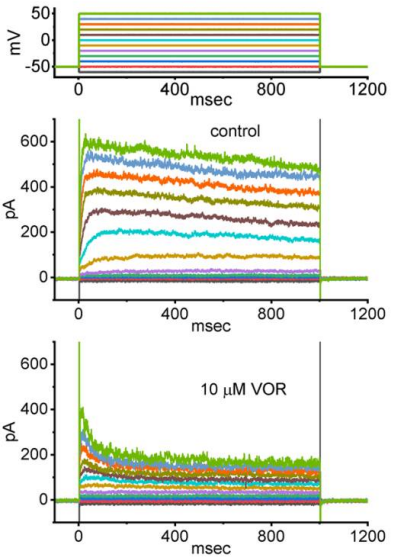
Vortioxetine purchased from MedChemExpress. Usage Cited in: Biomedicines. 2022 Jun 3;10(6):1318. [Abstract]
Representative current traces acquired in the absence (upper) and presence (lower) of 10 μM VOR. Voltage-clamp protocol that we used is illustrated in the uppermost part.
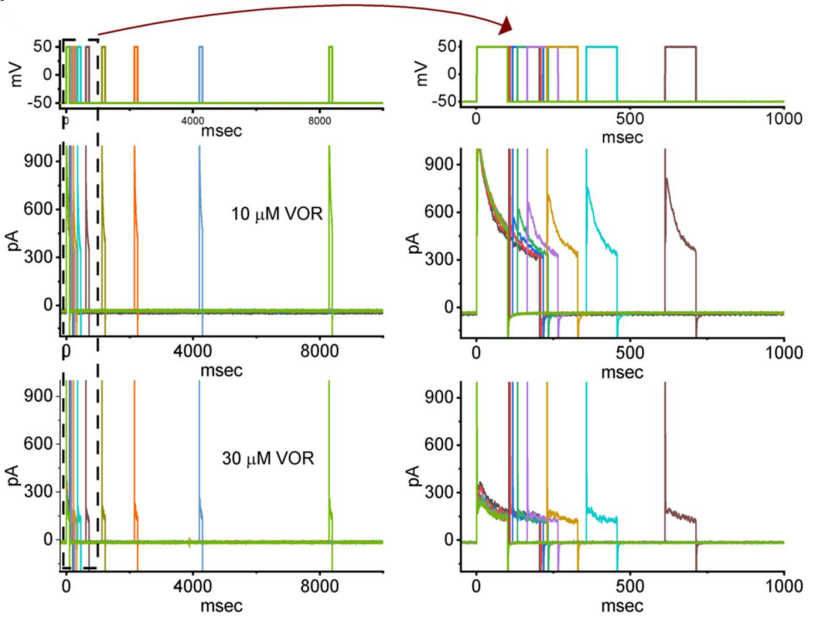
Vortioxetine purchased from MedChemExpress. Usage Cited in: Biomedicines. 2022 Jun 3;10(6):1318. [Abstract]
Representative current traces obtained in the presence of 10 μM Vortioxetine (upper) and 30 μM Vortioxetine (lower). The uppermost parts denote the voltage-clamp protocol applied. The right side shows the expanded records (i.e., potential and current traces) taken from the dashed box in the left side for a short time scale.
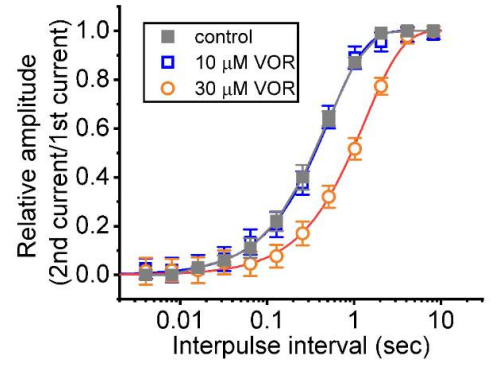
Vortioxetine purchased from MedChemExpress. Usage Cited in: Biomedicines. 2022 Jun 3;10(6):1318. [Abstract]
The mean relationship of the relative amplitude versus the interpulse interval in the absence (filled gray squares) and presence of 10 mM Vortioxetine (open blue squares) or 30 μM Vortioxetine (open red circles). The x-axis is displayed on the logarithmic scale. The time course as indicated in smooth line was goodness-of-fit to a single exponential. Each point represents the mean ± SEM (n = 7).
-
Eur Arch Psychiatry Clin Neurosci
YY1 (Yin-Yang 1), a transcription factor regulating systemic inflammation, is involved in cognitive impairment of depression. [Abstract]2023 Mar;77(3):149-159. PMID: 36436207 -
Mol Pharmacol
2023 Nov;104(5):230-238. PMID: 37567783 -
Pharmacol Res Perspect
Comparative Sleep Architecture Profiles of Antidepressants in Mice: Pharmacological Characterization of Paroxetine, Sertraline, Duloxetine, Mirtazapine and Vortioxetine. [Abstract]2026 Jun;14(3):e70246. PMID: 42083131 -
-
bioRxiv
Glial expression of Drosophila UBE3A causes spontaneous seizures modulated by 5-HT signaling. [Abstract]2024 Feb 9:2024.02.08.579543. PMID: 38370819


Solvent & Solubility
In Vitro:
DMSO : 50 mg/mL (167.53 mM; Need ultrasonic; Hygroscopic DMSO has a significant impact on the solubility of product, please use newly opened DMSO)
Please refer to the solubility information to select the appropriate solvent. Once prepared, please aliquot and store the solution to prevent product inactivation from repeated freeze-thaw cycles.
Storage method and period of stock solution: -80°C, 2 years; -20°C, 1 year. When stored at -80°C, please use it within 2 years. When stored at -20°C, please use it within 1 year.
Please refer to the solubility information to select the appropriate solvent. Once prepared, please aliquot and store the solution to prevent product inactivation from repeated freeze-thaw cycles.
Storage method and period of stock solution: -80°C, 2 years; -20°C, 1 year. When stored at -80°C, please use it within 2 years. When stored at -20°C, please use it within 1 year.
Concentration (start) × Volume (start) = Concentration (final) × Volume (final)
In Vivo:
Select the appropriate dissolution method based on your experimental animal and administration route.
- For the following dissolution methods, please ensure to first prepare a clear stock solution using an In Vitro approach and then sequentially add co-solvents:
- To ensure reliable experimental results, the clarified stock solution can be appropriately stored based on storage conditions. As for the working solution for In Vivo experiments, it is recommended to prepare freshly and use it on the same day.
- The percentages shown for the solvents indicate their volumetric ratio in the final prepared solution. If precipitation or phase separation occurs during preparation, heat and/or sonication can be used to aid dissolution.
Add each solvent one by one: 10% DMSO 40% PEG300 5% Tween-80 45% Saline
Solubility: ≥ 2.5 mg/mL (8.38 mM); Clear solution
This protocol yields a clear solution of ≥ 2.5 mg/mL (saturation unknown).
Taking 1 mL working solution as an example, add 100 μL DMSO stock solution (25.0 mg/mL) to 400 μL PEG300, and mix evenly; then add 50 μL Tween-80 and mix evenly; then add 450 μL Saline to adjust the volume to 1 mL.
Preparation of Saline: Dissolve 0.9 g sodium chloride in ddH₂O and dilute to 100 mL to obtain a clear Saline solution.
Add each solvent one by one: 10% DMSO 90% (20% SBE-β-CD in Saline)
Solubility: 2.5 mg/mL (8.38 mM); Suspended solution; Need ultrasonic
This protocol yields a suspended solution of 2.5 mg/mL. Suspended solution can be used for oral and intraperitoneal injection.
Taking 1 mL working solution as an example, add 100 μL DMSO stock solution (25.0 mg/mL) to 900 μL 20% SBE-β-CD in Saline, and mix evenly.
Preparation of 20% SBE-β-CD in Saline (4°C, storage for one week): 2 g SBE-β-CD powder is dissolved in 10 mL Saline, completely dissolve until clear.
In Vivo Dissolution Calculator
Please enter the basic information of animal experiments:
-
-
-
-
Recommended: Prepare an additional quantity of animals to account for potential losses during experiments.
Please enter your animal formula composition:
-
%DMSO +
Recommended: Keep the proportion of DMSO in working solution below 2% if your animal is weak.
-
%+
-
+%Tween-80 + +
-
%Saline +
The co-solvents required include: DMSO, . All of co-solvents are available by MedChemExpress (MCE). , Tween 80. All of co-solvents are available by MedChemExpress (MCE).
Working solution concentration: 0.22 mg/mL
Method for preparing stock solution: mg drug dissolved in μL DMSO. Stock solution concentration: mg/mL.
1. Take μL DMSO stock solution;
2. Add μL .
μL , mix evenly;
3. Then add μL Tween 80, mix evenly;
4. Then add μL
Please ensure that the stock solution in the first step is dissolved to a clear state, and add co-solvents in sequence. You can use ultrasonic heating (ultrasonic cleaner, recommended frequency 20-40 kHz), vortexing, etc. to assist dissolution.


Purity & Documentation
-
Data Sheet (278 KB)
-
SDS (393 KB)
- English - EN (393 KB)
- Français - FR (393 KB)
- Deutsch - DE (393 KB)
- Norwegian - NO (393 KB)
- Español - ES (393 KB)
- Swedish - SV (393 KB)
- Italian - IT (393 KB)
- Korean - KR (393 KB)
- Portuguese - PT (393 KB)
-
Handling Instructions (2659 KB)
References
[1]. Bang-Andersen B, et al. Discovery of 1-[2-(2,4-dimethylphenylsulfanyl)phenyl]piperazine (Lu AA21004): a novel multimodal compound for the treatment of major depressive disorder. J Med Chem. 2011 May 12;54(9):3206-21. [Content Brief]
[2]. Guilloux JP, et al. Antidepressant and anxiolytic potential of the multimodal antidepressant vortioxetine (Lu AA21004) assessed by behavioural and neurogenesis outcomes in mice. Neuropharmacology. 2013 May 28;73C:147-159. [Content Brief]
[3]. Theunissen EL, et al. A randomized trial on the acute and steady-state effects of a new antidepressant, vortioxetine (Lu AA21004), on actual driving and cognition. Clin Pharmacol Ther. 2013 Jun;93(6):493-501. [Content Brief]
[4]. Rothschild AJ, et al. Vortioxetine (Lu AA21004) 5mg in generalized anxiety disorder: results of an 8-week randomized, double-blind, placebo-controlled clinical trial in the United States. Eur Neuropsychopharmacol. 2012 Dec;22(12):858-66. [Content Brief]
[5]. Mrk A, et al. Pharmacological effects of Lu AA21004: a novel multimodal compound for the treatment of major depressive disorder. J Pharmacol Exp Ther. 2012 Mar;340(3):666-75. [Content Brief]


Complete Stock Solution Preparation Table
Please refer to the solubility information to select the appropriate solvent. Once prepared, please aliquot and store the solution to prevent product inactivation from repeated freeze-thaw cycles.
Storage method and period of stock solution: -80°C, 2 years; -20°C, 1 year. When stored at -80°C, please use it within 2 years. When stored at -20°C, please use it within 1 year.
| Optional Solvent | Concentration Solvent Mass | 1 mg | 5 mg | 10 mg | 25 mg |
|---|---|---|---|---|---|
| DMSO | 1 mM | 3.3506 mL | 16.7532 mL | 33.5064 mL | 83.7661 mL |
| 5 mM | 0.6701 mL | 3.3506 mL | 6.7013 mL | 16.7532 mL | |
| 10 mM | 0.3351 mL | 1.6753 mL | 3.3506 mL | 8.3766 mL | |
| 15 mM | 0.2234 mL | 1.1169 mL | 2.2338 mL | 5.5844 mL | |
| 20 mM | 0.1675 mL | 0.8377 mL | 1.6753 mL | 4.1883 mL | |
| 25 mM | 0.1340 mL | 0.6701 mL | 1.3403 mL | 3.3506 mL | |
| 30 mM | 0.1117 mL | 0.5584 mL | 1.1169 mL | 2.7922 mL | |
| 40 mM | 0.0838 mL | 0.4188 mL | 0.8377 mL | 2.0942 mL | |
| 50 mM | 0.0670 mL | 0.3351 mL | 0.6701 mL | 1.6753 mL | |
| 60 mM | 0.0558 mL | 0.2792 mL | 0.5584 mL | 1.3961 mL | |
| 80 mM | 0.0419 mL | 0.2094 mL | 0.4188 mL | 1.0471 mL | |
| 100 mM | 0.0335 mL | 0.1675 mL | 0.3351 mL | 0.8377 mL |


Vortioxetine Related Classifications
HY-15414 Related Classifications
 Powered by Bioz