



MS8815

Based on 1 Customer Validation
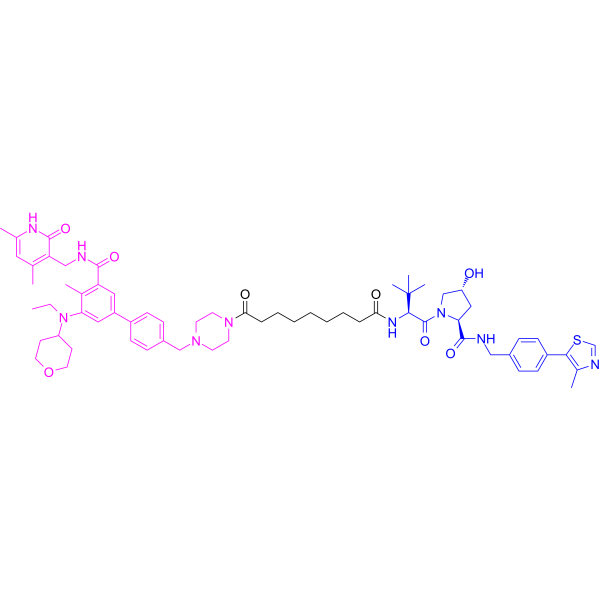
MS8815 is a EZH2 PROTAC degrader, with a DC50 of 140 nM in MDA-MB-453 triple-negative breast cancer (TNBC) cells and an IC50 of 8.6 nM against human EZH2. MS8815 induces ubiquitin-proteasome system-mediated degradation of EZH2, reduces the levels of EED, SUZ12, FOXM1, H3K27me3 and global m6A, and increases the protein level of HMGCS2. MS8815 can be used in the research of breast cancer and prostate cancer.
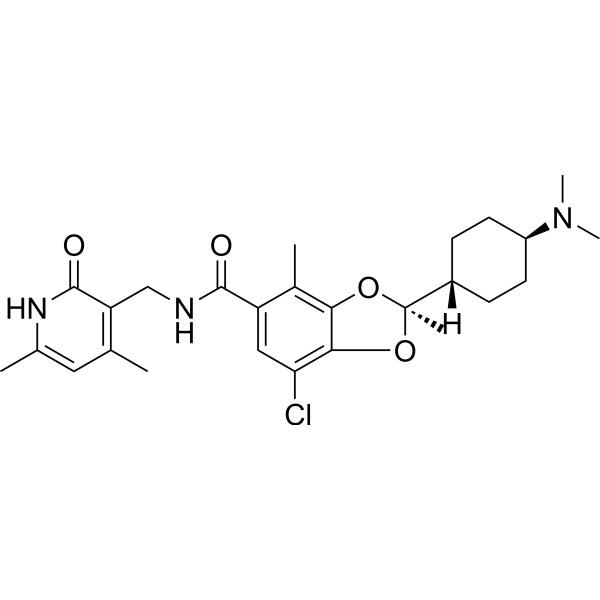
(Pink: EZH2 ligand (HY-147230); Blue: VHL ligand (HY-125845); Black: linker).
For research use only. We do not sell to patients.
- Purity : 99.95%
- CAS No.: 2855085-25-3
- Formula: C65H87N9O8S
- Molecular Weight:1154.51
-
Storage:
-20°C, sealed storage, away from moisture
* In solvent : -80°C, 6 months; -20°C, 1 month (sealed storage, away from moisture)

To place orders, for customer services and technical support, please contact: MedChemExpress USA
Tel: 609-228-6898 E-mail: [email protected] [email protected]


-
 Biological Activity
-
Chemical Information
-
Solvent & Solubility
- Protocols
- Purity & Documentation
- References
-
 Help & FAQs


-
HY-148333
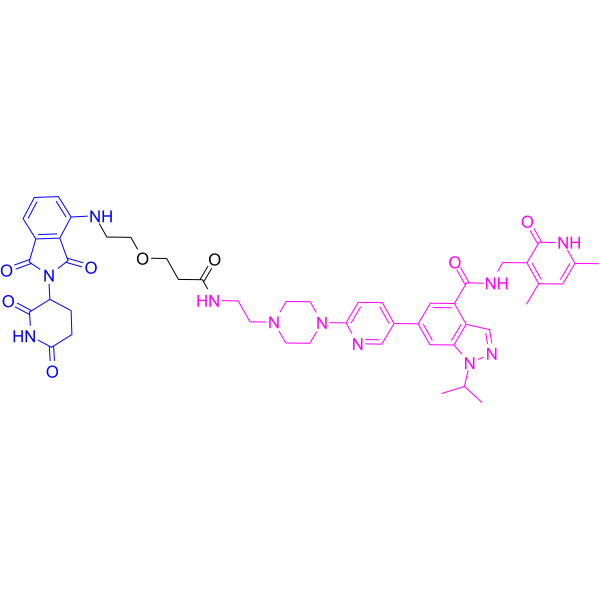
MS177EZH2 PROTAC Degrader -
HY-147525
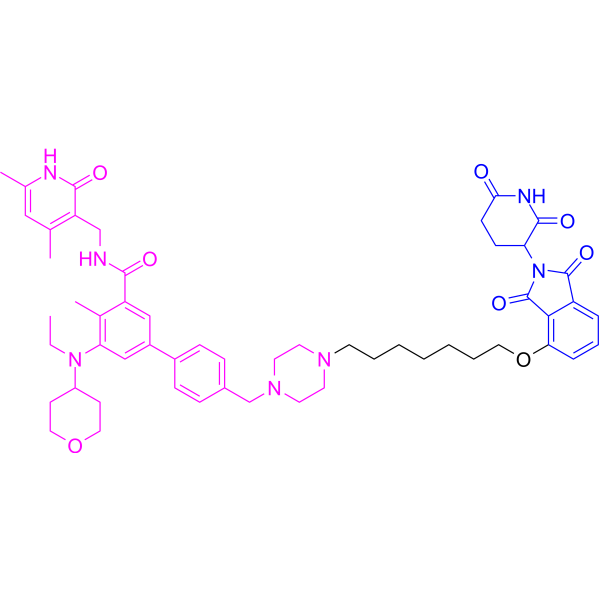
PROTAC EZH2 Degrader-1PROTAC EZH2 Degrader -
HY-17364
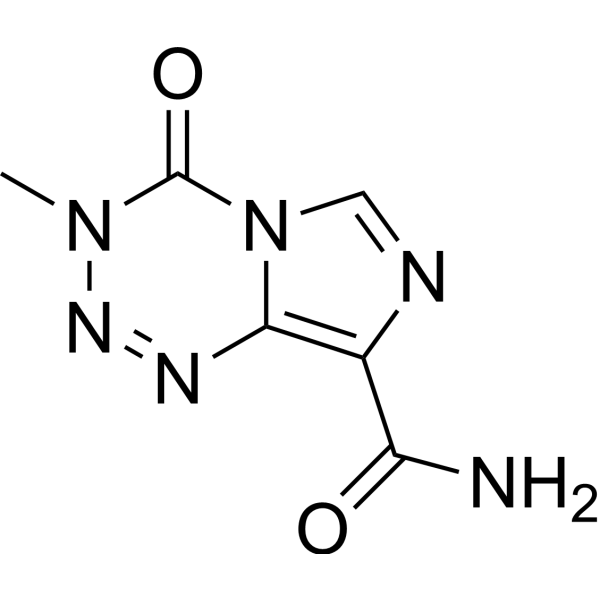
TemozolomideDNA Alkylator -
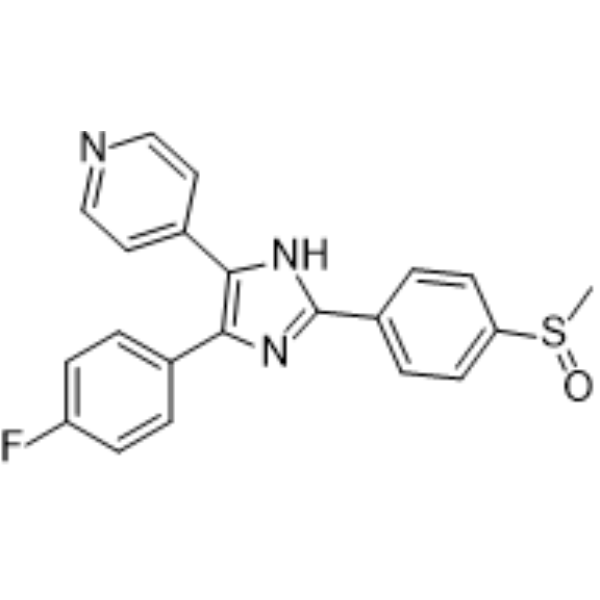
HY-10256
Adezmapimodp38 MAPK Inhibitor -
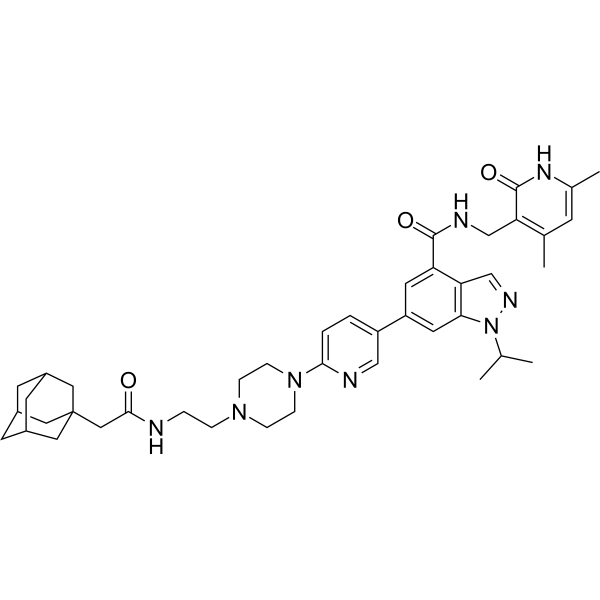
HY-133129
MS1943EZH2 HyT Degrader -

HY-P9907
TrastuzumabHER2 Blocking Antibody -
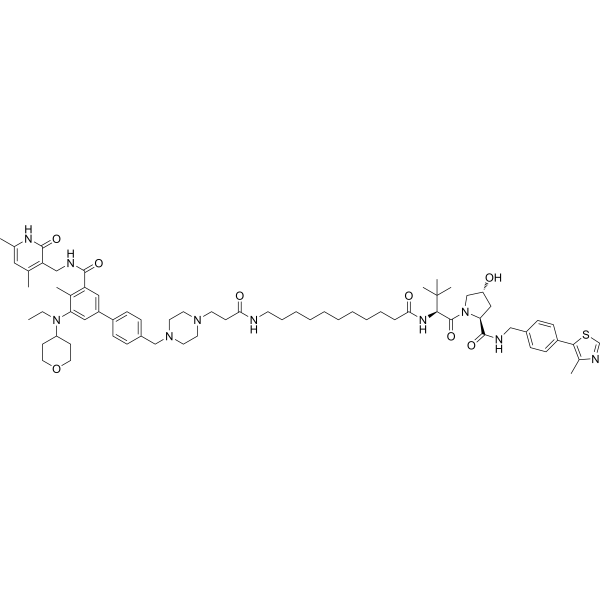
HY-162250
MS8847EZH2 Degrader -
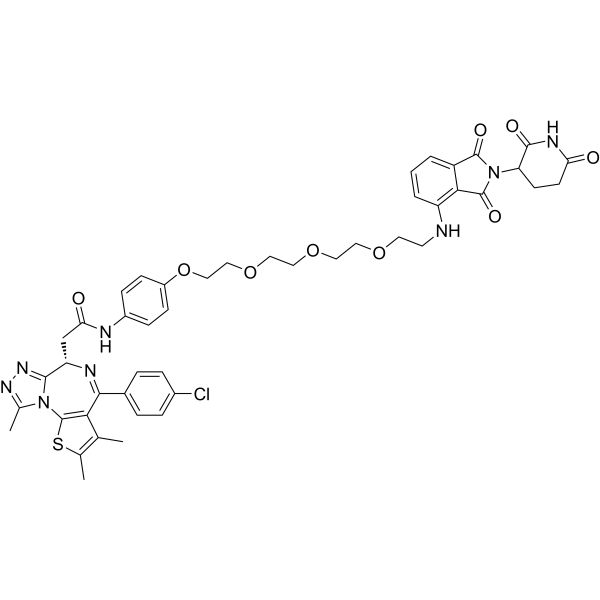
HY-16954
ARV-825PROTAC BRD2/BRD3/BRD4 Degrader -
HY-109108
ValemetostatEZH1/2 Inhibitor


Biological Activity
Description
IC50 & Target
[1]|
EZH2 8.6 nM (IC50) |
Cellular Effect
|
Cell Line

|
Type | Value | Description | References |
|---|---|---|---|---|
| EOL1 | IC50 |
0.42 μM
Compound: MS8815
|
Anti-proliferative activity against human EOL1 cells assessed as cell viability measured after 5 days incubation by CCK-8 assay
Anti-proliferative activity against human EOL1 cells assessed as cell viability measured after 5 days incubation by CCK-8 assay
|
[PMID: 38295690] |
| MDA-MB-453 | IC50 |
2.3 μM
Compound: 27
|
Antiproliferative activity against human MDA-MB-453 cells assessed as inhibition of cell viability incubated for 5 days by CCK8 assay
Antiproliferative activity against human MDA-MB-453 cells assessed as inhibition of cell viability incubated for 5 days by CCK8 assay
|
[PMID: 38056296] |
| MV4-11 | IC50 |
1 μM
Compound: MS8815
|
Anti-proliferative activity against human MV4-11 cells assessed as cell viability measured after 5 days incubation by CCK-8 assay
Anti-proliferative activity against human MV4-11 cells assessed as cell viability measured after 5 days incubation by CCK-8 assay
|
[PMID: 38295690] |
| RS4-11 | IC50 |
1.4 μM
Compound: MS8815
|
Anti-proliferative activity against human RS4-11 cells assessed as cell viability measured after 5 days incubation by CCK-8 assay
Anti-proliferative activity against human RS4-11 cells assessed as cell viability measured after 5 days incubation by CCK-8 assay
|
[PMID: 38295690] |
In Vitro
MS8815 (0.1-10 μM; 6 days) inhibits the growth of luminal breast cancer CAMA1 cells, with an IC50 of 2.4 μM after 6 days of treatment[1].
MS8815 (2.5 μM; until colony formation) reduces colony formation in luminal breast cancer T47D cells[1].
MS8815 (0.1-5 μM; 48 h) reduces the protein levels of EZH2, EED and H3K27me3 in luminal breast cancer T47D cells in a dose-dependent manner[1].
MS8815 (0.1-5 μM; 48 h) reduces the protein levels of FOXM1 and EZH2 in luminal breast cancer T47D cells in a dose-dependent manner[1].
MS8815 (0.1-10 μM; 6 days) inhibits the growth of tamoxifen-resistant luminal breast cancer T47D-TR cells, with an IC50 of 1.9 μM after 6 days of treatment[1].
MS8815 (2.5 μM; 48 h) reduces the protein levels of EED, FOXM1 and EZH2 in tamoxifen-resistant luminal breast cancer T47D-TR cells[1].
MS8815 (0.1-10 μM; 2-6 days) inhibits the growth of luminal breast cancer T47D cells in a time-dependent manner, with gradually increased activity observed after 2, 4, and 6 days of treatment[1].
MS8815 (0.1-100 μM; 72 h) potently inhibits the proliferation of human prostate cancer C4-2 cells, with an IC50 of 2.17 μM[2].
MS8815 (0.01-3 μM; 3-72 h) induces potent, time-dependent, concentration-dependent, and ubiquitin-proteasome system-dependent degradation of EZH2 in MDA-MB-453 triple-negative breast cancer (TNBC) cells, with a DC50 of 140 nM. It also degrades SUZ12 and EED, and reduces the level of H3K27me3[4].
MS8815 (0.3-3 μM; 48 h) potently induces EZH2 degradation in BT549 triple-negative breast cancer (TNBC) cells, with nearly complete degradation observed at a concentration of 0.3 μM after 48 h of treatment[4].
MS8815 (0.03-1 μM; 48 h) does not induce EZH1 degradation in MDA-MB-453 cells, although it inhibits EZH1 methyltransferase activity in biochemical assays[4].
MS8815 (serially diluted starting from 10 μM; 5 days) potently inhibits the proliferation of triple-negative breast cancer (TNBC) cell lines BT549, MDA-MB-468, MDA-MB-453 and SUM159, with GI50 values ranging from 1.7 to 2.3 μM. It exhibits better activity than EZH2 inhibitors and slightly higher potency than YM281[4].
MS8815 (serial dilution starting from 10 μM; 5-day proliferation assay; 0.1-1 μM; 48 h degradation assay) potently inhibits the proliferation of primary patient-derived 515a TNBC cells, with a GI50 of 1.4 μM; moreover, after 48 h of treatment, it induces nearly complete degradation of EZH2 at a concentration of 100 nM[4].
MS8815 efficiently degrades EZH2 in MDA-MB-453 cells (DC50 = 140 nM) and potently inhibits the growth of multiple TNBC cell lines (GI50 = 1.7-2.3 μM) as well as patient-derived primary TNBC ductal adenocarcinoma 515a cells (GI50 = 1.4 μM), overcoming the limitations of traditional EZH2 catalytic inhibitors[5].
MS8815 (administered for 3 days) acts synergistically with STM2457 to reduce the viability of human prostate cancer C4-2 and PC-3 cells, while only exerting an additive effect in human benign prostatic hyperplasia BPH-1 cells[6].
MS8815 potently inhibits the methyltransferase activity of EZH2 in biochemical assays, with an IC50 value of 8.6 nM[4].
MS8815 inhibits the methyltransferase activity of EZH1 in biochemical assays, with an IC50 of 62 nM[4].
MS8815 (10 μM) exhibits selectivity for EZH2 over a panel of 20 protein methyltransferases, and only exerts partial inhibitory activity against MLL1 at 10 μM[4].
MS8815 (1 μM; 3 days) significantly reduces the global mRNA m6A level in human prostate cancer C4-2 cells[6].
MS8815 (1 μM; 3 days) significantly reduces the global mRNA m6A level in human prostate cancer PC-3 cells[6].
MS8815 (1 μM; 3 days) reduces the protein levels of EZH2, YTHDF1, METTL14, WTAP and H3K27me3 in human prostate cancer C4-2 and PC-3 cells[6].
MS8815 (20 mg/mL; immediately post-preparation, 5 days postsynthesis) form stable fucoidan-functionalized nanoparticles, and the length of PEG linker is positively correlated with nanoparticle size. A higher GATS1i score correlates with a more significant decrease in colloidal stability over time[7].
MedChemExpress (MCE) has not independently confirmed the accuracy of these methods. They are for reference only.
-
Cell Line:Luminal breast cancer T47D cells
-
Concentration:0.1 μM; 1 μM; 10 μM
-
Incubation Time:6 days
-
Result:Potently inhibited T47D cell growth with an IC50 of 2 μM, as measured by reduced relative absorbance compared to DMSO control.
Showed significantly greater inhibitory effect than control compounds (MS8815-N, EPZ-6438).
-
Cell Line:Luminal breast cancer CAMA1 cells
-
Concentration:0.1 μM; 1 μM; 10 μM
-
Incubation Time:6 days
-
Result:Inhibited CAMA1 cell growth with an IC50 of 2.4 μM, as measured by reduced relative absorbance compared to DMSO control.
Showed significantly greater inhibitory effect than control compounds (MS8815-N, EPZ-6438).
-
Cell Line:Luminal breast cancer T47D cells
-
Concentration:0.1μM; 0.5 μM; 1 μM; 2.5 μM; 5 μM
-
Incubation Time:48 h
-
Result:Reduced EZH2 and EED protein levels, and reduced H3K27me3 levels in T47D cells at 2.5 μM.
Caused dose-dependent reductions in EZH2 protein levels with increasing concentrations (0.1 to 5 μM).\n
Reduced FOXM1 and EZH2 protein levels in T47D cells at 2.5 μM, while control compounds did not produce similar reductions.
Caused dose-dependent reductions in FOXM1 protein levels with increasing concentrations (0.1 to 5 μM).
-
Cell Line:Tamoxifen-resistant luminal breast cancer T47D-TR cells
-
Concentration:0.1 μM; 1 μM; 10 μM
-
Incubation Time:6 days
-
Result:Inhibited T47D-TR cell growth with an IC50 of 1.9 μM, as measured by reduced relative absorbance compared to DMSO control.
Showed significantly greater inhibitory effect than control compounds (MS8815-N, EPZ-6438).
-
Cell Line:Tamoxifen-resistant luminal breast cancer T47D-TR cells
-
Concentration:2.5 μM
-
Incubation Time:48 h
-
Result:Reduced EZH2 and EED protein levels in T47D-TR cells.
Reduced FOXM1 and EZH2 protein levels in T47D-TR cells, while control compounds did not produce similar reductions.
-
Cell Line:Luminal breast cancer T47D cells
-
Concentration:0.1 μM; 1 μM; 10 μM
-
Incubation Time:2 days; 4 days; 6 days
-
Result:Inhibited T47D cell growth in a time-dependent manner, with greater inhibition observed at 6 days compared to 2 or 4 days of treatment.
-
Cell Line:Human prostate cancer C4-2 cells
-
Concentration:0.1 μM; 1 μM; 10 μM; 100 μM
-
Incubation Time:72 h
-
Result:Potently inhibited C4-2 cell proliferation with an IC50 of 2.17 μM, which was significantly more potent than MS177 (IC50 = 11.78 μM) and EPZ6438 (IC50 = 45.50 μM).
-
Cell Line:MDA-MB-453 TNBC cells
-
Concentration:0.01 μM; 0.03 μM; 0.1 μM; 0.3 μM; 1 μM; 3 μM
-
Incubation Time:3 h; 6 h; 12 h; 24 h; 48 h; 72 h
-
Result:Induced time-dependent EZH2 degradation, with noticeable degradation at 6 h and maximal degradation at 48 h.
Induced concentration-dependent EZH2 degradation with a DC50 of 140 nM.
Co-treated with EPZ-6438 or VHL-1 completely rescued EZH2 degradation.
Pre-treated with MG132 fully recovered EZH2 degradation, while pre-treated with MLN4924 partially rescued EZH2 degradation.
Degraded PRC2 components SUZ12 and EED, and reduced the H3K27me3 mark at 48-72 h post-treatment.
-
Cell Line:BT549 TNBC cells
-
Concentration:0.3 μM; 3 μM
-
Incubation Time:48 h
-
Result:Induced nearly complete EZH2 degradation at 0.3 μM, with more effective activity than shorter-linker analogs and PEG-linker analogs.
-
Cell Line:MDA-MB-453 and SUM159 TNBC cells
-
Concentration:0.03 μM; 0.1 μM; 0.3 μM; 1 μM
-
Incubation Time:48 h
-
Result:Did not induce significant EZH1 degradation in either cell line, despite potent biochemical inhibition of EZH1.
-
Cell Line:BT549, MDA-MB-468, MDA-MB-453, SUM159 TNBC cell lines
-
Concentration:serial dilutions starting from 10 μM (2-fold dilutions)
-
Incubation Time:5 days
-
Result:Effectively suppressed cell proliferation with GI50 values of 2.0 μM (BT549), 1.7 μM (MDA-MB-468), 2.3 μM (MDA-MB-453), and 2.0 μM (SUM159).
This activity was superior to that of the EZH2 inhibitor EPZ-6438 and negative control MS8815N, and slightly more potent than the EZH2 PROTAC YM281.
-
Cell Line:Human prostate cancer C4-2 cells
-
Concentration:1 μM
-
Incubation Time:3 days
-
Result:Reduced the global m6A level in total RNA to approximately 0.38%, compared to the DMSO control value of approximately 0.52%.
-
Cell Line:Human prostate cancer PC-3 cells
-
Concentration:1 μM
-
Incubation Time:3 days
-
Result:Reduced the global m6A level in total RNA to approximately 0.3%, compared to the DMSO control value of approximately 0.5%.
-
Cell Line:human prostate cancer C4-2 and PC-3 cells
-
Concentration:1 μM
-
Incubation Time:3 days
-
Result:Reduced protein levels of EZH2, YTHDF1, METTL14, and WTAP, and decreased H3K27me3 levels compared to DMSO-treated controls.
Left METTL3 protein levels unchanged.
In Vivo
MS8815 (50 mg/kg/day; i.p.; five times weekly; 35 days) exerts significant anti-tumor activity in C4-2 PCa xenografts, and combining MS8815 with ADAR1 knockdown achieves a synergistic reduction in tumor growth in SCID mice[2].
MS8815 (25-100 mg/kg; i.p.; daily, 5 days per week; 28 days) increases HMGCS2 protein levels and reduces EZH2 and H3K27me3 protein levels in a dose-dependent manner in C4-2 xenograft tumors, with the highest dose (100 mg/kg) achieving the greatest magnitude of effect[3].
MS8815 (50 mg/kg; i.p.; twice weekly; 5 days on/2 days off for 30 days) reduces tumor burden in a castration-resistant prostate cancer patient-derived xenograft model, with significant decreases in tumor volume and weight relative to vehicle control[6].
MedChemExpress (MCE) has not independently confirmed the accuracy of these methods. They are for reference only.
-
Animal Model:SCID mice (male, 5 weeks old)[2]
-
Dosage:25 mg/kg/day; 50 mg/kg/day; 100 mg/kg/day; 200 mg/kg/day
-
Administration:i.p.; five times weekly; 28 days
-
Result:Triggered tumor repression, with more significant effects at 50 mg/kg/day and higher doses.
Showed no sudden death or evident weight loss in any treatment group.
Confirmed EZH2 degradation in xenograft tumors.
-
Animal Model:SCID mice (male, 5 weeks old)[2]
-
Dosage:50 mg/kg/day
-
Administration:i.p.; five times weekly; 35 days
-
Result:Significantly reduced tumor volume and weight compared to vehicle control.
Achieved synergistic reduction in tumor volume and weight when co-administered with doxycycline-induced ADAR1 knockdown, with significantly greater efficacy than MS8815 alone or ADAR1 knockdown alone.
-
Animal Model:NCG (male, 4 weeks old, immunodeficient, precastrated, C4-2 human prostate cancer cell xenograft)[3]
-
Dosage:25 mg/kg; 50 mg/kg; 100 mg/kg
-
Administration:i.p.; daily, 5 days per week; 28 days
-
Result:Increased HMGCS2 protein levels to ~11-fold relative to vehicle.
Reduced EZH2 protein levels to ~0.7-fold relative to vehicle.
Reduced H3K27me3 protein levels to ~1.1-fold relative to vehicle (25 mg/kg).
Increased HMGCS2 protein levels to ~16-fold relative to vehicle.
Reduced EZH2 protein levels to ~0.6-fold relative to vehicle.
Reduced H3K27me3 protein levels to ~0.6-fold relative to vehicle (50 mg/kg).
Increased HMGCS2 protein levels to ~19-fold relative to vehicle.
Reduced EZH2 protein levels to ~0.7-fold relative to vehicle.
Reduced H3K27me3 protein levels to ~0.3-fold relative to vehicle (100 mg/kg).
-
Animal Model:Swiss Albino (male)[4]
-
Dosage:50 mg/kg
-
Administration:i.p.; single dose
-
Result:Achieved peak plasma concentration (Cₘₐₓ) of 3.7 μM at 1 hour post-administration.
Maintained plasma concentrations at approximately 3 μM over 4 hours and above 250 nM over 12 hours post-injection.
Displayed no obvious clinical signs of toxicity at the tested dose.
-
Animal Model:NCG mice (male, 4-week-old, castrated, subcutaneous implantation of LuCaP 35CR castration-resistant prostate cancer patient-derived xenograft bits)[6]
-
Dosage:50 mg/kg
-
Administration:i.p.; twice weekly; 5 days on/2 days off for 30 days
-
Result:Reduced final mean tumor volume to approximately 950 mm3 (vs. ~1350 mm3 for vehicle).
Reduced final mean tumor weight to approximately 400 mg (vs. ~700 mg for vehicle).
Reduced EZH2 protein levels and global m6A levels in harvested tumors.


Chemical Information
-
CAS No. 2855085-25-3
-
Appearance Solid
-
Molecular Weight 1154.51
-
Formula C65H87N9O8S
-
Color White to off-white
-
SMILES
CC(C=C(C)N1)=C(CNC(C2=C(C)C(N(CC)C3CCOCC3)=CC(C4=CC=C(CN5CCN(C(CCCCCCCC(N[C@@H](C(C)(C)C)C(N6[C@H](C(NCC7=CC=C(C8=C(C)N=CS8)C=C7)=O)C[C@@H](O)C6)=O)=O)=O)CC5)C=C4)=C2)=O)C1=O
-
Shipping
Room temperature in continental US; may vary elsewhere.
-
Storage
-20°C, sealed storage, away from moisture
* In solvent : -80°C, 6 months; -20°C, 1 month (sealed storage, away from moisture)


Solvent & Solubility
In Vitro:
DMSO : 100 mg/mL (86.62 mM; ultrasonic and warming and heat to 60°C; Hygroscopic DMSO has a significant impact on the solubility of product, please use newly opened DMSO)
Please refer to the solubility information to select the appropriate solvent. Once prepared, please aliquot and store the solution to prevent product inactivation from repeated freeze-thaw cycles.
Storage method and period of stock solution: -80°C, 6 months; -20°C, 1 month (sealed storage, away from moisture). When stored at -80°C, please use it within 6 months. When stored at -20°C, please use it within 1 month.
Please refer to the solubility information to select the appropriate solvent. Once prepared, please aliquot and store the solution to prevent product inactivation from repeated freeze-thaw cycles.
Storage method and period of stock solution: -80°C, 6 months; -20°C, 1 month (sealed storage, away from moisture). When stored at -80°C, please use it within 6 months. When stored at -20°C, please use it within 1 month.
Concentration (start) × Volume (start) = Concentration (final) × Volume (final)
In Vivo:
Select the appropriate dissolution method based on your experimental animal and administration route.
- For the following dissolution methods, please ensure to first prepare a clear stock solution using an In Vitro approach and then sequentially add co-solvents:
- To ensure reliable experimental results, the clarified stock solution can be appropriately stored based on storage conditions. As for the working solution for In Vivo experiments, it is recommended to prepare freshly and use it on the same day.
- The percentages shown for the solvents indicate their volumetric ratio in the final prepared solution. If precipitation or phase separation occurs during preparation, heat and/or sonication can be used to aid dissolution.
For the following dissolution methods, please prepare the working solution directly:
It is recommended to prepare fresh solutions and use them promptly within a short period of time.
The percentages shown for the solvents indicate their volumetric ratio in the final prepared solution. If precipitation or phase separation occurs during preparation, heat and/or sonication can be used to aid dissolution.
Add each solvent one by one: 50% PEG300 50% Saline
Solubility: 2.5 mg/mL (2.17 mM); Suspended solution; Need ultrasonic
In Vivo Dissolution Calculator
Please enter the basic information of animal experiments:
-
-
-
-
Recommended: Prepare an additional quantity of animals to account for potential losses during experiments.
Please enter your animal formula composition:
-
%DMSO +
Recommended: Keep the proportion of DMSO in working solution below 2% if your animal is weak.
-
%+
-
+%Tween-80 + +
-
%Saline +
The co-solvents required include: DMSO, . All of co-solvents are available by MedChemExpress (MCE). , Tween 80. All of co-solvents are available by MedChemExpress (MCE).
Working solution concentration: 0.22 mg/mL
Method for preparing stock solution: mg drug dissolved in μL DMSO. Stock solution concentration: mg/mL. * In solvent : -80°C, 6 months; -20°C, 1 month (sealed storage, away from moisture)
1. Take μL DMSO stock solution;
2. Add μL .
μL , mix evenly;
3. Then add μL Tween 80, mix evenly;
4. Then add μL
Please ensure that the stock solution in the first step is dissolved to a clear state, and add co-solvents in sequence. You can use ultrasonic heating (ultrasonic cleaner, recommended frequency 20-40 kHz), vortexing, etc. to assist dissolution.


Purity & Documentation
-
Data Sheet (302 KB)
-
SDS (252 KB)
- English - EN (252 KB)
- Français - FR (252 KB)
- Deutsch - DE (252 KB)
- Norwegian - NO (252 KB)
- Español - ES (252 KB)
- Swedish - SV (252 KB)
- Italian - IT (252 KB)
- Korean - KR (252 KB)
- Portuguese - PT (252 KB)
-
Handling Instructions (2659 KB)
References
[1]. Corbin J, et al. EZH2 PROTACs target EZH2- and FOXM1-associated oncogenic nodes, suppressing breast cancer cell growth. Oncogene. 2024 Aug;43(36):2722-2736. [Content Brief]
[2]. Yi Y, et al. A dual role of EZH2 in regulating A-to-I RNA editing and mRNA stability through ADAR. Nature communications. 2026 Mar 26;17(1):4421. [Content Brief]
[3]. Yum C, et al. Ketone drink enhances therapeutic efficacy in prostate cancer by targeting EZH2. Oncogenesis. 2025 Jul 12;14(1):24. [Content Brief]
[4]. Dale B, et al. Targeting Triple-Negative Breast Cancer by a Novel Proteolysis Targeting Chimera Degrader of Enhancer of Zeste Homolog 2. ACS pharmacology & translational science. 2022 Jul 08;5(7):491-507. [Content Brief]
[5]. Sun D, et al. Blocking Non-enzymatic Functions by PROTAC-Mediated Targeted Protein Degradation. Journal of medicinal chemistry. 2022 Nov 10;65(21):14276-14288. [Content Brief]
[6]. Yi Y, et al. EZH2 crosstalk with RNA methylation promotes prostate cancer progression through modulation of m6A autoregulation pathway. The Journal of clinical investigation. 2026 Jan 16;136(2):e195840. [Content Brief]
[7]. Vogt KC, et al. Tumor microenvironment-targeted PROTAC nanoparticle self-assembly broadly predicted by structural descriptors. Science advances. 2025 Dec 05;11(49):eadu2292. [Content Brief]


Complete Stock Solution Preparation Table
Please refer to the solubility information to select the appropriate solvent. Once prepared, please aliquot and store the solution to prevent product inactivation from repeated freeze-thaw cycles.
Storage method and period of stock solution: -80°C, 6 months; -20°C, 1 month (sealed storage, away from moisture). When stored at -80°C, please use it within 6 months. When stored at -20°C, please use it within 1 month.
| Optional Solvent | Concentration Solvent Mass | 1 mg | 5 mg | 10 mg | 25 mg |
|---|---|---|---|---|---|
| DMSO | 1 mM | 0.8662 mL | 4.3308 mL | 8.6617 mL | 21.6542 mL |
| 5 mM | 0.1732 mL | 0.8662 mL | 1.7323 mL | 4.3308 mL | |
| 10 mM | 0.0866 mL | 0.4331 mL | 0.8662 mL | 2.1654 mL | |
| 15 mM | 0.0577 mL | 0.2887 mL | 0.5774 mL | 1.4436 mL | |
| 20 mM | 0.0433 mL | 0.2165 mL | 0.4331 mL | 1.0827 mL | |
| 25 mM | 0.0346 mL | 0.1732 mL | 0.3465 mL | 0.8662 mL | |
| 30 mM | 0.0289 mL | 0.1444 mL | 0.2887 mL | 0.7218 mL | |
| 40 mM | 0.0217 mL | 0.1083 mL | 0.2165 mL | 0.5414 mL | |
| 50 mM | 0.0173 mL | 0.0866 mL | 0.1732 mL | 0.4331 mL | |
| 60 mM | 0.0144 mL | 0.0722 mL | 0.1444 mL | 0.3609 mL | |
| 80 mM | 0.0108 mL | 0.0541 mL | 0.1083 mL | 0.2707 mL |


MS8815 Related Classifications
HY-148334 Related Classifications
 Powered by Bioz