



Nitroxoline
Based on 4 publication(s) in Google Scholar
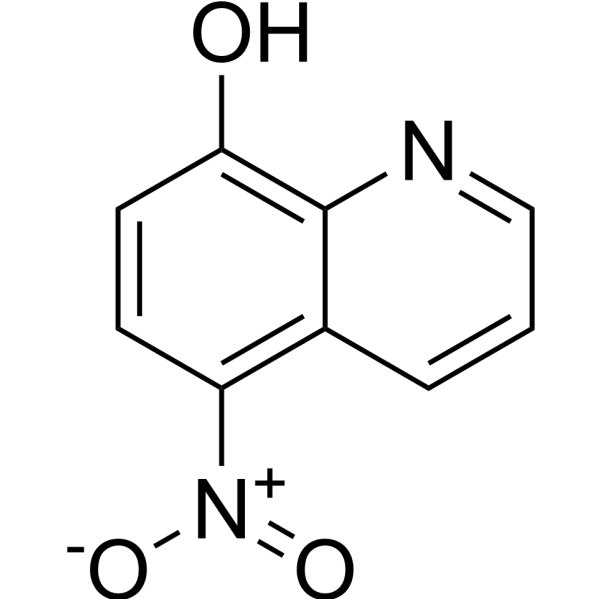
Nitroxoline (8-Hydroxy-5-nitroquinoline), an antibiotic, is an orally active antibiofilm agent. Nitroxoline reduces the formation and induces the dispersal of Pseudomonas aeruginosa biofilms by chelation of iron and zinc. Nitroxoline can be used for the urinary tract infections and cancer research.
연구목적의 판매만을 진행합니다. 환자를 대상으로 한 판매는 하지 않습니다.
- Purity : 99.90%
- CAS No.: 4008-48-4
- 화학식: C9H6N2O3
- 분자량:190.16
-
보관:Powder -20°C, 3 years , 4°C, 2 years ; In solvent -80°C, 2 years , -20°C, 1 year

To place orders, for customer services and technical support, please contact: MedChemExpress USA
Tel: 609-228-6898 E-mail: [email protected] [email protected]


-
 Biological Activity
-
Chemical Information
-
용액&용해도
- 순도&문서
- References
-
 Help & FAQs


-
HY-B1005
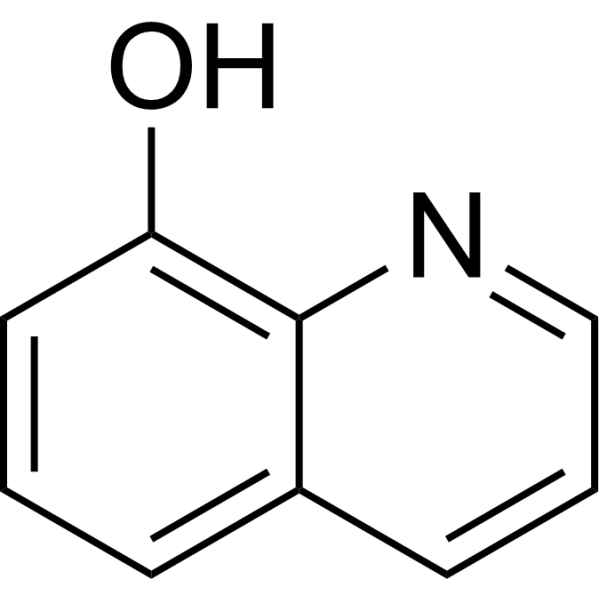
8-HydroxyquinolineFungicide -
HY-10227
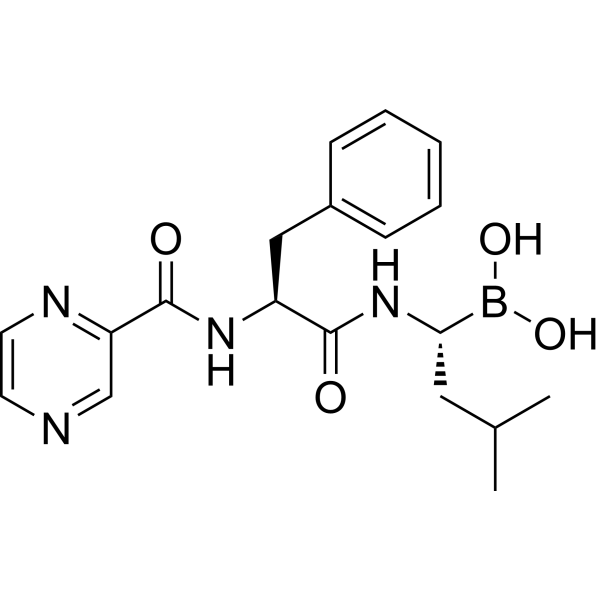
BortezomibProteasome Inhibitor -
HY-B0988
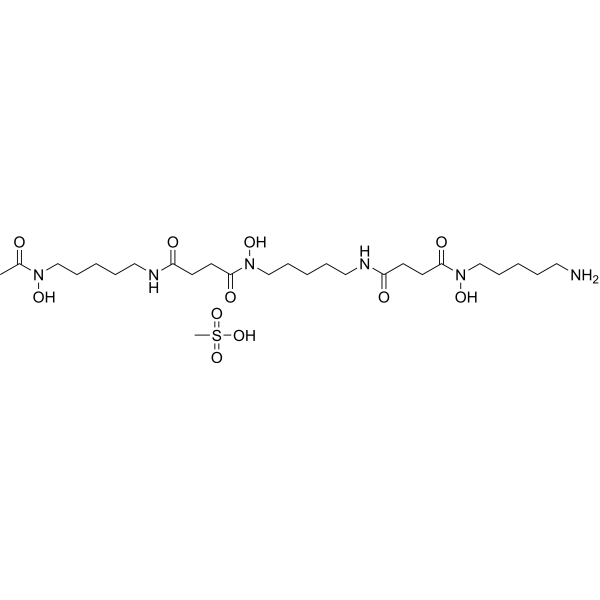
Deferoxamine mesylateIron Chelator -
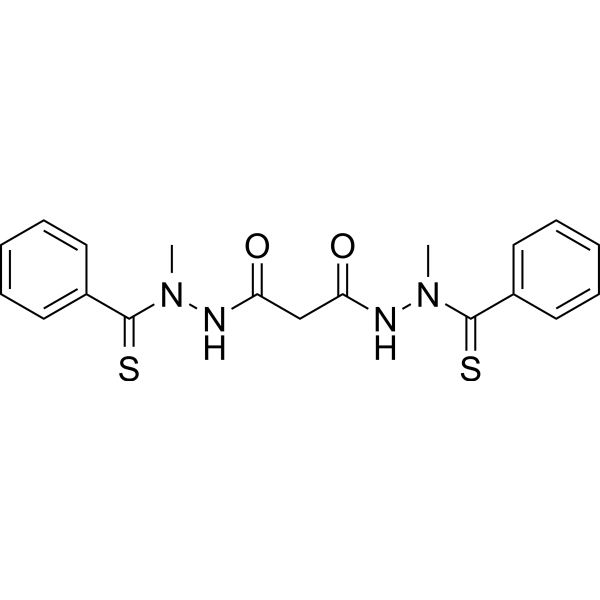
HY-12040
ElesclomolCuproptosis Inducer -
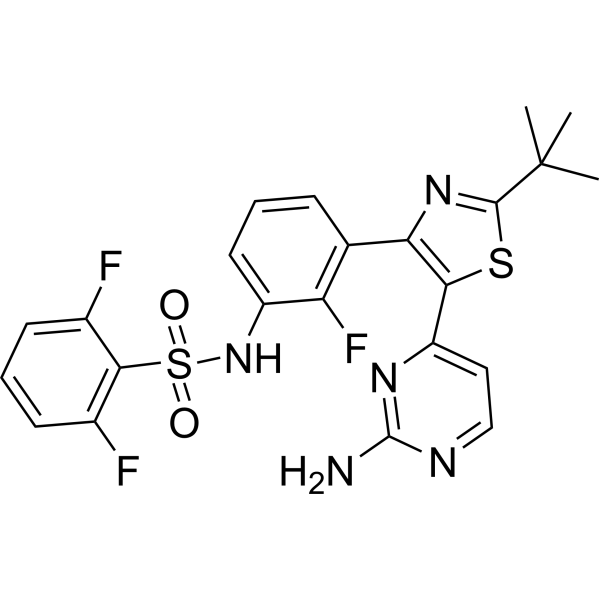
HY-14660
DabrafenibBRAF Inhibitor -
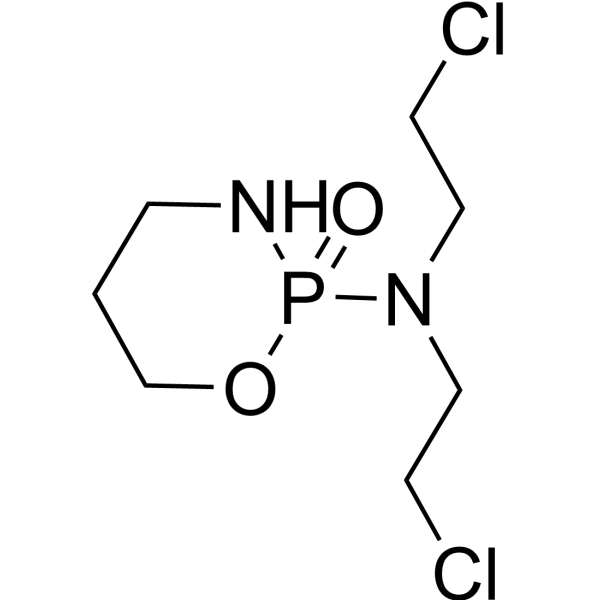
HY-17420
CyclophosphamideAlkylating Agent -
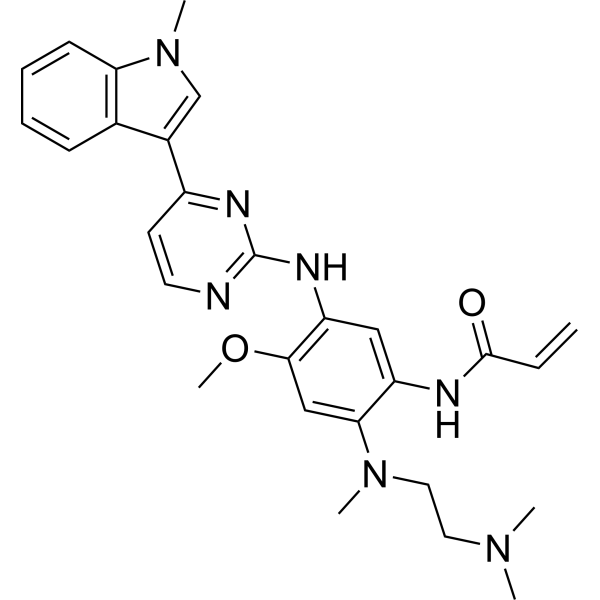
HY-15772
OsimertinibMutant-Selective EGFR Inhibitor -

HY-B1159R
Nitroxoline (Standard)Antibiofilm Agent -
HY-B1334A
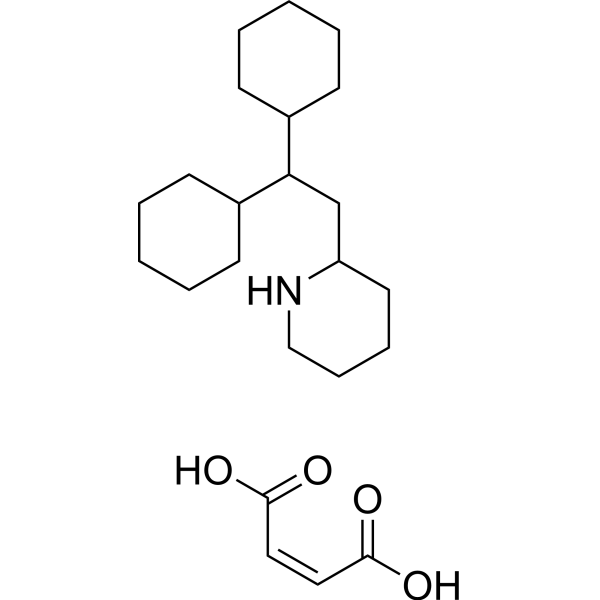
Perhexiline maleateCPT1/CPT2 Inhibitor -
HY-33354
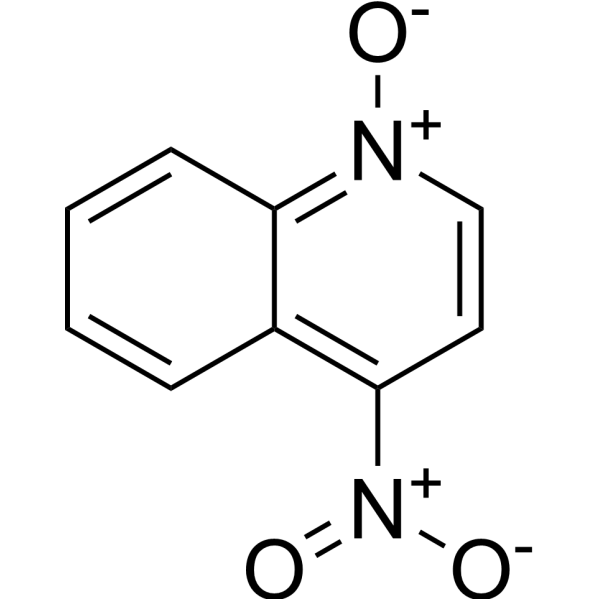
NitrochinChemical Carcinogen -

HY-W005598
2-Hydroxyquinolineα-Glucosidase/α-Amylase Inhibitor -
HY-59208
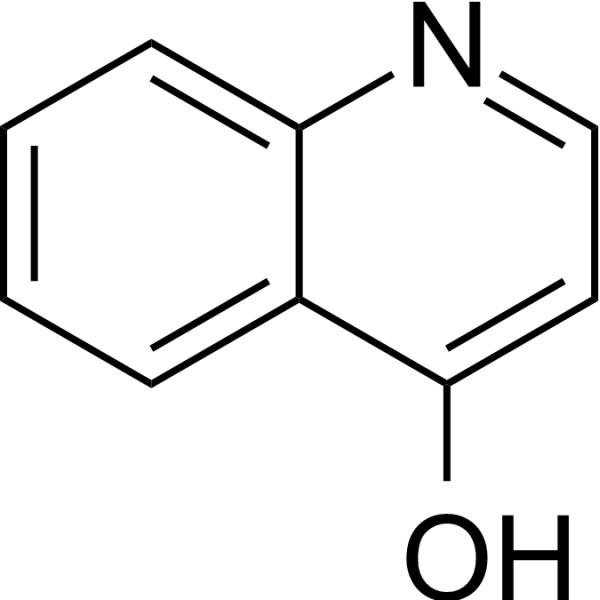
4-QuinolinolQuinoline Derivative
Publications Citing Use of MedChemExpress (MCE) Nitroxoline
MoreAll Antibiotic Isoforms
More

Biological Activity
제품 설명
Cellular Effect
|
Cell Line

|
Type | Value | Description | References |
|---|---|---|---|---|
| BTI-TN-5B1-4 | IC50 |
55 nM
Compound: 10; APL-1202
|
Inhibition of recombinant human N-terminal His-tagged MetAP2 expressed in baculovirus infected BTI-TN-5B1-4 insect cells using Met-Pro-pNA as substrate preincubated for 20 mins followed by substrate addition and measured after 30 mins
Inhibition of recombinant human N-terminal His-tagged MetAP2 expressed in baculovirus infected BTI-TN-5B1-4 insect cells using Met-Pro-pNA as substrate preincubated for 20 mins followed by substrate addition and measured after 30 mins
|
[PMID: 30939017] |
| HUVEC | IC50 |
1.9 μM
Compound: 10; APL-1202
|
Antiproliferative activity against HUVEC measured after 24 hrs by [3H]-thymidine incorporation assay
Antiproliferative activity against HUVEC measured after 24 hrs by [3H]-thymidine incorporation assay
|
[PMID: 30939017] |
| HUVEC | IC50 |
283 μg/mL
Compound: 4a
|
Cytotoxicity against human HUVEC cells assessed as metabolic activity measured after 24 hrs by cell-titer blue assay
Cytotoxicity against human HUVEC cells assessed as metabolic activity measured after 24 hrs by cell-titer blue assay
|
[PMID: 34865870] |
| MV4-11 | IC50 |
0.98 μM
Compound: 11
|
Inhibition of BRD4 in human MV4-11 cells using biotin labelled N-C:SGRG-K(Ac)-GG-K(Ac)-GLG-K(Ac)-GGA-K(Ac)-RHRKVGG-K as substrate preincubated for 15 mins followed by substrate addition measured after 5 mins by alpha screen assay
Inhibition of BRD4 in human MV4-11 cells using biotin labelled N-C:SGRG-K(Ac)-GG-K(Ac)-GLG-K(Ac)-GGA-K(Ac)-RHRKVGG-K as substrate preincubated for 15 mins followed by substrate addition measured after 5 mins by alpha screen assay
|
[PMID: 30529546] |
| MV4-11 | IC50 |
4.9 μM
Compound: 11
|
Antiproliferative activity against human MV4-11 cells after 72 hrs by CellTiter Glo luminescent assay
Antiproliferative activity against human MV4-11 cells after 72 hrs by CellTiter Glo luminescent assay
|
[PMID: 30529546] |
In Vitro
Biofilm mass synthesis is reduced by up to 80% at sub-MIC Nitroxoline (0.25-16 μg/mL) concentrations in Pseudomonas aeruginosa, and structures formed are reticulate rather than compact. In preformed biofilms, viable cell counts are reduced by 4 logs at therapeutic concentrations[1].
Nitroxoline (2.5-20 μM; 24 hours) effectively inhibits cell survival of small-cell lung cancer (SCLC) cells, and induces SCLC cell apoptosis by suppressing antiapoptotic proteins (such as Bcl-2 and MCL1) and upregulating proapoptotic protein Bim. Nitroxoline is found to downregulate MDM2 expression by inducing its proteasomal degradation, and thus upregulates p53 expression, which is a substrate protein of MDM2[2].
MedChemExpress (MCE) has not independently confirmed the accuracy of these methods. They are for reference only. .
-
Cell Line:H446, H1882, H1417, and H1688 cells
-
Concentration:2.5 μM, 5 μM, 10 μM, 20 μM
-
Incubation Time:24 hours
-
Result:Effectively inhibit cell survival of small-cell lung cancer (SCLC) cells.
-
Cell Line:H446, H1882, H1417 cells
-
Concentration:5 μM, 10 μM, 20 μM
-
Incubation Time:24 hours
-
Result:Suppressed antiapoptotic proteins (such as Bcl-2 and MCL1) and upregulated proapoptotic protein Bim.
In Vivo
MedChemExpress (MCE) has not independently confirmed the accuracy of these methods. They are for reference only.
-
Animal Model:C3H/He mice bladder injected with MBT-2 cells[3]
-
Dosage:15 mg/kg or 60mg/kg
-
Administration:Orally gavage; five times a week on days 1, 2, 4, 5, 7, 8, 10, and 11.
-
Result:Resulted in significant inhibition of tumor growth.


Chemical Information
-
CAS No. 4008-48-4
-
Appearance Solid
-
분자량 190.16
-
화학식 C9H6N2O3
-
Color Light yellow to yellow
-
SMILES
OC1=C2N=CC=CC2=C([N+]([O-])=O)C=C1
-
Synonyms
8-Hydroxy-5-nitroquinoline; 5-Nitro-8-quinolinol
-
선적
Room temperature in continental US; may vary elsewhere.
-
보관
Powder -20°C 3 years 4°C 2 years In solvent -80°C 2 years -20°C 1 year


Publications (4)
-
Journal Impact Factor
-
Most Recent
-
Cell Rep
TCF25 serves as a nutrient sensor to orchestrate metabolic adaptation and cell death by enhancing lysosomal acidification under glucose starvation. [Abstract]2025 Aug 21;44(9):116186. PMID: 40844875 -
Int J Mol Sci
Nitroxoline Enhances Radiosensitivity in Non-Small Cell Lung Cancer by Suppressing STAT3-AKT-MTOR Survival Signaling. [Abstract]2026 Mar 9;27(5):2504. PMID: 41828719 -
Antibiotics (Basel)
In Vitro and In Vivo Evaluation of Nitroxoline as an Effective Antimicrobial Alternative to Poultry Production. [Abstract]2026 Jan 6;15(1):62. PMID: 41594099 -
iScience
Nitroxoline as an antimicrobial synergist reverses colistin resistance in multidrug-resistant Escherichia coli. [Abstract]2025 Nov 10;28(12):114003. PMID: 41377659


용액&용해도
In Vitro:
DMSO : 50 mg/mL (262.94 mM; Need ultrasonic; Hygroscopic DMSO has a significant impact on the solubility of product, please use newly opened DMSO)
Please refer to the solubility information to select the appropriate solvent. Once prepared, please aliquot and store the solution to prevent product inactivation from repeated freeze-thaw cycles.
Storage method and period of stock solution: -80°C, 2 years; -20°C, 1 year. When stored at -80°C, please use it within 2 years. When stored at -20°C, please use it within 1 year.
Please refer to the solubility information to select the appropriate solvent. Once prepared, please aliquot and store the solution to prevent product inactivation from repeated freeze-thaw cycles.
Storage method and period of stock solution: -80°C, 2 years; -20°C, 1 year. When stored at -80°C, please use it within 2 years. When stored at -20°C, please use it within 1 year.
Concentration (start) × Volume (start) = Concentration (final) × Volume (final)


순도&문서
-
Data Sheet (281 KB)
-
SDS (481 KB)
- English - EN (481 KB)
- Français - FR (481 KB)
- Deutsch - DE (481 KB)
- Norwegian - NO (481 KB)
- Español - ES (481 KB)
- Swedish - SV (481 KB)
- Italian - IT (481 KB)
- Korean - KR (481 KB)
- Portuguese - PT (481 KB)
-
Handling Instructions (2659 KB)
References
[1]. A Sobke, et al. The urinary antibiotic 5-nitro-8-hydroxyquinoline (Nitroxoline) reduces the formation and induces the dispersal of Pseudomonas aeruginosa biofilms by chelation of iron and zinc. Antimicrob Agents Chemother. 2012 Nov;56(11):6021-5. [Content Brief]
[2]. Jin-Guo Yu, et al. Nitroxoline induces cell apoptosis by inducing MDM2 degradation in small-cell lung cancer. Kaohsiung J Med Sci. 2019 Apr;35(4):202-208. [Content Brief]


Complete Stock Solution Preparation Table
Please refer to the solubility information to select the appropriate solvent. Once prepared, please aliquot and store the solution to prevent product inactivation from repeated freeze-thaw cycles.
Storage method and period of stock solution: -80°C, 2 years; -20°C, 1 year. When stored at -80°C, please use it within 2 years. When stored at -20°C, please use it within 1 year.
| Optional Solvent | Concentration Solvent Mass | 1 mg | 5 mg | 10 mg | 25 mg |
|---|---|---|---|---|---|
| DMSO | 1 mM | 5.2588 mL | 26.2939 mL | 52.5878 mL | 131.4696 mL |
| 5 mM | 1.0518 mL | 5.2588 mL | 10.5176 mL | 26.2939 mL | |
| 10 mM | 0.5259 mL | 2.6294 mL | 5.2588 mL | 13.1470 mL | |
| 15 mM | 0.3506 mL | 1.7529 mL | 3.5059 mL | 8.7646 mL | |
| 20 mM | 0.2629 mL | 1.3147 mL | 2.6294 mL | 6.5735 mL | |
| 25 mM | 0.2104 mL | 1.0518 mL | 2.1035 mL | 5.2588 mL | |
| 30 mM | 0.1753 mL | 0.8765 mL | 1.7529 mL | 4.3823 mL | |
| 40 mM | 0.1315 mL | 0.6573 mL | 1.3147 mL | 3.2867 mL | |
| 50 mM | 0.1052 mL | 0.5259 mL | 1.0518 mL | 2.6294 mL | |
| 60 mM | 0.0876 mL | 0.4382 mL | 0.8765 mL | 2.1912 mL | |
| 80 mM | 0.0657 mL | 0.3287 mL | 0.6573 mL | 1.6434 mL | |
| 100 mM | 0.0526 mL | 0.2629 mL | 0.5259 mL | 1.3147 mL |


Nitroxoline Related Classifications
HY-B1159 Related Classifications
 Powered by Bioz