



Branched Fatty Acid Standards

- Formula: C6H10O4
- Molecular Weight: 146.14
2-Methylpentanedioic acid (Standard) is the analytical standard of 2-Methylpentanedioic acid. This product is intended for research and analytical applications. 2-Methylpentanedioic acid is a metabolite of succinic acid, a citric acid cycle intermediate.

- Formula: C9H18O2
- Molecular Weight: 158.24
4-Methyloctanoic acid (Standard) is the analytical standard of 4-Methyloctanoic acid (HY-W010178). This product is intended for research and analytical applications. 4-Methyloctanoic acid is an endogenous branched-chain medium-chain fatty acid and a negative regulator of the cAMP/PKA signaling pathway. 4-Methyloctanoic acid exerts antiepileptic effects by inhibiting epileptiform discharges and terminating behavioral and electroencephalographic seizures. 4-Methyloctanoic acid has neuroprotective effects; its polar metabolites can cross the blood-brain barrier, repair presynaptic release defects, improve motor function and alleviate neuromuscular degeneration in ALS models. 4-Methyloctanoic acid regulates phosphatidylinositol metabolism, reduces PIP/PIP2 levels and increases inositol levels. 4-Methyloctanoic acid can be used in studies related to epilepsy and amyotrophic lateral sclerosis.

- Formula: C5H8O4
- Molecular Weight: 132.11
Ethylmalonic acid (Standard) is the analytical standard of Ethylmalonic acid (HY-34740). This product is intended for research and analytical applications. Ethylmalonic acid is a short-chain organic dicarboxylic acid. Ethylmalonic acid synergistically induces mitochondrial permeability transition (MP) with Ca2+, inhibits Mi-CK, and disrupts mitochondrial energy metabolism. Ethylmalonic acid can be used in the research of SCADD, EE and other genetic metabolic diseases characterized by EMA accumulation.

- Formula: C5H6O4
- Molecular Weight: 130.10
Mesaconic acid (Standard) is the analytical standard of Mesaconic acid. This product is intended for research and analytical applications. Mesaconic acid (Citronic acid; Methylfumaric acid) is an orally active anti-inflammatory and antioxidant agent. Mesaconic acid reduces the level of NF-κB in colon tissues, downregulates the expression of Keap1 and Bax, upregulates the expression of Nrf2 and Bcl2, and decreases the expression of Caspase-1. Mesaconic acid reduces the levels of NLRP3, ASC and Casp-1 in colon, liver and kidney tissues. Mesaconic acid reduces pro-inflammatory cytokine levels, increases the level of the anti-inflammatory cytokine IL-10, elevates NAD+ levels, regulates oxidative stress markers and antioxidant enzyme levels, and upregulates intestinal barrier proteins in colon, liver and kidney tissues. Mesaconic acid increases the abundance of beneficial gut bacteria and reduces the abundance of harmful gut bacteria in rapidly aging mice, and exhibits anti-aging properties. Mesaconic acid acts as a flame retardant and serves as a competitive inhibitor of fumarate reduction. Mesaconic acid can be used in the research of aging-related inflammation.

- Formula: C7H14O2
- Molecular Weight: 130.19
2-Methylhexanoic acid (Standard) is the analytical standard of 2-Methylhexanoic acid. This product is intended for research and analytical applications. 2-methylhexanoic acid is a medium-chain fatty acid and is used as flavouring[1].

- Formula: C18H27NO3
- Molecular Weight: 305.41
Capsaicin (Purity 65%) (Standard) is the analytical standard of Capsaicin (Purity 65%). This product is intended for research and analytical applications. Capsaicin (Purity 65%) is a mixture of Capsaicin and Dihydrocapsaicin (Ratio >2:1).Capsaicin (Purity 65%) is an orally active capsaicin receptor (TRPV1) agonist.

- Formula: C₂₁H₃₂O₂
- Molecular Weight: 316.48
Eicosapentaenoic acid methyl ester (Standard) is the analytical standard of Eicosapentaenoic acid methyl ester (HY-W011311). This product is intended for research and analytical applications. Eicosapentaenoic acid methyl ester is a degradation product of monogalactosyldiacylglycerol (Compound 1). Compound 1 can be isolated from the marine diatom Phaeodactylum tricornutum. Compound 1 induces Apoptosis.

- Formula: C16H32O2
- Molecular Weight: 256.42
Dipotassium glycyrrhizinate (Standard) is the analytical standard of Dipotassium glycyrrhizinate. This product is intended for research and analytical applications. 2-Hexyldecanoic acid is a lipid containing one carboxylic acid group and two non-polar tails. In the presence of EDC, HATU and DCC, carboxylic acid groups can undergo continuous amide coupling reactions with amine-containing biomolecules to form stable amide bonds. 2-Hexyldecanoic acid can be used as an aerolysin inhibitor to prevent bacterial pathogens. 2-Hexyldecanoic acid can cause contact dermatitis.

- Formula: C5H10O3
- Molecular Weight: 118.13
2-Hydroxy-2-methylbutanoic acid (Standard) is the analytical standard of 2-Hydroxy-2-methylbutanoic acid. This product is intended for research and analytical applications. 2-Hydroxy-2-methylbutanoic acid, an unusual metabolite, is associated with 2-hydroxyglutaric aciduria and maple syrup urine disease.

- Formula: C5H8O4
- Molecular Weight: 132.11
Dimethylmalonic acid (Standard) (Dimethylpropanedioic acid (Standard)) is the analytical standard of Dimethylmalonic acid (HY-W007894). This product is intended for research and analytical applications. Dimethylmalonic acid (Dimethylpropanedioic acid) is a succinate dehydrogenase inhibitor. Dimethylmalonic acid competitively inhibits succinate dehydrogenase, reduces SDH-mediated succinate accumulation, blocks a key step in oxidative phosphorylation, and decreases anti-inflammatory cytokine secretion and ROS production. Dimethylmalonic acid can be used in research on autism spectrum disorders.

- Formula: C6H12O2
- Molecular Weight: 116.16
2-Ethylbutyric acid (Standard) is an analytical standard of 2-Ethylbutyric acid (HY-W004154). This product is intended for research and analytical applications. 2-Ethylbutyric acid is a volatile fatty acid. 2-Ethylbutyric acid exhibits phytotoxicity. 2-Ethylbutyric acid is used as an internal standard in milk and dairy products and as an internal standard (IS) in the calibration of fecal VFA standards. 2-Ethylbutyric acid can be used in the research of embryonic development.
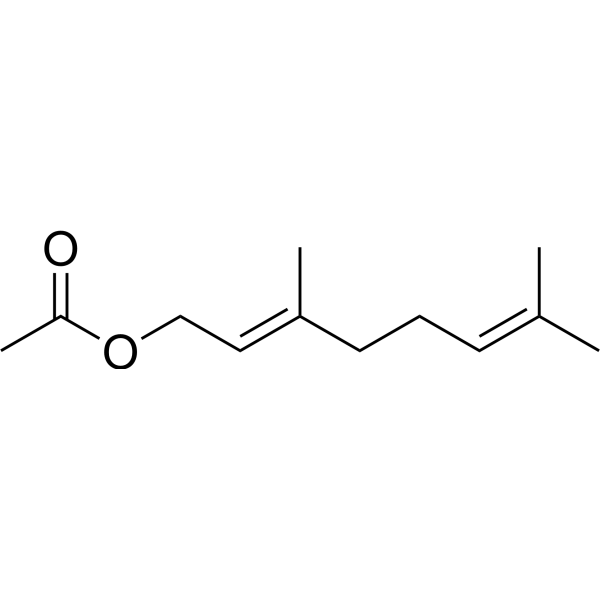
- Formula: C12H20O2
- Molecular Weight: 196.29
Geranyl acetate (Standard) is the analytical standard of Geranyl acetate. This product is intended for research and analytical applications. Geranyl acetate, an acyclic monoterpene ester derived from geraniol, is widely used in the cosmetics industry due to its pleasant scent. Geranyl acetate can induces cell apoptosis.

- Formula: C5H6O4
- Molecular Weight: 130.10
Citraconic acid (Methylmaleic acid) (Standard) is the analytical standard of Citraconic acid (HY-113298). This product is intended for research and analytical applications. Citraconic acid is an orally active inhibitor targeting the NLRP3 inflammasome and Keap1-Nrf2 pathway. Citraconic acid reduces reactive oxygen species (ROS) generation by inhibiting succinate dehydrogenase (SDH) activity. Citraconic acid also modifies the conformation of Keap1 protein, relieves its inhibition of Nrf2, promotes antioxidant gene expression, and inhibits NLRP3 activation and the release of pro-inflammatory factors such as IL-1β and IL-18. Citraconic acid has anti-inflammatory and antioxidant activities, can reduce oxidative stress and cell pyroptosis, improve tissue damage, and can be used for the research of inflammation-related diseases such as acute renal ischemia-reperfusion injury. Citraconic acid is an isomer of Itaconic acid (HY-Y052).

- Formula: C7H12O4
- Molecular Weight: 160.17
3-Methyladipic acid (Standard) is the analytical standard of 3-Methyladipic acid (HY-113277). This product is intended for research and analytical applications. 3-Methyladipic acid is the final metabolite produced by the degradation of phytanic acid via the ω-oxidation pathway when α-oxidation is impaired, and it is mainly excreted in urine. 3-Methyladipic acid is also present at low levels in healthy individuals, but is significantly elevated in Refsum disease, and can serve as a marker of ω-oxidation activity.

- Formula: C7H12O4
- Molecular Weight: 160.17
3,3-Dimethylglutaric acid (Standard) is the analytical standard of 3,3-Dimethylglutaric acid (HY-W008097). This product is intended for research and analytical applications. 3,3-Dimethylglutaric acid is an organic acid derivative and a candidate serum biomarker for sheep cystic echinococcosis. The serum level of 3,3-Dimethylglutaric acid increases significantly in sheep infected with Echinococcus granulosus. 3,3-Dimethylglutaric acid can serve as a ligand to synthesize metal complexes. 3,3-Dimethylglutaric acid is applicable to the research of cystic echinococcosis.

- Formula: C6H12O2
- Molecular Weight: 116.16
2-Methylvaleric acid (Standard) is the analytical standard of 2-Methylvaleric acid. This product is intended for research and analytical applications. 2-Methylvaleric acid is a branched short-chain fatty acid (SCFA) produced by the metabolism of branched-chain amino acids by gut microbes. 2-Methylvaleric acid can be used as a potential biomarker for metabolic diseases such as type 2 diabetes, and its content is significantly reduced in the feces of diabetic mice. 2-Methylvaleric acid may regulate host energy metabolism and inflammatory response through G protein-coupled receptors (GPCRs) or histone deacetylase (HDAC) inhibition. 2-Methylvaleric acid can be used to study gut microbe-host interactions and metabolic diseases as a fecal biomarker[1][2].

- Formula: C5H8O2
- Molecular Weight: 100.12
Angelic acid (Standard)) is the analytical standard of Angelic acid (HY-N6929). This product is intended for research and analytical applications. Angelic acid is a ferroptosis inducer, targeting NRF2 degradation. Angelic acid binds to NRF2 protein and promotes NRF2 degradation via ubiquitination-proteasome pathway, relieves the inhibitory effect of NRF2 on oxidative stress and lipid peroxidation. Then, Angelic acid induces ferroptosis in tumor cells. Angelic acid can enhance the accumulation of intracellular reactive oxygen species (ROS), upregulate ferroptosis-related markers CHAC1 and PTGS2, and synergize with ferroptosis inducers to enhance anti-tumor effects. Angelic acid also has the activity of scavenging UVA-induced ROS in vitro, inhibiting skin fibroblast senescence and extracellular matrix degradation. Angelic Acid helps wound healing with sedative activity.

- Formula: C8H14O2
- Molecular Weight: 142.20
(±)-2-Propyl-4-pentenoic acid (Standard) is the analytical standard of (±)-2-Propyl-4-pentenoic acid. This product is intended for research and analytical applications. (±)-2-Propyl-4-pentenoic acid (4-en-VPA) is a major toxic metabolite of Valproic acid. (±)-2-Propyl-4-pentenoic acid exhibits neuroteratogenicity[1][2].

- Formula: C6H10O4
- Molecular Weight: 146.14
3-Methylglutaric acid (Standard) is the analytical standard of 3-Methylglutaric acid (HY-113410). This product is intended for research and analytical applications. 3-Methylglutaric acid is a non-selective inhibitor of mitochondrial function and Na+, K+-ATPase, with an inhibition rate of 30% on rat cortical synaptosomal Na+, K+-ATPase. 3-Methylglutaric acid can induce reactive oxygen species (ROS) generation, thereby causing oxidative damage and inhibiting mitochondrial redox potential and ion pump function of cell membranes. 3-Methylglutaric acid can be used to study the neuropathological mechanisms of metabolic diseases and the role of oxidative stress-mediated neuronal damage in neurodegeneration.

- Formula: C6H10O2
- Molecular Weight: 114.14
2-Methyl-4-pentenoic Acid (Standard) (2-Methylpent-4-enoic acid (Standard)) is the analytical standard of 2-Methyl-4-pentenoic Acid (HY-W012922). This product is intended for research and analytical applications. 2-Methyl-4-pentenoic Acid (2-Methylpent-4-enoic acid) is an organic acid that can be used as a precursor for synthesizing other compounds. Additionally, changes in the level of 2-Methyl-4-pentenoic Acid may be associated with the susceptibility to schizophrenia and type 2 diabetes.



