



Picotamide

Based on 1 Customer Validation
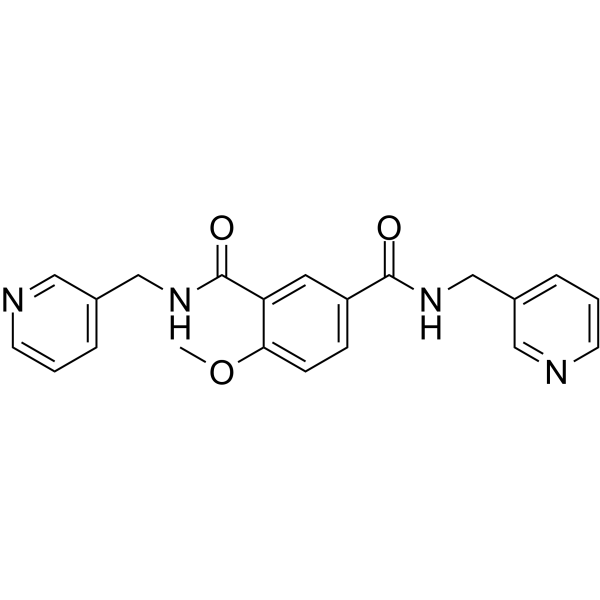
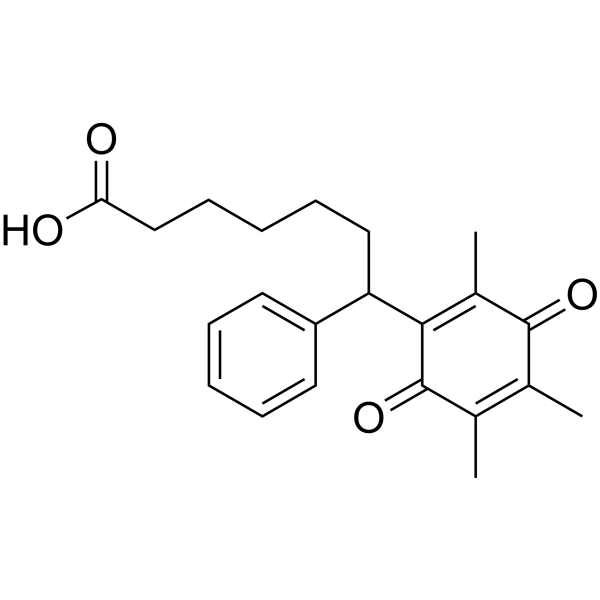
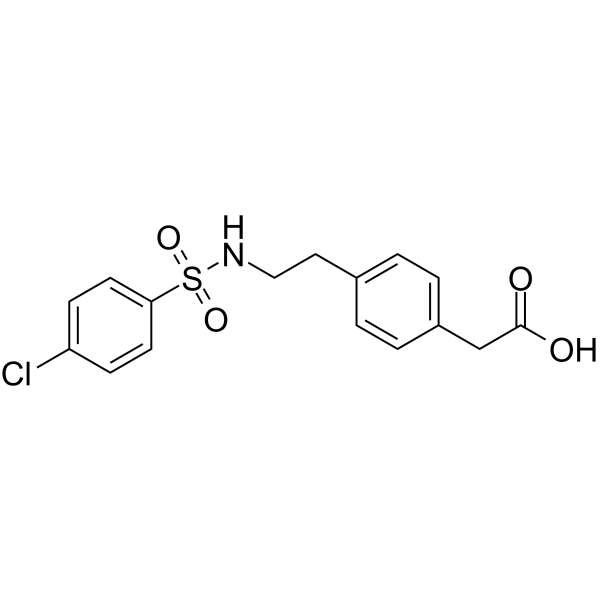
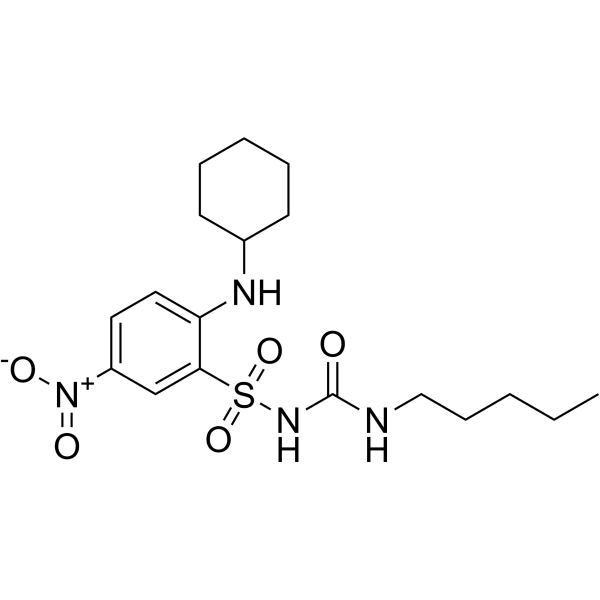
Picotamide is an orally active TXA2 receptor and TXA2 synthase inhibitor. Picotamide inhibits ADP (HY-W010918)-, Arachidonic acid (HY-109590)-, and Collagen (HY-NP003)-induced platelet aggregation, reduces TXA2 production during coagulation, and does not inhibit PGI2 synthesis in endothelial cells. Picotamide inhibits contractions induced by α1-adrenergic receptor agonism, TXA2 mediation, and neurogenic (electrical field stimulation-induced) factors in human prostatic smooth muscle, and broadly inhibits agonist-induced contractions of porcine interlobar renal and coronary arteries. Picotamide can be used in research related to thromboembolic diseases, atherosclerosis, and lower urinary tract symptoms.
For research use only. We do not sell to patients.
- Purity : 99.76%
- CAS No.: 32828-81-2
- Formula: C21H20N4O3
- Molecular Weight:376.41
-
Storage:Powder -20°C, 3 years ; In solvent -80°C, 6 months , -20°C, 1 month

To place orders, for customer services and technical support, please contact: MedChemExpress USA
Tel: 609-228-6898 E-mail: [email protected] [email protected]


-
 Biological Activity
-
Chemical Information
-
Solvent & Solubility
- Protocols
- Purity & Documentation
- References
-
 Help & FAQs







Biological Activity
Description
IC50 & Target
[1]|
TXA2/TP |
Cellular Effect
|
Cell Line

|
Type | Value | Description | References |
|---|---|---|---|---|
| Platelet | IC50 |
0.76 μM
Compound: 1
|
Antiplatelet activity against rat platelet rich plasma assessed as inhibition of ADP-induced platelet aggregation after 2 mins by Born test method
Antiplatelet activity against rat platelet rich plasma assessed as inhibition of ADP-induced platelet aggregation after 2 mins by Born test method
|
[PMID: 23010272] |
| Platelet | IC50 |
49.86 mM
Compound: Picotamide
|
Antiplatelet activity in rabbit platelet rich plasma assessed as inhibition of ADP-induced platelet aggregation by cytometry
Antiplatelet activity in rabbit platelet rich plasma assessed as inhibition of ADP-induced platelet aggregation by cytometry
|
[PMID: 29432947] |
| Sf21 | IC50 |
441 μM
Compound: Picotamide
|
Inhibition of human BSEP expressed in plasma membrane vesicles of Sf21 cells assessed as inhibition of ATP-dependent [3H]taurocholate uptake
Inhibition of human BSEP expressed in plasma membrane vesicles of Sf21 cells assessed as inhibition of ATP-dependent [3H]taurocholate uptake
|
[PMID: 21965623] |
| Sf21 | IC50 |
636.5 μM
Compound: Picotamide
|
Inhibition of Sprague-Dawley rat Bsep expressed in plasma membrane vesicles of Sf21 cells assessed as inhibition of ATP-dependent [3H]taurocholate uptake
Inhibition of Sprague-Dawley rat Bsep expressed in plasma membrane vesicles of Sf21 cells assessed as inhibition of ATP-dependent [3H]taurocholate uptake
|
[PMID: 21965623] |
In Vitro
Picotamide (10-80 μM; 48 h) decreased the cell viability of L929 cells in a dose-dependent manner[1].
Picotamide (10-100 μM; 48 h) exhibits dose-dependent cytotoxicity against L929 mouse fibroblasts[4].
Picotamide (3 μM) inhibits α1-adrenergic contractions in human prostatic tissue strips when cyclooxygenase activity is blocked by Indomethacin (HY-14397)[3].
Picotamide inhibits EFS-induced contraction in human prostate tissue[3].
Picotamide (0.325-1.3 μM; 2 min) exhibited antiplatelet aggregation activity in rabbit PRP, with an IC50 value of 0.47 μM for ADP-induced aggregation and an IC50 value of 0.34 μM for AA-induced aggregation[4].
Picotamide (300 μM; 30 min) inhibited U46619-induced contraction of porcine renal interlobar arteries without a rightward shift or a significant increase in EC50 values[5].
Picotamide (300 μM; 30 min) competitively inhibits Noradrenaline (HY-13715)-, Phenylephrine (HY-B0769)-, and Methoxamine (HY-B1298A)-induced contraction of porcine renal interlobar arteries, increasing EC50 without affecting Emax[5].
Picotamide (300 μM; 30 min) inhibits Serotonin (HY-B1473A)-induced contraction in porcine renal interlobar arteries, characterized by a rightward shift and an increase in EC50[5].
Picotamide (300 μM; 30 min) inhibits α,β-methylene-ATP (HY-134440A)-induced contraction of porcine renal interlobar arteries at high agonist concentrations[5].
Picotamide (300 μM; 30 min) has minimal effect on weak ATP (HY-B2176)-induced contraction in porcine renal interlobar arteries[5].
Picotamide (300 μM; 30 min) inhibits Angiotensin-II-induced contraction of porcine renal interlobar arteries without a significant change in EC50[5].
Picotamide (300 μM; 30 min) inhibits Endothelin-1 (HY-P0202)-induced contraction in porcine renal interlobar arteries[5].
Picotamide (300 μM; 30 min) inhibited U46619 (HY-108566)-induced contraction of porcine coronary arteries, without a rightward shift or a significant increase in EC50 values[5].
Picotamide (300 μM; 30 min) inhibits Phenylephrine-induced contraction of porcine coronary arteries, without competitive characteristics or changes in EC50[5].
Picotamide (300 μM; 30 min) inhibits Methoxamine-induced contraction of porcine coronary arteries without competitive characteristics or a significant change in EC50[5].
Picotamide (300 μM; 30 min) inhibited Methacholine-induced contraction in porcine coronary arteries without causing consistent changes in EC50[5].
Picotamide (300 μM; 30 min) inhibits Carbachol (HY-B1208)-induced contraction in porcine coronary arteries, with no consistent change in EC50[5].
Picotamide (300 μM; 30 min) inhibits Serotonin-induced contraction in porcine coronary arteries, manifested as a rightward shift and an increase in EC50[5].
Picotamide (300 μM; 30 min) inhibits Angiotensin-II-induced contraction in porcine coronary arteries without a significant change in EC50[5].
Picotamide (300 μM; 30 min) inhibits Endothelin-1-induced contraction in porcine coronary arteries[5].
Picotamide (30-300 μM; 30 min) dose-dependently inhibited EFS-induced contractions in porcine renal interlobar arteries without affecting Ef50[5].
MedChemExpress (MCE) has not independently confirmed the accuracy of these methods. They are for reference only. Further protocols information, click here.
-
Cell Line:L929
-
Concentration:10, 20, 40, 80 μM
-
Incubation Time:48 h
-
Result:Reduced cell survival rates to 81.38% at 10 μM, 69.31% at 20 μM, 55.17% at 40 μM, and 40.69% at 80 μM.
-
Cell Line:L929 mouse fibroblast cells
-
Concentration:10 μM; 100 μM
-
Incubation Time:48 h
-
Result:Resulted in a cell survival rate of 55.56% with an average absorbance of 0.126 at 10 μM.
Resulted in a cell survival rate of 44.44% with an average absorbance of 0.125 at 100 μM.


Chemical Information
-
CAS No. 32828-81-2
-
Appearance Solid
-
Molecular Weight 376.41
-
Formula C21H20N4O3
-
Color White to off-white
-
SMILES
O=C(C1=CC=C(OC)C(C(NCC2=CC=CN=C2)=O)=C1)NCC3=CC=CN=C3
-
Shipping
Room temperature in continental US; may vary elsewhere.
-
Storage
Powder -20°C 3 years In solvent -80°C 6 months -20°C 1 month


Solvent & Solubility
In Vitro:
DMSO : 5 mg/mL (13.28 mM; Need ultrasonic and warming; Hygroscopic DMSO has a significant impact on the solubility of product, please use newly opened DMSO)
Please refer to the solubility information to select the appropriate solvent. Once prepared, please aliquot and store the solution to prevent product inactivation from repeated freeze-thaw cycles.
Storage method and period of stock solution: -80°C, 6 months; -20°C, 1 month. When stored at -80°C, please use it within 6 months. When stored at -20°C, please use it within 1 month.
Please refer to the solubility information to select the appropriate solvent. Once prepared, please aliquot and store the solution to prevent product inactivation from repeated freeze-thaw cycles.
Storage method and period of stock solution: -80°C, 6 months; -20°C, 1 month. When stored at -80°C, please use it within 6 months. When stored at -20°C, please use it within 1 month.
Concentration (start) × Volume (start) = Concentration (final) × Volume (final)
In Vivo:
Select the appropriate dissolution method based on your experimental animal and administration route.
- For the following dissolution methods, please ensure to first prepare a clear stock solution using an In Vitro approach and then sequentially add co-solvents:
- To ensure reliable experimental results, the clarified stock solution can be appropriately stored based on storage conditions. As for the working solution for In Vivo experiments, it is recommended to prepare freshly and use it on the same day.
- The percentages shown for the solvents indicate their volumetric ratio in the final prepared solution. If precipitation or phase separation occurs during preparation, heat and/or sonication can be used to aid dissolution.
Add each solvent one by one: 10% DMSO 40% PEG300 5% Tween-80 45% Saline
Solubility: ≥ 0.5 mg/mL (1.33 mM); Clear solution
This protocol yields a clear solution of ≥ 0.5 mg/mL (saturation unknown).
Taking 1 mL working solution as an example, add 100 μL DMSO stock solution (5.0 mg/mL) to 400 μL PEG300, and mix evenly; then add 50 μL Tween-80 and mix evenly; then add 450 μL Saline to adjust the volume to 1 mL.
Preparation of Saline: Dissolve 0.9 g sodium chloride in ddH₂O and dilute to 100 mL to obtain a clear Saline solution.
Add each solvent one by one: 10% DMSO 90% (20% SBE-β-CD in Saline)
Solubility: ≥ 0.5 mg/mL (1.33 mM); Clear solution
This protocol yields a clear solution of ≥ 0.5 mg/mL (saturation unknown).
Taking 1 mL working solution as an example, add 100 μL DMSO stock solution (5.0 mg/mL) to 900 μL 20% SBE-β-CD in Saline, and mix evenly.
Preparation of 20% SBE-β-CD in Saline (4°C, storage for one week): 2 g SBE-β-CD powder is dissolved in 10 mL Saline, completely dissolve until clear.
In Vivo Dissolution Calculator
Please enter the basic information of animal experiments:
-
-
-
-
Recommended: Prepare an additional quantity of animals to account for potential losses during experiments.
Please enter your animal formula composition:
-
%DMSO +
Recommended: Keep the proportion of DMSO in working solution below 2% if your animal is weak.
-
%+
-
+%Tween-80 + +
-
%Saline +
The co-solvents required include: DMSO, . All of co-solvents are available by MedChemExpress (MCE). , Tween 80. All of co-solvents are available by MedChemExpress (MCE).
Working solution concentration: 0.22 mg/mL
Method for preparing stock solution: mg drug dissolved in μL DMSO. Stock solution concentration: mg/mL.
1. Take μL DMSO stock solution;
2. Add μL .
μL , mix evenly;
3. Then add μL Tween 80, mix evenly;
4. Then add μL
Please ensure that the stock solution in the first step is dissolved to a clear state, and add co-solvents in sequence. You can use ultrasonic heating (ultrasonic cleaner, recommended frequency 20-40 kHz), vortexing, etc. to assist dissolution.

Protocols
-
Endothelial Tube Formation Assay
Endothelial tube formation assay evaluates the ability of endothelial cells to attach, migrate, align, and organize into capillary-like networks when cultured on gelled basement membrane extract or Matrigel; the readout is the morphology and quantity of tube-like networks, which reflects an in vitro endothelial morphogenesis step related to angiogenesis. Basement membrane extract/Matrigel provides laminin-rich extracellular matrix cues that support endothelial differentiation into capillary-like structures, but it can contain biologically active growth factors, so growth-factor-reduced matrix is preferred when testing defined angiogenic stimulators or inhibitors.
-
Research Protocol for Cardiovascular Diseases
Cardiovascular disease can be modeled as maladaptive cardiac remodeling, where ischemic injury or pressure overload activates inflammatory signaling, fibroblast activation, extracellular-matrix deposition, cardiomyocyte hypertrophy, vascular remodeling, and progressive ventricular dysfunction. The TGF-β/SMAD axis is a central profibrotic pathway after myocardial injury and pressure overload, while innate immune and cytokine pathways regulate leukocyte recruitment, scar formation, and adverse remodeling. Key unresolved questions include which inflammatory signals are reparative versus harmful, when fibrosis is protective versus maladaptive, and whether pathway inhibition improves function without weakening necessary infarct healing or compensatory remodeling.


Purity & Documentation
-
Data Sheet (285 KB)
-
SDS (393 KB)
- English - EN (393 KB)
- Français - FR (393 KB)
- Deutsch - DE (393 KB)
- Norwegian - NO (393 KB)
- Español - ES (393 KB)
- Swedish - SV (393 KB)
- Italian - IT (393 KB)
- Korean - KR (393 KB)
- Portuguese - PT (393 KB)
-
Handling Instructions (2659 KB)
References


Complete Stock Solution Preparation Table
Please refer to the solubility information to select the appropriate solvent. Once prepared, please aliquot and store the solution to prevent product inactivation from repeated freeze-thaw cycles.
Storage method and period of stock solution: -80°C, 6 months; -20°C, 1 month. When stored at -80°C, please use it within 6 months. When stored at -20°C, please use it within 1 month.
| Optional Solvent | Concentration Solvent Mass | 1 mg | 5 mg | 10 mg | 25 mg |
|---|---|---|---|---|---|
| DMSO | 1 mM | 2.6567 mL | 13.2834 mL | 26.5668 mL | 66.4169 mL |
| 5 mM | 0.5313 mL | 2.6567 mL | 5.3134 mL | 13.2834 mL | |
| 10 mM | 0.2657 mL | 1.3283 mL | 2.6567 mL | 6.6417 mL |


Picotamide Related Classifications
HY-B1735 Related Classifications
 Powered by Bioz