



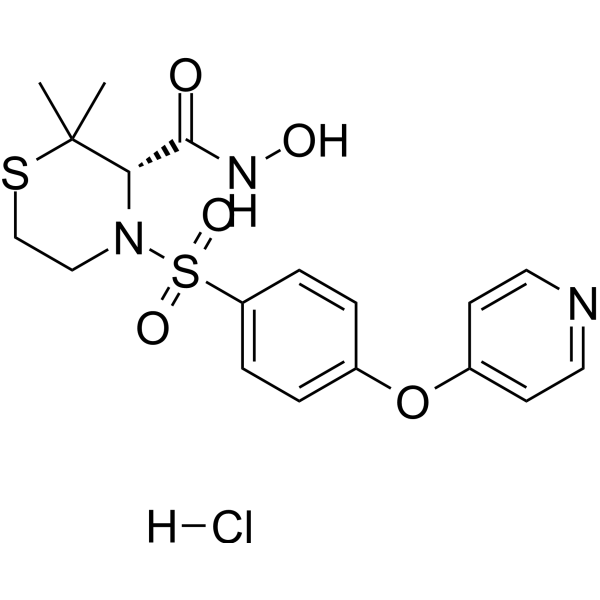
Prinomastat hydrochloride
Based on 4 publication(s) in Google Scholar
Prinomastat hydrochloride (AG3340 hydrochloride) is a broad spectrum, potent, orally active metalloproteinase (MMP) inhibitor with IC50s of 79, 6.3 and 5.0 nM for MMP-1, MMP-3 and MMP-9, respectively. Prinomastat hydrochloride inhibits MMP-2, MMP-3, MMP-13 and MMP-9 with Kis of 0.05 nM, 0.3 nM, 0.03 nM and 0.26 nM, respectively. Prinomastat hydrochloride can cross blood-brain barrier. Antitumor avtivity.
For research use only. We do not sell to patients.
- Purity : 98.53%
- CAS No.: 1435779-45-5
- Formula: C18H22ClN3O5S2
- Molecular Weight:459.97
-
Storage:
4°C, sealed storage, away from moisture
* In solvent : -80°C, 6 months; -20°C, 1 month (sealed storage, away from moisture)

To place orders, for customer services and technical support, please contact: MedChemExpress USA
Tel: 609-228-6898 E-mail: [email protected] [email protected]


-
 Biological Activity
-
Chemical Information
-
Solvent & Solubility
- Protocols
- Purity & Documentation
- References
-
 Help & FAQs


-
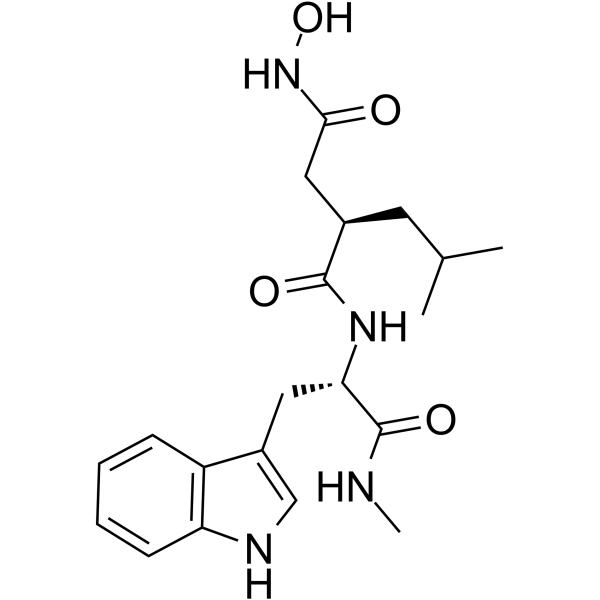
HY-15768
IlomastatMMP Inhibitor -
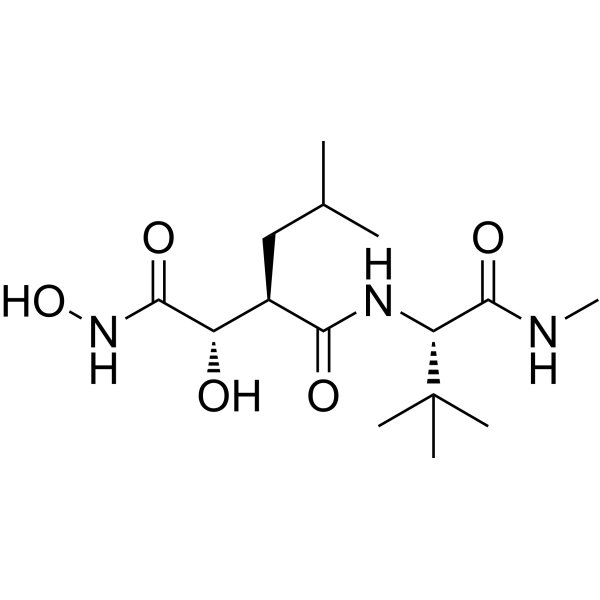
HY-12169
MarimastatMMP Inhibitor -
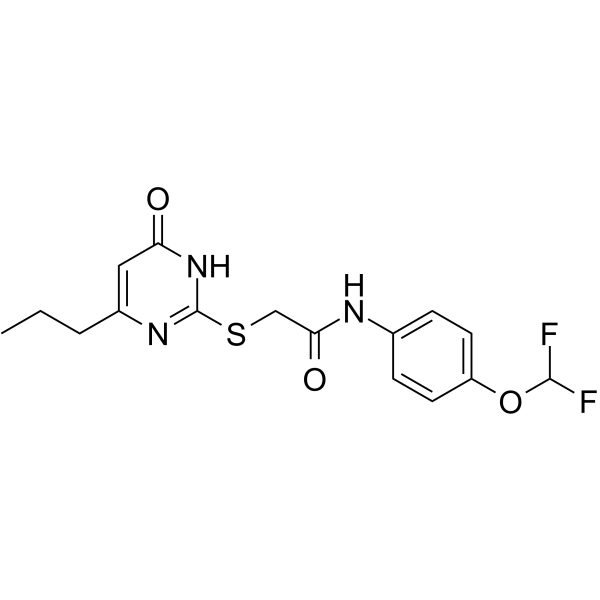
HY-135232
MMP-9-IN-1MMP-9 Inhibitor -
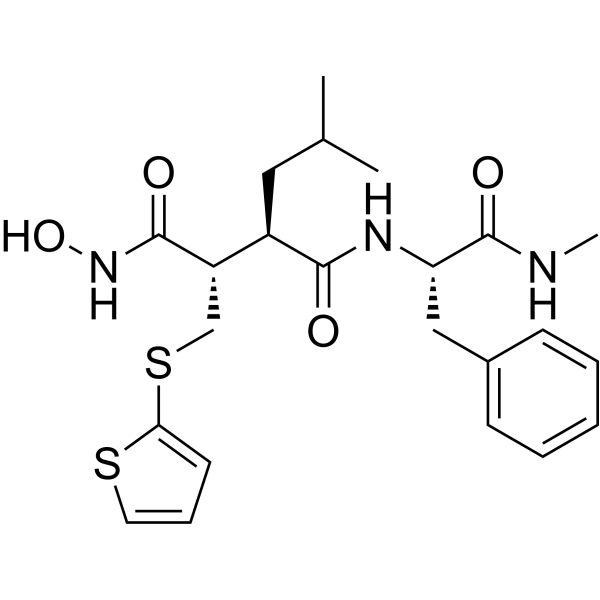
HY-13564
BatimastatMMP Inhibitor -
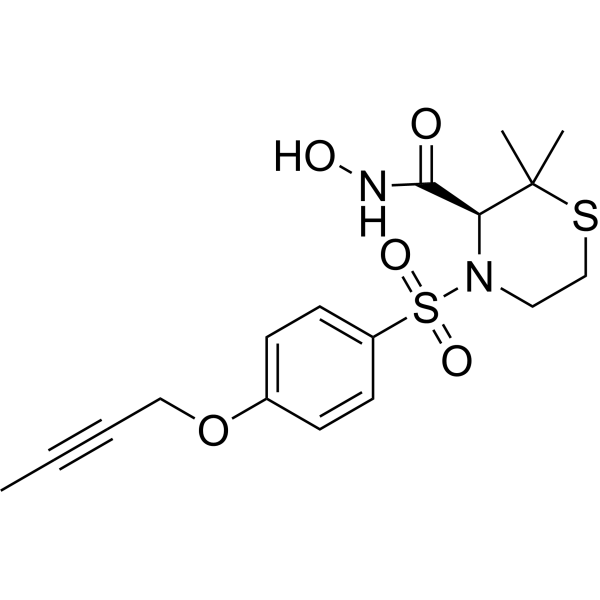
HY-101448
TMI-1Apoptosis Inducer -
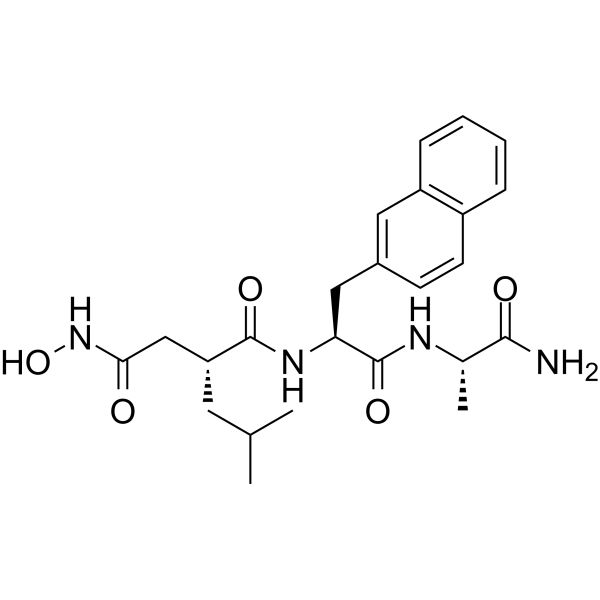
HY-118694
TAPI-0TACE/MMP Inhibitor -
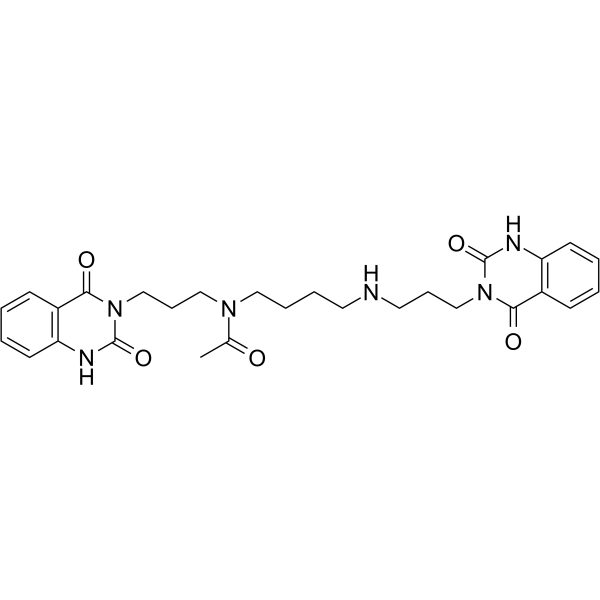
HY-109097
OtaplimastatMMP Inhibitor -
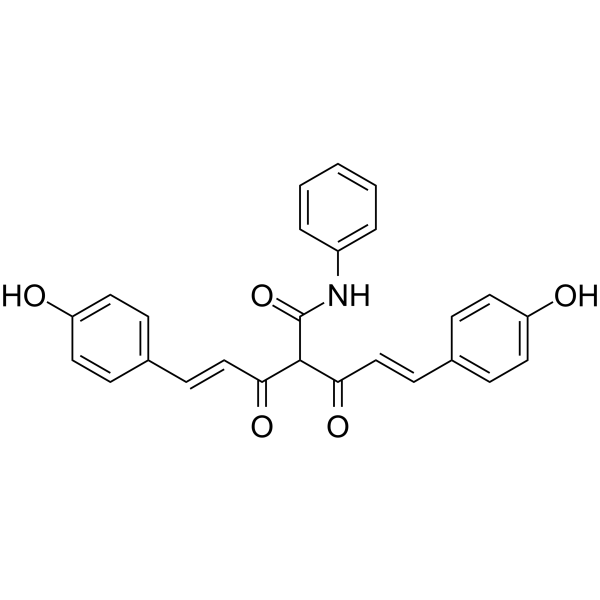
HY-120793
CMC2.24Ras/MMPs Inhibitor -
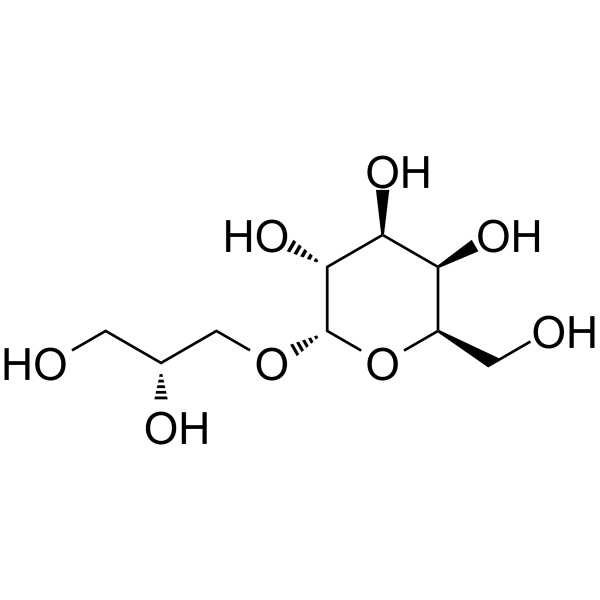
HY-N10176
D-IsofloridosideROS/MMP Inhibitor -

HY-101448R
TMI-1 (Standard)Apoptosis Inducer -

HY-13564R
Batimastat (Standard)MMP Inhibitor -

HY-12169R
Marimastat (Standard)MMP Inhibitor
Publications Citing Use of MedChemExpress (MCE) Prinomastat hydrochloride
More

Biological Activity
Description
|
MMP-9 5 nM (IC50) |
MMP-9 0.26 nM (Ki) |
MMP-2 0.05 nM (Ki) |
MMP-1 79 nM (IC50) |
MMP-13 6.3 nM (IC50) |
MMP-13 0.3 nM (Ki) |
collagenases 3 0.03 nM (Ki) |
In Vitro
Prinomastat (AG3340; 0.1-1 μg/mL; 4 days; C57MG/Wnt1 cells) inhibits Wnt1-induced MMP-3 production. Reversal of Wnt1-induced EMT and β-catenin transcriptional activity by Prinomastat[1].
Co-culture of L/Wnt3a cells and CT7 cells increases the Topflash activity in CT7 cells, and co-culturing both L/Wnt3a cells and MMP-3 overexpressing C57MG cells with CT7 cells increases the Topflash luciferase activity in CT7 cells beyond the level observed with L/Wnt3a cells, and these effects are all suppressed by Prinomastat (AG3340)[1].
Inhibition of entry of C57MG/Wnt1 cells into S phase by Prinomastat corresponds to a decrease in expression of cyclin D1 and Erk1/2 phosphorylation. The effect of Prinomastat on Wnt1-induced migration is then examined using an in vitro wound assay. As anticipated, the migration of C57MG/Wnt1 cells is increased by 1.8-fold when compared with C57MG cells.The effect of Wnt1 on the cellular distribution of vimentin is reversed by Prinomastat in C57MG/Wnt1 cells[1].
MedChemExpress (MCE) has not independently confirmed the accuracy of these methods. They are for reference only. Further protocols information, click here.
-
Cell Line:C57MG/Wnt1 cells
-
Concentration:0.1 µg/mL, 1 µg/mL
-
Incubation Time:4 days
-
Result:A significant decrease in MMP-3 promoter activity in C57MG/Wnt1 cells.
In Vivo
MedChemExpress (MCE) has not independently confirmed the accuracy of these methods. They are for reference only.


Chemical Information
-
CAS No. 1435779-45-5
-
Appearance Solid
-
Molecular Weight 459.97
-
Formula C18H22ClN3O5S2
-
Color White to off-white
-
SMILES
O=C([C@@H]1N(S(=O)(C2=CC=C(OC3=CC=NC=C3)C=C2)=O)CCSC1(C)C)NO.[H]Cl
-
Synonyms
AG3340 hydrochloride; KB-R9896 hydrochloride
-
Shipping
Room temperature in continental US; may vary elsewhere.
-
Storage
4°C, sealed storage, away from moisture
* In solvent : -80°C, 6 months; -20°C, 1 month (sealed storage, away from moisture)


Publications (4)
-
Journal Impact Factor
-
Most Recent
-
Sci Adv
2023 Jan 20;9(3):eadd3867. PMID: 36662861 -
J Neuropathol Exp Neurol
Inhibiting Matrix Metalloproteinases Protects Evoked Electromyography Amplitudes and Muscle Tension in the Orbicularis Oris Muscle in a Rat Model of Facial Nerve Injury. [Abstract]2022 Sep 19;81(10):816-824. PMID: 35656867 -
-


Solvent & Solubility
In Vitro:
H2O : 100 mg/mL (217.41 mM; Need ultrasonic)
Please refer to the solubility information to select the appropriate solvent. Once prepared, please aliquot and store the solution to prevent product inactivation from repeated freeze-thaw cycles.
Storage method and period of stock solution: -80°C, 6 months; -20°C, 1 month (sealed storage, away from moisture). When stored at -80°C, please use it within 6 months. When stored at -20°C, please use it within 1 month.
* Note: If you choose water as the stock solution, please dilute it to the working solution, then filter and sterilize it with a 0.22 μm filter before use.
Please refer to the solubility information to select the appropriate solvent. Once prepared, please aliquot and store the solution to prevent product inactivation from repeated freeze-thaw cycles.
Storage method and period of stock solution: -80°C, 6 months; -20°C, 1 month (sealed storage, away from moisture). When stored at -80°C, please use it within 6 months. When stored at -20°C, please use it within 1 month.
* Note: If you choose water as the stock solution, please dilute it to the working solution, then filter and sterilize it with a 0.22 μm filter before use.
Concentration (start) × Volume (start) = Concentration (final) × Volume (final)

Protocols
-
Mitochondrial membrane-potential fluorescent assay
Mitochondrial membrane potential fluorescent assays estimate ΔΨm in living cells using lipophilic cationic dyes such as TMRM, TMRE, rhodamine 123, and JC-1, which accumulate in mitochondria according to membrane polarization; loss of signal after FCCP or CCCP treatment is interpreted as mitochondrial depolarization. TMRM/TMRE and rhodamine 123 are commonly used for semi-quantitative live-cell microscopy or flow cytometry, while JC-1 can report a shift from red aggregate fluorescence to green monomer fluorescence during depolarization; interpretation requires controls because dye concentration, quenching mode, cell type, dye efflux, and mitochondrial mass can affect fluorescence independently of ΔΨm.
-
Mitochondrial membrane-potential and mitochondrial mass staining
Mitochondrial membrane potential staining measures the electrochemical polarization across the mitochondrial inner membrane in live cells using lipophilic cationic fluorescent probes; early rhodamine-based work showed that selective mitochondrial dye accumulation is lost when the mitochondrial transmembrane potential is dissipated. JC-1 reports mitochondrial polarization by shifting from green monomer fluorescence to red J-aggregate fluorescence as dye concentration increases within energized mitochondria; therefore, the red/green fluorescence ratio is used as a relative readout of mitochondrial membrane potential. TMRE or TMRM staining provides a single-channel relative readout because these cationic rhodamine esters accumulate in polarized mitochondria, and lower fluorescence indicates reduced mitochondrial polarization when acquisition and dye-loading conditions are controlled. Mitochondrial mass staining is commonly performed with MitoTracker Green FM or related MitoTracker dyes as


Purity & Documentation
-
Data Sheet (281 KB)
-
SDS (418 KB)
- English - EN (418 KB)
- Français - FR (418 KB)
- Deutsch - DE (418 KB)
- Norwegian - NO (418 KB)
- Español - ES (418 KB)
- Swedish - SV (418 KB)
- Italian - IT (418 KB)
- Korean - KR (418 KB)
- Portuguese - PT (418 KB)
-
Handling Instructions (2659 KB)
References
[1]. Sørensen MD, et al. Cyclic phosphinamides and phosphonamides, novel series of potent matrix metalloproteinase inhibitors with antitumour activity. Bioorg Med Chem. 2003 Dec 1;11(24):5461-84. [Content Brief]
[2]. Blavier L, et al. Stromelysin-1 (MMP-3) is a target and a regulator of Wnt1-induced epithelial-mesenchymal transition (EMT). Cancer Biol Ther. 2010 Jul 15;10(2):198-208. [Content Brief]
[3]. Shalinsky DR, et al. Broad antitumor and antiangiogenic activities of AG3340, a potent and selective MMP inhibitor undergoing advanced oncology clinical trials. Ann N Y Acad Sci. 1999 Jun 30;878:236-70. [Content Brief]
[4]. Ozerdem U, et al. The effect of prinomastat (AG3340), a potent inhibitor of matrix metalloproteinases, on a subacute model of proliferative vitreoretinopathy. Curr Eye Res. 2000 Jun;20(6):447-53. [Content Brief]


Complete Stock Solution Preparation Table
Please refer to the solubility information to select the appropriate solvent. Once prepared, please aliquot and store the solution to prevent product inactivation from repeated freeze-thaw cycles.
Storage method and period of stock solution: -80°C, 6 months; -20°C, 1 month (sealed storage, away from moisture). When stored at -80°C, please use it within 6 months. When stored at -20°C, please use it within 1 month.
| Optional Solvent | Concentration Solvent Mass | 1 mg | 5 mg | 10 mg | 25 mg |
|---|---|---|---|---|---|
| H2O | 1 mM | 2.1741 mL | 10.8703 mL | 21.7405 mL | 54.3514 mL |
| 5 mM | 0.4348 mL | 2.1741 mL | 4.3481 mL | 10.8703 mL | |
| 10 mM | 0.2174 mL | 1.0870 mL | 2.1741 mL | 5.4351 mL | |
| 15 mM | 0.1449 mL | 0.7247 mL | 1.4494 mL | 3.6234 mL | |
| 20 mM | 0.1087 mL | 0.5435 mL | 1.0870 mL | 2.7176 mL | |
| 25 mM | 0.0870 mL | 0.4348 mL | 0.8696 mL | 2.1741 mL | |
| 30 mM | 0.0725 mL | 0.3623 mL | 0.7247 mL | 1.8117 mL | |
| 40 mM | 0.0544 mL | 0.2718 mL | 0.5435 mL | 1.3588 mL | |
| 50 mM | 0.0435 mL | 0.2174 mL | 0.4348 mL | 1.0870 mL | |
| 60 mM | 0.0362 mL | 0.1812 mL | 0.3623 mL | 0.9059 mL | |
| 80 mM | 0.0272 mL | 0.1359 mL | 0.2718 mL | 0.6794 mL | |
| 100 mM | 0.0217 mL | 0.1087 mL | 0.2174 mL | 0.5435 mL |
* Note: If you choose water as the stock solution, please dilute it to the working solution, then filter and sterilize it with a 0.22 μm filter before use.


Prinomastat hydrochloride Related Classifications
HY-12170A Related Classifications
 Powered by Bioz