



1,2-Dipalmitoyl-sn-glycerol

Based on 1 Customer Validation
1,2-Dipalmitoyl-sn-glycerol is a diacylglycerol that activates PKC. 1,2-Dipalmitoyl-sn-glycerol promotes GLUT4 translocation to the cell surface and recruitment to the plasma membrane of adipocytes. 1,2-Dipalmitoyl-sn-glycerol can be used in research on type 2 diabetes.
For research use only. We do not sell to patients.
- Purity : 98.0%
- CAS No.: 30334-71-5
- Formula: C35H68O5
- Molecular Weight:568.92
-
Storage:Powder -20°C, 3 years ; In solvent -80°C, 6 months , -20°C, 1 month

To place orders, for customer services and technical support, please contact: MedChemExpress USA
Tel: 609-228-6898 E-mail: [email protected] [email protected]


-
 Biological Activity
-
Chemical Information
-
Solvent & Solubility
- Protocols
- Purity & Documentation
- References
-
 Help & FAQs


-
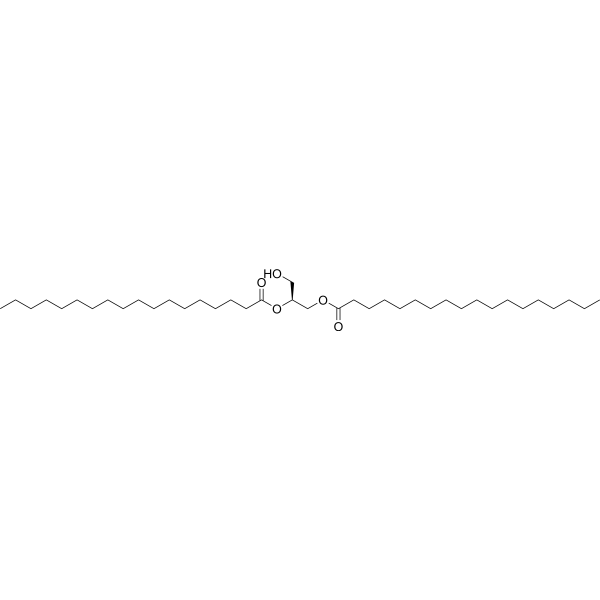
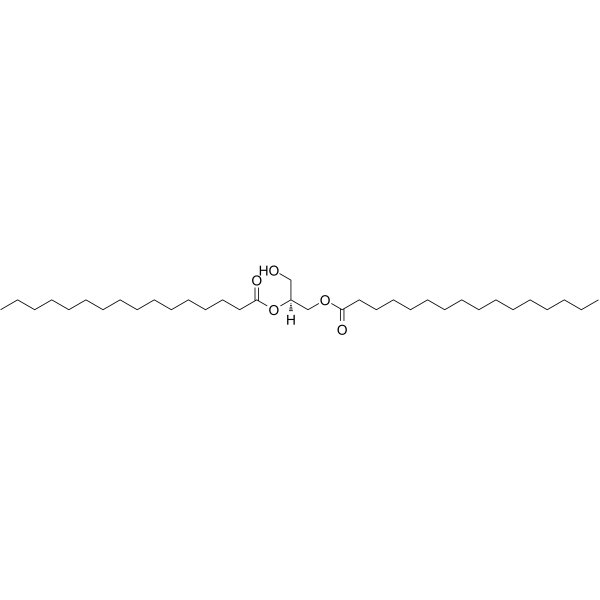
HY-112552
1,2-Distearoyl-sn-glycerolInternal Standard of DAG -
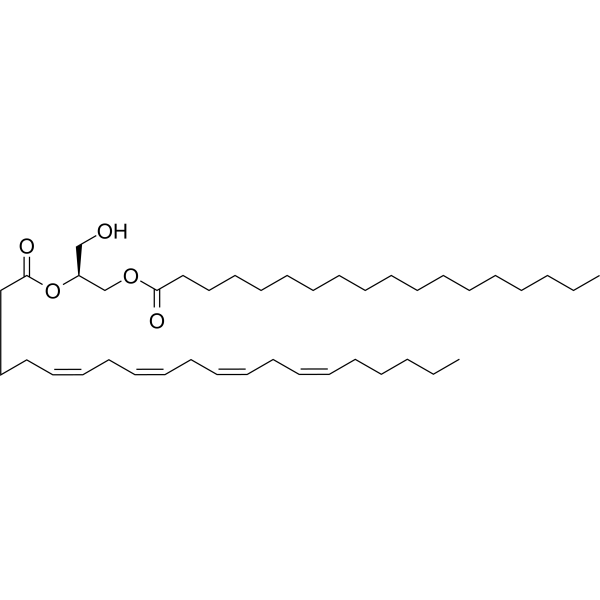
HY-131897
1-Stearoyl-2-arachidonoyl-sn-glycerolPKC Activator -
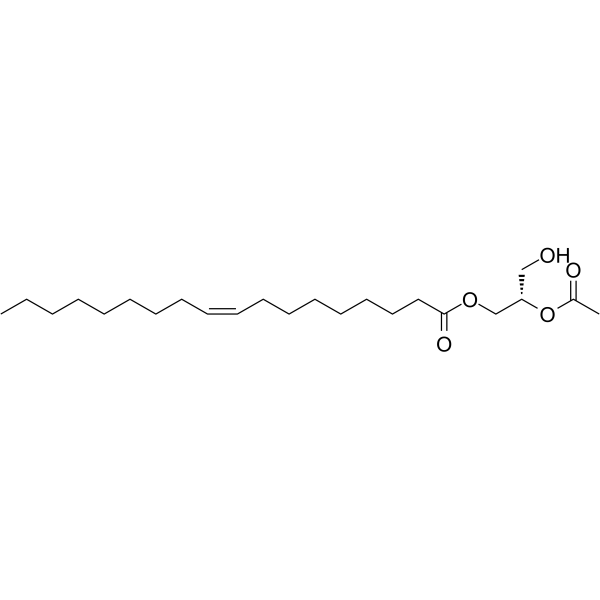
HY-131648
1-Oleoyl-2-acetyl-sn-glycerolDrug Analog -
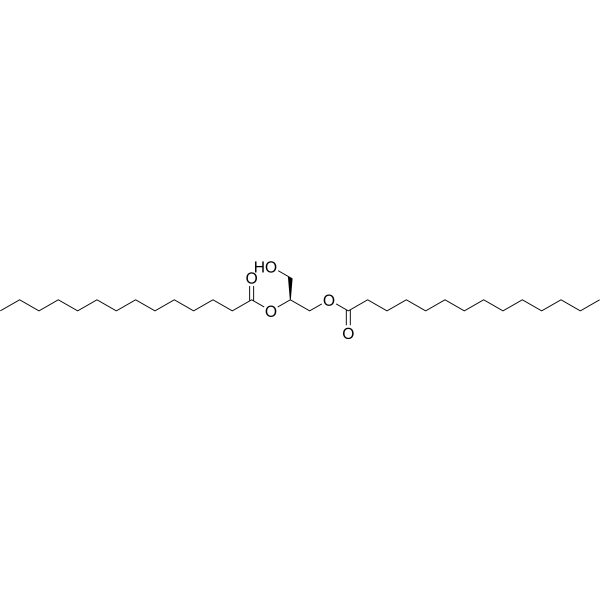
HY-128468
1,2-Dimyristoyl-sn-glycerolPKC Activator -
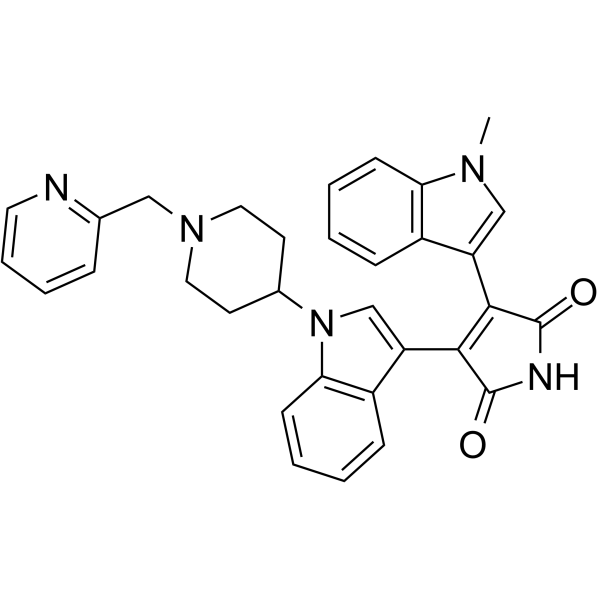
HY-10342
EnzastaurinPKCβ Inhibitor -

HY-W010736R
1,2-Dipalmitoyl-sn-glycerol (Standard)Reference Standard -
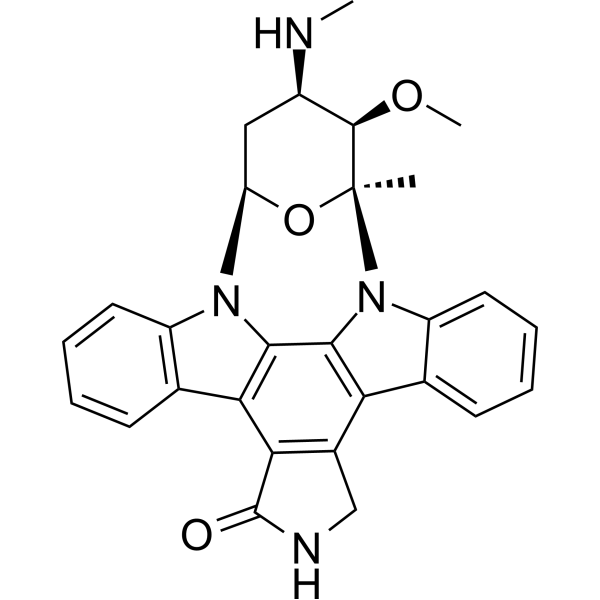
HY-15141
StaurosporinePKC/PKA Inhibitor -
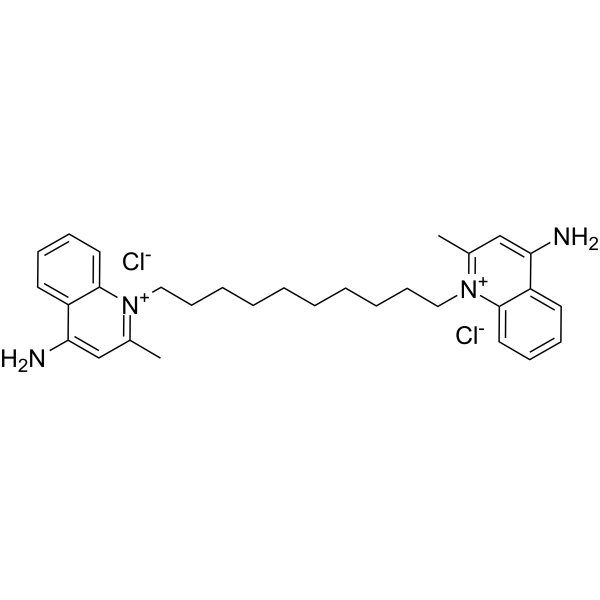
HY-B0567
Dequalinium ChloridePotassium Channel Inhibitor -
HY-101047
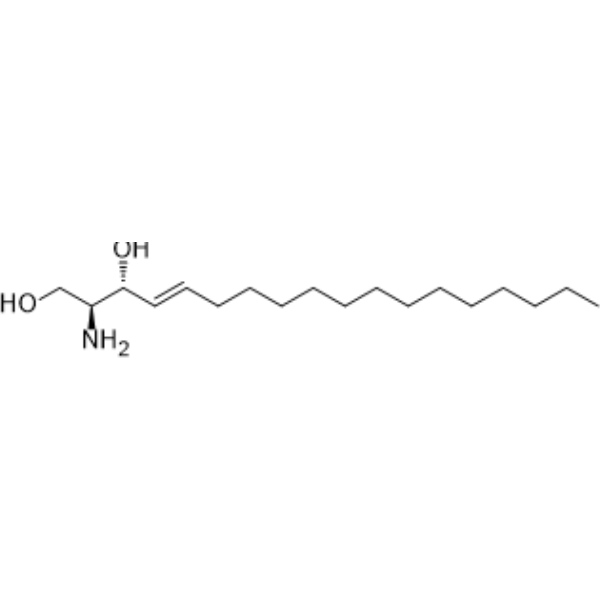
D-erythro-SphingosinePKC Inhibitor -
HY-N0021
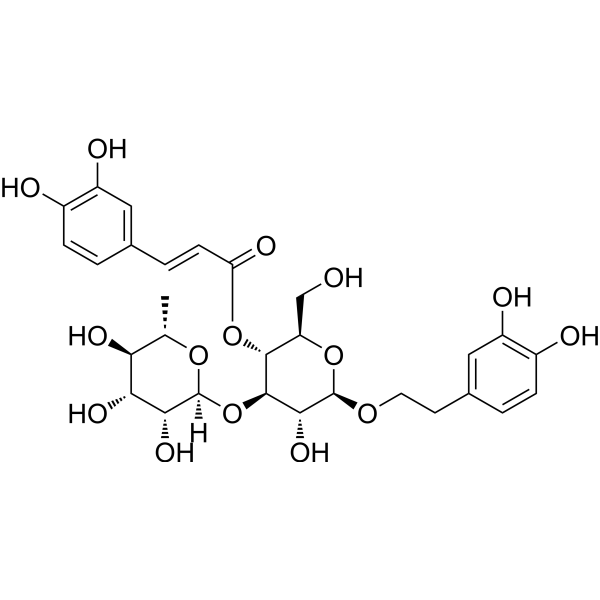
VerbascosideBacterial Inhibitor -
HY-128465
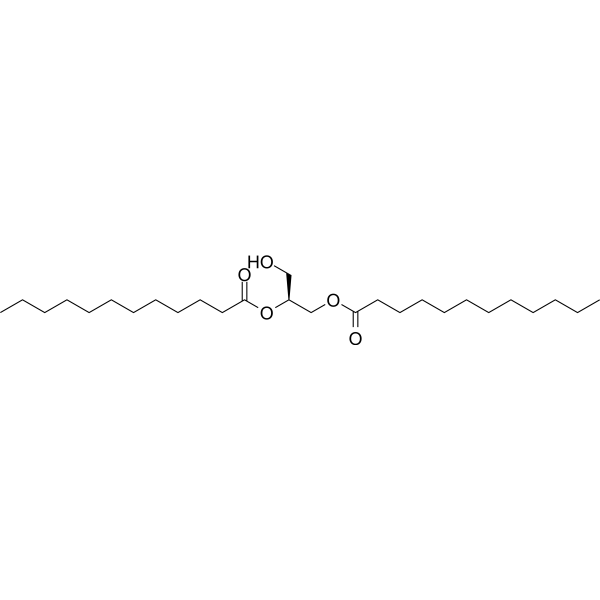
1,2-Dilauroyl-sn-glycerolDiacylglycerol -
HY-18980
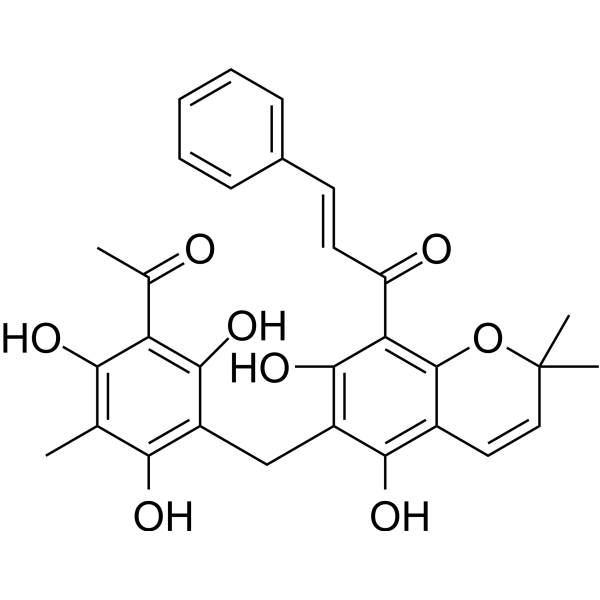
RottlerinPKC Inhibitor


Biological Activity
Description
|
PKC-α |
PKC-βI |
PKC-βII |
PKC-γ |
PKC-δ |
PKC-ε |
GLUT4 |
In Vitro
DP-DAG (30 μM; 20 min) promotes GLUT4 translocation to the cell surface in 3T3L1-GLUT4myc adipocytes[1].
1,2-Dipalmitoyl-sn-glycerol (30 μM; 10 min) does not activate Akt in 3T3L1-GLUT4myc adipocytes[1].
1,2-Dipalmitoyl-sn-glycerol (100 μM; 5 min) activates PKCα, -βI, -βII, -γ, -δ, and -ε, but not PKCλ/ι or -ζ, in cell-free systems[1].
1,2-Dipalmitoyl-sn-glycerol (0.1-10.0 μg/mL; 24 h) does not alter cell proliferation in normal human dermal fibroblasts in vitro at doses up to 10.0 μg/mL[2].
1,2-Dipalmitoyl-sn-glycerol (1.0 μM) alone supports optimal balanced growth of Frankia strain BR[5].
MedChemExpress (MCE) has not independently confirmed the accuracy of these methods. They are for reference only. Further protocols information, click here.
-
Cell Line:3T3L1-GLUT4myc adipocytes
-
Concentration:30 μM
-
Incubation Time:20 min
-
Result:Increased GLUT4 localization on the cell surface.
-
Cell Line:3T3L1-GLUT4myc adipocytes
-
Concentration:30 μM
-
Incubation Time:10 min
-
Result:Did not enhance phosphorylation of Akt at Thr308 and Ser473.
-
Cell Line:Normal human dermal fibroblasts from neonatal foreskin
-
Concentration:0.1 μg/mL; 1.0 μg/mL; 10.0 μg/mL
-
Incubation Time:24 h
-
Result:Induced no treatment-related changes in fibroblast proliferation as determined by DNA synthesis.
In Vivo
MedChemExpress (MCE) has not independently confirmed the accuracy of these methods. They are for reference only.
-
Animal Model:Guinea pigs (outbred, pigmented, 12-20 weeks old)[2]
-
Dosage:50 mg/mL
-
Administration:topical; twice daily; 5 days
-
Result:Induced no significant change in skin pigmentation.
Caused no erythema at treated sites.
Showed a complete lack of increased pigmentation.


Chemical Information
-
CAS No. 30334-71-5
-
Appearance Solid
-
Molecular Weight 568.92
-
Formula C35H68O5
-
Color White to off-white
-
SMILES
OC[C@H](OC(CCCCCCCCCCCCCCC)=O)COC(CCCCCCCCCCCCCCC)=O
-
Structure Classification
-
Initial Source
-
Shipping
Room temperature in continental US; may vary elsewhere.
-
Storage
Powder -20°C 3 years In solvent -80°C 6 months -20°C 1 month


Solvent & Solubility
In Vitro:
Ethanol : 5.56 mg/mL (9.77 mM; ultrasonic and warming and heat to 60°C)
DMSO : 2 mg/mL (3.52 mM; ultrasonic and warming and heat to 60°C; Hygroscopic DMSO has a significant impact on the solubility of product, please use newly opened DMSO)
Please refer to the solubility information to select the appropriate solvent. Once prepared, please aliquot and store the solution to prevent product inactivation from repeated freeze-thaw cycles.
Storage method and period of stock solution: -80°C, 6 months; -20°C, 1 month. When stored at -80°C, please use it within 6 months. When stored at -20°C, please use it within 1 month.
Please refer to the solubility information to select the appropriate solvent. Once prepared, please aliquot and store the solution to prevent product inactivation from repeated freeze-thaw cycles.
Storage method and period of stock solution: -80°C, 6 months; -20°C, 1 month. When stored at -80°C, please use it within 6 months. When stored at -20°C, please use it within 1 month.
Concentration (start) × Volume (start) = Concentration (final) × Volume (final)

Protocols
-
Large-size fat particle sorting
Large-size fat particle sorting is widely used to isolate cells up to 200 μm in diameter. Single-cell flow sorting will allow greater insight into adipocyte heterogeneity by identifying gene expression, protein composition, and metabolic signatures at the single-cell level.
-
Research Protocol for Metabolic Diseases
AMP-activated protein kinase, AMPK, is a conserved cellular energy sensor that responds to reduced cellular energy status and coordinates metabolism by increasing ATP-generating catabolic pathways while suppressing ATP-consuming anabolic processes. In metabolic disease research, the AMPK pathway is experimentally relevant because it regulates hepatic lipid synthesis, fatty acid oxidation, glucose production, skeletal-muscle glucose disposal, mTORC1-linked biosynthesis, autophagy, mitochondrial homeostasis, and whole-body energy balance. The central pathway logic is that energy stress, metformin, exercise-like stimulation, or direct AMPK activators increase AMPKα Thr172 phosphorylation and downstream substrate phosphorylation, including ACC and RAPTOR. Phosphorylation of ACC suppresses lipogenesis and supports fatty acid oxidation, whereas phosphorylation of RAPTOR suppresses mTORC1 signaling and links cellular energy status to growth and protein synthesis control. The pathway is linked


Purity & Documentation
-
Data Sheet (276 KB)
-
SDS (393 KB)
- English - EN (393 KB)
- Français - FR (393 KB)
- Deutsch - DE (393 KB)
- Norwegian - NO (393 KB)
- Español - ES (393 KB)
- Swedish - SV (393 KB)
- Italian - IT (393 KB)
- Korean - KR (393 KB)
- Portuguese - PT (393 KB)
-
Handling Instructions (2659 KB)
References


Complete Stock Solution Preparation Table
Please refer to the solubility information to select the appropriate solvent. Once prepared, please aliquot and store the solution to prevent product inactivation from repeated freeze-thaw cycles.
Storage method and period of stock solution: -80°C, 6 months; -20°C, 1 month. When stored at -80°C, please use it within 6 months. When stored at -20°C, please use it within 1 month.
| Optional Solvent | Concentration Solvent Mass | 1 mg | 5 mg | 10 mg | 25 mg |
|---|---|---|---|---|---|
| DMSO / Ethanol | 1 mM | 1.7577 mL | 8.7886 mL | 17.5772 mL | 43.9429 mL |
| Ethanol | 5 mM | 0.3515 mL | 1.7577 mL | 3.5154 mL | 8.7886 mL |


1,2-Dipalmitoyl-sn-glycerol Related Classifications
HY-W010736 Related Classifications
 Powered by Bioz