2417 Results for "

decrease

" in MedChemExpress (MCE) Product Catalog:
Products (2417)

2417 Results for "decrease" in MCE Product Catalog:

Cat. No.: HY-182513
CAS No.: 459842-29-6
Research Areas:  

Others Inflammation/Immunology

ONO-8539 is an orally active prostanoid EP1 receptor antagonist with competitive, insurmountable binding and slow receptor dissociation for long-duration inhibition. ONO-8539 modulates afferent nerve function related to bladder activity, inhibits detrusor overactivity-related contractions, decreases nonvoiding contractions and voiding duration, and increases uroflow rate with ATP (HY-B2176)-induced detrusor overactivity. ONO-8539 attenuates acid-induced heartburn symptoms, extends time to first heartburn sensation, and prevents primary hypersensitivity after distal esophageal acidification. ONO-8539 can be used for the research of overactive bladder and gastroesophageal reflux disease .
loading...
    loading...
Cat. No.: HY-183257
CAS No.: 1242983-93-2
Research Areas:  

Cancer

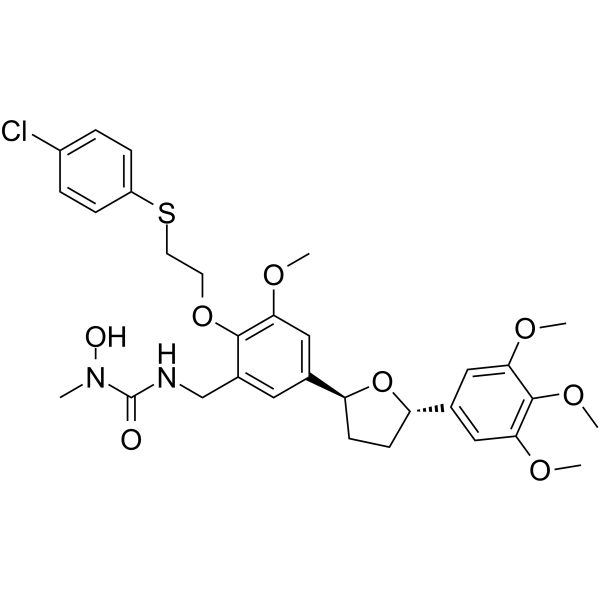
ATI-1 is an autophagy initiation inhibitor. ATI-1 targets valosin-containing protein (VCP/p97, disrupts its interaction with UFL1, impairs UFMylation homeostasis associated with VCP, promotes polyubiquitination and degradation of Beclin1, and blocks the formation of early autophagosomes. ATI-1 induces synergistic death of autophagy-dependent malignant tumor cells under nutrient deprivation conditions, accompanied by decreased mitochondrial membrane potential, reduced ROS levels and lysosomal stress. ATI-1 exhibits anti-tumor efficacy in a pancreatic adenocarcinoma xenograft mouse model. ATI-1 can be used for the research of pancreatic adenocarcinoma and lung cancer .
loading...
    loading...
Cat. No.: HY-187185
CAS No.: 3050643-44-9
Sigma-1 receptor antagonist 7 is a selective sigma-1 receptor antagonist capable of crossing the blood-brain barrier, with an IC50 of 12.7 nM against guinea pig σ1R. Sigma-1 receptor antagonist 7 binds to σ1R, and its binding affinity decreases in the presence of Phenytoin (HY-B0448). Sigma-1 receptor antagonist 7 alleviates mechanical and thermal hyperalgesia induced by acute inflammation in rats. Sigma-1 receptor antagonist 7 can be used for research related to hyperalgesia .
loading...
    loading...
Cat. No.: HY-189136
CAS No.: 2086229-19-6
FCW34 is a cell-permeable, selective Sialyltransferase inhibitor. FCW34 inhibits α2,3-N-linked ST3GALIII (IC50 1.74 μM) and α2,6-N-linked ST6GALI (IC50 3.6 μM), reducing N-glycoprotein sialylation. FCW34 decreases cell migration ability by inhibiting the Talin/Integrin/FAK/Paxillin and Integrin/NFκB signaling pathways. FCW34 significantly inhibits tumor growth, reduces angiogenesis, and suppresses spontaneous lung metastasis in a nude mouse model of breast cancer. FCW34 can be used for research on breast cancer .
loading...
    loading...
Cat. No.: HY-189650
AMPAR/Nav1.2-IN-1 is a blood-brain barrier-penetrant AMPAR inhibitor and Nav1.2 blocker with IC50 values of 12.7 and 7.01 μM, respectively. AMPAR/Nav1.2-IN-1 inhibits AMPA-mediated excitatory currents and neuronal Nav1.2 voltage-gated sodium channels. AMPAR/Nav1.2-IN-1 scavenges free radicals via HAT and SET, increases GSH and SOD while decreasing MDA, and restores GABA-glutamate homeostasis by attenuating glutamate elevation and increasing GABA. AMPAR/Nav1.2-IN-1 can be used for epilepsy research .
loading...
    loading...
Cat. No.: HY-189826
CAS No.: 3106928-52-0
Research Areas:  

Cancer

AMC-3-221 is a cereblon-dependent CDK9 PROTAC degrader with a DC50 of 8 nM (MOLM14 AML cells). AMC-3-221 targets CDK9 with an IC50 of 1.7 nM and a Kd of 4.6 nM. AMC-3-221 decreases MCL-1 and c-MYC protein levels as well as MCL-1, c-MYC, and N-MYC RNA levels. AMC-3-221 induces apoptosis and inhibits proliferation in multiple cancer cell lines. AMC-3-221 exhibits proteasome-dependent CDK9 degradation. AMC-3-221 can be used for research on acute myeloid leukemia (AML) .
loading...
    loading...
Cat. No.: HY-190183
CAS No.: 1043812-24-3
Research Areas:  

Cancer

eEF2K Degrader-3 is an eEF2K molecular glue degrader (Kd = 0.831 μM) that recruits βTRCP to mediate ubiquitin-proteasome degradation. eEF2K Degrader-3 triggers rapid downregulation of eEF2K and produces a durable effect. eEF2K Degrader-3 inhibits TNBC cell proliferation, migration, and invasion, suppresses tumor growth and lung metastasis in mouse models, decreases vimentin and increases E-cadherin in organoids, and downregulates AURKA and SOX8 downstream of eEF2K degradation. eEF2K Degrader-3 can be used for research on triple-negative breast cancer (TNBC) .
loading...
    loading...
Cat. No.: HY-190711
AChE/BChE/Aβ42-IN-1 is an inhibitor that inhibits AChE, BChE, and β-amyloid (Aβ42) with IC50 values of 7.01 μM, 5.39 μM, and 4.47 μM, respectively. AChE/BChE/Aβ42-IN-1 reduces NF-κB p65 phosphorylation, attenuates LPS/Aβ42-induced neurotoxicity, increases microglial viability, decreases reactive oxygen species (ROS), pro-inflammatory cytokines, and nitric oxide, and attenuates microglial activation. AChE/BChE/Aβ42-IN-1 can be used for research on Alzheimer's disease .
loading...
    loading...
Cat. No.: HY-19205A
CAS No.: 193739-23-0
Synonyms: LDP-392
CMI-392 (LDP-392) is an orally active dual 5-lipoxygenase inhibitor and platelet-activating factor receptor (PAFR) antagonist, with an IC50 of 10 nM for human PAF receptor and an IC50 of 100 nM for rat 5-lipoxygenase. CMI-392 blocks PAF receptor binding, inhibits leukotriene synthesis, attenuates PAF-induced hemoconcentration, and suppresses arachidonic acid- and TPA-induced ear swelling in mice. CMI-392 reduces inflammatory cell infiltration, decreases MPO levels, alleviates ocular inflammation, and improves dextran sulfate sodium-induced colitis. CMI-392 can be used in the research of inflammatory and immune-related diseases such as colitis and atopic dermatitis .
loading...
    loading...
Cat. No.: HY-B1114A
CAS No.: 62783-47-5
Synonyms: AR-DF 26 sodium
Gliquidone sodium (AR-DF 26 sodium) can bind to the pancreatic β-cells and increases insulin release to regulate blood glucose levels. Gliquidone sodium significantly decreases LPS (HY-D1056)-induced proinflammatory responses and inhibits ERK/STAT3/NF-κB phosphorylation in BV2 microglial cells. Gliquidone sodium can suppress microgliosis, microglial hypertrophy mediated by LPS, and proinflammatory cytokine COX-2 and IL-6 levels in murine model. Gliquidone sodium also exhibits good anticancer activity in lung carcinoma cells. Gliquidone sodium has antioxidant property. Gliquidone sodium can be studied in research for type 2 diabetes and cancers .
loading...
    loading...
Cat. No.: HY-D1422
CAS No.: 1445108-32-6
Synonyms: BDNCA-346
Target:  

Fluorescent Dye

Research Areas:  

Others

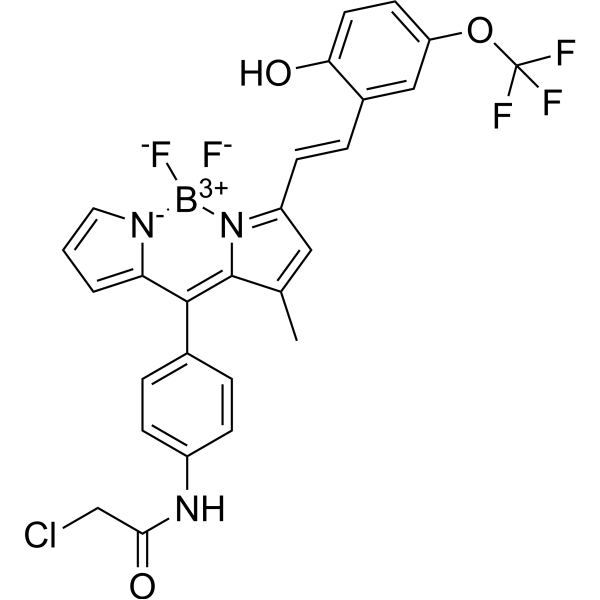
ER Tracker Yellow (BDNCA-346) is a Fluorescent probe for targeted visualization of temperature at the endoplasmic reticulum. Its detection mechanism depends on temperature, with fluorescence intensity decreasing at higher temperatures due to preferential non-radiative processes; this intensity reversibly returns to baseline when cooled, provided the probe does not precipitate or degrade. It localizes specifically to the endoplasmic reticulum, where it may covalently attach to biomacromolecules via a thiol-reactive moiety, and its fluorescence remains stable after cell fixation; its fluorescence intensity is unaffected by physiological pH ranges of 5.0–8.0 and free Ca²⁺ concentrations of 0–800 μM. Its excitation/emission wavelength is Ex/Em = 559/581 nm[1].
loading...
    loading...
Cat. No.: HY-D3087
CAS No.: 1966158-27-9
Target:  

Fluorescent Dye

Research Areas:  

Cancer

Lyso-OC is a two-photon fluorescent probe that enables real-time monitoring of autophagy through ultrasensitive detection of lysosomal polarity changes. Lyso-OC possesses a coumarin (HY-N0709) solvatochromic group and a morpholine lysosome-targeting group, allowing selective lysosomal localization in living cells. Lyso-OC emits strong fluorescence in low-polarity lysosomes, whereas in high-polarity autolysosomes formed during autophagy, its fluorescence intensity decreases and the emission peak shifts by approximately 30 nm. For two-photon detection, the excitation/emission wavelengths of Lyso-OC are 760/490-550 nm, and its one-photon excitation wavelength is 375 nm. Lyso-OC can be used in cancer-related research .
loading...
    loading...
Cat. No.: HY-N0597R
CAS No.: 32791-84-7
Panaxatriol (Standard) is the analytical standard of Panaxatriol. This product is intended for research and analytical applications. Panaxatriol is an orally active dammarane-type tetracyclic triterpene sapogenin. Panaxatriol enhances the phosphorylation levels of Akt, insulin receptor and p70S6K in skeletal muscle. Panaxatriol reduces the mRNA expression level of Atrogin1 in skeletal muscle. Panaxatriol induces apoptosis, pre-G1 cell cycle arrest and increased intracellular ROS levels in prostate cancer cells, decreases mitochondrial membrane potential, inhibits cell migration and reduces colony formation. Panaxatriol can be used in research related to insulin resistance, myocardial ischemia/reperfusion injury and prostate cancer .
loading...
    loading...
Cat. No.: HY-N0600
CAS No.: 62025-50-7
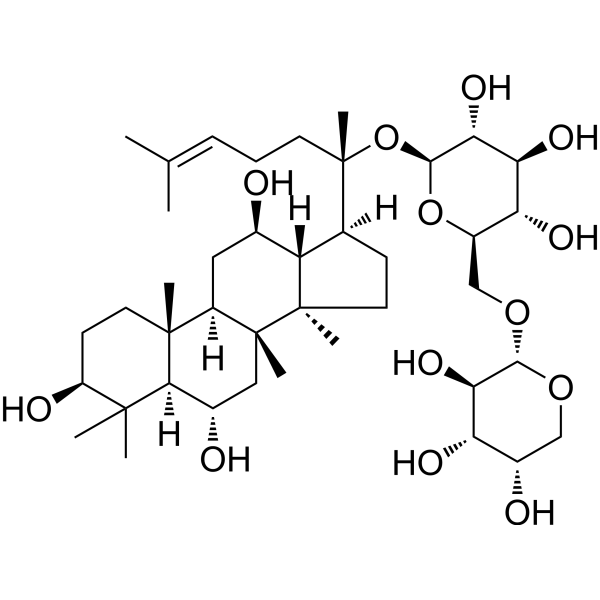
Ginsenoside F3 is a saponin extracted from the leaves of Panax ginseng with immunoenhancing and antitumor immunostimulatory activities. Ginsenoside F3 upregulates RIPOR2 with a Kd value of 3.77 μM. Ginsenoside F3 enhances NF‑κB activation, upregulates T‑bet and downregulates GATA‑3, increases the production of IL‑2 and IFN‑γ, decreases the production of IL‑4 and IL‑10, reverses CD8⁺ T‑cell exhaustion, restores cytokine secretion, and enhances antitumor immunity in a mouse non‑small cell lung cancer model. Ginsenoside F3 can be used for the research of non-small cell lung cancer .
loading...
    loading...
Cat. No.: HY-N10116A
CAS No.: 483-77-2
Calamenene is a sesquiterpene compound . Calamenene promotes dendritic cell maturation, upregulates CD1a, CD80, CD83, CD86, HLA-DR and CCR7 on the cell surface, reduces endocytic activity, enhances T cell-stimulating capacity, drives Th1 polarization through the secretion of IL-12, induces IFN-γ production, decreases IL-4 generation, and triggers intracellular Ca 2+ mobilization as well as dendritic cell migration towards MIP-3β. Calamenene exerts bacteriostatic and bactericidal growth-inhibitory effects against pathogenic *Vibrio harveyi*. Calamenene can be used in studies related to cancer and bacterial infections .
loading...
    loading...
Cat. No.: HY-N10133
CAS No.: 119240-82-3
Synonyms: 3′-Prenylnaringenin
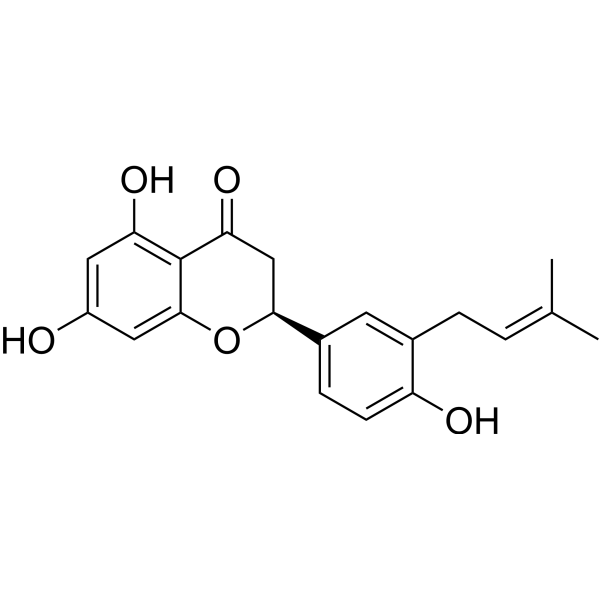
Licoflavanone (3′-Prenylnaringenin) is a flavanone with antioxidant, anti-inflammatory and anticancer activities. Licoflavanone can be isolated from the leaf extract of Glycyrrhiza glabra. Licoflavanone downregulates the mTOR/PI3K/AKT signaling pathway to inhibit the proliferation, migration and invasion of cancer cells, while activates Bax, Bad and multiple caspase enzymes to induce apoptosis. Its anti-inflammatory effect is manifested by reducing the nuclear translocation of NF-κB, decreasing the phosphorylation levels of p38, JNK and ERK1/2, thereby inhibiting the expression of nitric oxide, proinflammatory cytokines, COX-2 and iNOS. Licoflavanone is used in studies on nasopharyngeal carcinoma and related mechanisms .
loading...
    loading...
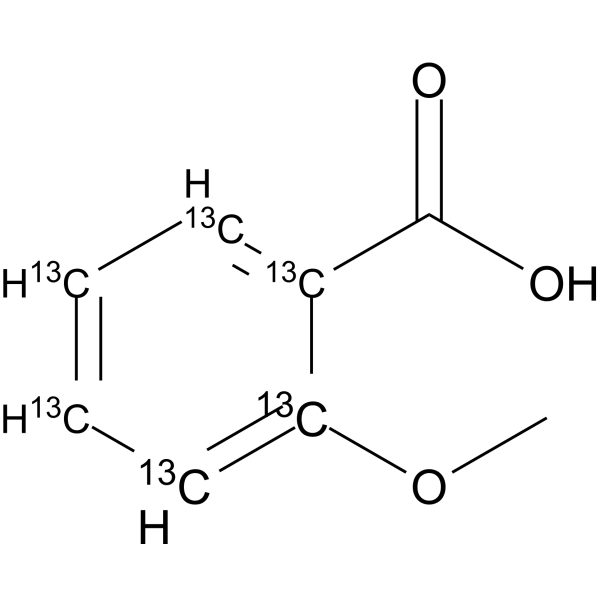
Cat. No.: HY-N1393S
Synonyms: NSC 3778-13C6; O-Methylsalicylic acid-13C6; Salicylic acid methyl ether-13C6
2-Methoxybenzoic acid (NSC 3778; O-Methylsalicylic acid; Salicylic acid methyl ether)- 13C6 is the 13C-labeled 2-Methoxybenzoic acid (HY-N1393). 2-Methoxybenzoic acid is a natural compound with potential salicylate-like effect. 2-Methoxybenzoic acid inhibits carbonic anhydrase activity, elevates intraplatelet cyclic guanosine monophosphate level, and suppresses cytosolic phospholipase A2 phosphorylation. 2-Methoxybenzoic acid suppresses platelet reactivity, including decreased spreading, retraction, and aggregation in platelets. 2-Methoxybenzoic acid ameliorates arterial thrombosis in a dose-dependent manner without affecting normal hemostasis in mice. 2-Methoxybenzoic acid can be used for the research of arterial thrombosis .
loading...
    loading...
Cat. No.: HY-N1393S1
CAS No.: 96739-36-5
Synonyms: NSC 3778-d3; O-Methylsalicylic acid-d3; Salicylic acid methyl ether-d3
2-Methoxybenzoic acid (NSC 3778; O-Methylsalicylic acid; Salicylic acid methyl ether)-d3 is deuterium-labeled 2-Methoxybenzoic acid (HY-N1393). 2-Methoxybenzoic acid is a natural compound with potential salicylate-like effect. 2-Methoxybenzoic acid inhibits carbonic anhydrase activity, elevates intraplatelet cyclic guanosine monophosphate level, and suppresses cytosolic phospholipase A2 phosphorylation. 2-Methoxybenzoic acid suppresses platelet reactivity, including decreased spreading, retraction, and aggregation in platelets. 2-Methoxybenzoic acid ameliorates arterial thrombosis in a dose-dependent manner without affecting normal hemostasis in mice. 2-Methoxybenzoic acid can be used for the research of arterial thrombosis .
loading...
    loading...
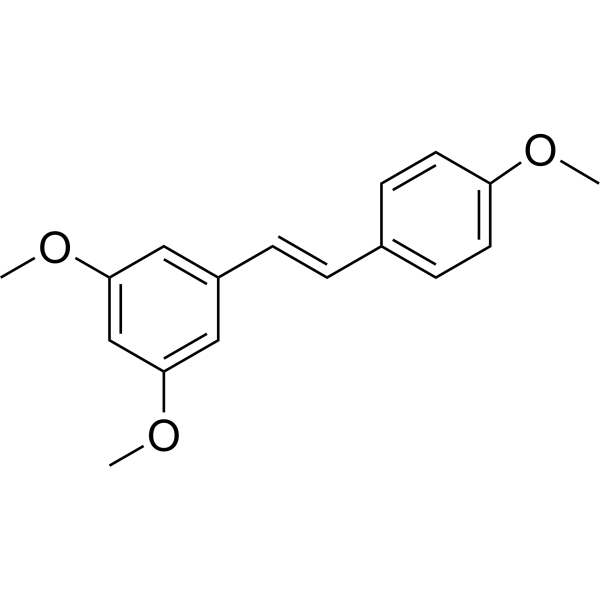
Cat. No.: HY-N1408
CAS No.: 22255-22-7
Synonyms: trans-trismethoxy Resveratrol; (E)-Resveratrol trimethyl ether; trans-3,5,4'-Trimethoxystilbene
Trans-Trimethoxyresveratrol (trans-trismethoxy Resveratrol; (E)-Resveratrol trimethyl ether; trans-3,5,4'-Trimethoxystilbene) is an orally active natural derivative of Resveratrol (HY-16561). Trans-Trimethoxyresveratrol has an enhanced anticancer profile compared to Resveratrol, exhibiting higher potency than resveratrol, with improved cancer cell proliferation inhibition, induction of cell cycle arrest, decreased metastasis, and increased apoptosis. Trans-Trimethoxyresveratrol causes microtubule disassembling and tubulin depolymerization and exerts anti-angiogenic effects through VEGFR2. Trans-Trimethoxyresveratrol can be used for the studies of anti-angiogenic and anti-cancer (such as non-small cell lung cancer and osteosarcoma) .
loading...
    loading...
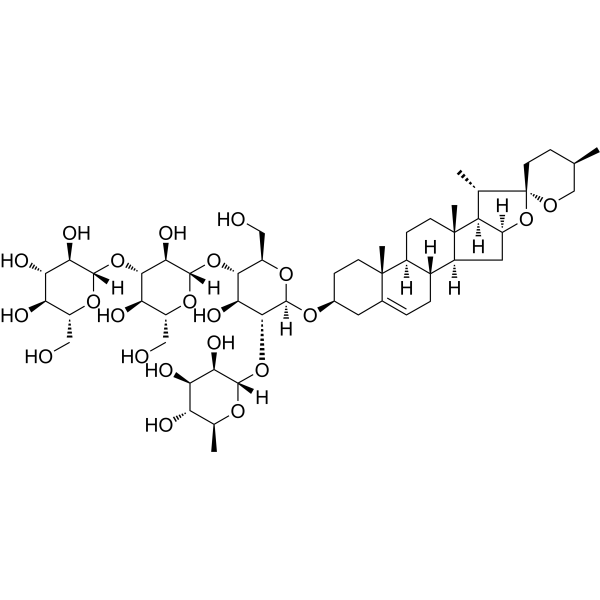
Cat. No.: HY-N2282
CAS No.: 91653-50-8
Synonyms: Zingiberensis newsaponin
Zingiberen Newsaponin (Zingiberensis newsaponin) is an orally active type of steroid saponin compound. Zingiberen Newsaponin exerts anti-hepatocellular carcinoma (HCC) effects by inhibiting autophagy and the AKR1C1/JAK2/STAT3 pathway. Zingiberen Newsaponin activates oxidative stress (upregulates ROS and MDA) and mitochondrial pathways, promoting cancer cell apoptosis. Zingiberen Newsaponin alleviates cerebral ischemia-reperfusion (I/R) injury by decreasing the concentration of pro-inflammatory cytokines and inhibits NF-κB. Zingiberen Newsaponin can enhance the activity of SOD, eliminate free radicals and protect nerve cells. Zingiberen Newsaponin induces platelet aggregation .
loading...
    loading...

