255 Results for "

Embryonic

" in MedChemExpress (MCE) Product Catalog:
Products (255)

255 Results for "Embryonic" in MCE Product Catalog:

  • Categories Recommended:
    More
Cat. No.: HY-10182AR
CAS No.: 1797989-42-4
Synonyms: CHIR-99021 monohydrochloride (Standard); CT99021 monohydrochloride (Standard)
Research Areas:  

Cancer

Laduviglusib (monohydrochloride) (Standard) is the analytical standard of Laduviglusib (monohydrochloride). This product is intended for research and analytical applications. Laduviglusib (CHIR-99021) monohydrochloride is a potent and selective GSK-3α/β inhibitor with IC50s of 10 nM and 6.7 nM. Laduviglusib monohydrochloride shows >500-fold selectivity for GSK-3 over CDC2, ERK2 and other protein kinases. Laduviglusib monohydrochloride is also a potent Wnt/β-catenin signaling pathway activator. Laduviglusib monohydrochloride enhances mouse and human embryonic stem cells self-renewal. Laduviglusib monohydrochloride induces autophagy .
loading...
    loading...
Cat. No.: HY-168207
Research Areas:  

Inflammation/Immunology

TH023 is an inhibitor for the TLR4 signaling pathway, that targets especially the formation of TLR4 homodimer. TH023 inhibits secreted embryonic alkaline phosphatase in cell HEK-Blue hTLR4 with an IC50 of 0.354 μM, and inhibits the NO expression in RAW264.7 with an IC50 of 1.61μM. TH023 also inhibits the activation of NF-κB, reduces the nuclear translocation of NF-κB p65. TH023 exhibits anti-inflammatory efficacy in LPS (HY-D1056)-induced mouse acute sepsis model, and ameliorates the mouse lung injury .
loading...
    loading...
Cat. No.: HY-182447
CAS No.: 69095-83-6
Synonyms: DL111-IT
Target:  

CDK Apoptosis

Research Areas:  

Endocrinology Cancer

Contragestazol (DL111-IT) is a non-hormonal antifertility agent. Contragestazol reduces the expression of Cyclin D1 and CDK4, increases the expression of total retinoblastoma protein (pRb), and decreases the level of hyperphosphorylated pRb. Contragestazol induces G0/G1 phase cell cycle arrest. Contragestazol inhibits embryonic development by inducing luteal cell apoptosis and reducing intrauterine polyamine levels. Contragestazol exhibits antitumor activity against prostate cancer, S180 tumor and H22 tumor. Contragestazol shows extremely potent activity in terminating early pregnancy in animals .
loading...
    loading...
Cat. No.: HY-183405
CAS No.: 143984-56-9
Target:  

RAR/RXR

Research Areas:  

Neurological Disease

CD2019 is a selective retinoic acid receptor β (RARβ) agonist, with a Kd value of 26 nM for RARβ and an AC50 value of 3.8 nM for human RARβ. CD2019 regulates downstream biological effects via the PI3K signaling pathway. CD2019 suppresses squamous metaplasia, inhibits squamous differentiation markers, maintains pseudostratified epithelial structure, induces neurite and axon growth, and promotes functional recovery; it exhibits cytotoxicity at higher concentrations and reduces endogenous retinol levels. CD2019 can be used in studies related to squamous metaplasia, spinal cord injury and embryonic malformations .
loading...
    loading...
Cat. No.: HY-D3179
CAS No.: 1451048-96-6
CDg13 is a fluorescent probe that specifically detects living neural stem/progenitor cells. CDg13 localizes to the endoplasmic reticulum via its dihexyl moiety, with no interaction with endoplasmic reticulum biomolecules. CDg13 undergoes selective efflux by active ABCG2 transporters, with increased intracellular accumulation following ABCG2 inhibition or knockdown. CDg13 isolates and enriches self-renewable neural stem/progenitor cells from embryonic mouse brain tissue, stains neural stem/progenitor cells brightly, and sorts ABCG2low cell populations from heterogeneous populations . (Ex/Em = 520/553 nm)
loading...
    loading...
Cat. No.: HY-W012278
CAS No.: 56-55-3
Synonyms: Tetraphene
Benz[a]anthracene (Tetraphene) is a polycyclic aromatic hydrocarbon pollutant and also a ligand of aryl hydrocarbon receptor 2 (AHR2), with a pIC50 of 7.319. Benz[a]anthracene can be detected in spruce needles near aluminum smelters. Exposure to Benz[a]anthracene during zebrafish embryonic stage activates the AHR-CYP1A signaling pathway and induces AHR2 expression, leading to social behavioral deficits that persist into adulthood, accompanied by impaired neuro-immune interaction, while anxiety levels remain unaffected. Benz[a]anthracene can be used in studies related to PAH environmental toxicology, developmental neurotoxicity and biodegradation .
loading...
    loading...
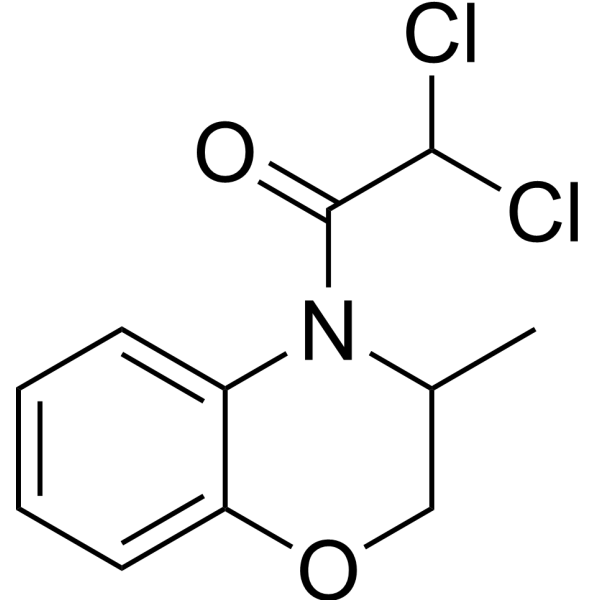
Cat. No.: HY-W020788
CAS No.: 98730-04-2
Synonyms: CGA 154281
Benoxacor (CGA 154281) is a herbicide safener and xenobiotic metabolism regulator. Benoxacor protects maize from the toxicity of metolachlor mainly by inducing detoxifying enzymes such as Glutathione S-transferase. Benoxacor also activates FXR, PXR and ERRα, and inhibits aromatase (aromatase). However, Benoxacor exhibits potential subacute oral toxicity and a high risk of hepatotoxicity in animal models. Benoxacor induces reactive oxygen species accumulation, interferes with embryonic heart development, and causes increased liver and kidney weights as well as alterations in gut microbiota in mice. Benoxacor can be used in studies related to hepatic steatosis, infertility, breast cancer and developmental toxicity .
loading...
    loading...
Cat. No.: HY-W025074
CAS No.: 120533-76-8
Research Areas:  

Cancer

BML-278 is a SIRT1 activator (EC150: 1 μM). BML-278 increases H3K9 methylation and inhibits H3K9 acetylation in both the paternal and maternal pronucleus. BML-278 improves early embryonic development. BML-278 arrests the cell cycle at the G1/S phase, and reduces senescence in primary human mesenchymal cells. BML-278 reduces tubulin acetylation in U937 cells. BML-278 also increases mitochondrial density in murine C2C12 myoblasts .
loading...
    loading...
Cat. No.: HY-W133907
CAS No.: 55566-30-8
Tetrakis (hydroxymethyl) phosphonium sulfate is a protein crosslinker and hydrogel modifier. Tetrakis (hydroxymethyl) phosphonium sulfate covalently binds to primary and secondary amines of amino acids or proteins via a Mannich-type reaction, thereby constructing stable crosslinking bonds between protein molecules. Tetrakis (hydroxymethyl) phosphonium sulfate not only regulates the gelation time and storage modulus of recombinant elastin-like protein hydrogels, but also exhibits excellent cytocompatibility, and supports the differentiation and growth of embryonic stem cells and neural cells in a three-dimensional encapsulation environment. Tetrakis (hydroxymethyl) phosphonium sulfate is suitable for protein-based hydrogel systems, especially for applications related to cell encapsulation .
loading...
    loading...
Cat. No.: HY-W714048
Synonyms: CHIR-99021-d4; CT99021-d4
Laduviglusib-d4 (CHIR-99021-d4) is the deuterium labeled Laduviglusib (HY-10182). Laduviglusib (CHIR-99021) is a potent, selective and orally active GSK-3α/β inhibitor with IC50s of 10 nM and 6.7 nM. Laduviglusib shows >500-fold selectivity for GSK-3 over CDC2, ERK2 and other protein kinases. Laduviglusib is also a potent Wnt/β-catenin signaling pathway activator. Laduviglusib enhances mouse and human embryonic stem cells self-renewal. Laduviglusib induces autophagy.
loading...
    loading...
Cat. No.: HY-104044A
CAS No.: 2086689-94-1
Synonyms: BGB-290 maleate
Target:  

Apoptosis

Research Areas:  

Neurological Disease

Pamiparib maleate (BGB-290 maleate) is a highly potent and selective PARP inhibitor with neurotoxicity-inducing activity. Pamiparib maleate can effectively penetrate the blood-brain barrier and cause cerebral hemorrhage, brain atrophy, and movement disorders in zebrafish embryos exposed. Pamiparib maleate exposure downregulates the activities of acetylcholinesterase (AChE) and adenosine triphosphatase (ATPase) and leads to upregulation of oxidative stress, which triggers apoptosis and interferes with the expression of neurodevelopment-related genes. The use of pamiparib maleate is also accompanied by downregulation of the Notch signaling pathway, while activation of the Notch signaling pathway can partially rescue neurodevelopmental toxicity. Therefore, pamiparib maleate provides a reference for evaluating its potential neurotoxicity during embryonic development .
loading...
    loading...
Cat. No.: HY-125217
CAS No.: 2286261-72-9
Target:  

PARP

Research Areas:  

Cancer

PARP10-IN-1 is a PARP10 inhibitor with an IC50 of 1.8 μM, 2.7 μM, and >10-fold selectivity over most PARP family members, excluding PARP7 and PARP16.PARP10-IN-1 inhibits PARP10-mediated mono-ADP-ribosylation, including auto-MARylation of PARP10 and MARylation of its protein targets.PARP10-IN-1 is membrane permeable and inhibits PARP10-dependent MARylation in human embryonic kidney cells.PARP10-IN-1 can be used for the research of cancer .
loading...
    loading...
Cat. No.: HY-Z11709
CAS No.: 1160974-39-9
13-Hydroxy-alpha-tocopherol is a fat-soluble vitamin E derivative and anticancer agent with antioxidant and antiproliferative activities. 13-Hydroxy-alpha-tocopherol scavenges peroxyl free radicals and protects polyunsaturated fatty acids from oxidative damage. 13-Hydroxy-alpha-tocopherol not only inhibits the growth of glioma cancer cells, but its deficiency is also closely associated with recurrent miscarriage, embryonic growth retardation and death. Clinical observations show that the expression of 13-Hydroxy-alpha-tocopherol is downregulated in the follicular fluid of patients with recurrent miscarriage. 13-Hydroxy-alpha-tocopherol has important application potential in the research of recurrent miscarriage and glioma .
loading...
    loading...
Cat. No.: HY-L005M
295 compounds

Epigenetics involves heritable phenotypic changes that occur without alterations to the underlying DNA sequence. Key mechanisms include DNA methylation, histone modifications, and regulation by small non-coding RNAs such as microRNAs. By modifying DNA, histones, or RNA—while leaving their primary sequences intact—these processes influence molecular function and regulation, thereby playing critical roles in cellular differentiation, embryonic development, gene expression control, aging, and diseases such as cancer.

MCE provide a unique collection of 295 epigenetics-related compounds. For each regulatory target and its subtype, 3 to 5 highly specific representative compounds have been retained, which can be used in epigenetic and related disease research.

Cat. No.: HY-182636
CAS No.: 1895049-73-6
MT16-001 is a cell-permeable UCHL1 inhibitor with an IC50 value of 580 nM. MT16-001 also exhibits considerable inhibitory activity against USP30, and shows selectivity for other UCH family deubiquitinases (DUBs) as well as the broader proteome. MT16-001 binds covalently to the cysteine residue at the active site of UCHL1, and forms covalent interactions with ALDH2, ALDH9A1 and GATD3A in intact cells. Meanwhile, as a cytotoxic agent, it displays a steep dose-response curve in human embryonic kidney cells. MT16-001 can be used for research on various cancers, liver fibrosis and pulmonary fibrosis .
loading...
    loading...
Cat. No.: HY-181154
Research Areas:  

Infection

PROTAC SARS-CoV-2 Mpro degrader-5 is a SARS-CoV-2 main protease (Mpro) PROTAC. PROTAC SARS-CoV-2 Mpro degrader-5 engages CRBN E3 ubiquitin ligase to form a ternary complex with SARS-CoV-2 Mpro, induces K48-linked polyubiquitination of SARS-CoV-2 Mpro, and drives proteasome-dependent turnover of SARS-CoV-2 Mpro with a high selectivity index (CC50/DC50 > 10) in human embryonic kidney cells.PROTAC SARS-CoV-2 Mpro degrader-5 can be used for the research of COVID-19 .
loading...
    loading...
Cat. No.: HY-W012278S
CAS No.: 1718-53-2
Synonyms: Tetraphene-d12
Benz[a]anthracene-d12 (Tetraphene-d12) is the deuterated-labeled Benz[a]anthracene (HY-W012278). Benz[a]anthracene (Tetraphene) is a polycyclic aromatic hydrocarbon pollutant and also a ligand of aryl hydrocarbon receptor 2 (AHR2), with a pIC50 of 7.319. Benz[a]anthracene can be detected in spruce needles near aluminum smelters. Exposure to Benz[a]anthracene during zebrafish embryonic stage activates the AHR-CYP1A signaling pathway and induces AHR2 expression, leading to social behavioral deficits that persist into adulthood, accompanied by impaired neuro-immune interaction, while anxiety levels remain unaffected. Benz[a]anthracene can be used in studies related to PAH environmental toxicology, developmental neurotoxicity and biodegradation .
loading...
    loading...
Cat. No.: HY-W020788R
CAS No.: 98730-04-2
Synonyms: CGA 154281 (Standard)
Benoxacor (Standard) is the analytical standard of Benoxacor. This product is intended for research and analytical applications. Benoxacor (CGA 154281) is a herbicide safener and xenobiotic metabolism regulator. Benoxacor protects maize from the toxicity of metolachlor mainly by inducing detoxifying enzymes such as Glutathione S-transferase. Benoxacor also activates FXR, PXR and ERRα, and inhibits aromatase (aromatase). However, Benoxacor exhibits potential subacute oral toxicity and a high risk of hepatotoxicity in animal models. Benoxacor induces reactive oxygen species accumulation, interferes with embryonic heart development, and causes increased liver and kidney weights as well as alterations in gut microbiota in mice. Benoxacor can be used in studies related to hepatic steatosis, infertility, breast cancer and developmental toxicity .
loading...
    loading...
Cat. No.: HY-L017
2,931 compounds

Adult stem cells are important for tissue homeostasis and regeneration due to their ability to self-renew and generate multiple types of differentiated daughters. Self-renewal is reflected by their capacity to undergo multiple/limitless divisions. Several signaling pathways are involved in self-renewal of stem cells, that is, Notch, Wnt, and Hedgehog pathways or Polycomb family proteins. Recent studies mainly focus on cancer stem cell (CSCs), induced pluripotent stem cell (iPSCs), neural stem cell and maintenance of embryonic stem cell pluripotency. Among them, CSCs have been believed to be responsible for tumor initiation, growth, and recurrence that have implications for cancer therapy.

MCE owns a unique collection of 2,931 compounds that can be used for stem cell regulatory and signaling pathway research.

Cat. No.: HY-115701
CAS No.: 154436-49-4
Synonyms: 1-Stearoyl-2-15(S)-HpETE-sn-glycero-3-phosphoethanolamine; 15(S)-HpETE-SAPE; 15(S)-hydroperoxyeicostetraenoic acid-SAPE
Target:  

Ferroptosis

Research Areas:  

Inflammation/Immunology

1-Stearoyl-2-15(S)-HpETE-sn-glycero-3-Pe is a phospholipid that contains stearic acid (HY-B2219) at the sn-1 position and 15(S)-HpETE at the sn-2 position. It is produced via oxidation of 1-stearoyl-2-arachidonoyl-sn-glycero-3-Pe (SAPE) by 15-lipoxygenase (15-LO). 1-Stearoyl-2-15(S)-HpETE-sn-glycero-3-Pe (0.6 and 0.9 μM) increases ferroptotic cell death in wild-type and Acsl4 knockout Pfa1 mouse embryonic fibroblasts (MEFs) treated with the GPX4 inhibitor RSL3.
loading...
    loading...