288 Results for "

zebrafish 53BP1

" in MedChemExpress (MCE) Product Catalog:
Products (288)

288 Results for "zebrafish 53BP1" in MCE Product Catalog:

Cat. No.: HY-W012278
CAS No.: 56-55-3
Synonyms: Tetraphene
Benz[a]anthracene (Tetraphene) is a polycyclic aromatic hydrocarbon pollutant and also a ligand of aryl hydrocarbon receptor 2 (AHR2), with a pIC50 of 7.319. Benz[a]anthracene can be detected in spruce needles near aluminum smelters. Exposure to Benz[a]anthracene during zebrafish embryonic stage activates the AHR-CYP1A signaling pathway and induces AHR2 expression, leading to social behavioral deficits that persist into adulthood, accompanied by impaired neuro-immune interaction, while anxiety levels remain unaffected. Benz[a]anthracene can be used in studies related to PAH environmental toxicology, developmental neurotoxicity and biodegradation .
loading...
    loading...
Cat. No.: HY-P70935
Purity:  ≥ 95%, as determined by reducing SDS-PAGE.
Synonyms: EPDR1; Upregulated In Colorectal Cancer Gene 1 Protein; Ependymin Related 1; Mammalian Ependymin-Related Protein 1; MERP-1; Ependymin Related Protein 1 (zebrafish); MERP1; Mammalian Ependymin Related Protein 1; UCC1; Ependymin Related Protein 1; EPDR
Species:  
Human
Source:  
HEK293
loading...
    loading...
Cat. No.: HY-P79426
Purity:  ≥ 90%, as determined by reducing SDS-PAGE.
Synonyms: ISM1; ISM; Prev. C20orf82; Isthmin 1 Homolog (zebrafish); BA149I18.1; Isthmin 1 Homolog; Isthmin 1, Angiogenesis Inhibitor; DJ1077I2.1; Isthmin-1; Isthmin; Isthmin 1; Chromosome 20 Open Reading Frame 82
Species:  
Human
Source:  
HEK293
loading...
    loading...
Cat. No.: HY-104044A
CAS No.: 2086689-94-1
Synonyms: BGB-290 maleate
Target:  

Apoptosis

Research Areas:  

Neurological Disease

Pamiparib maleate (BGB-290 maleate) is a highly potent and selective PARP inhibitor with neurotoxicity-inducing activity. Pamiparib maleate can effectively penetrate the blood-brain barrier and cause cerebral hemorrhage, brain atrophy, and movement disorders in zebrafish embryos exposed. Pamiparib maleate exposure downregulates the activities of acetylcholinesterase (AChE) and adenosine triphosphatase (ATPase) and leads to upregulation of oxidative stress, which triggers apoptosis and interferes with the expression of neurodevelopment-related genes. The use of pamiparib maleate is also accompanied by downregulation of the Notch signaling pathway, while activation of the Notch signaling pathway can partially rescue neurodevelopmental toxicity. Therefore, pamiparib maleate provides a reference for evaluating its potential neurotoxicity during embryonic development .
loading...
    loading...
Cat. No.: HY-128057
CAS No.: 342779-66-2
Purity:  99.94%
Target:  

GPR139

NCRW0005-F05 is a GPR139 antagonist with an IC50 of 147.9 nM against zebrafish GPR139. NCRW0005-F05 blocks agonist-induced GPR139 activity and inhibits intracellular calcium mobilization. NCRW0005-F05 suppresses fear memory consolidation, increases and decreases the peak amplitude of calcium transients, reduces KCl-induced calcium transients, induces thigmotaxis, and decreases locomotor speed after conditioning. NCRW0005-F05 can be used in research related to Parkinson's disease, diabetes, and obesity .
loading...
    loading...
Cat. No.: HY-161783
CAS No.: 3048532-05-1
HDAC6-IN-45 (Compound 15) is a selective inhibitor for HDAC6 with IC50 of 15.2 nM. HDAC6-IN-45 exhibits neurotrophic through the upregulation of GAP43 and Beta-3 tubulin markers. HDAC6-IN-45 activates the Nrf2 signaling pathway, reduces H2O2-induced ROS production, inhibits apoptosis in PC12, and exhibits neuroprotective efficacy in SCOP-induced zebrafish Alzheimer's Disease models. HDAC6-IN-45 exhibits antioxidant activity and good blood-brain barrier (BBB) permeability .
loading...
    loading...
Cat. No.: HY-163982
Target:  

NF-κB FOXJ

Research Areas:  

Inflammation/Immunology

FOXJ1 agonist 1 (compound 16c) is an orally effective small molecule that can effectively enhance the expression of FOXJ1. Foxj1-IN-1 acts on the mammalian airway system composed of multiciliated cells (MCC) to prevent the development and onset of chronic obstructive pulmonary disease (COPD). Foxj1-IN-1 can induce the production of motile cilia in the respiratory system of zebrafish and mammals, and inhibit elastase-induced COPD mouse models. Foxj1-IN-1 has good liver microsomal stability, in vivo PK curve and AUC; it has no significant inhibition of CYP and hERG, and does not have significant cytotoxicity .
loading...
    loading...
Cat. No.: HY-178016
CAS No.: 3097193-89-7
Target:  

Histamine Receptor

Research Areas:  

Neurological Disease

H3R antagonist 8 is a selective nonimidazole histamine H3 receptor antagonist (IC50 = 0.35 μM). H3R antagonist 8 exhibits hERG channel blockade activity (IC50 = 0.67 μM). H3R antagonist 8 inhibits seizures by antagonizing H3 receptor. H3R antagonist 8 reduces tonic hind limb extension (THLE) in mice in the maximal electroshock seizure (MES) model (ED50 = 20.21 mg/kg) and and shortens pentylenetetrazol (PTZ)-induced total movement distance in AB strain zebrafish larvae. H3R antagonist 8 can be used for the study of epilepsy .
loading...
    loading...
Cat. No.: HY-21191S
CAS No.: 2708218-84-0
Synonyms: PFBS-13C3 sodium
Perfluorobutanesulfonic acid- 13C3 sodium (PFBS- 13C3 sodium) is the 13C-labeled Perfluorobutanesulfonic acid (HY-21191). Perfluorobutanesulfonic acid (PFBS) is a short-chain perfluoroalkyl substance and the main replacement for perfluorooctanesulfonic acid. Perfluorobutanesulfonic acid induces fat accumulation in human HepG2 hepatoma cells. Perfluorobutanesulfonic acid promotes lipid accumulation by activating PPARγ pathway and triggering oxidative stress, endoplasmic reticulum stress and calcium dyshomeostasis. Perfluorobutanesulfonic acid impairs reproduction and causes developmental disorders in offspring of Caenorhabditis elegans. Perfluorobutanesulfonic acid disrupts pancreatic organogenesis and lipid homeostasis in zebrafish embryos. Perfluorobutanesulfonic acid can be used in environmental toxicology, lipid metabolism and developmental toxicity studies .
loading...
    loading...
Cat. No.: HY-W012352R
CAS No.: 605-32-3
2-Hydroxyanthraquinone (Standard) is the analytical standard of 2-Hydroxyanthraquinone (HY-W012352). This product is intended for research and analytical applications. 2-Hydroxyanthraquinone is a product generated by the photochemical oxidation of Anthracene (ANT) (HY-Y0299). 2-Hydroxyanthraquinone induces ferroptosis in cardiomyocytes by depleting GSH and inhibiting GPX4, leading to cardiac developmental malformations. 2-Hydroxyanthraquinone causes damage to the cerebrovascular system and blood-brain barrier in zebrafish by downregulating the Wnt/β-catenin signaling pathway, as well as inducing inflammation and neuronal apoptosis. 2-Hydroxyanthraquinone can be used in studies related to cerebrovascular diseases and cardiotoxicity .
loading...
    loading...
Cat. No.: HY-P75680
Purity:  ≥ 95%, as determined by reducing SDS-PAGE.
Synonyms: CNPY3; PRAT4A; Prev. TNRC5; Protein Associated With Toll-Like Receptor 4A; CAG4A; Trinucleotide Repeat Containing 5; Trinucleotide Repeat-Containing Gene 5 Protein; Canopy 3 Homolog (zebrafish); Expanded Repeat-Domain Protein CAG/CTG 5; CAG Repeat Contain
Species:  
Human
Source:  
HEK293
loading...
    loading...
Cat. No.: HY-P76273
Purity:  ≥ 90%, as determined by reducing SDS-PAGE.
Synonyms: CNPY3; PRAT4A; Prev. TNRC5; Protein Associated With Toll-Like Receptor 4A; CAG4A; Trinucleotide Repeat Containing 5; Trinucleotide Repeat-Containing Gene 5 Protein; Canopy 3 Homolog (zebrafish); Expanded Repeat-Domain Protein CAG/CTG 5; CAG Repeat Contain
Species:  
Mouse
Source:  
HEK293
loading...
    loading...
Cat. No.: HY-P76274
Purity:  ≥ 85%, as determined by reducing SDS-PAGE.
Synonyms: CNPY3; PRAT4A; Prev. TNRC5; Protein Associated With Toll-Like Receptor 4A; CAG4A; Trinucleotide Repeat Containing 5; Trinucleotide Repeat-Containing Gene 5 Protein; Canopy 3 Homolog (zebrafish); Expanded Repeat-Domain Protein CAG/CTG 5; CAG Repeat Contain
Species:  
Mouse
Source:  
HEK293
loading...
    loading...
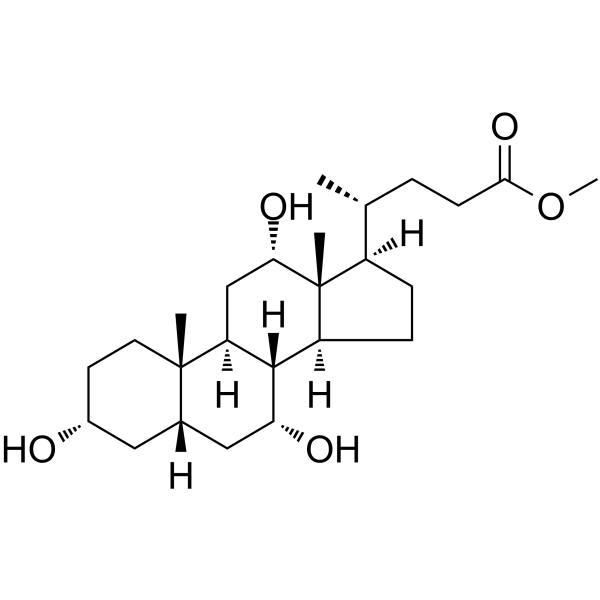
Cat. No.: HY-107830
CAS No.: 1448-36-8
Purity:  99.81%
Methyl cholate is a bile acid analog and a specific inhibitor of TcdB toxin from Clostridioides difficile. Methyl cholate exerts a stronger selective inhibitory effect on TcdB than on TcdA. Methyl cholate induces conformational stabilization by binding to a unique site of TcdB, thereby blocking the binding of the toxin to host receptors and its self-processing process. Methyl cholate effectively protects human fibroblasts from TcdB-induced cytopathic effects. Methyl cholate exhibits dose-dependent anti-hepatic fibrosis activity in both cellular and zebrafish models, and significantly reduces the expression levels of α-SMA and COL-I. Methyl cholate is suitable for in-depth research in the fields of Clostridioides difficile infection and hepatic fibrosis .
loading...
    loading...
Cat. No.: HY-117733
CAS No.: 176050-48-9
Zerumin A is an anti-angiogenic agent that acts on multiple molecular targets related to angiogenesis (including kdr/VEGFR2, angpt1, angpt2, tie1, and tie2). Zerumin A specifically inhibits the proliferation and migration of human umbilical vein endothelial cells (HUVECs) by regulating the VEGF-VEGFR and ANGPT-TIE signaling pathways, and dose-dependently inhibits angiogenesis (10-20 μM significantly inhibits zebrafish embryo angiogenesis). Zerumin A can be used in the research of cancer and angiogenesis-related inflammatory diseases. Zerumin A can be naturally extracted from the 95% ethanol extract of the fruits, seeds, and pericarp of Alpinia caerulea (R.Br.) Bentham (a plant of the Alpinia genus in the Zingiberaceae family) .
loading...
    loading...
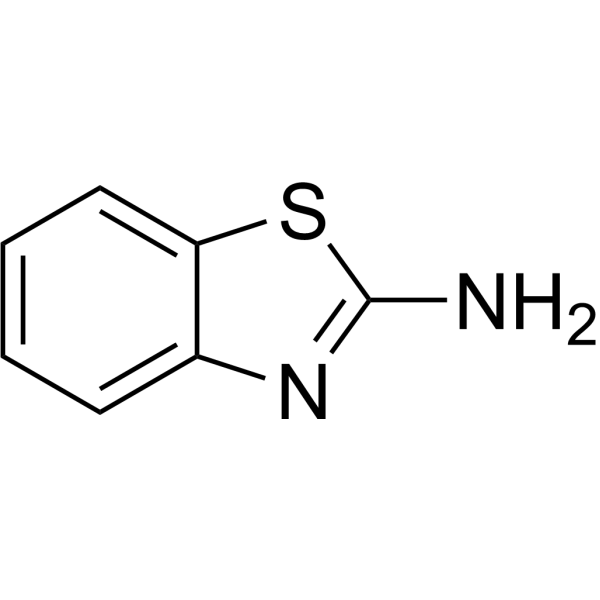
Cat. No.: HY-W017424
CAS No.: 136-95-8
2-Aminobenzothiazole acts as a caspase 3/7 activator, an anticancer cytotoxic agent, and also exhibits neurotoxicity. 2-Aminobenzothiazole drives the apoptotic pathway by activating caspase 3/7, induces mitochondrial inner membrane depolarization, and triggers both early and late apoptosis via a caspase-dependent pathway. In zebrafish models, 2-Aminobenzothiazole induces oxidative damage in brain tissues and inhibits genes related to GABA and 5-HT synthesis pathways. Long-term exposure to 2-Aminobenzothiazole impairs motor ability, social behavior, anxiety-like state and cognitive function. 2-Aminobenzothiazole can be used in studies of human laryngeal carcinoma and related neurotoxicity .
loading...
    loading...
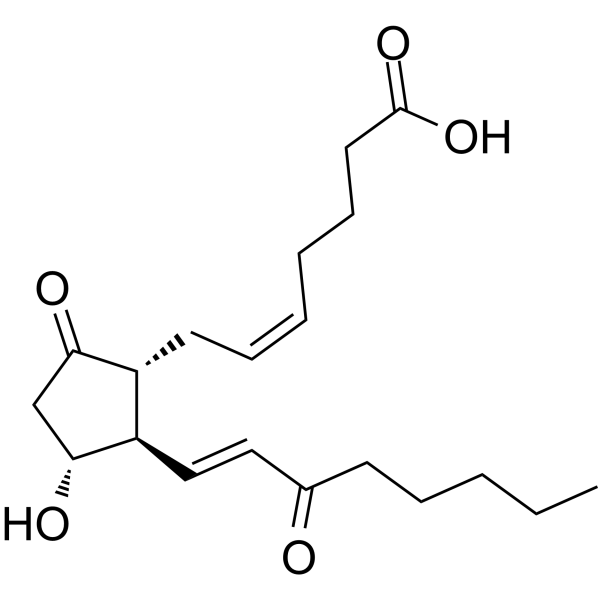
Cat. No.: HY-113205
CAS No.: 26441-05-4
Purity:  ≥99.0%
Synonyms: 15-keto-PGE2
15-keto-Prostaglandin E2 (15-keto-PGE2) is an endogenous PGE2 metabolite. 15-keto-Prostaglandin E2 inhibits STAT3 activation by binding to the Cys259 residue of STAT3. 15-keto-Prostaglandin E2 binds to and stabilizes EP2 and EP4 receptors. 15-keto-Prostaglandin E2 inhibits the growth and progression of breast cancer cells. 15-keto-Prostaglandin E2 activates PPAR-γ and promotes fungal growth. 15-keto-Prostaglandin E2 disrupts glomerular vascularization during zebrafish development and reduces the surface area of the glomerular filtration barrier .
loading...
    loading...
Cat. No.: HY-119976S
CAS No.: 2468796-76-9
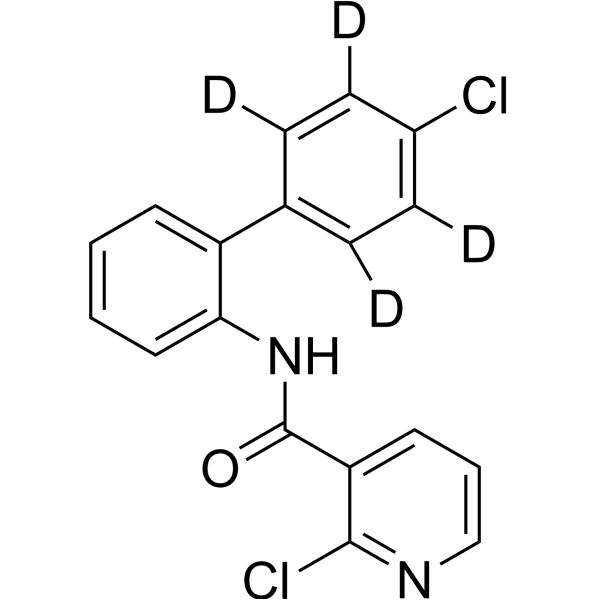
Boscalid-d4 is the deuterium labeled Boscalid. Boscalid is a succinate dehydrogenase (SDHI) inhibitor with antifungal activity. Boscalid binds to the ubiquinone-binding site of fungal mitochondrial complex II, blocks ATP production and aerobic respiration, exhibits good control efficacy against a variety of plant fungal diseases including gray mold, sclerotinia rot and powdery mildew, and is widely used for disease control in agriculture. Boscalid induces apoptosis, altered lipid metabolism, mitochondrial dysfunction, respiratory impairment, oxidative stress, ROS accumulation and neurodevelopmental disorders in zebrafish. Boscalid reduces foraging ability, shortens median death time and causes chronic toxicity in exposed honeybees. Boscalid also possesses genotoxicity, cytotoxicity, elevated mitochondrial superoxide levels and early-stage apoptosis .
loading...
    loading...
Cat. No.: HY-147209
Target:  

YAP

Research Areas:  

Metabolic Disease

DC-TEAD3in03 is a subtype-selective and covalent TEAD3 inhibitor with an IC50 of 0.16 μM. DC-TEAD3in03 exhibits the inhibitory activity on TEAD1/2/4 reduced by more than 100 times. DC-TEAD3in03 has the IC50 for TEAD3 of 1.15 μM in the GAL4-TEAD reporter gene experiment in cells, and it does not interfere with the β-catenin pathway. DC-TEAD3in03 reduces the growth rate of the zebrafish tail fin. DC-TEAD3in03 can be used to study the proportional growth of appendages in vertebrates .
loading...
    loading...
Cat. No.: HY-147412
CAS No.: 2642382-41-8
Synonyms: QR-421a
Ultevursen (QR-421a) is a splice-modulating antisense oligonucleotide targeting exon 13 of the USH2A gene, which restores the functional expression of Usherin protein by inducing exon skipping. Ultevursen binds to USH2A pre-mRNA and modulates the splicing process to specifically skip exon 13 carrying the pathogenic mutation c.2299delG, generating an in-frame transcript and a truncated yet functionally normal protein. Ultevursen exhibits concentration-dependent exon skipping activity in human cells and retinal organoid models, and restores Usherin expression and retinal function in zebrafish and gene-edited mouse models. Ultevursen can be used for related research on type 2 Usher syndrome and non-syndromic retinitis pigmentosa .
loading...
    loading...