293 Results for "

pyruvate

" in MedChemExpress (MCE) Product Catalog:
Products (293)

293 Results for "pyruvate" in MCE Product Catalog:

Cat. No.: HY-114625
CAS No.: 17230-85-2
Amquinate is a coccidiostat and a cytochrome b inhibitor. Amquinate blocks cytochrome-mediated electron transport near cytochrome b in mitochondria, acting downstream of coenzyme Q without affecting succinate dehydrogenase or NADH dehydrogenase. Amquinate inhibits succinate- and malate plus pyruvate-supported mitochondrial respiration in Eimeria tenella and does not affect L-ascorbate-supported respiration or any mitochondrial respiration in chicken liver mitochondria. Amquinate exhibits selective anticoccidial activity against wild-type Eimeria tenella. Amquinate can be used for the research of coccidiosis (Eimeria tenella infection) .
loading...
    loading...
Cat. No.: HY-128606
CAS No.: 2606-90-8
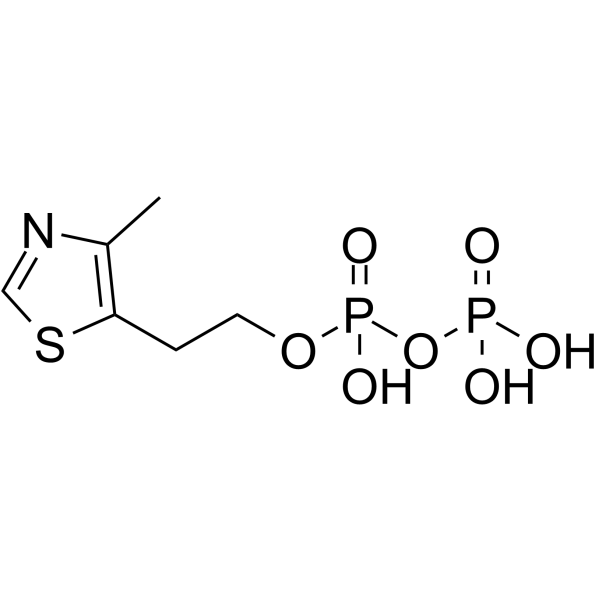
Thiamine diphosphate analog 1 is an analog of thiamine diphosphate. Thiamine diphosphate is the active metabolite of vitamin B1 in organisms. Thiamine diphosphate targets ThDP-dependent enzymes such as transketolase and pyruvate dehydrogenase complex, acting as an essential coenzyme to exert an activating effect. Thiamine diphosphate assists in catalytic reactions in free form and initiates the catalytic cycles of various glucose-metabolizing enzymes. Thiamine diphosphate serves as a diagnostic biomarker and protective factor for Alzheimer's disease. Thiamine diphosphate can be used in research related to metabolism and Alzheimer's disease .
loading...
    loading...
Cat. No.: HY-170838
Target:  

PDHK

Research Areas:  

Cancer

PDHK1-IN-1 (compound 17) is a selective inhibitor of PDHK1 (IC50=1.5 μM) with anticancer activity. PDHK1 negatively regulates the pyruvate dehydrogenase complex (PDC), limiting the tricarboxylic acid (TCA) cycle and oxidative phosphorylation. Overexpression of PDHK1 can shift the metabolism towards an increased glycolysis dependence (Warburg effect). PDHK1-IN-1 can inhibit the phosphorylation of the PDC E1α Ser232 recognition site of PDHK1 and the phosphorylation of Ser293 .
loading...
    loading...
Cat. No.: HY-17538A
CAS No.: 2319647-97-5
Target:  

PGC-1α

Research Areas:  

Metabolic Disease

ZLN005 (hydrochloride) is a peroxisome proliferator-activated receptor-g coactivator-1a (PGC-1α) activator. ZLN005 (hydrochloride) can stimulate the expression of PGC-1α and downstream genes in skeletal muscle cells, improve glucose utilization and fatty acid oxidation. ZLN005 (hydrochloride) can increase the transcription of PGC-1α and downstream genes in skeletal muscle of diabetic db/db mice, increase fat oxidation and improve glucose tolerance, pyruvate tolerance and insulin sensitivity .
loading...
    loading...
Cat. No.: HY-N1511R
CAS No.: 108340-60-9
Ganoderic acid D (Standard) is the analytical standard of Ganoderic acid D. This product is intended for research and analytical applications. Ganoderic acid D, a highly oxygenated tetracyclic triterpenoid, is the major active component of Ganoderma lucidum. Ganoderic acid D upregulates the protein expression of SIRT3 and induces the deacetylated cyclophilin D (CypD) by SIRT3. Ganoderic acid D inhibits the energy reprogramming of colon cancer cells including glucose uptake, lactate production, pyruvate and acetyl-coenzyme production in colon cancer cells . Ganoderic acid D induces HeLa human cervical carcinoma apoptosis .
loading...
    loading...
Cat. No.: HY-124456
CAS No.: 36587-59-4
Target:  

Bacterial

Research Areas:  

Infection

Unguinol is a depsidone originally isolated from A. unguis. It is an inhibitor of pyruvate phosphate dikinase (PPDK; IC50=42.3 μM). It inhibits the growth of plants utilizing C4, but not C3, carbon fixation. Unguinol also inhibits the growth of the bacteria S. aureus and V. harveyi (GI50s=8.7 and 69.5 μM, respectively) and H460, MCF-7, and SF-268 cancer cells (GI50s=28.2, 50.8, and 44.3 μM, respectively).
loading...
    loading...
Cat. No.: HY-178748
PKM2-IN-12 is an orally active PKM2 inhibitor with an IC50 of 10 nM. PKM2-IN-12 inhibits COLO-205 cell proliferation and migration, arrests the cell cycle, and induces apoptosis. PKM2-IN-12 significantly reduces cellular levels of lactate, pyruvate, and ROS. PKM2-IN-12 directly kills cancer cells and restores disrupted gut microbiota balance in mice model. PKM2-IN-12 can be used to study colorectal cancer .
loading...
    loading...
Cat. No.: HY-179371
CAS No.: 2606032-80-6
LIQ1, a flavonoid derivative, is a potent Pyruvate kinase M2 (PKM2) allosteric inhibitor (IC50 = 0.39 μM; Kd = 4.5 μM) targeting Arg43 within the polyarginine pocket. LIQ1 exhibits efficacy in a mouse model of LPS (HY-D1056)-induced endotoxemia, preventing the nuclear translocation of PKM2 and inhibiting its binding to HIF-1α, thereby suppressing IL-1β transcription. LIQ1 can be used for the research of endotoxemia [1].
loading...
    loading...
Cat. No.: HY-183858
CAS No.: 1964516-59-3
Target:  

Lactate Dehydrogenase

Research Areas:  

Cancer

NCATS-SM1440 is a glycolysis inhibitor and metabolic regulator that targets LDHA and LDHB (IC50=0.06 μM and 0.03 μM, respectively). Upon binding to LDHA, NCATS-SM1440 blocks the glycolysis pathway and reduces lactate production. NCATS-SM1440 drives the shift of pyruvate metabolism toward mitochondrial metabolism, effectively disrupting the dependence of cancer cells on aerobic glycolysis. NCATS-SM1440 can be widely used in research related to cancer, Ewing's sarcoma, and other related conditions .
loading...
    loading...
Cat. No.: HY-161627
CAS No.: 2919975-48-5
Anemoside A3-methyl 6-aminohexanoate is an orally effective pyruvate carboxylase (PC) inhibitor with a Kd value of 10.1 μM against human PC. Anemoside A3-methyl 6-aminohexanoate exerts its function through the PC/NF-κB/NLRP3 inflammasome axis. Anemoside A3-methyl 6-aminohexanoate significantly alleviates symptoms of DSS (HY-116282C)-induced colitis in mice. Anemoside A3-methyl 6-aminohexanoate can be used in colitis-related research .
loading...
    loading...
Cat. No.: HY-100742BR
CAS No.: 2003234-64-6
Research Areas:  

Cancer

(S)-GNE-140 Standard is the analytical standard of (S)-GNE-140 (HY-100742B). This product is intended for research and analytical applications. (S)-GNE-140 (Compound 30-S) is the S enantiomer of GNE-140 (HY-118241). (S)-GNE-140 is a potent inhibitor of human LDHA and LDHB, with IC50 values of 55 nM and 140 nM, respectively. (S)-GNE-140 exerts its inhibitory effect by non-competitively binding to NADH and occupying the LDH pyruvate site, but its activity is weaker than that of the R enantiomer. (S)-GNE-140 can be used for cancer research .
loading...
    loading...
Cat. No.: HY-168337
CAS No.: 3052985-32-4
Target:  

JNK Pyruvate Kinase

SET-171 is a JNK (c-Jun N-terminal kinase) inhibitor that exhibits significant anticancer activity and lipid metabolism regulation by inhibiting liver pyruvate kinase (PKL) expression. In anticancer studies, SET-171 shows IC50 values of 8.82 μM and 2.97 μM against HepG2 and Huh7 cell lines, respectively, indicating high cytotoxicity. Additionally, in non-alcoholic fatty liver disease (NAFLD)-related studies, SET-171 significantly reduces triacylglycerol (TAG) levels and inhibits the expression of steatosis-related proteins. SET-171 holds promise for research on hepatocellular carcinoma (HCC) and NAFLD .
loading...
    loading...
Cat. No.: HY-DY1120
Research Areas:  

Cancer

ZY-2 (solution) is a fluorescent probe targeting pyruvate kinase M2 (PKM2) with an excitation wavelength of 419 nm. ZY-2 (solution) significantly activates purified PKM2 protein. ZY-2 (solution) exhibits enhanced fluorescence emission in low-polarity or high-viscosity environments. ZY-2 (solution) enables highly sensitive and selective fluorescence imaging of PKM2 in live PKM2-positive cancer cells, with no significant side effects on cell viability within its effective concentration range. ZY-2 (solution) can be used for cervical cancer research .
Solvent and concentration: DMSO: 10 mM
loading...
    loading...
Cat. No.: HY-W698249
CAS No.: 299-29-6
Target:  

Ferroptosis Bacterial

Research Areas:  

Cardiovascular Disease Infection

Ferrous gluconate is a highly water-soluble iron-containing agent with high bioavailability and bactericidal activity. As a non-heme iron, Ferrous gluconate is used for meat product fortification and improvement of iron deficiency anemia. Ferrous gluconate induces ferroptosis in E. coli through Fe 2+ infiltration, reactive oxygen species burst, lipid peroxidation and direct interaction with DNA. Ferrous gluconate also downregulates the SOS responsive transcriptional repressor LexA. In addition, Ferrous gluconate regulates multiple key pathways in E. coli such as fatty acid metabolism, iron-sulfur cluster assembly and pyruvate metabolism, and is applied in studies related to *E. coli* infection and iron deficiency anemia .
loading...
    loading...
Cat. No.: HY-107641R
CAS No.: 28166-41-8
Synonyms: α-Cyano-4-hydroxycinnamate (Standard)
α-Cyano-4-hydroxycinnamic acid (Standard) is the analytical standard of α-Cyano-4-hydroxycinnamic acid (HY-107641). This product is intended for research and analytical applications. α-Cyano-4-hydroxycinnamic acid (α-Cyano-4-hydroxycinnamate) is a potent and non-competitive inhibitor of monocarboxylate transporters (MCTs). α-Cyano-4-hydroxycinnamic acid inhibits mitochondrial pyruvate transporter with a Ki of 6.3 μM. α-Cyano-4-hydroxycinnamic acid is used as a matrix to facilitate peptide ionization in matrix-assisted laser desorption/ionization time-of-flight (MALDI-TOF) mass spectrometry applications .
loading...
    loading...
Cat. No.: HY-178441
PKM2-IN-11 is a PKM2 inhibitor (IC50 = 0.363 μM). PKM2-IN-11 has dual mechanisms involving pyruvate kinase M2 (PKM2) inhibition and microtubule stabilization. PKM2-IN-11 can decrease PKM2 protein levels in MCF-7 cells. PKM2-IN-11 can slightly reduce reactive oxygen species (ROS) levels and significantly increase early apoptotic cells. PKM2-IN-11 induces G2/M phase arrest. PKM2-IN-11 can be used for the study of breast cancer .
loading...
    loading...
Cat. No.: HY-180523
PKM2-IN-13 is a selective PKM2 inhibitor inhibiting PKM2 with an IC50 value of 55.13 μM. PKM2-IN-13 exhibits broad-spectrum anticancer activity with low toxicity to normal cells. PKM2-IN-13 induces apoptosis by elevated ROS levels and activation of caspases 3/7, and interacts with and inhibits the glycolytic activity of Pyruvate Kinase M2 in virto. PKM2-IN-13 demonstrates a favorable safety profile with no significant adverse effects in vivo. PKM2-IN-13 can be used for oral squamous cell carcinoma (OSCC), colon carcinoma, breast cancer and melanoma research .
loading...
    loading...
Cat. No.: HY-N6663
CAS No.: 13466-78-9
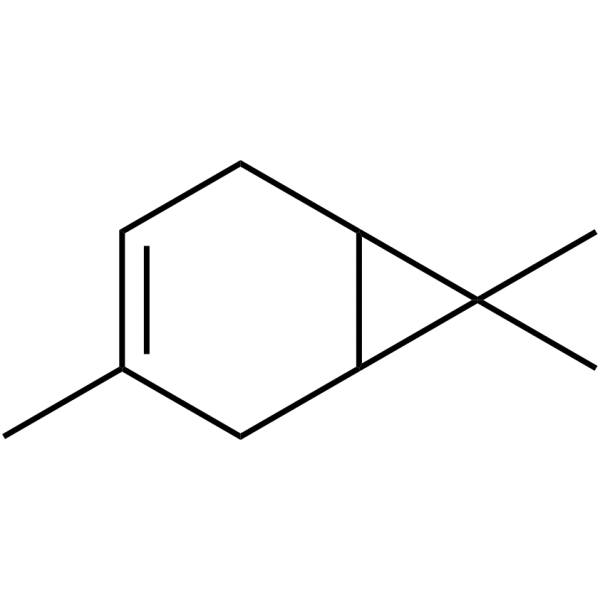
3-Carene is an orally active TCA cycle enzyme inhibitor. 3-Carene inhibits succinate dehydrogenase and malate dehydrogenase as well as pyruvate kinase, disrupting energy metabolism. 3-Carene disrupts cell wall and cell membrane integrity, leading to potassium ion leakage, protein leakage, membrane depolarization, ATP depletion, morphological disruption, and cell lysis. 3-Carene interferes with amino acid metabolism, pantothenate and CoA biosynthesis, purine and pyrimidine metabolism, and aminoacyl-tRNA biosynthesis. 3-Carene enhances GABA receptor-mediated synaptic responses. 3-Carene can be used in research on bacterial infections, inflammation, anxiety, and sleep disorders .
loading...
    loading...
Cat. No.: HY-107641S
CAS No.: 1258536-45-6
Synonyms: α-Cyano-4-hydroxycinnamate-d4
α-Cyano-4-hydroxycinnamic acid-d4 (α-Cyano-4-hydroxycinnamate-d4) is the deuterium labeled α-Cyano-4-hydroxycinnamic acid (HY-107641). α-Cyano-4-hydroxycinnamic acid (α-Cyano-4-hydroxycinnamate) is a potent and non-competitive inhibitor of monocarboxylate transporters (MCTs). α-Cyano-4-hydroxycinnamic acid inhibits mitochondrial pyruvate transporter with a Ki of 6.3 μM. α-Cyano-4-hydroxycinnamic acid is used as a matrix to facilitate peptide ionization in matrix-assisted laser desorption/ionization time-of-flight (MALDI-TOF) mass spectrometry applications .
loading...
    loading...
Cat. No.: HY-116568
CAS No.: 178928-70-6
Purity:  99.52%
Synonyms: JAU-6476
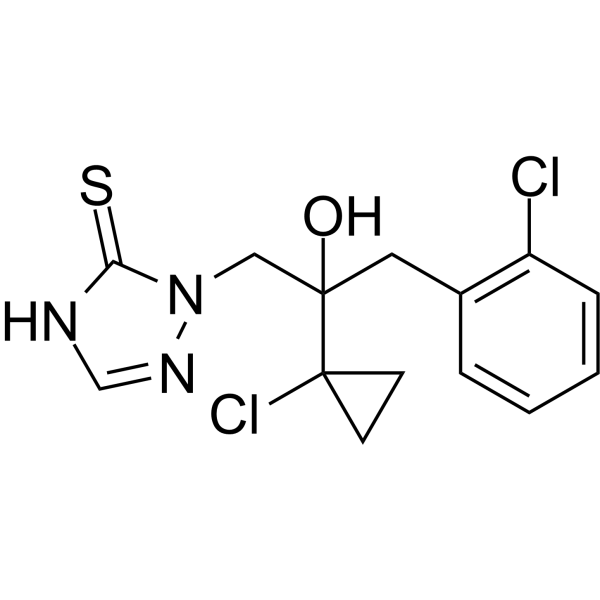
Prothioconazole is an orally active broad-spectrum fungicide. Prothioconazole weakly inhibits CaCYP51 activity in Candida albicans, with an apparent IC50 of approximately 120 μM. Prothioconazole disrupts Microtubule stability by reducing the acetylation level of α-tubulin. Prothioconazole induces Mitochondrial dysfunction, oxidative stress, DNA damage, and Apoptosis. Prothioconazole accumulates 14-methylated sterols and depletes ergosterol in cells, culture media, plants, and animals. Prothioconazole interferes with pyruvate metabolism and glycolysis/gluconeogenesis processes in mouse liver, downregulates Fasn mRNA expression, and induces hepatotoxicity and renal metabolic disorders. Prothioconazole reduces the fertility of female mice. Prothioconazole inhibits body weight gain and increases liver/kidney indices in mice. Prothioconazole can be used in studies related to candidiasis .
loading...
    loading...

