3429 Results for "

substrates

" in MedChemExpress (MCE) Product Catalog:
Products (3429)

3429 Results for "substrates" in MCE Product Catalog:

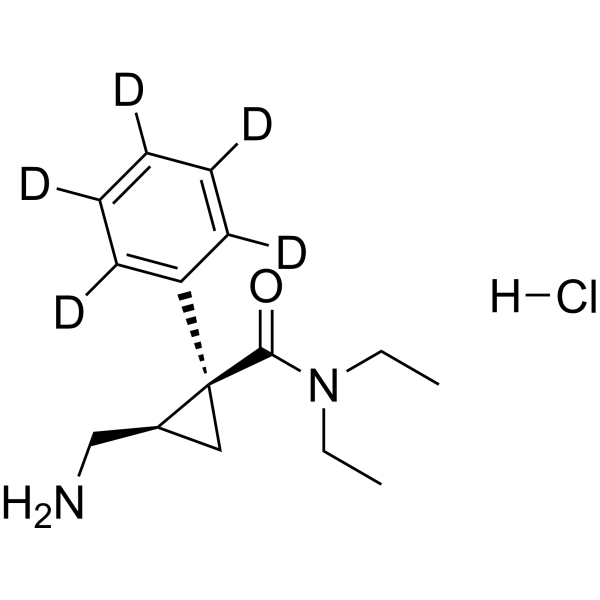
Cat. No.: HY-B0168BS
Synonyms: (1S,2R)-Milnacipran-d5 hydrochloride; F-2695-d5 hydrochloride
Levomilnacipran-d5 ((1S,2R)-Milnacipran-d5) hydrochloride is deuterium labeled Levomilnacipran hydrochloride (HY-B0168B). Levomilnacipran ((1S,2R)-Milnacipran) hydrochloride is the enantiomer of Milnacipran (HY-B0168) and a strong substrate of P-gp that can cross the blood-brain barrier. Levomilnacipran hydrochloride is a serotonin and norepinephrine reuptake inhibitor, with IC50 values of 10.5 nM and 19.0 nM, and Ki values of 92.2 nM and 1.2 nM for human norepinephrine transporter (NET) and serotonin transporter (SERT), respectively. Levomilnacipran hydrochloride has antidepressant and anxiolytic activities. Levomilnacipran hydrochloride can be used for the research of depression .
loading...
    loading...
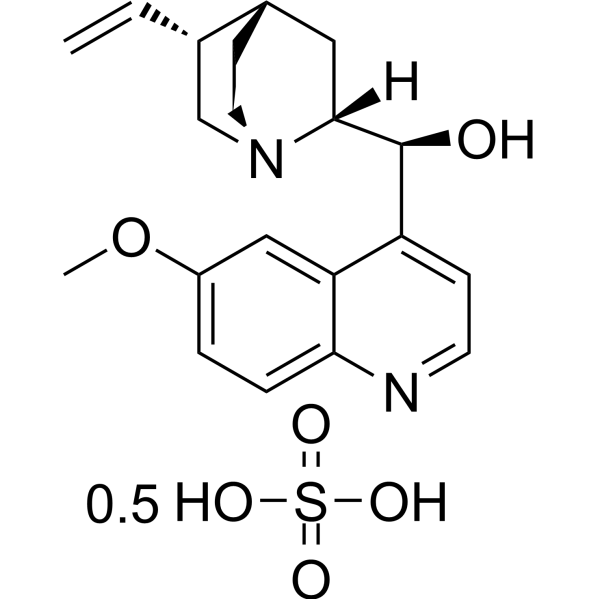
Cat. No.: HY-B1751A
CAS No.: 50-54-4
Quinidine sulfate is an orally active antiarrhythmic agent. Quinidine sulfate reduces the expression level of P-gp, inhibits P-gp-mediated efflux, increases the intracellular accumulation of P-gp substrates, induces PARP cleavage and Caspase-3 activation, and elevates the proportion of Apoptotic cells at the sub-G1 phase. Quinidine sulfate exerts sustained block and open-channel block effects on IK(f). Quinidine sulfate alters the urinary metabolic ratio of Amphetamine, modulates the Pentylenetetrazol-induced seizure threshold, and regulates the anticonvulsant effect of Dextromethorphan. Quinidine sulfate can be used in studies related to uterine sarcoma and seizures .
loading...
    loading...
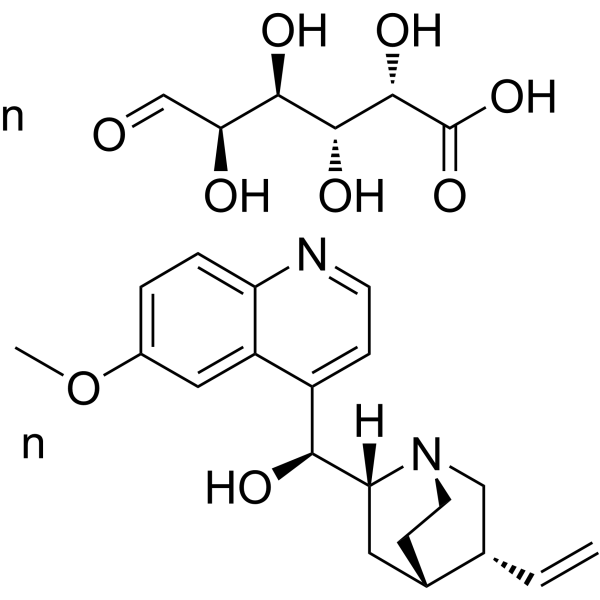
Cat. No.: HY-B1751E
CAS No.: 27555-34-6
Quinidine polygalacturonate is an orally active antiarrhythmic agent. Quinidine polygalacturonate reduces the expression level of P-gp, inhibits P-gp-mediated efflux, increases the intracellular accumulation of P-gp substrates, induces PARP cleavage and Caspase-3 activation, and elevates the proportion of Apoptotic cells at the sub-G1 phase. Quinidine polygalacturonate exerts sustained block and open-channel block effects on IK(f). Quinidine polygalacturonate alters the urinary metabolic ratio of Amphetamine, modulates the Pentylenetetrazol-induced seizure threshold, and regulates the anticonvulsant effect of Dextromethorphan. Quinidine polygalacturonate can be used in studies related to uterine sarcoma and seizures .
loading...
    loading...
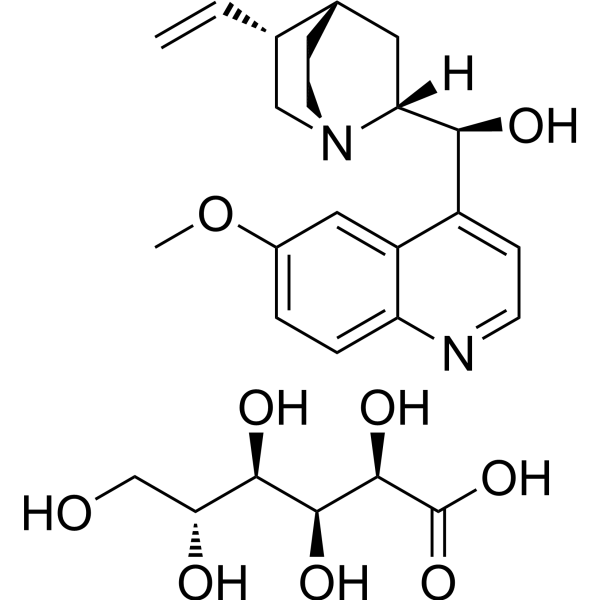
Cat. No.: HY-B1751F
CAS No.: 7054-25-3
Quinidine gluconic acid is an orally active antiarrhythmic agent. Quinidine gluconic acid reduces the expression level of P-gp, inhibits P-gp-mediated efflux, increases the intracellular accumulation of P-gp substrates, induces PARP cleavage and Caspase-3 activation, and elevates the proportion of Apoptotic cells at the sub-G1 phase. Quinidine gluconic acid exerts sustained block and open-channel block effects on IK(f). Quinidine gluconic acid alters the urinary metabolic ratio of Amphetamine, modulates the Pentylenetetrazol-induced seizure threshold, and regulates the anticonvulsant effect of Dextromethorphan. Quinidine gluconic acid can be used in studies related to uterine sarcoma and seizures .
loading...
    loading...
Cat. No.: HY-D0889R
CAS No.: 556-50-3
Synonyms: Gly-Gly (Standard); H-Gly-Gly-OH (Standard)
Glycylglycine (Standard) is the analytical standard of Glycylglycine (HY-D0889). This product is intended for research and analytical applications. Glycylglycine is a non-selective glycylglycine dipeptidase substrate and iNOS inhibitor. Glycylglycine can cross the cell membrane by passive diffusion and is hydrolyzed to glycine in the cell, participating in energy metabolism and antioxidant processes. Glycylglycine promotes spermatogonial stem cells (SSCs) proliferation, inhibits astrocyte overactivation and reduces nitric oxide (NO) release, while upregulating the expression of neurotrophic factors (such as PDGFA, FGF2, CNTF) to support nerve myelin repair. Glycylglycine can be used to study male reproductive biology (such as SSCs proliferation regulation) and neurodegenerative diseases (such as neuroprotective mechanisms in multiple sclerosis) .
loading...
    loading...
Cat. No.: HY-D2477A
Target:  

Fluorescent Dye

Research Areas:  

Cancer

Sulfo-QSY21-NHS DIEA is an N-hydroxysuccinimide ester derivative fluorescent quencher that reduces the fluorescence intensity of paired fluorophores via proximity effect and relieves quenching after linker extension induced by mechanical force. Sulfo-QSY21-NHS DIEA can label streptavidin through NHS ester bioconjugation and be integrated into fluorescence-based molecular tension sensors to map the mechanical forces of cell surface receptors. Sulfo-QSY21-NHS DIEA also serves as a quencher for cysteine cathepsin-targeted quenched fluorescent substrate probes, and is widely used in studies related to breast cancer, colorectal cancer and lung adenocarcinoma .
loading...
    loading...
Cat. No.: HY-D3442
CAS No.: 3121565-89-4
ALDH2 probe 5 is a ALDH2 isoform-selective fluorescent probe with an emission wavelength centered at 494 nm. ALDH2 probe 5 is a turn-on fluorescent substrate for ALDH2; in its unreacted aldehyde form, twisted intramolecular charge transfer (TICT) occurs, resulting in fluorescence quenching. After ALDH2 probe 5 is catalytically oxidized to carboxylate by ALDH2, TICT is inhibited and fluorescence is significantly enhanced. ALDH2 probe 5 enables highly sensitive quantitative imaging of ALDH2 activity in recombinant enzymes, live cells, blood, tissue homogenates, and the brains of living mice. ALDH2 probe 5 can be used for studies related to neuroinflammation .
loading...
    loading...
Cat. No.: HY-E70445
CAS No.: 9047-57-8
Research Areas:  

Neurological Disease

Chondroitinase AC II is a glycosaminoglycan lyase (EC 4.2.2.5) discovered from Arthrobacter sp. CS01. Chondroitinase AC II exhibits broad substrate specificity toward CS-A, CS-C, and HA. Chondroitinase AC II cleaves the β-1,4-glycosidic bond between D-glucuronic acid and N-acetylgalactosamine through a β-elimination mechanism, producing unsaturated disaccharides and thereby degrading chondroitin sulfate and hyaluronic acid. Chondroitinase AC II activity is enhanced by Mn 2+ and inhibited by Zn 2+ and Hg 2+ . Chondroitinase AC II is used for CS oligosaccharide preparation and research related to nerve injury .
loading...
    loading...
Cat. No.: HY-I0201S
CAS No.: 1254771-90-8
Synonyms: P-Fluorophenylboronic acid-d4
4-Fluorobenzeneboronic acid-d4 (P-Fluorophenylboronic acid-d4) is the deuterated-labeled 4-Fluorobenzeneboronic acid (HY-I0201). 4-Fluorobenzeneboronic acid (P-Fluorophenylboronic acid) is a fluorinated arylboronic acid coupling ligand and precursor. Under the catalysis of heterogeneous palladium nanoparticles, 4-Fluorobenzeneboronic acid participates in the Suzuki-Miyaura C-C coupling reaction to generate fluorinated biphenyl derivatives. 4-Fluorobenzeneboronic acid also participates in the copper-catalyzed three-component reaction with nitrobenzene and potassium metabisulfite as substrates, and finally produces sulfonamides through the formation of arylsulfinate intermediates, copper-assisted S-N bond construction and reduction steps .
loading...
    loading...
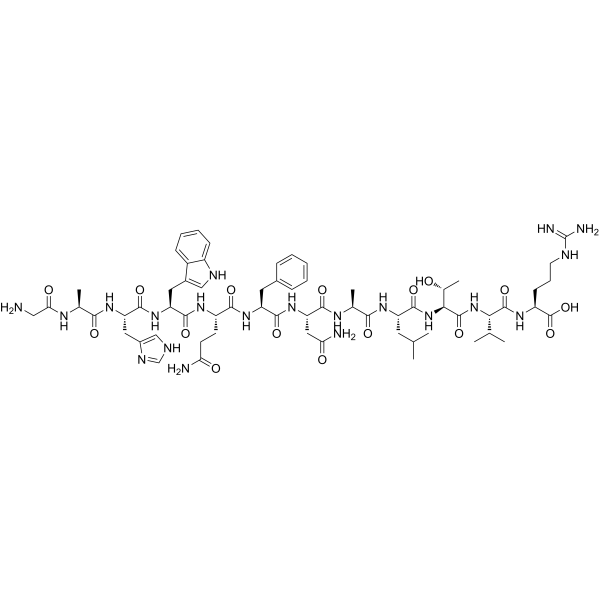
Cat. No.: HY-P5352
CAS No.: 299157-43-0
Target:  

CD44

Research Areas:  

Inflammation/Immunology Cancer

Hyaluronan-IN-1 (Pep-1) is a Hyaluronan inhibitor with a Kd value of 1.65 μM. Hyaluronan-IN-1 blocks CD44-dependent cell adhesion. Hyaluronan-IN-1 inhibits cell adhesion to hyaluronan substrates. Hyaluronan-IN-1 suppresses the development of contact hypersensitivity in mice by blocking the homing process of inflammatory cells to the skin. Hyaluronan-IN-1 also inhibits responses during the sensitization phase. Hyaluronan-IN-1 reduces lung metastasis of melanoma and prolongs the survival of mice. Hyaluronan-IN-1 can be used in research related to contact hypersensitivity, chronic skin inflammation, and melanoma .
loading...
    loading...
Cat. No.: HY-W014118R
CAS No.: 101-86-0
α-Hexylcinnamaldehyde (Standard) is the analytical standard of α-Hexylcinnamaldehyde. This product is intended for research and analytical applications. α-Hexylcinnamaldehyde is an O-acetyltransferase (OAT) inhibitor. α-Hexylcinnamaldehyde inhibits OAT-mediated bioactivation of nitroarene mutagens, exerts antimutagenic activity through demutagenic and bioantimutagenic mechanisms, and interferes with ATP-binding cassette (ABC) transporter function to reduce substrate efflux. α-Hexylcinnamaldehyde alters membrane permeability, fluidizes phospholipid membranes, exerts antioxidant effects, and enhances the antiproliferative effect of Doxorubicin on human cancer cells. α-Hexylcinnamaldehyde can be used in the research of colorectal adenocarcinoma, T-cell leukemia, and multidrug-resistant cancers .
loading...
    loading...
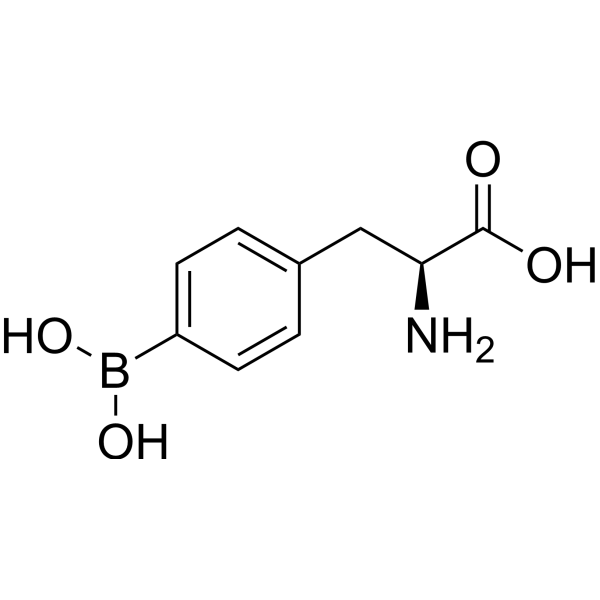
Cat. No.: HY-W087830
CAS No.: 76410-58-7
Synonyms: L-BPA
L-p-Boronophenylalanine is a boron-containing substrate for L-type amino acid transporters (LAT1 and LAT2). L-p-Boronophenylalanine enters tumor cells by competing with natural amino acids for LAT, selectively accumulating boron in cancer cells. L-p-Boronophenylalanine can be used in boron neutron capture therapy (BNCT). When boron-10 captures thermal neutrons, a nuclear reaction occurs, producing high-energy alpha particles and lithium nuclei, which kill cancer cells at close range with little damage to surrounding tissues. L-p-Boronophenylalanine can be used in cancer research, especially glioblastoma and anaplastic astrocytoma .
loading...
    loading...
Cat. No.: HY-W1005067
CAS No.: 2191110-79-7
EN171 is a covalent 14-3-3σ molecular glue ligand that sequesters neonuclear substrates, including BRD4 and BLC6, into the cytoplasm by recruiting 14-3-3σ. EN171 covalently targets C38 and C96 on 14-3-3 to enhance the interaction between 14-3-3 and ERα, YAP, and TAZ (with EC50 values of 9 μM for human ERα, 45 μM for YAP, and 107 μM for TAZ). EN171 inhibits the transcriptional activity of estrogen receptors and the Hippo pathway in breast cancer cells. EN171 can be used in studies related to breast cancer .
loading...
    loading...
Cat. No.: HY-W243460
CAS No.: 39208-15-6
Research Areas:  

Others

EDTA copper (II) disodium salt, 97% is a negatively charged copper (II)-ethylenediaminetetraacetic acid chelate and also an adsorption substrate. EDTA copper (II) disodium salt, 97% forms amide bonds with chitosan amino groups in weakly acidic (pH 3-5) solutions, while it forms the CuEDTA (OH) 3− hydroxyl complex in strongly alkaline (pH > 12) solutions. EDTA copper (II) disodium salt, 97% can be adsorbed onto granular activated carbon, with electrostatic interactions dominating its pH-dependent adsorption behavior. EDTA copper (II) disodium salt, 97% can be used to eliminate the inhibition of enzyme-catalyzed reactions caused by trace heavy metals .
loading...
    loading...
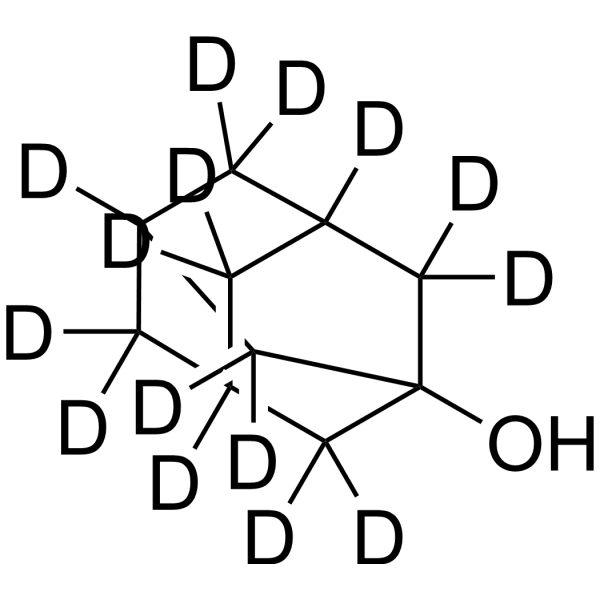
Cat. No.: HY-Y0531S
CAS No.: 33830-11-4
Synonyms: Tricyclo[3.3.1.1~3,7~]decan-1-ol-d15
1-Adamantanol-d15 (Tricyclo[3.3.1.1~3,7~]decan-1-ol-d15) is the deuterium labeled 1-Adamantanol (HY-Y0531). 1-Adamantanol (Tricyclo[3.3.1.1~3,7~]decan-1-ol) is a hydroxylated derivative of Adamantane (HY-N2427). 1-Adamantanol serves as a substrate for regioselective hydroxylation reactions in Streptomyces strain SA8. 1-Adamantanol can form acrylate derivatives, which are used as photoresist layer materials .
loading...
    loading...
Cat. No.: HY-Y1771R
CAS No.: 119-67-5
Synonyms: Phthalaldehydic acid (Standard)
2-Carboxybenzaldehyde (Standard) (Phthalaldehydic acid (Standard)) is the analytical standard of 2-Carboxybenzaldehyde (HY-Y1771). This product is intended for research and analytical applications. 2-Carboxybenzaldehyde (Phthalaldehydic acid) is a key intermediate metabolite in the biodegradation process of polycyclic aromatic hydrocarbons, and also a specific substrate for CBA reductase and NAD-dependent 2-carboxybenzaldehyde dehydrogenase. 2-Carboxybenzaldehyde undergoes regioselective reduction via CBA reductase in mammalian tissues to produce 2-hydroxymethylbenzoic acid. 2-Carboxybenzaldehyde is converted to phthalic acid by NAD-dependent dehydrogenase during bacterial degradation. 2-Carboxybenzaldehyde can be used in relevant research in fields such as organic synthesis .
loading...
    loading...
Cat. No.: HY-15560A
CAS No.: 911004-45-0
Hoechst 34580 (trihydrochloride) is a biochemical assay reagent.
loading...
    loading...
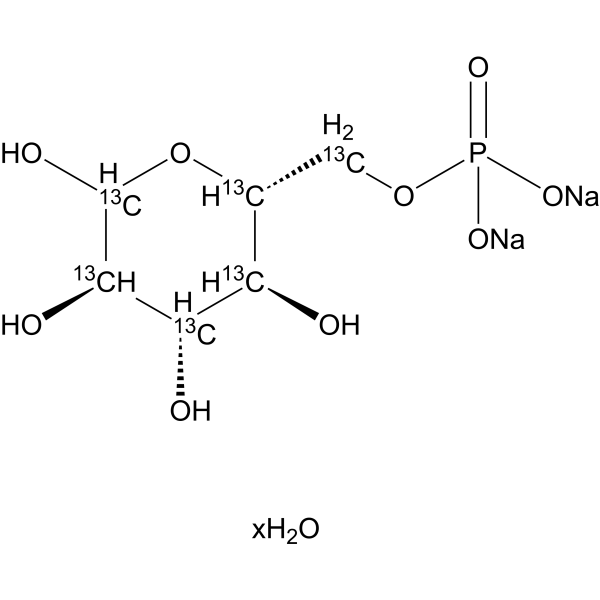
Cat. No.: HY-112537S1
Purity:  ≥98.0%
D-Glucose 6-Phosphate- 13C6 disodium xhydrate is a 13C-labeled D-Glucose 6-phosphate disodium xhydrate. D-Glucose 6-phosphate disodium xhydrate is a key central node metabolite in sugar metabolism, serving as the initial metabolite of glycolysis and pentose phosphate pathway, and also a substrate for glycogen synthesis. D-Glucose 6-phosphate disodium xhydrate can act as a metabolic stress signal, especially when phosphoglucomutase (PGI) is inhibited, activating the mTOR pathway, promoting protein synthesis, and thereby participating in the remodeling process of the heart. D-Glucose 6-phosphate disodium xhydrate can be used in research related to non-insulin-dependent diabetes and heart failure.
loading...
    loading...
Cat. No.: HY-113293BS
CAS No.: 2734919-86-7
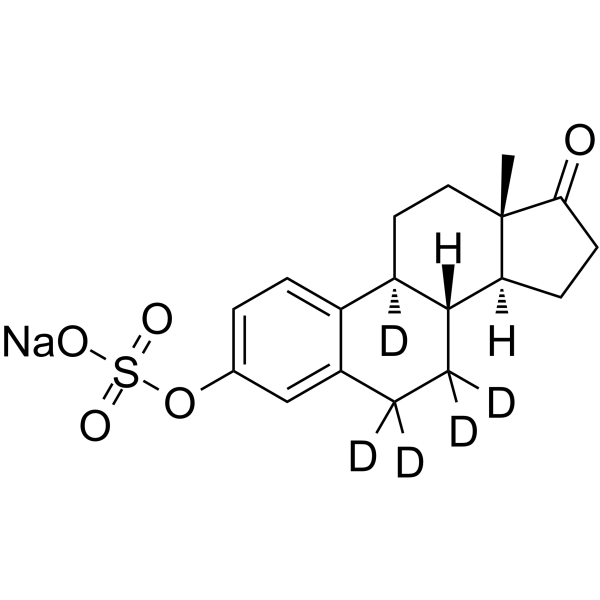
Estrone sulfate-d5 sodium is the deuterium labeled Estrone sulfate sodium (HY-113293B). Estrone sulfate sodium is an inactive endogenous estrogen that can be converted into Estrone (HY-B0234) and Estradiol (HY-B0141). Estrone sulfate sodium is also a substrate of the OATP1B3 transporter. Estrone sulfate sodium can be converted into Estrone and Estradiol in normal mammary parenchymal cells. Estrone sulfate sodium stimulates the growth of nitrosomethylurea-induced mammary tumors in ovariectomized rats and the colony formation of dispersed nitrosomethylurea mammary cells, with conversion into Estrone and Estradiol occurring both in vivo and in vitro during this process. Estrone sulfate sodium is applicable to breast cancer-related research .
loading...
    loading...
Cat. No.: HY-113293BS1
CAS No.: 285979-80-8
Purity:  99.38%
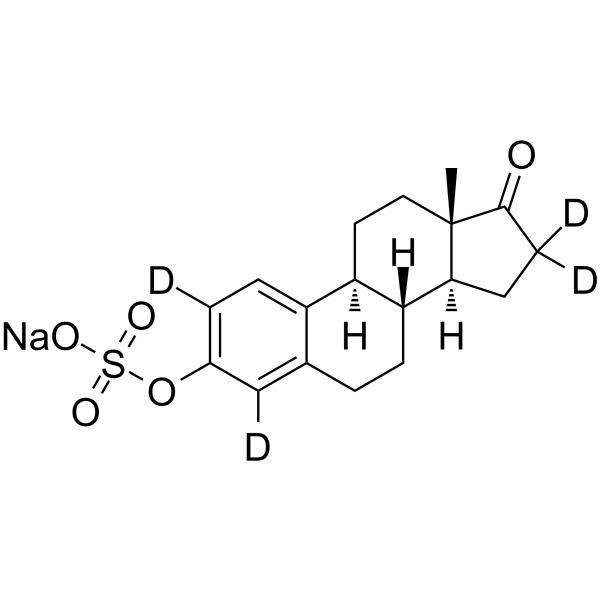
Estrone sulfate-d4 sodium is the deuterium labeled Estrone sulfate sodium (HY-113293B). Estrone sulfate sodium is an inactive endogenous estrogen that can be converted into Estrone (HY-B0234) and Estradiol (HY-B0141). Estrone sulfate sodium is also a substrate of the OATP1B3 transporter. Estrone sulfate sodium can be converted into Estrone and Estradiol in normal mammary parenchymal cells. Estrone sulfate sodium stimulates the growth of nitrosomethylurea-induced mammary tumors in ovariectomized rats and the colony formation of dispersed nitrosomethylurea mammary cells, with conversion into Estrone and Estradiol occurring both in vivo and in vitro during this process. Estrone sulfate sodium is applicable to breast cancer-related research .
loading...
    loading...

