469 Results for "

O2

" in MedChemExpress (MCE) Product Catalog:
Products (469)

469 Results for "O2" in MCE Product Catalog:

Cat. No.: HY-108351R
CAS No.: 861891-50-1
Research Areas:  

Cardiovascular Disease

IM-54 (Standard) is the analytical standard of IM-54 (HY-108351). This product is intended for research and analytical applications. IM-54 is a selective inhibitor of oxidative stress-induced necrosis. IM-54 shows potent inhibitory activity against H2O2-induced necrosis. IM-54 acts as a potential cardioprotective agent and biological tool for investigating the molecular mechanisms of cell death [2].
loading...
    loading...
Cat. No.: HY-109804R
CAS No.: 1001015-18-4
CORM-401 (Standard) is the analytical standard of CORM-401 (HY-109804). This product is intended for research and analytical applications. CORM-401 is an oxidant-sensitive CO-releasing molecule. CORM-401 induces NO increase in the regulation of endothelial calcium signalling. CORM-401 reduces TNF-α/CHX and H2O2-induced ROS production. CORM-401 uncouples mitochondrial respiration and inhibits glycolysis [2] .
loading...
    loading...
Cat. No.: HY-146172
CAS No.: 2710376-48-8
Antioxidant agent-3 (Compound 14q), an potent antioxidant, displays potent DPPH radicals scavenging activity and ABTS + scavenging activity with IC50s of 26.58 and 30.31 μM, respectively. Antioxidant agent-3 (Compound 14q) increases reactive oxygen species (ROS), superoxide dismutase (SOD) and glutathione (GSH), and reduced lactate dehydrogenase (LDH) in H2O2-treated HepG2 cells .
loading...
    loading...
Cat. No.: HY-178141
AChE/BuChE-IN-7 is a dual-action inhibitor with an IC50 valueof 0.15 μM for AChE and 0.7 μM for BuChE, SI of 4.7. AChE/BuChE-IN-7 shows anti-oxidant activity and can mitigate H2O2-induced cytotoxicity. AChE/BuChE-IN-7 has genomic stability and prolonged systemic availability. AChE/BuChE-IN-7 can be used for the research of neurological disease, such as Alzheimer's disease .
loading...
    loading...
Cat. No.: HY-N13174
CAS No.: 1802175-67-2
Peanut procyanidin A is a type of A-type procyanidin that can be extracted from peanut skins. Peanut procyanidin A can protect prostate DU145 cells from H2O2-induced oxidative stress damage through the MAPKs signaling pathway, alleviate cell cycle arrest, and reduce cell apoptosis. Peanut procyanidin A can also regulate gut microbiota and metabolism in mice with DSS (HY-116282)-induced ulcerative colitis [2].
loading...
    loading...
Cat. No.: HY-N7697E
CAS No.: 117436-78-9
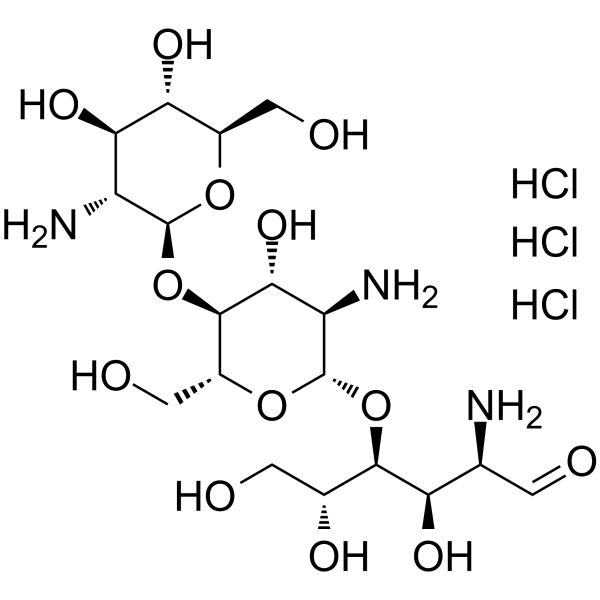
Chitotriose trihydrochloride is an orally active chitooligosaccharide with antioxidant activities. Chitotriose trihydrochloride inhibits hydroxylation of benzoate to salicylate by H2O2 in the presence of Cu 2+ (IC50 value of 80 μM) .
loading...
    loading...
Cat. No.: HY-W927359
CAS No.: 109653-47-6
Fluorescein hydrazide (3,6-Dihydroxyxanthane) is a fluorescein dye that can be used for the fluorophotometric determination of hydrogen peroxide (H2O2) and other reactive oxygen species (ROS) .
loading...
    loading...
Cat. No.: HY-172604
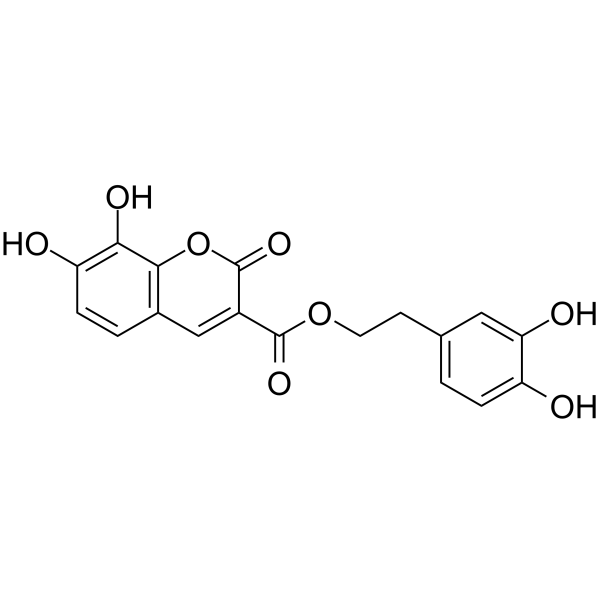
Neuroprotective agent 10 is an orally active, blood-brain barrier permeable neuroprotective agent. Neuroprotective agent 10 scavenges ABTS, DPPH and superoxide anion free radicals. Neuroprotective agent 10 inhibits abnormal electrical discharges. At the cellular level, Neuroprotective agent 10 alleviates H2O2-induced oxidative damage and LPS (HY-D1056)-induced neuroinflammation, and relieves epileptic symptoms and oxidative damage in mice. Neuroprotective agent 10 can be used in the research of epilepsy .
loading...
    loading...
Cat. No.: HY-124834
CAS No.: 75483-04-4
Target:  

Keap1-Nrf2 Apoptosis

Research Areas:  

Cancer

Nrf2 activator-10 (Compound AI-1) is a PI3K-dependent inducer for antioxidant response element (ARE) (EC50 is 2.7 μM) and an activator for Nrf2. Nrf2 activator-10 modifies Keap1, blocks Cul3-Keap1 ubiquitin ligase complex, activates the transcription of Nrf2. Nrf2 activator-10 protects cells from H2O2-induced apoptosis.
loading...
    loading...
Cat. No.: HY-135876
CAS No.: 29873-99-2
Synonyms: (-)-γ-Elemene
γ-Elemene ((-)-γ-Elemene) is a lipid-lowering agent. γ-Elemene increases superoxide dismutase (SOD). γ-Elemene reduces the expression of adhesion molecules (VCAM-1, ICAM-1) in cells damaged by H2O2. γ-Elemene regulates lipid peroxidation. γ-Elemene protects cells from peroxidative damage induced by high fat and H2O2. γ-Elemene decreases lipid content. γ-Elemene can be used in the research of atherosclerosis .
loading...
    loading...
Cat. No.: HY-170925
Research Areas:  

Neurological Disease

AChE-IN-81 (compound 22) is a potent, irreversible and selective AChE inhibitor. AChE-IN-81 inhibits activity on AChE with inhibitory rates of 80.0%, with an IC50 of 3.7 μM. AChE-IN-81 binds to AChE with a binding affinity (Kd) of 5.37 μM. AChE-IN-81 effectively reduces in zebrafish brain cells. AChE-IN-81 exhibits potential neuroprotective activities on H2O2-induced SH-SY5Y cell injury model .
loading...
    loading...
Cat. No.: HY-N10277
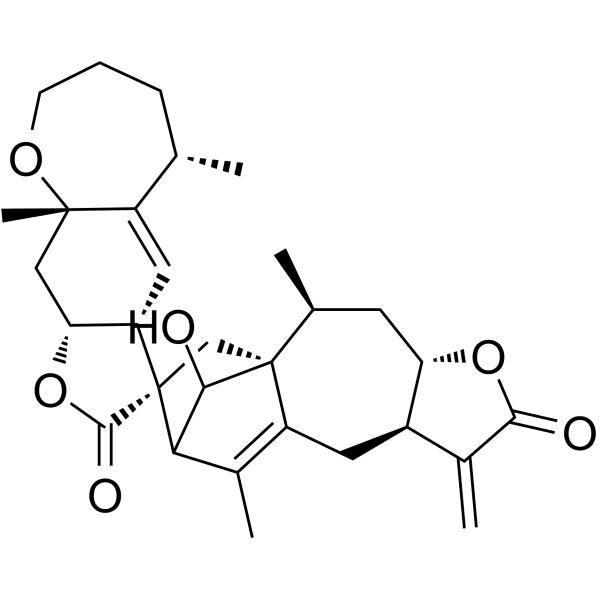
Inubritannolide A displays slight strong neuroprotective potency against different types of neuronal cells mediated by various inducers including H2O2, 6-hydroxydopamine (6-OHDA), and lipopolysaccharide (LPS).
loading...
    loading...
Cat. No.: HY-150563
CAS No.: 2361384-14-5
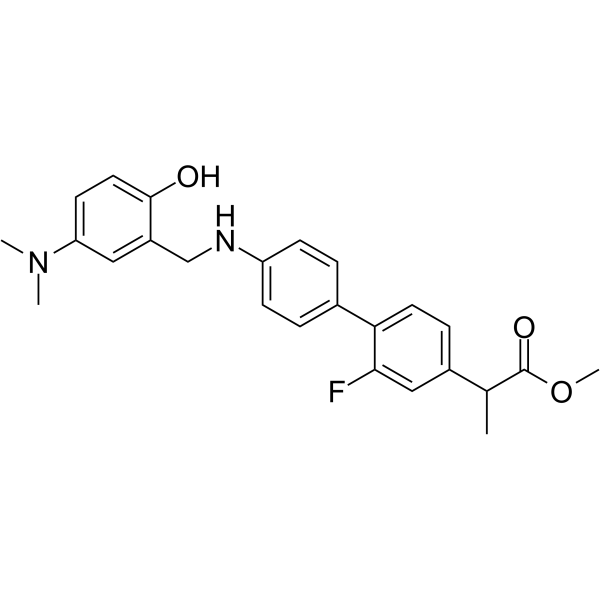
Neuroinflammatory-IN-2 is a potent anti-neuroinflammatory agent with an IC50 value of 10.30 μM for MAO-B, and 96.33% inhibition of Aβ1-42 aggregation at 25 μM. Neuroinflammatory-IN-2 has neuroprotective activity in H2O2-induced PC-12 cell injury. Neuroinflammatory-IN-2 also has biometal chelating abilities, antioxidant activity, anti-neuroinflammatory activity and appropriate BBB permeability. Neuroinflammatory-IN-2 can be used for researching Alzheimer’s disease .
loading...
    loading...
Cat. No.: HY-N0615R
CAS No.: 80418-24-2
Synonyms: Sanchinoside R1 (Standard); Sanqi glucoside R1 (Standard)
Notoginsenoside R1 (Standard) is the analytical standard of Notoginsenoside R1. This product is intended for research and analytical applications. Notoginsenoside R1 (Sanchinoside R1), a saponin, is isolated from P. notoginseng. Notoginsenoside R1 exhibits anti-oxidation, anti-inflammatory, anti-angiogenic, and anti-apoptosis activities. Notoginsenoside R1 provides cardioprotection against ischemia/reperfusion (I/R) injury. Notoginsenoside R1 also provides neuroprotection in H2O2-induced oxidative damage in PC12 cells [2] .
loading...
    loading...
Cat. No.: HY-W423191
CAS No.: 534-42-9
Synonyms: 4-O-α-D-Glucopyranosyl-D-gluconic acid
Maltobionic acid (4-O-α-D-Glucopyranosyl-D-gluconic acid) is an orally active oligosaccharide and iron chelator with antibacterial activity. Maltobionic acid inhibits the expression of NFATc1, suppresses osteoclast differentiation, inhibits bone resorption, and increases serum calcitonin levels. Maltobionic acid protects mammalian cells from hydrogen peroxide (H2O2)-induced oxidative damage; resists fermentation by the gut microbiota; and exhibits anti-digestive and anti-fermentative properties. Maltobionic acid can be used in research related to osteoporosis, bacterial infections, and constipation [2] .
loading...
    loading...
Cat. No.: HY-D2965
CAS No.: 1219603-04-9
Synonyms: SPG1
SNAP-Peroxy-Green-1 (SPG1) a SNAP tag fluorescent probe. SNAP-Peroxy-Green-1 can be used for detecting H2O2 in the extracellular space or on the surface of the cell membrane .
loading...
    loading...
Cat. No.: HY-12508
CAS No.: 380607-77-2
Purity:  99.31%
Target:  

iGluR

Research Areas:  

Neurological Disease

CMPDA is a positive allosteric modulator of AMPA receptors with EC50s of 45.4 ± 4.2 nM/63.4 ± 5.6 nM for GluA2i/GluA2o receptor.
loading...
    loading...
Cat. No.: HY-119171
CAS No.: 1953157-39-5
Purity:  99.80%
Target:  

KMO

GSK 366 is a type II kynurenine-3-monooxygenase (KMO) inhibitor with IC50 values of 2.3 nM and 0.7 nM for human KMO and P. fluorescens-KMO (Pf-KMO). GSK 366 binds to KMO’s substrate site, prevents productive NADPH association, substrate binding, and FAD hydroperoxy species formation. GSK 366 does not stimulate hydrogen peroxide (H2O2) production and reduces H2O2 levels. GSK 366 can be used for the researches of inflammation and neurological disease, such as acute pancreatitis multiple organ dysfunction syndrome and Alzheimer’s disease .
loading...
    loading...
Cat. No.: HY-P70068
Purity:  ≥ 95%, as determined by reducing SDS-PAGE.
Synonyms: Chlorite dismutase; EC:1.13.11.49; Chlorite O(2)-lyase; Daro_2580; rDeChlorite dismutase/Cld, His; Cld
Species:  
Others
Source:  
E. coli
loading...
    loading...
Cat. No.: HY-114886
CAS No.: 351978-83-1
Research Areas:  

Metabolic Disease

IGP-5 is a mitochondrial sn-Glycerol 3-phosphate Dehydrogenase (mGPDH) inhibitor with the IC50 of 0.7 μM aganist mGPDH H2O2 production . IGP-5 can be used for study of energy metabolism .
loading...
    loading...

