
300 Results for "

Prostate Cancer Tumor

" in MedChemExpress (MCE) Product Catalog:
Products (300)

300 Results for "Prostate Cancer Tumor" in MCE Product Catalog:

2
2 Cited Publications
Cat. No.: HY-145722A
CAS No.: 1002331-21-6
Synonyms: OGX-427
Target:  

HSP

Research Areas:  

Cancer

Apatorsen is a 2'-methoxyethyl-modified antisense oligonucleotide and also a Hsp27 inhibitor. Apatorsen reduces Hsp27 mRNA and protein levels, impairs stress-induced cytoprotective functions, induces cell apoptosis, inhibits tumor growth and prevents metastasis. Apatorsen is applicable to research related to non-small cell lung cancer, castration-resistant prostate cancer, breast cancer, ovarian cancer and bladder cancer .
loading...
    loading...
2
2 Cited Publications
Cat. No.: HY-145722
CAS No.: 915443-09-3
Purity:  98.54%
Synonyms: OGX-427 sodium
Target:  

HSP

Research Areas:  

Cancer

Apatorsen (OGX-427) sodium is a 2'-methoxyethyl-modified antisense oligonucleotide and also a Hsp27 inhibitor. Apatorsen sodium reduces Hsp27 mRNA and protein levels, impairs stress-induced cytoprotective functions, induces cell apoptosis, inhibits tumor growth and prevents metastasis. Apatorsen sodium is applicable to research related to non-small cell lung cancer, castration-resistant prostate cancer, breast cancer, ovarian cancer and bladder cancer .
loading...
    loading...
2
2 Cited Publications
Cat. No.: HY-118487
CAS No.: 939825-12-4
Purity:  98.03%
Research Areas:  

Cancer

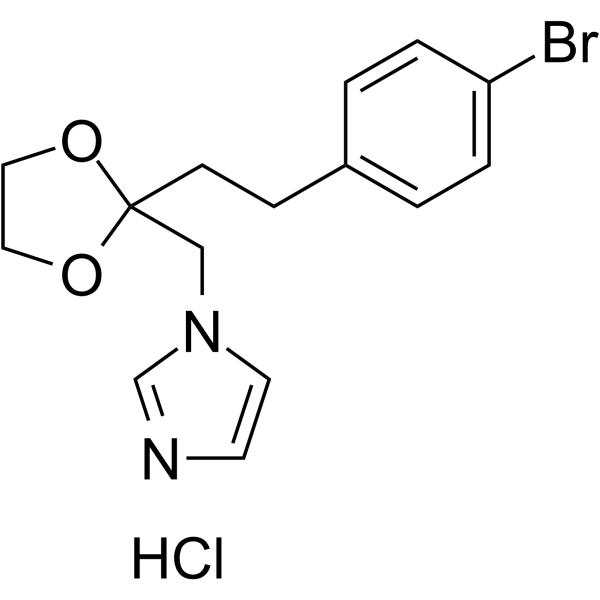
OB-24 is a selective small-molecule HO-1 inhibitor (IC50 = 1.9 μM for HO-1 and IC50 for HO-2 >100 μM). OB-24 possesses anti-tumor and anti-metastatic properties. OB-24 can be studies in research such as prostate cancer, melanoma, ovarian carcinoma and lung metastasis .
loading...
    loading...
2
2 Cited Publications
Cat. No.: HY-N6796
CAS No.: 52665-74-4
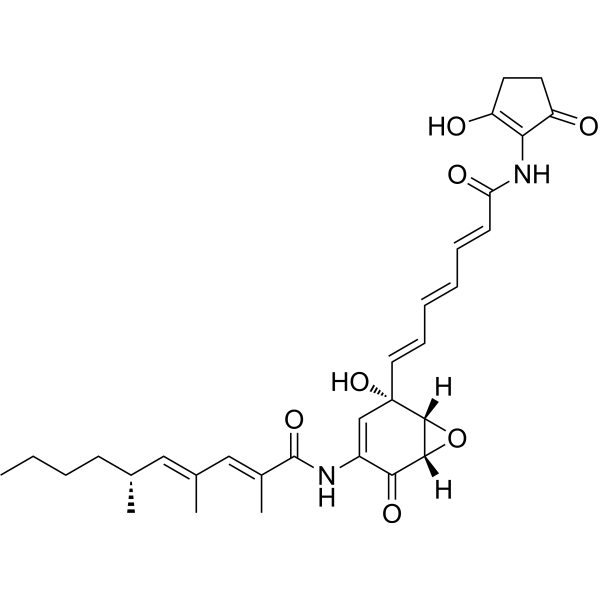
Manumycin A is a polyketide antibiotic and an inhibitor of thioredoxin reductase 1 (TrxR-1). Manumycin A can inhibit the growth of breast cancer cells and exert its anti-tumor activity through LC3. Manumycin A can downregulate the release of pro-inflammatory cytokines in human monocytes stimulated by TNF α, and has potential anti-inflammatory activity. Manumycin A can inhibit the Ras/Raf/ERK1/2 signaling and hnRNP H1 in castration resistant prostate cancer cells to suppress exosome biogenesis and secretion .
loading...
    loading...
2
2 Cited Publications
Cat. No.: HY-162318
CAS No.: 2946670-96-6
Research Areas:  

Cancer

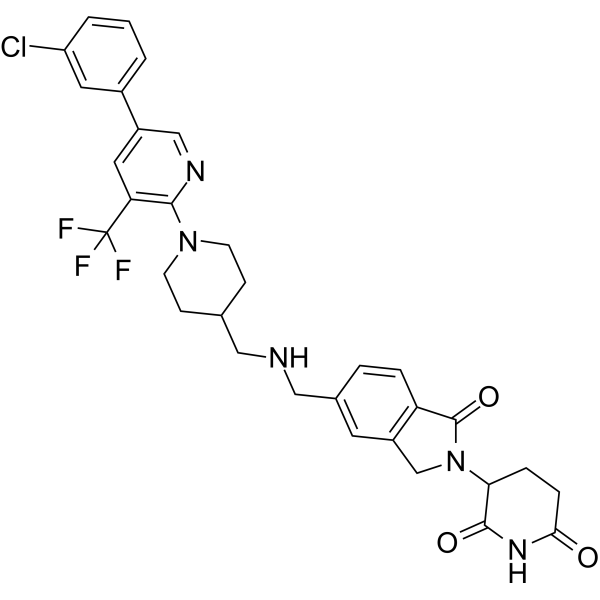
MYC degrader 1 is a MYC degrader that recruits Cereblon (CRBN), with a Kd value of 145 nM and oral activity. MYC degrader 1 specifically binds MYC and GSPT1, recruits the CRBN E3 ubiquitin ligase complex, and induces MYC degradation via the ubiquitin-proteasome pathway. MYC degrader 1 downregulates KLHL42 expression, restores pRB1 protein levels, and re-establishes the sensitivity of MYC-overexpressing cancer cells to CDK4/6 inhibitors. MYC degrader 1 combined with Palbociclib (HY-50767) shows significant inhibition of tumor growth. MYC degrader 1 can be used in studies related to bladder cancer, prostate cancer, and breast cancer .
loading...
    loading...
2
2 Cited Publications
Cat. No.: HY-119272
CAS No.: 342808-40-6
Purity:  99.34%
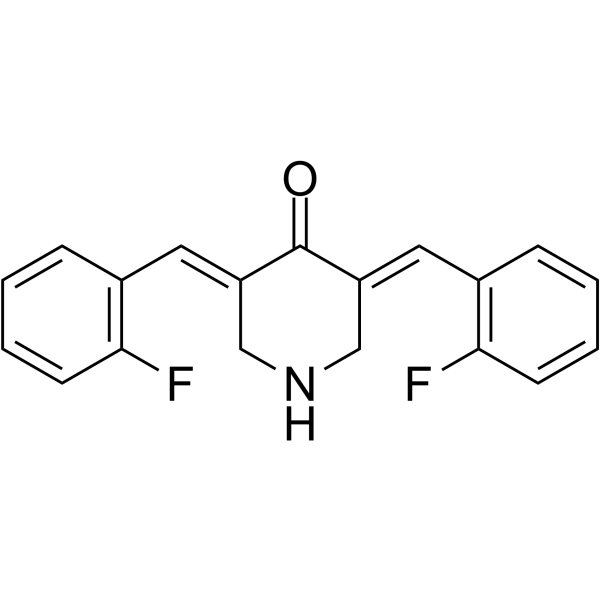
EF24, a curcumin analogue, is an NF-kB inhibitor with great anti-tumor efficacy and oral bioavailability via deactivation of the MAPK/ERK signaling pathway in oral squamous cell carcinoma (OSCC). EF24 is active against melanoma and breast cancer cell lines with GI50 values of 0.7 μM and 0.8 μM, respectively. EF24 induces cell cycle arrest and apoptosis in MDA-MB-231 human breast cancer cells and DU-145 human prostate cancer cells. EF24 increases the levels of activated caspase 3 and 9, and decreases the phosphorylated forms of MEK1 and ERK .
loading...
    loading...
2
2 Cited Publications
Cat. No.: HY-162318A
Target:  

c-Myc

Research Areas:  

Cancer

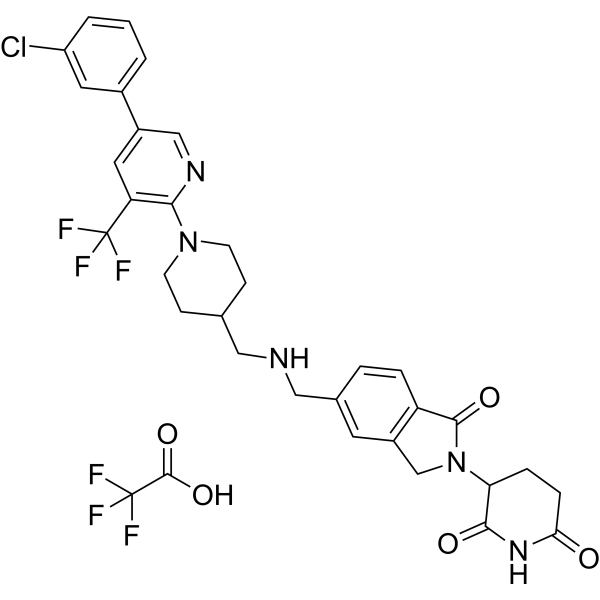
MYC degrader 1 TFA is a MYC degrader that recruits Cereblon (CRBN), with a Kd value of 145 nM and oral activity. MYC degrader 1 TFA specifically binds MYC and GSPT1, recruits the CRBN E3 ubiquitin ligase complex, and induces MYC degradation via the ubiquitin-proteasome pathway. MYC degrader 1 TFA downregulates KLHL42 expression, restores pRB1 protein levels, and re-establishes the sensitivity of MYC-overexpressing cancer cells to CDK4/6 inhibitors. MYC degrader 1 TFA combined with Palbociclib (HY-50767) shows significant inhibition of tumor growth. MYC degrader 1 TFA can be used in studies related to bladder cancer, prostate cancer, and breast cancer .
loading...
    loading...
1
1 Cited Publications
Cat. No.: HY-N6601
CAS No.: 13849-91-7
Synonyms: Randialic acid A
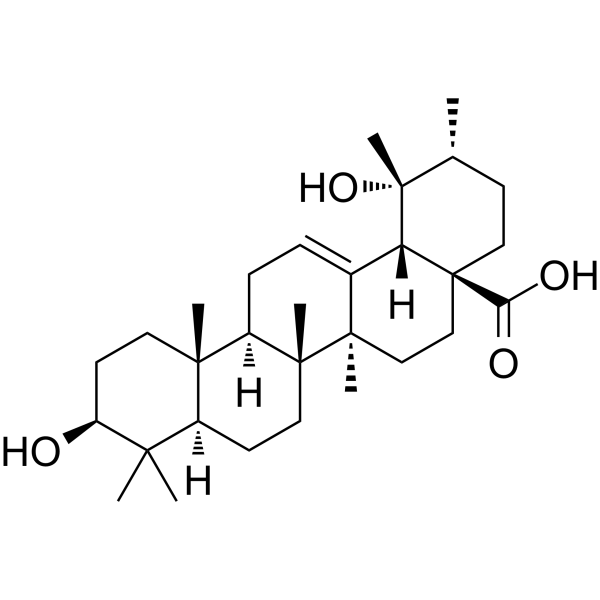
Randialic acid A (Pomolic acid) is a pentacyclic triterpene isolated from?Euscaphis japonica?(Tunb.). Randialic acid A (Pomolic acid) inhibits tumor cells growth and induces cell apoptosis. Randialic acid A (Pomolic acid) has a potential for the treatment of prostate cancer (PC) .
loading...
    loading...
1
1 Cited Publications
Cat. No.: HY-155994
CAS No.: 3036457-38-9
Purity:  99.90%
Target:  

PROTACs PIKfyve Autophagy

Research Areas:  

Cancer

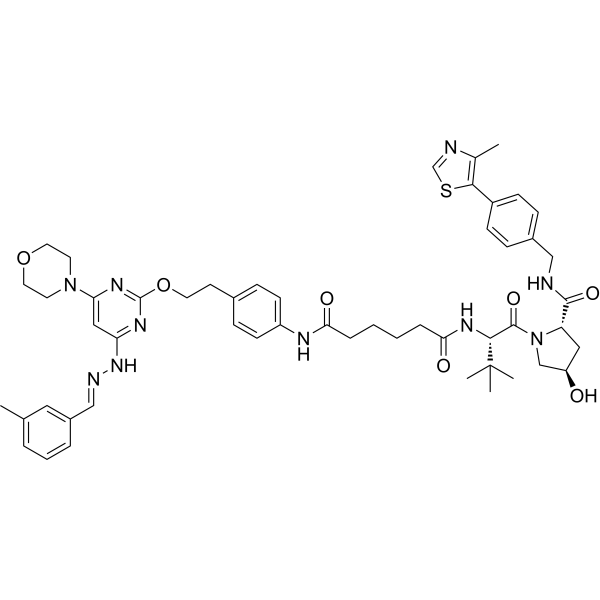
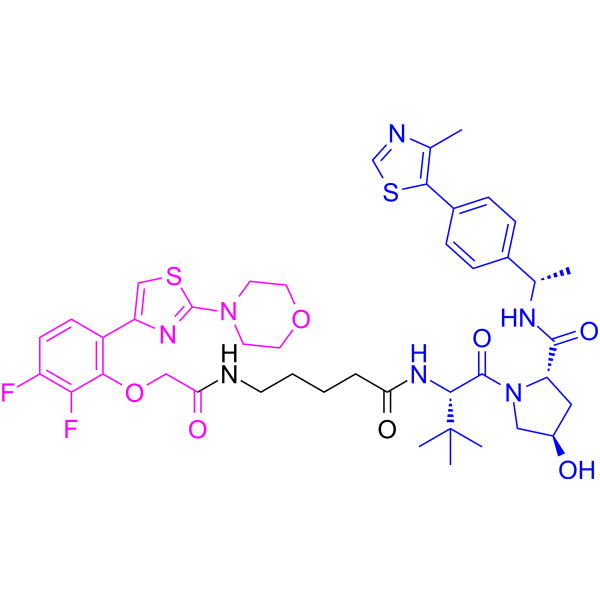
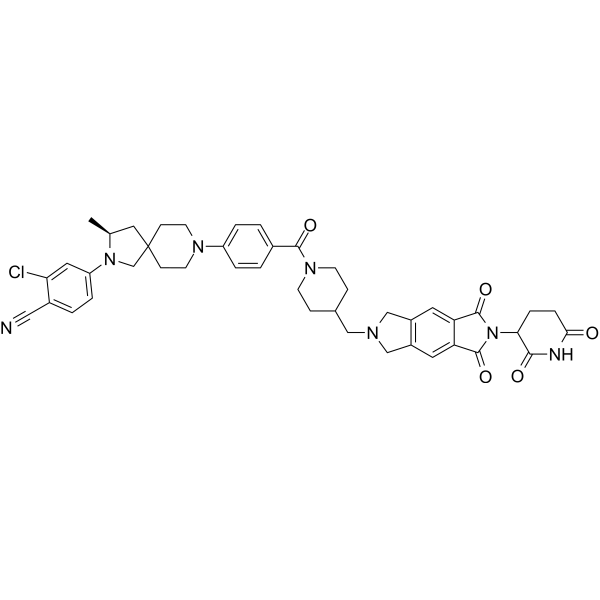
PIK5-12d is a PROTAC PIKfyve degrader (DC50 = 1.48 nM). PIK5-12d induces massive cytoplasmic vacuolization and blocks autophagic flux in multiple prostate cancer cells. PIK5-12d inhibits prostate cancer cell proliferation. PIK5-12d significantly suppresses tumor proliferation in mice bearing LTL-331R human prostate cancer PDX tumors. PIK5-12d can be used for the study of prostate cancer .
loading...
    loading...
1
1 Cited Publications
Cat. No.: HY-149862
CAS No.: 2632305-17-8
Purity:  98.19%
Research Areas:  

Cancer

ARD-2051 is a selective and orally active androgen receptor (AR) PROTAC degrader. ARD-2051 achieves DC50 values of 0.6 nM for AR protein degradation in both the LNCaP and VCaP prostate cancer cell lines. ARD-2051 exhibits effective anti-tumor activity in VCaP xenograft mice model. ARD-2051 can be used for the research of prostate cancer .
loading...
    loading...
1
1 Cited Publications
Cat. No.: HY-142870
CAS No.: 1802650-31-2
Purity:  98.70%
Research Areas:  

Cancer

ZY-444 is an anti-cancer agent, targeting pyruvate carboxylase (PC). ZY-444 suppresses the Wnt/β-catenin/Snail signaling pathway by blocking nuclear translocation of β-catenin. ZY-444 selectively inhibits proliferation, migration, and invasion and induces apoptosis in cancer cells. ZY-444 exhibits potent anti-tumor in cancer mouse models. ZY-444 can be used for the study of breast cancer, lung cancer (NSCLC), prostate cancer and iodine-refractory thyroid cancer .
loading...
    loading...
1
1 Cited Publications
Cat. No.: HY-16160
CAS No.: 851636-83-4
Target:  

Autophagy ICMT

Research Areas:  

Neurological Disease Cancer

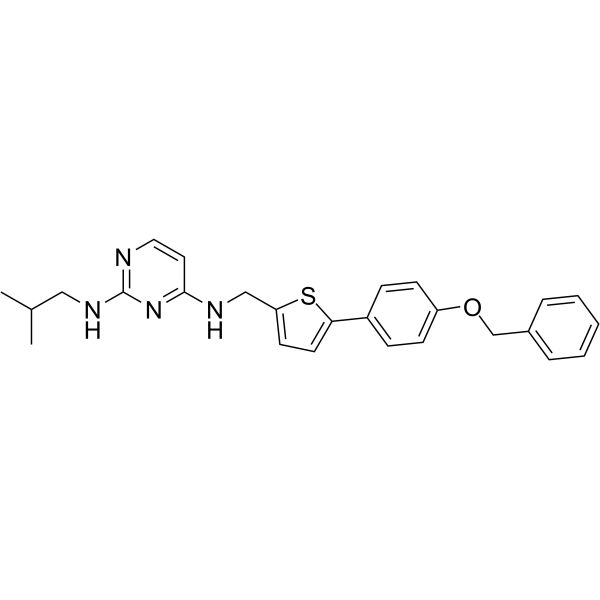
Cysmethynil is an Icmt inhibitor(IC50 = 2.4 μM). Cysmethynil inhibites RAS membrane binding and EGF signal transduction. Cysmethynil prevents the cells in the G1 phase and induces autophagy. Cysmethynil inhibits PC3 cells proliferation, has synergistic effect with Paclitaxel (HY-B0015) and Doxorubicin (HY-15142A). Cysmethynil has anti-tumor effects and can be used for solid tumor (such as prostate cancer et al.) research .
loading...
    loading...
1
1 Cited Publications
Cat. No.: HY-148771
CAS No.: 2488296-74-6
Purity:  99.79%
Synonyms: PROTAC AR-V7 degrader-2
Research Areas:  

Cancer

MTX-23 is a PROTAC degrader targeting androgen receptor splice variant 7 (AR-V7) and full-length androgen receptor (AR-FL), with DC50 values of 0.37 μM and 2 μM, respectively. MTX-23 binds to the DNA-binding domains of AR-V7 and AR-FL, recruits the VHL E3 ubiquitin ligase (E3 ubiquitin ligase) and induces their degradation. MTX-23 reduces the proliferation of prostate cancer cells, promotes their apoptosis (apoptosis), and also inhibits tumor growth in mouse models. MTX-23 can be used for the research of prostate cancer .
loading...
    loading...
1
1 Cited Publications
Cat. No.: HY-170620
Target:  

PROTACs PARP

Research Areas:  

Cancer

PARP1 PROTAC 180055 is a PARP1 PROTAC degrader that recruits VHL, with DC50 values of 180 nM and 240 nM in T47D and MDA-MB-231 cells, respectively. PARP1 PROTAC 180055 selectively kills BRCA-mutant tumor cells by inducing PARP1 ubiquitination and proteasomal degradation, thereby blocking PARylation, NAD + depletion and DNA trapping. PARP1 PROTAC 180055 can be used in the research of breast cancer, ovarian cancer, colorectal cancer, acute T-lymphoblastic leukemia, prostate cancer and osteosarcoma .
loading...
    loading...
1
1 Cited Publications
Cat. No.: HY-N0726
CAS No.: 125536-25-6
Synonyms: Dracohodin perochlorate
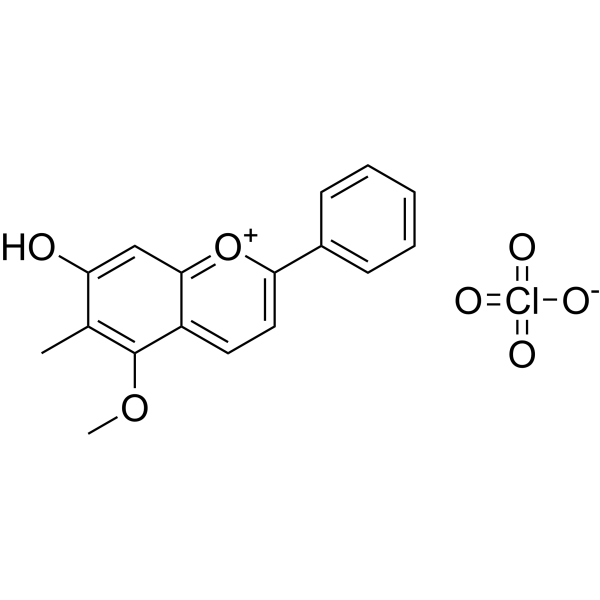
Dracorhodin perchlorate (Dracohodin perochlorate) is a natural product that can be obtained from the natural active molecule Dragon's blood. Dracorhodin perchlorate inhibits PI3K/Akt and NF-κB activation, upregulates p53 expression, activates caspase, produces ROS, and promotes Apoptosis. Dracorhodin perchlorate regulates the TLR4. Dracorhodin perchlorate promotes wound healing, improves diabetes. Dracorhodin perchlorate has anti-tumor activity against prostate cancer, breast cancer, cervical cancer and other cancers .
loading...
    loading...
1
1 Cited Publications
Cat. No.: HY-156111
CAS No.: 2632305-36-1
Purity:  99.36%
Research Areas:  

Neurological Disease Cancer

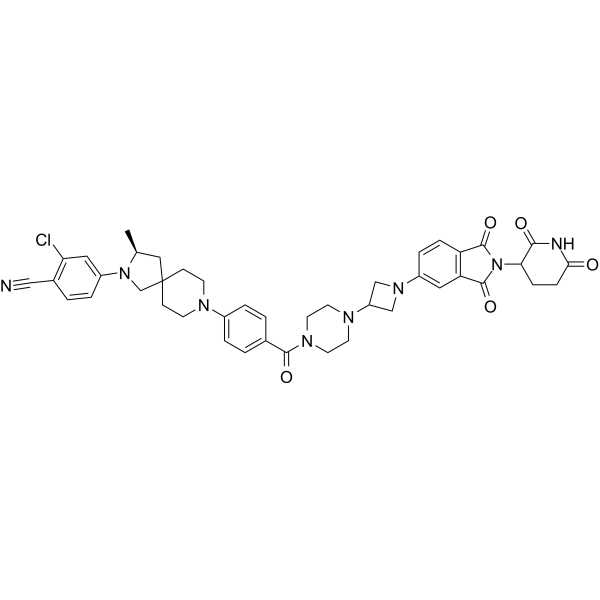
ARD-1676 is an orally active androgen receptor (AR) PROTAC degrader . ARD-1676 induces proteasomal degradation of AR, inhibits AR-regulated gene expression, suppresses cell growth, reduces AR protein levels and inhibits tumor growth in in vivo models. ARD-1676 can be used in studies related to AR+ human prostate cancer and spinal bulbar muscular atrophy .
loading...
    loading...
1
1 Cited Publications
Cat. No.: HY-P990255

Target:  

CXCR

Research Areas:  

Inflammation/Immunology Cancer

Anti-Mouse CXCL9/MIG Antibody (MIG-2F5.5) is an anti-mouse CXCL9/MIG IgG monoclonal antibody. Anti-Mouse CXCL9/MIG Antibody (MIG-2F5.5) can reduce tumor infiltration of CD8 + cytotoxic T cells (CTLs). Anti-Mouse CXCL9/MIG Antibody (MIG-2F5.5) can prolong the survival of transplanted hearts. Anti-Mouse CXCL9/MIG Antibody (MIG-2F5.5) can be used for researches on immunology and cancer such as prostate cancer .
loading...
    loading...
1
1 Cited Publications
Cat. No.: HY-N0819
CAS No.: 89412-79-3
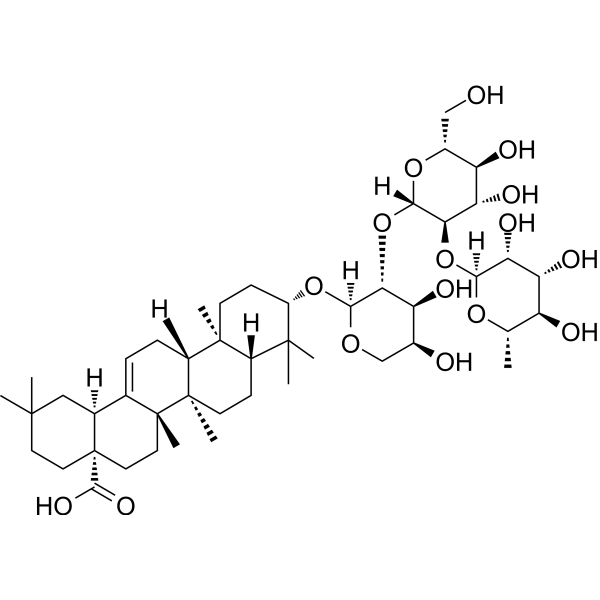
Raddeanin A is an oleanane-type triterpenoid saponin with oral activity. Raddeanin A inhibits SRC, mTOR, JNK, VEGFR2, NLRP3 inflammasome, Wnt/β-catenin, Wee1, PI3K/AKT signaling pathway, MAPK/ERK signaling pathway, AR-FL, AR-Vs, and downregulates the expression of p-PI3K and p-AKT. Raddeanin A inhibits osteoclast formation, bone resorption, osteolysis, cancer cell invasion, migration, proliferation, angiogenesis and epithelial-mesenchymal transition, while induces apoptosis, cell cycle arrest, ROS production, immunogenic cell death and dendritic cell maturation. Raddeanin A improves blood-retinal barrier function, alleviates inflammation, regulates the tumor microenvironment, and enhances the activity of anti-PD-1 antibody. Raddeanin A is applicable to the research of breast cancer-associated osteolysis, human osteosarcoma, colorectal cancer, glioblastoma, Alzheimer's disease, cholangiocarcinoma, melanoma, non-small cell lung cancer, castration-resistant prostate cancer and multiple myeloma .
loading...
    loading...
Cat. No.: HY-P991015
CAS No.: 2921676-04-0
Synonyms: JNJ-78278343; KLCB-245

Target:  

CD3

Research Areas:  

Cancer

Pasritamig (JNJ-78278343; KLCB-245) is a bispecific T-cell engager (BiTE) that targets the complex of human kallikrein KLK2 and CD3 receptor. Pasritamig redirects the cytotoxicity of T cells to KLK2-expressing tumor cells and induces T cell-mediated lysis of KLK2-expressing prostate cancer cells. Administered via subcutaneous injection, subcutaneous infusion or intravenous infusion, Pasritamig exhibits antitumor activity against metastatic castration-resistant prostate cancer. Pasritamig has a safety profile with an extremely low incidence of cytokine release syndrome and can be safely administered in an outpatient setting. Pasritamig is applicable to the research of metastatic castration-resistant prostate cancer .
loading...
    loading...
Cat. No.: HY-173158
CAS No.: 3031593-79-7
Research Areas:  

Cancer

AUR1545 is a selective KAT2A/KAT2B ((GCN5/PCAF)) PROTAC degrader that induces monocyte differentiation and inhibits the growth of acute myeloid leukemia cells. AUR1545 inhibits cell growth, induces epithelial differentiation and suppresses tumor growth in small cell lung cancer models. AUR1545 inhibits cell growth and induces differentiation in neuroendocrine prostate cancer cells and primary patient-derived organoids. AUR1545 is applicable to research related to acute myeloid leukemia, small cell lung cancer and neuroendocrine prostate cancer .
loading...
    loading...

