

242 Results for "

absorber

" in MedChemExpress (MCE) Product Catalog:
Products (242)

242 Results for "absorber" in MCE Product Catalog:

2
2 Cited Publications
Cat. No.: HY-15941
CAS No.: 27072-45-3
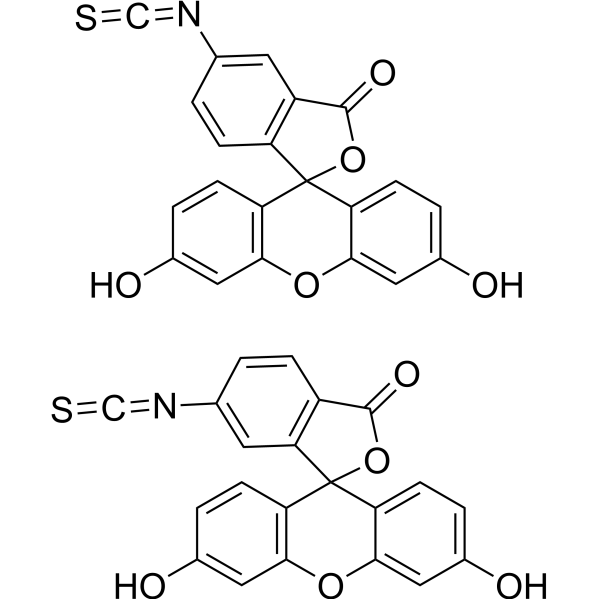
Synonyms: Fluorescein 5(6)-isothiocyanate; Fluorescein isothiocyanate 5- and 6- isomers
5(6)-FITC (Fluorescein 5(6)-isothiocyanate) is an amine-reactive derivative of a fluorescent dye, characterized by high absorbance and excellent fluorescence quantum yield. The isothiocyanate group of FITC can react with various functional groups on proteins, including amines, thiols, imidazoles, tyrosines and carbonyls, enabling the labeling of proteins such as antibodies and lectins. 5(6)-FITC has a wide range of applications, including flow cytometry, immunofluorescence, protease assays and conjugation. The maximum excitation/emission wavelengths are 492/518 nm .
loading...
    loading...
2
2 Cited Publications
Cat. No.: HY-W050154
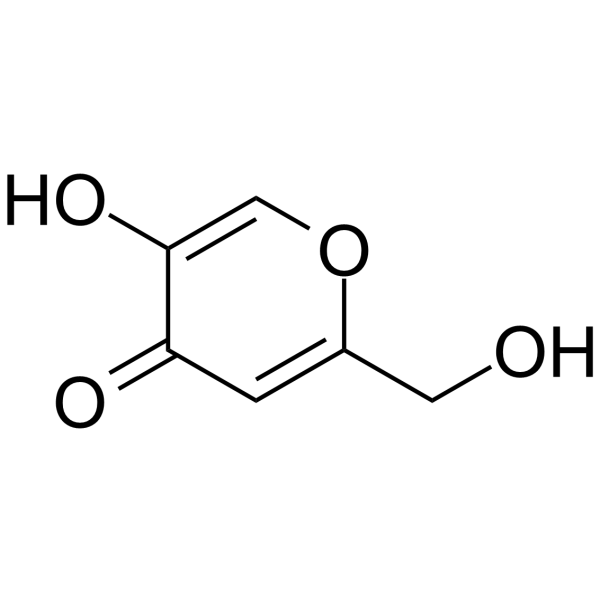
CAS No.: 501-30-4
Kojic acid is a substance produced by Aspergillus oryzae that is orally effective and can also be absorbed transdermally. Kojic acid exhibits various biological activities, including anti-aging, anti-nematode, antimicrobial, antioxidant, and anti-inflammatory effects. Kojic acid is a Tyrosinase inhibitor with an Mushroom Tyrosinase IC50 of 182.7 μM. Kojic acid prevents melanin production by capturing copper ions that bind to the tyrosinase active site, thus inhibiting its activation. Kojic acid also suppresses the NF-κB and p21 signaling pathways in human keratinocytes. Kojic acid derivatives have anticancer activity .
loading...
    loading...
1
1 Cited Publications
Cat. No.: HY-Y1892
CAS No.: 121548-04-7
Research Areas:  

Metabolic Disease

Lauroyl PEG-32 glycerides is a potential and safe absorption enhancer for improving the absorption of poorly absorbable agents including insulin and calcitonin by pulmonary delivery.
loading...
    loading...
1
1 Cited Publications
Cat. No.: HY-N9457
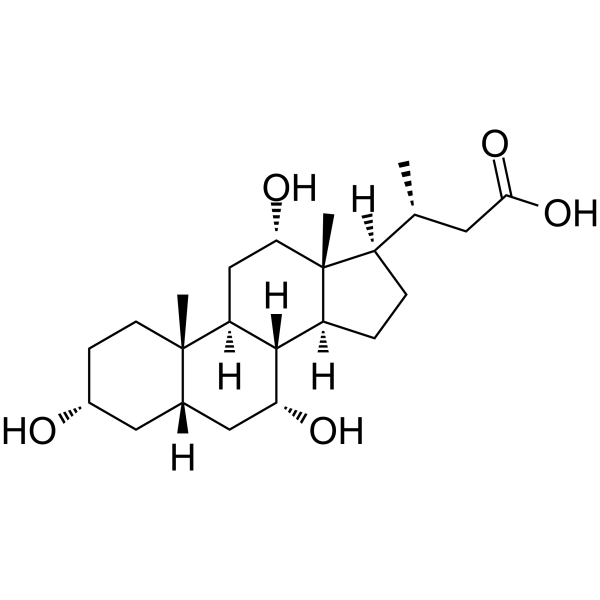
CAS No.: 60696-62-0
Norcholic acid is a normal minorbile C23 bile acid having four side chain and exsits in human urine and meconium. Norcholic acid can become prominent under certain pathological conditions. Norcholic acid is efficiently absorbed from intestine and quickly excreted into the bile but not into urine .
loading...
    loading...
1
1 Cited Publications
Cat. No.: HY-B1278
CAS No.: 58-95-7
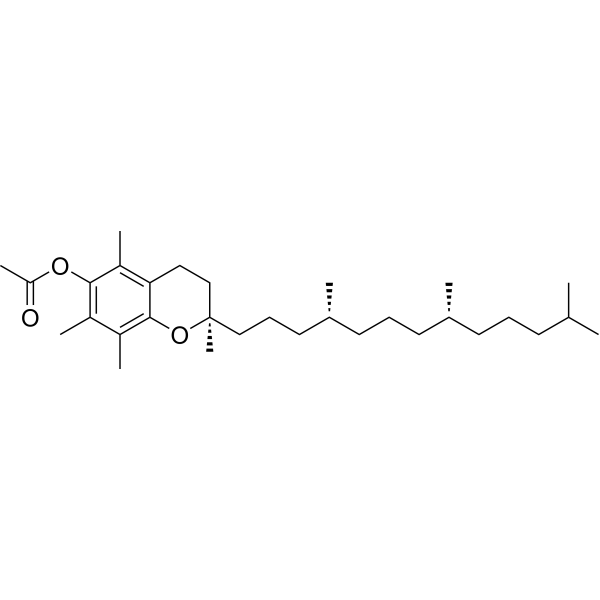
Synonyms: D-Vitamin E acetate
D-α-Tocopherol acetate (D-Vitamin E acetate) can be hydrolyzed to d-alpha-tocopherol (VE) and absorbed in the small intestine .
loading...
    loading...
1
1 Cited Publications
Cat. No.: HY-123275A
CAS No.: 160192-34-7
Purity:  99.40%
Synonyms: S-2238 hydrochloride
Target:  

Thrombin

Research Areas:  

Others

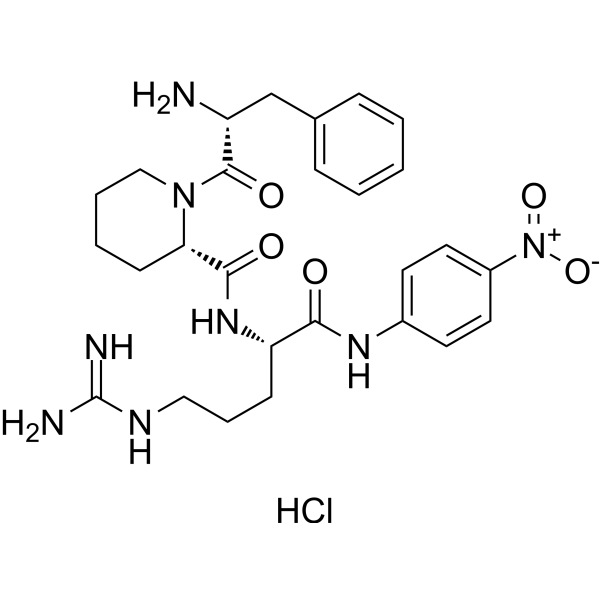
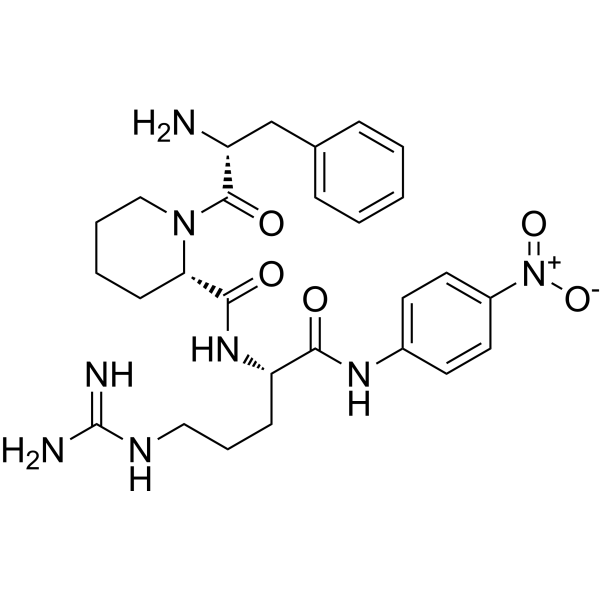
H-D-Phe-Pip-Arg-pNA hydrochloride (S-2238 hydrochloride) is a specific chromogenic peptide substrate for thrombin (Thrombin). The amide bond of H-D-Phe-Pip-Arg-pNA hydrochloride is rapidly hydrolyzed by thrombin, producing a characteristic yellow absorbance at 405 nm, and the change in absorbance is proportional to thrombin activity. H-D-Phe-Pip-Arg-pNA hydrochloride can be used in biochemical detection-related studies .
loading...
    loading...
1
1 Cited Publications
Cat. No.: HY-123275B
CAS No.: 115388-96-0
Purity:  98.90%
Synonyms: S-2238 acetate
Target:  

Thrombin

Research Areas:  

Others

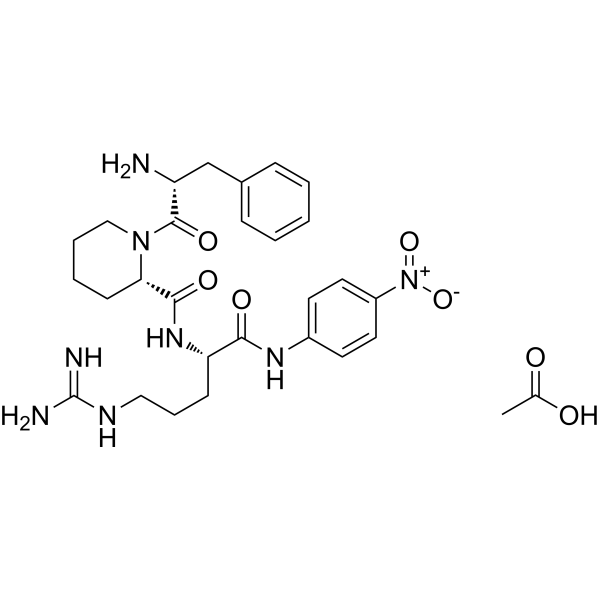
H-D-Phe-Pip-Arg-pNA acetate (S-2238 acetate) is a specific chromogenic peptide substrate for thrombin (Thrombin). The amide bond of H-D-Phe-Pip-Arg-pNA acetate is rapidly hydrolyzed by thrombin, producing a characteristic yellow absorbance at 405 nm, and the change in absorbance is proportional to thrombin activity. H-D-Phe-Pip-Arg-pNA acetate can be used in biochemical detection-related studies .
loading...
    loading...
1
1 Cited Publications
Cat. No.: HY-W088089
CAS No.: 181934-09-8
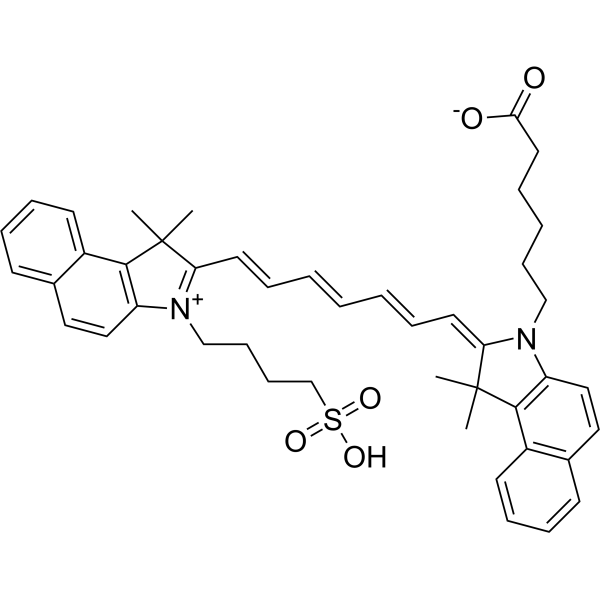
ICG-carboxylic acid is near-infrared (NIR) fluorescent probe. ICG is a fluorescent dye used in medical diagnostics. ICG has absorption peaking at 800 nm and can absorb the near IR laser energy and release heat in the dyed tissue (Ex/Em = 785/810 nm) .
loading...
    loading...
1
1 Cited Publications
Cat. No.: HY-B0897
CAS No.: 103597-45-1
Research Areas:  

Others

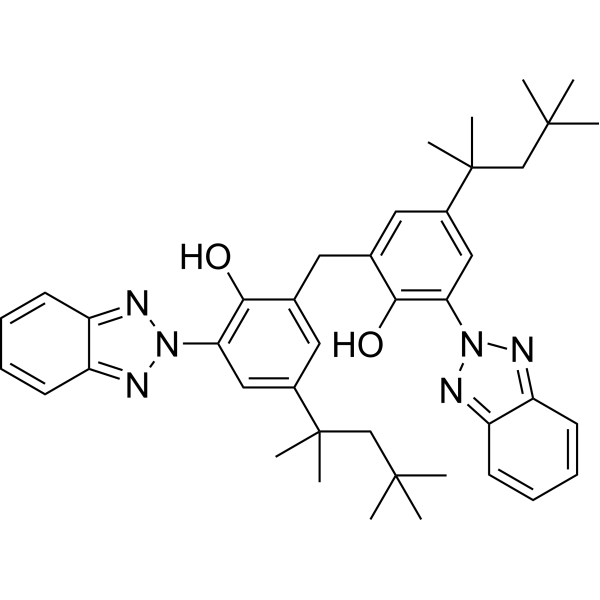
Bisoctrizole is a broad-spectrum UVA/UVB absorber that belongs to the benzotriazole class of compounds. Bisoctrizole absorbs UV light through hydroxyphenyl groups, causing reversible electronic transitions, thereby converting light energy into heat energy, inhibiting UV-induced material or skin damage. Bisoctrizole is highly efficient in capturing UVA (320-400 nm) and some UVB (280-320 nm) radiation. Bisoctrizole delays the photodegradation of materials such as silicones, improving their UV aging resistance or enhancing the photoprotective ability of sunscreen products .
loading...
    loading...
1
1 Cited Publications
Cat. No.: HY-123275
CAS No.: 64815-81-2
Synonyms: S-2238
Target:  

Thrombin

Research Areas:  

Others

H-D-Phe-Pip-Arg-pNA (S-2238) is a specific chromogenic peptide substrate for thrombin (Thrombin). The amide bond of H-D-Phe-Pip-Arg-pNA is rapidly hydrolyzed by thrombin, producing a characteristic yellow absorbance at 405 nm, and the change in absorbance is proportional to thrombin activity. H-D-Phe-Pip-Arg-pNA can be used in biochemical detection-related studies .
loading...
    loading...
1
1 Cited Publications
Cat. No.: HY-D1815
Synonyms: APC Dye
Allophycocyanin (APC Dye) is a light-harvesting protein, containing strongly coupled dimers of chromophores. Allophycocyanin serve as a minimal system to examine photosynthetic energy transfer. Allophycocyanin strongly absorbs far-red light (FRL), and expresses during acclimation to low light, likely associates with chlorophyll a-containing photosystem I .
loading...
    loading...
1
1 Cited Publications
Cat. No.: HY-140741
Purity:  99.89%
Research Areas:  

Inflammation/Immunology

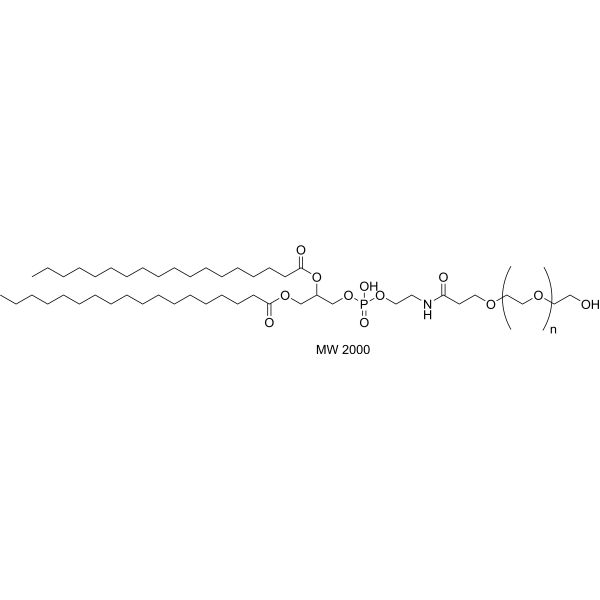
DSPE-PEG2000-OH is an absorption enhancer. DSPE-PEG2000-OH reduces the expression levels of ZO-1 and Occludin. DSPE-PEG2000-OH enhances the pulmonary absorption of poorly absorbable macromolecules via the paracellular pathway without altering pulmonary membrane fluidity .
loading...
    loading...
1
1 Cited Publications
Cat. No.: HY-B0456R
CAS No.: 83-88-5
Synonyms: Vitamin B2 (Standard); E101 (Standard)
Riboflavin (Standard) is the analytical standard of Riboflavin. This product is intended for research and analytical applications. Riboflavin, an orally active and easily absorbed micronutrient, is a precursor of flavin mononucleotide (FMN) and flavin adenine dinucleotide (FAD), which serve as coenzymes for numerous enzymatic reactions and perform key metabolic functions by mediating the transfer of electrons in biological oxidation-reduction reaction .
loading...
    loading...
1
1 Cited Publications
Cat. No.: HY-118189
CAS No.: 112137-89-0
Research Areas:  

Inflammation/Immunology

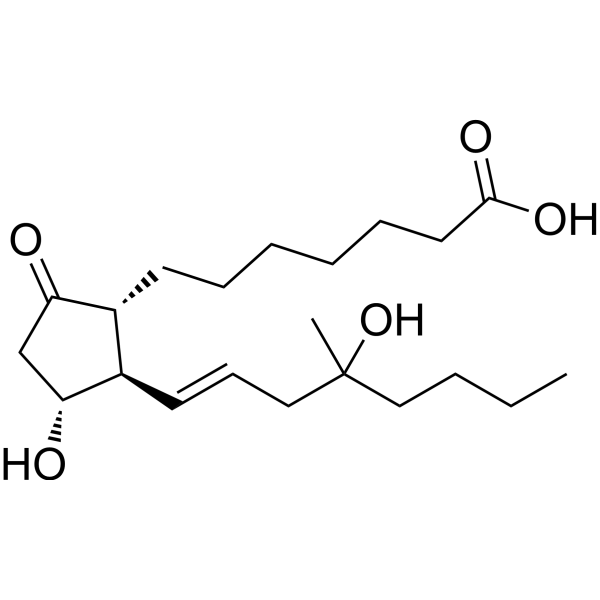
Misoprostol acid is an active metabolite of Misoprostol. Misoprostol is a synthetic analogue of prostaglandin E1 (PGE1), extensively absorbed, and undergoes rapid de-esterification to Misoprostol acid in the gastrointestinal tract after oral administration. Misoprostol can be used for non-steroidal anti-inflammatory drug-induced (NSAID) gastric ulcers . Misoprostol is an oral agent used to induce labor .
loading...
    loading...
1
1 Cited Publications
Cat. No.: HY-133813A
CAS No.: 72296-47-0
Purity:  ≥95.0%
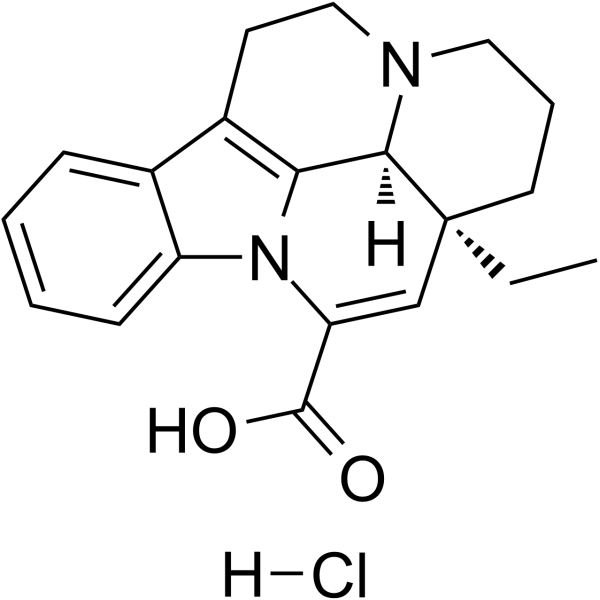
Apovincaminic acid hydrochloride salt is the major metabolite of Vinpocetine (HY-13295), with blood-brain barrier permeability and oral activity. Apovincaminic acid hydrochloride salt is detectable in the plasma of pregnant rabbits after oral administration of Vinpocetine. Apovincaminic acid hydrochloride salt is absorbable from all segments of the gastrointestinal tract of Norway rat, with the stomach as the primary absorption site, and is excreted via urine and feces. Apovincaminic acid hydrochloride salt is used in the research of cerebrovascular diseases .
loading...
    loading...
1
1 Cited Publications
Cat. No.: HY-Y0546
CAS No.: 119-61-9
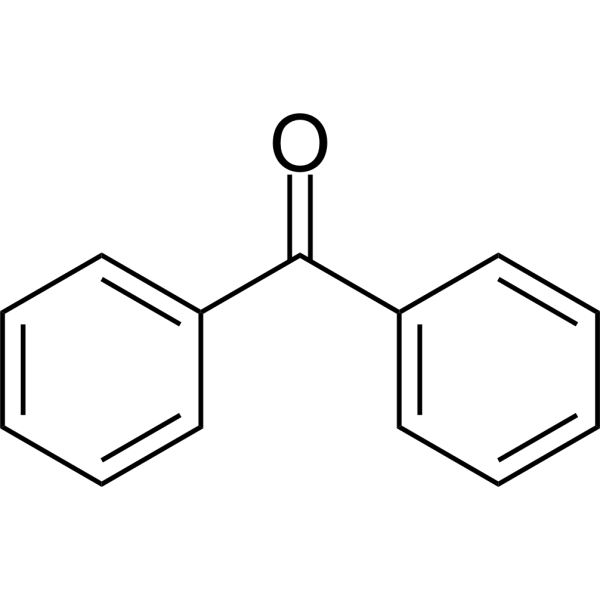
Benzophenone is an endogenous metabolite. Benzophenone is a photosensitizer, that absorbs UV light, transfers its energy to DNA, and triggers DNA damage. Benzophenone can be used as the fragrance enhancer, ultraviolet curing agent, additive in plastics, or the flavor ingredient. Benzophenone can also be used in the manufacturing of insecticides, agricultural chemicals, hypnotics, antihistamines, and other pharmaceuticals. Benzophenone exhibits certain carcinogenicity in mouse/rat models under long term exposure. Benzophenone exhibits estrogenic activity .
loading...
    loading...
1
1 Cited Publications
Cat. No.: HY-W129633
CAS No.: 1266615-56-8
Synonyms: DCIP sodium hydrate; DPIP sodium hydrate
2,6-Dichlorophenolindophenol (DCIP; DPIP) sodium hydrate is a redox chromogenic indicator with a redox potential of +217 mV relative to SHE, and it acts as a substrate for reduction reactions. During the metabolic process of nutrient consumption by Saccharomyces cerevisiae, 2,6-Dichlorophenolindophenol sodium hydrate is reduced from dark blue to colorless, resulting in a decrease in absorbance. 2,6-Dichlorophenolindophenol sodium hydrate is widely used in spectrophotometric biochemical oxygen demand determination and preclinical colorimetric toxicity analysis for heavy metal ion detection based on Saccharomyces cerevisiae .
loading...
    loading...
1
1 Cited Publications
Cat. No.: HY-108036B
CAS No.: 439685-79-7
Purity:  ≥98.0%
Synonyms: Hydroxypropyl tetrahydropyrantriol
Research Areas:  

Metabolic Disease

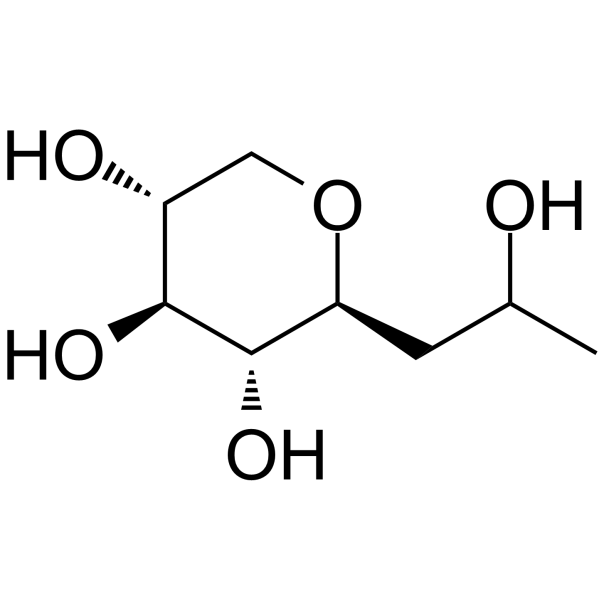
Pro-xylane (Hydroxypropyl tetrahydropyrantriol) is a bioactive C-glycoside that targets the biosynthesis pathway of glycosaminoglycans/mucopolysaccharides (GAGs) in the skin matrix and can be absorbed transdermally. Pro-xylane stimulates the biosynthesis of GAGs in fibroblasts, enhances the structural stability of the skin extracellular matrix, improves skin elasticity and moisturizing ability, and delays wrinkle formation. Pro-xylane can effectively promote the synthesis of collagen fibers and hyaluronic acid in the dermis. Pro-xylane is used in the field of anti-aging cosmetics to improve skin hydration and elasticity. Pro-xylane is eco-friendly and biodegradable .
loading...
    loading...
1
1 Cited Publications
Cat. No.: HY-W016729
CAS No.: 6203-18-5
4-(Dimethylamino) cinnamaldehyde is a staining agent that reacts with flavan-3-ols and Proanthocyanidins (HY-N0794) bearing meta-dihydroxyl or trihydroxyl phenol structures to form a green chromophore. In acidic media, 4-(Dimethylamino) cinnamaldehyde undergoes a condensation reaction with aromatic primary amines to produce colored and stable quinoid protonated Schiff base salts. 4-(Dimethylamino) cinnamaldehyde can be used to determine indole products of apotryptophanase and tryptophanase, as well as for the detection and analysis of Proanthocyanidins, with the absorbance detection wavelength of the calibration curve set at 640 nm .
loading...
    loading...
1
1 Cited Publications
Cat. No.: HY-108036
CAS No.: 439685-79-7
Purity:  ≥98.0%
Synonyms: Hydroxypropyl tetrahydropyrantriol (30% in water)
Research Areas:  

Metabolic Disease

Pro-xylane (30% in water) (Hydroxypropyl tetrahydropyrantriol) is a bioactive C-glycoside that targets the biosynthesis pathway of glycosaminoglycans/mucopolysaccharides (GAGs) in the skin matrix and can be absorbed transdermally. Pro-xylane (30% in water) stimulates the biosynthesis of GAGs in fibroblasts, enhances the structural stability of the skin extracellular matrix, improves skin elasticity and moisturizing ability, and delays wrinkle formation. Pro-xylane (30% in water) can effectively promote the synthesis of collagen fibers and hyaluronic acid in the dermis. Pro-xylane (30% in water) is used in the field of anti-aging cosmetics to improve skin hydration and elasticity. Pro-xylane (30% in water) is eco-friendly and biodegradable .
loading...
    loading...

