
608 Results for "

binding peptide

" in MedChemExpress (MCE) Product Catalog:
Products (608)

608 Results for "binding peptide" in MCE Product Catalog:

3
3 Cited Publications
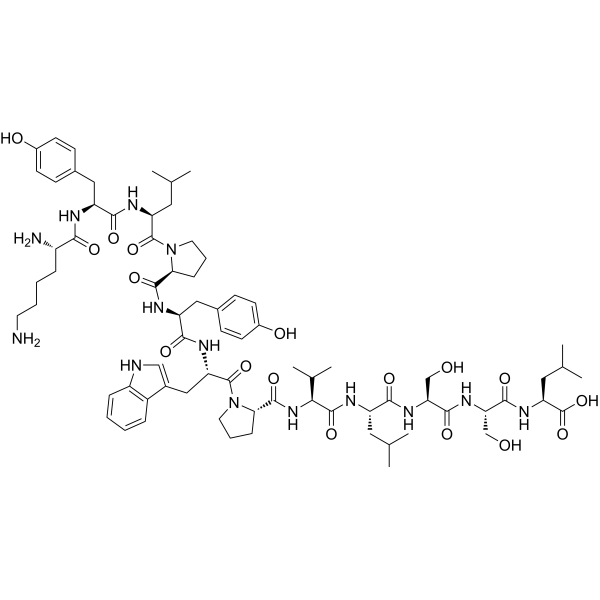
Cat. No.: HY-P2264
CAS No.: 676657-00-4
Target:  

Ephrin Receptor

Research Areas:  

Inflammation/Immunology

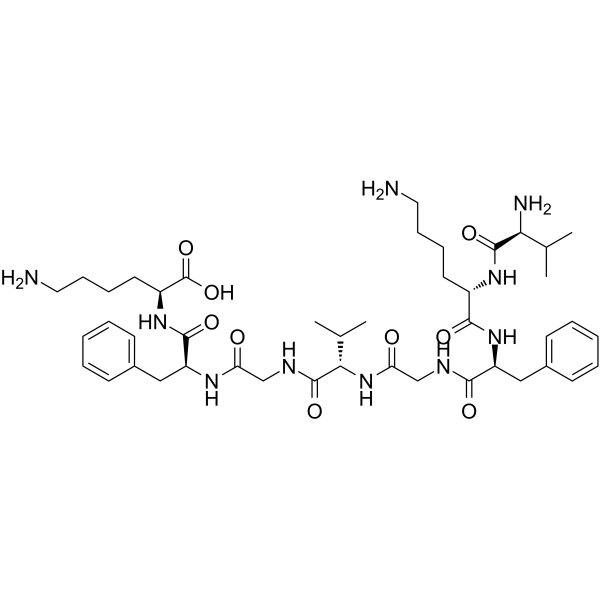
KYL peptide, an antagonistic peptide, selectively targets EphA4 receptor (IC50:4.22 μM, Kd:1.3 μM). KYL peptide binds to the ligand-binding domain of EphA4, effectively alleviates Aβ-induced synaptic dysfunction and synaptic plasticity defects in AD mice. KYL peptide can promote nerve regeneration after injury and modulating immune responses .
loading...
    loading...
3
3 Cited Publications
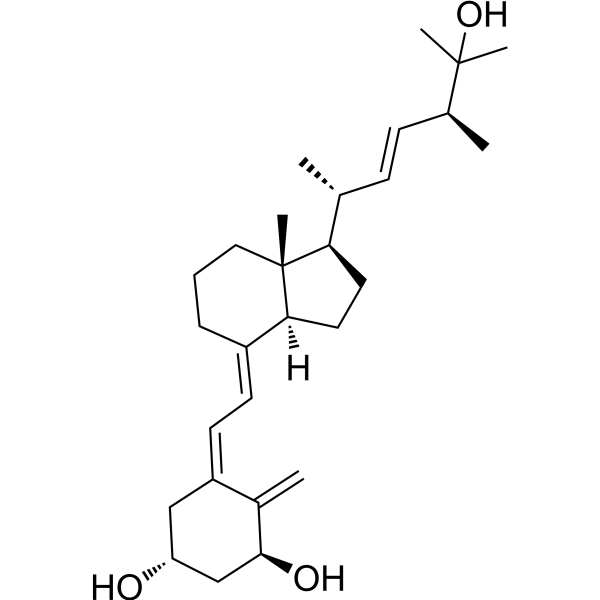
Cat. No.: HY-32350
CAS No.: 60133-18-8
Synonyms: 1α,25-Dihydroxy Vitamin D2
Ercalcitriol (1α,25-Dihydroxy Vitamin D2) is a vitamin D receptor (VDR) agonist with high binding affinity. After binding to VDR, Ercalcitriol forms a complex with retinoid X receptor (RXR) to regulate target gene transcription. For example, Ercalcitriol induces human gingival/oral epithelial cells to produce human cat antimicrobial peptide (hCAP-18/LL-37), which has antimicrobial activity against periodontal pathogens such as Porphyromonas gingivalis. Ercalcitriol enhances the innate immune defense of the oral mucosa by promoting the expression of antimicrobial peptides, and is mainly used in the study of periodontal diseases and immune-related oral diseases .
loading...
    loading...
3
3 Cited Publications
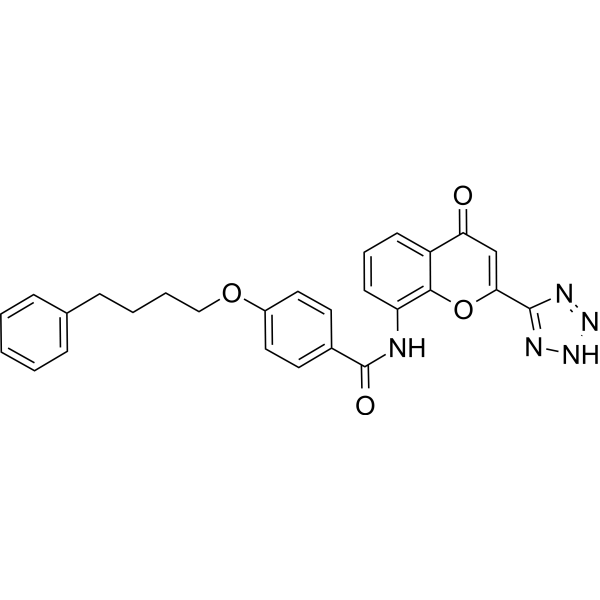
Cat. No.: HY-B0290
CAS No.: 103177-37-3
Synonyms: ONO-1078
Target:  

Leukotriene Receptor

Research Areas:  

Inflammation/Immunology

Pranlukast is a highly potent, selective and competitive antagonist of peptide leukotrienes. Pranlukast inhibits [ 3H]LTE4, [ 3H]LTD4, and [ 3H]LTC4 bindings to lung membranes with Kis of 0.63±0.11, 0.99±0.19, and 5640±680 nM, respectively.
loading...
    loading...
3
3 Cited Publications
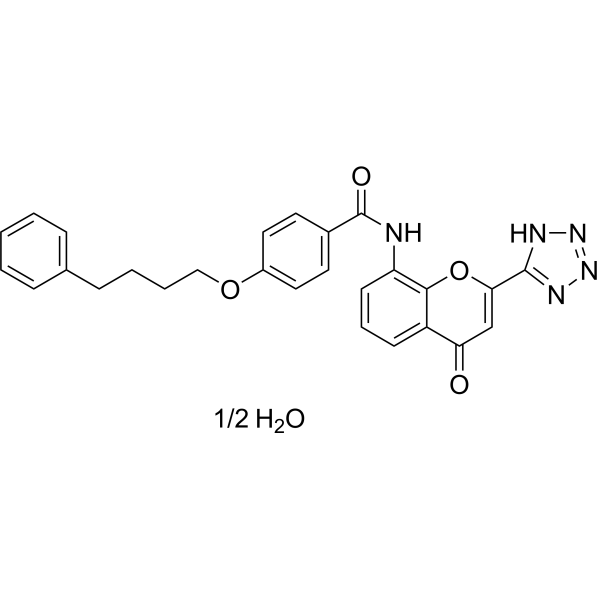
Cat. No.: HY-B0290A
CAS No.: 150821-03-7
Synonyms: ONO-1078 hemihydrate
Target:  

Leukotriene Receptor

Research Areas:  

Inflammation/Immunology

Pranlukast hemihydrate is a highly potent, selective and competitive antagonist of peptide leukotrienes. Pranlukast inhibits [ 3H]LTE4, [ 3H]LTD4, and [ 3H]LTC4 bindings to lung membranes with Kis of 0.63±0.11, 0.99±0.19, and 5640±680 nM, respectively.
loading...
    loading...
3
3 Cited Publications
Cat. No.: HY-19347
CAS No.: 890190-22-4
Synonyms: WD-Repeat Protein 5-0103
Target:  

WDR5

Research Areas:  

Neurological Disease Cancer

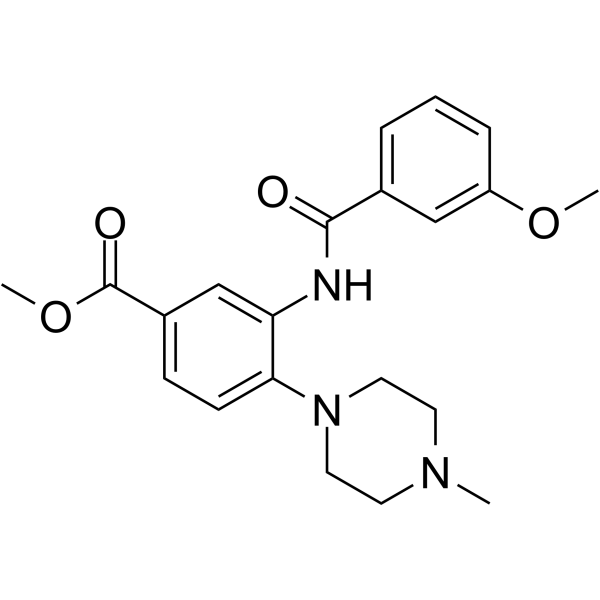
WDR5-0103 (WD-Repeat Protein 5-0103) is a potent and selective WD repeat-containing protein 5 (WDR5) antagonist with a Kd of 450 nM. WDR5-0103 competitively binds to the peptide-binding pocket of WDR5, blocking the interaction between WDR5 and mixed-lineage leukemia (MLL) protein and inhibiting the methyltransferase activity of MLL. WDR5-0103 is mainly used in the research of cancer and neurodegenerative diseases .
loading...
    loading...
3
3 Cited Publications
Cat. No.: HY-P1454
CAS No.: 2247635-23-8
Synonyms: Ac-LPSDDLEFWCHVMY-NH2
Target:  

Wnt

Research Areas:  

Cancer

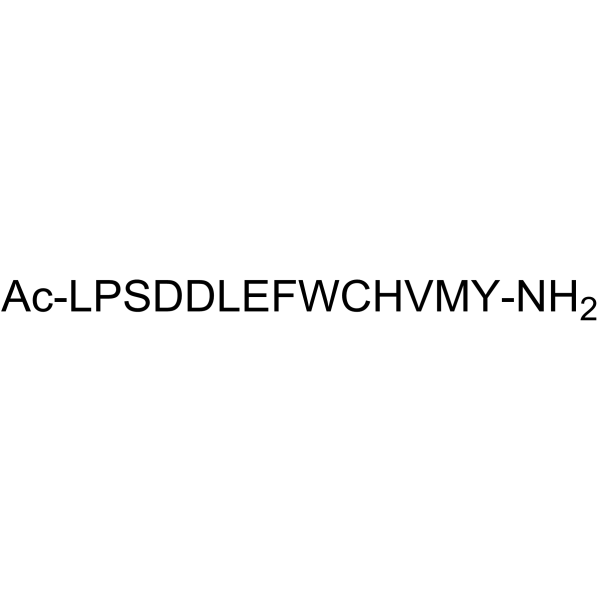
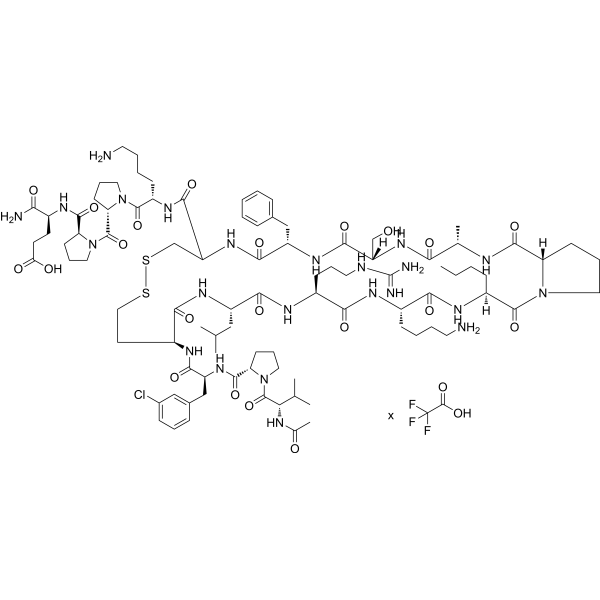
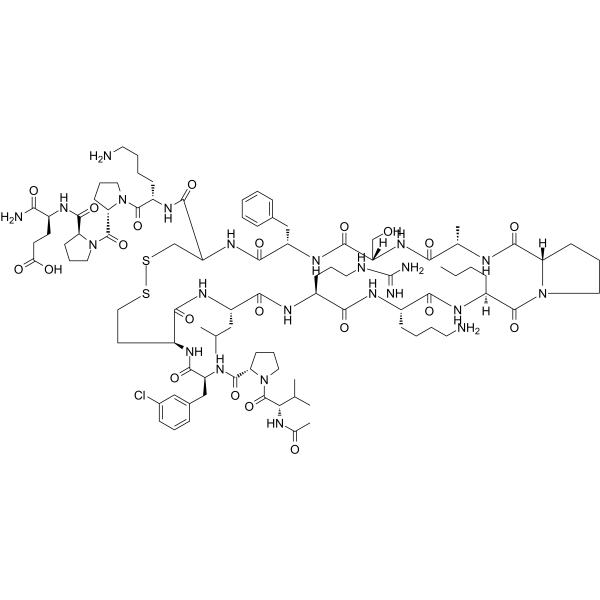
Fz7-21 (Ac-LPSDDLEFWCHVMY-NH2) is a potent peptide antagonist of FZD7 receptors , selectively binds to FZD7 CRD subclass and alters the conformation of the CRD and the architecture of its lipid-binding groove. The EC50 values are 58 and 34 nM for human and mouse FZD7 CRD, respectively. Fz7-21 impairs the function of FZD7 in Wnt–β-catenin signalling and stem cell function in intestinal organoids .
loading...
    loading...
3
3 Cited Publications
Cat. No.: HY-125837A
CAS No.: 2748239-18-9
Purity:  ≥98.0%
Research Areas:  

Cancer

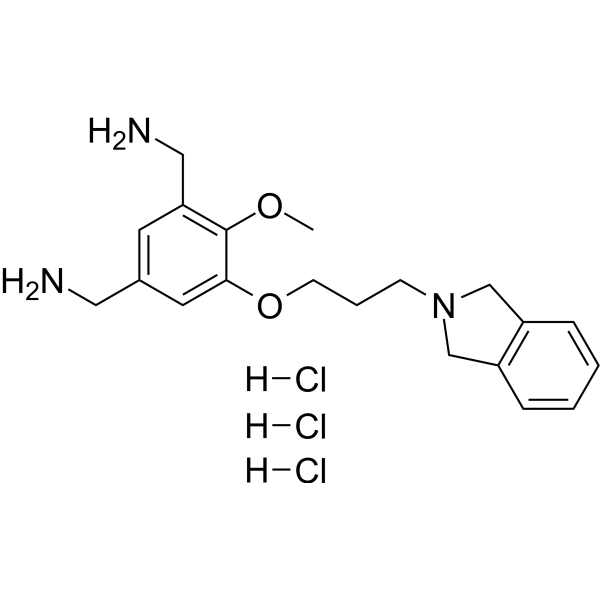
MS31 trihydrochloride is a potent, highly affinity and selective fragment-like methyllysine reader protein spindlin 1 (SPIN1) inhibitor. MS31 trihydrochloride potently inhibits the interactions between SPIN1 and H3K4me3 (IC50=77 nM, AlphaLISA; 243 nM, FP). MS31 trihydrochloride selectively binds Tudor domain II of SPIN1 (Kd=91 nM). MS31 trihydrochloride potently inhibits binding of trimethyllysine-containing peptides to SPIN1, and is not toxic to nontumorigenic cells .
loading...
    loading...
3
3 Cited Publications
Cat. No.: HY-P1454A
Synonyms: Ac-LPSDDLEFWCHVMY-NH2 TFA
Target:  

Wnt

Research Areas:  

Cancer

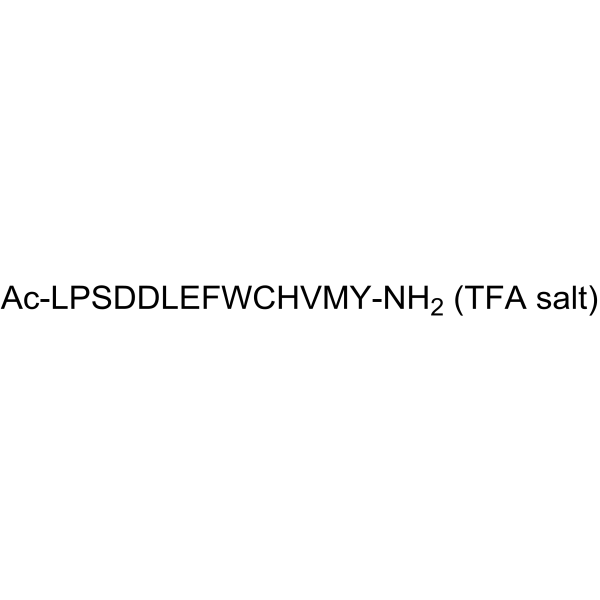
Fz7-21 (Ac-LPSDDLEFWCHVMY-NH2) TFA is a potent peptide antagonist of FZD7 receptors , selectively binds to FZD7 CRD subclass and alters the conformation of the CRD and the architecture of its lipid-binding groove. The EC50 values are 58 and 34 nM for human and mouse FZD7 CRD, respectively. Fz7-21 TFA impairs the function of FZD7 in Wnt-β-catenin signalling and stem cell function in intestinal organoids .
loading...
    loading...
3
3 Cited Publications
Cat. No.: HY-163316
CAS No.: 3030697-87-8
SIRT4-IN-1 is a selective and potent Sirtuin 4 (Sirt4) inhibitor with an IC50 of 16 μM for hSirt4. SIRT4-IN-1 also inhibits hSirt1, hSirt2, hSirt3, hSirt4 and hSirt6. SIRT4-IN-1 competes with acyl peptide substrate for Sirt4's acyl binding site, and is noncompetitive with NAD +. SIRT4-IN-1 increases glutamate dehydrogenase (GDH) activity and rescues pyruvate dehydrogenase (PDH) activity. SIRT4-IN-1 inhibits adipocyte differentiation and suppresses Sirt4 overexpression-induced increased differentiation. SIRT4-IN-1 can be used for the researches of cancer and metabolic disease .
loading...
    loading...
2
2 Cited Publications
Cat. No.: HY-P5397A
Target:  

Inhibitory Antibodies

Research Areas:  

Others

IRBP derived peptide, R16 is a biological active peptide. (R16 is an IRBP (Interphotoreceptor retinoid binding protein) derived peptide. Photoreceptor cell protein is capable of inducing an experimental autoimmune uveitis (EAU) in susceptible animal strains.)
loading...
    loading...
2
2 Cited Publications
Cat. No.: HY-16664
CAS No.: 431979-47-4
Research Areas:  

Cancer

SJ-172550 is a small molecule inhibitor of MDMX; competes for the wild type p53 peptide binding to MDMX with an EC50 of 5 μM.
loading...
    loading...
2
2 Cited Publications
Cat. No.: HY-P2284
CAS No.: 959961-23-0
Research Areas:  

Cancer

AD 01, a 24 amino acid peptide of FKBPL (FK506-binding protein like), possesses potent anti-angiogenic activity. AD 01 bind to the CD44 receptor and inhibit tumour cell migration in a CD44 dependant manner .
loading...
    loading...
2
2 Cited Publications
Cat. No.: HY-P2244A
CAS No.: 1659305-79-9
Target:  

YAP

Research Areas:  

Cancer

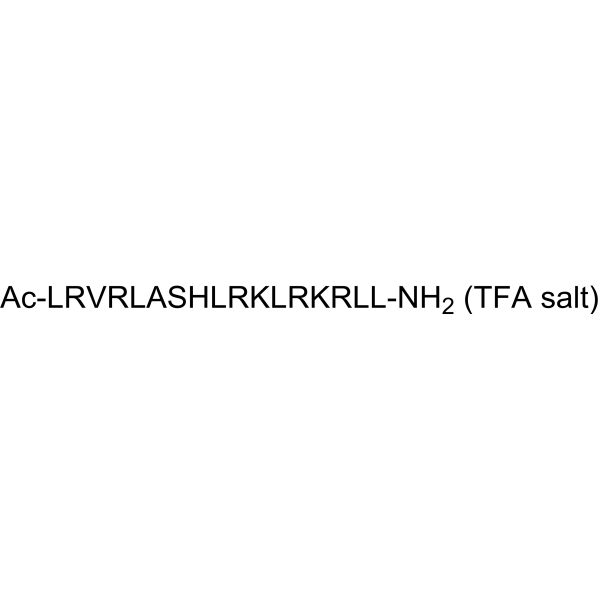
YAP-TEAD-IN-1 TFA is a potent and competitive peptide inhibitor of YAP-TEAD interaction (IC50=25 nM). YAP-TEAD-IN-1 TFA is a 17mer peptide and shows a higher the binding affinity to TEAD1 (Kd=15 nM) than YAP (50-171) (Kd= 40 nM) .
loading...
    loading...
2
2 Cited Publications
Cat. No.: HY-P1050
CAS No.: 514200-66-9
Target:  

nAChR

COG 133 is a fragment of Apolipoprotein E (APOE) peptide. COG 133 competes with the ApoE holoprotein for binding the LDL receptor, with potent anti-inflammatory and neuroprotective effects. COG 133 is also a nAChR antagonist with an IC50 of 445 nM .
loading...
    loading...
2
2 Cited Publications
Cat. No.: HY-P1050A
CAS No.: 2828432-37-5
COG 133 TFA is a fragment of Apolipoprotein E (APOE) peptide. COG 133 TFA competes with the ApoE holoprotein for binding the LDL receptor, with potent anti-inflammatory and neuroprotective effects. COG 133 TFA is also a nAChR antagonist with an IC50 of 445 nM .
loading...
    loading...
2
2 Cited Publications
Cat. No.: HY-P1075
CAS No.: 261969-05-5
Target:  

Calcium Channel

Research Areas:  

Neurological Disease Cancer

CALP3, a Ca 2+-like peptide, is a potent Ca 2+ channel blocker that activates EF hand motifs of Ca 2+-binding proteins. CALP3 can functionally mimic increased [Ca 2+]i by modulating the activity of Calmodulin (CaM), Ca 2+ channels and pumps. CALP3 has the potential in controlling apoptosis in diseases such as AIDS or neuronal loss due to ischemia .
loading...
    loading...
2
2 Cited Publications
Cat. No.: HY-P5985
CAS No.: 593267-11-9
Target:  

ERK

Research Areas:  

Others

mSIRK (G-Protein βγ Binding Peptide) is an cell-permeable activator of ERK1/2, with EC50 of 2.5-5 μM. mSIRK disrupts the interaction between α and βγ subunits and promotes α subunit dissociation without stimulating nucleotide exchange .
loading...
    loading...
2
2 Cited Publications
Cat. No.: HY-P2244
CAS No.: 1659305-78-8
Target:  

YAP

Research Areas:  

Cancer

YAP-TEAD-IN-1 is a potent and competitive inhibitor of?YAP–TEAD interaction (IC50=25 nM). YAP-TEAD-IN-1 is a 17mer peptide and shows a higher the binding affinity to TEAD1 (Kd=15 nM) than YAP (50-171) (Kd=40 nM) .
loading...
    loading...
2
2 Cited Publications
Cat. No.: HY-110197
CAS No.: 1774353-12-6
Purity:  99.35%
Target:  

IDE

Research Areas:  

Metabolic Disease

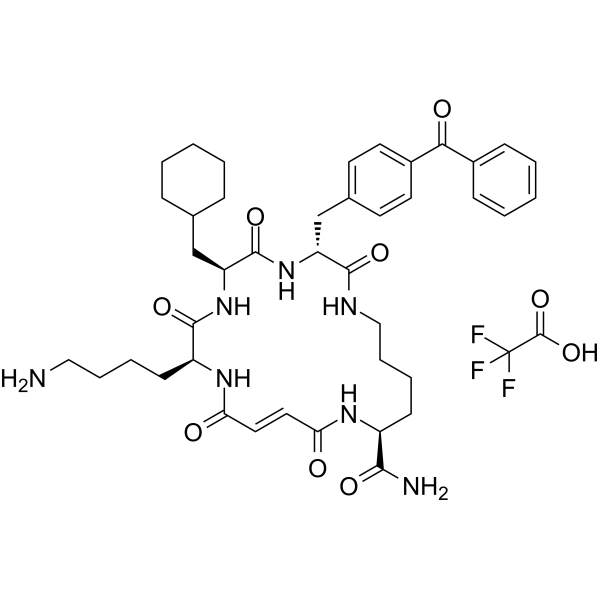
6bK TFA is a selective insulin-degrading enzyme (IDE) inhibitor with an IC50 of 50 nM. 6bK TFA binds to the distal pocket of IDE, thereby blocking substrate binding, peptide unfolding and cleavage processes, and reducing the degradation of insulin, glucagon and amylin. 6bK TFA improves oral glucose tolerance but impairs intraperitoneal glucose tolerance. 6bK TFA can be used in research related to type 2 diabetes .
loading...
    loading...
2
2 Cited Publications
Cat. No.: HY-104086
CAS No.: 259886-50-5
Purity:  ≥98.0%
Synonyms: CB7; Carrier CB7
Cucurbit[7]uril is a cyclic organic molecule consisting of seven glycoluril units linked by methylene bridges. It has a rigid barrel-like structure with two identical inlets at both ends to selectively encapsulate guest molecules of appropriate size, shape, and polarity. Cucurbit[7]uril is known for its high binding affinity for a variety of organic and inorganic guests, including drugs, amino acids, peptides, and metal ions. This property makes them promising candidates for various applications in areas such as drug delivery, catalysis, and sensing.
loading...
    loading...

