50 Results for "

fecal

" in MedChemExpress (MCE) Product Catalog:
Products (50)

50 Results for "fecal" in MCE Product Catalog:

Cat. No.: HY-N12281
CAS No.: 517-43-1
Sennoside is an orally active apoptosis inducer and stimulant laxative, found in Senna (Cassia angustifolia). Sennoside induces overexpression of wild-type p53 and p21/WAF as part of pathways mediating colonic epithelial cell apoptosis. Sennoside stimulates colonic peristalsis, reverses net water, sodium, chloride absorption to secretion and enhances potassium and calcium secretion. Sennoside increases paracellular permeability to small molecules, accelerates colon transit and softens fecal pellets. Sennoside can be used for the research of constipation, melanosis coli, and colorectal cancer .
loading...
    loading...
Cat. No.: HY-168761
CAS No.: 18416-54-1
Target:  

Endogenous Metabolite

Research Areas:  

Metabolic Disease

N-Cholyl-L-alanine is a bile acid amidate, which is found in human fecal samples .
loading...
    loading...
Cat. No.: HY-W011730
CAS No.: 87178-63-0
Synonyms: Leu-Pro hydrochloride
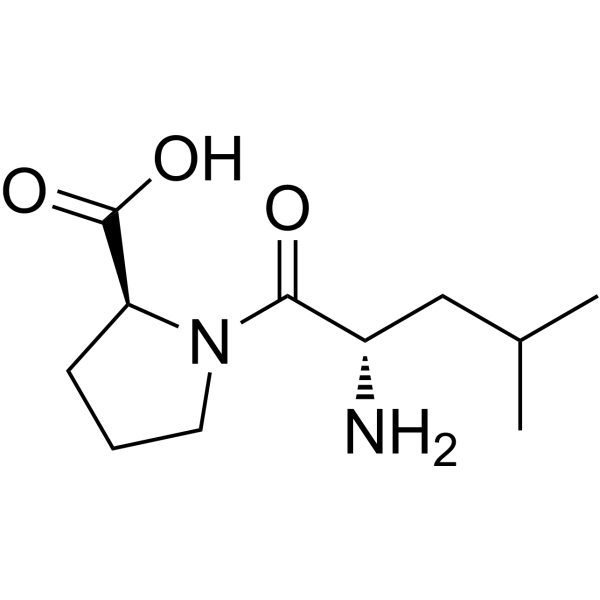
Leucylproline hydrochloride (Leu‑Pro hydrochloride) is a dipeptide composed of L‑leucine and L‑proline, and it is a fecal secondary metabolite associated with the gut microbiota. Leucylproline hydrochloride is taken up by Lactococcus lactis cells via the di‑tripeptide transport system, and mediates transcriptional repression of the prtP/prtM promoter after intracellular accumulation. The content of Leucylproline hydrochloride is significantly decreased in fecal samples related to hepatolenticular degeneration. Leucylproline hydrochloride can be used for the study of metabolism‑related diseases .
loading...
    loading...
Cat. No.: HY-P4285
CAS No.: 13110-25-3
Target:  

Inhibitory Antibodies

Research Areas:  

Others

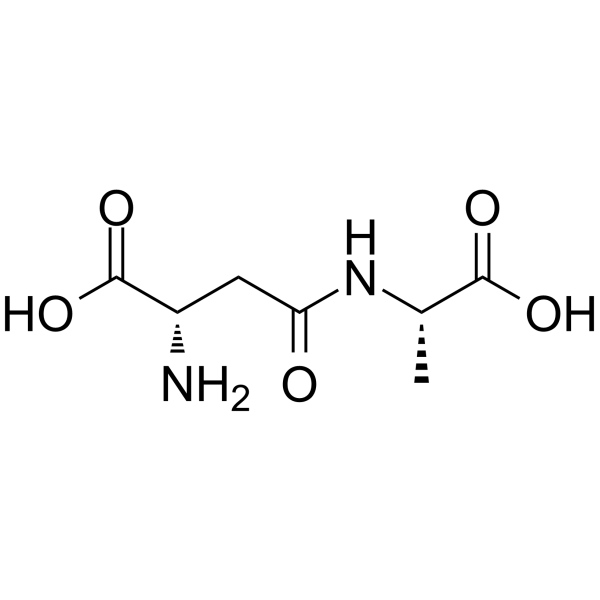
β-Aspartylalanine is a substrate for β-aspartyl peptidase and used to measure β-aspartyl peptidase activity in fecal supernatants .
loading...
    loading...
Cat. No.: HY-114729
CAS No.: 6403-35-6
Synonyms: Leu-Pro
Leucylproline (Leu‑Pro) is a dipeptide composed of L‑leucine and L‑proline, and it is a fecal secondary metabolite associated with the gut microbiota. Leucylproline is taken up by Lactococcus lactis cells via the di‑tripeptide transport system, and mediates transcriptional repression of the prtP/prtM promoter after intracellular accumulation. The content of leucylproline is significantly decreased in fecal samples related to hepatolenticular degeneration. Leucylproline can be used for the study of metabolism‑related diseases .
loading...
    loading...
Cat. No.: HY-173033
CAS No.: 2530027-71-3
MI-883 is orally active constitutive androstane receptor (CAR) (EC50 of 73 nM) agonist and pregnane X Receptor (PXR) (IC50 of 100 nM) antagonist. MI-883 binds to CAR and PXR ligand-binding domains, promotes CAR LBD assembly, activates CAR3 variant, stimulates CAR cytoplasmic-nuclear translocation, upregulates CAR target genes, recruits coactivators NCOA1, NCOA2, NCOA3, inhibits basal and agonist-induced PXR activation, downregulates PXR target genes, disrupts PXR-NCOR2 interaction, blocks agonist-mediated PXR-NCOA1 recruitment. MI-883 reduces plasma total cholesterol, LDL cholesterol, and hepatic free cholesterol levels, increases fecal bile acid excretion, regulates genes involved in xenobiotic metabolism, cholesterol homeostasis, and bile acid homeostasis. MI-883 exhibits metabolic stability, liver-predominant distribution, a safety profile with no observed toxicity, and does not stimulate human hepatocyte hypertrophy or hyperplasia. MI-883 can be used for the research of diet-induced hypercholesterolemia .
loading...
    loading...
Cat. No.: HY-N0468R
CAS No.: 63279-13-0
Rebaudioside D (Standard) is the analytical standard of Rebaudioside D. This product is intended for research and analytical applications. Rebaudioside D is an orally active sweetener that targets and activates FXR, modulates Acetyl-CoA Carboxylase, and inhibits 3-hydroxy-3-methylglutaryl-CoA reductase. Rebaudioside D regulates bile acid homeostasis and lipid metabolism, reduces the synthesis rates of fatty acids and cholesterol, and exerts multiple effects including anti-adipogenesis, hepatoprotection, anti-steatosis, gut microbiota modulation, enhancement of secondary bile acid metabolism, anti-endotoxin activity, regulation of bile acid transport, and inhibition of bile acid efflux. Rebaudioside D also reduces body weight gain, visceral fat accumulation, hepatic triglyceride and cholesterol accumulation, hepatic lipid peroxidation, and decreases the circulating level of lipopolysaccharide-binding protein. Rebaudioside D additionally enhances the secondary bile acid metabolic pathway of intestinal bacteria, upregulates the gene expression of ileal organic solute transporter α, and downregulates the gene expression of hepatic bile salt export pump. Rebaudioside D does not affect glucose homeostasis, alter total caloric intake or fecal energy excretion, induce weight gain, exacerbate obesity, promote hepatic steatosis, impair brown adipose tissue function, nor change skeletal muscle metabolism-related proteins. Rebaudioside D can be used in diet-induced obesity and obesity-related research .
loading...
    loading...
Cat. No.: HY-118103R
CAS No.: 360-68-9
Synonyms: 5β-Cholestan-3β-ol (Standard)
Coprostanol (5β-Cholestan-3β-ol) (Standard) is the analytical standard of Coprostanol. This product is used for research and analytical applications. Coprostanol is a fecal sterol formed by the reduction of cholesterol by microorganisms in the human and higher animal intestines. Coprostanol can be used as an indicator sterol for fecal contamination. Coprostanol has been recognized as a good indicator of water resource pollution caused by sewage discharge. Coprostanol can serve as a potential biological indicator for cerebral chondrodystrophy (CTX).
loading...
    loading...
Cat. No.: HY-133970S
CAS No.: 358731-18-7
Purity:  ≥99.0%
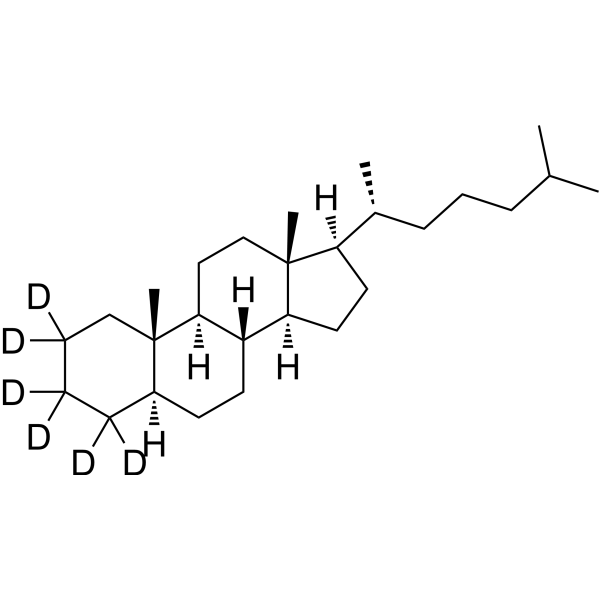
5α-Cholestane-d6 is the deuterated-labeled 5α-Cholestane (HY-133970). 5α-Cholestane is a steroidal hydrocarbon and fecal stanol, and is used as an internal standard for gas chromatographic sterol analysis. 5α-Cholestane is the parent steroidal skeleton of polyhydroxylated brassinosteroids of plant origin. It is used as an internal standard for GC-FID and GC-MS analysis of fecal sterols in urine and sludge samples. 5α-Cholestane can be used in studies of age- or disease-related skeletal muscle atrophy .
loading...
    loading...
Cat. No.: HY-133970S1
CAS No.: 122241-86-5
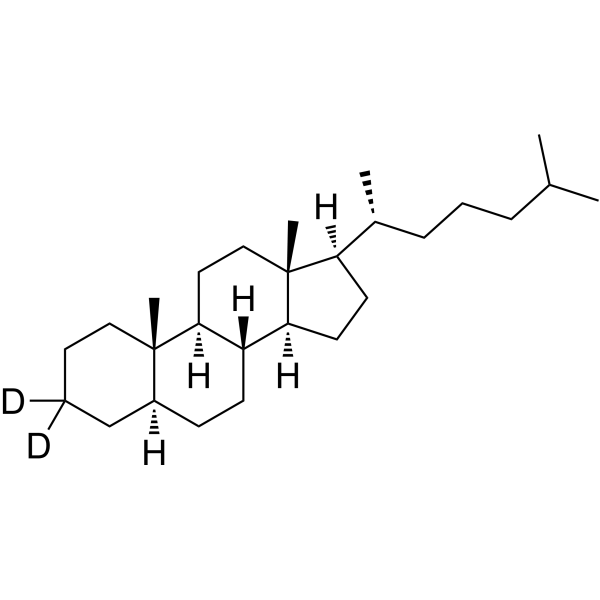
5α-Cholestane-d2 is the deuterated-labeled 5α-Cholestane (HY-133970). 5α-Cholestane is a steroidal hydrocarbon and fecal stanol, and is used as an internal standard for gas chromatographic sterol analysis. 5α-Cholestane is the parent steroidal skeleton of polyhydroxylated brassinosteroids of plant origin. It is used as an internal standard for GC-FID and GC-MS analysis of fecal sterols in urine and sludge samples. 5α-Cholestane can be used in studies of age- or disease-related skeletal muscle atrophy .
loading...
    loading...
Cat. No.: HY-133970R
CAS No.: 481-21-0
5α-Cholestane (Standard) is the analytical standard of 5α-Cholestane (HY-133970). This product is intended for research and analytical applications. 5α-Cholestane is a steroidal hydrocarbon and fecal stanol, and is used as an internal standard for gas chromatographic sterol analysis. 5α-Cholestane is the parent steroidal skeleton of polyhydroxylated brassinosteroids of plant origin. It is used as an internal standard for GC-FID and GC-MS analysis of fecal sterols in urine and sludge samples. 5α-Cholestane can be used in studies of age- or disease-related skeletal muscle atrophy .
loading...
    loading...
Cat. No.: HY-147927
CAS No.: 1802891-20-8
Target:  

Enteropeptidase

Research Areas:  

Metabolic Disease

Human enteropeptidase-IN-1 (compound 6b) is a highly potent, orally active and low systemic exposure enteropeptidase inhibitor. Human enteropeptidase-IN-1 boosts the increase in fecal protein output, and exhibits potent body weight loss in diet-induced obese (DIO) rat model. Human enteropeptidase-IN-1 can be used for anti-obesity research .
loading...
    loading...
Cat. No.: HY-W004154R
CAS No.: 88-09-5
2-Ethylbutyric acid (Standard) is an analytical standard of 2-Ethylbutyric acid (HY-W004154). This product is intended for research and analytical applications. 2-Ethylbutyric acid is a volatile fatty acid. 2-Ethylbutyric acid exhibits phytotoxicity. 2-Ethylbutyric acid is used as an internal standard in milk and dairy products and as an internal standard (IS) in the calibration of fecal VFA standards. 2-Ethylbutyric acid can be used in the research of embryonic development .
loading...
    loading...
Cat. No.: HY-173131
Target:  

5-HT Receptor

Research Areas:  

Others

5-HT4R agonist-2 (Compound 4) is a selective 5-HT4R agonist with an EC50 value of 0.41 nM. 5-HT4R agonist-2 can significantly enhance whole gut and colonic transit, increase fecal output and water content, while maintaining minimal systemic absorption, and it shows promise for the research of chronic idiopathic constipation .
loading...
    loading...
Cat. No.: HY-N13218
Target:  

Others

Research Areas:  

Cardiovascular Disease

Pueraria Extract is a kudzu extract, and its components include: Isoflavones. Pueraria Extract (ethanol extract) can significantly improve cardiac damage in rats with acute myocardial infarction. Pueraria Extract improves bile acid levels by increasing the expression of CYP7A1 and restoring the diversity of intestinal microbiota. Pueraria Extract can also inhibit the FXR-FGF15 signaling pathway and increase the expression of OST-α to increase bile acid reabsorption and fecal excretion. .
loading...
    loading...
Cat. No.: HY-B1407R
CAS No.: 85-73-4
Synonyms: N4-Phthalylsulfathiazole (Standard)
Research Areas:  

Infection

Phthalylsulfathiazole (N4-Phthalylsulfathiazole) Standard is the analytical standard of Phthalylsulfathiazole (HY-B1407). This product is intended for research and analytical applications. Phthalylsulfathiazole (N4-Phthalylsulfathiazole) is an orally active sulfonamide intestinal antibacterial agent. Phthalylsulfathiazole has low toxicity and excellent bacteriostatic efficacy. Phthalylsulfathiazole inhibits E. coli, streptococci, staphylococci, and total fecal bacteria. Phthalylsulfathiazole can be used in research related to intestinal infections such as colon infection, bacillary dysentery, and ulcerative colitis.
loading...
    loading...
Cat. No.: HY-N9503
CAS No.: 6380-28-5
Carvacryl acetate is an orally active and brain-penetrant TRPA1 receptor activator and Na +/K +-ATPase activator. Carvacryl acetate modulates GABAergic signaling, alters hippocampal GABA and glutamine levels, reduces lipid peroxidation and nitrite formation, scavenges hydroxyl radicals, and boosts glutathione and antioxidant enzyme activity. Carvacryl acetate inhibits Haemonchus contortus larval hatching, development, adult motility, and fecal egg counts, and induces adult worm structural damage. Carvacryl acetate can be used for the research of intestinal mucositis, gastrointestinal nematode infection, epilepsy, and neurodegenerative diseases .
loading...
    loading...
Cat. No.: HY-137263
CAS No.: 35775-65-6
Target:  

Antibiotic

Research Areas:  

Infection

Propionylmaridomycin is a macrolide antibiotic with antibacterial activity. Propionylmaridomycin is rapidly absorbed from the gastrointestinal tract and rapidly distributed to tissues. Propionylmaridomycin radioactivity levels in the liver, kidneys, and lungs were significantly higher than in plasma, while distribution to the brain was less. Propionylmaridomycin is excreted primarily through the feces, and the high fecal recovery rate is due to unabsorbed compounds and biliary excretion of compounds and their metabolites. Propionylmaridomycin exhibits the highest antibacterial activity in the lungs. Propionylmaridomycin is completely converted to several metabolites in rats, of which 4''-depropionyl-9-propionylmaridomycin was identified as the major metabolite .
loading...
    loading...
Cat. No.: HY-147927A
CAS No.: 1802891-23-1
Target:  

Enteropeptidase

Research Areas:  

Metabolic Disease

(S)-Human enteropeptidase-IN-1 (Compound 6c) is an orally active enteropeptidase inhibitor with low systemic exposure (IC50 (initial): 26 nM; IC50 (app): 1.8 nM). (S)-Human enteropeptidase-IN-1 promotes increased fecal protein output and effectively reduces body weight in a diet-induced obese (DIO) rat model. (S)-Human enteropeptidase-IN-1 inhibits enteropeptidase via a reversible covalent mechanism and prolongs the enzyme inactivation time. (S)-Human enteropeptidase-IN-1 can be used in anti-obesity research .
loading...
    loading...
Cat. No.: HY-118935
CAS No.: 666256-06-0
Target:  

Adrenergic Receptor

Research Areas:  

Inflammation/Immunology

NGD9002 free base is a new generation of selective corticotropin-releasing factor-1 (CRF-1) receptor antagonist with inhibitory activity on CRF-induced colonic function stimulation. NGD9002 free base can reduce CRF-induced fecal output response and show an inhibitory IC50 value of 4.3 mg/kg. NGD9002 free base can effectively block CRF-induced colonic secretory motility stimulation at the highest dose and reduce acute water avoidance-induced defecation. NGD9002 free base can also prevent the occurrence of pain hypersensitivity reactions to repeated colonic distension .
loading...
    loading...

