57 Results for "

p53-dependent

" in MedChemExpress (MCE) Product Catalog:
Products (57)

57 Results for "p53-dependent" in MCE Product Catalog:

Cat. No.: HY-W718423
CAS No.: 29761-21-5
Synonyms: IDPP
Research Areas:  

Cancer

Isodecyl diphenyl phosphate (IDPP) is a flame retardant. Isodecyl diphenyl phosphate induces cytotoxicity, DNA damage, mitochondrial dysfunction and oxidative stress in cancer cells, and mediates DNA damage and cell cycle arrest via a p53-dependent pathway .
loading...
    loading...
Cat. No.: HY-N7526R
CAS No.: 475-38-7
Synonyms: DHNQ (Standard); 5,8-Dihydroxy-1,4-naphthoquinone (Standard)
Naphthazarin (DHNQ) is a naturally occurring compound. Naphthazarin is effective by various cellular mechanisms including oxidative stress, activation of mitochondrial apoptosis-inducing factor (AIF), depolymerization of microtubules, interference with lysosomal function and p53-dependent p21 activation. Naphthazarin triggers apoptosis and has anti-tumor effects .
loading...
    loading...
Cat. No.: HY-N2076
CAS No.: 3738-70-3
Synonyms: (-)-Cephaeline hydrochloride; NSC 32944 monohydrochloride
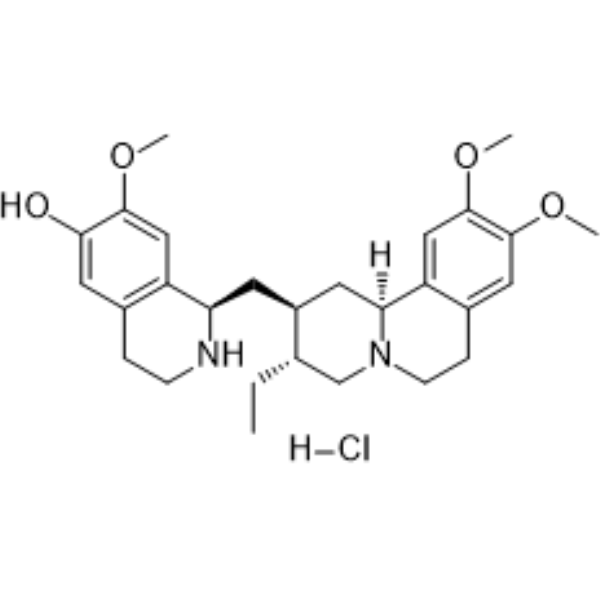
Cephaeline hydrochloride ((-)-Cephaeline (hydrochloride); NSC 32944 (monohydrochloride)) is a ferroptosis inducer, with broad-spectrum anticancer and antiviral activities. Cephaeline hydrochloride induces Ferroptosis by upregulating p53, inhibiting NRF2, activating ULK3, downregulating the expressions of SLC7A11 and GPX4 in a p53-dependent manner, reducing GSH and mitochondrial membrane potential, and increasing lipid peroxidation and iron accumulation. Cephaeline hydrochloride inhibits cancer cell proliferation, migration and tumor growth. Cephaeline hydrochloride inhibits Ebola virus (EBOV) VLP entry and infection, with IC50 values of 3.27 μM and 22.18 μM respectively; it also inhibits Zika virus (ZIKV) NS5 RdRp activity (IC50 = 976 nM), and binds to severe acute respiratory syndrome coronavirus 2 (SARS-CoV-2) RdRp and N protein, with Kd values of 8.9 μM and 53.8 μM respectively. Cephaeline hydrochloride can be used in studies related to breast cancer, lung cancer, COVID-19, EBOV and ZIKV infections .
loading...
    loading...
Cat. No.: HY-148408
CAS No.: 1005095-06-6
Purity:  99.94%
Target:  

Sirtuin

Research Areas:  

Cancer

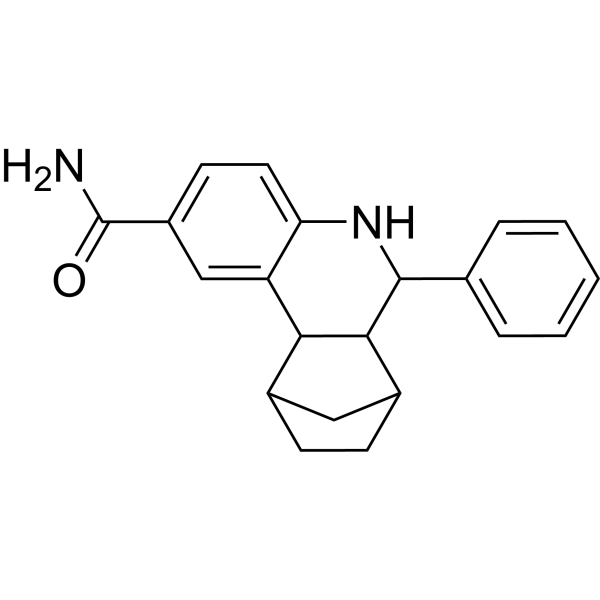
SIRT2-IN-11 (AEM1) is a selective SIRT2 inhibitor with an IC50 value of 18.5 μM. SIRT2-IN-11 p53-dependently induces apoptosis, activates expression of CDKN1A, PUMA and NOXA, and increases acetylation of p53. SIRT2-IN-11 can be used for the research of p53-related cancers .
loading...
    loading...
Cat. No.: HY-N1951R
CAS No.: 27210-57-7
Synonyms: Rosmariquinone (Standard)
Miltirone is an orally active natural compound found in the root of Salvia miltiorrhiza. Miltirone is a central benzodiazepine receptor partial agonist, with an IC50 of 0.3 μM. Miltirone induces ROS - and-p53 dependent apoptosis. Miltirone inhibits carboxylesterase 2 (CES2; Ki = 0.04 μM) and SARS-CoV main protease (Mpro) .
loading...
    loading...
Cat. No.: HY-119833
CAS No.: 73694-15-2
Purity:  99.1%
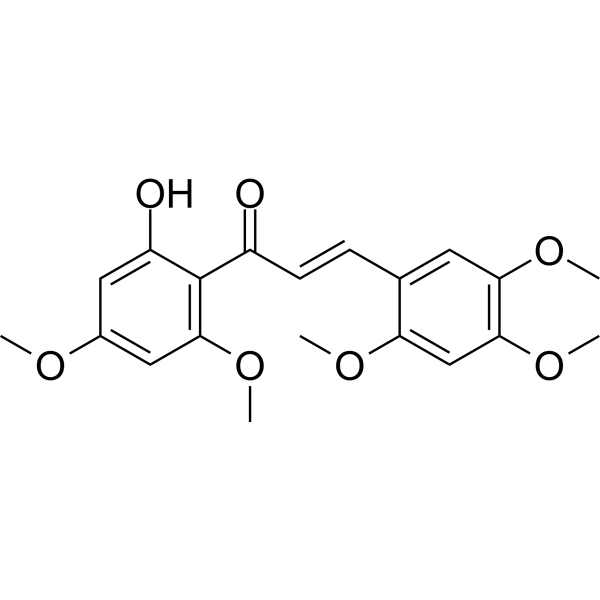
Rubone, a chalcone analog, is a modulator of miR-34a. Rubone upregulates miR-34a expression in a p53 dependent manner, downregulates the downstream target Bcl-2 and Cyclin D1 expression, and suppresses hepatocellular carcinoma (HCC) growth in vivo. Rubone enhances the anticancer effect of Paclitaxel (PTX; HY-B0015) in PTX-resistant prostate cancer cell lines by reversing the expression of miR-34a downstream targets .
loading...
    loading...
Cat. No.: HY-138054
CAS No.: 2171519-89-2
Purity:  ≥99.0%
Target:  

MDM-2/p53

Research Areas:  

Cancer

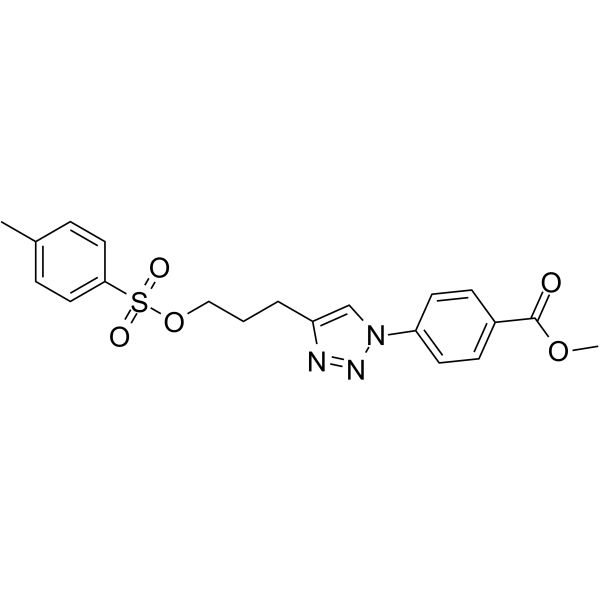
Cjoc42 is a compound capable of binding to gankyrin. Cjoc42 inhibits gankyrin activity in a dose-dependent manner. Cjoc42 prevents the decrease in p53 protein levels normally associated with high amounts of gankyrin. Cjoc42 restores p53-dependent transcription and sensitivity to DNA damage .
loading...
    loading...
Cat. No.: HY-113843
CAS No.: 1035875-01-4
Target:  

MDM-2/p53

Research Areas:  

Cancer

RETRA (hydrobromide) is a mutant p53-dependent activator of p73 that can inhibit cancer cells carrying mutant p53. RETRA (hydrobromide) increases the expression level of p73, induces transcriptional activation of several common to transcriptional targets p53 and p73, which leads to mutant p53- and p73-dependent inhibition of tumor growth, reduction of colony formation and induction of effector caspases .
loading...
    loading...
Cat. No.: HY-P3528
CAS No.: 47295-77-2
Target:  

Caspase Apoptosis

Research Areas:  

Neurological Disease

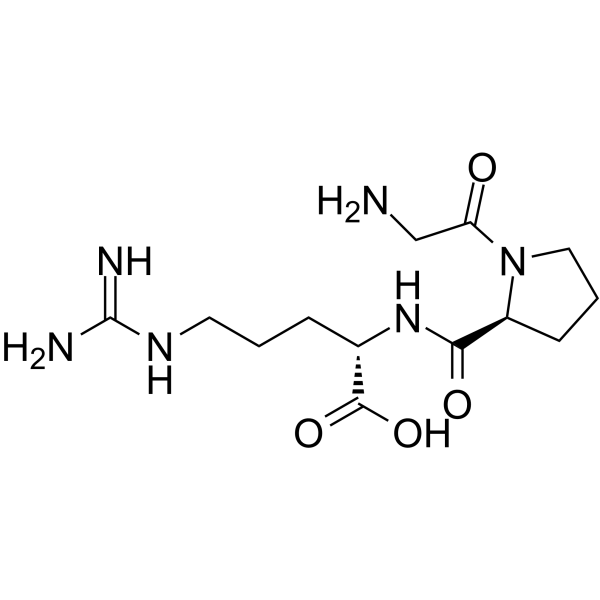
GPR is a three amino acid peptide. GPR can rescue cultured rat hippocampal neurons from Aβ-induced neuronal death by inhibiting caspase-3/p53 dependent apoptosis. GPR can be used for the research of Alzheimer's disease (AD).
loading...
    loading...
Cat. No.: HY-142913
CAS No.: 1613152-39-8
Target:  

Apoptosis

Research Areas:  

Cancer

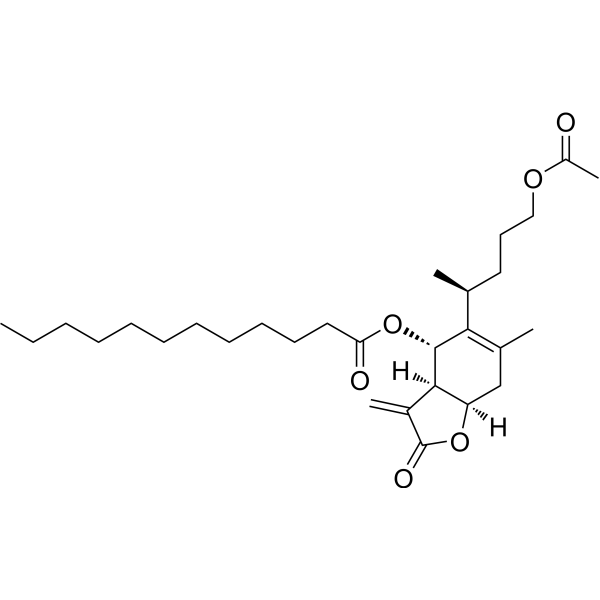
ABL-L induces apoptosis of human laryngocarcinoma cells through p53-dependent pathway.
loading...
    loading...
Cat. No.: HY-146806
CAS No.: 2771313-42-7
Target:  

MDM-2/p53

Research Areas:  

Cancer

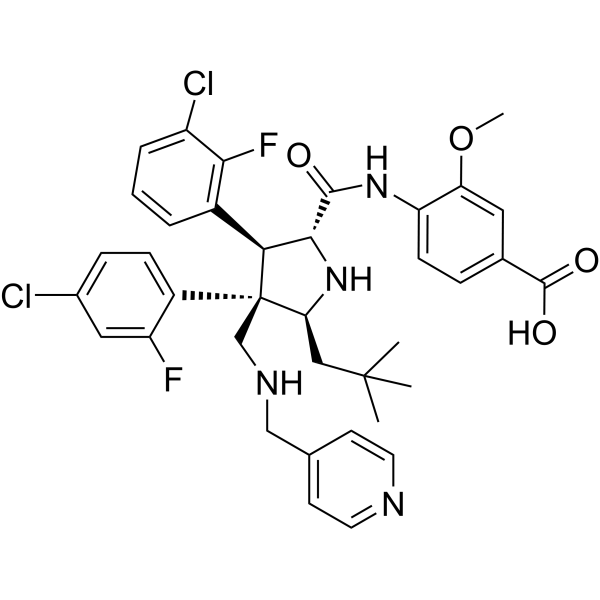
YL93 is a dual inhibitors of MDM2/4 with Ki values of 0.64 μM and 1.1 nM for MDM4 and MDM2, respectively. YL93 induces cell-cycle arrest and apoptosis. YL93 shows p53-dependent cell growth inhibition .
loading...
    loading...
Cat. No.: HY-W708917
Lumichrome-d8 is the deuterium labeled Lumichrome (HY-115385). Lumichrome, a photodegradation product of Riboflavin, is an endogenous compound in humans. Lumichrome inhibits human lung cancer cell growth and induces apoptosis via a p53-dependent mechanism. Lumichrom is the inhibitor for AKT/β-catenin signaling pathway .
loading...
    loading...
Cat. No.: HY-119666
CAS No.: 83644-00-2
Rooperol is a norlignan analog with antitumor, anti-inflammatory, and antioxidant activities. Rooperol induces apoptosis in CSCs through a mitochondrial-induced increase in ROS and a p53-dependent pathway, while also downregulating the expression of key stem cell regulatory factors, such as Oct4, Nanog, and Sox2, ultimately exerting its anticancer effects .
loading...
    loading...
Cat. No.: HY-115385R
CAS No.: 1086-80-2
Lumichrome (Standard) is the analytical standard of Lumichrome. This product is intended for research and analytical applications. Lumichrome, a photodegradation product of Riboflavin, is an endogenous compound in humans. Lumichrome inhibits human lung cancer cell growth and induces apoptosis via a p53-dependent mechanism. Lumichrom is the inhibitor for AKT/β-catenin signaling pathway. Lumichrom is the inhibitor for AKT/β-catenin signaling pathway .
loading...
    loading...
Cat. No.: HY-155991
CAS No.: 2893777-88-1
Target:  

Apoptosis

Research Areas:  

Cancer

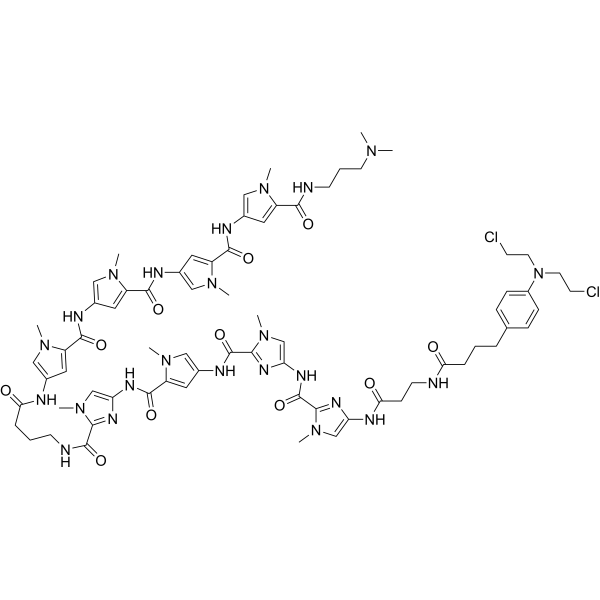
RUNX-IN-2 (Compound Conjugate 3) covalently binds to the RUNX-binding sequences, and inhibits the binding of RUNX proteins to their target sites. RUNX-IN-2 induces the p53-dependent apoptosis and inhibits cancer cell growth. RUNX-IN-2 inhibits tumor growth in PANC-1 xenograft mice. RUNX-IN-2 has high alkylation efficiency and specificity .
loading...
    loading...
Cat. No.: HY-P10797
TAT-N24 is a cell-penetrating peptide and also an inhibitor of p55PIK. TAT-N24 disrupts the interactions between p55PIK and p53, PCNA or Rb, blocks the p53-dependent ubiquitin-mediated degradation process, and inhibits the nuclear translocation and phosphorylation of NF-κB p65. TAT-N24 enhances MMS-induced p53-dependent cell apoptosis, inhibits DNA synthesis, reduces the expression of Cyclin D1, and induces cell cycle arrest at the G0/G1 or S phase. TAT-N24 inhibits the activation of NLRP3 and NLRC4 inflammasomes, reduces the expression of ZBP1-PANoptosome components, and suppresses PANoptosis. TAT-N24 can be used in research related to leukemia, colon cancer, cervical cancer, liver cancer, corneal neovascularization, restenosis and acute glaucoma .
loading...
    loading...
Cat. No.: HY-169688
CAS No.: 1708948-28-0
Target:  

MDM-2/p53 Apoptosis

Research Areas:  

Cancer

NA-17 is a naphthalimide compound with anti-tumor activity and lower toxicity to normal cells like HL-7702 and WI-38. NA-17 exhibits a p53-dependent selective inhibition in various NSCLC cells, inducing the accumulation of active p53 in the mitochondria and nuclei of NSCLC cells. NA-17 can cause cell cycle arrest in the G1 phase, leading to apoptosis and cell death .
loading...
    loading...
Cat. No.: HY-N0245R
CAS No.: 30462-34-1
Theaflavin-3-gallate (Standard) is the analytical standard of Theaflavin-3-gallate. This product is intended for research and analytical applications. Theaflavin-3-gallate, a black tea theaflavin monomer, is regarded as the biologically important active component of black tea and provides health benefits. Theaflavin-3-gallate acts as prooxidants and induces oxidative stress in the carcinoma cells. Theaflavin-3-gallate reacts directly with reduced glutathione (GSH) in a time- and concentration-dependent manner. Theaflavin-3-gallate induces apoptosis and G1 cell cycle arrest in ovarian cancer A2780/CP70 cells through p53-dependent pathways. Theaflavin-3-gallate induces DNA damage through ATM/Chk/p53 pathway .
loading...
    loading...
Cat. No.: HY-169412
CAS No.: 2848599-79-9
MAPK-IN-3 (Compound 4a) is an anti-proliferative agent that shows particularly strong inhibitory effects on KYSE 30, HCT 116, and HGC 27, with IC50 values of 0.57 μM, 3.27 μM, and 2.28 μM, respectively. MAPK-IN-3 blocks the cell cycle via a p53-dependent mechanism and induces cell apoptosis through a p53-independent mechanism. MAPK-IN-3 downregulates the expression of cell cycle-related proteins like Cyclin D1 and cyclin B1, upregulates pro-apoptotic proteins such as cleaved PARP, cleaved caspase-7, and cleaved caspase-9, and reduces the expression of anti-apoptotic proteins like Bcl-2. Additionally, MAPK-IN-3 increases the intracellular level of ROS in KYSE 30 cells and upregulates the expression of members of the MAPK signaling pathway associated with ROS, such as p-ERK, p-p38 and p-JNK .
loading...
    loading...
Cat. No.: HY-181805
CAS No.: 3110559-06-0
Target:  

HDAC Autophagy Apoptosis

Research Areas:  

Cancer

HDAC6-IN-76 (Compound G25) is a selective HDAC6 inhibitor with an IC50 of 12 nM. HDAC6-IN-76 induces Autophagy in a p53-dependent manner. HDAC6-IN-76 induces Apoptosis in a p53-dependent manner. HDAC6-IN-76 exhibits anticancer activity against hematologic malignancies, including acute myeloid leukemia .
loading...
    loading...

