


373 Results for "

post

" in MedChemExpress (MCE) Product Catalog:
Products (373)

373 Results for "post" in MCE Product Catalog:

5
5 Cited Publications
Cat. No.: HY-D1191
CAS No.: 2225748-05-8
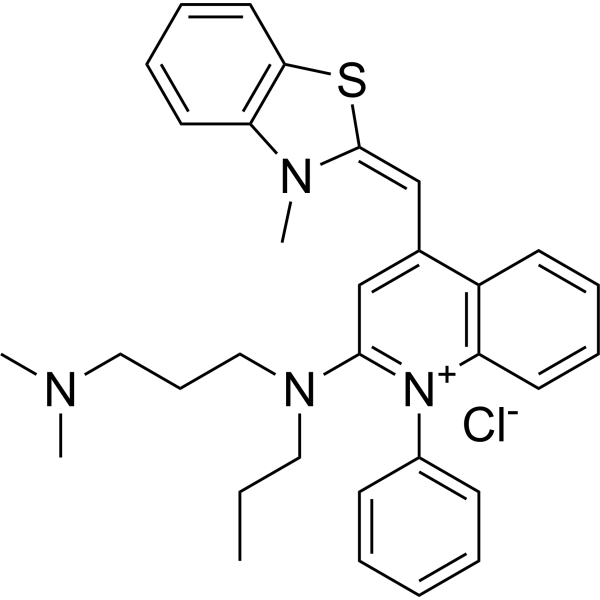
SYBR Green I chloride is a highly sensitive fluorescent nucleic acid dye that binds specifically to the minor groove of double-stranded DNA or intercalates between base pairs. SYBR Green I chloride exhibits weak fluorescence in the unbound state but emits bright fluorescence upon binding, and it preferentially binds to large-fragment DNA and DNA with high G+C content. SYBR Green I chloride is suitable for real-time PCR technology; its fluorescence intensity correlates with the amount and size of amplification products, enabling accurate quantification of gene expression and discrimination of amplicons via melting curve analysis without additional post-processing. SYBR Green I chloride is widely used in preclinical in vitro nucleic acid detection .
loading...
    loading...
4
4 Cited Publications
Cat. No.: HY-16346
CAS No.: 290297-26-6
Synonyms: CID 6451149
Target:  

Neurokinin Receptor

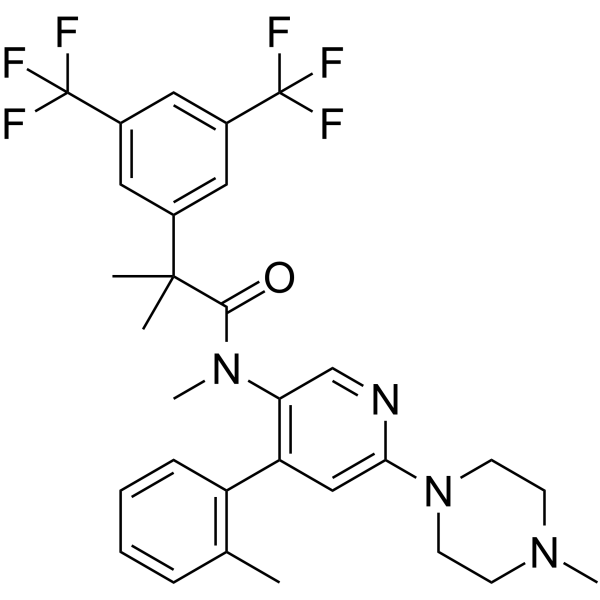
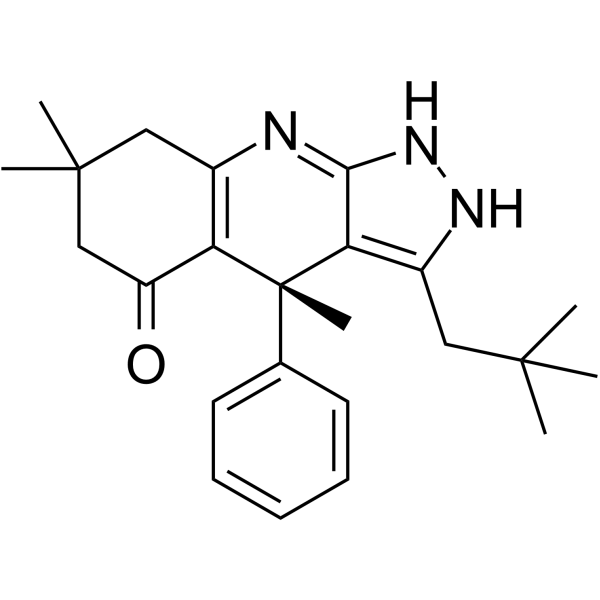
Netupitant (CID 6451149) is a blood-brain barrier penetrable, orally active NK1 receptor inhibitor with a Ki of 0.95 nM (CHO cells) against the human receptor. Netupitant antagonizes the effects induced by Substance P, inhibits the maximal response of Substance P with a long-lasting action, and suppresses NK1 agonist-induced behaviors in mice and gerbils. Netupitant reduces the frequency of bladder contractions, prolongs contraction intervals, decreases basal pressure at high doses, and acts on the afferent branch of the micturition reflex. Netupitant can be used in research related to overactive bladder, chemotherapy-induced nausea and vomiting, post-operative nausea and vomiting, anxiety disorders, and depression .
loading...
    loading...
4
4 Cited Publications
Cat. No.: HY-113416
CAS No.: 651-48-9
Purity:  99.93%
Synonyms: DHEA sulfate; Prasterone sulfate
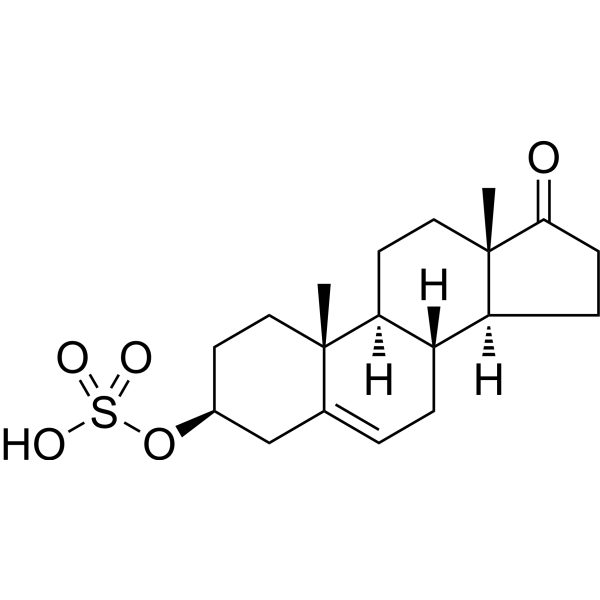
Dehydroepiandrosterone sulfate (DHEA sulfate; Prasterone sulfate) is a neurosteroid and the main secretion product of the adrenal gland. Dehydroepiandrosterone sulfate has both non-competitive antagonist activity of GABAA receptor and agonist activity of σ1 receptor. Dehydroepiandrosterone sulfate can partially penetrate the blood-brain barrier, inhibit GABAA receptor-mediated chloride influx, enhance NMDA receptor activity through σ1 receptors, exert anti-inflammatory, anti-glucocorticoid and antidepressant effects, and increase convulsive sensitivity. Dehydroepiandrosterone sulfate participates in neuroprotection, neurite growth regulation and catecholamine secretion regulation, and can be used in the study of depression, post-traumatic stress disorder (PTSD), Alzheimer's disease, etc. Dehydroepiandrosterone sulfate may also be a biomarker for cardiovascular disease mortality, and its concentration is independently and negatively correlated with mortality .
loading...
    loading...
4
4 Cited Publications
Cat. No.: HY-B0765
CAS No.: 1099-87-2
Synonyms: DHEA sulfate sodium; Prasterone sulfate sodium
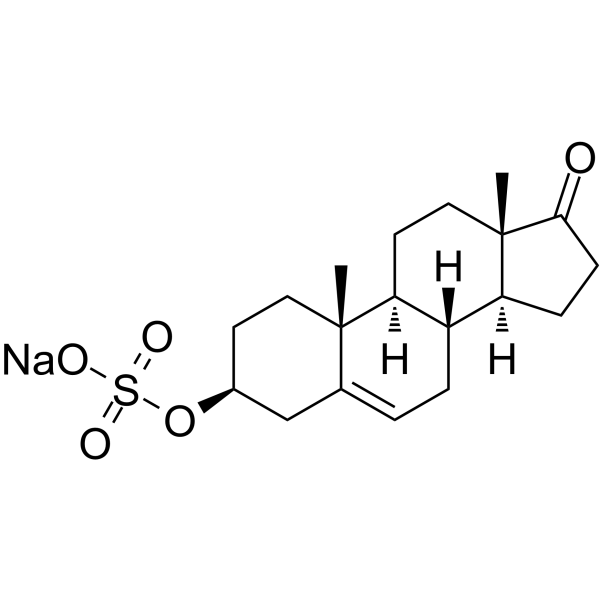
Dehydroepiandrosterone sulfate (DHEA sulfate; Prasterone sulfate) sodium salt is a neurosteroid and the main secretion product of the adrenal gland. Dehydroepiandrosterone sulfate sodium salt has both non-competitive antagonist activity of GABAA receptor and agonist activity of σ1 receptor. Dehydroepiandrosterone sulfate sodium salt can partially penetrate the blood-brain barrier, inhibit GABAA receptor-mediated chloride influx, enhance NMDA receptor activity through σ1 receptors, exert anti-inflammatory, anti-glucocorticoid and antidepressant effects, and increase convulsive sensitivity. Dehydroepiandrosterone sulfate sodium salt participates in neuroprotection, neurite growth regulation and catecholamine secretion regulation, and can be used in the study of depression, post-traumatic stress disorder (PTSD), Alzheimer's disease, etc. Dehydroepiandrosterone sulfate sodium salt may also be a biomarker for cardiovascular disease mortality, and its concentration is independently and negatively correlated with mortality .
loading...
    loading...
3
3 Cited Publications
Cat. No.: HY-124607B
CAS No.: 2056262-07-6
Purity:  98.21%
Target:  

GSK-3

BRD3731 is a selective GSK3β inhibitor, with IC50s of 15 nM and 215 nM for GSK3β and GSK3α, respectively. BRD3731 is potentail for the research of post-traumatic stress disorder (PTSD), psychiatric disorder, diabetes, and neurodegenerative disorders .
loading...
    loading...
3
3 Cited Publications
Cat. No.: HY-P99804
CAS No.: 2429913-18-6
Synonyms: MK1654

Target:  

RSV

Research Areas:  

Infection

Clesrovimab (MK1654) is a humanized IgG1 monoclonal antibody targeting the respiratory syncytial virus (RSV) protein F. Clesrovimab binds to pre-fusion and post-fusion forms of RSV-A fusion protein with high affinity, with corresponding KD values of 71 pM and 480 pM, respectively. Clesrovimab is applicable for the research of RSV infection .
loading...
    loading...
3
3 Cited Publications
Cat. No.: HY-B1392
CAS No.: 81161-17-3
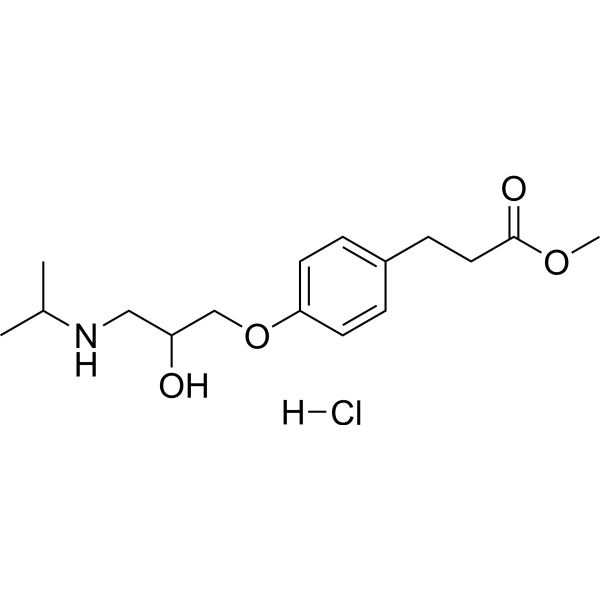
Esmolol hydrochloride is an ultra-short-acting cardioselective β1-adrenergic blocker. Esmolol hydrochloride exerts its antiarrhythmic effect by activating Neurokinin 1 Receptor. Esmolol hydrochloride attenuates post resuscitation myocardial dysfunction. Esmolol hydrochloride improves diabetic wound healing by inhibiting aldose reductase and the production of advanced glycation end products and promoting fibroblast migration. Esmolol hydrochloride can be used to study cardiac diseases such as arrhythmias and diabetic foot ulcers .
loading...
    loading...
3
3 Cited Publications
Cat. No.: HY-151656
CAS No.: 118162-46-2
Purity:  99.88%
Synonyms: Azido Palmitic Acid
Target:  

ADC Linkers

Research Areas:  

Others

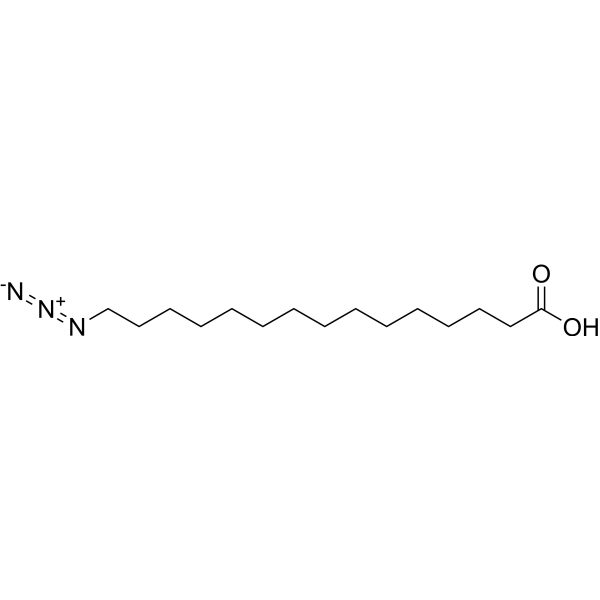
15-Azido-pentadecanoic acid is a click chemistry reagent containing an azide group. Azido Palmitic Acid can be used to identify and characterize post-translationally palmitylated proteins with using a simple and robust two-step labeling and detection technique . 15-Azido-pentadecanoic acid is a click chemistry reagent, it contains an Azide group and can undergo copper-catalyzed azide-alkyne cycloaddition reaction (CuAAc) with molecules containing Alkyne groups. It can also undergo strain-promoted alkyne-azide cycloaddition (SPAAC) reactions with molecules containing DBCO or BCN groups.
loading...
    loading...
2
2 Cited Publications
Cat. No.: HY-101399
CAS No.: 7432-24-8
Purity:  99.82%
Synonyms: H-γ-Glu-Phe-OH; γ-Glutamylphenylalanine
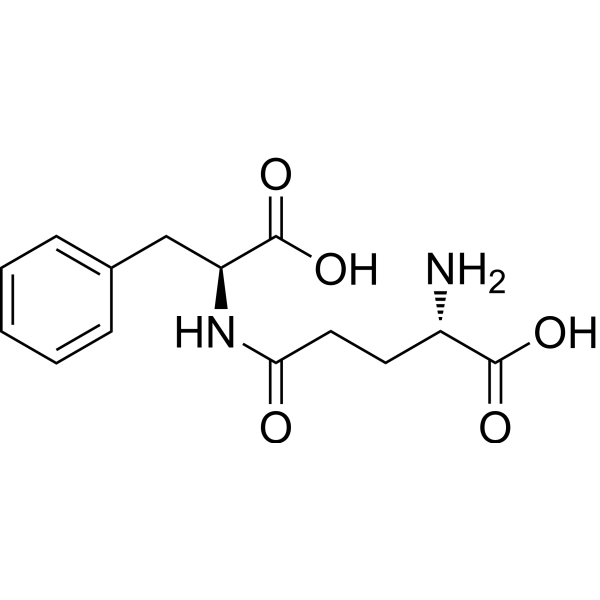
γ-Glu-Phe is synthesized by Bacillus amyloliquefaciens (GBA) and Aspergillus oryzae (GAO). γ-Glu-Phe or the post-enzymatic reaction mixture enhances the umami intensity of commercial soy sauce and model chicken broth .
loading...
    loading...
2
2 Cited Publications
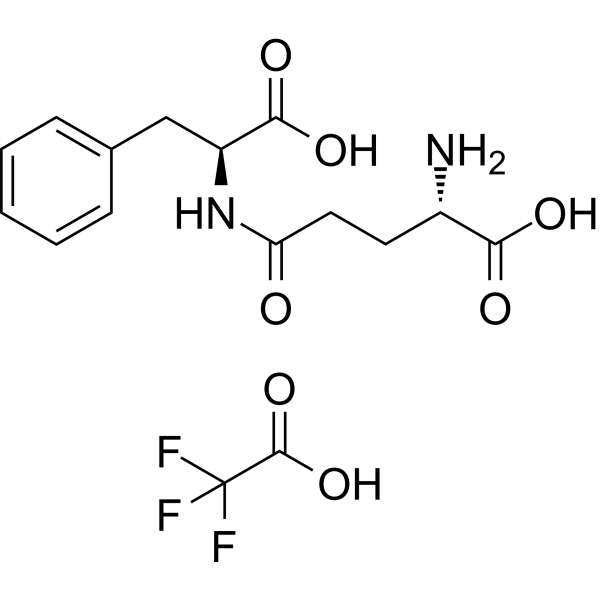
Cat. No.: HY-101399A
CAS No.: 2828432-42-2
Purity:  99.50%
Synonyms: H-γ-Glu-Phe-OH TFA; γ-Glutamylphenylalanine TFA
γ-Glu-Phe TFA (γ-Glutamylphenylalanine TFA) is synthesized by Bacillus amyloliquefaciens (GBA) and Aspergillus oryzae (GAO). γ-Glu-Phe TFA or the post-enzymatic reaction mixture enhances the umami intensity of commercial soy sauce and model chicken broth .
loading...
    loading...
2
2 Cited Publications
Cat. No.: HY-P99221
CAS No.: 880266-57-9
Synonyms: RN-624; PF 4383119
Tanezumab (RN-624) is a humanized anti-NGF mAb with high affinity and specificity. Tanezumab blocks NGF binding to its receptors, p75 and TrkA, in the peripheral nervous system. Tanezumab can be used in studies of acute and chronic pain such as osteoarthritis, knee and neuralgia, as well as post-herpetic neuralgia .
loading...
    loading...
2
2 Cited Publications
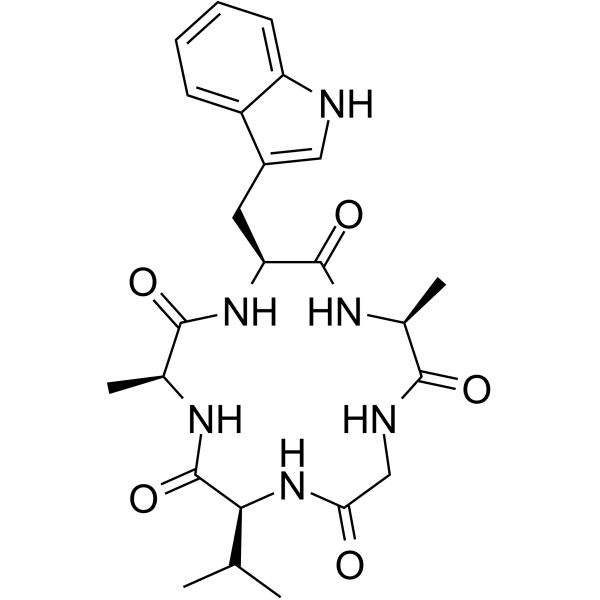
Cat. No.: HY-107245
CAS No.: 164991-89-3
Purity:  99.51%
Segetalin B, an orally active cyclopentapeptide found in Vaccaria segetalis, possesses estrogen-like activity. Segetalin B promotes mineralization of ovariectomized rat-derived bone marrow mesenchymal stem cells (BMSCs) in vitro and increases the level of osteocalcin, BMP-2, ALP, and SIRT1 activity. Segetalin B is promising for research of post-menopausal osteoporosis (PMOP) .
loading...
    loading...
2
2 Cited Publications
Cat. No.: HY-P72659A
Purity:  ≥ 95%, as determined by reducing SDS-PAGE.
Synonyms: FAP; Prolyl Endopeptidase FAP; Fibroblast Activation Protein Alpha; Dipeptidyl Peptidase FAP; Seprase; FAPalpha; DPPIV; SIMP; 170 KDa Melanoma Membrane-Bound Gelatinase; CDNA FLJ60298, Highly Similar To Seprase; Gelatine Degradation Protease FAP; Fibroblast Activation Protein, Alpha; Integral Membrane Serine Protease; Serine Integral Membrane Protease; post-Proline Cleaving Enzyme; FAPA; Surface-Expressed Protease
Species:  
Human
Source:  
HEK293
loading...
    loading...
2
2 Cited Publications
Cat. No.: HY-N0086R
CAS No.: 1867-73-8
Synonyms: 6-Methyladenosine (Standard); N-Methyladenosine (Standard)
N6-Methyladenosine (Standard) is the analytical standard of N6-Methyladenosine. This product is intended for research and analytical applications. N6-Methyladenosine is the most prevalent internal (non-cap) modification present in the messenger RNA (mRNA) of all higher eukaryotes. N6-Methyladenosine can modifies viral RNAs and has antiviral activities. In Vitro: N6-methyladenosine (m6A) is selectively recognized by the human YTH domain family 2 (YTHDF2) protein to regulate mRNA degradation. N6-methyladenosine (m6A), a prevalent internal modification in the messenger RNA of all eukaryotes, is post-transcriptionally installed by m6A methyltransferase (e.g., MT-A70) within the consensus sequence of G(m6A)C (70%) or A(m6A)C (30%). N6-methyladenosine (m6A)-containing RNAs are greatly enriched in the YTHDF-bound portion and diminished in the flow-through portion . N6-methyladenosine (m6A), the most abundant internal RNA modification, functions in diverse biological processes, including regulation of embryonic stem cell self-renewal and differentiation. N6-methyladenosine (m6A) is a large protein complex, consisting in part of methyltransferase-like 3 (METTL3) and methyltransferase-like 14 (METTL14) catalytic subunits .
loading...
    loading...
2
2 Cited Publications
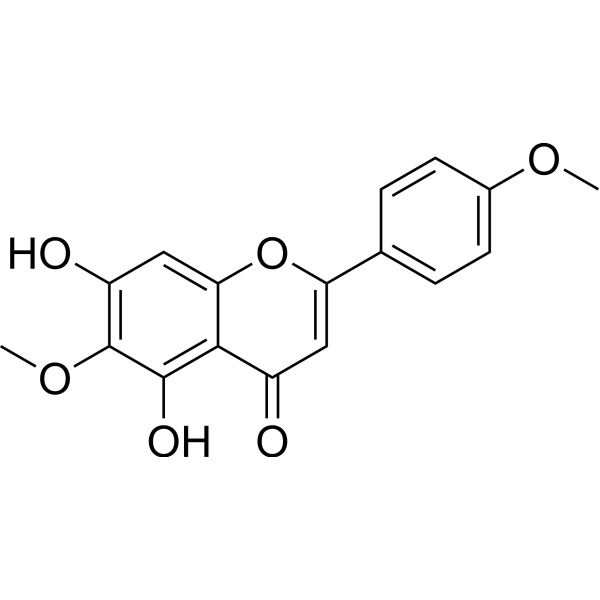
Cat. No.: HY-N0493
CAS No.: 520-12-7
Pectolinarigenin is an orally active dual inhibitor of COX-2/5-LOX with anti-inflammatory, antioxidant, antitumor and neuroprotective activities. Pectolinarigenin exerts neuroprotective and anti-inflammatory effects on astrocyte inflammation via the NFκB and MAPK pathways. Pectolinarigenin inhibits LPS-induced phosphorylation of ERK1/2, N-FκB and p38MAPK, directly inhibits the enzymatic activity or binding of COX-2, 5-LOX and HIF-1α, and reduces the level of XIAP. Pectolinarigenin modifies Keap1 to promote nuclear accumulation of Nrf2, induces ARE-mediated antioxidant enzyme expression, and possesses direct free radical scavenging activity. Pectolinarigenin reduces the release of NO, proinflammatory mediators and leukotrienes, and increases the level of IL-10. Pectolinarigenin induces G2/M cell cycle arrest, apoptosis (Apoptosis) and autophagy (Autophagy) via the PI3K/AKT/mTOR signaling pathway. Pectolinarigenin reduces renal crystal deposition and inhibits melanin synthesis. Pectolinarigenin inhibits inflammation and alleviates allergy in mouse models of inflammation. Pectolinarigenin alleviates renal injury, inflammation and oxidative stress in mice by inhibiting HIF-1α activity. Pectolinarigenin can be used for the research of neurodegenerative diseases, inflammatory/allergic diseases, calcium oxalate nephrocalcinosis, gastric cancer, melasma, post-inflammatory diseases and chloasma .
loading...
    loading...
1
1 Cited Publications
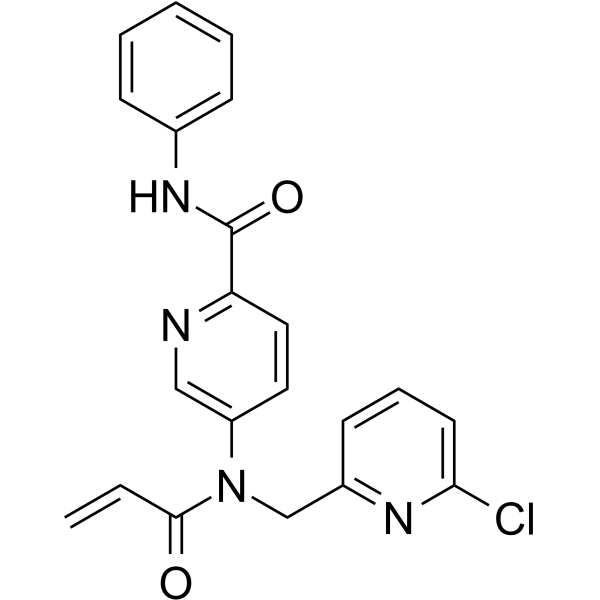
Cat. No.: HY-141550
CAS No.: 2305052-86-0
Purity:  99.92%
Target:  

NF-κB

Research Areas:  

Inflammation/Immunology

BPK-25, an active acrylamide, promotes degradation of nucleosome remodeling and deacetylation (NuRD) complex proteins by a post-translational mechanism involving covalent protein engagement. BPK-25 inhibits TMEM173 activation by the cyclic dinucleotide ligand cGAMP .
loading...
    loading...
1
1 Cited Publications
Cat. No.: HY-B2023
CAS No.: 15545-48-9
Synonyms: Chlortoluron
Research Areas:  

Others

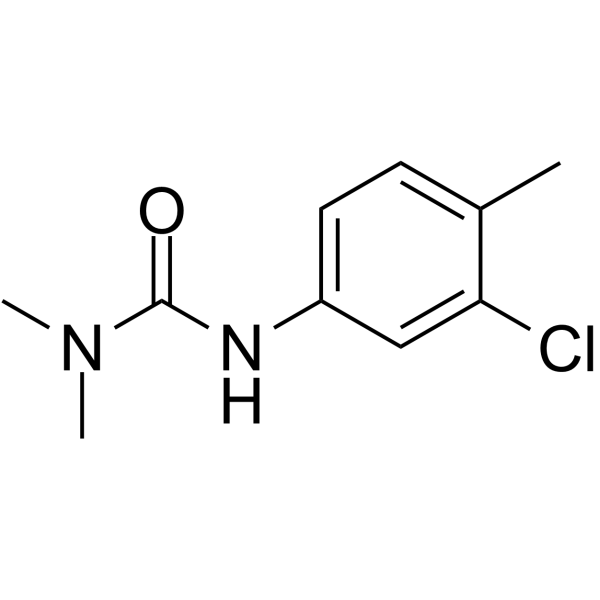
Chlorotoluron (Chlortoluron) is a urea herbicide. Chlorotoluron serves as a degradation substrate that undergoes dissipation in soil and produces demethylated chlorotoluron metabolites via N-dealkylation. Chlorotoluron is used for pre-emergence and post-emergence weed control in cereals and various other crops .
loading...
    loading...
1
1 Cited Publications
Cat. No.: HY-143711S
CAS No.: 1182037-78-0
Purity:  ≥95.0%
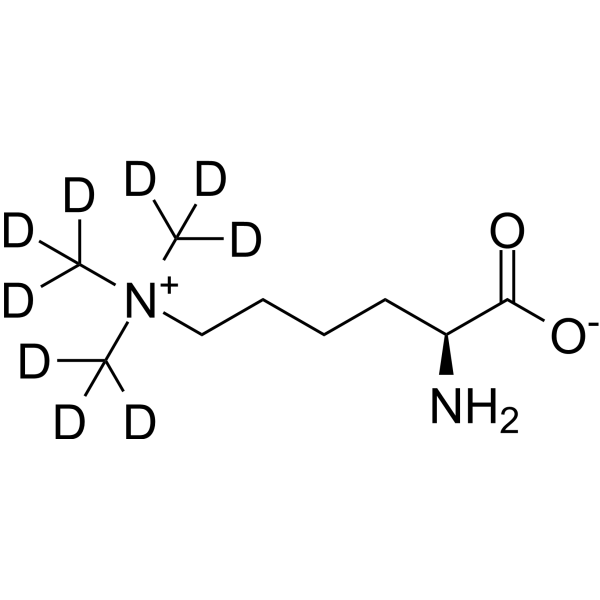
Trimethyllysine-d9 is the deuterium labeled Trimethyllysine (HY-143711) . Trimethyllysine is an important post-translationally modified amino acid, involving in carnitine biosynthesis and epigenetic processes .
loading...
    loading...
1
1 Cited Publications
Cat. No.: HY-P99792
CAS No.: 2449086-91-1
Synonyms: NM57; rhRIG

Target:  

RABV

Research Areas:  

Infection

Ormutivimab (rhRIG) is a recombinant human monoclonal antibody, targeting rabies virus. Ormutivimab neutralizes a variety of rabies virus strains. Ormutivimab exhibits potent potency against rabies post-exposure prophylaxis (PEP) model .
loading...
    loading...
1
1 Cited Publications
Cat. No.: HY-113230B
Purity:  99.69%
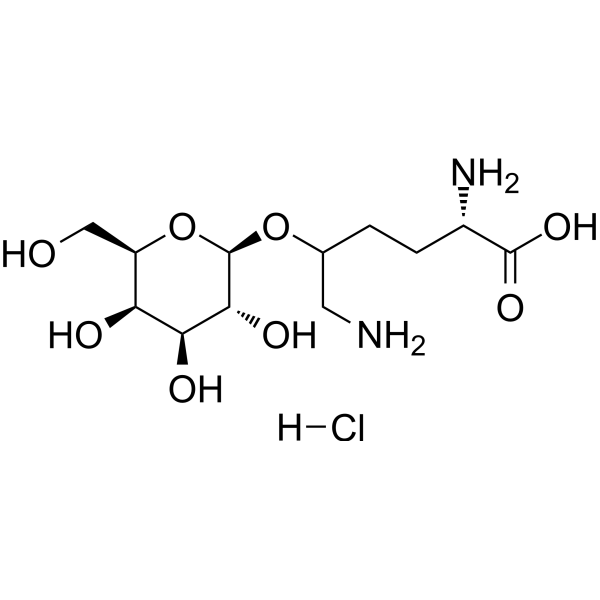
Galactosylhydroxylysine hydrochloride is a component of bone collagen produced by post-translational glycosylation of hydroxylysine. Galactosylhydroxylysine hydrochloride is released during bone resorption and has been shown to be elevated in metabolic bone loss .
loading...
    loading...

