126 Results for "

OX2R knockout

" in MedChemExpress (MCE) Product Catalog:
Products (126)

126 Results for "OX2R knockout" in MCE Product Catalog:

Cat. No.: HY-W422431
CAS No.: 5878-43-3
Dihydrolysergic acid is a fungal ergot alkaloid and also the dihydro analog of lysergic acid. Dihydrolysergic acid serves as a precursor for vasodilatory ergot alkaloid-derived drugs. Dihydrolysergic acid can be biosynthesized by expressing intron-free synthetic Claviceps africana cloA in an Neosartorya fumigata easM knockout strain [2].
loading...
    loading...
Cat. No.: HY-183428
CAS No.: 2916446-33-6
LK00764 is a TAAR1 agonist with an EC50 of 4 nM. LK00764 alleviates Dizocilpine (HY-15084B)-induced hyperlocomotion, reduces vertical locomotor activity, attenuates spontaneous hyperlocomotion in dopamine transporter knockout rats, and inhibits stress-induced hyperthermia in rats. LK00764 can be used for the research of schizophrenia .
loading...
    loading...
Cat. No.: HY-180538
Research Areas:  

Others

MRT-31619 is a selective CRBN Molecular glue degrader, with an IC50 of 14 nM and an EC50 of 72 nM. MRT-31619 triggers ubiquitination and proteasomal degradation of CRBN. MRT-31619 serves as a chemical knockout tool for CRBN depletion to evaluate the dependence of other molecular glues on CRBN. MRT-31619 is applicable to the research of CRBN-related disease models [2].
loading...
    loading...
Cat. No.: HY-131731
CAS No.: 2353563-15-0
Target:  

PROTACs

Research Areas:  

Cancer

PROTAC STK4 Degrader-1 is a cereblon-recruiting STK4 PROTAC degrader. PROTAC STK4 Degrader-1 mediates ubiquitination and proteasomal degradation of STK4, induces dose- and time-dependent downregulation of STK4 in cancer cells, and exhibits reduced cytotoxicity in cereblon-knockout cells. PROTAC STK4 Degrader-1 can be used in research related to multiple myeloma .
loading...
    loading...
Cat. No.: HY-P11000A
Research Areas:  

Others

INF7TAT acetate is an amphipathic cell-penetrating peptide that mediates intracellular delivery of CRISPR ribonucleoproteins. INF7TAT acetate achieves endosomal escape via the INF7 fragment and cell binding via the TAT fragment. It enables intracellular delivery into primary human T cells and hematopoietic stem and progenitor cells, facilitating gene knockout and AAV-mediated homology-directed repair. INF7TAT acetate can be used for genome editing-related research [2].
loading...
    loading...
Cat. No.: HY-117778
CAS No.: 107729-45-3
Purity:  ≥95.0%
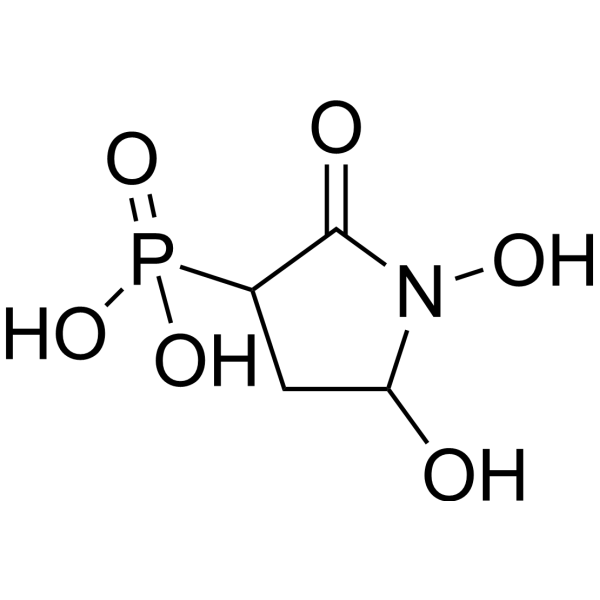
SF2312 is a phosphonate Antibiotic and Enolase inhibitor, with an IC50 of 18.4 nM against E. coli enolase. SF2312 reduces intracellular ATP levels and inhibits glycolytic flux. SF2312 exhibits activity against both Gram-positive and Gram-negative bacteria, and exerts synergistic effects against E. coli when combined with Fosfomycin (HY-B1075A). SF2312 shows selective toxicity toward gliomas with ENO1 gene knockout. SF2312 can be used in research related to bacterial infections and gliomas [2] .
loading...
    loading...
Cat. No.: HY-117778B
Purity:  ≥98.0%
Research Areas:  

Infection Cancer

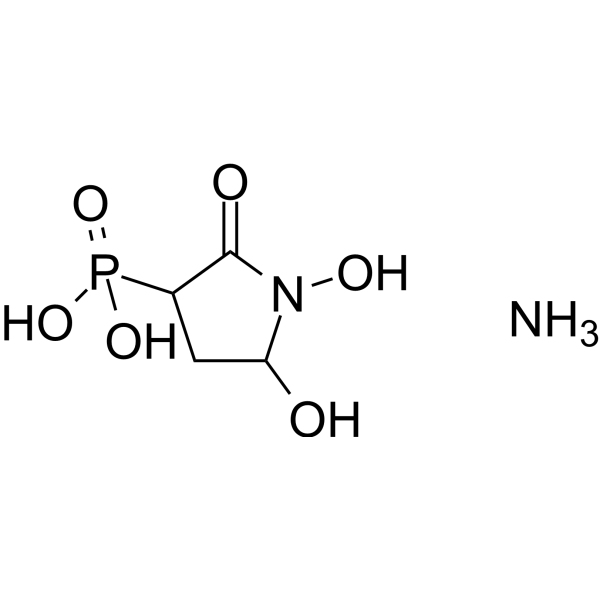
SF2312 ammonium is a phosphonate Antibiotic and Enolase inhibitor, with an IC50 of 18.4 nM against E. coli enolase. SF2312 ammonium reduces intracellular ATP levels and inhibits glycolytic flux. SF2312 ammonium exhibits activity against both Gram-positive and Gram-negative bacteria, and exerts synergistic effects against E. coli when combined with Fosfomycin (HY-B1075A). SF2312 ammonium shows selective toxicity toward gliomas with ENO1 gene knockout. SF2312 ammonium can be used in research related to bacterial infections and gliomas [2] .
loading...
    loading...
Cat. No.: HY-162353
CAS No.: 3056570-19-2
Research Areas:  

Cancer

AZ'9567 is an orally active MAT2a inhibitor with a pIC50 of 9.1. AZ'9567 binds to MAT2a allosterically, reduces the synthesis of SAM, decreases SDMA levels, and exerts antiproliferative effects on MTAP-knockout cells. AZ'9567 depletes SAM, causes methionine accumulation in plasma and tissues, triggers adaptive disorders in one-carbon metabolism, transsulfuration metabolism and lipid metabolism, and induces oxidative stress, hepatic steatosis and lipid homeostasis imbalance. AZ'9567 can be used in studies related to MTAP-deficient/deleted cancers [2] .
loading...
    loading...
Cat. No.: HY-185697
CAS No.: 3136609-62-3
Target:  

PROTACs IFNAR c-Myc

Research Areas:  

Cancer

dIRF4-2 is a selective IRF4 PROTAC degrader with a DC50 value of 2.2 μM. dIRF4-2 forms a ternary complex between IRF4 and CRBN, inducing ubiquitination and proteasomal degradation of IRF4. dIRF4-2 downregulates MYC. dIRF4-2 exhibits anticancer activity against myeloma. dIRF4-2 acts as a chemical probe for investigating IRF4 function, mimicking the IRF4 gene knockout phenotype. dIRF4-2 can be used in the research of multiple myeloma .
loading...
    loading...
Cat. No.: HY-P10989
CAS No.: 241478-23-9
Target:  

Inhibitory Antibodies

Research Areas:  

Cancer

NG2 binding peptide is a short peptide that specifically recognizes NG2 proteoglycan and can be obtained by phage screening technology. NG2 binding peptide interacts with NG2 binding sites to achieve precise targeting of tumor angiogenesis in vitro and in vivo. NG2 binding peptide exhibits significant homing ability in wild-type tumor-bearing mice, but has no localization effect in NG2 knockout mice. Due to the tissue specificity of NG2 expression, NG2 binding peptide can be used in scenarios such as tumor targeted therapy, drug delivery, and molecular imaging diagnosis .
loading...
    loading...
Cat. No.: HY-P11092
Target:  

Endogenous Metabolite

Research Areas:  

Neurological Disease

TLQP-62 (mouse,rat) is a secreted C-terminal peptide that can be derived from protein VGF. TLQP-62 activates the BDNF-TrkB signaling pathway, inducing acute, transient phosphorylation of TrkB receptor and downstream CREB (Ser133) phosphorylation. TLQP-62 demonstrates excellent efficacy in promoting long-term fear memory formationin wild-type mice and reversing memory impairment in VGF heterozygous knock-out mice. TLQP-62 can be used for the study of memory-related neurological disorders (e.g., Alzheimer’s disease, frontotemporal dementia) .
loading...
    loading...
Cat. No.: HY-182367
Target:  

GPR39

Research Areas:  

Neurological Disease

TMN-OMe is a blood-brain barrier-permeable GPR39 agonist and a radiotracer for positron emission tomography (PET). TMN-OMe activates GPR39 by recruiting β-arrestin, exhibits highly selective binding ability in the mouse brain, and enables quantitative analysis of GPR39 at the in vivo level. TMN-OMe shows specific uptake in GPR39 knockout mice, Alzheimer's disease model (APP/PS1) mice, and blocking experiments. TMN-OMe facilitates in-depth exploration of changes in GPR39-related mechanisms in neurological diseases and is widely used in Alzheimer's disease research .
loading...
    loading...
Cat. No.: HY-16639
CAS No.: 1448895-09-7
ML314 is a potent, BBB-penetrant and β-arrestin biased molecule agonist of NTR1 (EC50 = 1.9 μM). ML314 shows good selectivity against NTR2 and GPR35, but does not stimulate Ca2+ mobilization. ML314 can attenuate amphetamine-like hyperlocomotion in dopamine transporter knockout mice. ML314 attenuates methamphetamine-associated hyperlocomotion and potentiates the psychostimulant inhibitory effects of a ghrelin antagonist in wild type mouse model. ML314 also acts as an allosteric enhancer of endogenous neurotensin. ML314 antagonizes G protein signaling. ML314 can be studied in research for methamphetamine abuse conditions [2].
loading...
    loading...
Cat. No.: HY-168166
CAS No.: 2489231-47-0
Target:  

Endogenous Metabolite

Research Areas:  

Neurological Disease

CHET3 is a sex-selective activator with potent analgesic activity. CHET3 was discovered to be a highly selective omnidirectional modulator of TASK-3-containing K2P channels, including TASK-3 homologues and TASK-3/TASK-1 heterologues. CHET3 exhibited significant analgesic effects in multiple acute and chronic pain models in mice, which could be abolished by pharmacological means or genetic knockout of TASK-3. CHET3 is able to functionally modulate the membrane excitability of specific small sensory neurons, which supports its analgesic effects on thermal hypersensitivity and mechanical hyperalgesia in chronic pain .
loading...
    loading...
Cat. No.: HY-13757AS1
CAS No.: 508201-30-7
Synonyms: ICI 47699-d3; (Z)-TamOXifen-d3; trans-TamOXifen-d3
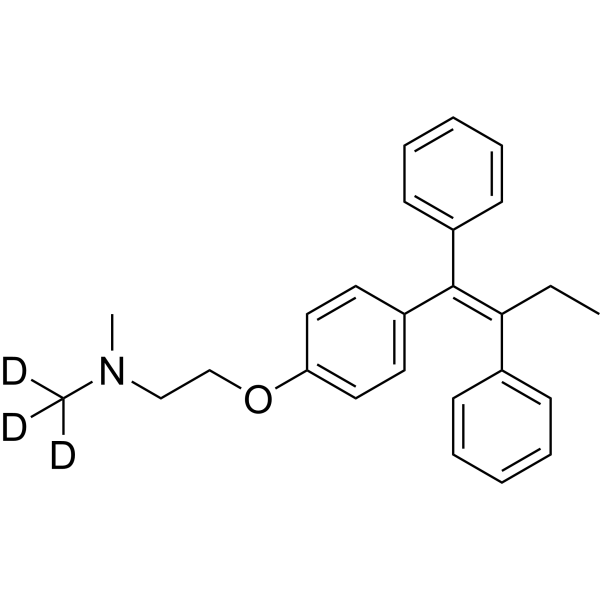
Tamoxifen-d3 is the deuterium labeled Tamoxifen . Tamoxifen (ICI 47699) is an orally active, selective estrogen receptor modulator (SERM) which blocks estrogen action in breast cells and can activate estrogen activity in other cells, such as bone, liver, and uterine cells [2] . Tamoxifen is a potent Hsp90 activator and enhances the Hsp90 molecular chaperone ATPase activity. Tamoxifen also potent inhibits infectious EBOV Zaire and Marburg (MARV) with IC50 of 0.1 μM and 1.8 μM, respectively . Tamoxifen activates autophagy and induces apoptosis . Tamoxifen also can induce gene knockout of CreER(T2) transgenic mouse .
loading...
    loading...
Cat. No.: HY-117771A
CAS No.: 2098969-71-0
Purity:  98.42%
Target:  

DAGL

DO34 analog is a structural analog of DO34 (HY-117771). DO34 is a selective DAGL inhibitor, with an IC50 of 6 nM for DAGLα conversion of SAG to 2-AG. DO34 blocks de novo 2-AG synthesis, and suppresses tonic CB1 receptor activation. DO34 blocks depolarization-induced suppression of excitation and inhibition in the cerebellum and hippocampus. DO34 regulates feeding behavior and locomotor activity in mice. DO34 abolishes AM251-mediated enhancement of parallel fiber-evoked excitatory postsynaptic currents in cerebellar slices from MAGL global knockout mice. DO34 can be used for the research of energy balance disorder and neuroinflammation [2] .
loading...
    loading...
Cat. No.: HY-13757AR
CAS No.: 10540-29-1
Purity:  99.76%
Synonyms: ICI 47699(Standard); (Z)-TamOXifen(Standard); trans-TamOXifen (Standard)
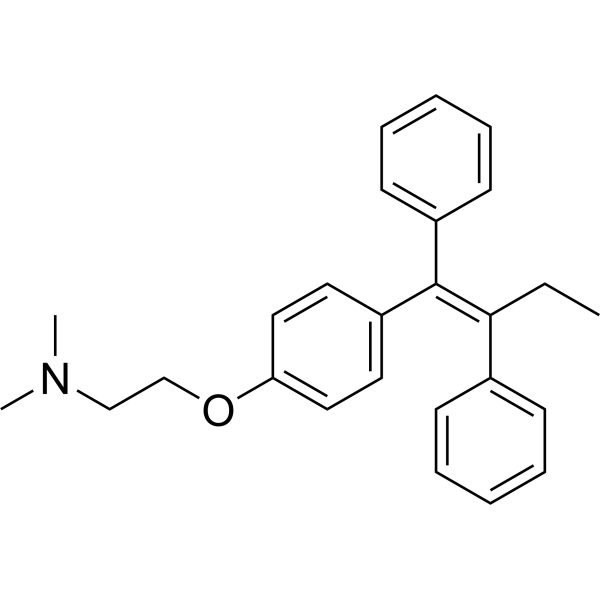
Tamoxifen (Standard) is the analytical standard of Tamoxifen (HY-13757A). This product is intended for research and analytical applications. Tamoxifen (ICI 47699) is an orally active, selective estrogen receptor modulator (SERM) which blocks estrogen action in breast cells and can activate estrogen activity in other cells, such as bone, liver, and uterine cells [2] . Tamoxifen is a potent Hsp90 activator and enhances the Hsp90 molecular chaperone ATPase activity. Tamoxifen also potent inhibits infectious EBOV Zaire and Marburg (MARV) with IC50 of 0.1 μM and 1.8 μM, respectively . Tamoxifen activates autophagy and induces apoptosis . Tamoxifen also can induce gene knockout of CreER(T2) transgenic mouse .
loading...
    loading...
Cat. No.: HY-W778408
CAS No.: 1346606-38-9
Synonyms: ICI 47699-13C6; (Z)-TamOXifen-13C6; trans-TamOXifen-13C6
Tamoxifen- 13C6 (ICI 47699- 13C6) is the 13C-labeled Tamoxifen (HY-13757A). Tamoxifen (ICI 47699) is an orally active, selective estrogen receptor modulator (SERM) which blocks estrogen action in breast cells and can activate estrogen activity in other cells, such as bone, liver, and uterine cells [2] . Tamoxifen is a potent Hsp90 activator and enhances the Hsp90 molecular chaperone ATPase activity. Tamoxifen also potent inhibits infectious EBOV Zaire and Marburg (MARV) with IC50 of 0.1 μM and 1.8 μM, respectively . Tamoxifen activates autophagy and induces apoptosis . Tamoxifen also can induce gene knockout of CreER transgenic mouse .
loading...
    loading...
Cat. No.: HY-115701
CAS No.: 154436-49-4
Synonyms: 1-Stearoyl-2-15(S)-HpETE-sn-glycero-3-phosphoethanolamine; 15(S)-HpETE-SAPE; 15(S)-hydroperOXyeicostetraenoic acid-SAPE
Target:  

Ferroptosis

Research Areas:  

Inflammation/Immunology

1-Stearoyl-2-15(S)-HpETE-sn-glycero-3-Pe is a phospholipid that contains stearic acid (HY-B2219) at the sn-1 position and 15(S)-HpETE at the sn-2 position. It is produced via oxidation of 1-stearoyl-2-arachidonoyl-sn-glycero-3-Pe (SAPE) by 15-lipoxygenase (15-LO). 1-Stearoyl-2-15(S)-HpETE-sn-glycero-3-Pe (0.6 and 0.9 μM) increases ferroptotic cell death in wild-type and Acsl4 knockout Pfa1 mouse embryonic fibroblasts (MEFs) treated with the GPX4 inhibitor RSL3.
loading...
    loading...
Cat. No.: HY-126720
CAS No.: 807370-75-8
Purity:  ≥99.0%
Target:  

Endogenous Metabolite

Research Areas:  

Metabolic Disease

N-Lignoceroyl Taurine is an arachidonoyl amino acid and taurine conjugate with a fatty acid that can be isolated from bovine brain. N-Lignoceroyl Taurine is one of several novel taurine-conjugated fatty acids discovered during mass spectrometry lipidomic analysis of the brain and spinal cord of wild-type and fatty acid amide hydrolase (FAAH) knockout mice. N-Lignoceroyl Taurine levels were 23-26-fold higher in FAAH -/- mice compared to wild-type mice, suggesting that FAAH utilizes N-Lignoceroyl Taurine as a substrate. However, in vitro experiments with purified FAAH showed that N-Lignoceroyl Taurine was hydrolyzed 2,000-fold slower in FAAH compared to oleoylethanolamide. N-Acyl Taurines with polyunsaturated acyl chains can activate members of the transient receptor potential (TRP) calcium channel family, including TRPV1 and TRPV4.
loading...
    loading...

