1516 Results for "

2A6

" in MedChemExpress (MCE) Product Catalog:
Products (1516)

1516 Results for "2A6" in MCE Product Catalog:

175
175 Publications Verification
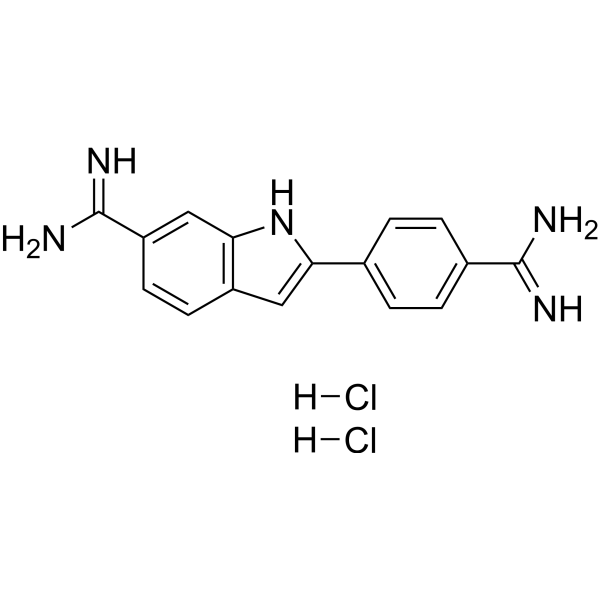
Cat. No.: HY-D0814
CAS No.: 28718-90-3
Synonyms: 4',6-Diamidino-2-phenylindole dihydrochloride
DAPI (4',6-Diamidino-2-phenylindole) dihydrochloride is a DAPI dye. DAPI is a fluorescent dye that binds strongly to DNA. It binds to the AT base pair of the double-stranded DNA minor groove, and one DAPI molecule can occupy three base pair positions. The fluorescence intensity of DAPI molecules bound to double-stranded DNA is increased by about 20 times, and it is commonly observed with fluorescence microscopy, and the amount of DNA can be determined based on the intensity of fluorescence. DAPI cannot penetrate intact cell membranes and is commonly used for staining damaged and fixed cells . DAPI (Compound 3) is an acid-sensing ion channel 3 (ASIC3) inhibitor. DAPI binds to ASIC3 and blocks the channel function. DAPI can be used in the study of chronic pain treatment (Ex/Em = 356/451 nm).
loading...
    loading...
159
159 Cited Publications
Cat. No.: HY-D2868
CAS No.: 47165-04-8
Synonyms: 4',6-Diamidino-2-phenylindole
DAPI (4',6-Diamidino-2-phenylindole) is a DAPI dye. DAPI is a fluorescent dye that binds strongly to DNA. It binds to the AT base pair of the double-stranded DNA minor groove, and one DAPI molecule can occupy three base pair positions. The fluorescence intensity of DAPI molecules bound to double-stranded DNA is increased by about 20 times, and it is commonly observed with fluorescence microscopy, and the amount of DNA can be determined based on the intensity of fluorescence. DAPI cannot penetrate intact cell membranes and is commonly used for staining damaged and fixed cells . DAPI (Compound 3) is an acid-sensing ion channel 3 (ASIC3) inhibitor. DAPI binds to ASIC3 and blocks the channel function. DAPI can be used in the study of chronic pain treatment (Ex/Em = 356/451 nm).
loading...
    loading...
129
129 Cited Publications
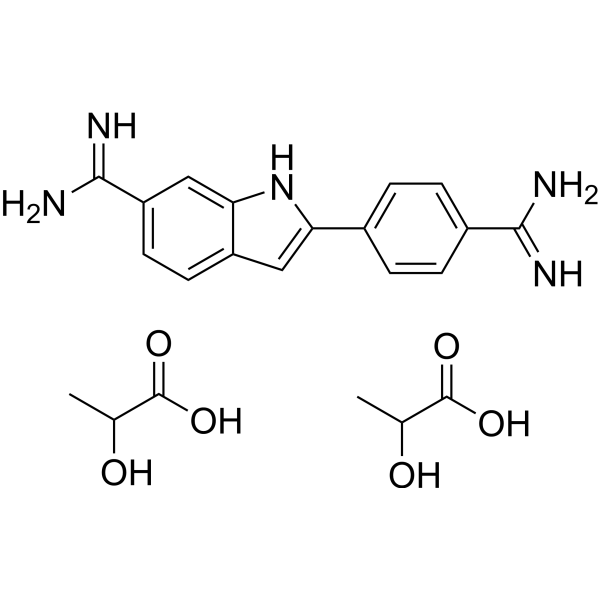
Cat. No.: HY-D1738
CAS No.: 28718-91-4
Synonyms: 4',6-Diamidino-2-phenylindole dilactate
DAPI (4',6-Diamidino-2-phenylindole) dilactate is a DAPI dye. DAPI is a fluorescent dye that binds strongly to DNA. It binds to the AT base pair of the double-stranded DNA minor groove, and one DAPI molecule can occupy three base pair positions. The fluorescence intensity of DAPI molecules bound to double-stranded DNA is increased by about 20 times, and it is commonly observed with fluorescence microscopy, and the amount of DNA can be determined based on the intensity of fluorescence. DAPI cannot penetrate intact cell membranes and is commonly used for staining damaged and fixed cells . DAPI (Compound 3) is an acid-sensing ion channel 3 (ASIC3) inhibitor. DAPI binds to ASIC3 and blocks the channel function. DAPI can be used in the study of chronic pain treatment (Ex/Em = 356/451 nm) .
loading...
    loading...
92
92 Cited Publications
Cat. No.: HY-W114750
CAS No.: 28289-54-5
MPTP (1-Methyl-4-phenyl-1,2,3,6-tetrahydropyridine) is a brain penetrant dopamine neurotoxin. MPTP can be used to induce Parkinson’s Disease model. MPTP, a precusor of MPP +, induces apoptosis .
loading...
    loading...
63
63 Cited Publications
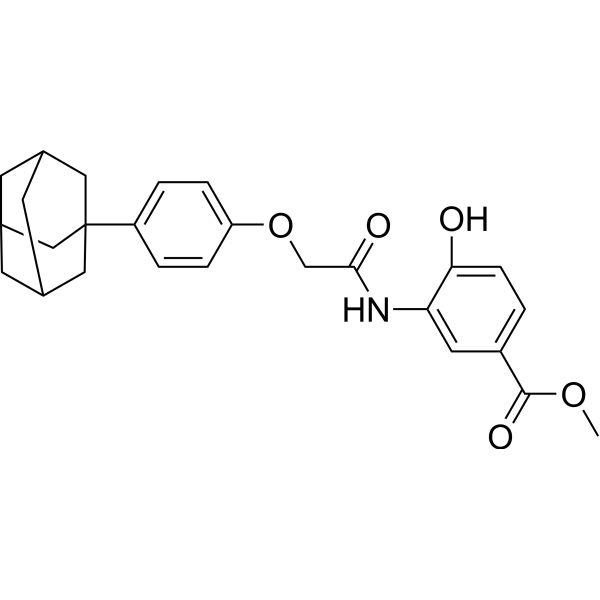
Cat. No.: HY-13671
CAS No.: 934593-90-5
Purity:  98.47%
Synonyms: HIF-1α inhibitor; LW8
Research Areas:  

Cancer

LW6 (HIF-1α inhibitor) is a novel HIF-1 inhibitor with an IC50 value of 4.4 μM, and it is also an inhibitor of MDH2. LW6 decreases HIF-1α protein expression without affecting HIF-1β expression.
loading...
    loading...
36
36 Cited Publications
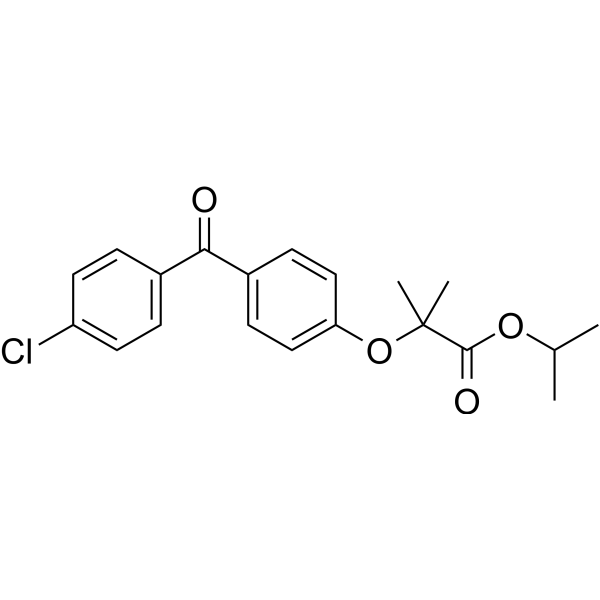
Cat. No.: HY-17356
CAS No.: 49562-28-9
Research Areas:  

Cardiovascular Disease Cancer

Fenofibrate is a selective PPARα agonist with an EC50 of 30 μM. Fenofibrate also inhibits human cytochrome P450 isoforms, with IC50s of 0.2, 0.7, 9.7, 4.8 and 142.1 μM for CYP2C19, CYP2B6, CYP2C9, CYP2C8, and CYP3A4, respectively.
loading...
    loading...
32
32 Cited Publications
Cat. No.: HY-17459
CAS No.: 120202-66-6
Synonyms: (S)-(+)-Clopidogrel bisulfate; (S)-(+)-Clopidogrel hydrogen sulfate
Research Areas:  

Cardiovascular Disease Cancer

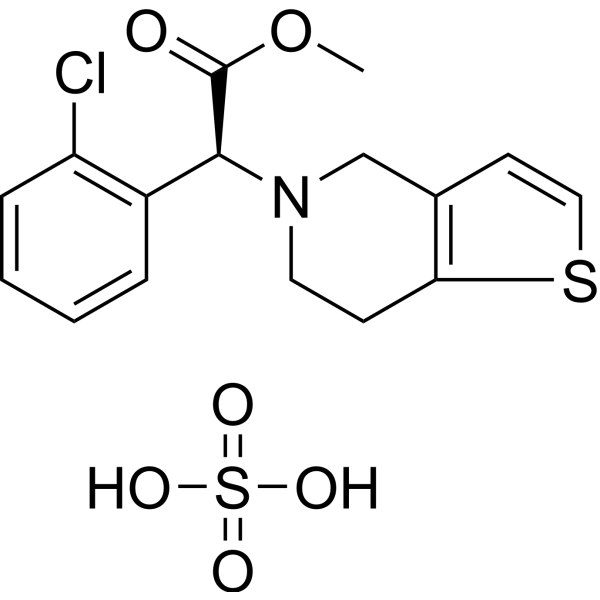
Clopidogrel hydrogen sulfate is an antiplatelet agent to prevent blood clots. Clopidogrel hydrogen sulfate inhibits CYP2B6 and CYP2C19 with IC50s of 18.2 nM and 524 nM, respectively . Clopidogrel hydrogen sulfate is a potent antithrombotic agent that inhibits ADP-induced platelet aggregation .Clopidogrel hydrogen sulfate also is an orally active P2Y(12) inhibitor .
loading...
    loading...
31
31 Cited Publications
Cat. No.: HY-19708
CAS No.: 1589527-65-0
Target:  

IRE1

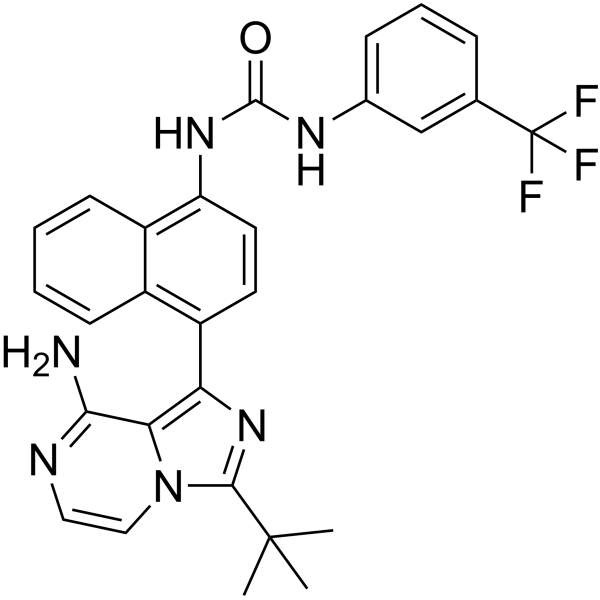
KIRA6 is an advanced small-molecule IRE1α RNase kinase inhibitor with an IC50 of 0.6 µM [2]. KIRA6 can trigger an apoptotic response .
loading...
    loading...
28
28 Cited Publications
Cat. No.: HY-13637
CAS No.: 82410-32-0
Purity:  99.89%
Synonyms: BW 759; 2'-Nor-2'-deoxyguanosine
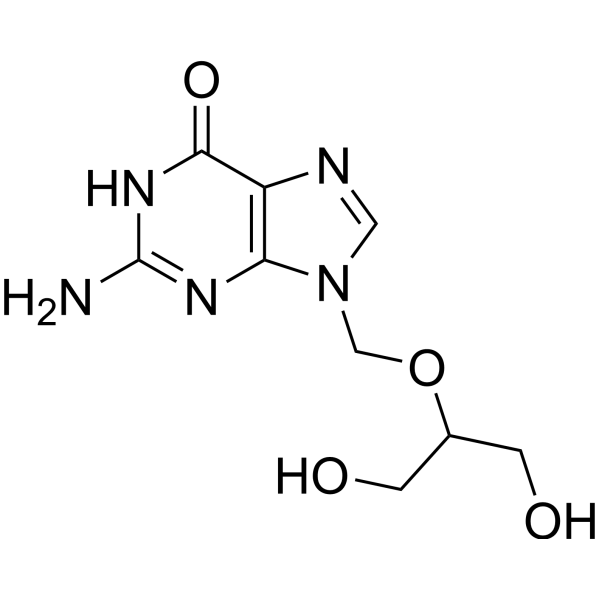
Ganciclovir (BW 759), a nucleoside analogue, is an orally active antiviral agent with activity against CMV. Ganciclovir also has activity in vitro against members of the herpes group and some other DNA viruses. Ganciclovir inhibits the in vitro replication of human herpes viruses (HSV 1 and 2, CMV) and adenovirus serotypes 1, 2, 4, 6, 8, 10, 19, 22 and 28. Ganciclovir has an IC50 of 5.2 μM for feline herpesvirus type-1 (FHV-1) and can diffuse into the brain .
loading...
    loading...
28
28 Cited Publications
Cat. No.: HY-13637A
CAS No.: 107910-75-8
Purity:  99.92%
Synonyms: BW 759 sodium; 2'-Nor-2'-deoxyguanosine sodium
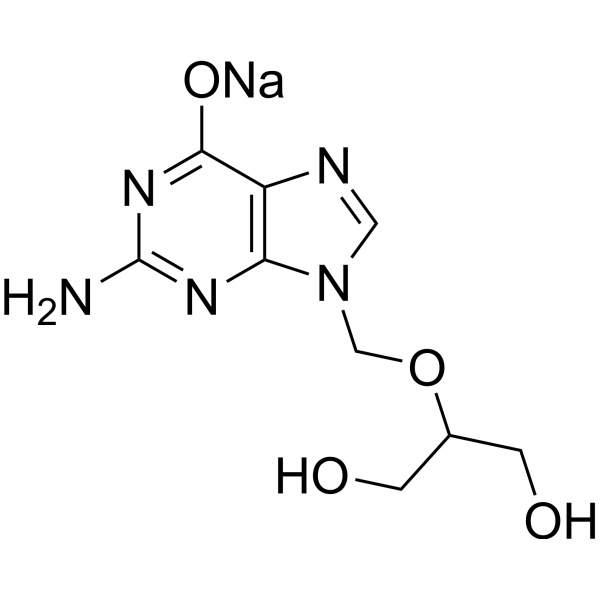
Ganciclovir (BW 759) sodium, a nucleoside analogue, is an orally active antiviral agent with activity against CMV. Ganciclovir sodium also has activity in vitro against members of the herpes group and some other DNA viruses. Ganciclovir sodium inhibits the in vitro replication of human herpes viruses (HSV 1 and 2, CMV) and adenovirus serotypes 1, 2, 4, 6, 8, 10, 19, 22 and 28. Ganciclovir sodium has an IC50 of 5.2 μM for feline herpesvirus type-1 (FHV-1) and can diffuse into the brain .
loading...
    loading...
19
19 Cited Publications
Cat. No.: HY-15727
CAS No.: 1047644-62-1
Purity:  99.53%
Synonyms: GSK2110183; LAE002
Target:  

Akt PKC ROCK

Research Areas:  

Cancer

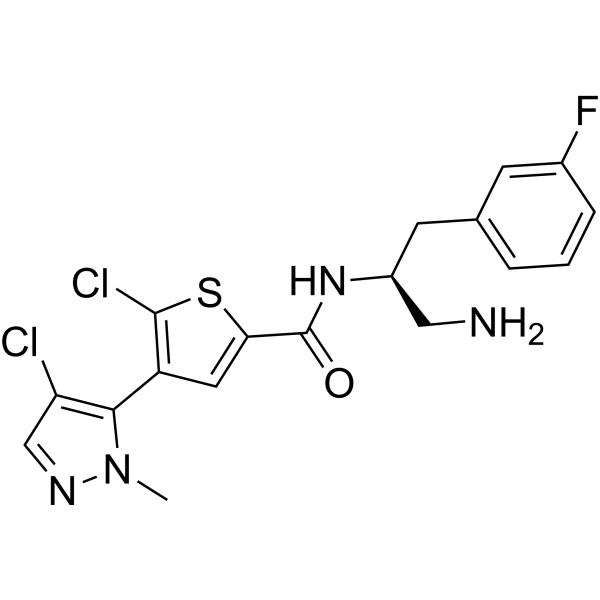
Afuresertib (GSK2110183) is an orally bioavailable, selective, ATP-competitive and potent pan-Akt kinase inhibitor with Kis of 0.08/2/2.6 nM for Akt1/Akt2/Akt3, respectively .
loading...
    loading...
19
19 Cited Publications
Cat. No.: HY-15727A
CAS No.: 1047645-82-8
Purity:  99.95%
Synonyms: GSK2110183 hydrochloride; LAE002 hydrochloride
Target:  

Akt PKC ROCK

Research Areas:  

Cancer

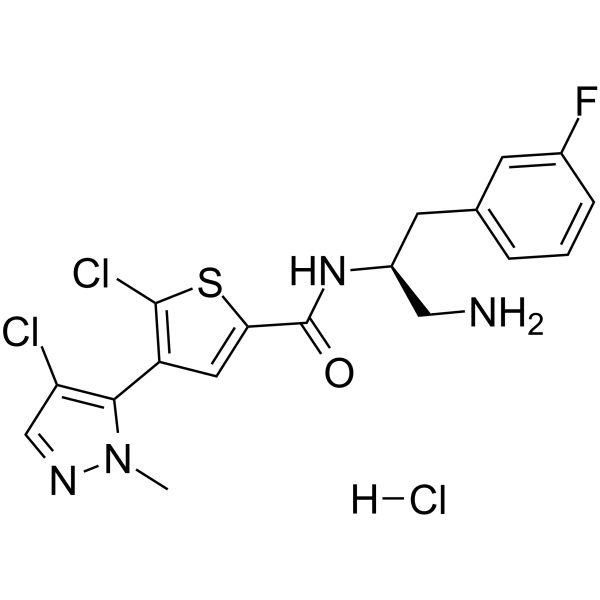
Afuresertib hydrochloride (GSK 2110183 hydrochloride) is an orally bioavailable, selective, ATP-competitive and potent pan-Akt kinase inhibitor with Kis of 0.08/2/2.6 nM for Akt1/Akt2/Akt3 respectively .
loading...
    loading...
19
19 Cited Publications
Cat. No.: HY-122272
CAS No.: 61869-08-7
Purity:  99.92%
Synonyms: BRL29060
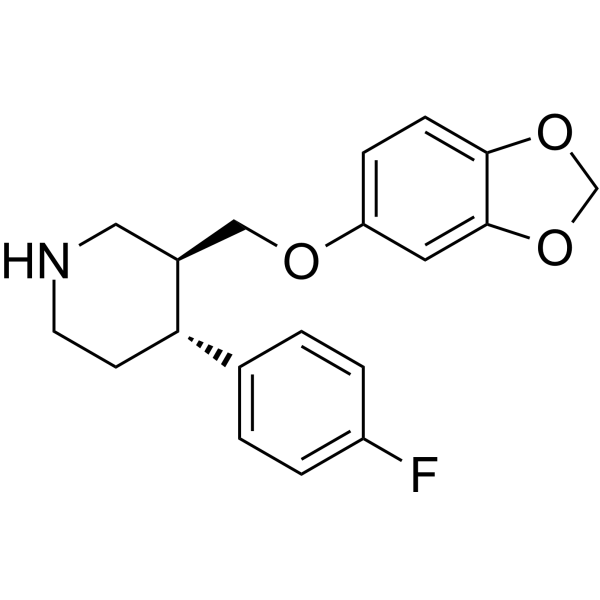
Paroxetine (BRL29060) is an orally active and selective serotonin reuptake inhibitor (SSRI) and apoptosis inducer with blood-brain barrier permeability. Paroxetine inhibits nitric oxide synthase and CYP2D6, induces desensitization of 5-HT1A/1B/1D autoreceptors, downregulates 5-HT2 receptors, and promotes the production of inflammatory cytokines. Paroxetine is a weak norepinephrine (NE) uptake inhibitor and possesses antitumor activity. Paroxetine is widely used in research concerning depression, obsessive-compulsive disorder, panic disorder, social phobia, generalized anxiety disorder, post-traumatic stress disorder, premenstrual dysphoric disorder, hot flashes, and related conditions .
loading...
    loading...
19
19 Cited Publications
Cat. No.: HY-B0492
CAS No.: 78246-49-8
Synonyms: BRL29060 hydrochloride; BRL29060A
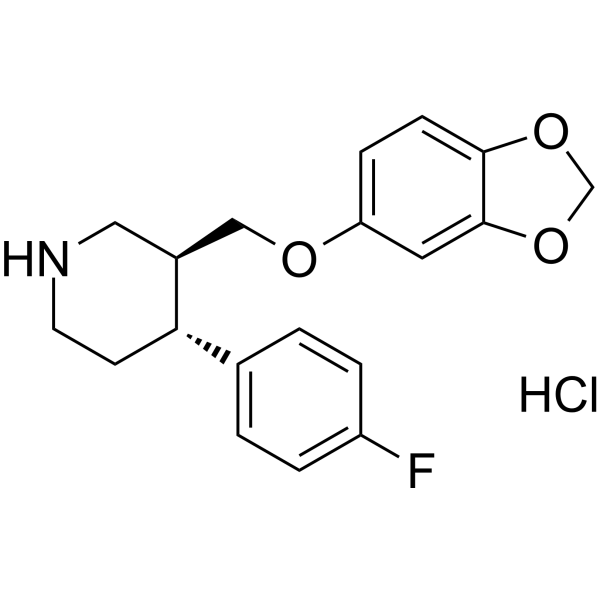
Paroxetine (BRL29060) hydrochloride is an orally active and selective serotonin reuptake inhibitor (SSRI) and apoptosis inducer with blood-brain barrier permeability. Paroxetine hydrochloride inhibits nitric oxide synthase and CYP2D6, induces desensitization of 5-HT1A/1B/1D autoreceptors, downregulates 5-HT2 receptors, and promotes the production of inflammatory cytokines. Paroxetine hydrochloride is a weak norepinephrine (NE) uptake inhibitor and possesses antitumor activity. Paroxetine hydrochloride is widely used in research concerning depression, obsessive-compulsive disorder, panic disorder, social phobia, generalized anxiety disorder, post-traumatic stress disorder, premenstrual dysphoric disorder, hot flashes, and related conditions .
loading...
    loading...
13
13 Cited Publications
Cat. No.: HY-13765
CAS No.: 154-42-7
Purity:  99.90%
Synonyms: Thioguanine; 2-Amino-6-purinethiol
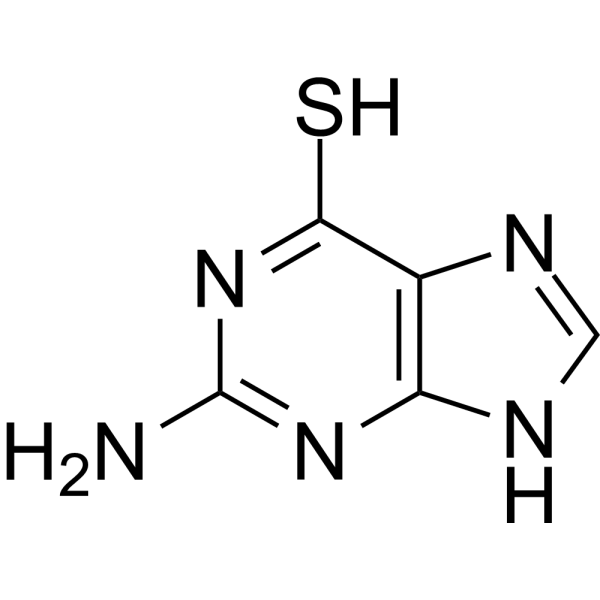
6-Thioguanine (Thioguanine; 2-Amino-6-purinethiol) is an anti-leukemia and immunosuppressant agent, acts as an inhibitor of SARS and MERS coronavirus papain-like proteases (PLpros) and also potently inhibits USP2 activity, with IC50s of 25 μM and 40 μM for Plpros and recombinant human USP2, respectively.
loading...
    loading...
13
13 Cited Publications
Cat. No.: HY-13104
CAS No.: 711019-86-2
Purity:  98.15%
Target:  

P2Y Receptor Apoptosis

Research Areas:  

Cardiovascular Disease

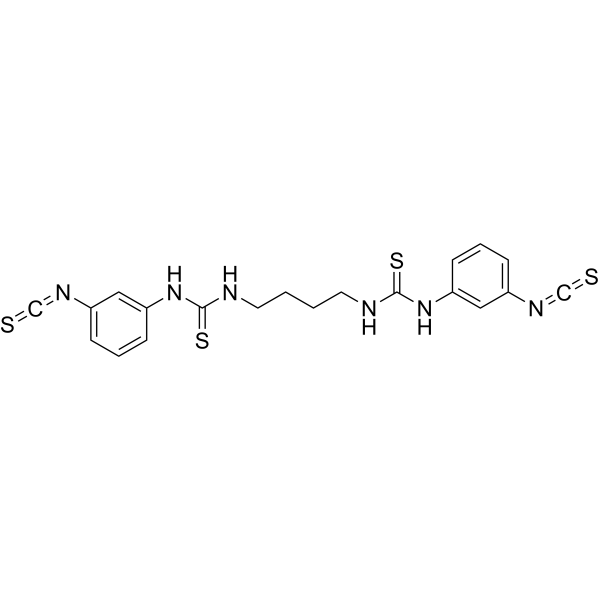
MRS 2578 is a selective and potent P2Y6 receptor antagonist with IC50s of 37 nM (human) and 98 nM (rat). MRS 2578 exhibits insignificant activity at P2Y1, P2Y2, P2Y4, and P2Y11 receptors .
loading...
    loading...
11
11 Cited Publications
Cat. No.: HY-14463
CAS No.: 912999-49-6
Purity:  99.92%
Synonyms: AT13387
Target:  

HSP

Research Areas:  

Cancer

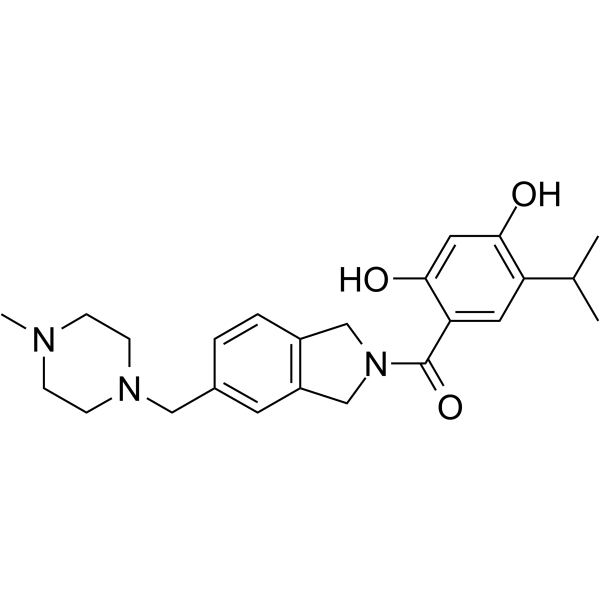
Onalespib (AT13387) is a potent and cross the blood-brain barrier heat-shock-protein-90 (Hsp90) inhibitor. Onalespib inhibits the proliferation, survival and migration. Onalespib decreases the expression of EGFR, p-EGFR, AKT, P-AKT, ERK1/2, P-ERK1/2, S6, P-S6 protein. Onalespib shows antitumor activity. Onalespib has the potential for the research of non-small cell lung cancer (NSCLC) .
loading...
    loading...
11
11 Cited Publications
Cat. No.: HY-B0492A
CAS No.: 110429-35-1
Synonyms: BRL29060 hydrochloride hemihydrate; BRL29060A hemihydrate
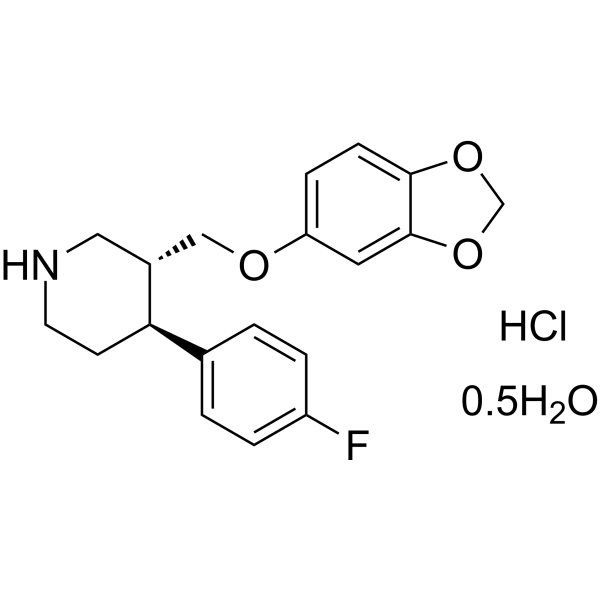
Paroxetine (BRL29060) hydrochloride hemihydrate is an orally active and selective serotonin reuptake inhibitor (SSRI) and apoptosis inducer with blood-brain barrier permeability. Paroxetine hydrochloride hemihydrate inhibits nitric oxide synthase and CYP2D6, induces desensitization of 5-HT1A/1B/1D autoreceptors, downregulates 5-HT2 receptors, and promotes the production of inflammatory cytokines. Paroxetine hydrochloride hemihydrate is a weak norepinephrine (NE) uptake inhibitor and possesses antitumor activity. Paroxetine hydrochloride hemihydrate is widely used in research concerning depression, obsessive-compulsive disorder, panic disorder, social phobia, generalized anxiety disorder, post-traumatic stress disorder, premenstrual dysphoric disorder, hot flashes, and related conditions .
loading...
    loading...
10
10 Cited Publications
Cat. No.: HY-W112938
CAS No.: 92739-63-4
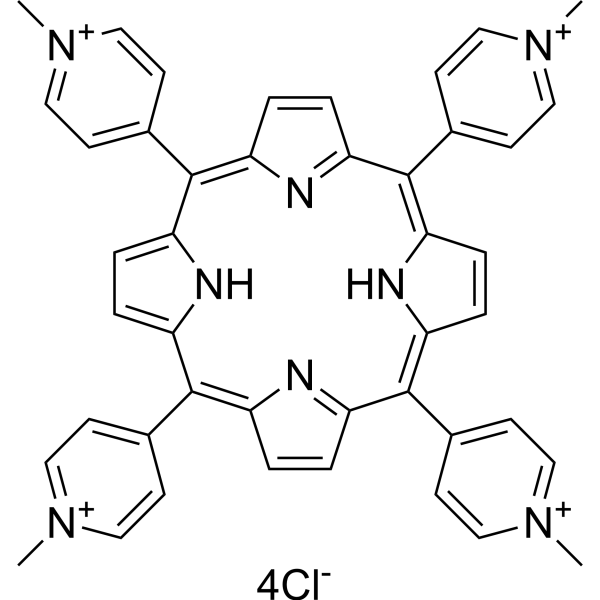
TMPyP tetrachloride is a quadruplex-specific ligand. TMPyP tetrachloride inhibits the interaction between G-quadruplexes and IGF-1. TMPyP tetrachloride is a telomerase inhibitor and inhibits cancer cells proliferation. TMPyP tetrachloride is also a stabilizer of nucleic acid secondary structure and an acetylcholinesterase inhibitor. Besides, TMPyP tetrachloride has antiviral activity against SARS-CoV-2 [2] .
loading...
    loading...
10
10 Cited Publications
Cat. No.: HY-108477
CAS No.: 36951-72-1
Purity:  ≥98.0%
Synonyms: TMP 1363
Research Areas:  

Cancer

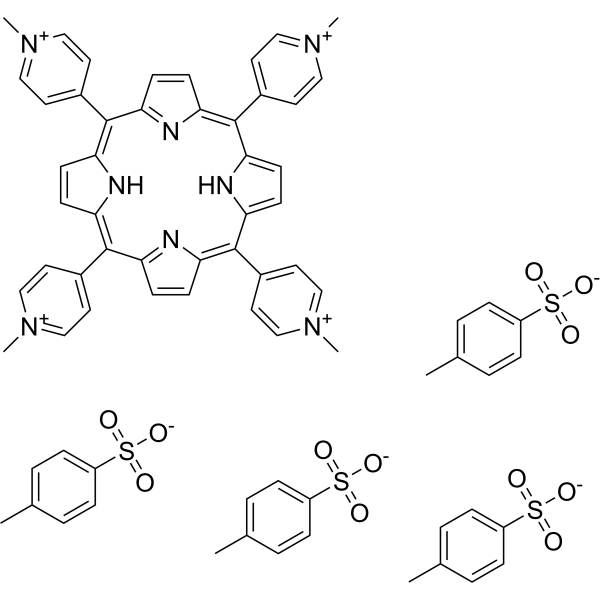
TMPyP4 tosylate (TMP 1363) is a quadruplex-specific ligand. TMPyP4 tosylate inhibits the interaction between G-quadruplexes and IGF-1. TMPyP4 tosylate is a telomerase inhibitor and inhibits cancer cells proliferation. TMPyP4 tosylate is also a stabilizer of nucleic acid secondary structure and an acetylcholinesterase inhibitor. Besides, TMPyP4 tosylate has antiviral activity against SARS-CoV-2 [2] .
loading...
    loading...

