112 Results for "

3CLpro

" in MedChemExpress (MCE) Product Catalog:
Products (112)

112 Results for "3CLpro" in MCE Product Catalog:

7
7 Publications Verification
Cat. No.: HY-100721
CAS No.: 1416992-39-6
Purity:  98.69%
Target:  

Virus Protease

Research Areas:  

Infection

GC376 sodium is a 3CLpro inhibitor; inhibits the replication of viruses TGEV, FIPV and PTV with IC50 values of 0.15, 0.2 and 0.15 μM, respectively.
loading...
    loading...
5
5 Cited Publications
Cat. No.: HY-136259
CAS No.: 1417700-13-0
Purity:  99.87%
Target:  

SARS-CoV Virus Protease

Research Areas:  

Infection

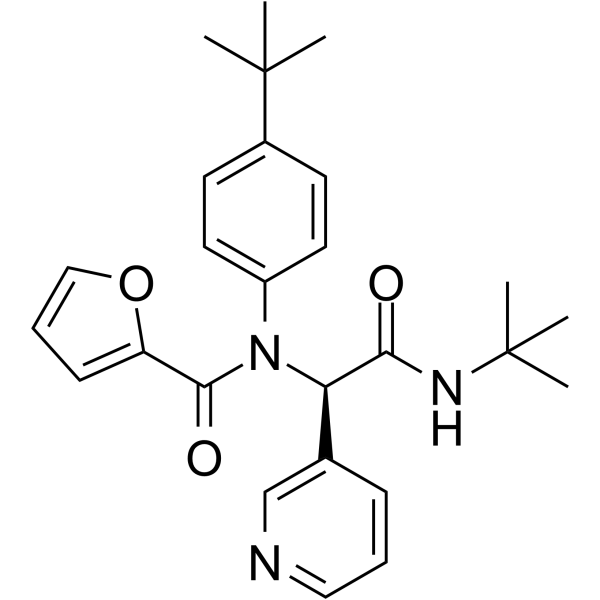
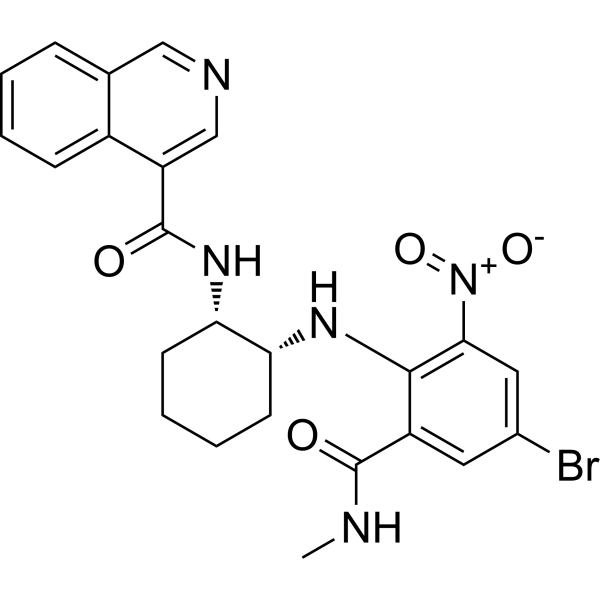
ML188, a first in class probe, is a selective non-covalent SARS-CoV 3CLpro inhibitor with an IC50 of 1.5 μM. Antiviral activity .
loading...
    loading...
2
2 Cited Publications
Cat. No.: HY-138078
CAS No.: 2468015-78-1
Purity:  99.87%
Synonyms: PF-07304814
Target:  

SARS-CoV

Research Areas:  

Infection

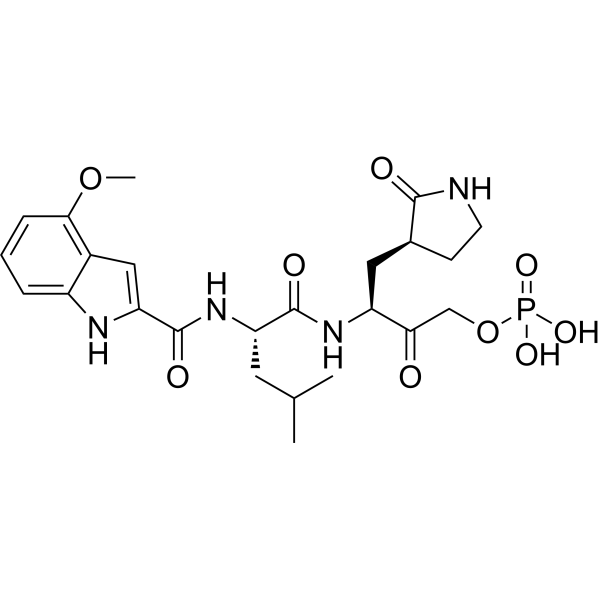
Lufotrelvir (PF-07304814), a phosphate proagent of PF-00835231, acts as a potent 3CLpro protease (Mpro) inhibitor with SARS-CoV-2 antiviral activity. Lufotrelvir binds and inhibits SARS-CoV-2 3CLpro activity with a Ki of 174nM. Lufotrelvir is promising single antiviral agent and also can be used for the research of combination with other antivirals that target other critical stages of the coronavirus life cycle.
loading...
    loading...
Cat. No.: HY-172437
CAS No.: 2996148-73-1
Synonyms: S-892216
Target:  

Virus Protease SARS-CoV

Research Areas:  

Infection

Secutrelvir is an oral SARS-CoV-2 3C-like protease (3CLpro) inhibitor and antiviral agent, with IC50 values of 0.655 nM and 0.697 nM against SARS-CoV-2 3CLpro, respectively. Secutrelvir forms a reversible covalent bond with the catalytic cysteine C145 of SARS-CoV-2 3CLpro, thereby inhibiting viral replication. Secutrelvir exhibits activity against multiple SARS-CoV-2 variants and can be used in research related to coronavirus disease 2019 (COVID-19) [3].
loading...
    loading...
Cat. No.: HY-B0961
CAS No.: 129-16-8
Synonyms: Mercury dibromofluorescein disodium salt; ZP1
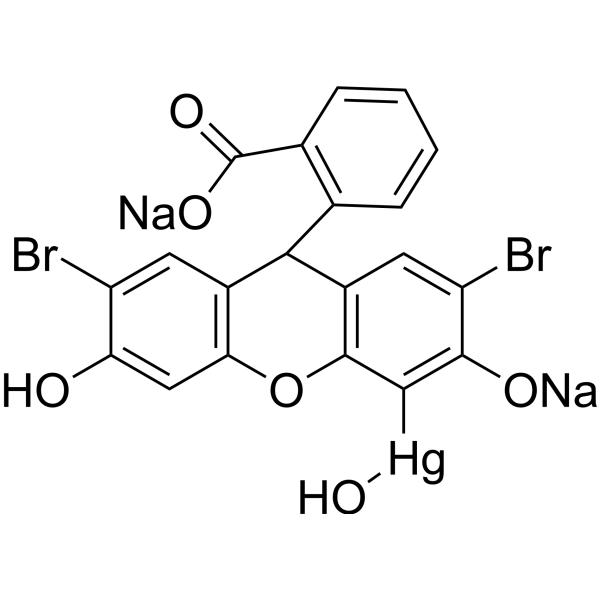
Merbromin is a mixed inhibitor of the 3-chymotrypsin-like protease (3CLpro) of SARS-CoV-2, with an IC50 of 2.7 μM. Merbromin effectively inhibits the replication of the Zika virus (ZIKV) and shows anti-ZIKV activity by inhibiting ZIKVpro. Merbromin can also be used as a topical disinfectant for cuts and scrapes, and it serves as a biological dye .
loading...
    loading...
Cat. No.: HY-161177
Research Areas:  

Infection

PROTAC KRAS G12D degrader 2 is a peptidomimetic PROTAC specifically targeting the dimeric SARS-CoV-2 3CL Pro protein. PROTAC KRAS G12D degrader 2 inhibits SARS-CoV-2 3CLPro with an IC50 of 21.2 μM. PROTAC KRAS G12D degrader 2 specifically binds to the active site of SARS-CoV-2 3CL Pro. PROTAC KRAS G12D degrader 2 reduces protein levels of SARS-CoV-2 3CL Pro without affecting cell viability. PROTAC KRAS G12D degrader 2 can be used for the study of viral infections in Coronavirus genera .
loading...
    loading...
Cat. No.: HY-N3266
CAS No.: 99353-00-1
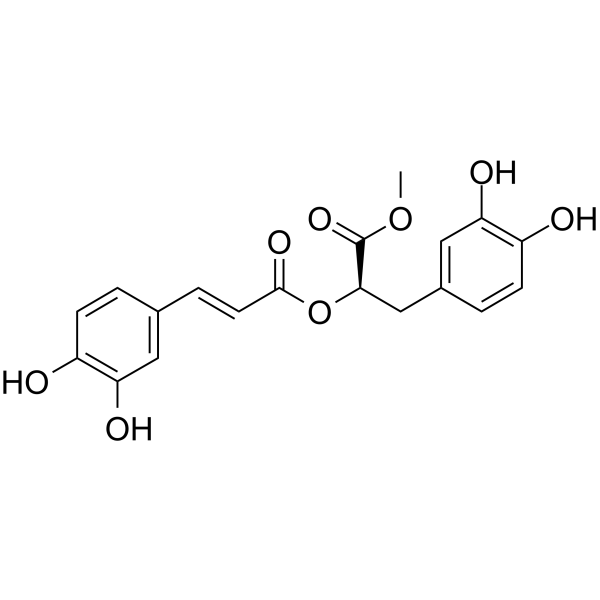
Methyl rosmarinate is an orally active hydroxycinnamic acid. Methyl rosmarinate exhibits an IC50 of 24.70 μM and a Ki of 15.29 μM against PTP1B, an IC50 of 41.46 μg/mL against BChE, a Ki of 0.61 mM against mushroom tyrosinase, and an IC50 of 2.50 μM against SARS-CoV-2 3CLpro. Methyl rosmarinate downregulates the phosphorylation levels of ERK, JNK, p38, Smad2 and Smad3. Methyl rosmarinate activates erythrocyte BPGM and promotes the production of 2,3-BPG. Methyl rosmarinate induces apoptosis of fibroblasts. Methyl rosmarinate prolongs the survival time of hypoxic mice. Methyl rosmarinate improves insulin sensitivity. Methyl rosmarinate binds to SARS-CoV-2 3CLpro and inhibits viral replication. Methyl rosmarinate induces glioblastoma cell death. Methyl rosmarinate activates the TGR5/AMPK axis and reduces the levels of ROS and MDA. Methyl rosmarinate shows inhibitory activity against MMP-1. Methyl rosmarinate can be used in research related to pulmonary fibrosis, hypoxia-induced injury, type 2 diabetes, Alzheimer's disease, hyperpigmentation disorders, COVID-19, glioblastoma and myocardial ischemia-reperfusion injury [3] .
loading...
    loading...
Cat. No.: HY-N0063R
CAS No.: 65995-63-3
Punicalagin (Standard) is the analytical standard of Punicalagin. This product is intended for research and analytical applications. Punicalagin is a polyphenol ingredient isolated from Pomegranate (Punica granatum L.) or the leaves of Terminalia catappa L.. Punicalagin is a reversible and non-competitive 3CLpro inhibitor and inhibits SARS-CoV-2 replication in vitro. Punicalagin is an anti-hepatitis B virus (HBV) agent and has antioxidant, anti-inflammatory, and anticancer effects. Punicalagin has the potential for the research of COVID-19 [3].
loading...
    loading...
Cat. No.: HY-149535
CAS No.: 2921711-74-0
Purity:  99.84%
Synonyms: WU-04
Target:  

SARS-CoV

Research Areas:  

Infection

Iscartrelvir (WU-04) is a non-covalent inhibitor of SARS-CoV-2, targeting the 3CLpro protein. Iscartrelvir has high inhibitory effect on the 3CLpro protein of 6 SARS-CoV-2 variants (Alpha, Beta, Gamma, Delta, Lambda and Omicron) and 2 coronaviruses (SARS-CoV and MERS-CoV) .
loading...
    loading...
Cat. No.: HY-90001S
CAS No.: 1616968-73-0
Synonyms: ABT 538-d6; RTV-d6
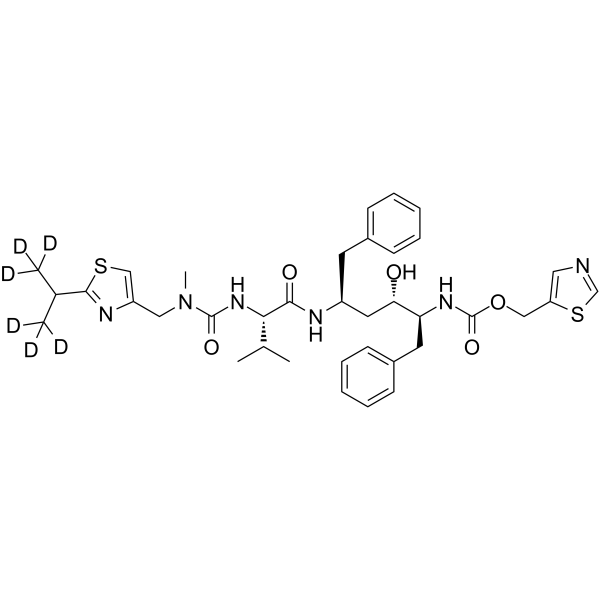
Ritonavir-d6 is the deuterium labeled Ritonavir. Ritonavir (ABT 538) is an inhibitor of HIV protease used to treat HIV infection and AIDS. Ritonavir is also a SARS-CoV 3CLpro inhibitor with an IC50 of 1.61 μM .
loading...
    loading...
Cat. No.: HY-N8306
CAS No.: 50597-93-8
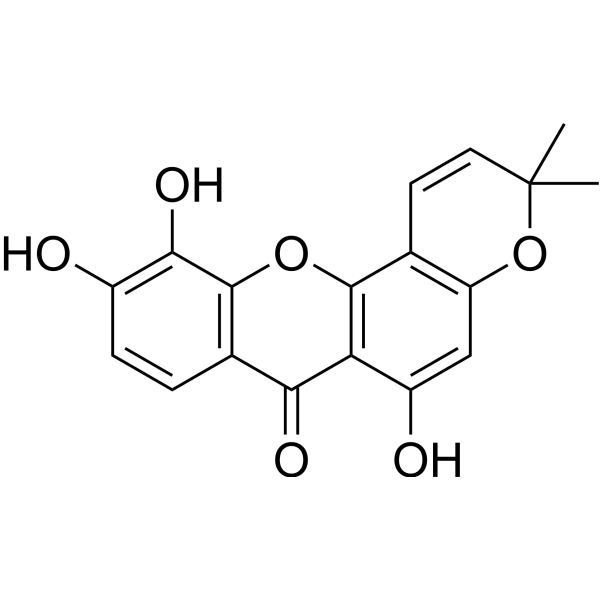
Isojacareubin can be isolated from Hypericum japonicum. Isojacareubin covalently inhibits SARS-CoV-2 3CLpro. Isojacareubin also has anti-helicobacter activity. Isojacareubin inhibits PKC, and suppresses hepatocellular carcinoma metastasis and induces apoptosis [3].
loading...
    loading...
Cat. No.: HY-149264
CAS No.: 622794-09-6
Purity:  ≥99.0%
Target:  

SARS-CoV

Research Areas:  

Infection

SARS-CoV-2 3CLpro-IN-13 is a potent SARS-CoV-2 3CL protease inhibitor with an IC50 value of 21 nM. SARS-CoV-2 3CLpro-IN-13 shows anti-coronavirus activity .
loading...
    loading...
Cat. No.: HY-152005
CAS No.: 302821-53-0
Target:  

SARS-CoV

Research Areas:  

Infection

SARS-CoV-2 3CLpro-IN-6 is a reversible covalent inhibitor of SARS-CoV-2 3CL protease. SARS-CoV-2 3CLpro-IN-6 has potent inhibitory activity for SARS-CoV-2 3CL pro with an IC50 value of 4.9 μM. SARS-CoV-2 3CLpro-IN-6 can be used for the research of coronavirus disease 2019 (COVID-19) .
loading...
    loading...
Cat. No.: HY-D2342
SARS-CoV-2 3CLpro probe-1 (Compound probe 3) is a selective and activity-based probe for the SARS-CoV-2 3CL protease. SARS-CoV-2 3CLpro probe-1 can detect endogenously expressed 3CLpro in SARS-CoV-2-infected cells .
loading...
    loading...
Cat. No.: HY-152009
CAS No.: 1164478-67-4
Target:  

SARS-CoV

Research Areas:  

Infection

SARS-CoV-2 3CLpro-IN-7 is a reversible covalent SARS-CoV-2 3CL protease inhibitor with an IC50 value of 1.4 µM .
loading...
    loading...
Cat. No.: HY-N12677
CAS No.: 199167-23-2
Synonyms: Caflanone; FBL-03G
Isocannflavin B (Caflanone) is an autophagy inducer that induces strong autophagic intracytoplasmic vacuolization in breast cancer cells. Isocannflavin B inhibits ACE2-mediated viral entry as well as SARS-CoV-2 PLpro and 3CLpro, and inhibits HCoV-OC43 in vitro. Isocannflavin B reduces Akt phosphorylation and p21 Cip1 expression in breast cancer cells. Isocannflavin B induces tumor cell apoptosis, autophagy, and cell cycle arrest, and inhibits cell proliferation. Isocannflavin B binds to the extracellular Ig-like domain of CSF1-R as a targeting ligand. Isocannflavin B can be used for research on breast cancer, viral infection, and Parkinson's disease [3] .
loading...
    loading...
Cat. No.: HY-157477
Target:  

SARS-CoV Cathepsin

Research Areas:  

Infection

SARS-CoV-2 3CLpro-IN-22 (Compound 17) is a cathepsin L (CTSL ) inhibitor with an IC50 value of 32.5 nM. SARS-CoV-2 3CLpro-IN-22 can be used for the study of SARS-CoV-2 virus .
loading...
    loading...
Cat. No.: HY-N9861
CAS No.: 481-45-8
Kayaflavone is a biflavonoid compound from the seed kernel of Torreya grandis. Kayaflavone exhibits anticancer activity and is cytotoxic to human tumor cell lines. Kayaflavone inhibits amyloid-β toxicity in PC-12 cells with an EC50 of 5.29 μM. Kayaflavone is predicted to bind to the catalytic site of the SARS-CoV-2 main protease (Mpro/3CLpro) and block enzyme activity, indicating potential antiviral activity. Kayaflavone can be used in cancer-related research, such as cervical cancer and breast cancer, as well as in research related to neurological diseases [3] .
loading...
    loading...
Cat. No.: HY-17367S4
CAS No.: 1092540-50-5
Synonyms: BMS-232632-d6
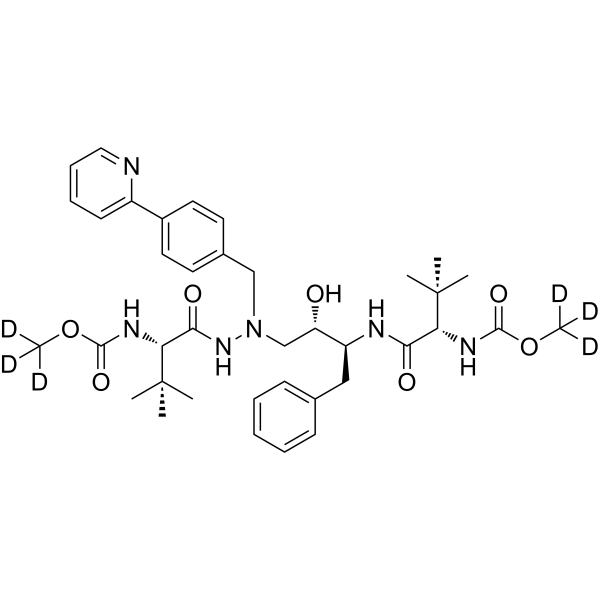
Atazanavir-d6 is deuterium labeled Atazanavir. Atazanavir (BMS-232632), a highly selective HIV-1 protease inhibitor, is the first protease inhibitor approved for once-daily administration . Atazanavir (BMS-232632) is a substrate and inhibitor of CYP3A4, and an inhibitor and inducer of P-glycoprotein (P-gp) . Atazanavir is also a SARS-CoV 3CLpro inhibitor with an IC50 of 3.49 μM [3].
loading...
    loading...
Cat. No.: HY-190319
CAS No.: 3054108-85-6
Research Areas:  

Infection

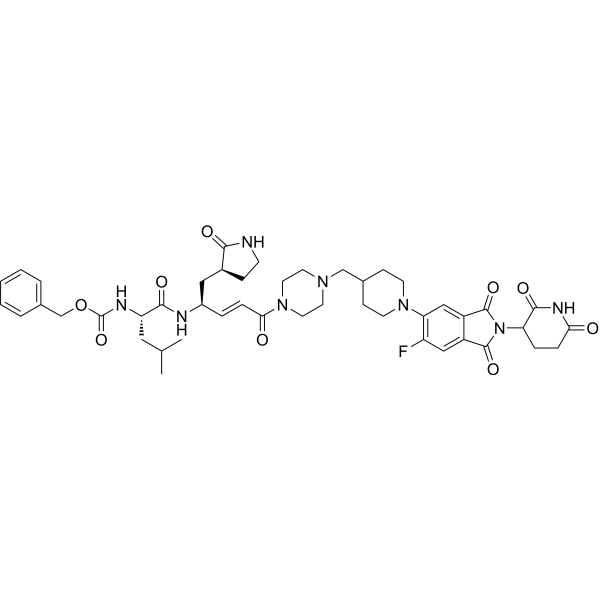
PROTAC SARS-CoV-2 3CLPro degrader 3 is a GC-376-derived peptidomimetic PROTAC degrader of SARS-CoV-2 3CLPro (IC50 = 21.2 μM). PROTAC SARS-CoV-2 3CLPro degrader 3 binds to the active site of dimeric SARS-CoV-2 3CLPro, and its cereblon-binding moiety recruits the cullin-RING ubiquitin ligase complex for polyubiquitination and proteasomal degradation, promoting protease degradation in cultured cells and reducing viral main protease protein levels. PROTAC SARS-CoV-2 3CLPro degrader 3 can be used for research related to SARS-CoV-2 infection .
loading...
    loading...

