


27 Results for "

B lymphocyte proliferation

" in MedChemExpress (MCE) Product Catalog:
Products (27)

27 Results for "B lymphocyte proliferation" in MCE Product Catalog:

14
14 Cited Publications
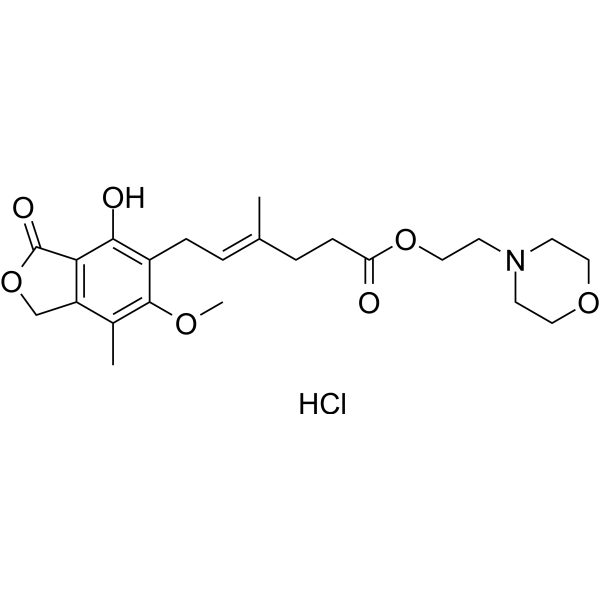
Cat. No.: HY-B0199A
CAS No.: 116680-01-4
Synonyms: RS 61443 hydrochloride; TM-MMF hydrochloride
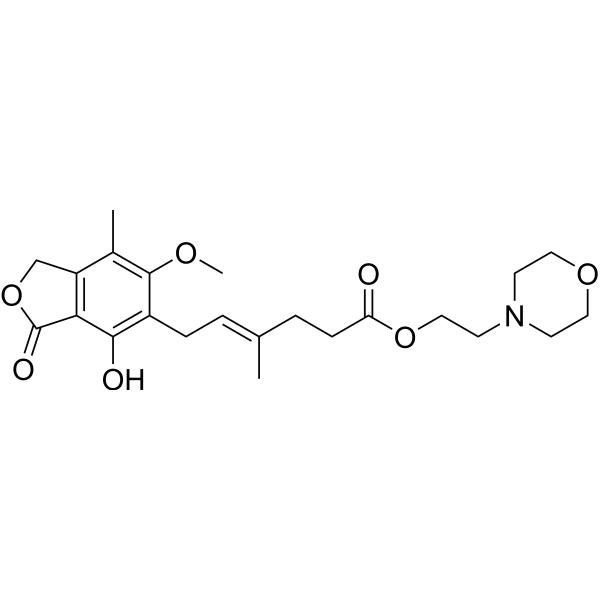
Mycophenolate mofetil (RS 61443; TM-MMF) hydrochloride is an orally active antimetabolic immunosuppressant with antiproliferative and anti-inflammatory properties. Mycophenolate mofetil hydrochloride significantly inhibits the production of B, T lymphocytes and the proliferation of smooth muscle cells by selectively blocking the de novo purine synthesis pathway. Mycophenolate mofetil hydrochloride effectively reduces adventitial inflammation, medial necrosis and intimal thickening in rat aortic allografts, and decreases the number of lymphocytes expressing the IL-2 receptor, thereby delaying xenograft rejection. Mycophenolate mofetil hydrochloride shows certain toxicity in a hamster-to-rat limb xenotransplantation model when used in combination with FK506 (HY-13756). Mycophenolate mofetil hydrochloride is widely used in studies related to allograft arteriosclerosis (chronic rejection) .
loading...
    loading...
2
2 Cited Publications
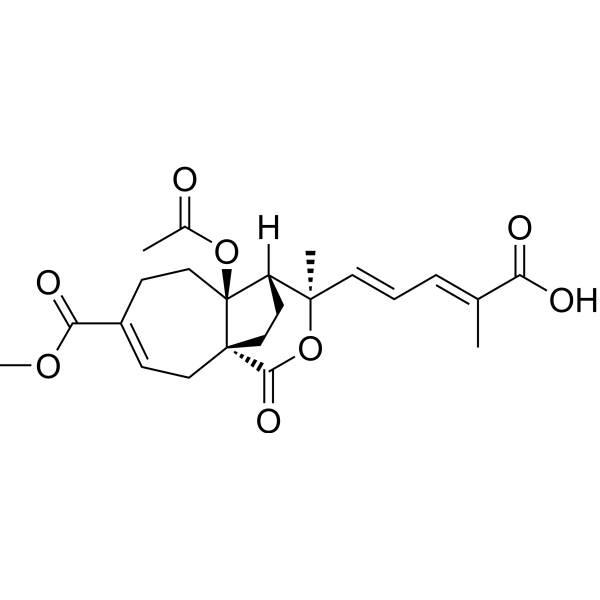
Cat. No.: HY-N6939
CAS No.: 82508-31-4
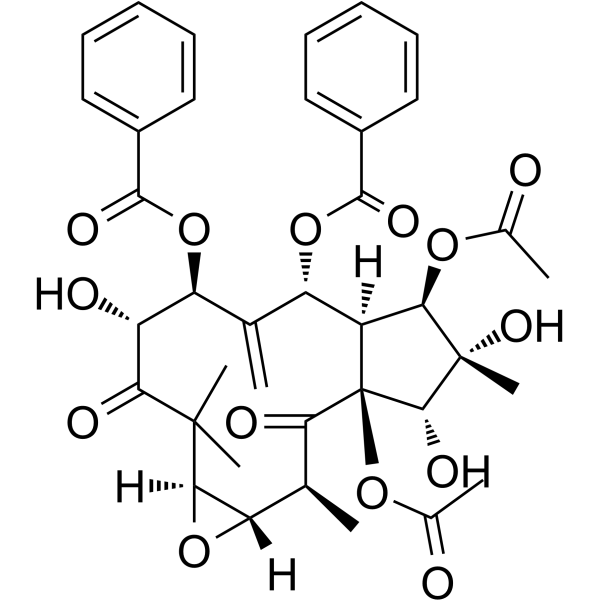
Pseudolaric Acid B is an orally active diterpene acid. Pseudolaric Acid B has anti-fungal, anti-fertility, anti-angiogenesis and anticancer activity, and can induce tumor cell apoptosis and autophagy. In addition, Pseudolaric Acid B can inhibit the secretion of hepatitis B virus (HBV) and has immunosuppressive effect, selectively inhibiting the proliferation of T lymphocytes and the production of IL-2 .
loading...
    loading...
1
1 Cited Publications
Cat. No.: HY-P99446
CAS No.: 845264-92-8
Synonyms: TACI-Ig; TACI-Fc 5

Target:  

TNF Receptor

Research Areas:  

Inflammation/Immunology

Atacicept (TACI-Ig) is a is a recombinant fusion protein containing the extracellular, ligand-binding portion of the TACI receptor and the Fc portion of human IgG. Atacicept inhibits B cell stimulation by binding to B lymphocyte stimulator and a proliferation-inducing ligand. Atacicept can be used in research of B-cell autoimmune disease .
loading...
    loading...
1
1 Cited Publications
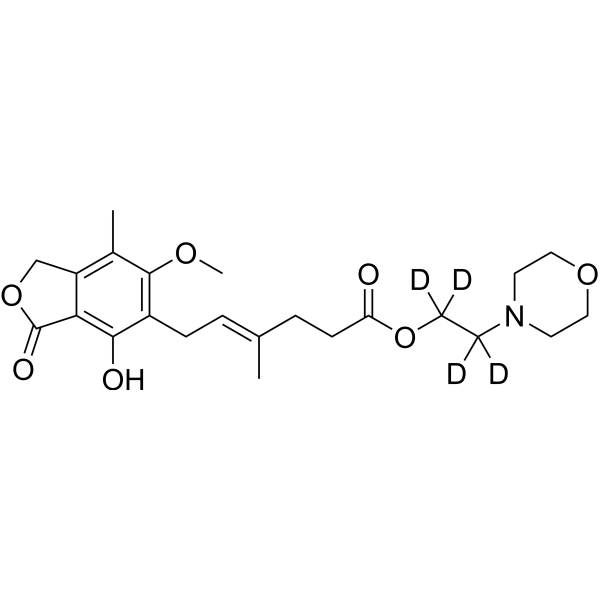
Cat. No.: HY-B0199S
CAS No.: 1132748-21-0
Mycophenolate Mofetil-d4 is the deuterium labeled Mycophenolate Mofetil. Mycophenolate mofetil (RS 61443; TM-MMF) hydrochloride is an orally active antimetabolic immunosuppressant with antiproliferative and anti-inflammatory properties. Mycophenolate mofetil hydrochloride significantly inhibits the production of B, T lymphocytes and the proliferation of smooth muscle cells by selectively blocking the de novo purine synthesis pathway. Mycophenolate mofetil hydrochloride effectively reduces adventitial inflammation, medial necrosis and intimal thickening in rat aortic allografts, and decreases the number of lymphocytes expressing the IL-2 receptor, thereby delaying xenograft rejection. Mycophenolate mofetil hydrochloride shows certain toxicity in a hamster-to-rat limb xenotransplantation model when used in combination with FK506 (HY-13756). Mycophenolate mofetil hydrochloride is widely used in studies related to allograft arteriosclerosis (chronic rejection) .
loading...
    loading...
Cat. No.: HY-P99568
CAS No.: 2136630-26-5
Synonyms: RC18
Telitacicept (RC18) is a fully human TACI-Fc fusion protein. Telitacicept is a dual B lymphocyte stimulator (BLyS)/APRIL (a proliferation-inducing ligand) inhibitor that effectively blocks proliferation of B lymphocytes. Telitacicept can be used in research of B-cell autoimmune disease . The component ratio of this product is Active ingredient : Excipients = 1: 0.5-1: 0.8.
loading...
    loading...
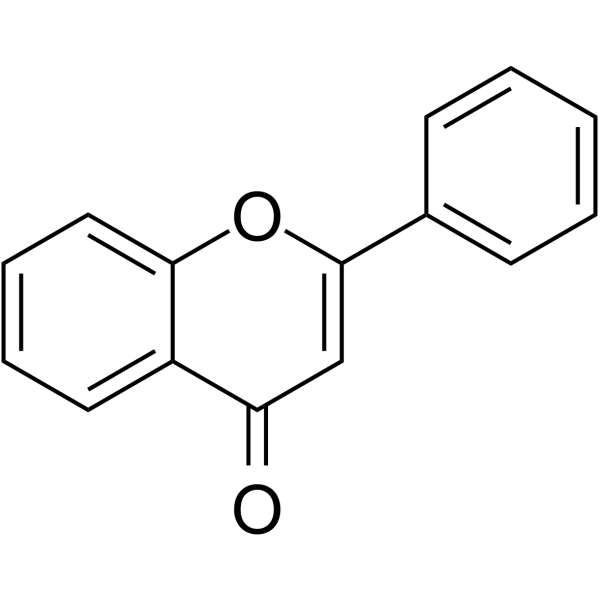
Cat. No.: HY-N2424
CAS No.: 525-82-6
Synonyms: 2-Phenyl-4-chromone
Flavone is an anti-tumor compound that targets cell cycle regulatory proteins (such as cyclin B1) and apoptosis-related factors (such as p21waf1, PIG3). Flavone selectively induces mitochondrial-mediated apoptosis pathways in tumor cells, inhibits cyclin B1 protein expression, upregulates p21waf1, and activates p63/p73 proteins. Flavone has immunomodulatory functions that enhance natural killer cell (NK cell) activity and lymphocyte proliferation. Flavone is used in cancer research, especially for its inhibitory potential in solid tumor models such as esophageal cancer and liver cancer .
loading...
    loading...
Cat. No.: HY-P1827
CAS No.: 219312-69-3
Target:  

Tyrosinase MHC

Research Areas:  

Cancer

mTRP-2 (180-188) is an MHC class I-restricted tumor-associated antigenic peptide derived from mouse tyrosinase-related protein 2 (TRP-2). mTRP-2 (180-188) binds to HLA-A*0201 with an ID50 of 36 nM. mTRP-2 (180-188) can be presented by H-2K b molecules and activate TRP-2-specific cytotoxic T lymphocytes (CTL). mTRP-2 (180-188) induces immune responses against B16 melanoma by promoting antigen-specific T cell proliferation, cytokine release, and CTL-mediated tumor cell killing. mTRP-2 (180-188) can be used in studies related to melanoma, glioma, and tumor immunology .
loading...
    loading...
Cat. No.: HY-B0199R
CAS No.: 128794-94-5
Synonyms: RS 61443 (Standard); TM-MMF (Standard)
Mycophenolate Mofetil (Standard) is the analytical standard of Mycophenolate Mofetil. This product is intended for research and analytical applications. Mycophenolate mofetil (RS 61443; TM-MMF) hydrochloride is an orally active antimetabolic immunosuppressant with antiproliferative and anti-inflammatory properties. Mycophenolate mofetil hydrochloride significantly inhibits the production of B, T lymphocytes and the proliferation of smooth muscle cells by selectively blocking the de novo purine synthesis pathway. Mycophenolate mofetil hydrochloride effectively reduces adventitial inflammation, medial necrosis and intimal thickening in rat aortic allografts, and decreases the number of lymphocytes expressing the IL-2 receptor, thereby delaying xenograft rejection. Mycophenolate mofetil hydrochloride shows certain toxicity in a hamster-to-rat limb xenotransplantation model when used in combination with FK506 (HY-13756). Mycophenolate mofetil hydrochloride is widely used in studies related to allograft arteriosclerosis (chronic rejection) .
loading...
    loading...
Cat. No.: HY-P10851
Target:  

Apoptosis

Research Areas:  

Inflammation/Immunology Cancer

HVEM(14-39) is a B- and T-lymphocyte attenuator (BTLA) peptide inhibitor. HVEM (14-39) can be combined with BTLA with a KD of 0.102 μM. HVEM(14-39) enhances the activation and proliferation of T cells by regulating the expression of BTLA and HVEM in T cells, and promotes the transformation of cells into effector memory T cells. HVEM(14-39) inhibits tumor cell proliferation and promotes late apoptosis. HVEM(14-39) has immunomodulatory effects and can be used in the study of cancer .
loading...
    loading...
Cat. No.: HY-118917
CAS No.: 297730-05-3
Target:  

IMPDH

Research Areas:  

Inflammation/Immunology

VX-148 is an orally active immunosuppressant, which is a non-competitive inosine-5'-monophosphate dehydrogenase (IMPDH) inhibitor with Ki values for IMPDH Ⅱ and IMPDH Ⅰ of 6 and 14 nM respectively. VX-148 can significantly inhibit the proliferation of human peripheral blood mononuclear cells (PBMC) stimulated by T-cell mitogen (PHA) or B-cell mitogen (SPAS). VX-148 has high selectivity for lymphocytes (such as L1210, Jurkat T cells, and Raji B cells), but has no significant toxicity to non-lymphoid cells. VX-148 can inhibit antibody responses in mouse models and significantly prolong the survival time of transplanted skin in allogeneic skin transplantation models. VX-148 can be used in the research of autoimmune diseases (such as rheumatoid arthritis, psoriasis) and organ transplantation anti-rejection .
loading...
    loading...
Cat. No.: HY-164670
CAS No.: 2676188-98-8
Target:  

p38 MAPK MyD88

Research Areas:  

Inflammation/Immunology

D228 is an orally active antiinflammatory agent. D228 reduces ConA induced T lymphocyte cell proliferation (IC50: 42.85 μM) and LPS induced B lymphocyte cell proliferation (IC50: 3.15 μM). D228 is effective against inflammatory bowel disease (IBD). D228 alleviates the DSS (HY-116282C)-induced inflammation response in the IBD model by downregulating the MyD88/TRAF6/p38 signaling .
loading...
    loading...
Cat. No.: HY-P991842
Anti-CD3 Antibody (UCHT-1) is an antibody targeting CD3. Anti-CD3 Antibody (UCHT-1) activates the phospholipase C and phosphatidylinositol 3-kinase (PI3K) signaling pathways, elevates intracellular calcium levels, regulates the T3 epitope, and triggers T lymphocyte proliferation. Anti-CD3 Antibody (UCHT-1) also inhibits lymphocyte proliferation, abolishes IL-2 production, and blocks the expression of IL-2 receptors. Anti-CD3 Antibody (UCHT-1) is applicable to research related to graft-versus-host disease, acute myeloid leukemia, and B-cell acute lymphoblastic leukemia .
loading...
    loading...
Cat. No.: HY-B0199AS
Synonyms: RS 61443-d4 hydrochloride; TM-MMF-d4 hydrochloride
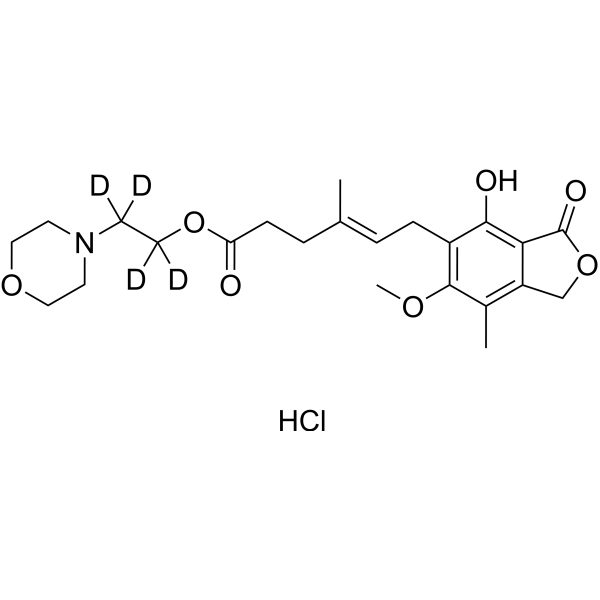
Mycophenolate Mofetil-d4 hydrochloride is deuterated labeled Mycophenolate mofetil hydrochloride (HY-B0199A). Mycophenolate mofetil (RS 61443; TM-MMF) hydrochloride is an orally active antimetabolic immunosuppressant with antiproliferative and anti-inflammatory properties. Mycophenolate mofetil hydrochloride significantly inhibits the production of B, T lymphocytes and the proliferation of smooth muscle cells by selectively blocking the de novo purine synthesis pathway. Mycophenolate mofetil hydrochloride effectively reduces adventitial inflammation, medial necrosis and intimal thickening in rat aortic allografts, and decreases the number of lymphocytes expressing the IL-2 receptor, thereby delaying xenograft rejection. Mycophenolate mofetil hydrochloride shows certain toxicity in a hamster-to-rat limb xenotransplantation model when used in combination with FK506 (HY-13756). Mycophenolate mofetil hydrochloride is widely used in studies related to allograft arteriosclerosis (chronic rejection) .
loading...
    loading...
Cat. No.: HY-126420
CAS No.: 57685-46-8
Purity:  ≥99.0%
Kansuinine B is a natural diterpenoid compound with anti-inflammatory, anti-cancer and anti-viral activities, which can be isolated from the roots of Euphorbia kansui. Kansuinine B induces sustained ERK1/2 activation, inhibits IL-6-induced Stat3 activation and tyrosine phosphorylation, and enhances serine phosphorylation of Stat3. Kansuinine B negatively regulates the IL-6 signaling pathway by upregulating the expression of SOCS-3. Kansuinine B promotes the proliferation of mouse splenic lymphocytes in vitro and stimulates rat peritoneal macrophages to produce NO. Kansuinine B can be used in studies related to liver cancer and COVID-19 .
loading...
    loading...
Cat. No.: HY-N14361
CAS No.: 117568-33-9
Flavidulols B has a suppressive effect on proliferation of mouse lymphocytes .
loading...
    loading...
Cat. No.: HY-130757
CAS No.: 571194-06-4
Remisporine B is a polyketide, that can be isolated from Penicillium sp. ZJ-SY2. Remisporine B exhibits immunosuppressive efficacy, that inhibits concanavalin A (HY-P2149)-induced T-cell proliferation and LPS (HY-D1056)- induced B-cell proliferations of mouse splenic lymphocytes with IC50 of 30.1 µg/mL and 32.4 µg/mL .
loading...
    loading...
Cat. No.: HY-118079
CAS No.: 204398-91-4
Target:  

Endogenous Metabolite

Research Areas:  

Infection

Drimentine B is a terpenylated diketopiperazine originally isolated from Actinomycete bacteria that has anticancer activity. It inhibits the proliferation of NS-1 murine β lymphocyte myeloma cells by 41 and 59% in vitro when used at concentrations of 50 and 100 μg/mL, respectively.
loading...
    loading...
Cat. No.: HY-N6939R
CAS No.: 82508-31-4
Pseudolaric Acid B (Standard) is the analytical standard of Pseudolaric Acid B. This product is intended for research and analytical applications. Pseudolaric Acid B is an orally active diterpene acid. Pseudolaric Acid B has anti-fungal, anti-fertility, anti-angiogenesis and anticancer activity, and can induce tumor cell apoptosis and autophagy. In addition, Pseudolaric Acid B can inhibit the secretion of hepatitis B virus (HBV) and has immunosuppressive effect, selectively inhibiting the proliferation of T lymphocytes and the production of IL-2 .
loading...
    loading...
Cat. No.: HY-N21625
CAS No.: 713524-97-1
Pleioside B is a flavonoid glycoside found in the leaves of Pleioblastus amarus and acts as a B lymphocyte stimulator. Pleioside B stimulates the proliferation of murine B lymphocytes in vitro. Pleioside B can be used in research on immune-related diseases .
loading...
    loading...
Cat. No.: HY-N21624
CAS No.: 199925-44-5
Pleioside A is a flavonoid glycoside with immunomodulatory activity that is found in the leaves of Pleioblastus amarus. Pleioside A exerts differential regulatory effects on adaptive immune lymphocyte proliferation by inhibiting mouse T cell proliferation and promoting B lymphocyte proliferation. Pleioside A can be used for research on adaptive immunity and immunomodulation .
loading...
    loading...

