35 Results for "

BalbC

" in MedChemExpress (MCE) Product Catalog:
Products (35)

35 Results for "BalbC" in MCE Product Catalog:

15
15 Publications Verification
Cat. No.: HY-P0286
CAS No.: 92915-79-2
Target:  

Inhibitory Antibodies

Research Areas:  

Inflammation/Immunology

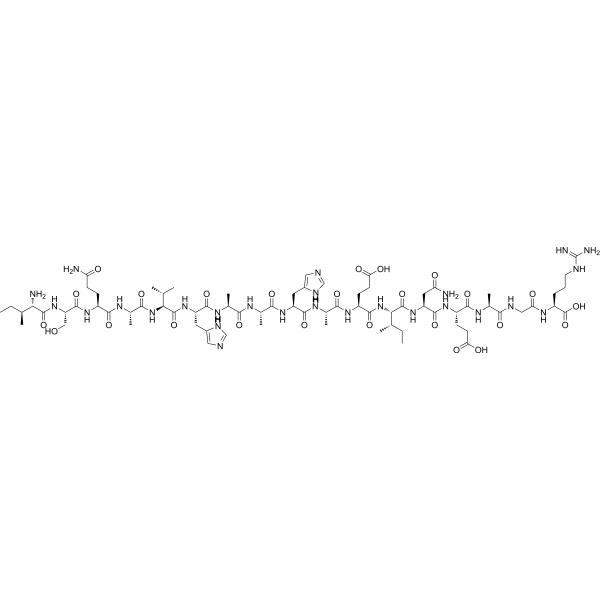
OVA Peptide (323-339) represents a T and B cell epitope of Ovalbumin (Ova), which is important in the generation and development of immediate hypersensitivity responses in BALB/c mice.
loading...
    loading...
8
8 Cited Publications
Cat. No.: HY-W583749
CAS No.: 73606-19-6
Synonyms: F-53B
Research Areas:  

Endocrinology

6:2 Cl-PFAES is an orally effective alternative to Perfluorooctane sulfonate. 6:2 Cl-PFAES significantly inhibits the growth of zebrafish and induces reproductive toxicity. 6:2 Cl-PFAES reduces the relative weights of epididymis and testis in male BALB/c mice. 6:2 Cl-PFAES can be used in the chrome plating industry .
loading...
    loading...
1
1 Cited Publications
Cat. No.: HY-P1684
CAS No.: 1319725-20-6
Synonyms: FOXP3 inhibitor P60
Peptide P60 is a FOXP3 inhibitor. Peptide P60 reduces the nuclear translocation of FOXP3 and impairs FOXP3-mediated inhibition of NF-κB and NFAT activity. Peptide P60 inhibits the immunosuppressive activity of regulatory T cells and restores the proliferation and activation of effector T cells. Peptide P60 induces lymphoproliferative autoimmune syndrome in neonatal ICR mice and reduces the number of CD4 +CD25 +Foxp3 + T cells in the spleen. Peptide P60 enhances the efficacy of AH1 (HY-P4193) peptide vaccine and recombinant adenovirus-based HCV NS3 vaccine in BALB/c mice, including protective effects against CT26 tumor implantation. Peptide P60 can be used in studies related to tumor immunity, viral infection and lymphoproliferative autoimmune syndrome .
loading...
    loading...
Cat. No.: HY-114340
CAS No.: 1814881-70-3
Purity:  98.06%
Research Areas:  

Cancer

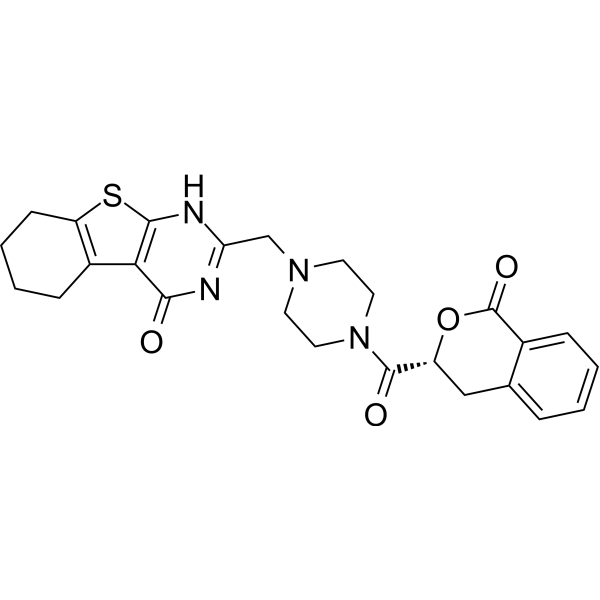
LEM-14 is a potent and selective NSD2 inhibitor with an IC50 of 132 µM. LEM-14 has very weak activitv against NSD1 and has no activity against NSD3. LEM-14 inhibits fibrotic gene expression in ND but not DIO BMDMs. LEM-14 combined with ionizing radiation (IR) enhances the apoptosis rate and reduces the colony-formation ability of CRC cells. LEM-14 exhibits enhanced anti-tumor efficacy in Balb/c nude mice bearing LoVo cell xenografts when combined with ionizing radiation. LEM-14 has the potential for the research of multiple myeloma and colorectal cancer .
loading...
    loading...
Cat. No.: HY-128866
CAS No.: 2332841-25-3
Target:  

Bacterial ATP Synthase

Research Areas:  

Infection

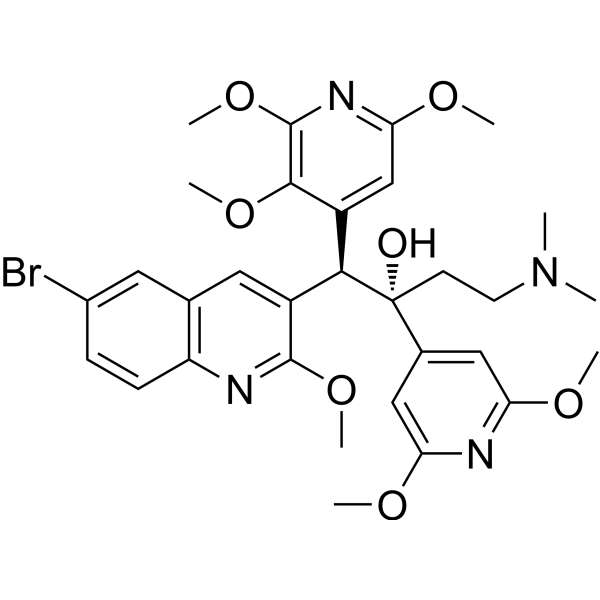
TBAJ-876 is an orally active diarylquinoline antimycobacterial agent. TBAJ-876 targets the c and ε subunits of Mycobacterium tuberculosis F-ATP synthase to modulate energy metabolism, and it exerts bactericidal activity against replicating Mycobacterium tuberculosis and retains activity against strains carrying Rv0678 mutations. TBAJ-876 undergoes N-demethylation in vivo to form the major active metabolite TBAJ-876-M3, which has lower lipophilicity and lower binding affinity for the hERG potassium channel. TBAJ-876 is well tolerated in BALB/c mice and significantly reduces the number of colony-forming units of Mycobacterium tuberculosis in the lungs. TBAJ-876 can be used in research related to tuberculosis and Mycobacterium abscessus lung disease .
loading...
    loading...
Cat. No.: HY-169120
CAS No.: 108979-07-3
Target:  

Telomerase

Research Areas:  

Cancer

FKB04 is a telomeric repeat binding factor 2 (TRF2) inhibitor that exerts its antitumor activity by disrupting the telomere maintenance mechanism in liver cancer cells, leading to T-loop defects, telomere shortening, and cellular senescence. Additionally, FKB04 can inhibit tumor growth in a human liver cancer xenograft mouse model (with Huh-7 cells implanted in BALB/c mice). FKB04 can be used in liver cancer research .
loading...
    loading...
Cat. No.: HY-P5462A
Target:  

IFNAR TNF Receptor

Research Areas:  

Inflammation/Immunology

PLP (180-199) TFA is a myelin proteolipid protein-derived peptide corresponding to amino acids 180-199 of PLP. PLP (180-199) TFA acts as an encephalitogenic peptide and induces experimental autoimmune encephalomyelitis (EAE) in susceptible BALB/c mice. PLP (180-199) TFA can stimulate antigen-specific T-cell responses, promote inflammatory cytokine production including IFN-γ and TNF-α, and is used for the study of autoimmune encephalomyelitis and multiple sclerosis-related immune responses .
loading...
    loading...
Cat. No.: HY-N6651
CAS No.: 22550-15-8
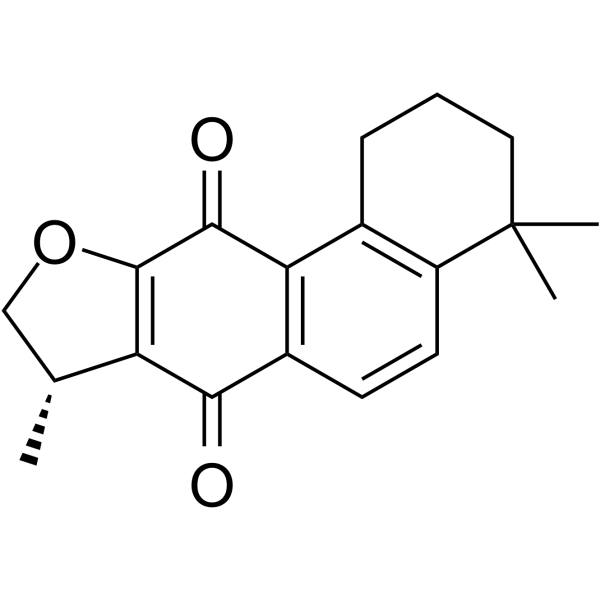
Isocryptotanshinone is a dual STAT3 and PTP1B (IC50 = 56.1 μM) inhibitor. Isocryptotanshinone inhibits STAT3 by binding to the STAT3 SH2 domain to block phosphorylation and nuclear translocation [1][2]. Isocryptotanshinone exerts its anti-proliferative effect via the induction of cell cycle arrest, apoptosis, and pro-death autophagy, through the regulation of STAT3, AKT/mTOR and MAPK signaling pathways. Isocryptotanshinone suppresses the xenograft gastric cancer (GC) tumor growth in BALB/c nude mice. Isocryptotanshinone can be used for cancer research, such as lung cancer, breast cancer and GC .
loading...
    loading...
Cat. No.: HY-P1837
CAS No.: 186302-15-8
Target:  

Influenza Virus HSV

Research Areas:  

Infection

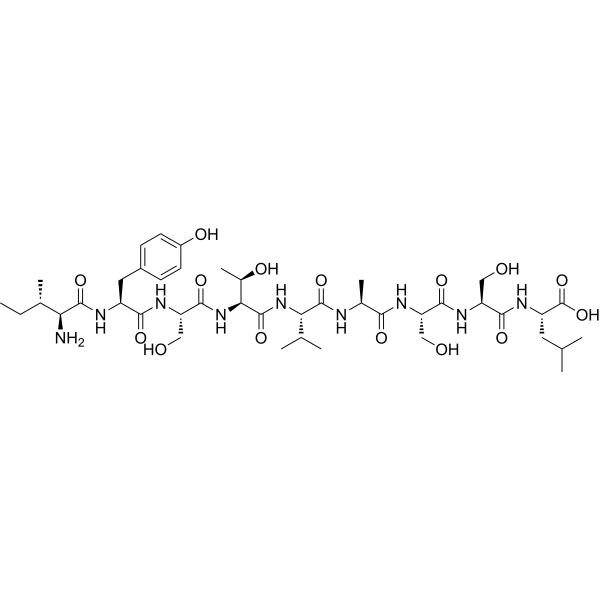
Influenza HA (518-526) is an H-2d-restricted CTL epitope derived from influenza virus hemagglutinin. Influenza HA (518-526) is highly conserved across various H5N1, some H9N2, and H1N1 strains. Influenza HA (518-526) binds to the mouse MHC class I allele K d to form a complex, which is then recognized by specific CD8 + T cells. Influenza HA (518-526) is an immunodominant epitope in influenza-infected BALB/c mice, and it stimulates CD8 + T cells to secrete IFN-γ to induce a robust immune response. Currently, Influenza HA (518-526) is widely used in research related to respiratory syncytial virus (RSV), influenza virus, and H5N1 influenza .
loading...
    loading...
Cat. No.: HY-P990215

Target:  

Interleukin Related

Research Areas:  

Infection Inflammation/Immunology

Anti-Mouse IL-27 p28 Antibody (MM27.7B1) is a mouse-derived anti-mouse IL-27 p28 IgG2a, κ type antibody inhibitor. Anti-Mouse IL-27 p28 Antibody (MM27.7B1) can neutralize IL-27. Anti-Mouse IL-27 p28 Antibody (MM27.7B1) delays CD8+ T cell reconstitution mediated by IL-27 after murine anti-thymocyte globulin (mATG) treatment in BALB/c heart allografts mice models .
loading...
    loading...
Cat. No.: HY-106979
CAS No.: 186752-78-3
Synonyms: SAR-943
Olcorolimus (SAR-943) is a Rapamycin (HY-10219) derivative. Olcorolimus can reduce IL-4, IL-5, eosinophil, neutrophil, lymphocyte, cellular fibronectin; lung epithelial cell proliferation and mucus hypersecretory phenotype in Ovalbumin (HY-W250978)-sensitized BALB/c mice. Olcorolimus can be used for the researches of inflammation and immunology, such as asthma .
loading...
    loading...
Cat. No.: HY-N15846
CAS No.: 2489675-55-8
VSA 1, a semisynthetic QS-21 (HY-101092) analog, is a saponin adjuvant. VSA 1 potentiates antigen-specific IgG1 and IgG2a immune responses in BALB/c mice, indicating a mixed Th1/Th2 immune response. VSA 1 significantly improves vaccine efficacy after primary immunization and enhances homologous protection .
loading...
    loading...
Cat. No.: HY-P5462
CAS No.: 165549-58-6
Target:  

IFNAR TNF Receptor

Research Areas:  

Inflammation/Immunology

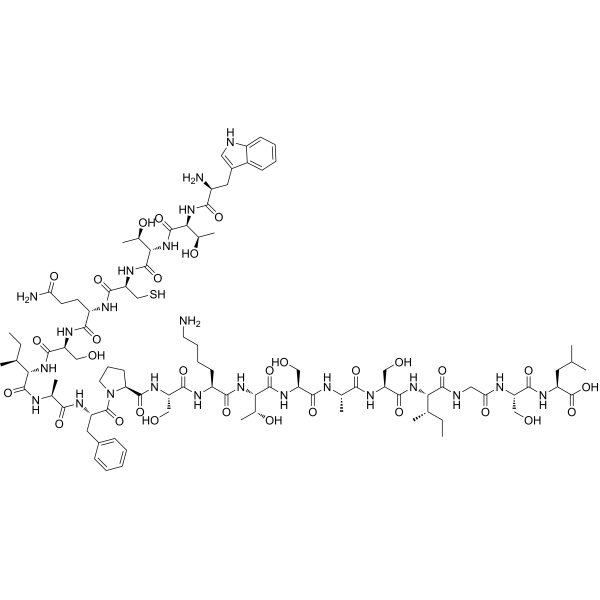
PLP (180-199) is a myelin proteolipid protein-derived peptide corresponding to amino acids 180-199 of PLP. PLP (180-199) acts as an encephalitogenic peptide and induces experimental autoimmune encephalomyelitis (EAE) in susceptible BALB/c mice. PLP (180-199) can stimulate antigen-specific T-cell responses, promote inflammatory cytokine production including IFN-γ and TNF-α, and is used for the study of autoimmune encephalomyelitis and multiple sclerosis-related immune responses .
loading...
    loading...
Cat. No.: HY-178370
Research Areas:  

Cancer

Ferroptosis inducer-12 is a potent and selective ferroptosis inducer. Ferroptosis inducer-12 exhibits potent antiproliferative activity against HT1080 and OS-RC-2, with IC50 values of 3 nM and 5 nM, respectively. Ferroptosis inducer-12 strongly inhibits GPX4 enzymatic activity, induces intracellular ROS and elevates intracellular Fe 2+ levels in OS-RC-2 cells. Ferroptosis inducer-12 significantly inhibits tumor growth in BALB/c nude mice bearing OS-RC-2 xenografts. Ferroptosis inducer-12 can be used for the study of cancer .
loading...
    loading...
Cat. No.: HY-N4308
CAS No.: 1251-84-9
Synonyms: Hexa-O-methylquercetagetin; Quercetagetin hexamethyl ether; 3,5,6,7,3',4'-Hexamethoxyflavone
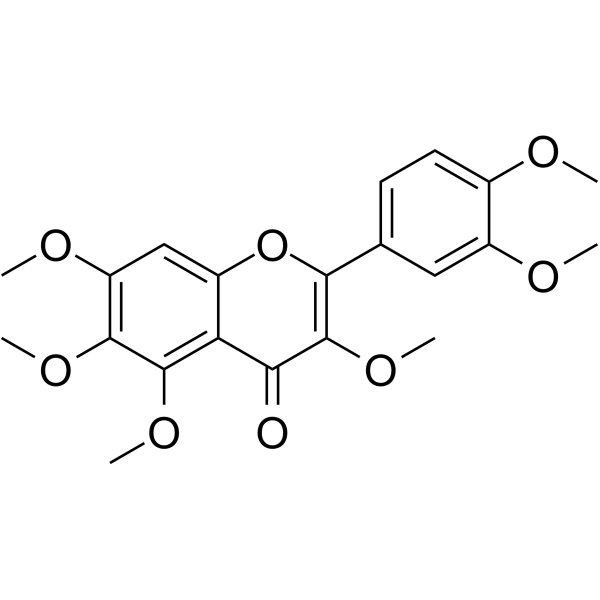
Hexamethylquercetagetin (Hexa-O-methylquercetagetin; Quercetagetin hexamethyl ether; 3,5,6,7,3',4'-Hexamethoxyflavone) is an orally active NF-κB inhibitor. Hexamethylquercetagetin inhibits NF-κB-derived luciferase activity, reduces phosphorylated p65 and IκBα, Cyclin D1, Bcl-2 and blocks TNFα-induced NF-κB activation. Hexamethylquercetagetin inhibits survival and proliferation of cervical carcinoma cells. Hexamethylquercetagetin suppresses tumor volume and weight in BALB/c nude mouse xenograft models of cervical carcinoma. Hexamethylquercetagetin can be used for the research of cancer, such as cervical carcinoma .
loading...
    loading...
Cat. No.: HY-15616
CAS No.: 457893-92-4
Target:  

Melanocortin Receptor

Research Areas:  

Cancer

BMS-470539 is a synthetic MC-1R agonist with potent anti-inflammatory properties. BMS-470539 selectively activates human and murine MC-1R with EC50 values ??of 16.8 nM and 11.6 nM, respectively. In vitro studies have shown that BMS-470539 is able to dose-dependently inhibit TNF-alpha-induced NF-kB activation in human melanoma cells expressing MC-1R. In vivo, subcutaneous injection of BMS-470539 into BALB/c mice effectively inhibited LPS-induced TNF-alpha production with an ED50 of approximately 10 μmol/kg and a pharmacodynamic half-life of approximately 8 hours. It also significantly reduced leukocyte infiltration in a lung inflammation model and attenuated paw swelling in a delayed-type hypersensitivity model, highlighting its efficacy as an anti-inflammatory agent through MC-1R modulation .
loading...
    loading...
Cat. No.: HY-161065
CAS No.: 2102393-11-1
Target:  

Bacterial

Research Areas:  

Infection

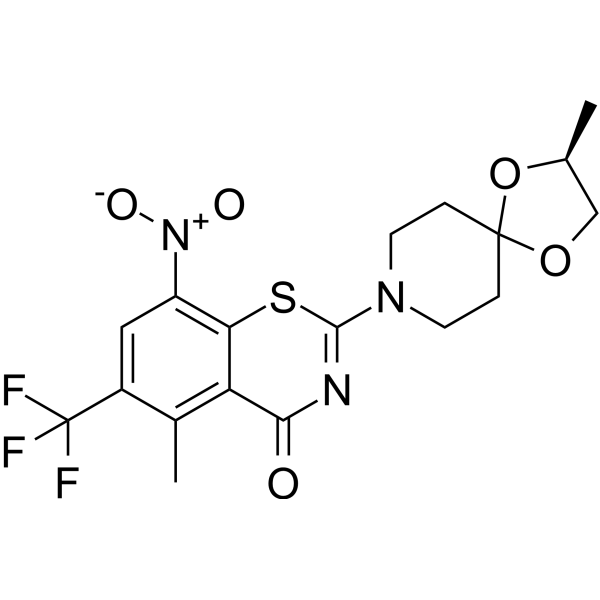
HKI12134085 (compound 3) is an orally available antibacterial nitrobenzothiazinone (BTZ) derivative with activity against Mycobacterium tuberculosis. HKI12134085 has in vivo inhibitory potency in a BALB/c mouse model of Mycobacterium tuberculosis infection .
loading...
    loading...
Cat. No.: HY-169928
Target:  

DNA/RNA Synthesis

Research Areas:  

Cancer

WRN inhibitor 14 (compound S35) is an orally active WRN inhibitor with anticancer activity. WRN inhibitor 14 results in tumor growth inhibition in the SW48 xenograft model in BALB/c nude mice .
loading...
    loading...
Cat. No.: HY-146496
CAS No.: 2413124-92-0
Target:  

Bacterial

Research Areas:  

Infection

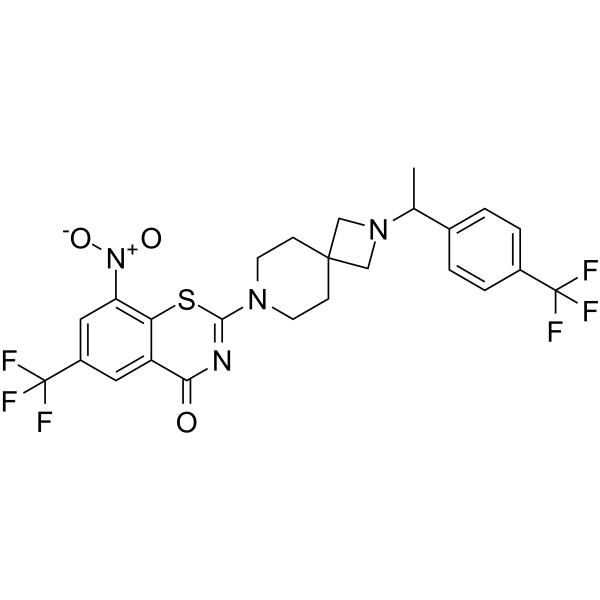
Antitubercular agent-20 (Compound 2d) is an orally active antitubercular agent. Antitubercular agent-20 shows excellent activity against MTB H37Rv and MDR-MTB strains (MIC: <0.016 µg/ml). Antitubercular agent-20 has low cytotoxicity and good tolerance in BALB/c mice .
loading...
    loading...
Cat. No.: HY-146495
CAS No.: 2248171-05-1
Target:  

Bacterial

Research Areas:  

Infection

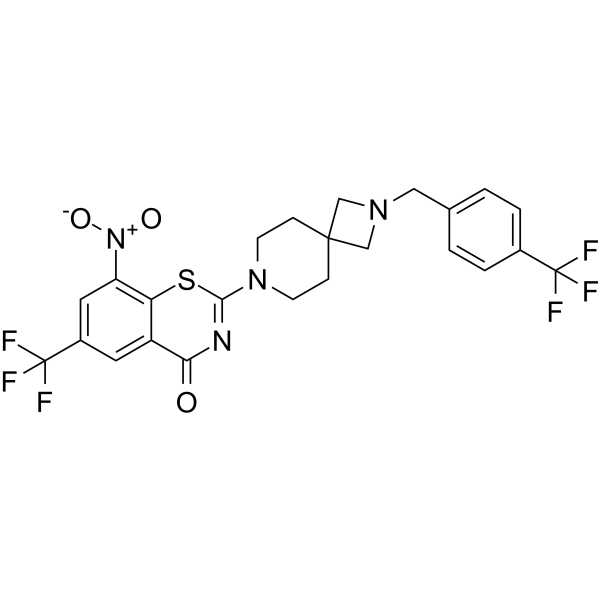
Antitubercular agent-19 (Compound 1c) is an antitubercular agent. Antitubercular agent-19 shows excellent activity against MTB H37Rv and MDR-MTB strains (MIC: <0.016 µg/ml). Antitubercular agent-19 shows low cytotoxicity and relatively high acute lethal toxicity in BALB/c mice .
loading...
    loading...

