
193 Results for "

Cancer therapy.

" in MedChemExpress (MCE) Product Catalog:
Products (193)

193 Results for "Cancer therapy." in MCE Product Catalog:

  • Targets Recommended:
24
24 Cited Publications
Cat. No.: HY-18777
CAS No.: 927822-86-4
Research Areas:  

Cancer

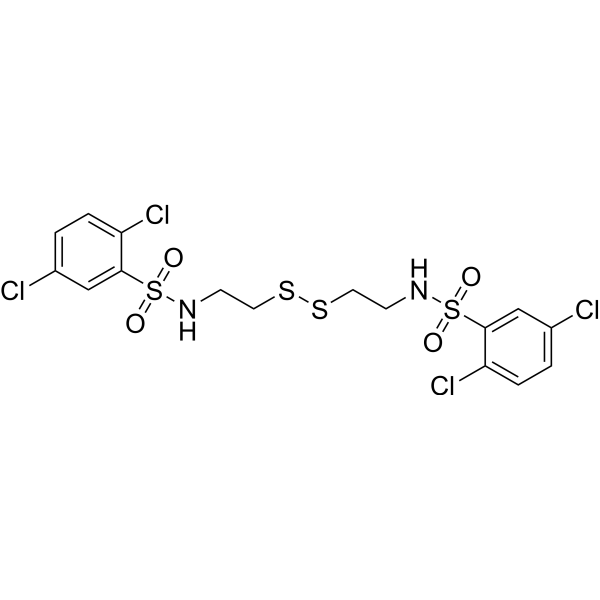
KC7F2 is a potent hypoxia inducible factor-1 (HIF-1) pathway inhibitor with an IC50 of 20 μM in LN229-HRE-AP cells, and with potential as a cancer therapy agent .
loading...
    loading...
20
20 Cited Publications
Cat. No.: HY-N0140
CAS No.: 77-52-1
Synonyms: Prunol; Urson; Malol
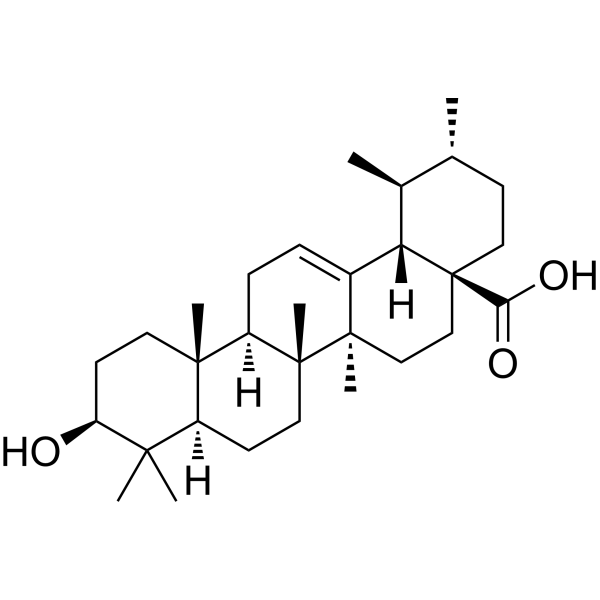
Ursolic acid (Prunol) is a natural pentacyclic triterpenoid carboxylic acid, exerts anti-tumor effects and is an effective compound for cancer prevention and therapy.
loading...
    loading...
20
20 Cited Publications
Cat. No.: HY-W854659
CAS No.: 72984-36-2
Synonyms: Ce6 trisodium
Chlorin e6 Ce6 (trisodium) is a water-soluble derivative of chlorophyll, belonging to the chlorin class of photosensitizers with an absorption wavelength range of 600-670 nm. Chlorin e6 trisodium emits characteristic red fluorescence upon light excitation, enabling real-time identification of tumor boundaries and progression. Chlorin e6 trisodium can be used for the study of photodynamic therapy (PDT) of cancers (bladder cancer) and fluorescence diagnosis of neoplastic lesions .
loading...
    loading...
12
12 Cited Publications
Cat. No.: HY-16488
CAS No.: 122341-38-2
Synonyms: m-THPC; KW2345
Research Areas:  

Cancer

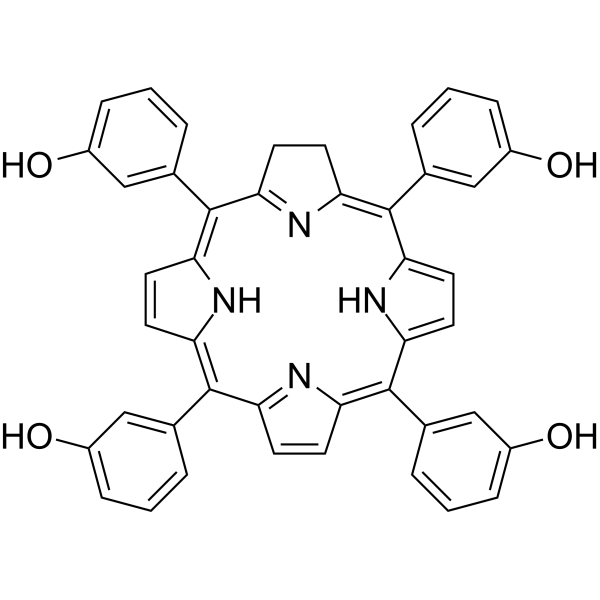
Temoporfin (m-THPC), a reduced porphyrin, is a potent second-generation photosensitizer. Temoporfin can be used in the research of photodynamic therapy (PDT) for head and neck cancers .
loading...
    loading...
7
7 Cited Publications
Cat. No.: HY-13266
CAS No.: 1092443-52-1
Target:  

CDK Apoptosis

Research Areas:  

Cancer

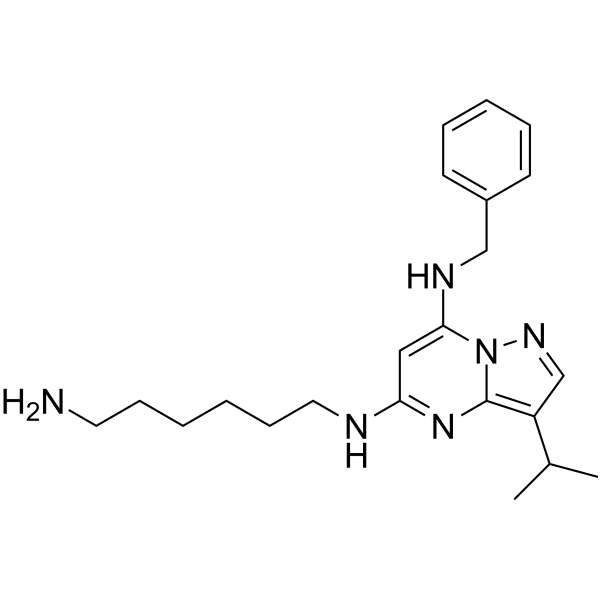
BS-181 is a potent and selective CDK7 inhibitor (IC50=21 nM) than Seliciclib (HY-30237). BS-181 is also against CDK2, CDK5 and CDK9 with IC50 values of 880, 3000 and 4200 nM, respectively (fails to block CDK1, 4 and 6). BS-181 inhibits a panel of cancer cells growth (IC50=11.5 μM-37.3 μM) and induces cell apoptosis. BS-181 has the potential for the research of cancer therapy .
loading...
    loading...
4
4 Cited Publications
Cat. No.: HY-128973
CAS No.: 24533-72-0
Purity:  ≥98.0%
Research Areas:  

Cancer

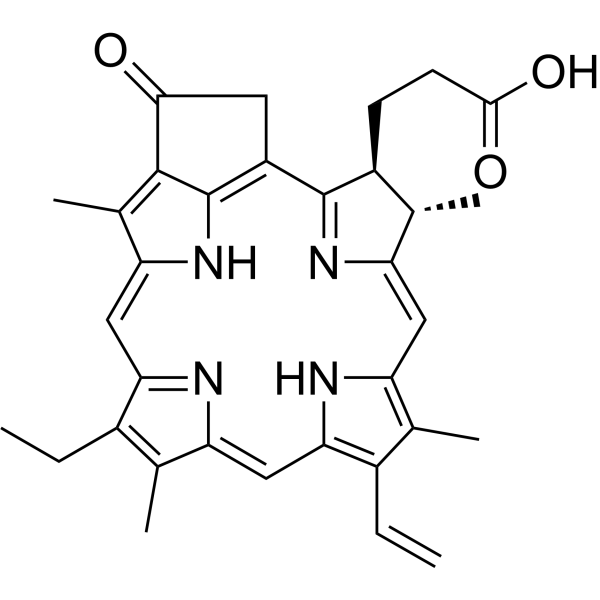
Pyropheophorbide-a (Ppa) is a photosensitizer used in photodynamic therapy (PDT) for tumors. Pyropheophorbide-a exhibits phototoxic effects on tumor cells, such as cervical cancer cells, and also has anti-lipogenesis activity. Pyropheophorbide-a shows potential for research in the fields of cancer and age-related macular degeneration (AMD). Pyropheophorbide-a derivatives also demonstrate inhibitory activity against tumor cells .
loading...
    loading...
4
4 Cited Publications
Cat. No.: HY-16477
CAS No.: 220201-34-3
Synonyms: ME2906; Mono-L-aspartyl chlorin e6; NPe6
Target:  

Photosensitizer

Research Areas:  

Cancer

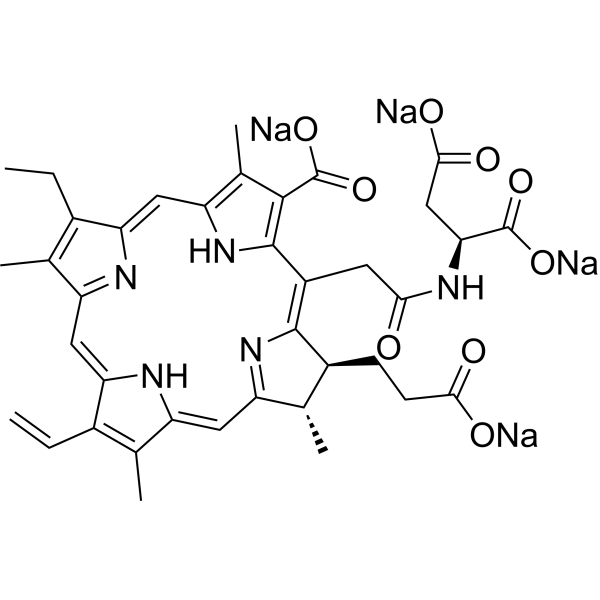
Talaporfin (ME2906) sodium is a chlorin based photosensitizer. Talaporfin sodium can be used for the research of various cancers by using photodynamic therapy (PDT) .
loading...
    loading...
3
3 Cited Publications
Cat. No.: HY-18954
CAS No.: 1262417-51-5
Target:  

PARP

Research Areas:  

Cancer

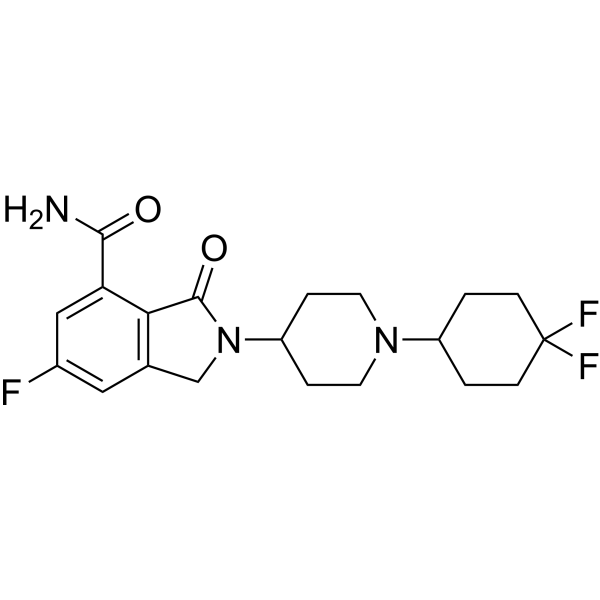
NMS-P118 is a potent, orally available, and highly selective PARP-1 Inhibitor for cancer therapy.
loading...
    loading...
3
3 Cited Publications
Cat. No.: HY-12964
CAS No.: 1239875-86-5
Purity:  99.32%
Target:  

TAM Receptor

Research Areas:  

Cancer

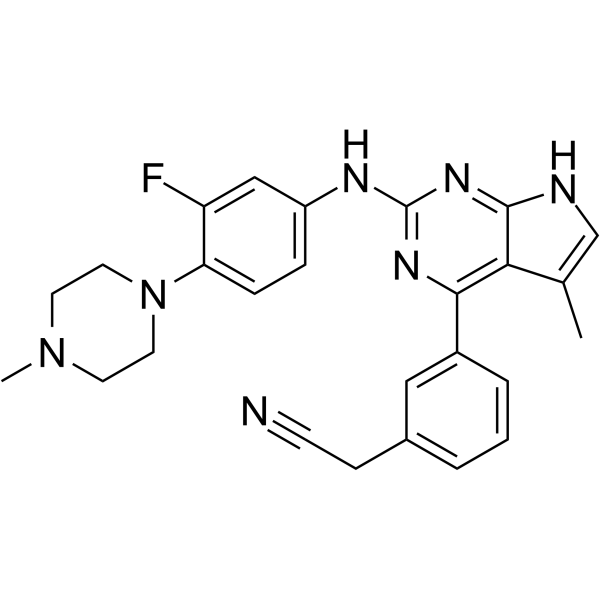
SGI-7079 is a selective, ATP-competitive, orally active inhibitor of the receptor tyrosine kinase Axl. SGI-7079 blocks Axl-mediated signaling pathways such as NF-κB activation and MMP-9 expression, thereby inhibiting tumor cell proliferation, migration and invasion. SGI-7079 is mainly used in the research of malignant tumors such as inflammatory breast cancer and bladder cancer, as well as in combination with immunization (used in combination with PD-1 therapy)[1][2][3].
loading...
    loading...
2
2 Cited Publications
Cat. No.: HY-137473
CAS No.: 6453-67-4
Purity:  99.14%
Synonyms: Pyropheophorbide-a methyl ester
Target:  

Apoptosis

Research Areas:  

Cancer

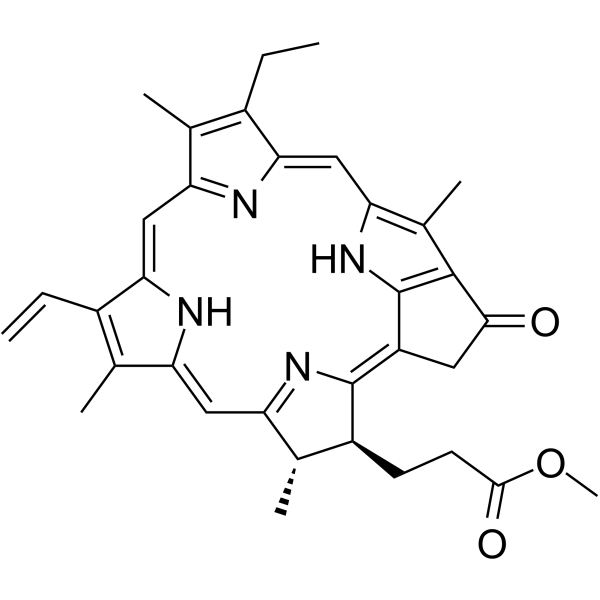
Methyl pyropheophorbide-a (Pyropheophorbide-a methyl ester), a chlorophyll-a derivative, is a potent photosensitizer that can be used in photodynamic therapy (PDT) of cancer. Methyl pyropheophorbide-a has photodynamic activity and can induce apoptosis and inhibit tumor growth .
loading...
    loading...
2
2 Cited Publications
Cat. No.: HY-P99575
CAS No.: 2307488-83-9
Synonyms: AMG-757

Target:  

Notch

Research Areas:  

Inflammation/Immunology Cancer

Tarlatamab (AMG-757) is a bispecific T-cell engager (BiTE) antibody targeting delta-like ligand 3 (DLL3). DLL3 is a target that is selectively expressed in small-cell lung cancer (SCLC) tumors, but with minimal normal tissue expression. Tarlatamab has the KDs of 0.64 nM and 0.50 nM for human and nonhuman primate (NHP) DLL3, respectively. Tarlatamab has the KDs of 14.9 nM and 12 nM for human and NHP CD3, respectively. Tarlatamab is a first-in-class HLE BiTE immuno-oncology therapy targeting DLL3 and has the potential for SCLC research .
loading...
    loading...
1
1 Cited Publications
Cat. No.: HY-113011
CAS No.: 1109-28-0
Purity:  ≥98.0%
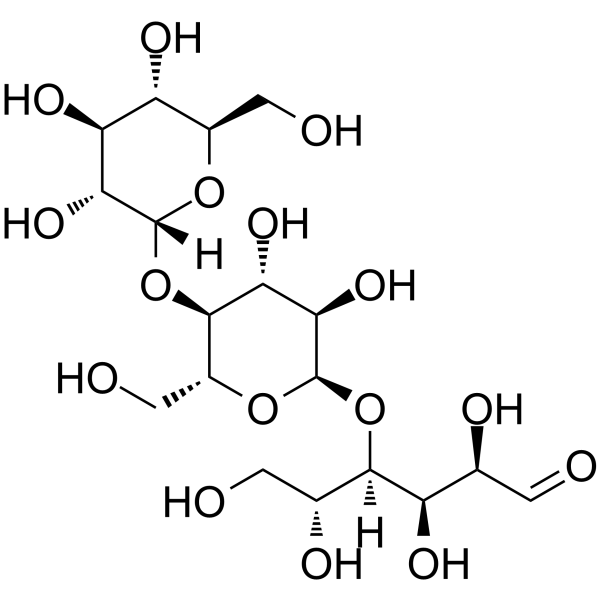
Maltotriose is a maltooligosaccharide and a specific inducer of the Escherichia coli maltose operon. The oligosaccharide structure of Maltotriose acts as a highly efficient drug delivery carrier, which significantly enhances the targeting ability and water solubility of photosensitizers in photodynamic therapy for pancreatic cancer .
loading...
    loading...
1
1 Cited Publications
Cat. No.: HY-N1453
CAS No.: 123940-54-5
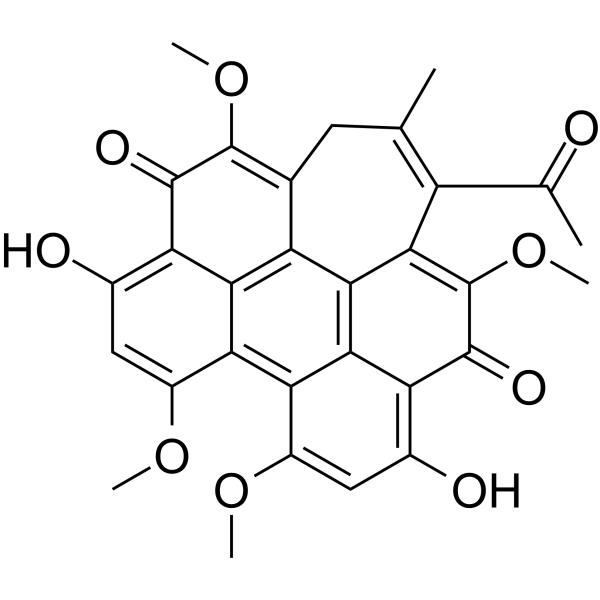
Hypocrellin B, a pigment isolated from the fungi Hypocrella bambusae and Shiraia bambusicola, is an apoptosis inducer. Hypocrellin B can be used as a photosensitizer for photodynamic therapy of cancer. Hypocrellin B also has antimicrobial and antileishmanial activities .
loading...
    loading...
1
1 Cited Publications
Cat. No.: HY-164426
CAS No.: 2377167-56-9
HEI3090 is a P2X7R activator. HEI3090 stimulates dendritic cells expressing P2X7R to produce IL-18, which subsequently promotes Natural Killer cells and CD4 T cells within tumors to produce IFN-γ, leading to a sustained antitumor response. HEI3090 can be used to enhance the efficacy of αPD-1 therapy in non-small cell lung cancer (NSCLC) .
loading...
    loading...
1
1 Cited Publications
Cat. No.: HY-164117
CAS No.: 106476-75-9
Research Areas:  

Cancer

BNN6 is a thermoresponsive nitric oxide (NO) donor that often works by binding to a carrier. BNN6 decomposes under the heat stimulation generated by photothermal action, releasing high concentrations of NO, which exerts anti-tumor activity by inducing tumor cell apoptosis and inhibiting their repair. BNN6 can be used to synthesize the multifunctional biosensor BNN6-BiTiS3-iRGD, which exerts a synergistic anti-cancer effect with photothermal therapy (PTT) .
loading...
    loading...
Cat. No.: HY-W087830
CAS No.: 76410-58-7
Synonyms: L-BPA
L-p-Boronophenylalanine is a boron-containing substrate for L-type amino acid transporters (LAT1 and LAT2). L-p-Boronophenylalanine enters tumor cells by competing with natural amino acids for LAT, selectively accumulating boron in cancer cells. L-p-Boronophenylalanine can be used in boron neutron capture therapy (BNCT). When boron-10 captures thermal neutrons, a nuclear reaction occurs, producing high-energy alpha particles and lithium nuclei, which kill cancer cells at close range with little damage to surrounding tissues. L-p-Boronophenylalanine can be used in cancer research, especially glioblastoma and anaplastic astrocytoma .
loading...
    loading...
Cat. No.: HY-158420
CAS No.: 3047493-70-6
Purity:  99.30%
Target:  

FOXM1 Autophagy

Research Areas:  

Cancer

STL001 is potent and selective FOXM1 inhibitor. STL001 induces the translocation of nuclear FOXM1 to the cytoplasm and promotes its autophagic degradation. STL001 sensitizes human cancers to a broad-spectrum of cancer therapies .
loading...
    loading...
Cat. No.: HY-124012
CAS No.: 444930-42-1
Purity:  99.20%
Research Areas:  

Cancer

PCNA-I1 is a selective small molecule inhibitor targeting proliferating cell nuclear antigen (PCNA) with anticancer activity. PCNA-I1 can stabilize the PCNA trimer structure (Kd=0.14-0.41μM), reduce its binding to chromatin, induce tumor cell cycle arrest, inhibit DNA replication and repair, and enhance the anti-tumor effect of DNA damaging agents. PCNA-I1 can be used in the study of targeted therapy for prostate cancer, lung cancer and other tumors .
loading...
    loading...
Cat. No.: HY-N0140R
CAS No.: 77-52-1
Synonyms: Prunol (Standard); Urson (Standard); Malol (Standard)
Ursolic acid (Standard) is the analytical standard of Ursolic acid. This product is intended for research and analytical applications. Ursolic acid (Prunol) is a natural pentacyclic triterpenoid carboxylic acid, exerts anti-tumor effects and is an effective compound for cancer prevention and therapy.
loading...
    loading...
Cat. No.: HY-100865
CAS No.: 2443767-35-7
Purity:  99.12%
Synonyms: DBPR114
Target:  

FLT3

Research Areas:  

Cancer

BPR1K871 is a potent and selective dual FLT3/AURKA inhibitor with IC50s of 19 nM and 22 nM for FLT3 and AURKA, respectively, acts as a preclinical development candidate for anti-cancer therapy .
loading...
    loading...

