1. Search Result
Search Result
Results for "

Cu+

" in MedChemExpress (MCE) Product Catalog:

226

Inhibitors & Agonists

49

Fluorescent Dyes

16

Biochemical Assay Reagents

13

Peptides

3

MCE Kits

1

Inhibitory Antibodies

16

Natural
Products

4

Recombinant Proteins

9

Isotope-Labeled Compounds

7

Antibodies

15

Click Chemistry

2

Oligonucleotides

Cat. No. Product Name Target Research Areas Chemical Structure
  • HY-100486
    BTTAA
    2 Publications Verification

    Biochemical Assay Reagents Others
    BTTAA is a Cu(I)-stabilizing ligand, whch performs potently with ubiquitin Glu18AzF.
    BTTAA
  • HY-156376
    Cu(II)-Elesclomol
    5 Publications Verification

    Cuproptosis Apoptosis Topoisomerase Reactive Oxygen Species (ROS) Inflammation/Immunology Cancer
    Cu(II)-Elesclomol is a complex formed by Elesclomol (HY-12040) and Cu 2+ (copper ions). Cu(II)-Elesclomol is also a weak inhibitor of DNA topoisomerase I. Cu(II)-Elesclomol exerts anticancer effects by inducing oxidative stress and DNA damage through copper chelation. Cu(II)-Elesclomol can inhibit tumor cell proliferation and induce cell cycle arrest and apoptosis. Cu(II)-Elesclomol can be used in the study of cancer .
    Cu(II)-Elesclomol
  • HY-P0063
    Copper tripeptide
    1 Publications Verification

    GHK-Cu

    Biochemical Assay Reagents Inflammation/Immunology
    Copper tripeptide (GHK-Cu) is a tripeptide. During wound healing, Copper tripeptide may be freed from existing extracellular proteins via proteolysis and serves as a chemoattractant for inflammatory and endothelial cells. Copper tripeptide has been shown to increase messenger RNA production for collagen, elastin, proteoglycans, and glycosaminoglycans in fibroblasts. Copper tripeptide is a natural modulator of multiple cllular pathways in skin regeneration .
    Copper tripeptide
  • HY-108473
    CU-CPT 4a
    10+ Cited Publications

    TLR3-IN-1

    Toll-like Receptor (TLR) Cancer
    CU-CPT 4a (TLR3-IN-1) is a potent, highly selective TLR3 signaling inhibitor. CU-CPT 4a represses the expression of downstream signaling pathways mediated by the TLR3/dsRNA complex, including TNF-α and IL-1β .
    CU-CPT 4a
  • HY-141511
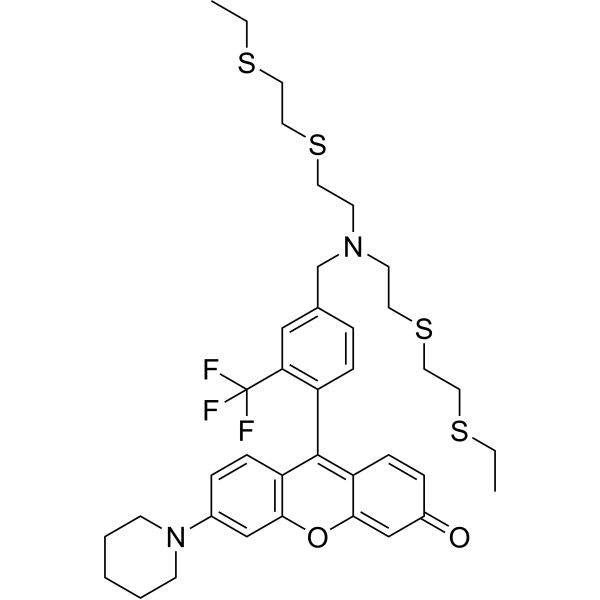
    Coppersensor 1
    Maximum Cited Publications
    29 Publications Verification

    Fluorescent Dye Neurological Disease Cancer
    Coppersensor-1 (CS1) is a membrane-permeable fluorescent dye. Coppersensor-1 has a picomolar affinity for Cu + with high selectivity over competing cellular metalions. Coppersensor-1 as a probe, can selective and sensitive detection of copper(I) ions (Cu +) in biological samples, including live cells. Coppersensor-1 can be used for the research of imaging of severe diseases such as cancer, cardiovascular disorders and neurogenerative diseases .
    Coppersensor 1
  • HY-108471
    CU-CPT22
    10+ Cited Publications

    Toll-like Receptor (TLR) Cancer
    CU-CPT22 is a potent protein complex of toll-like receptor 1 and 2 (TLR1/2) inhibitor, and competes with the synthetic triacylated lipoprotein (Pam3CSK4) binding to TLR1/2 with a Ki of 0.41 µM. CU-CPT22 blocks Pam3CSK4-induced TLR1/2 activation with an IC50 of 0.58 µM .
    CU-CPT22
  • HY-D0023
    Pyranine
    2 Publications Verification

    HPTS; Solvent Green 7

    Environmental Pollutants Fluorescent Dye Others
    Pyranine (HPTS; Solvent Green 7) is a cell-impermeant pH-sensitive fluorescent indicator. Pyranine acts as a class of fluorescent chemosensor for the Cu + ion. Pyranine is used as a coloring agent, biological stain, optical detecting reagent, and pH indicator (Ex/Em = 450/510 nm) .
    Pyranine
  • HY-150086
    Copper Fluor-4
    3 Publications Verification

    CF4

    Fluorescent Dye Others
    Copper Fluor-4 (CF4) is a Cu +-specific fluorescent probe based on a rhodol dye scaffold. Copper Fluor-4 has high copper selectivity with a Kd value of 2.9×10 −13 M, particularly over zinc and iron, as well as abundant cellular alkali and alkaline earth metals. Copper Fluor-4 is stable in a physiologically relevant pH regime between 6 and 8 (wavelengths of 415 nm for excitation and 660 nm for emission) .
    Copper Fluor-4
  • HY-110353
    CU-T12-9
    10+ Cited Publications

    Toll-like Receptor (TLR) Inflammation/Immunology Cancer
    CU-T12-9 is a specific TLR1/2 agonist with EC50 of 52.9 nM in HEK-Blue hTLR2 SEAP assay. CU-T12-9 activates both the innate and the adaptive immune systems. CU-T12-9 selectively activates the TLR1/2 heterodimer, not TLR2/6. CU-T12-9 signals through NF-κB and invokes an elevation of the downstream effectors TNF-α, IL-10, and iNOS .
    CU-T12-9
  • HY-112051
    CU-CPT9b
    1 Publications Verification

    Toll-like Receptor (TLR) Inflammation/Immunology
    CU-CPT9b is a specific TLR8 antagonist, with an IC50 of 0.7 nM. CU-CPT9b shows high binding affinity towards TLR8 with a Kd of 21 nM .
    CU-CPT9b
  • HY-112667
    CU-CPT-9a
    5 Publications Verification

    Toll-like Receptor (TLR) Inflammation/Immunology
    CU-CPT-9a is a specific TLR8 antagonist, with an IC50 of 0.5 nM.
    CU-CPT-9a
  • HY-112050
    CU-CPT-8m
    2 Publications Verification

    TLR8-specific antagonist

    Toll-like Receptor (TLR) Inflammation/Immunology
    CU-CPT-8m is a specific TLR8 antagonist, with an IC50 of 67 nM.
    CU-CPT-8m
  • HY-139324
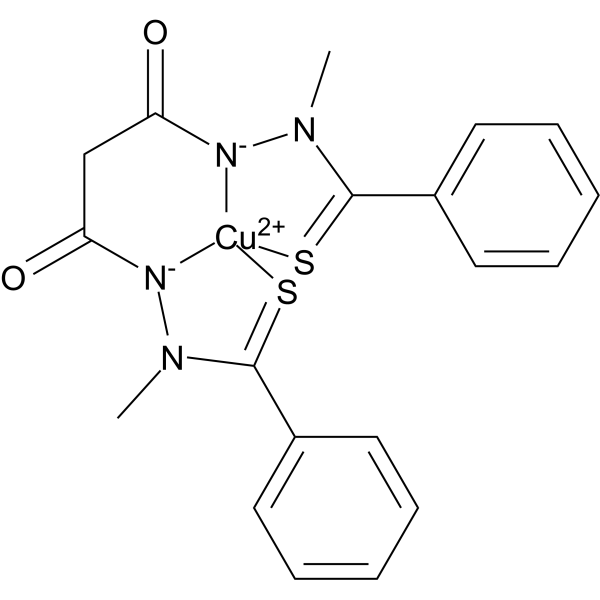
    Cu(II)GTSM
    1 Publications Verification

    GSK-3 Amyloid-β Neurological Disease Cancer
    Cu(II)GTSM, a cell-permeable Cu-complex, significantly inhibits GSK3β. Cu(II)GTSM inhibits Amyloid-β oligomers (AβOs) and decreases tau phosphorylation. Cu(II)GTSM also decreases the abundance of Amyloid-β trimers. Cu(II)GTSM is a potential anticancer and antimicrobial agent .
    Cu(II)GTSM
  • HY-121638A
    (5Z,2E)-CU-3
    1 Publications Verification

    DGK Apoptosis Interleukin Related Caspase Cancer
    (5Z,2E)-CU-3 is an isomer of CU-3 (HY-121638). CU-3 is a DGKα inhibitor with an IC50 of 0.6 μM. CU-3 competitively reduces DGKα’s affinity for ATP via binding to the enzyme’s catalytic region. CU-3 induces apoptosis in cancer cells. CU-3 promotes T-cell activation and enhances IL-2 production. CU-3 can be used for the research of hepatocellular carcinoma and cervical cancer .
    (5Z,2E)-CU-3
  • HY-131945
    CU-115
    2 Publications Verification

    Toll-like Receptor (TLR) Inflammation/Immunology
    CU-115 is a potent TLR8 antagonist (IC50=1.04 µM), and shows selective for TLR8 over TLR7 (IC50=>50 µM). CU-115 decreases TNF-α and IL-1β production activated by R-848 in THP-1 cells .
    CU-115
  • HY-P5243

    AHK-Cu

    Others Bcl-2 Family Others
    Copper tripeptide-3 (AHK-Cu) is a bioactive peptide with promotion of hair growth effect. Copper tripeptide-3 increases dermal cell proliferation and viability while increasing the deposition of collagen to renew the extracellular matrix. Copper tripeptide-3 stimulates the elongation of human hair follicles and proliferation of dermal papilla cells .
    Copper tripeptide-3
  • HY-100133A

    Integrin Cancer
    DOTA-ADIBO TFA is a DOTA-derived bifunctional chelator (BFC) that allows drug conjugation via an uncatalyzed, copper-free cycloaddition reaction. DOTA-ADIBO TFA enables the construction of fusion chelator systems that can be further used to synthesize radiotracers after Cu[64] modification. Positron emission tomography imaging of tumors expressing integrin αvβ6 .
    DOTA-ADIBO TFA
  • HY-153419

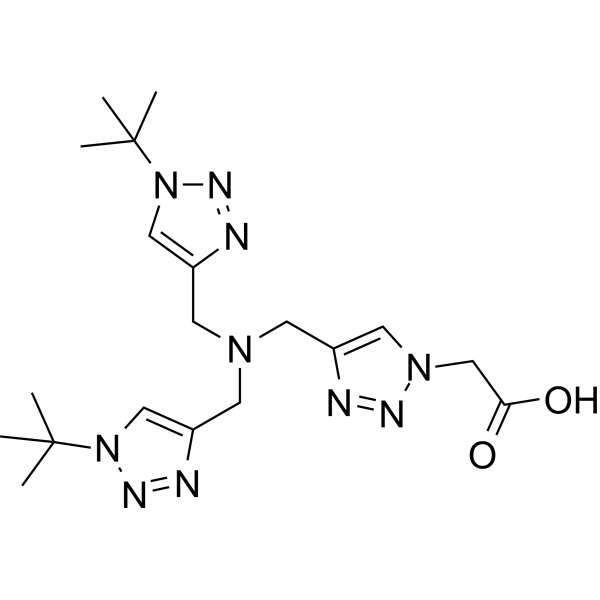
    Biochemical Assay Reagents Others
    BTTES is a tris(triazolylmethyl)amine-based ligand for Cu(I) without apparent toxicity. BTTES IMPROVES the cycloaddition reaction rapidly in living systems .
    BTTES
  • HY-P4666

    Biochemical Assay Reagents Others
    Valylhistidine is a dipeptide composed of valine and histidine (Val-His). Valylhistidine can form a dipeptide complex with Cu (II) that mimics superoxide dismutase but lacks activity .
    Valylhistidine
  • HY-101929
    CU-CPT17e
    3 Publications Verification

    Toll-like Receptor (TLR) Inflammation/Immunology Cancer
    CU-CPT17e is a potent multi-Toll-like receptor (TLR) agonist that activates TLR3, TLR8, and TLR9.
    CU-CPT17e
  • HY-D1601
    N-Aminofluorescein
    1 Publications Verification

    Fluorescent Dye Others
    N-Aminofluorescein is a fluorescein hydrazide with spiro form, a highly selective and sensitive fluorescence probe for Cu 2+. N-Aminofluorescein has no selective fluorescence response to other common metal ions, can be used for direct detection of Cu 2+ in biological systems with λex/em=495/516 nm . N-Aminofluorescein can be used to measure the concentration of copper ions in cells .
    N-Aminofluorescein
  • HY-D1550

    Fluorescent Dye Others
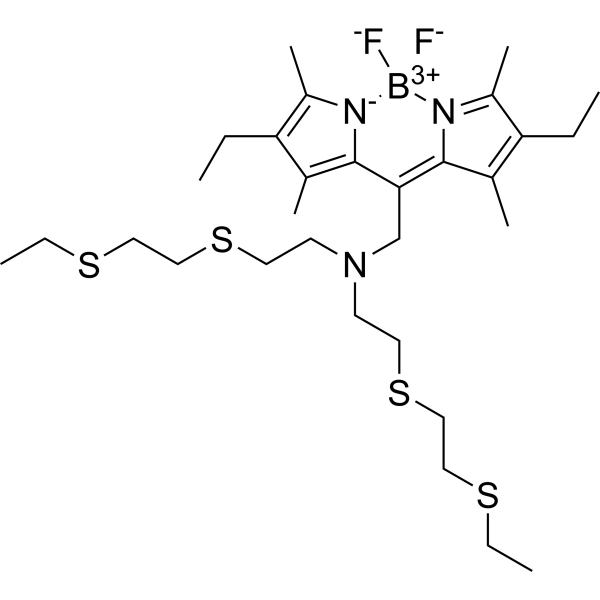
    10-(4-(Bis(2-acetoxyethyl)amino)phenyl)-BODIPY 505/515 is a fluorescent dye for Cu 2+ ion .
    10-(4-(Bis(2-acetoxyethyl)amino)phenyl)-BODIPY 505/515
  • HY-P11057

    Fluorescent Dye Others
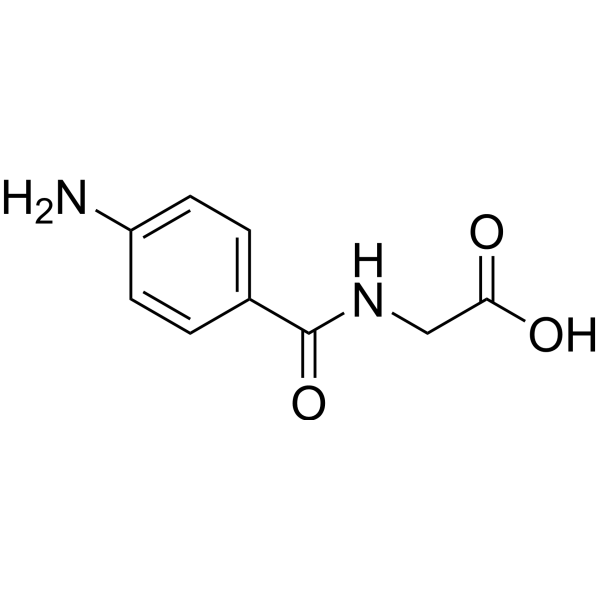
    FGGH is a water-soluble peptide-based probe. FGGH performs the sequential detection of Cu 2+ and S 2- by fluorescence and colorimetry with high sensitivity (LOD: 1.42 and 22.2 nM for Cu 2+ and S 2-, respectively) (Ex=488 nm, Em=525 nm), and images both two ions in living cells and zebrafish models with low cytotoxicity. FGGH can be used for in vivo imaging and environmental pollution monitoring research .
    FGGH
  • HY-D0798

    Fluorescent Dye Others
    Catechol violet is an efficient and versatile ligand for Cu(I)-catalyzed C-S coupling reactions. Catechol violet is also a complexometric indicator dye .
    Catechol violet
  • HY-E70377

    Cu/Zn SOD

    SOD Inflammation/Immunology Cancer
    Cu/Zn Superoxide dismutase (Cu/Zn SOD; SOD1) is a cytosolic copper-zinc dimer form of superoxide dismutase enzyme. Cu/Zn Superoxide dismutase has oxygen radical enzymatic dismutation .
    Cu/Zn Superoxide dismutase
  • HY-147310

    Toll-like Receptor (TLR) Infection
    CU-CPD107 is a potent, selective toll-like receptor 8 (TLR 8) agonist. CU-CPD107 inhibits TLR8 signaling. CU-CPD107 converts to synergistic agonist activities in the presence of ssRNA and induces TLR8 signaling. CU-CPD107 inhibits proinflammatory factor expression and avoids immune responses in the presence of ssRNA .
    CU-CPD107
  • HY-W582564

    Ethylenediaminetetraacetic acid copper disodium tetrahydrate

    Biochemical Assay Reagents Others
    Cu(Ⅱ)-EDTA disodium tetrahydrate, a typical contaminant in industrial wastewater, is an EDTA-complexed heavy metal. Cu(Ⅱ)-EDTA disodium tetrahydrate can be used in research on the recovery of heavy metal resources from mixed wastewater .
    Cu(Ⅱ)-EDTA disodium tetrahydrate
  • HY-156780
    NSC 689534
    1 Publications Verification

    Cuproptosis Cancer
    NSC 689534 can form copper chelate with Cu 2+. NSC 689534/Cu 2+ complex is a potent oxidative stress inducer, and has antitumor activity .
    NSC 689534
  • HY-121638

    DGK Apoptosis Interleukin Related Caspase Cancer
    CU-3 is a DGKα inhibitor with an IC50 of 0.6 μM. CU-3 competitively reduces DGKα’s affinity for ATP via binding to the enzyme’s catalytic region. CU-3 induces apoptosis in cancer cells. CU-3 promotes T-cell activation and enhances IL-2 production. CU-3 can be used for the research of hepatocellular carcinoma and cervical cancer .
    CU-3
  • HY-132221

    Cyclic GMP-AMP Synthase Inflammation/Immunology
    CU-32 is a potent cGAS inhibitor with an IC50 of 0.45 µM. CU-32 decreases IFN-stimulatory DNA-induced production of IFN-β in THP-1 cells .
    CU-32
  • HY-134919

    Cyclic GMP-AMP Synthase Inflammation/Immunology
    CU-76 is an inhibitor for human cyclic GMP-AMP synthase (hcGAS) with an IC50 of 0.24 μM. CU-76 selectively inhibits the DNA pathway in human cells, and can be used in autoimmune research .
    CU-76
  • HY-132927B

    Reactive Oxygen Species (ROS) Inflammation/Immunology
    Salpyran dihydrochloride is a Cu(II) selective chelator with therapeutic potential. Salpyran dihydrochloride prevents the formation of reactive oxygen species from the binary Cu(II)/H2O2 system .
    Salpyran dihydrochloride
  • HY-N16571

    Fluorescent Dye Endogenous Metabolite Others
    Marionol is a type of flavonol compound and belongs to the secondary metabolites of plants. Marionol exhibits significant specificity towards Cu²⁺ and possesses the characteristic of intramolecular proton transfer in excited state (ESIPT), enabling it to generate strong fluorescence upon excitation by ultraviolet light. The maximum excitation/emission wavelengths are 350 nm and 510 nm (depending on the solvent), respectively. Marionol can be used as a fluorescence probe for Cu²⁺ .
    Marionol
  • HY-163200

    Cuproptosis Neurological Disease
    Cu(I) chelator 1 (Compound LH2) is a chelator which targets the Cu(I) redox state. Cu(I) chelator 1 prevents ROS production .
    Cu(I) chelator 1
  • HY-103147

    CU32-085 hydrochloride

    5-HT Receptor Dopamine Receptor Neurological Disease
    Mesulergine (CU32-085) hydrochloride is a potent 5-HT2C antagonist and dopamine (DA) agonist. Mesulergine hydrochloride presentes hyperphagia. Mesulergine hydrochloride has the potential for the research of cognitive processes .
    Mesulergine hydrochloride
  • HY-P0063A

    GHK-Cu acetate

    Biochemical Assay Reagents Inflammation/Immunology
    Copper tripeptide (GHK-Cu) acetate is a tripeptide. During wound healing, Copper tripeptide acetate may be freed from existing extracellular proteins via proteolysis and serves as a chemoattractant for inflammatory and endothelial cells. Copper tripeptide acetate has been shown to increase messenger RNA production for collagen, elastin, proteoglycans, and glycosaminoglycans in fibroblasts. Copper tripeptide acetate is a natural modulator of multiple cllular pathways in skin regeneration .
    Copper tripeptide acetate
  • HY-144324

    Cholinesterase (ChE) Neurological Disease
    AChE-IN-6 (Compound 12a) is an optimal multifunctional ligand with significant inhibition of AChE (EeAChE, IC50 = 0.20 μM; HuAChE, IC50 = 37.02 nM) and anti-Aβ activity (IC50 = 1.92 μM for self-induced Aβ1-42 aggregation; IC50 = 1.80 μM for disaggregation of Aβ1-42 fibrils; IC50 = 2.18 μM for Cu2+-induced Aβ1-42 aggregation; IC50 = 1.17 μM for disaggregation of Cu2+-induced Aβ1-42 fibrils). AChE-IN-6 has the potential for the research of Alzheimer's disease .
    AChE-IN-6
  • HY-150260

    Bacterial Infection
    SA09-Cu is a noncompetitive and potent NDM-1 inhibitor with an IC50 of 9.6 nM. SA09-Cu can convert NDM-1 into an inactive state by oxidizing the Zn(II)-thiolate site of the enzyme and avoids to be reduced by intracellular thiols of bacteria. SA09-Cu exhibits excellent inhibition against a series of clinical NDM-1-producing carbapenem-resistant Enterobacteriaceae (CRE) in restoring the Meropenem (HY-13678) effect, and slows down the development of carbapenem resistance .
    SA09-Cu
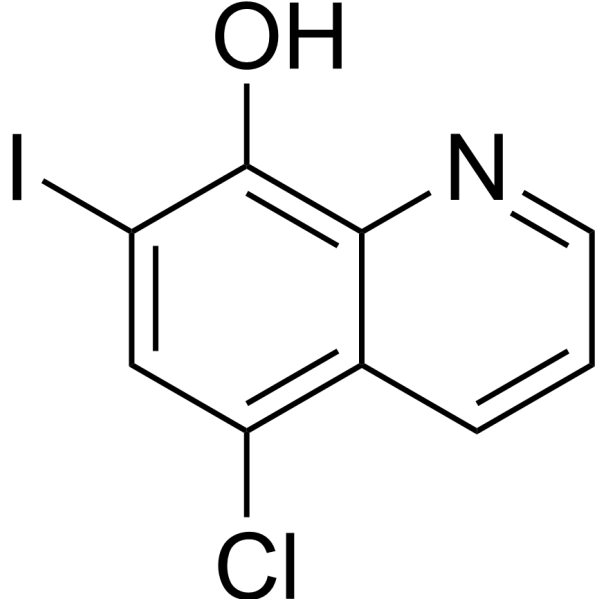
  • HY-162050

    Sirtuin Neurological Disease
    8AQ?Cu?5Iu is an activator of SIRT1. 8AQ?Cu?5Iu exhibits neuroprotective effects by modulating the SIRT1/3-FOXO3a signaling pathway. 8AQ?Cu?5Iu can used in study attenuating neurodegenerative diseases .
    8AQ−Cu−5Iu
  • HY-121638B

    Bcl-2 Family Infection Cardiovascular Disease Inflammation/Immunology Cancer
    (E/Z)-CU-3 is a MCL-1 modulator. (E/Z)-CU-3 can be used to study hyperproliferative diseases, angiogenic diseases, cell cycle regulation diseases, autophagy regulation diseases, inflammatory diseases and/or infectious diseases .
    (E/Z)-CU-3
  • HY-136476B

    Heme Oxygenase (HO) MOFs Inflammation/Immunology Cancer
    Cu (II) Protoporphyrin IX is used as a negative control for Zn (II) Protoporphyrin (an inihibitor of heme oxygenase). Heme oxygenase has been implicated in tumor cell resistance to chemotherapy, reduction of free radical formation and inflammation, and associated with vascular repair .
    Cu(II) protoporphyrin IX
  • HY-158117

    Apoptosis Autophagy Cancer
    [Cu2Cl2(4'-(4-Methoxy-1-naphthyl)-terpy)2](PF6)2 (Compound 3) is a copper complex, which inhibits cell viability of HCT116, HCT116DoxR, A2780 and fibroblasts, with IC50s of 0.13, 0.15, 0.66 and 6.24 μM, respectively. [Cu2Cl2(4'-(4-Methoxy-1-naphthyl)-terpy)2](PF6)2 induces apoptosis and autophagy, and arrests cell cycle at G0/G1 phase in HCT116DoxR. [Cu2Cl2(4'-(4-Methoxy-1-naphthyl)-terpy)2](PF6)2 exhibits antimetastatic efficacy .
    [Cu2Cl2(4'-(4-Methoxy-1-naphthyl)-terpy)2](PF6)2
  • HY-132927

    Biochemical Assay Reagents Others
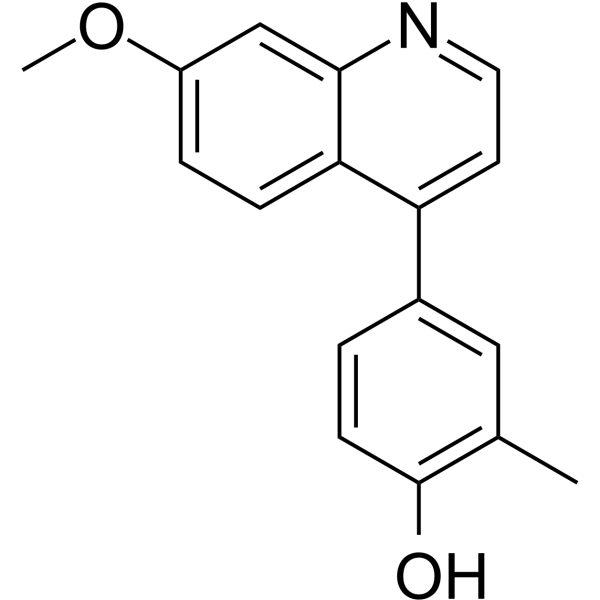
    Salpyran is a Cu(II) selective chelator with therapeutic potential.
    Salpyran
  • HY-49457

    Drug Derivative Others
    Copper(II) ionophore I is a neutral Cu + ionophore.
    Copper(II) ionophore I
  • HY-132927A

    Biochemical Assay Reagents Others
    Salpyran is a Cu(II) selective chelator with therapeutic potential .
    Salpyran hydrochloride
  • HY-W747575

    Endogenous Metabolite Metabolic Disease
    (±)13-HODE cholesteryl ester is originally extracted from atherosclerotic lesions1 and shown to be produced by Cu2+-catalyzed oxidation of LDL. Later studies determined that 15-LO from rabbit reticulocytes and human monocytes were able to metabolize cholesteryl linoleate, a major component of LDL, to 13-HODE cholesteryl ester.
    (+/-)13-HODE cholesteryl ester
  • HY-123016A

    Endogenous Metabolite Metabolic Disease
    (±)9-HODE cholesteryl ester is originally extracted from atherosclerotic lesions1 and shown to be produced by Cu2+-catalyzed oxidation of LDL.2 Later studies determined that 15-LO from rabbit reticulocytes and human monocytes were able to metabolize cholesteryl linoleate, a major component of LDL, to 9-HODE cholesteryl ester.
    (±)9-HODE cholesteryl ester
  • HY-N5197

    Bacterial Antibiotic Infection
    Dapdiamide A is an antibiotic found in Pantoea agglomerans CU0119 strain, exhibiting antibacterial activity and potential applications in anti-infective research .
    Dapdiamide A
  • HY-182406

    Ser/Thr Protease Cardiovascular Disease
    CU-2010 is a Serine protease inhibitor. In canine models, CU-2010 reduces blood loss after cardiac surgery in a dose-dependent manner and improves post-ischemic recovery .
    CU-2010
  • HY-180351

    RAR/RXR Others
    CU-6PMN is a fluorescent RXR agonist. CU-6PMN has a maximum absorption wavelength of 396 nm and an emission wavelength of 453 nm in 0.1 N NaOH aqueous solution. CU-6PMN has an EC50 value of 22 nM and a Ki value of 230 nM for human RXRα. CU-6PMN can be used in research related to the screening of RXR ligands .
    CU-6PMN

Inquiry Online

Your information is safe with us. * Required Fields.

Salutation


Country or Region *

Applicant Name *


Organization Name *

Department *


Email Address *


Product Name *

Cat. No.


Requested quantity *

Phone Number *


Remarks

Inquiry Online

Inquiry Information

Product Name:
Cat. No.:
Quantity:
MCE Japan Authorized Agent: