


1. Search Result
Search Result
Results for "

EPA

" in MedChemExpress (MCE) Product Catalog:

58

Inhibitors & Agonists

2

Screening Libraries

1

Biochemical Assay Reagents

8

Natural
Products

6

Recombinant Proteins

7

Isotope-Labeled Compounds

1

Antibodies

7

Oligonucleotides

Cat. No. Product Name Target Research Areas Chemical Structure
  • HY-B0660
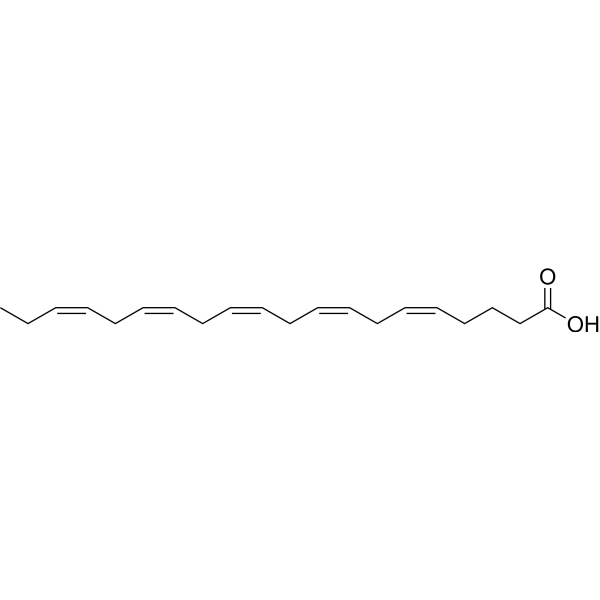
    Eicosapentaenoic Acid
    Maximum Cited Publications
    30 Publications Verification

    EPA; Timnodonic acid

    Endogenous Metabolite Histone Demethylase Neurological Disease Cancer
    Eicosapentaenoic Acid (EPA) is an orally active Omega-3 long-chain polyunsaturated fatty acid (ω-3 LC-PUFA). Eicosapentaenoic Acid exhibits a DNA demethylating action that promotes the re-expression of the tumor suppressor gene CCAAT/enhancer-binding protein δ (C/EBPδ). Eicosapentaenoic Acid activates RAS/ERK/C/EBPβ pathway through H-Ras intron 1 CpG island demethylation in U937 leukemia cells. Eicosapentaenoic Acid can promote relaxation of vascular smooth muscle cells and vasodilation .
    Eicosapentaenoic Acid
  • HY-B0747

    EPA ethyl ester; Ethyl eicosapentaenoate; AMR101

    Endogenous Metabolite Metabolic Disease
    Eicosapentaenoic acid ethyl ester (EPA ethyl ester) is an orally active ω-3 fatty acid agent. Eicosapentaenoic acid ethyl ester could improve the activity of liver β-oxidase in vitro, reduce the level of liver total triglyceride, increase the content of liver triglyceride and phospholipid ω-3 fatty acid, and increase the total ω-3 fatty acid level in rats .
    Eicosapentaenoic acid ethyl ester
  • HY-114041
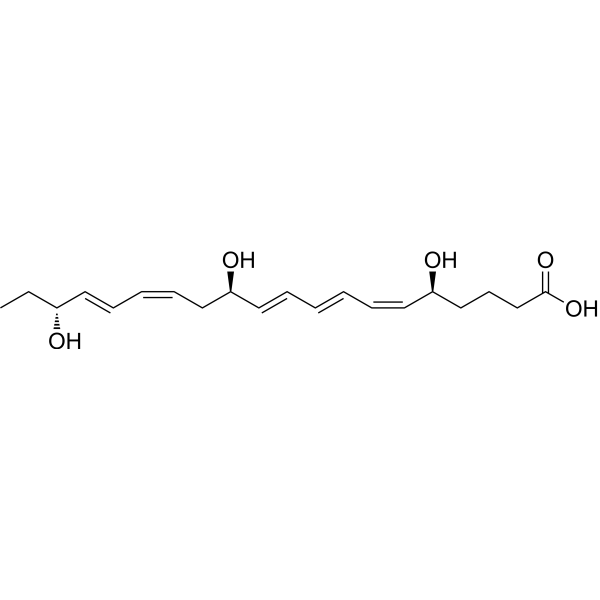
    Resolvin E1
    2 Publications Verification

    RvE1

    Endogenous Metabolite Inflammation/Immunology
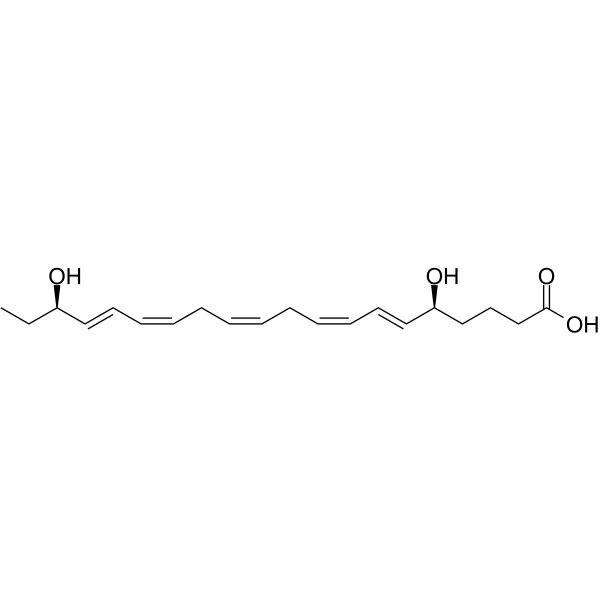
    Resolvin E1 (RvE1), a potent endogenous pro-resolving mediator of inflammation, is derived from omega-3 fatty acid eicosapentaenoic acid (EPA). Resolvin E1 is endogenously biosynthesized from EPA in the presence of Aspirin during the spontaneous resolution phase of acute inflammation, where specific cell-cell interactions occur. Resolvin E1 possesses unique counterregulatory actions that inhibit polymorphonuclear leukocyte (PMN) transendothelial migration. Resolvin E1 also acts as a potent inhibitor of leukocyte infiltration, dendritic cell migration, and IL-12 production .
    Resolvin E1
  • HY-Y1422I

    Environmental Pollutants Biochemical Assay Reagents Lipase Others
    Lipase, Pseudomonas fluorescens (Immobilized) is an immobilized biocatalyst derived from Pseudomonas fluorescens. Lipase, Pseudomonas fluorescens (Immobilized) efficiently catalyzes the hydrolysis, esterification and transesterification of triacylglycerols in solvent-free systems, and is particularly suitable for biodiesel production from soybean oil and selective modification of oils rich in EPA and DHA. Lipase, Pseudomonas fluorescens (Immobilized) exhibits optimal activity at pH 8.5 and 45°C, and retains residual activity after repeated cycles of use. Lipase, Pseudomonas fluorescens (Immobilized) is activated by Ca 2+, but inhibited by Co 2+, Ni 2+, Fe 3+, Fe 2+ and EDTA .
    Lipase,Pseudomonas fluorescens (Immobilized)
  • HY-B0660S

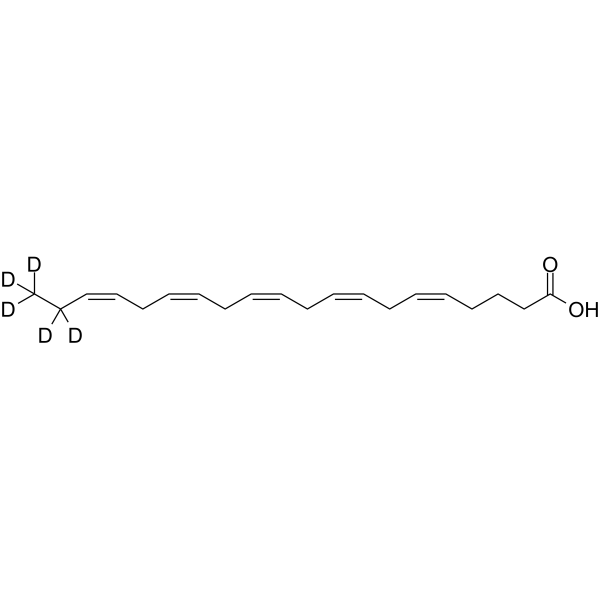
    EPA-d5; Timnodonic acid-d5

    Endogenous Metabolite Histone Demethylase Neurological Disease Cancer
    Eicosapentaenoic Acid-d5 is the deuterium labeled Eicosapentaenoic Acid. Eicosapentaenoic Acid (EPA; Timnodonic acid) is an omega-3 fatty acid.
    Eicosapentaenoic Acid-d5
  • HY-113120

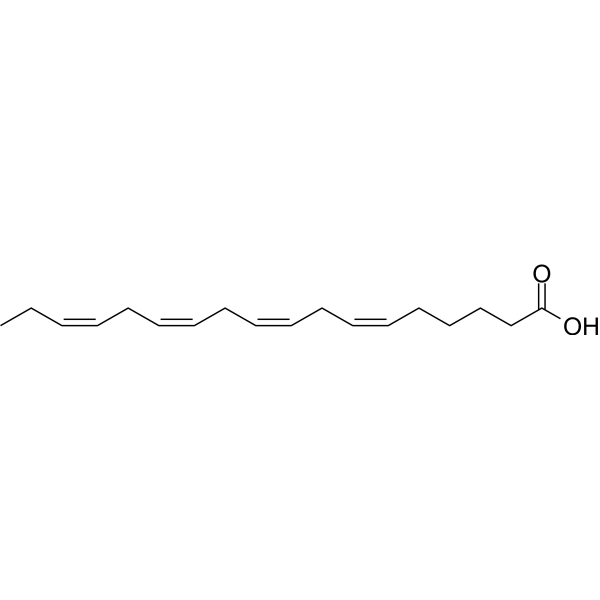
    6Z,9Z,12Z,15Z-Octadecatetraenoic acid

    Lipoxygenase Metabolic Disease
    Stearidonic acid (6Z,9Z,12Z,15Z-Octadecatetraenoic acid) is an orally active polyunsaturated fatty acid found in blackcurrant seed oil. Stearidonic acid can inhibit 5-lipoxygenase and reduce leukotriene and 5-HETE synthesis. Stearidonic acid can increase the content of eicosapentaenoic acid (EPA) in red blood cells. Stearidonic acid can be used for the research of metabolic disease .
    Stearidonic acid
  • HY-113000

    Endogenous Metabolite Cardiovascular Disease
    Cetoleic acid is a long-chain monounsaturated fatty acid found in deep-sea fish. Cetoleic acid can promote the synthesis of ALA in human HepG2 cells and EPA in vitro in salmon liver cells, affecting cholesterol levels in rodents. Cetoleic acid has potential applications in cardiovascular disease research .
    Cetoleic acid
  • HY-101172

    EP-A-501322

    5-HT Receptor Cardiovascular Disease
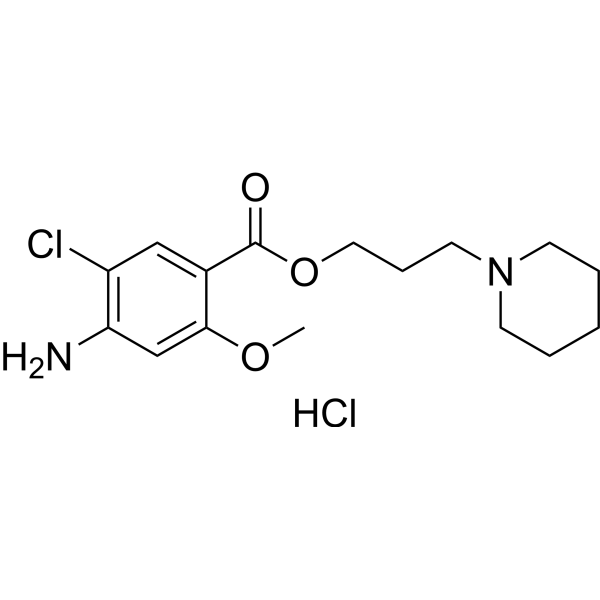
    RS 23597-190 (EP-A-501322) is a high affinity and selective 5-HT4 receptor antagonist. RS 23597-190 inhibits Serotonin (HY-B1473A)-induced tachycardia. RS 23597-190 significantly inhibits superoxide production in high glucose .
    RS 23597-190
  • HY-141469

    HPA; Heneicosapentaenoic acid methyl ester

    PGE synthase Lipoxygenase Cardiovascular Disease Neurological Disease
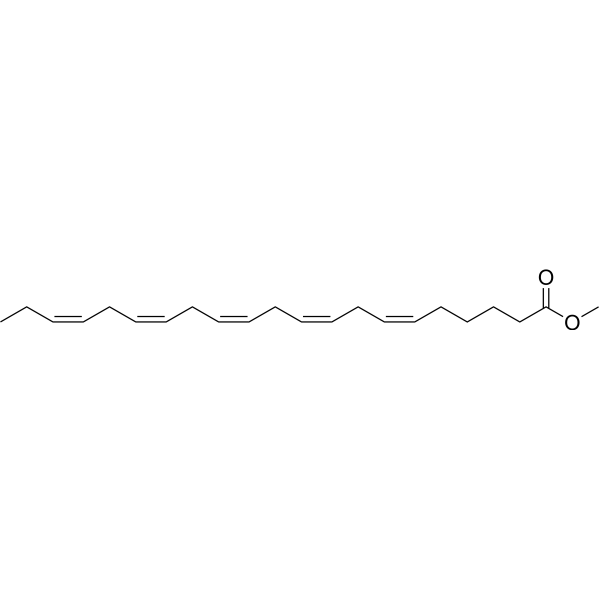
    6,9,12,15,18-Heneicosapentaenoic acid (HPA) is a ∆5 desaturase inhibitor. 6,9,12,15,18-Heneicosapentaenoic acid serves as a weak substrate for Prostaglandin H synthase and 5-lipoxygenase, yet it inactivates Prostaglandin H synthase at a rate comparable to that of AA, EPA and DHA. 6,9,12,15,18-Heneicosapentaenoic acid is a weak inducer of Aacyl-CoA oxidase. 6,9,12,15,18-Heneicosapentaenoic acid incorporates into phospholipids and triacylglycerols in cell culture. 6,9,12,15,18-Heneicosapentaenoic acid can be used in research related to liver cancer .
    6,9,12,15,18-Heneicosapentaenoic acid
  • HY-B0660R

    EPA (Standard); Timnodonic acid (Standard)

    Reference Standards Endogenous Metabolite Histone Demethylase Neurological Disease Cancer
    Eicosapentaenoic Acid (Standard) is the analytical standard of Eicosapentaenoic Acid. This product is intended for research and analytical applications. Eicosapentaenoic Acid (EPA) is an orally active Omega-3 long-chain polyunsaturated fatty acid (ω-3 LC-PUFA). Eicosapentaenoic Acid exhibits a DNA demethylating action that promotes the re-expression of the tumor suppressor gene CCAAT/enhancer-binding protein δ (C/EBPδ). Eicosapentaenoic Acid activates RAS/ERK/C/EBPβ pathway through H-Ras intron 1 CpG island demethylation in U937 leukemia cells. Eicosapentaenoic Acid can promote relaxation of vascular smooth muscle cells and vasodilation .
    Eicosapentaenoic Acid (Standard)
  • HY-130675A

    15(S)-hydroxy-Eicosapentaenoic acid; 15(S)-hydroxy EPA

    Lipoxygenase Inflammation/Immunology
    15(S)-HEPE is a monohydroxy fatty acid. 15(S)-HEPE is biosynthesized from eicosapentaenoic acid by 15-lipoxygenase (15-LO). Serum levels of 15(S)-HEPE are elevated in patients with asthma.
    15(S)-HEPE
  • HY-147426

    ADS-007; ARO HIF2

    Small Interfering RNA (siRNA) HIF/HIF Prolyl-Hydroxylase Cancer
    Zifcasiran (ADS-007; ARO HIF2) is an siRNA synthetic double-stranded RNAi trigger. Zifcasiran sodium selectively target hypoxia-inducible factor-2α (HIF2α) interrupting downstream pro-oncogenic signaling in clear cell renal cell carcinoma (ccRCC). Zifcasiran sodium engages the cell's RNAi machinery to target HIF2α (EPAS1) mRNA for degradation, thereby reducing the amount of free HIF2α mRNA available for translation .
    Zifcasiran
  • HY-W777986

    1-EPA-2-OH-sn-glycerol-3-phosphocholine

    Drug Derivative Metabolic Disease
    1-Eicosapentaenoyl-sn-glycerol-3-phosphocholine (1-EPA-2-OH-sn-glycerol-3-phosphocholine) is an ester product.
    1-Eicosapentaenoyl-sn-glycerol-3-phosphocholine
  • HY-121212

    LDLR Metabolic Disease Inflammation/Immunology
    Icosabutate, an orally active ω-3 polyunsaturated fatty acid, is an aeicosapentaenoic acid (EPA) derivative. Icosabutate overcomes the drawbacks of unmodified EPA for liver targeting and improves insulin sensitivity, hepatic inflammation and fibrosis . Icosabutate is well tolerated, and efficacious in lowering non-high-density lipoprotein cholesterol (non-HDL-C) levels in persistent hypertriglyceridemia .
    Icosabutate
  • HY-RS04409

    Small Interfering RNA (siRNA) Others

    EPAS1 Human Pre-designed siRNA Set A contains three designed siRNAs for EPAS1 gene (Human), as well as a negative control, a positive control, and a FAM-labeled negative control.

    EPAS1 Human Pre-designed siRNA Set A
    EPAS1 Human Pre-designed siRNA Set A
  • HY-130138C

    Calcium Channel Inflammation/Immunology
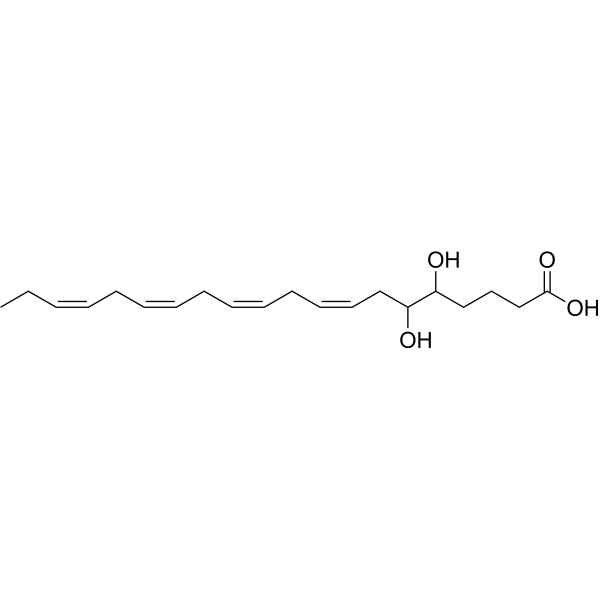
    5,6-DiHETE is an anti-inflammatory lipid mediator derived from eicosapentaenoic acid (EPA). 5,6-DiHETE has the ability to suppress vascular hyperpermeability during inflammation and is used in the research of inflammatory diseases .
    5,6-DiHETE
  • HY-114041S

    RvE1-d4

    Isotope-Labeled Compounds Endogenous Metabolite Inflammation/Immunology
    Resolvin E1-d4 (RvE1-d4) is deuterium labeled Resolvin E1. Resolvin E1 (RvE1), a potent endogenous pro-resolving mediator of inflammation, is derived from omega-3 fatty acid eicosapentaenoic acid (EPA). Resolvin E1 is endogenously biosynthesized from EPA in the presence of Aspirin during the spontaneous resolution phase of acute inflammation, where specific cell-cell interactions occur. Resolvin E1 possesses unique counterregulatory actions that inhibit polymorphonuclear leukocyte (PMN) transendothelial migration. Resolvin E1 also acts as a potent inhibitor of leukocyte infiltration, dendritic cell migration, and IL-12 production .
    Resolvin E1-d4
  • HY-N7833

    Biochemical Assay Reagents Others
    Heneicosapentaenoic Acid (HPA) is a 21:5 omega-3 fatty acid found in trace amounts in the green alga B. pennata and in fish oils. Its chemical composition is similar to eicosapentaenoic acid (EPA), except that a carbon is extended at the carboxy terminus, placing the first double bond at the δ6 position. HPA can be used to study the importance of double bond position in omega-3 fatty acids. It incorporates phospholipids and triacylglycerols in vivo with the same efficiency as EPA and docosahexaenoic acid, and exhibits a strong inhibitory effect on the synthesis of arachidonic acid from linoleic acid. HPA is a poor substrate for prostaglandin H synthase (PGHS) (cyclooxygenase) and 5-lipoxygenase, but retains the ability to rapidly inactivate PGHS.
    Heneicosapentaenoic acid
  • HY-W011269
    Eicosapentaenoic Acid sodium
    Maximum Cited Publications
    30 Publications Verification

    EPA sodium; Timnodonic acid sodium

    Endogenous Metabolite Histone Demethylase Cardiovascular Disease Metabolic Disease Cancer
    Eicosapentaenoic Acid (EPA)sodium is an orally active Omega-3 long-chain polyunsaturated fatty acid (ω-3 LC-PUFA). Eicosapentaenoic Acid sodium exhibits a DNA demethylating action that promotes the re-expression of the tumor suppressor gene CCAAT/enhancer-binding protein δ (C/EBPδ). Eicosapentaenoic Acid sodium activates RAS/ERK/C/EBPβ pathway through H-Ras intron 1 CpG island demethylation in U937 leukemia cells. Eicosapentaenoic Acid sodium can promote relaxation of vascular smooth muscle cells and vasodilation .
    Eicosapentaenoic Acid sodium
  • HY-114041S1

    RvE1-d4-1

    Isotope-Labeled Compounds Endogenous Metabolite Inflammation/Immunology
    Resolvin E1-d4-1 is the deuterium labeled Resolvin E1. Resolvin E1 (RvE1), a potent endogenous pro-resolving mediator of inflammation, is derived from omega-3 fatty acid eicosapentaenoic acid (EPA). Resolvin E1 is endogenously biosynthesized from EPA in the presence of Aspirin during the spontaneous resolution phase of acute inflammation, where specific cell-cell interactions occur. Resolvin E1 possesses unique counterregulatory actions that inhibit polymorphonuclear leukocyte (PMN) transendothelial migration. Resolvin E1 also acts as a potent inhibitor of leukocyte infiltration, dendritic cell migration, and IL-12 production .
    Resolvin E1-d4-1
  • HY-147426A

    ADS-007 sodium; ARO HIF2 sodium

    Small Interfering RNA (siRNA) HIF/HIF Prolyl-Hydroxylase Cancer
    Zifcasiran (ADS-007) sodium is an siRNA synthetic double-stranded RNAi trigger. Zifcasiran sodium selectively target hypoxia-inducible factor-2α (HIF2α) interrupting downstream pro-oncogenic signaling in clear cell renal cell carcinoma (ccRCC). Zifcasiran sodium engages the cell's RNAi machinery to target HIF2α (EPAS1) mRNA for degradation, thereby reducing the amount of free HIF2α mRNA available for translation .
    Zifcasiran sodium
  • HY-W747548

    Lipoxygenase Leukotriene Receptor Inflammation/Immunology
    12(S)-HEPE is a monohydroxy fatty acid synthesized from EPA by the action of 12-LO. Unstimulated neutrophils metabolize 12(S)-HEPE to 12(S),20-diHEPE, whereas stimulated neutrophils produce 5(S),12(S)-HEPE via the 5-lipoxygenase pathway. The competitive action of 12(S)-HEPE with arachidonic acid as a substrate for 5-LO in the formation of leukotrienes may provide a basis for the anti-inflammatory potential of ω-3 fatty acids.
    12(S)-HEPE
  • HY-127023

    EPA-5-HT

    Endogenous Metabolite FAAH Interleukin Related Tyrosine Hydroxylase Metabolic Disease
    Eicosapentaenoyl serotonin (EPA-5-HT) is an endogenous fatty acid-serotonin conjugate lipid mediator. Eicosapentaenoyl serotonin acts as an inhibitor of fatty acid amide hydrolase (FAAH). Eicosapentaenoyl serotonin suppresses IL-17 release in Concanavalin A (HY-P2149)-stimulated human peripheral blood mononuclear cells. Eicosapentaenoyl serotonin is regulated by polyunsaturated fatty acids and modulates intestinal immunity and Th17 signaling. Eicosapentaenoyl serotonin can be used for the study of inflammatory bowel disease-related mechanisms .
    Eicosapentaenoyl serotonin
  • HY-B0660S1

    EPA 1,2,3,4,5-13C, FA 20:5-13C5

    Isotope-Labeled Compounds Endogenous Metabolite Histone Demethylase Neurological Disease Cancer
    Eicosapentaenoic acid 1,2,3,4,5- 13C5 (EPA 1,2,3,4,5- 13C, FA 20:5- 13C5) is 13C labeled Eicosapentaenoic Acid. Eicosapentaenoic Acid (EPA) is an orally active Omega-3 long-chain polyunsaturated fatty acid (ω-3 LC-PUFA). Eicosapentaenoic Acid exhibits a DNA demethylating action that promotes the re-expression of the tumor suppressor gene CCAAT/enhancer-binding protein δ (C/EBPδ). Eicosapentaenoic Acid activates RAS/ERK/C/EBPβ pathway through H-Ras intron 1 CpG island demethylation in U937 leukemia cells. Eicosapentaenoic Acid can promote relaxation of vascular smooth muscle cells and vasodilation .
    Eicosapentaenoic acid 1,2,3,4,5-13C5
  • HY-129764

    PGF3α

    P-glycoprotein Metabolic Disease Inflammation/Immunology Cancer
    Prostaglandin F3α (PGF3α) is an eicosapentaenoic acid (EPA)-derived bioactive lipid mediator that has anti-cancer and anti-inflammatory effects. Prostaglandin F3α is a substrate of ABCC4 with a Km of 12.1 μM. Prostaglandin F3α can be used for the research of diabetes .
    Prostaglandin F3α
  • HY-B0660A

    EPA metformin; Timnodonic acid metformin

    Endogenous Metabolite Histone Demethylase Neurological Disease Cancer
    Eicosapentaenoic Acid (EPA) metformin is an orally active Omega-3 long-chain polyunsaturated fatty acid (ω-3 LC-PUFA). Eicosapentaenoic acid metformin exhibits a DNA demethylating action that promotes the re-expression of the tumor suppressor gene CCAAT/enhancer-binding protein δ (C/EBPδ). EEicosapentaenoic acid metformin activates RAS/ERK/C/EBPβ pathway through H-Ras intron 1 CpG island demethylation in U937 leukemia cells. Eicosapentaenoic acid metformin can promote relaxation of vascular smooth muscle cells and vasodilation .
    Eicosapentaenoic acid metformin
  • HY-W740449

    EPA ethyl ester-d5; Ethyl eicosapentaenoate-d5; AMR101-d5

    Isotope-Labeled Compounds Others
    Eicosapentaenoic acid ethyl ester-d5-1 (EPA ethyl ester-d5) is deuterium labeled Eicosapentaenoic acid ethyl ester .
    Eicosapentaenoic acid ethyl ester-d5-1
  • HY-127139

    Eicosapentaenoic acid Chloride; EPA Chloride

    Endogenous Metabolite Metabolic Disease
    Eicosapentaenoyl chloride is a derivative of eicosapentaenoic acid. It has been used in the synthesis of fatty acid conjugates to enhance lipophilicity and cell permeability of bioactive compounds such as (–)-epigallocatechin gallate and salicylic acid.
    Eicosapentaenoyl Chloride
  • HY-RS25487

    Small Interfering RNA (siRNA) Others

    Epas1 Rat Pre-designed siRNA Set A contains three designed siRNAs for Epas1 gene (Rat), as well as a negative control, a positive control, and a FAM-labeled negative control.

    Epas1 Rat Pre-designed siRNA Set A
    Epas1 Rat Pre-designed siRNA Set A
  • HY-165078

    (±)11,12-EEQ; (±)11,12-Epoxyeicosatetraenoic acid

    Endogenous Metabolite Others
    (±)11(12)-EpETE ((±)11,12-EEQ) is an EPA hydroxyl product. EPA is a major component of Omega-3 polyunsaturated fatty acids (PUFAs) .
    (±)11(12)-EpETE
  • HY-115421A

    Endogenous Metabolite Metabolic Disease
    11-HEPE is a monohydroxy fatty acid derived from EPA (eicosapentaenoic acid) .
    11-HEPE
  • HY-115421B

    Endogenous Metabolite Others
    11(S)-HEPE is a monohydroxy fatty acid derived from EPA (eicosapentaenoic acid) .
    11(S)-HEPE
  • HY-115421

    Drug Derivative Metabolic Disease
    11(R)-HEPE is a monohydroxy fatty acid derived from EPA (eicosapentaenoic acid) .
    11(R)-HEPE
  • HY-157910

    Drug Metabolite Metabolic Disease
    (±)17(18)-EpETE methyl ester is an analog of the eicosapentaenoic acid (EPA) metabolite (±)17(18)-EpETE .
    (±)17(18)-EpETE methyl ester
  • HY-118652

    ω-3 6-keto PGF2α

    Prostaglandin Receptor Metabolic Disease
    Δ17-6-keto Prostaglandin F1α (Δ17-6-keto PGF1α) is a cyclooxygenase (COX) product of eicosapentaenoic acid (EPA) in various tissues such as seminal vesicles, lung, Polymorphonuclear leukocytes, and ocular tissues. Δ17-6-keto PGF1α and other 3-series COX products from EPA, such as PGF3α, PGE3, and thromboxane B3, may be involved in the reduced incidence of glaucoma in patients on a marine-rich (EPA-rich) diet.
    Δ17-6-keto Prostaglandin F1α
  • HY-N7801

    Drug Isomer Metabolic Disease
    (±)5-HEPE is produced by non-enzymatic oxidation of EPA. It contains equal amounts of 5(S)-HEPE and 5(R)-HEPE. The biological activity of (±)5-HEPE is likely mediated by one of the individual isomers, most commonly the 5(S) isomer in mammalian systems. EPA can be metabolized to 5-HEPE in human and bovine neutrophils, and human eosinophils, which is further metabolized to 5-oxoEPE and LTB5. The 5-series metabolites of EPA, namely 5-HEPE, 5-oxoEPE, and LTB5, have significantly decreased biological effects compared to the arachidonic acid-derived metabolites.
    (±)5-HEPE
  • HY-RS14538

    Small Interfering RNA (siRNA) Others

    TIMP1 Human Pre-designed siRNA Set A contains three designed siRNAs for TIMP1 gene (Human), as well as a negative control, a positive control, and a FAM-labeled negative control.

    TIMP1 Human Pre-designed siRNA Set A
    TIMP1 Human Pre-designed siRNA Set A
  • HY-130309

    (±)8,9-EEQ; (±)8,9-epoxy Eicosatetraenoic acid

    Angiotensin-converting Enzyme (ACE) Cardiovascular Disease
    Eicosapentaenoic acid (EPA) is converted to epoxyeicosatetraenoic acids (EpETEs) by several cytochrome P450 isoforms. The major product of this epoxygenase pathway, (±)17(18)-EpETE, relaxes vascular and airway smooth muscle by activating large conductance Ca 2+-activated K + (BKCa) channels by directly interacting with BKα channel subunits. (±)8(9)-EpETE is an epoxygenase pathway product produced from EPA by CYP450 both in vitro and in vivo.
    (±)8(9)-EpETE
  • HY-126108A

    Lipoxygenase Inflammation/Immunology
    8(S)-HEPE is a monohydroxy fatty acid produced by lipoxygenase oxidation of EPA. It acts to promote hatching of barnacle eggs at 10 nM, although it is not clearly identified as the natural egg hatching factor .
    8(S)-HEPE
  • HY-121212R

    Aminotransferases (Transaminases) Reference Standards Others Metabolic Disease Inflammation/Immunology
    Desmethyl Sibutramine (hydrochloride) (Standard) is the analytical standard of Desmethyl Sibutramine (hydrochloride). This product is intended for research and analytical applications. Desmethyl Sibutramine hydrochloride, the secondary metabolite of Sibutramine, is an orally active norepinephrine transporter (NET) and serotonin transporter (SERT) inhibitor. Desmethyl Sibutramine hydrochloride can be used in the research of obesity and appetite suppressant .
    Icosabutate (Standard)
  • HY-B0747R

    EPA ethyl ester(Standard); Ethyl eicosapentaenoate (Standard); AMR101 (Standard)

    Reference Standards Endogenous Metabolite Metabolic Disease
    Eicosapentaenoic acid ethyl ester (Standard) is the analytical standard of Eicosapentaenoic acid ethyl ester. This product is intended for research and analytical applications. Eicosapentaenoic acid ethyl ester is an omega-3 fatty acid agent.
    Eicosapentaenoic acid ethyl ester (Standard)
  • HY-117044

    Endogenous Metabolite Metabolic Disease
    12(R)-HEPE is a monohydroxy fatty acid synthesized from EPA by the eggs of the sea urchin, S. purpuratus.1 The biological activity of 12(R)-HEPE has not been extensively documented, but may be similar to that of 12(R)-HETE.
    12(R)-HEPE
  • HY-126108

    Others Metabolic Disease
    (±)8-HEPE is produced by non-enzymatic oxidation of EPA. It contains equal amounts of (±)8-HEPE and 8(R)-HEPE. The ability of (±)8-HEPE to induce hatching of E. modestus and B. balanoides eggs is probably due to the presence of the 8(R) isomer within the racemic mixture.
    (±)8-HEPE
  • HY-145522

    MEM; 1,3-Myristin-2-Eicosapentaenoin; 14:0/20:5/14:0-TG

    Biochemical Assay Reagents Metabolic Disease
    1,3-Dimyristoyl-2-eicosapentaenoyl glycerol (MEM) is a triacylglycerol that contains myristic acid (HY-N2041) at the sn-1 and sn-3 positions and eicosapentaenoic acid at the sn-2 position. The myristoyl groups in MEM do not affect the oxidative stability of eicosapentaenoic acid (EPA) during long-term storage at 25°C.
    13-Dimyristoyl-2-Eicosapentaenoyl Glycerol
  • HY-116008

    8-epi PGF3α; 8-iso PGF3α

    Prostaglandin Receptor Endocrinology
    8-iso PGF3α is an isoprostane produced from the free-radical peroxidation of EPA. Little is known about the biological activity of 8-iso PGF3α. There is one report that it is inactive in a TP receptor mediated assay of human platelet shape change, where 8-iso PGF2α has an ED50 value of 1 μM.
    8-iso Prostaglandin F3α
  • HY-121888

    PPAR Metabolic Disease
    20-HEPE is a metabolite of eicosapentaenoic acid formed by ω-oxidation of EPA by cytochrome P450 (CYP) ω-oxidases, including human CYP4F3B. At 10 μM, it activates peroxisome proliferator-activated receptor α (PPARα) in COS-7 cells expressing a luciferase reporter gene. 20-HEPE also activates mouse transient receptor potential vanilloid receptor 1 (mTRPV1) in vitro but lacks analgesic activity in rats.
    20-HEPE
  • HY-109089S

    15(S)-HEPE-d5 ethyl ester; 15(S)-Hydoxy EPA-d5 ethyl ester; 15(S)-Hydoxy eicosapetaeoic acid-d5 ethyl ester

    Isotope-Labeled Compounds Others
    Epeleuton-d5 (15(S)-HEPE-d5 ethyl ester) is deuterium labeled Epeleuton. Epeleuton is a second-generation synthetic N-3 fatty acid derivative with activity in patients with non-alcoholic fatty liver disease, although it did not reach the primary endpoints of alanine aminotransferase and liver stiffness, but it can significantly reduce triglycerides, glycated hemoglobin, plasma glucose and inflammatory markers .
    Epeleuton-d5
  • HY-117044A

    Prostaglandin Receptor Metabolic Disease
    (±)12-HEPE is produced by non-enzymatic oxidation of EPA. It contains equal amounts of 12(S)-HEPE and 12(R)-HEPE. The biological activity of (±)12-HEPE is likely mediated by one of the individual isomers, most commonly the 12(S) isomer in mammalian systems. 12-HEPE inhibits platelet aggregation with the same potency as 12-HETE, exhibiting IC50 values of 24 and 25 μM, respectively.1 These compounds are also equipotent as inhibitors of U46619-induced contraction of rat aorta (IC50s=8.6-8.8 μM).
    (±)12-HEPE
  • HY-113513

    Others Cancer
    5(S)-HEPE is an active metabolite of eicosapentaenoic acid. It is formed from EPA by 5-lipoxygenase (5-LO). 5(S)-HEPE is an agonist of G protein-coupled receptor 119 (GPR119). It increases cAMP accumulation in CHO-K1 cells expressing human GPR119 when used at a concentration of 10 μM. 5(S)-HEPE increases glucose-induced insulin secretion from MING6 insulinoma pancreatic islets and glucagon-like peptide 1 (GLP-1) secretion from HuTu 80 adenocarcinoma cells when used at a concentration of 10 μM. Serum levels of 5(S)-HEPE are elevated in patients with hyperlipidemia.
    5-HEPE
  • HY-180258

    Biochemical Assay Reagents
    1,3-Olein-2-EPA is an acylglycerol.
    1,3-Olein-2-EPA

Inquiry Online

Your information is safe with us. * Required Fields.

Salutation


Country or Region *

Applicant Name *


Organization Name *

Department *


Email Address *


Product Name *

Cat. No.


Requested quantity *

Phone Number *


Remarks

Inquiry Online

Inquiry Information

Product Name:
Cat. No.:
Quantity:
MCE Japan Authorized Agent:

