1. Search Result
Search Result
Results for "

Iron

" in MedChemExpress (MCE) Product Catalog:

421

Inhibitors & Agonists

3

Screening Libraries

11

Fluorescent Dye

58

Biochemical Assay Reagents

20

Peptides

1

MCE Kits

8

Inhibitory Antibodies

70

Natural
Products

11

Recombinant Proteins

22

Isotope-Labeled Compounds

7

Antibodies

2

Click Chemistry

9

Oligonucleotides

Targets Recommended:
Cat. No. Product Name Target Research Areas Chemical Structure
  • HY-B1645
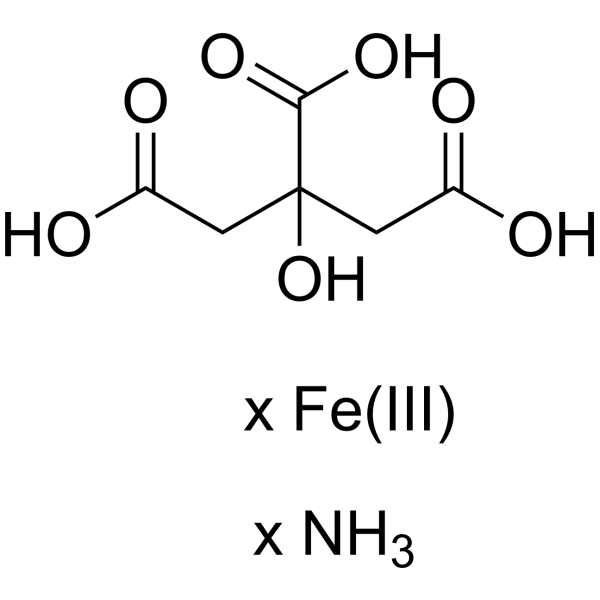
    Ammonium iron(III) citrate
    25+ Cited Publications

    Ammonium ferric citrate; FAC

    Environmental Pollutants Ferroptosis Cancer
    Ammonium iron(III) citrate (Ammonium ferric citrate), a physiological form of nonetransferrin-bound iron, induces intracellular iron overload to cause ferroptosis . Ammonium iron(III) citrate can enhance protein production .
    Ammonium iron(III) citrate
  • HY-17359
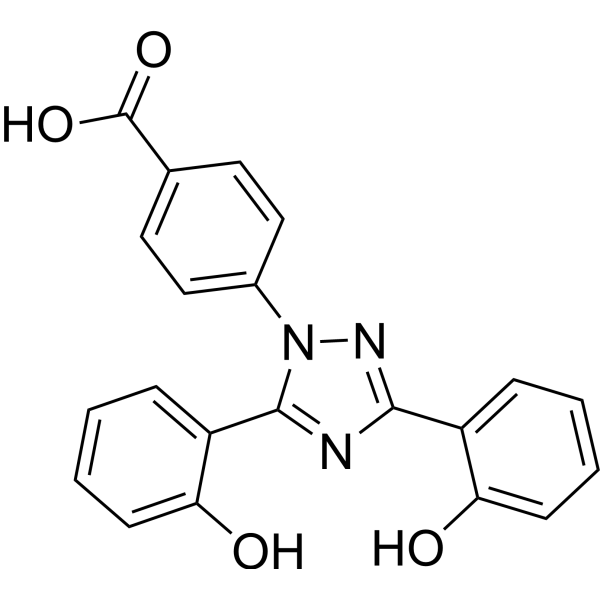
    Deferasirox
    10+ Cited Publications

    ICL 670

    Bacterial Ferroptosis Cancer
    Deferasirox (ICL 670) is an orally available iron chelator used for the management of transfusional iron overload .
    Deferasirox
  • HY-137805
    Ferrozine
    3 Publications Verification

    Fluorescent Dye Others
    Ferrozine is a spectrophotometric reagent for iron ions, can react with divalent Fe to form a stable magenta complex species. The complex has an absorption peak at 562 nm . Ferrozine-based colorimetric assays can quantify iron in cells
    Ferrozine
  • HY-B0581
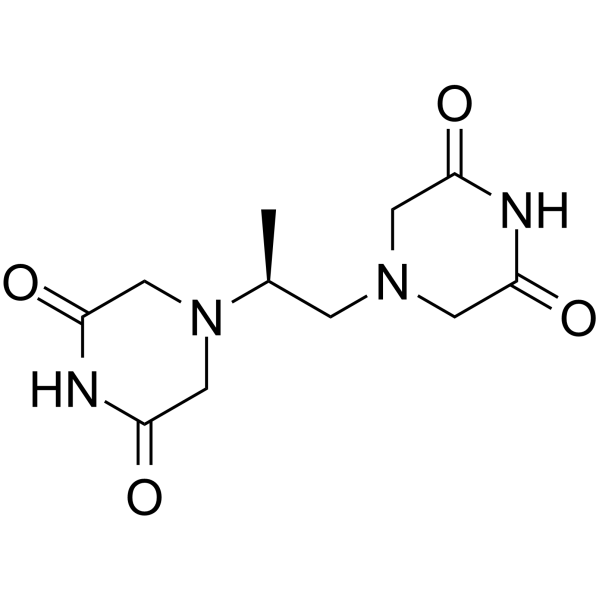
    Dexrazoxane
    15+ Cited Publications

    ICRF-187; ADR-529; NSC-169780

    Ferroptosis Apoptosis Cardiovascular Disease Neurological Disease Inflammation/Immunology Cancer
    Dexrazoxane, as an intracellular iron chelating agent, reduces the formation of superoxide radicals and has cardioprotective, anti-inflammatory, antioxidant, anti-tumor and neuroprotective activities. Dexrazoxane inhibits ferroptosis of H9c2 cells by inhibiting HMGB1. Dexrazoxane induces DNA damage and apoptosis in human fibrosarcoma cells .
    Dexrazoxane
  • HY-N1428C
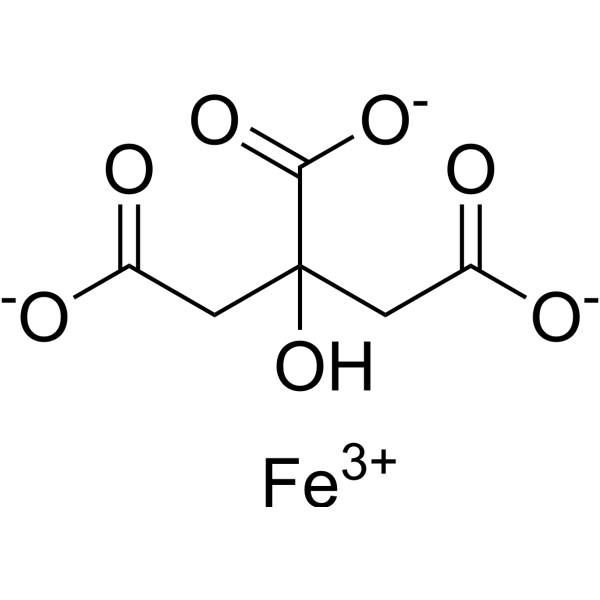
    Ferric citrate
    5 Publications Verification

    Iron(III) citrate; Zerenex

    Reactive Oxygen Species (ROS) Antibiotic Metabolic Disease
    Ferric citrate (Iron(III) citrate), an orally active iron supplement, is an efficacious phosphate binder. Ferric citratee can be used for iron deficiency anemia and chronic kidney disease (CKD) research .
    Ferric citrate
  • HY-P3267
    Holo-Bovine Transferrin
    2 Publications Verification

    Transferrin Receptor Others
    Holo-Bovine Transferrin, a blood-plasma glycoprotein, is a target ligand for transferrin receptor. Holo-Bovine Transferrin can bind to and mediate the transport of iron .
    Holo-Bovine Transferrin
  • HY-107928
    Iron dextran
    1 Publications Verification

    Fe dextran

    Transferrin Receptor Metabolic Disease Cancer
    Iron dextran (Fe dextran) can be used in the study of iron-deficiency anemia in animals .
    Iron dextran
  • HY-Y1103
    Iron(II) sulfate heptahydrate, 99%
    1 Publications Verification

    Ferrous sulfate heptahydrate, 99%

    Environmental Pollutants Biochemical Assay Reagents Cardiovascular Disease Cancer
    Iron(II) sulfate heptahydrate, 99% (Ferrous sulfate heptahydrate, 99%) is an orally active iron salt. Iron(II) sulfate heptahydrate, 99% replaces iron found in hemoglobin and myoglobin, allowing for the transportation of oxygen via hemoglobin. Iron(II) sulfate heptahydrate, 99% is mainly used for the prevention of iron-deficiency anemia. Iron(II) sulfate heptahydrate, 99% also has anti-tumor effects on chronic myeloid leukemia and breast cancer .
    Iron(II) sulfate heptahydrate, 99%
  • HY-W075707
    FeTCPP chloride
    1 Publications Verification

    Iron(III) meso-Tetra(4-carboxyphenyl)porphine chloride

    MOFs Others
    FeTCPP chloride (Iron(III) meso-Tetra(4-carboxyphenyl)porphine chloride) is a metallic porphyrin compound formed by the coordination of a central iron ion (Fe 3+) with four 4-carboxyphenylporphyrins (TCPP). FeTCPP chloride can be used as a catalyst for catalytic, electrochemical, photochemical and biomedical research. FeTCPP chloride has high photocatalytic performance for p-nitrophenol under visible light. FeTCPP chloride also has peroxisase-like activity, which is used in bionic catalysis research .
    FeTCPP chloride
  • HY-112220
    VIT-2763
    5+ Cited Publications

    Ferroportin Metabolic Disease
    VIT-2763, an oral ferroportin inhibitor, inhibits hepcidin binding to ferroportin and blocks iron efflux. VIT-2763 has the potential in the treatment of β-thalassemia .
    VIT-2763
  • HY-B2068
    Iron sucrose
    1 Publications Verification

    Iron saccharate

    Reactive Oxygen Species (ROS) Metabolic Disease Cancer
    Iron sucrose (Iron saccharate) is a intravenous iron preparation and a pro-oxidant agent. Iron sucrose has the potential for iron deficiency anemia treatment .
    Iron sucrose
  • HY-129457
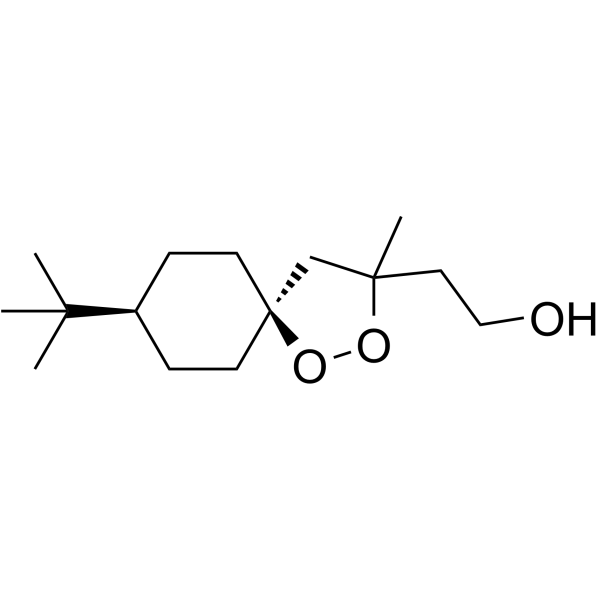
    FINO2
    10+ Cited Publications

    Ferroptosis Cancer
    FINO2 is a potent ferroptosis inducer. FINO2 inhibits GPX4 activity. FINO2 is a stable oxidant that oxidizes ferrous iron and stable at varying pH levels. FINO2 causes widespread lipid peroxidation .
    FINO2
  • HY-Y1103A

    Ferrous sulfate heptahydrate, for cell culture, 99%

    Environmental Pollutants Biochemical Assay Reagents Cardiovascular Disease Cancer
    Iron(II) sulfate heptahydrate, for cell culture, 99% (Ferrous sulfate heptahydrate, for cell culture, 99%) is an orally active iron salt. Iron(II) sulfate heptahydrate, for cell culture, 99% replaces iron found in hemoglobin and myoglobin, allowing for the transportation of oxygen via hemoglobin. Iron(II) sulfate heptahydrate, for cell culture, 99% is mainly used for the prevention of iron-deficiency anemia. Iron(II) sulfate heptahydrate, for cell culture, 99% also has anti-tumor effects on chronic myeloid leukemia and breast cancer .
    Iron(II) sulfate heptahydrate, for cell culture, 99%
  • HY-B1651

    Ferrous fumarate

    Transferrin Receptor Metabolic Disease Cancer
    Iron (II) fumarate is an orally effective active dietary supplement. Iron (II) fumarate can alleviate metabolic damage and damage to silkworms caused by cypermethrin (HY-123178). Iron (II) fumarate can be used for research on iron deficiency anemia .
    Iron(II) fumarate
  • HY-Y0813S

    57Fe

    Isotope-Labeled Compounds Others
    Iron-57 ( 57Fe) is a stable isotope labeled Iron.
    Iron-57
  • HY-153629
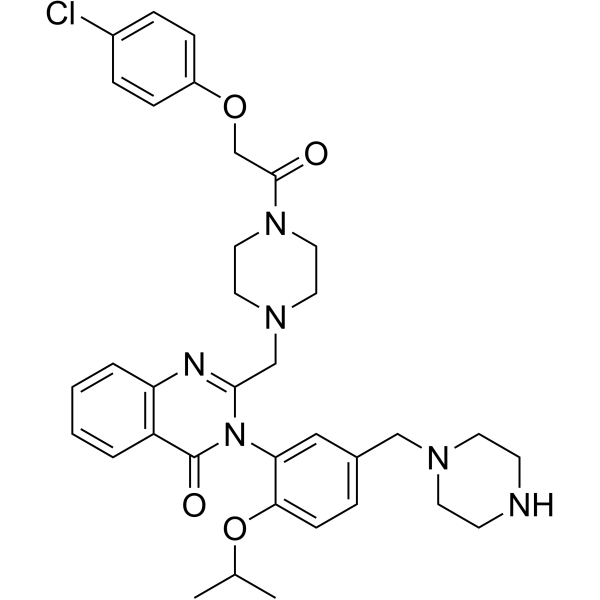
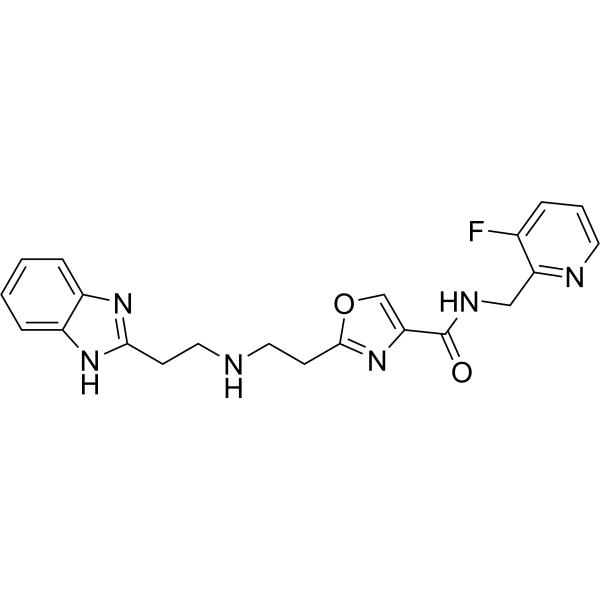
    FSEN1
    2 Publications Verification

    Ferroptosis Cancer
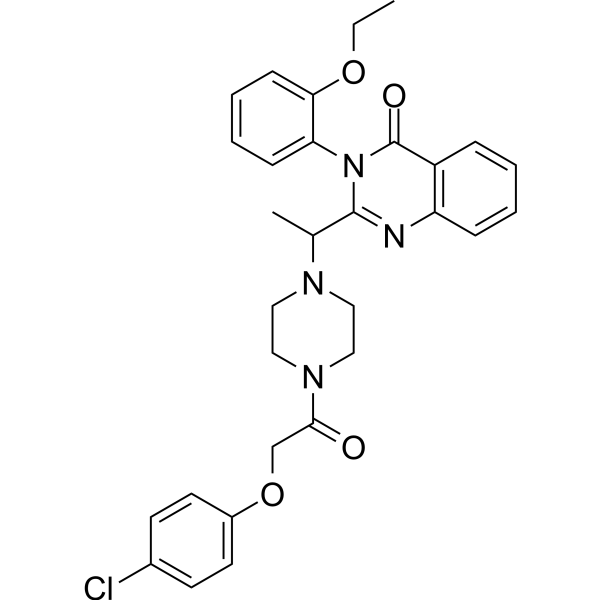
    FSEN1 is a potent and non-competitive FSP1 inhibitor with an IC50 value of 313 nM. FSEN1 triggers iron death in cancer cells by inhibiting FSP1. FSEN1 can be used in research of cancer .
    FSEN1
  • HY-W698249

    Ferroptosis Bacterial Cardiovascular Disease Infection
    Ferrous gluconate is a highly water-soluble iron-containing agent with high bioavailability and bactericidal activity. As a non-heme iron, Ferrous gluconate is used for meat product fortification and improvement of iron deficiency anemia. Ferrous gluconate induces ferroptosis in E. coli through Fe 2+ infiltration, reactive oxygen species burst, lipid peroxidation and direct interaction with DNA. Ferrous gluconate also downregulates the SOS responsive transcriptional repressor LexA. In addition, Ferrous gluconate regulates multiple key pathways in E. coli such as fatty acid metabolism, iron-sulfur cluster assembly and pyruvate metabolism, and is applied in studies related to *E. coli* infection and iron deficiency anemia .
    Ferrous gluconate
  • HY-12406
    VLX600
    2 Publications Verification

    Oxidative Phosphorylation Mitochondrial Metabolism Autophagy Cancer
    VLX600 is an iron-chelating inhibitor of oxidative phosphorylation (OXPHOS). VLX600 causes mitochondrial dysfunction and induces a strong shift to glycolysis. VLX600 displays selective cytotoxic activity against malignant cell and induces autophagy. Anticancer activity .
    VLX600
  • HY-W019927

    Ammonium ferric sulfate dodecahydrate, 99%

    Biochemical Assay Reagents Others
    Ammonium iron(III) sulfate dodecahydrate, 99% is an analytical reagent-grade iron(III) salt and source material for iron(III) reagent or standard solutions in volumetric analysis .
    Ammonium iron(III) sulfate dodecahydrate, 99%
  • HY-130078

    Transferrin Receptor Metabolic Disease Inflammation/Immunology
    Ferrous bisglycinate is an orally active iron fortificants and therapeutic iron supplements. Ferrous bisglycinate can be used for the research of iron deficiency anemia .
    Ferrous bisglycinate
  • HY-B1648

    Biochemical Assay Reagents Cardiovascular Disease
    Ferric pyrophosphate is an orally effective anti-inflammatory agent and iron fortifier. Ferric pyrophosphate downregulates the expression of colonic pro-inflammatory cytokines, modulates the intestinal flora, and corrects the dysbiosis associated with iron deficiency anemia (IDA). Ferric pyrophosphate can be used in studies related to iron deficiency anemia .
    Ferric pyrophosphate
  • HY-108017

    Biochemical Assay Reagents Metabolic Disease Cancer
    Ferric maltol is an orally active monovalent iron (Fe 3+) complex. Ferric maltol is used in the study of iron deficiency anemia in inflammatory bowel disease .
    Ferric maltol
  • HY-D0221

    NSC 112125; 2,4,6-Tipyidyl-s-tiazie

    MOFs Fluorescent Dye Others
    2,4,6-Tri-2-pyridinyl-1,3,5-triazine (NSC 112125) is a colorimetric reagent for detecting iron. 2,4,6-Tri-2-pyridinyl-1,3,5-triazine forms a complex with Fe (II) and can be quantified as a measure of iron concentration by colorimetric detection at 594 nm .
    2,4,6-Tri-2-pyridinyl-1,3,5-triazine
  • HY-120475
    PBT434
    2 Publications Verification

    ATH434

    α-synuclein Neurological Disease
    PBT434 is a potent, orally active and cross the blood-brain barrier α-synuclein aggregation inhibitor. PBT434 can be used as a iron chelator and modulates transcellular iron trafficking. PBT434 inhibits iron-mediated redox activity and iron-mediated aggregation of α-synuclein. PBT434 prevents the loss of substantia nigra pars compacta neurons (SNpc). PBT434 has the potential for the research of Parkinson’s disease (PD) .
    PBT434
  • HY-P4373A
    Hepcidin-1 (mouse) TFA
    1 Publications Verification

    Cathepsin MMP Inflammation/Immunology
    Hepcidin-1 (mouse) TFA is an endogenous peptide hormone involved in the regulation of iron homeostasis. Hepcidin-1 (mouse) TFA upregulates mRNA levels of TRAP, cathepsin K, and MMP-9 and increases TRAP-5b protein secretion. Hepcidin-1 (mouse) TFA downregulates the level of FPN1 protein and increases intracellular iron. Hepcidin-1 (mouse) TFA facilitates osteoclast differentiation .
    Hepcidin-1 (mouse) TFA
  • HY-N10473
    Pulcherriminic acid
    3 Publications Verification

    Bacterial Fungal Infection
    Pulcherriminic acid is a cyclic dipeptide antimicrobial agent with high affinity for Fe 3+, found mainly in Bacillus and yeast. Pulcherriminic acid chelates iron ions through a non-enzymatic reaction to form the extracellular red pigment pulcherrimin, which competes for iron nutrition and thus achieves an antibacterial effect. Pulcherriminic acid has great applications in food, agriculture and medical industries .
    Pulcherriminic acid
  • HY-108260

    GT-56-252

    Ferroptosis Cardiovascular Disease
    Deferitrin (GT-56-252), a desferrithiocin (DFT) analogue, is an orally active trident iron chelator. Deferitrin is used for chronic iron overload due to transfusional therapy. Deferitrin has the potential for beta-thalassemia major .
    Deferitrin
  • HY-131060

    CN328

    Ferroptosis Others
    CN128 hydrochloride (CN328) is an orally active and selective iron chelator. CN128 is used for the research of β-thalassemia .
    CN128 hydrochloride
  • HY-106594A

    Iron(III) ferrocyanide; Milori blue

    Environmental Pollutants Bacterial Infection Cancer
    Prussian blue soluble is a good adsorbent to be used as antidotes for poisoning with cesium or thallium ions. Prussian blue soluble has anticancerous and antibacterial properties. Prussian blue soluble can be used as a contrast agent in photoacoustic and magnetic resonance imaging (MRI) .
    Prussian blue insoluble
  • HY-107928B

    Biochemical Assay Reagents Others Inflammation/Immunology Cancer
    Iron-dextran (Fe 35-40% w/w) is an iron supplement (Fe 35-40% w/w). Iron-dextran can cause severe immune reactions, including anaphylactic shock. Iron-dextran can be used in studies of iron deficiency anemia .
    Iron–Dextran(Fe 35-40% w/w)
  • HY-131926

    Ethylenediaminetetraacetic acid (Iron sodium)

    Environmental Pollutants Biochemical Assay Reagents Others
    EDTA iron sodium (NaFeEDTA; Sodium iron EDTA) is a biochemical reagent that can be used as a biological material or organic compound for life science related research.
    EDTA (iron sodium)
  • HY-126301
    DMT1 blocker 1
    3 Publications Verification

    Ferroportin Metabolic Disease
    DMT1 blocker 1 is an orally active blocker of divalent metal transporter 1 (DMT1) with an IC50 of 0.64 μM. DMT1 blocker 1 inhibits intestinal cell absorption of non-heme iron, thereby alleviating iron overload by blocking the DMT1 transporter. DMT1 blocker 1 demonstrates significant efficacy in rodent models of acute iron hyperabsorption. DMT1 blocker 1 is useful for studying iron overload disorders such as hereditary hemochromatosis and thalassemia .
    DMT1 blocker 1
  • HY-147379

    Ferroportin Metabolic Disease
    Hepcidin antagonist-1 (example 104) is a potent hepcidin (hepcidine) antagonist with an IC50<50 μM. Hepcidin antagonist-1 can be used for researching iron metabolism disorders, such as anemias .
    Hepcidin antagonist-1
  • HY-126302
    DMT1 blocker 2
    3 Publications Verification

    Ferroportin Metabolic Disease
    DMT1 blocker 2 is a direct inhibitor of divalent metal transporter 1 (DMT1), with an IC50 of 0.83 μM. DMT1 blocker 2 can block iron uptake by enterocytes in vivo .
    DMT1 blocker 2
  • HY-114837

    Ferroptosis Cancer
    HBED is a potent iron chelator. HBED can be used to study transfusional iron overload .
    HBED
  • HY-P3494

    Hepcidin Bacterial Infection Inflammation/Immunology
    Hepcidin-25 (human) is an iron metabolism regulator and Antimicrobial agent. Hepcidin-25 (human) exerts anti-inflammatory and antimicrobial activities by regulating iron-mediated oxidative damage .
    Hepcidin-25 (human)
  • HY-120475A
    PBT434 mesylate
    2 Publications Verification

    ATH434 mesylate

    α-synuclein Neurological Disease
    PBT434 methanesulfonate is a potent, orally active and cross the blood-brain barrier α-synuclein aggregation inhibitor. PBT434 methanesulfonate can be used as a iron chelator and modulates transcellular iron trafficking. PBT434 methanesulfonate inhibits iron-mediated redox activity and iron-mediated aggregation of α-synuclein. PBT434 methanesulfonate prevents the loss of substantia nigra pars compacta neurons (SNpc). PBT434 methanesulfonate has the potential for the research of Parkinson’s disease (PD) .
    PBT434 mesylate
  • HY-W105875

    D-Gluconic acid Iron(II) salt dihydrate, 98%

    Biochemical Assay Reagents Others
    Iron(II) D-gluconate dihydrate, 98% is used for blood coagulation.
    Iron(II) D-gluconate dihydrate, 98%
  • HY-P1997

    Desferrichrome; DFC; N-Desferriferrichrome

    Biochemical Assay Reagents Others
    Ferrichrome is a hydroxamate siderophore produced by various fungi, including U. sphaerogena, that facilitates iron chelation and uptake by these organisms. It can be used as a heterosiderophore by bacteria, including Pseudomonas aeruginosa and Vibrio parahaemolyticus. Ferrichrome (0.8 μM) inhibits concanavalin A-induced proliferation of mouse spleen monocytes and reduces the number of concanavalin A-stimulated CD4+ T cells expressing IL-2 receptor. It also inhibits the heme-catalyzed oxidation of LDL by hydrogen peroxide in a concentration-dependent manner.
    Ferrichrome Iron-free
  • HY-126164

    Biochemical Assay Reagents Others
    LK 614 is a membrane permeable iron chelator that can be used to study the protective effects against L-Histidine (HY-N0832)-induced cell damage .
    LK 614
  • HY-P5533

    Biochemical Assay Reagents Cancer
    CRT, an iron peptide mimic, can bind to apo-transferrin (apo-Tf). CRT can be used to modify nanoparticles, and enhances drug delivery efficiency .
    CRT
  • HY-W127813

    Chloro(octaethylporphyrinato)Iron

    Biochemical Assay Reagents Others
    Iron(III) octaethylporphine chloride is a biochemical reagent that can be used as a biological material or organic compound for life science related research.
    Iron(III) octaethylporphine chloride
  • HY-107928A

    Biochemical Assay Reagents Others
    Iron-Dextran is an injectable complex of iron and dextran, a complex carbohydrate. It is often used to improve iron deficiency anemia, a condition characterized by low levels of iron in the blood due to insufficient dietary intake or malabsorption. Iron-glucan works by providing a source of supplemental iron that the body can use to produce hemoglobin, the protein responsible for carrying oxygen in the blood. However, caution should be exercised when taking iron dextran because it may cause hypersensitivity reactions, including anaphylaxis, and may also increase the risk of infection or other adverse reactions. Therefore, it should only be administered under the supervision of a qualified healthcare provider in a clinical setting.
    Iron–Dextran(Fe 25-35% w/w)
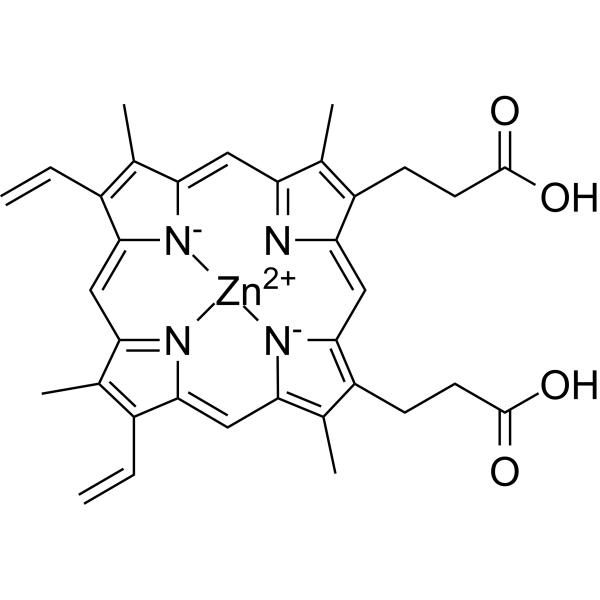
  • HY-101193R

    Zn(II)-protoporphyrin IX (Standard); ZnPP (Standard); Zinc Protoporphyrin-9 (Standard)

    Reference Standards Reactive Oxygen Species (ROS) Endogenous Metabolite Apoptosis Cardiovascular Disease Metabolic Disease Cancer
    Zinc Protoporphyrin (Standard) is the analytical standard of Zinc Protoporphyrin. This product is intended for research and analytical applications. Zinc Protoporphyrin (Zn(II)-protoporphyrin IX) is an orally active and competitive heme oxygenase-1 (HO-1) inhibitor and markedly attenuates the protective effects of Phloroglucinol (PG) against H2O2 . Zinc Protoporphyrin is used as a screening marker of iron deficiency in individual pregnant women and children, but also to assess population iron status in combination with haemoglobin concentration . Zinc Protoporphyrin has anti-cancer activity .
    Zinc Protoporphyrin (Standard)
  • HY-W581820

    Ferrous succinate

    Biochemical Assay Reagents Cardiovascular Disease
    Iron(II) succinate (Ferrous succinate) is an orally active and organic acid iron supplement (ferrous salt). Iron(II) succinate improves hematological parameters in iron-deficiency anemia rats, including hemoglobin, red blood cells, hematocrit, mean corpuscular volume, mean corpuscular hemoglobin, and mean corpuscular hemoglobin concentration. Iron(II) succinate increases serum ferritin, serum iron levels, and transferrin saturation, while decreasing total iron-binding capacity in iron-deficiency anemia rats. Iron(II) succinate reduces the elevated heart, spleen, and kidney coefficients, and increases the decreased liver coefficient in iron-deficiency anemia rats. Iron(II) succinate replenishes the depleted iron content in the liver and spleen of iron-deficiency anemia rats. Iron(II) succinate can be used for the research of iron-deficiency anemia .
    Iron(II) succinate
  • HY-B1651R

    Ferrous fumarate (Standard)

    Transferrin Receptor Reference Standards Metabolic Disease Cancer
    Iron(II) fumarate (Standard) is the analytical standard of Iron(II) fumarate. This product is intended for research and analytical applications. Iron(II) fumarate (Ferrous fumarate) is the iron(II) salt of fumaric acid. Iron(II) fumarate is an orally active dietary supplement and has the potential for iron deficiency anemia treatment .
    Iron(II) fumarate (Standard)
  • HY-W698286

    Biochemical Assay Reagents
    Iron(II) gluconate is a kind of biochemical reagent.
    Iron(II) gluconate
  • HY-108362

    MOFs Others
    Iron(III) mesotetraphenylporphine chloride is a metal-organic framework (MOF).
    Iron(III) mesotetraphenylporphine chloride
  • HY-W151629A

    Fluorescent Dye Others
    Ferrozine sodium hydrate is a spectrophotometric reagent for iron, can react with divalent Fe to form a stable magenta complex species. The complex has an absorption peak at 562 nm .Ferrozine sodium hydrate-based colorimetric assays can quantify iron in cells
    Ferrozine sodium hydrate
  • HY-W107177

    meso-Tetrakis(4-chlorophenyl)porphyrin-Fe(III)chloride

    MOFs Others
    5,10,15,20-tetrakis(p-chlorophenyl)porphyrin iron(III) chloride (meso-Tetrakis(4-chlorophenyl)porphyrin-Fe(III)chloride) is a metal-organic framework (MOF).
    5,10,15,20-tetrakis(p-chlorophenyl)porphyrin iron(III) chloride

Inquiry Online

Your information is safe with us. * Required Fields.

Salutation


Country or Region *

Applicant Name *


Organization Name *

Department *


Email Address *


Product Name *

Cat. No.


Requested quantity *

Phone Number *


Remarks

Inquiry Online

Inquiry Information

Product Name:
Cat. No.:
Quantity:
MCE Japan Authorized Agent:

