1. Search Result
Search Result
Results for "

JNK

" in MedChemExpress (MCE) Product Catalog:

495

Inhibitors & Agonists

1

Screening Libraries

2

Fluorescent Dye

3

Biochemical Assay Reagents

26

Peptides

3

Inhibitory Antibodies

177

Natural
Products

13

Recombinant Proteins

14

Isotope-Labeled Compounds

26

Antibodies

5

Oligonucleotides

2

GMP Molecules

Targets Recommended:
Cat. No. Product Name Target Research Areas Chemical Structure
  • HY-12041
    SP600125
    580+ Cited Publications

    JNK Autophagy Apoptosis Ferroptosis Cancer
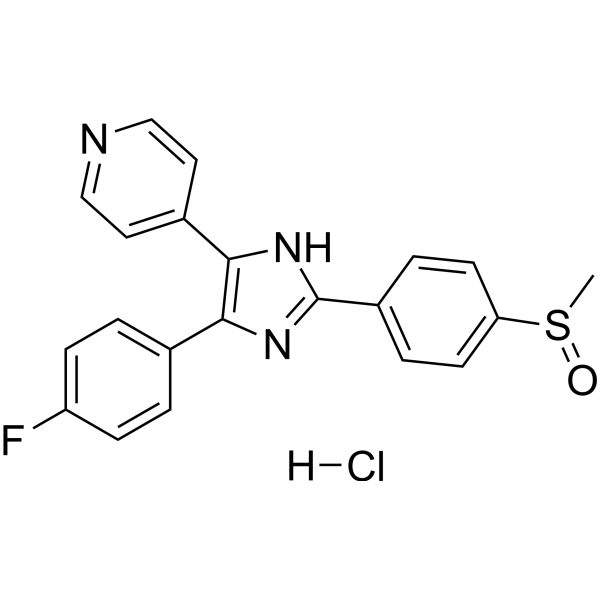
    SP600125 is an orally active, reversible, and ATP-competitive JNK inhibitor with IC50s of 40, 40 and 90 nM for JNK1, JNK2 and JNK3, respectively. SP600125 is a potent ferroptosis inhibitor. SP600125 induces the transformation of bladder cancer cells from autophagy to apoptosis .
    SP600125
  • HY-13319
    JNK-IN-8
    55+ Cited Publications

    JNK Inhibitor XVI

    JNK Cancer
    JNK-IN-8 (JNK Inhibitor XVI) is a potent JNK inhibitor with IC50s of 4.7 nM, 18.7 nM, and 1 nM for JNK1, JNK2, and JNK3, respectively .
    JNK-IN-8
  • HY-111431A
    p-Cresyl sulfate potassium
    5+ Cited Publications

    p-Tolyl sulfate potassium

    Endogenous Metabolite JNK p38 MAPK Metabolic Disease Inflammation/Immunology
    p-Cresyl sulfate potassium is a uremic toxin that binds to a prototype protein. p-Cresyl sulfate potassium activates the JNK and p38 MAPK signaling pathways. p-Cresyl sulfate potassium has pro-inflammatory activity .
    p-Cresyl sulfate potassium
  • HY-13634A
    Ezatiostat
    5+ Cited Publications

    TER199free base; TLK199

    Glutathione S-transferase Apoptosis Cancer
    Ezatiostat (TER199 free base; TLK199) is a tripeptide analog of glutathione and is a selective and orally active glutathione S-transferase P1-1 (GSTP1) inhibitor. Ezatiostat leads to JNK activation by inhibiting GSTP1. Ezatiostat stimulates both lymphocyte production and bone marrow progenitor proliferation. Ezatiostat has the potential for myelodysplastic syndrome (MDS) treatment .
    Ezatiostat
  • HY-15617
    JNK-IN-7
    5+ Cited Publications

    JNK inhibitor

    JNK Cancer
    JNK-IN-7 is a potent JNK inhibitor with IC50 of 1.5, 2 and 0.7 nM for JNK1, JNK2 and JNK3, respectively.
    JNK-IN-7
  • HY-107598
    JNK Inhibitor VIII
    3 Publications Verification

    TCS JNK 6o

    JNK Cancer
    JNK Inhibitor VIII (TCS JNK 6o) is a c-Jun N-terminal kinases (JNK-1, -2, and -3) inhibitor with Ki values of 2 nM, 4 nM, 52 nM, respectively, and has IC50 values of 45 nM and 160 nM for JNK-1 and -2, respectively .
    JNK Inhibitor VIII
  • HY-138304
    CC-90001
    3 Publications Verification

    JNK Inflammation/Immunology
    CC-90001 is a potent, selective and orally active inhibitor of c-Jun N-terminal kinase (JNK). CC-90001 shows 12.9-fold selectivity for JNK1 over JNK2 in a cell-based model. CC-90001 can be used for the research of idiopathic pulmonary fibrosis .
    CC-90001
  • HY-14761
    Bentamapimod
    10+ Cited Publications

    AS 602801

    JNK Cancer
    Bentamapimod (AS 602801) is an ATP-competitive JNK inhibitor with IC50 of 80 nM, 90 nM, and 230 nM for JNK1, JNK2, and JNK3, respectively.
    Bentamapimod
  • HY-11010
    AS601245
    5+ Cited Publications

    JNK Neurological Disease Inflammation/Immunology Cancer
    AS601245 is an orally active, selective, ATP competitive JNK (c-Jun NH2-terminal protein kinase) inhibitor with IC50s of 150, 220, and 70 nM for three JNK human isoforms (hJNK1, hJNK2, and hJNK3), respectively. AS601245 exhibits 10- to 20-fold selectivity over c-src, CDK2, and c-Raf and more than 50- to 100-fold selectivity over a range of Ser/Thr- and Tyr-protein kinases. Neuroprotective properties .
    AS601245
  • HY-113756A
    Latanoprost acid
    1 Publications Verification

    Prostaglandin Receptor ERK Akt JNK p38 MAPK Inflammation/Immunology
    Latanoprost acid, an analog of prostaglandin (PG) F2α, is an selective prostanoid receptor (FP) agonist that specifically activates the FP-PG receptor . Latanoprost acid inhibits RANKL-induced osteoclastgenesis and function by inhibiting ERK, AKT, JNK, and p38 cascade, following by the c-fos/NFATc1 pathway. Latanoprost acid is a medication which works to lower pressure inside the eyes .
    Latanoprost acid
  • HY-165126

    SPG

    Endogenous Metabolite Sirtuin JNK p38 MAPK PPAR AP-1 Infection Metabolic Disease Inflammation/Immunology Cancer
    Schizophyllan (SPG) is an orally active extracellular β-glucan produced by the fungus Schizophyllum commune. Schizophyllan improves mitochondrial function and protects against metabolic liver injury by activating the SIRT3 pathway. Schizophyllan inhibits osteoclastogenesis and promotes osteoblast differentiation by suppressing the phosphorylation of JNK/p38, as well as downregulating PGC1β/PPARγ, c-Fos and NFATc1. Recognized via Dectin-1, schizophyllan enables precise delivery of oligonucleotide drugs and antigens to antigen-presenting cells, thus holding great potential in the treatment of inflammatory diseases and vaccine development .
    Schizophyllan
  • HY-15881
    TCS JNK 5a
    2 Publications Verification

    JNK Inhibitor IX

    JNK Apoptosis Cancer
    TCS JNK 5a is a potent JNK3 inhibitor with a pIC50 of 6.7. TCS JNK 5a also inhibits JNK2 with a pIC50 of 6.5.
    TCS JNK 5a
  • HY-N7259

    JNK p38 MAPK Apoptosis Inflammation/Immunology
    (+)-Isomenthone is an enantiomer form of Menthone (HY-N2381). (+)-Isomenthone blocks TNF-α-triggered activation of the JNK and p38 MAPK pathways.(+)-Isomenthone inhibits TNF-α-mediated reductions in cell viability, increases in apoptosis, and downstream apoptotic events linked to pathway activation.(+)-Isomenthone protects human dermal fibroblasts against TNF-α-induced cell death under serum-deprived conditions .
    (+)-Isomenthone
  • HY-107599

    JNK Apoptosis Neurological Disease
    AEG3482 is a potent antiapoptotic compound that inhibits Jun kinase (JNK) activity through induced expression of heat shock protein 70 (HSP70). AEG3482 directly binds HSP90, thereby facilitating HSF1-dependent expression of HSP70 and HSP25 .
    AEG3482
  • HY-N0363
    (+)-Columbianetin
    2 Publications Verification

    (S)-Columbianetin

    ERK JNK Collagen TGF-beta/Smad p38 MAPK Reactive Oxygen Species (ROS) Others
    (+)-Columbianetin ((S)-Columbianetin) acts as an inhibitor of JNK/ERK. (+)-Columbianetin inhibits UVA-induced phosphorylation of JNK and ERK, reduces the production of MMP-1, reverses UVA-induced Collagen (HY-NP003) degradation, and alleviates UVA-mediated inhibition of Smad2/3 phosphorylation and translocation. (+)-Columbianetin regulates the AP-1 and ASK1-MAPK signaling pathways, inhibits the production of ROS and blocks sub-G1 cell cycle arrest. (+)-Columbianetin is applicable to research related to skin aging .
    (+)-Columbianetin
  • HY-13275

    IRAK Inflammation/Immunology
    IRAK inhibitor 1 is a potent IRAK-4 inhibitor with IC50 of 216 nM, is poorly active against JNK-1 and JNK-2 with IC50 of 3.801 μM, and >10 μM, respectively.
    IRAK inhibitor 1
  • HY-N3312

    p38 MAPK JNK NF-κB Metabolic Disease Inflammation/Immunology Cancer
    Matairesinol is an orally active bioactive compound with anti-inflammatory, antioxidant and anticancer activities. Matairesinol inhibits the phosphorylation of MAPK, JNK and NF-κB, downregulates RANKL-induced NFATc1 expression and activity, and suppresses the activation of the PI3K/AKT/FOXO1 pathway. Matairesinol can be used in research related to sepsis-mediated brain injury, osteoporosis, heart failure, atopic dermatitis and cancer .
    Matairesinol
  • HY-10851

    JNK Reactive Oxygen Species (ROS) Neurological Disease
    JNK-9L (Compound 9l) is a BBB-penetrable and ATP-competitive JNK inhibitor with IC50s of 0.099 and 0.148  μM for JNK1 and JNK3, respectively. JNK-9L significantly inhibits c-jun phosphorylation and Streptozotocin (HY-13753)-induced ROS generation with an IC50 of 0.8  nM. JNK-9L can be used for neurodegenerative disorders like Parkinson’s disease research .
    JNK-9L
  • HY-151929

    JNK Neurological Disease
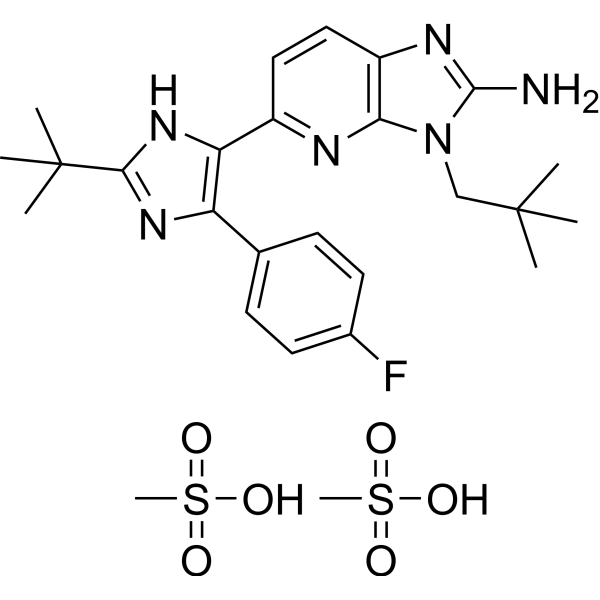
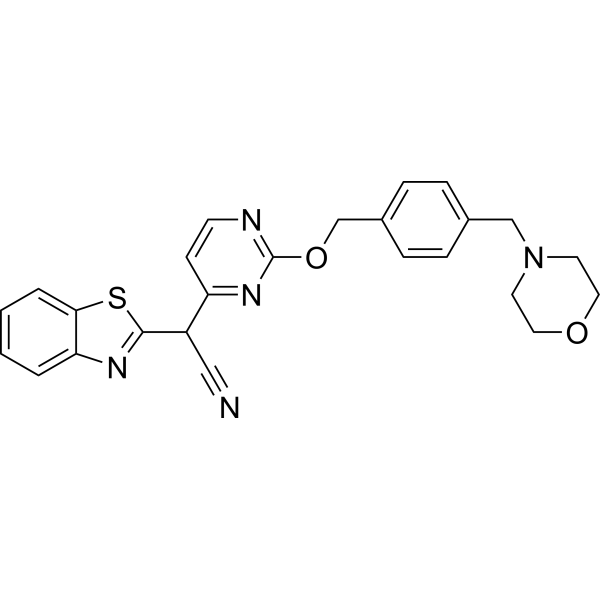
    JNK3 inhibitor-4 is a potent and BBB-permeable inhibitor of JNK3 (IC50=1.0 nM) based on 2-aryl-1-pyrimidinyl-1H-imidazole-5-yl acetonitrile. JNK3 inhibitor-4 shows excellent selectivity over other protein kinases including isoforms JNK1 (IC50=143.9 nM) and JNK2 (IC50=298.2 nM) . JNK3 inhibitor-4 has neuroprotective effect and predicated blood-brain barrier permeability .
    JNK3 inhibitor-4
  • HY-139624

    JNK Others
    JNK3 inhibitor-1 is a potent and selective JNK3 inhibitor (IC50 = 0.005 μM). JNK3 inhibitor-1 is orally bioavailable and brain penetrant.
    JNK3 inhibitor-1
  • HY-107600
    IQ-3
    2 Publications Verification

    JNK Inflammation/Immunology
    IQ-3 is a specific inhibitor of the c-Jun N-terminal kinase (JNK) family, with preference for JNK3. IQ-3 exhibits Kd values of 0.24 μM, 0.29 μM and 0.066 μM for JNK1, JNK2 and JNK3, respectively .
    IQ-3
  • HY-150053
    JNK-IN-11
    1 Publications Verification

    JNK Neurological Disease
    JNK-IN-11 (compound 1) is a potent JNK inhibitor with an IC50 value of 2.2, 21.4, 1.8 µM for JNK1, JNK2, JNK3, respectively. JNK-IN-11 has the potential for the research of alzheimer and parkinson disease .
    JNK-IN-11
  • HY-169021

    JNK Cancer
    JNK-1-IN-3 (Compound 9e) is an inhibitor of JNK1 that downregulates JNK1 gene expression and inhibits the protein levels of its phosphorylated form, concurrently reducing the expression of its downstream targets, c-Jun and c-Fos, in tumors while restoring p53 activity. JNK-1-IN-3 exhibits broad-spectrum antiproliferative activity, particularly with high inhibitory activity against renal and breast cancer cell lines, demonstrating both in vivo and in vitro anticancer activity .
    JNK-1-IN-3
  • HY-170879

    p38 MAPK JNK Cancer
    JD123 inhibits JNK1 activity and the expression of cJun (1-135). JD123 is a ATP-competitive p38-γ MAPK inhibitor, but not effect to ERK1, ERK2, or p38-α, p38-β or p38-δ. .
    JD123
  • HY-P10506

    JNK Neurological Disease
    CMX-8933 is an octapeptide fragment of the goldfish brain neurotrophic factor ependymin. CMX-8933 increases the enzymatic activity of c-Jun N-terminal kinase (JNK), increases the phosphorylation of JNK and c-Jun proteins, and increases the cellular levels of c-Jun and c-Fos mRNA. CMX-8933 can be used to study the role of ependymin in neuroplasticity, learning, memory formation, and neural regeneration .
    CMX-8933
  • HY-134000

    NSC624610

    p38 MAPK NF-κB ERK JNK VEGFR MMP Cancer
    Emodic acid (NSC624610) is an anthraquinone compound isolated from A. microcarpus, which can inhibit the proliferation of cancer cells by inhibiting the activity of NF-κB. Emodic acid can also inhibit the phosphorylation of p38, ERK and JNK, the secretion of tumor-promoting cytokines IL-1β and IL-6, and the expression of VEGF and MMP, thereby inhibiting the invasion and migration potential of cancer cells .
    Emodic acid
  • HY-149930

    JNK Apoptosis Cancer
    YL5084, a covalent JNK inhibitor, exhibits selectivity for JNK2 and JNK3 over JNK1 with IC50s of 70 nM, 84 nM and 2173 nM, respectively. YL5084 exhibits JNK2-independent antiproliferative effects and induces apoptosis in a JNK2-independent manner .
    YL5084
  • HY-125953

    Ceramide (Egg, Chicken)

    JNK p38 MAPK Phosphatase Akt Survivin CDK mTOR Apoptosis Autophagy Reactive Oxygen Species (ROS) Neurological Disease Cancer
    Ceramide (Egg) (Ceramide (Egg, Chicken)) is a ceramide from chicken. Ceramide (Egg) is a sphingomyelin signaling pathway second messenger. Ceramide (Egg) activates PP2A, JNK, p38 MAPK, CAPK, ceramide-activated protein phosphatase, Vav, PKCζ, and SAPK/JNK cascade. Ceramide (Egg) downregulates or inhibits AKT, survivin, CDK2, mTOR, and FLIP. Ceramide (Egg) mediates apoptosis, autophagy, cell cycle arrest, mitochondrial dysfunction, redox state shifts, and ROS generation. Ceramide (Egg) can be used for the research of cancer and neurological disease .
    Ceramide (Egg)
  • HY-P2246

    JNK Cancer
    JTP10-△-TATi TFA is a selective JNK2 peptide inhibitor, with an IC50 of 92 nM, exhibiting 10-fold selectivity for JNK2 over JNK1 and JNK3 .
    JTP10-△-TATi TFA
  • HY-N8712

    p38 MAPK JNK ERK TNF Receptor Interleukin Related PI3K Akt Inflammation/Immunology
    Umckalin is Coumarin (HY-N0709) derivative that exhibits anti-inflammatory properties. Umckalin reduces phosphorylation of p38 MAPK, JNK, and ERK, lowers TNF-α, IL-6, IL-1β, NO, and PGE2 production. Umckalin can be used for the research of chronic inflammatory diseases .
    Umckalin
  • HY-112402

    JNK Inhibitor II, negative control

    Autophagy Apoptosis JNK Ferroptosis Cancer
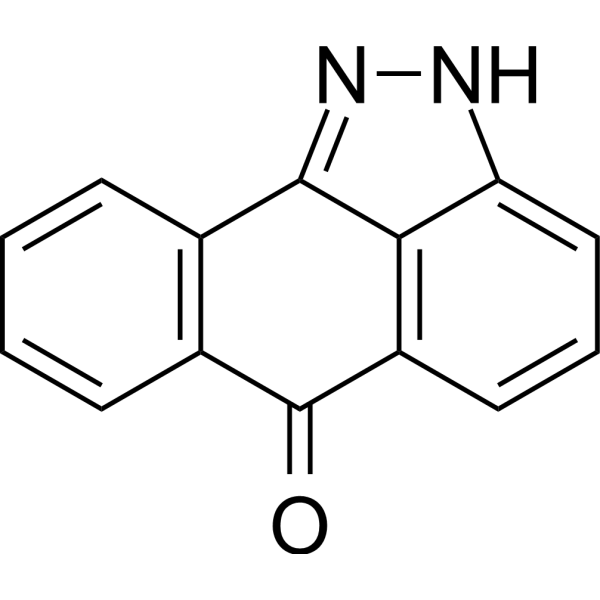
    SP 600125, negative control (SPM1) is an alkyl derivative of pyrazoloanthrone, which can be used as a negative control for SP600125 (HY-12041) .
    SP 600125, negative control
  • HY-13319G

    JNK Inhibitor XVI

    JNK Cancer
    JNK-IN-8 (JNK Inhibitor XVI) (GMP) is JNK-IN-8 (HY-13319) produced by using GMP guidelines. GMP small molecules work appropriately as an auxiliary reagent for cell therapy manufacture. JNK-IN-8 is a potent JNK inhibitor with IC50s of 4.7 nM, 18.7 nM, and 1 nM for JNK1, JNK2, and JNK3, respectively .
    JNK-IN-8
  • HY-151962

    JNK Apoptosis GSK-3 p38 MAPK Neurological Disease
    JNK3 inhibitor-5 (Compound 22b) is a potent and selective JNK3 inhibitor with an IC50 of 0.379 nM. JNK3 inhibitor-5 effectively protects the neuronal cells against amyloid beta-induced apoptosis. JNK3 inhibitor-5 has a high cell permeability and is predicted as BBB permeable .
    JNK3 inhibitor-5
  • HY-178692

    JNK Neurological Disease Inflammation/Immunology Cancer
    JNK-IN-25 is a potent and selective JNK1/2/3 inhibitor with IC50 values of 1.54 (JNK1), 1.99 (JNK2), and 0.75 nM (JNK3), respectively. JNK-IN-25 inhibits phosphorylation of c-Jun in cells via covalently bonding with the conserved cysteine of JNK1/2/3. JNK-IN-25 can be used for research of  cancer, inflammatory and neurodegenerative diseases .
    JNK-IN-25
  • HY-14411

    JNK Cancer
    JNK-1-IN-1 is a JNK-1 inhibitor. JNK-1-IN-1 also inhibits MKK7 with an IC50 of 7.8μM. JNK-1-IN-1 bind to MKK7cp and acts as an inhibitor of JNK-1 .
    JNK-1-IN-1
  • HY-149279

    JNK Neurological Disease
    JNK3 inhibitor-7 is a potent, orally active and cross the blood-brain barrier JNK3 inhibitor with IC50 values of 53, 973, 1039 nM for JNK3, JNK2, JNK1, respectively. JNK3 inhibitor-7 shows significant neuroprotective effects. JNK3 inhibitor-7 has the potential for the research of Alzheimer’s disease (AD) .
    JNK3 inhibitor-7
  • HY-150552

    JNK Discoidin Domain Receptor Inflammation/Immunology Cancer
    JNK3 inhibitor-2 is a potent and selective JNK3 inhibitor with IC50 values of >100, >100, 0.25 µM for JNK1, JNK2, JNK3, respectively. JNK3 inhibitor-2 shows DDR1 and EGFR (T790M, L858R) inhibition .
    JNK3 inhibitor-2
  • HY-170601

    PROTACs JNK Cancer
    PROTAC JNK1-targeted-1 (PA2) is a JNK1 PROTAC degrader, with a DC50 of 10 nM. PROTAC JNK1-targeted-1 (PA2) decreases the level of Fibronectin protein. PROTAC JNK1-targeted-1 can be used for the research of pulmonary fibrosis . (Pink: JNK1 inhibitor (HY-170602); Black: linker (HY-40178); Blue: CRBN Ligand (HY-41547))
    PROTAC JNK1-targeted-1
  • HY-176213

    JNK Neurological Disease
    JNK2/3-IN-1 (Compound 56d) is an irreversible covalent inhibitor of c-Jun N-terminal kinases 2/3 (JNK2/3) with IC50 values of 830 and 1909 nM, respectively. JNK2/3-IN-1 is promising for research of neurodegenerative diseases (e.g., Parkinson’s, Alzheimer’s) and fibrotic disorders .
    JNK2/3-IN-1
  • HY-E70838

    JNK Neurological Disease
    JNK3 is a neuronal-specific isoform of JNK. JNK3 signaling pathway is a critical component in the pathogenesis of glutamate neurotoxicity. JNK3 Recombinant Human Active Protein Kinase is a recombinant JNK3 protein that can be used to study JNK3-related functions .
    JNK3 Recombinant Human Active Protein Kinase
  • HY-N3828

    Apoptosis ERK JNK Cancer
    epi-Eriocalyxin A (Epieriocalyxin A), a diterpenoid isolated from Isodon eriocalyx, induces colon cancer apoptosis. epi-Eriocalyxin A also inhibits ERK1/2 and JNK activation, which suppresses Bcl-2 expression .
    epi-Eriocalyxin A
  • HY-13634

    TER199; TLK199 hydrochloride

    Glutathione S-transferase Apoptosis Cancer
    Ezatiostat hydrochloride (TER199; TLK199 hydrochloride) is a tripeptide analog of glutathione and is a selective and orally active glutathione S-transferase P1-1 (GSTP1) inhibitor. Ezatiostat hydrochloride leads to JNK activation by inhibiting GSTP1. Ezatiostat hydrochloride stimulates both lymphocyte production and bone marrow progenitor proliferation. Ezatiostat hydrochloride has the potential for myelodysplastic syndrome (MDS) treatment .
    Ezatiostat hydrochloride
  • HY-175276

    JNK MMP Cancer
    JNK-IN-24, a JNK inhibitor, is an anti-metastatic cancer agent. JNK-IN-24 downregulates JNK and MMP1 expression in Scrib knockdown induced cancer tissues. JNK-IN-24 promotes recovery from tumorous wing disc phenotype of Scrib RNAi. JNK-IN-24 can be used for the study in various epithelial cell-derived cancers .
    JNK-IN-24
  • HY-157551

    JNK c-Met/HGFR Cancer
    JNK-IN-16 is a c-Met and JNK inhibitor with nanomolar potency, with IC50 values of 120 nM and 72 nM, respectively. JNK-IN-16 can be used for cancer research .
    JNK-IN-16
  • HY-179044

    p38 MAPK JNK Caspase Apoptosis Cancer
    MKK7-JNK activator 1 (Compound 10) is a MKK7-JNK pathway activator. MKK7-JNK activator 1 effectively inhibits the proliferation and migration of MDA-MB-468 cells, induces G2/M phase arrest and caspase -dependent apoptosis (independent of ROS production). MKK7-JNK activator 1 significantly increases the levels of p-MKK7 and p-JNK, but does not affect p-ERK or p-p38. MKK7-JNK activator 1 can be used for the study of triple-negative breast cancer (TNBC) .
    MKK7-JNK activator 1
  • HY-155593

    JNK Inflammation/Immunology
    JNK-1-IN-2 (Compound c6) is a JNK-1 inhibitor (IC50: 33.5 nM). JNK-1-IN-2 also inhibits JNK-2 and JNK-3 with IC50s of 112.9 nM and 33.2 nM. JNK-1-IN-2 inhibits the phosphorylation of c-Jun. JNK-1-IN-2 reverses lung impairment. JNK-1-IN-2 can be used for research of pulmonary fibrosis .
    JNK-1-IN-2
  • HY-169609

    JNK Neurological Disease Metabolic Disease Inflammation/Immunology Cancer
    JNK-IN-22 (Compound 58) is a JNK-1 inhibitor .
    JNK-IN-22
  • HY-169736

    JNK Neurological Disease Metabolic Disease Inflammation/Immunology Cancer
    JNK-IN-21 (Compound 62) is a JNK-1 inhibitor .
    JNK-IN-21
  • HY-77009

    JNK Cancer
    JNK-IN-13 (compound 1) is a potent and selective JNK inhibitor with IC50s of 290 nM and 500 nM for JNK3 and JNK2, respectively .
    JNK-IN-13
  • HY-169177

    JNK Inflammation/Immunology
    JNK-1-IN-4 (Compound E1) is an inhibitor for JNK, that inhibits JNK-1, JNK-2 and JNK-3 with IC50s of 2.7, 19.0 and 9.0 nM, respectively. JNK-1-IN-4 inhibits the phosphorylation of c-Jun, and reduces the expression of TGF-β1-induced EMT marker proteins, such as fibronectin and α-SMA. JNK-1-IN-4 exhibits good pharmacokinetic characteristics with a bioavailability of 69%. JNK-1-IN-4 exhibits anti-fibrotic effect in Bleomycin (HY-17565)-induced mice idiopathic pulmonary fibrosis models .
    JNK-1-IN-4

Inquiry Online

Your information is safe with us. * Required Fields.

Salutation


Country or Region *

Applicant Name *


Organization Name *

Department *


Email Address *


Product Name *

Cat. No.


Requested quantity *

Phone Number *


Remarks

Inquiry Online

Inquiry Information

Product Name:
Cat. No.:
Quantity:
MCE Japan Authorized Agent:

