1. Search Result
Search Result
Results for "

Kv currents

" in MedChemExpress (MCE) Product Catalog:

32

Inhibitors & Agonists

11

Peptides

Cat. No. Product Name Target Research Areas Chemical Structure
  • HY-108577
    XE991 dihydrochloride
    3 Publications Verification

    Potassium Channel Neurological Disease
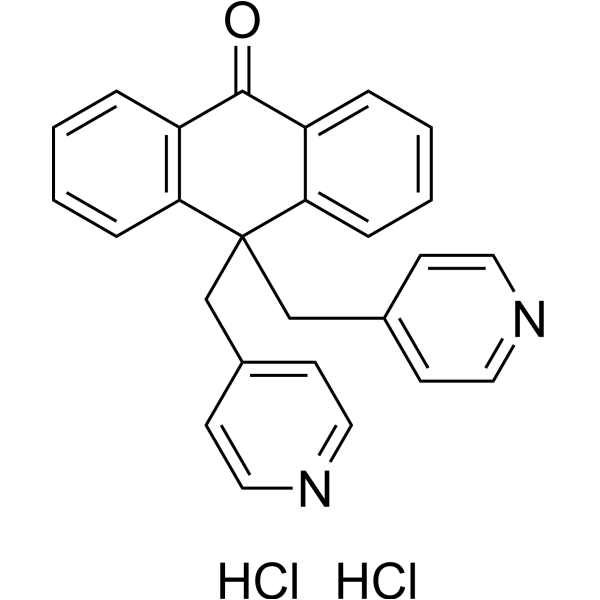
    XE991 dihydrochloride, a Kv7 (KCNQ) channels blocker, potently inhibits Kv7.1 (KCNQ1), Kv7.2 (KCNQ2), Kv7.2 + Kv7.3 (KCNQ3) channel, and M-current with IC50s of 0.75 μM, 0.71 μM, 0.6 μM, and 0.98 μM, respectively .
    XE991 dihydrochloride
  • HY-108577A
    XE991
    3 Publications Verification

    Potassium Channel Neurological Disease
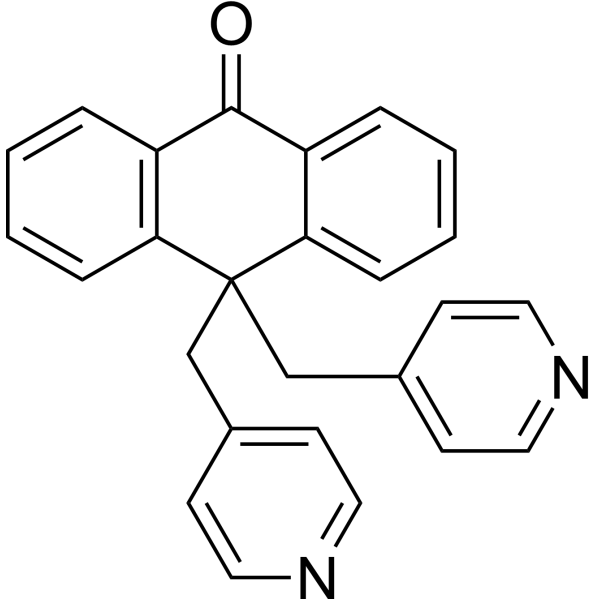
    XE 991 dihydrochloride, a Kv7 (KCNQ) channels blocker, potently inhibits Kv7.1 (KCNQ1), Kv7.2 (KCNQ2), Kv7.2 + Kv7.3 (KCNQ3) channel, and M-current with IC50s of 0.75 μM, 0.71 μM, 0.6 μM, and 0.98 μM, respectively .
    XE991
  • HY-100712
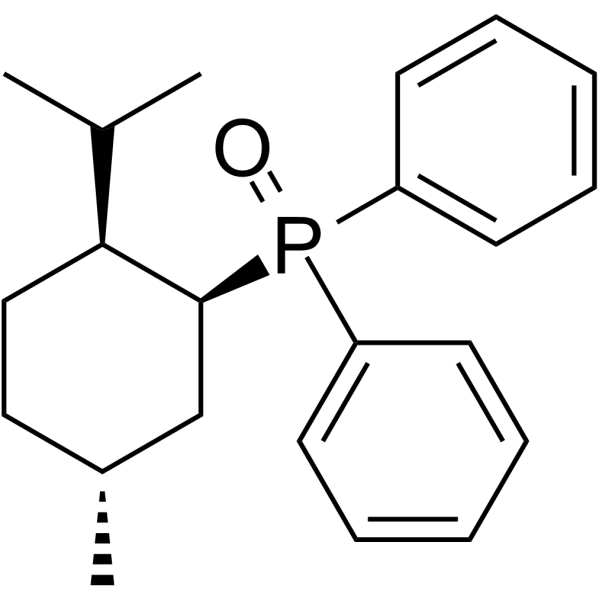
    DPO-1
    1 Publications Verification

    Potassium Channel Calcium Channel NOD-like Receptor (NLR) Interleukin Related Cardiovascular Disease Inflammation/Immunology
    DPO-1 is a potent Kv1.5 and Kv1.3 (EC50 = 3.1 μM) channels inhibitor with potential immunomodulatory and anti-inflammatory effects. DPO-1 reduces Kv1.3 current density, blunts Ca 2+ influx in Ca 2+-depleted Jurkat cells, and inhibits IL-2 secretion in activated Jurkat cells. DPO-1 inhibits Uric acid sodium (HY-B2130A) (MSU)-induced NLRP3 inflammasome activation by blocking Kv1.5-mediated K + efflux. DPO-1 can be used for the study of immunologic disorders and atrial fibrillation .
    DPO-1
  • HY-108586

    Potassium Channel Neurological Disease
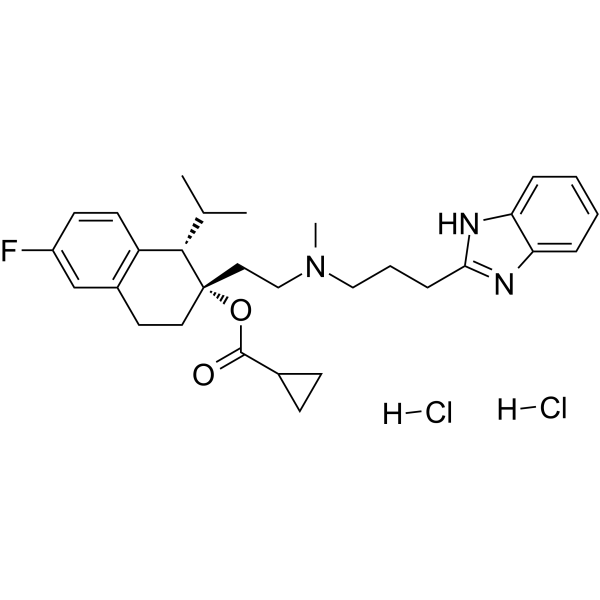
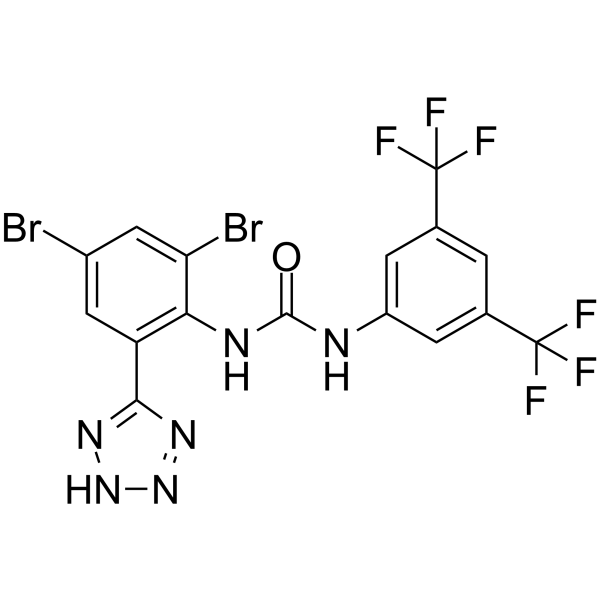
    NS3623 is an activator of human ether-a-go-go-related gene (hERG1/KV11.1) potassium channels. NS3623 activates the IKr and Ito currents and has antiarrhythmic effect. NS3623 has a dual mode of action, being an inhibitor of hERG1 channels .
    NS3623
  • HY-108588
    NS5806
    1 Publications Verification

    Potassium Channel Cardiovascular Disease
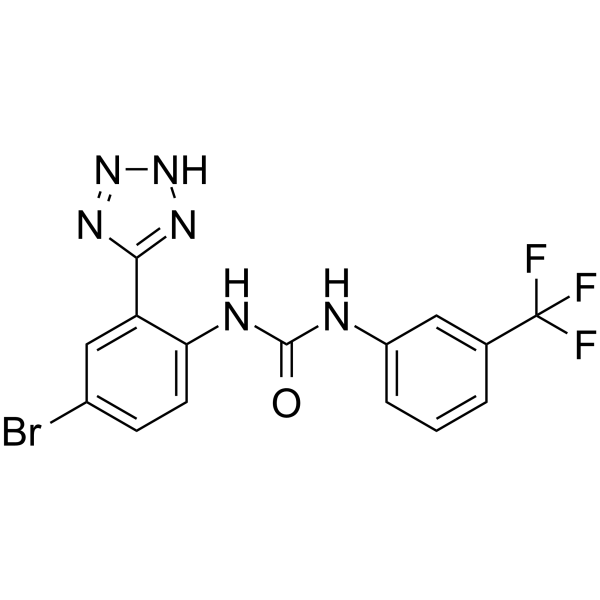
    NS5806, a potent potassium current activator, increases KV4.3/KChIP2 peak current amplitudes with an EC50 of 5.3 μM. NS5806 slows KV4.3 and KV4.2 current dacay in channel complexes containing KChIP2 .
    NS5806
  • HY-W020468
    Linopirdine
    2 Publications Verification

    DuP 996

    Potassium Channel TRP Channel Neurological Disease
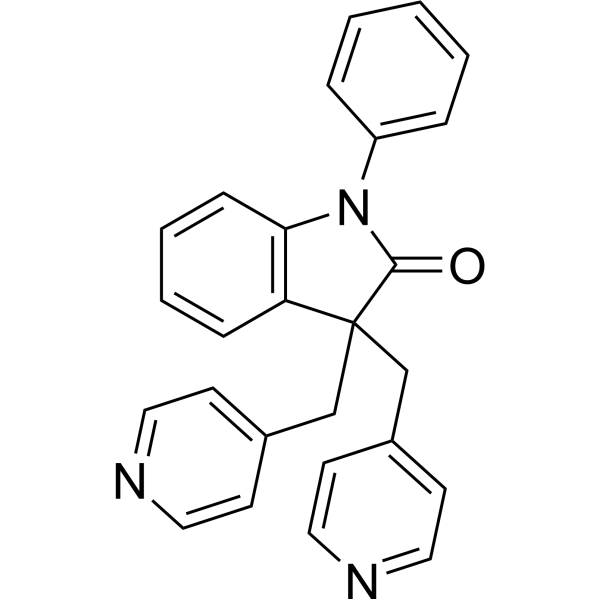
    Linopirdine (DuP 996) is an orally active, selective M-type K + current (IM; Kv7; KCNQ Channels) inhibitor with an IC50 of 2.4 μM. Linopirdine is a TRPV1 agonist. Linopirdine, a putative cognition enhancing agent, increases acetylcholine release in rat brain tissue .
    Linopirdine
  • HY-108591

    R-L3

    Potassium Channel Cardiovascular Disease
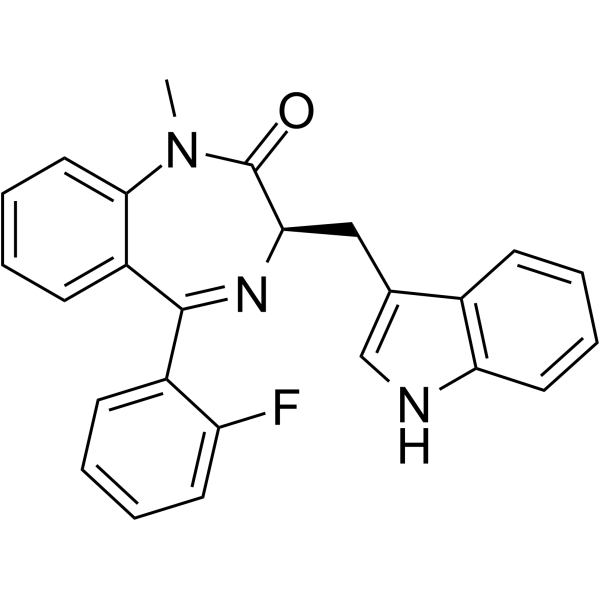
    L-364,373 (R-L3) is a voltage-gated Kv7.1 (KCNQ1)/mink channels activator. L-364,373 activates Iks (slow delayed rectifier potassium current) and shortens action potential duration in guinea pig cardiac myocytes, and suppresses early afterdepolarizations in rabbit ventricular myocytes .
    L-364,373
  • HY-110162

    Potassium Channel Neurological Disease
    QO 58 is a potent modulator of K(v)7 channels. QO-58 increases the current amplitudes, shifts the voltage-dependent activation curve in a more negative direction and slows the deactivation of K(v)7.2/K(v)7.3 currents. QO-58 has the potential for the research of diseases associated with neuronal hyperexcitability .
    QO 58
  • HY-P5785A

    Potassium Channel Neurological Disease
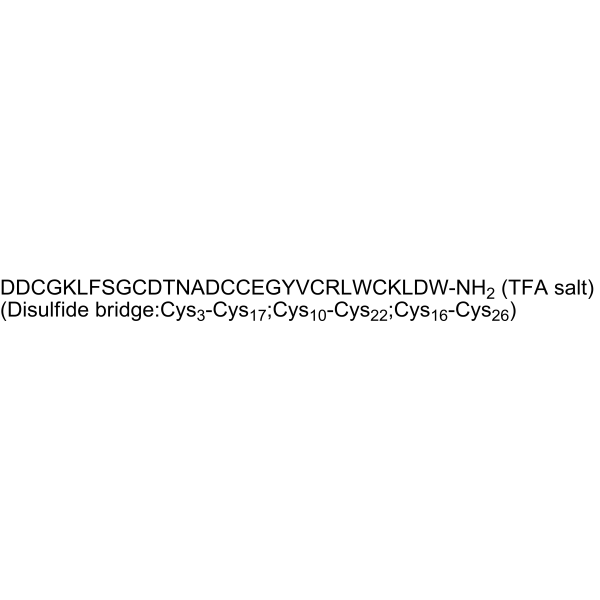
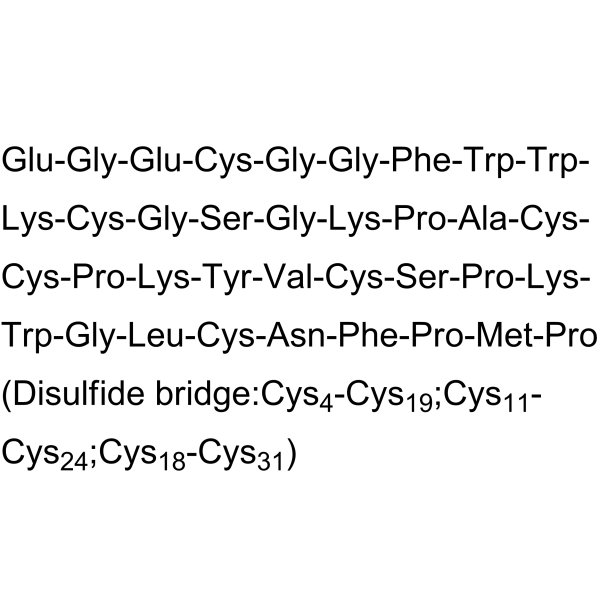
    Heteropodatoxin-2 (TFA), a peptides of 30-amino acid, is a heteropodatoxin. Heteropodatoxin-2 blocks Kv4.2 current expressed in Xenopus laevis oocytes in a voltage-dependent manner, with less block at more positive potentials .
    Heteropodatoxin-2 TFA
  • HY-P2707

    α-DTX

    Sodium Channel Potassium Channel Neurological Disease
    α-Dendrotoxin (α-DTX) is a voltage-gated K + channel blocker and an acid-sensing ion channel (ASIC) inhibitor. α-Dendrotoxin blocks Kv1.1, Kv1.2, Kv1.6 and D-type (ID) voltage-gated K + channels, and reversibly inhibits slowly inactivating potassium currents. α-Dendrotoxin induces epilepsy-related behaviors in mice. α-Dendrotoxin can be used in studies related to tonic-clonic seizures .
    α-Dendrotoxin
  • HY-P5786

    HpTx1

    Potassium Channel Sodium Channel Neurological Disease
    Heteropodatoxin-1 (HpTx1), a spider peptide toxin, is a Kv4.2 current inhibitor. Heteropodatoxin-1 also inhibits Nav1.7 and activates Nav1.9 but does not affect Nav1.8 .
    Heteropodatoxin-1
  • HY-111560

    Potassium Channel Neurological Disease
    IQM-266 is a Downstream Regulatory Element Antagonist Modulator (DREAM) ligand with a KD of 4.63 μM. IQM-266 inhibits the KV4.3/DREAM current in a concentration-, voltage-, and time-dependent-manner. IQM-266 also modulates A-type outward potassium currents (IA) from rat dorsal root ganglia (DRG) neurons. IQM-266 can be used for neurological disease research, such as Alzheimer’s disease and Huntington's disease (HD) .
    IQM-266
  • HY-P3071

    Stichodactyla helianthus neurotoxin

    Potassium Channel Neurological Disease Inflammation/Immunology
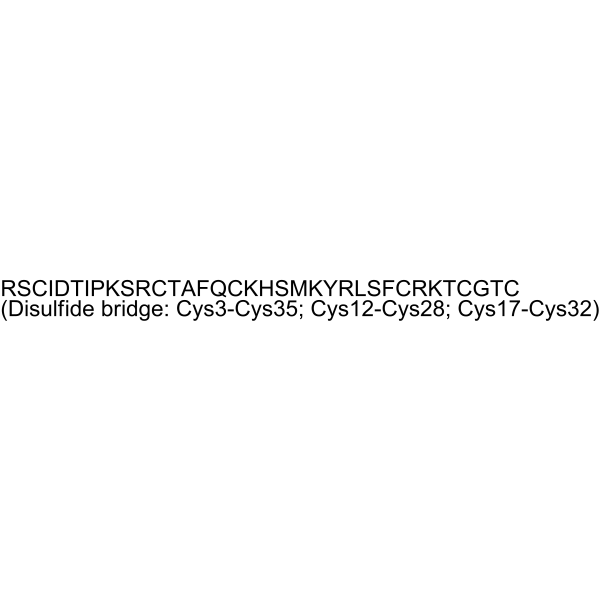
    ShK toxin blocks voltage-dependent potassium channel (Kv1.3 channel). ShK toxin can be isolated from the whole body extract of the Caribbean sea anemone (Stichodactylu helianthus). ShK toxin competes with dendrotoxin I and α-dendrotoxin for binding to synaptosomal membranes of rat brain, facilitates acetylcholine release. ShK toxin suppresses K+ currents in cultured rat dorsal root ganglion neurons. ShK toxin also inhibits T lymphocyte proliferation .
    ShK toxin
  • HY-P1427

    Potassium Channel Neurological Disease
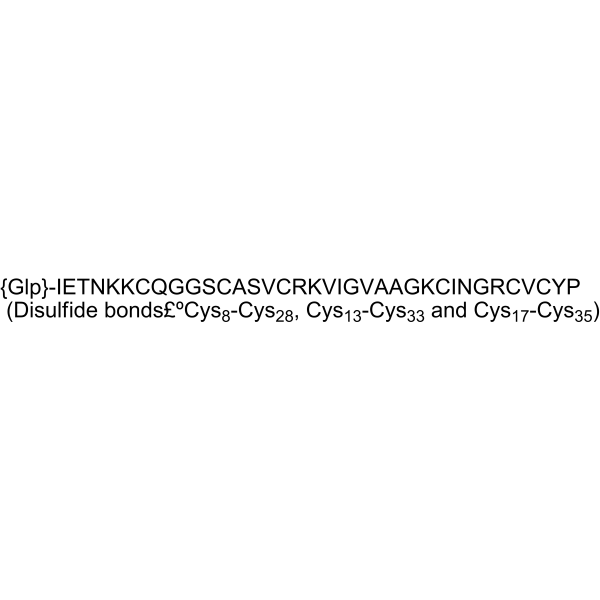
    Guangxitoxin 1E is a potent and selective blocker of KV2.1 and KV2.2 channels. Guangxitoxin 1E inhibits KV2 with an IC50 of 1-3 nM. KV2 channels underlie delayed-rectifier potassium currents in various neurons .
    Guangxitoxin 1E
  • HY-P3071A

    Stichodactyla helianthus neurotoxin TFA

    Potassium Channel Neurological Disease Inflammation/Immunology
    ShK toxin TFA (Stichodactyla helianthus neurotoxin TFA) is a neurotoxin. ShK toxin TFA blocks voltage-dependent potassium channel (Kv1.3 channel). ShK toxin TFA can be isolated from the whole body extract of the Caribbean sea anemone (Stichodactylu helianthus). ShK toxin TFA competes with dendrotoxin I and α-dendrotoxin for binding to synaptosomal membranes of rat brain, facilitates acetylcholine release. ShK toxin TFA suppresses K + currents in cultured rat dorsal root ganglion neurons. ShK toxin TFA also inhibits T lymphocyte proliferation .
    ShK toxin TFA
  • HY-P1426

    Potassium Channel Neurological Disease
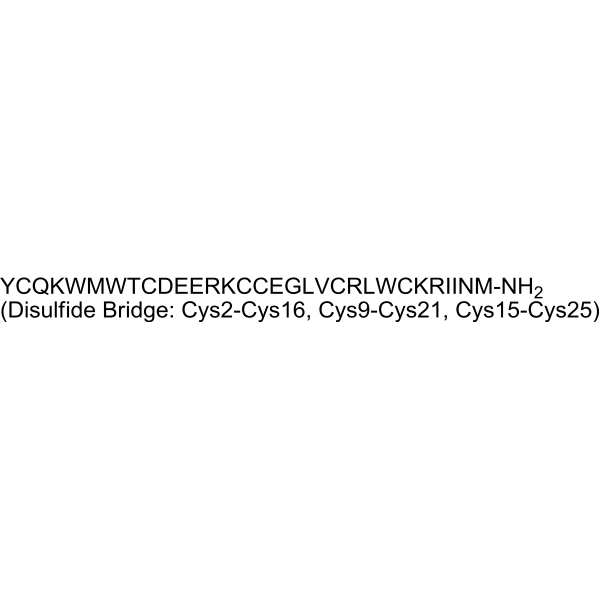
    AmmTX3 is a peptide toxin identified from the venom of the scorpion Androctonus mauretanicus. AmmTX3 is a highly specific blocker of Kv4 channels, which selectively and almost completely blocks transient A-type K + currents with a Ki of 131 nM. AmmTX3 induces epileptiform behaviors and causes death in mice receiving intracerebroventricular injection. AmmTX3 increases the excitability of dentate gyrus granule cells, reduces GABAergic inhibition, enhances and stabilizes the EPSP-spike component of long-term potentiation, and impairs reference memory. AmmTX3 can be used in research related to pain, epilepsy, and autism spectrum disorder .
    AmmTX3
  • HY-153746

    Potassium Channel Neurological Disease
    Kv3 modulator 5 (Example 5) is a Kv3 channel modulator. Kv3 modulator 5 increases the Kv3.2 current. Kv3 modulator 5 can be used for research of hearing disorders .
    Kv3 modulator 5
  • HY-178928

    Potassium Channel Inflammation/Immunology
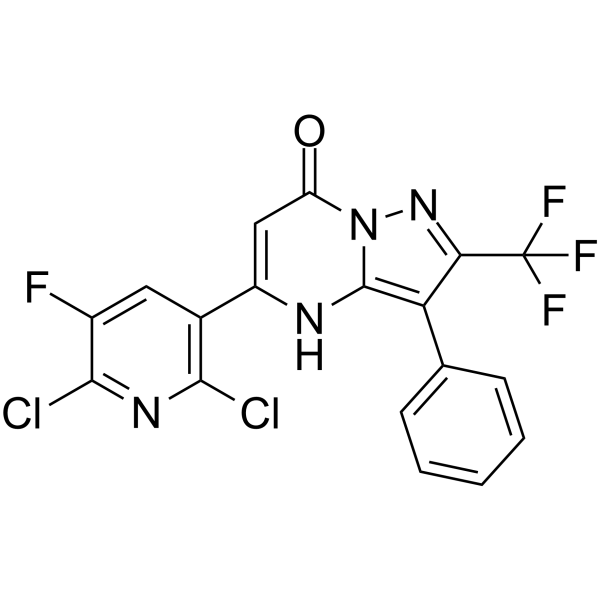
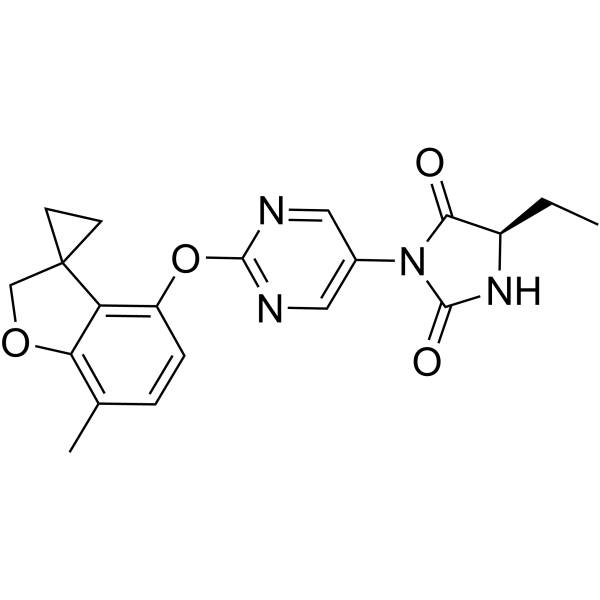
    KV1.3-IN-3 (Compound 13a) is a KV1.3 channel inhibitor. KV1.3-IN-3 decreases the Kv1.3 peak current amplitude by more than 80%. KV1.3-IN-3 exhibits excellent pharmacological properties and safety. KV1.3-IN-3 can be used for the study of autoimmunity disease .
    KV1.3-IN-3
  • HY-108577R

    Potassium Channel Neurological Disease
    XE991 dihydrochloride (Standard) is the analytical standard of XE991 dihydrochloride. This product is intended for research and analytical applications. XE991 dihydrochloride, a Kv7 (KCNQ) channels blocker, potently inhibits Kv7.1 (KCNQ1), Kv7.2 (KCNQ2), Kv7.2 + Kv7.3 (KCNQ3) channel, and M-current with IC50s of 0.75 μM, 0.71 μM, 0.6 μM, and 0.98 μM, respectively .
    XE991 dihydrochloride (Standard)
  • HY-P5785

    Potassium Channel Neurological Disease
    Heteropodatoxin-2, a peptides of 30-amino acid, is a heteropodatoxin. Heteropodatoxin-2 blocks Kv4.2 current expressed in Xenopus laevis oocytes in a voltage-dependent manner, with less block at more positive potentials .
    Heteropodatoxin-2
  • HY-P5770

    Sodium Channel Neurological Disease
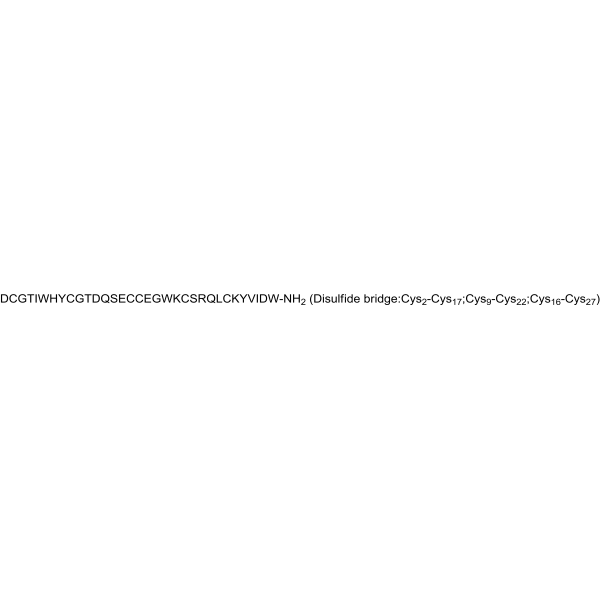
    Jingzhaotoxin-V, a 29-residue polypeptide, is derived from the venom of the spider Chilobrachys jingzhao. Jingzhaotoxin-V inhibits tetrodotoxin-resistant and tetrodotoxin-sensitive sodium currents in rat dorsal root ganglion neurons with IC50 values of 27.6 nM and 30.2 nM, respectively. Jingzhaotoxin-V also inhibits Kv4.2 potassium currents expressed in Xenpus Laevis oocytes (IC50 of 604.2 nM) .
    Jingzhaotoxin-V
  • HY-172521

    Potassium Channel Others
    (S)-(+)-Docosahexaenyl-2'-hydroxy-1'-propylamide (N-Docosahexacnoylethanolamide(22:6)) is a DHEA homolog. (S)-(+)-Docosahexaenyl-2'-hydroxy-1'-propylamide blocks the Shaker-related voltage-gated potassium channels. (S)-(+)-Docosahexaenyl-2'-hydroxy-1'-propylamide can inhibit the Kv1.2 K+ currents with an IC50 of 1.5 μM .
    (S)-(+)-Docosahexaenyl-2'-hydroxy-1'-propylamide
  • HY-113673

    Potassium Channel Cardiovascular Disease
    A-935142 is a human ether-a-go-go-related gene (hERG, Kv 11.1) channel activator. A-935142 enhances hERG current in a complex manner by facilitation of activation, reduction of inactivation, and slowing of deactivation, and abbreviates atrial and ventricular repolarization .
    A-935142
  • HY-W020468R

    DuP 996 (Standard)

    Reference Standards Potassium Channel TRP Channel Neurological Disease
    Linopirdine (DuP 996) is an orally active, selective M-type K+ current (IM; Kv7; KCNQ Channels) inhibitor with an IC50 of 2.4 μM. Linopirdine is a TRPV1 agonist. Linopirdine, a putative cognition enhancing agent, increases acetylcholine release in rat brain tissue .
    Linopirdine (Standard)
  • HY-P1426A

    Potassium Channel Neurological Disease
    AmmTX3 TFA is a peptide toxin identified from the venom of the scorpion Androctonus mauretanicus. AmmTX3 TFA is a highly specific blocker of Kv4 channels, which selectively and almost completely blocks transient A-type K + currents with a Ki of 131 nM. AmmTX3 TFA induces epileptiform behaviors and causes death in mice receiving intracerebroventricular injection. AmmTX3 TFA increases the excitability of dentate gyrus granule cells, reduces GABAergic inhibition, enhances and stabilizes the EPSP-spike component of long-term potentiation, and impairs reference memory. AmmTX3 TFA can be used in research related to pain, epilepsy, and autism spectrum disorder .
    AmmTX3 TFA
  • HY-108588R

    Reference Standards Potassium Channel Cardiovascular Disease
    NS5806 (Standard) is the analytical standard of NS5806 (HY-108588). This product is intended for research and analytical applications. NS5806, a potent potassium current activator, increases KV4.3/KChIP2 peak current amplitudes with an EC50 of 5.3 μM. NS5806 slows KV4.3 and KV4.2 current dacay in channel complexes containing KChIP2 .
    NS5806 (Standard)
  • HY-50722B

    Calcium Channel Cytochrome P450 Cardiovascular Disease Neurological Disease Cancer
    NNC 55-0396 free base is a blood-brain-barrier-permeable T-type Ca 2+ channel inhibitor and pan-P450 inhibitor. NNC 55-0396 free base selectively inhibits T-type Ca2+ channels, suppresses HIF-1α expression and stability and inhibits Kv currents. NNC 55-0396 free base reduces brain infarct and attenuates neurological dysfunction. NNC 55-0396 free base inhibits the activity of multiple P450 enzymes. NNC 55-0396 (free base) can be used for the research of brain injury, hypertension, and glioblastoma .
    NNC 55-0396 free base
  • HY-108577AR

    Potassium Channel Reference Standards Neurological Disease
    XE991 (Standard) is the analytical standard of XE991 (HY-108577A). This product is intended for research and analytical applications. XE 991, a Kv7 (KCNQ) channels blocker, potently inhibits Kv7.1 (KCNQ1), Kv7.2 (KCNQ2), Kv7.2 + Kv7.3 (KCNQ3) channel, and M-current with IC50s of 0.75 μM, 0.71 μM, 0.6 μM, and 0.98 μM, respectively .
    XE991 (Standard)
  • HY-P5157

    Potassium Channel Neurological Disease
    BmP02 is a selective Kv1.3 channel blocker and a highly-selective Kv4.2 modulator, which can be isolated from Chinese scorpion (Buthus martensi Karsch) venom. BmP02 also delays the inactivation of Kv4.2 in HEK293T cells, with an EC50 value of ~850 nM. BmP02 inhibits the transient outward potassium currents (Ito) in ventricular muscle cells .
    BmP02
  • HY-100712R

    Potassium Channel Reference Standards Calcium Channel NOD-like Receptor (NLR) Interleukin Related Cardiovascular Disease Inflammation/Immunology
    DPO-1 (Standard) is the analytical standard of DPO-1 (HY-100712). This product is intended for research and analytical applications. DPO-1 is a potent Kv1.5 and Kv1.3 (EC50 = 3.1 μM) channels inhibitor with potential immunomodulatory and anti-inflammatory effects. DPO-1 reduces Kv1.3 current density, blunts Ca2+ influx in Ca2+-depleted Jurkat cells, and inhibits IL-2 secretion in activated Jurkat cells. DPO-1 inhibits Uric acid sodium (HY-B2130A) (MSU)-induced NLRP3 inflammasome activation by blocking Kv1.5-mediated K+ efflux. DPO-1 can be used for the study of immunologic disorders and atrial fibrillation .
    DPO-1 (Standard)
  • HY-108586R

    Reference Standards Potassium Channel Neurological Disease
    NS3623 (Standard) is the analytical standard of NS3623 (HY-108586). This product is intended for research and analytical applications. NS3623 is an activator of human ether-a-go-go-related gene (hERG1/KV11.1) potassium channels. NS3623 activates the IKr and Ito currents and has antiarrhythmic effect. NS3623 has a dual mode of action, being an inhibitor of hERG1 channels .
    NS3623 (Standard)
  • HY-108591R

    R-L3 (Standard)

    Reference Standards Potassium Channel Cardiovascular Disease
    L-364,373 (Standard) is the analytical standard of L-364,373 (HY-108591). This product is intended for research and analytical applications. L-364,373 (R-L3) is a voltage-gated Kv7.1 (KCNQ1)/mink channels activator. L-364,373 activates Iks (slow delayed rectifier potassium current) and shortens action potential duration in guinea pig cardiac myocytes, and suppresses early afterdepolarizations in rabbit ventricular myocytes .
    L-364,373 (Standard)

Inquiry Online

Your information is safe with us. * Required Fields.

Salutation


Country or Region *

Applicant Name *


Organization Name *

Department *


Email Address *


Product Name *

Cat. No.


Requested quantity *

Phone Number *


Remarks

Inquiry Online

Inquiry Information

Product Name:
Cat. No.:
Quantity:
MCE Japan Authorized Agent:

