
1. Search Result
Search Result
Results for "

MS

" in MedChemExpress (MCE) Product Catalog:

410

Inhibitors & Agonists

141

Screening Libraries

1

Fluorescent Dyes

14

Biochemical Assay Reagents

40

Peptides

15

Inhibitory Antibodies

18

Natural
Products

23

Recombinant Proteins

12

Isotope-Labeled Compounds

12

Antibodies

10

Click Chemistry

20

Oligonucleotides

Cat. No. Product Name Target Research Areas Chemical Structure
  • HY-W011777
    Tricaine methanesulfonate
    20+ Cited Publications

    MS-222

    Biochemical Assay Reagents Neurological Disease
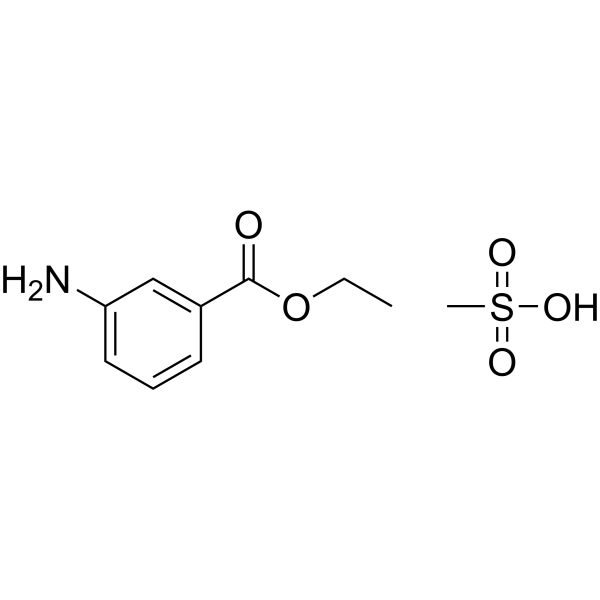
    Tricaine methanesulfonate (MS-222) is common used to immobilize fish for marking or transport and to suppress sensory systems during invasive procedures .
    Tricaine methanesulfonate
  • HY-133129
    MS1943
    4 Publications Verification

    HyT Histone Methyltransferase Apoptosis Inflammation/Immunology Cancer
    MS1943 is an orally active selective HyT degrader of EZH2 that effectively reduces EZH2 levels in cells. MS1943 has anticancer activity and exhibits cytotoxic effects in a variety of TNBC cells while sparing normal cells. In addition, MS1943 maintains high potency (IC50=120 nM) in inhibiting EZH2 methyltransferase activity and is highly selective for EZH2. (Structure Note: RED, EZH2 ligand (HY-148458); Blue, Hyt (HY-W001578)) .
    MS1943
  • HY-100685
    MS-444
    2 Publications Verification

    BE-34776

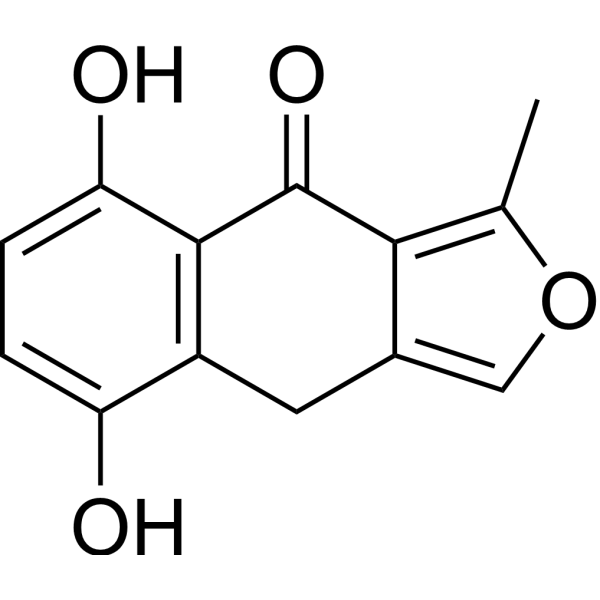
    HuR Apoptosis COX Neurological Disease Cancer
    MS-444 (BE-34776) is a HuR (ELAVL1) inhibitor that blocks the cytoplasmic translocation of HuR and inhibits its dimerization. MS-444 reduces cytoplasmic HuR levels by preventing the binding of HuR to ARE-mRNA, without altering the total expression of HuR. MS-444 induces apoptosis, inhibits cell growth, angiogenesis and invasion, and also regulates immune function and microbiota. MS-444 effectively alters the number, size and invasiveness of tumors in various cancer models. MS-444 is tolerable to intraperitoneal injection in vivo and can be applied to research related to colorectal cancer, familial adenomatous polyposis, colitis-associated cancer and glioblastoma .
    MS-444
  • HY-148333
    MS177
    3 Publications Verification

    PROTACs Histone Methyltransferase Apoptosis Cancer
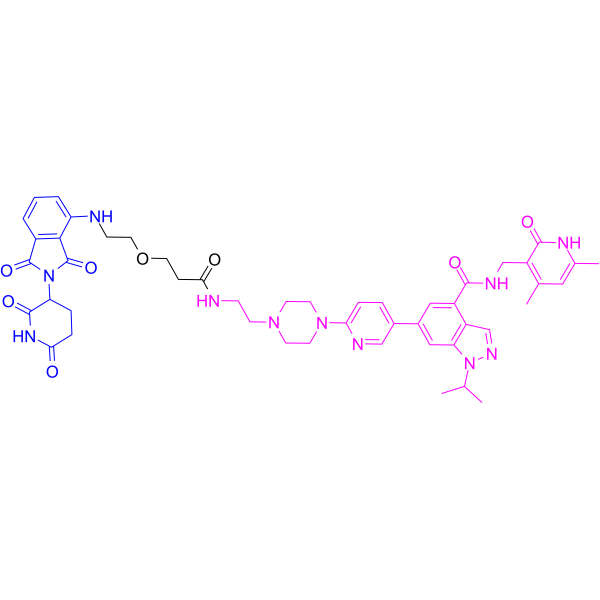
    MS177 is an effective and fast-acting EZH2 degrader. MS177 is a PROTAC that consists of a CRBN ligand, linker, and a potent enzymatic EZH2 inhibitor C24 (C24 IC50): 12 nM). MS177 effectively depletes both canonical EZH2-PRC2 and noncanonical EZH2-cMyc complexes. MS177 induces leukaemia cell growth inhibition, apoptosis and cell cycle progression arrest .
    MS177
  • HY-141796

    PROTACs WDR5 Cancer
    MS67 is a potent and selective WD40 repeat domain protein 5 (WDR5) degrader with a Kd of 63 nM. MS67 is inactive against other protein methyltransferases, kinases, GPCRs, ion channels, and transporters. MS67 shows potent acticancer effects .
    MS67
  • HY-141640

    PROTACs EGFR Cancer
    MS154 is a first-in-class E3 ligase cereblon-recruited EGFR degrader with Kd values of 1.8 nM and 3.8 nM for EGFR WT and EGFR L858R mutant, respectively. MS154 potently induces degradation of mutant, but not wild-type, EGFR in cancer cell lines in an E3 ligase-dependent manner. MS154 exhibits anticancer effects against lung cancer (blue: E3 ligase ligand (HY-103596); black: linker (HY-W096167); pink: EGFR ligand (HY-168305)) .
    MS154
  • HY-116797

    MS0015203

    GPR171 Metabolic Disease
    MS15203 is a potent and selective GPR171 agonist. MS15203 increases food intake and body weight. MS15203 increases neuronal activity. MS15203 significantly increases the abundance of the mRNAs encoding proSAAS, NPY, AgRP .
    MS15203
  • HY-134494
    MS48107
    2 Publications Verification

    GPR68 Neurological Disease
    MS48107 is a potent and selective positive allosteric modulator of G protein-coupled receptor 68 (GPR68). MS48107 is selective for GPR68 over the closely related proton GPCRs, neurotransmitter transporters, and hERG ion channels. MS48107 can readily cross the blood-brain barrier (BBB) in mice .
    MS48107
  • HY-112620

    GPR171 Neurological Disease
    MS21570 is a selective GPR171 antagonist, with an IC50 of 220 nM.
    MS21570
  • HY-162250

    PROTACs Histone Methyltransferase Cancer
    MS8847 is a PROTAC degrader and antiproliferative agent targeting EZH2 (DC50=34.4 nM in EOL-1 MLL-rAML cells). MS8847 recruits the E3 ligase von Hippel-Lindau (VHL) to mediate the degradation of EZH2 via the ubiquitin-proteasome system. MS8847 induces antiproliferative effects in MLL-rearranged acute myeloid leukemia cells and inhibits the growth of triple-negative breast cancer cell lines or 3D triple-negative breast cancer models. MS8847 is applicable to research related to MLL-rearranged acute myeloid leukemia and triple-negative breast cancer .
    MS8847
  • HY-157581

    EGFR PROTACs Cancer
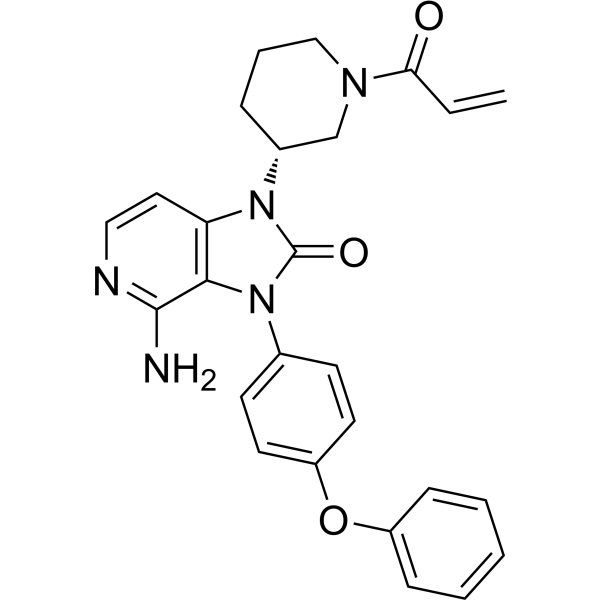
    MS39 (compound 6) is a PROTAC targeting EGFR. MS39 reduces the expression of EGFR and downstream signaling in HCC-827 and H3255 cells. MS39 inhibits the proliferation of H3255 cells .
    MS39
  • HY-172550

    HCN Channel Neurological Disease
    MS7710 is a hyperpolarization-activated cyclic nucleotide-gated (HCN) channel inhibitor with blood-brain barrier permeability and an excellent brain/plasma concentration ratio. MS7710 inhibits HCN channel-mediated Ih current, and reduces the firing frequency and burst activity of dopaminergic neurons in the ventral tegmental area. MS7710 ameliorates chronic social defeat stress-induced deficits in social interaction and impairments in reward-related cognitive flexibility in mice. MS7710 exerts only limited effects on ventral tegmental area dopaminergic neuron activity, social interaction, exploratory behavior, locomotor activity or sucrose preference in control mice. MS7710 is applicable to the research of major depressive disorder .
    MS7710
  • HY-141807

    PROTACs Akt Cancer
    MS21 is an effective AKT PROTAC degrader. MS21 can inhibit mutations in the PI3K/PTEN pathway, suppress the proliferation and induce cell cycle arrest of tumor cells. MS21 has anti-tumor activity. (Pink: AKT ligand-2 (HY-48682); Black: Linker (HY-W014125); Blue: (S,R,S)-AHPC (HY-125845)) .
    MS21
  • HY-148334

    PROTACs Histone Methyltransferase Cancer
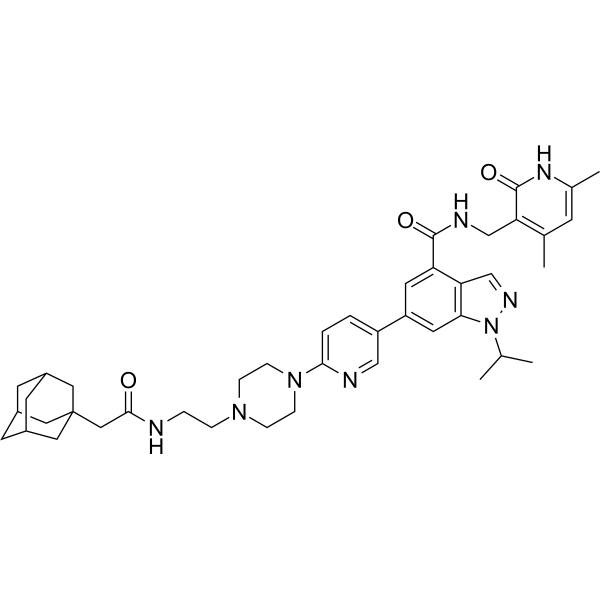
    MS8815 is a selective enhancer of zeste homolog 2 (EZH2) PROTAC degrader. MS8815 has inhibition activity for EZH2 with an IC50 value of 8.6 nM. MS8815 can be used for the research of triple-negative breast cancer (TNBC) .
    MS8815
  • HY-173561

    PROTACs Histone Methyltransferase Cancer
    MS115 is a selective PRMT5/MEP50 PROTAC degrader, with DC50 values of 17.4 nM and 11.3 nM for PRMT5 and MEP50, respectively. MS115 promotes PRMT5/MEP50 ubiquitination and degradation. MS115 shows anticancer activity against breast cancer .
    MS115
  • HY-100360
    MS049
    1 Publications Verification

    Histone Methyltransferase Cancer
    MS049, a chemical probe, is a potent, selective, and cell-active dual inhibitor of PRMT4 and PRMT6 with IC50s of 34 nM and 43 nM, respectively. MS049 reduces levels of Med12me2a and H3R2me2a in HEK293 cells. MS049 is not toxic and does not affect the growth of HEK293 cells .
    MS049
  • HY-153863

    PROTACs MEK Raf Cancer
    MS934 is a novel improved VHL-recruiting MEK 1/2 PROTAC degrader. MS934 also degrades CRAF. MS934 can be used for the research of variety of human cancers, such as melanoma, nonsmall cell lung cancer (NSCLC), colorectal cancer, primary brain tumors, and hepatocellular carcinoma (Pink: Target protein ligand (HY-168288); Black: linker (HY-168289); Blue: E3 ligase ligand (HY-112078)) .
    MS934
  • HY-125232
    MS645
    1 Publications Verification

    Epigenetic Reader Domain Cancer
    MS645 is a bivalent BET bromodomains (BrD) inhibitor with a Ki of 18.4 nM for BRD4-BD1/BD2. MS645 spatially constrains bivalent inhibition of BRD4 BrDs resulting in a sustained repression of BRD4 transcriptional activity in solid-tumor cells .
    MS645
  • HY-130602

    PROTACs MEK Cancer
    MS432 is a first-in-class and highly selective PD0325901-based von Hippel-Lindau-recruiting PROTAC degrader for MEK1 and MEK2. MS432 displays good plasma exposure in mice, exhibiting DC50 values of 31 nM and 17 nM for MEK1, MEK2 in HT29 cells respectively .
    MS432
  • HY-152261

    PROTACs Cancer
    MS6105 is an LDH protein hydrolysis-targeted chimera (PROTAC) that effectively degrades LDHA and LDHB in a time- and ubiquitin-proteasome system-dependent manner and has anticancer activity . MS6105 is a click chemistry reagent, it contains an Alkyne group and can undergo copper-catalyzed azide-alkyne cycloaddition (CuAAc) with molecules containing Azide groups.
    MS6105
  • HY-151101
    MS159
    1 Publications Verification

    PROTACs Cancer
    MS159 is a potent nuclear receptor binding SET structural domain protein 2 (NSD2) PROTACdegrader. MS159 inhibits the growth of tumour cells. MS159 is a useful chemical tool for exploring the role of NSD2 in health and disease .
    MS159
  • HY-145282
    MS170
    1 Publications Verification

    PROTACs Akt Cancer
    MS170 is a potent and selective PROTAC AKT degrader. MS170 depletes cellular total AKT (T-AKT) with the DC50 value of 32 nM. MS170 binds to AKT1, AKT2, and AKT3 with Kds of 1.3 nM, 77 nM, and 6.5 nM, respectively .
    MS170
  • HY-148244
    MS47134
    1 Publications Verification

    Mas-related G-protein-coupled Receptor (MRGPR) Others
    MS47134 is a potent and selective MRGPRX4 agonist with an EC50 value of 149 nM. MS47134 can be used for research of pain, itch and mast cell-mediated hypersensitivity .
    MS47134
  • HY-155815

    Histone Methyltransferase PROTACs Cancer
    MS9715 is a potent and seletive NSD3-targeting PROTAC. MS9715 is designed by BI-9321, which binds NSD3’s PWWP1 domain, with an E3 ligase VHL ligand. MS9715 has the potental for NSD3-dependent cancer research .
    MS9715
  • HY-B0772A

    MS-551

    Potassium Channel Cardiovascular Disease
    Nifekalant hydrochloride (MS-551), a class III antiarrhythmic agent, is a IKr potassium channel blocker with an IC50 of 10 µM. Nifekalant hydrochloride can be used for refractory ventricular tachyarrhythmias research .
    Nifekalant hydrochloride
  • HY-151613A

    PROTACs Akt Cancer
    MS15 TFA is a potent and selective AKT PROTAC degrader. MS15 TFA inhibits the AKT1, -2, and -3 activities, with IC50 values of 798 nM, 90 nM, and 544 nM, respectively .
    MS15 TFA
  • HY-158239

    PROTACs E1/E2/E3 Enzyme Cancer
    MS181 (compound 1) is a potent cereblon (CRBN)-recruiting and EED-binding polycomb repressive complex 1 (PRC1) PROTAC degrader. MS181 decreases the expression of EED, EZH2, SUZ12, BMI1 and RING1B. MS181 shows antiproliferative activity (Strtucture Note: Red, EED binder (HY-158771); Blue, CRBN ligand (HY-41547); Black, Linker HY-131717) .
    MS181
  • HY-143883

    PROTACs Akt Cancer
    MS143 is a potent PROTAC AKT degrader (DC50=46 nM and GI50=0.8 μM in PC3 cells). MS143 induces rapid and robust AKT degradation in a concentration- and time-dependent manner via hijacking the ubiquitin-proteasome system. MS143 can suppress cancer cell growth (Pink: AKT ligand (HY-15431); Blue: E3 ligase ligand (HY-125845); Black: linker) .
    MS143
  • HY-114918

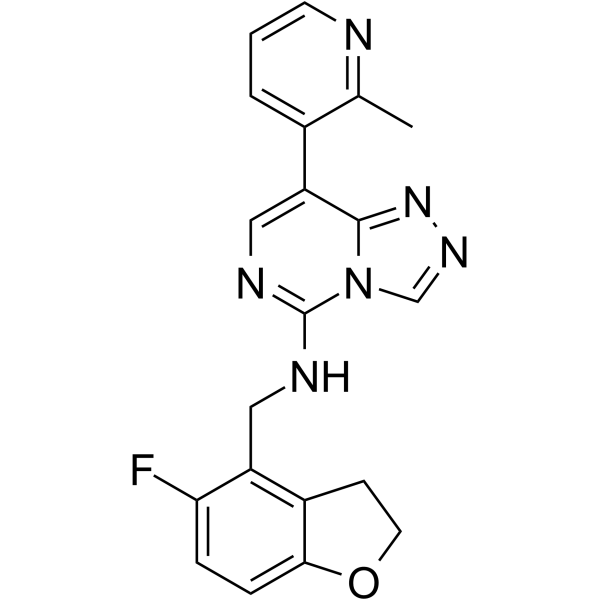
    TSH Receptor Endocrinology
    MS438 is a potent thyrotropin receptor (TSHR) agonist with an EC50 of 53 nM. MS438 binds to the serpentine portion of the TSHR. MS438 induces T4 secretion in mice .
    MS438
  • HY-147942

    PROTACs EGFR Cancer
    MS9449 is a potent PROTAC EGFR degrader with Kds of 17 nM and 10 nM for EGFR WT and EGFR L858R, respectively. MS9449 effectively induces degradation of mutant EGFRs through both the ubiquitin/proteasome system (UPS) and autophagy/lysosome pathways. MS9449 potently inhibits the proliferation of NSCLC cells. MS9449 can be used for researching anticancer .
    MS9449
  • HY-147941

    PROTACs EGFR Inflammation/Immunology Cancer
    MS9427 is a potent PROTAC EGFR degrader with Kds of 7.1 nM and 4.3 nM for EGFR WT and EGFR L858R, respectively. MS9427 selectively degrades the mutant but not the WT EGFR through both the ubiquitin/proteasome system (UPS) and autophagy/lysosome pathways. MS9427 potently inhibits the proliferation of NSCLC cells. MS9427 can be used for researching anticancer .
    MS9427
  • HY-157582

    EGFR Others
    MS39N (compound 27) is a negative control for MS39 that binds EGFR without inducing degradation .
    MS39N
  • HY-151613

    PROTACs Akt Cancer
    MS15 is a potent and selective AKT PROTAC degrader. MS15 inhibits the AKT1, -2, and -3 activities, with IC50 values of 798 nM, 90 nM, and 544 nM, respectively .
    MS15
  • HY-125837A
    MS31 trihydrochloride
    3 Publications Verification

    Epigenetic Reader Domain Cancer
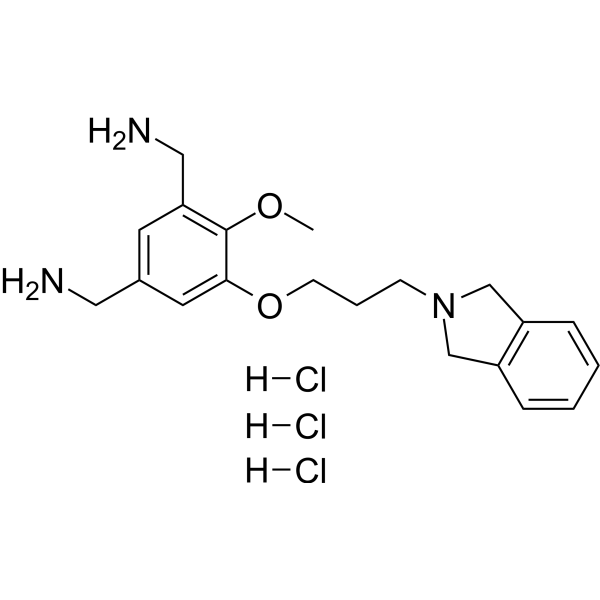
    MS31 trihydrochloride is a potent, highly affinity and selective fragment-like methyllysine reader protein spindlin 1 (SPIN1) inhibitor. MS31 trihydrochloride potently inhibits the interactions between SPIN1 and H3K4me3 (IC50=77 nM, AlphaLISA; 243 nM, FP). MS31 trihydrochloride selectively binds Tudor domain II of SPIN1 (Kd=91 nM). MS31 trihydrochloride potently inhibits binding of trimethyllysine-containing peptides to SPIN1, and is not toxic to nontumorigenic cells .
    MS31 trihydrochloride
  • HY-114759
    MS-PPOH
    1 Publications Verification

    Cytochrome P450 Neurological Disease Metabolic Disease Cancer
    MS-PPOH is a potent and selective cytochrome P450 (CYP) epoxygenase inhibitor . MS-PPOH inhibits CYP2C8 and CYP2C9 with IC50s of 15 and 11 μM, respectively . MS-PPOH is a click chemistry reagent, it contains an Alkyne group and can undergo copper-catalyzed azide-alkyne cycloaddition (CuAAc) with molecules containing Azide groups.
    MS-PPOH
  • HY-161759

    Histone Methyltransferase Metabolic Disease
    MS152 is an oral bioactive inhibitor of EHMT2/G9a. MS152 reactivats maternally silenced Prader-Willi syndrome (PWS) genes in brain and liver tissues of PWS mouse models .
    MS152
  • HY-114994

    TSH Receptor Endocrinology
    MS437 is a potent TSH receptor (TSHR) stimulator with an EC50 value of 13x10 -8 M. MS437 shows potent activation of G, Gαq and 12 and up-regulation of thyroglobulin (Tg), sodium iodine symporter (NIS) and TSHR gene expressions .
    MS437
  • HY-150510

    Histone Methyltransferase Neurological Disease Cancer
    MS8511 is a selective G9a/GLP covalent irreversible inhibitor by targeting a cysteine residue at the substrate binding site, with IC50 values of 100 nM (G9a) and 140 nM (GLP), and Kd values of 44 nM (G9a) and 46 nM (GLP). MS8511 reduces the cellular H3K9me2 level and enhances antiproliferation activity. MS8511 can be used for the research of several types of cancers including brain, breast, ovarian, lung, bladder, melanoma, colorectal cancer, and other disease such as Alzheimer’s disease (AD), sickle cell disease, Prader−Willi syndrome (PWS) .
    MS8511
  • HY-133177

    EAAT Neurological Disease
    MS-153 is a glutamate transporter activator that can be used as a neuroprotective agent .
    MS-153
  • HY-42774

    1,11-Bis(methanesulfonyloxy)-3,6,9-trioxandecane

    PROTAC Linkers Cancer
    Ms-PEG4-MS is a PEG-based PROTAC linker that can be used in the synthesis of PROTACs .
    Ms-PEG4-MS
  • HY-111367

    Amine N-methyltransferase Neurological Disease Metabolic Disease Cancer
    MS2734 is a inhibitor of nicotinamide N-methyltransferase (NNMT). MS2734 potently inhibits the methyltransferase activity of human NNMT (hNNMT) with an IC50 value of 14 μM. MS2734 can be used for the study of obesity, diabetes, Parkinson's disease, and various cancers with high NNMT expression .
    MS2734
  • HY-114628

    GLP Receptor Neurological Disease Inflammation/Immunology Cancer
    MS012 is a selective GLP inhibitor (IC50=7 nM). MS012 can be used in research of GLP dysregulation, including cancer, inflammatory diseases, and neuroregenerative disorders .
    MS012
  • HY-173002

    DNA Methyltransferase Cancer
    MS9024 is the degrader for DNA methyltransferase 1 that degrades DNMT1 in cell HCT116 through the ubiquitin-proteasome pathway with a DC50 of 35 nM (DC50 in MDA-MB-468 and H1299 is 254 nM and 101 nM). MS9024 also inhibits DNMT1 with an IC50 of 0.43 μM .
    MS9024
  • HY-150510A

    Histone Methyltransferase Neurological Disease Cancer
    MS8511 (hydrochloride) is a selective G9a/GLP covalent irreversible inhibitor by targeting a cysteine residue at the substrate binding site, with IC50 values of 100 nM (G9a) and 140 nM (GLP), and Kd values of 44 nM (G9a) and 46 nM (GLP). MS8511 (hydrochloride) reduces the cellular H3K9me2 level and enhances antiproliferation activity. MS8511 (hydrochloride) can be used for the research of several types of cancers including brain, breast, ovarian, lung, bladder, melanoma, colorectal cancer, and other disease such as Alzheimer’s disease (AD), sickle cell disease, Prader−Willi syndrome (PWS) .
    MS8511 hydrochloride
  • HY-176036

    Ligands for E3 Ligase Cancer
    MS1262 is a ligand for the E3 enzyme SPOP substrate GLP and can recruit SPOP. MS1262 can be used to synthesize MS479 (HY-176035) .
    MS1262
  • HY-178749

    ClpP Mitochondrial Metabolism Apoptosis Caspase PARP Cancer
    MS6076 is a mitochondrial protease ClpP agonist. MS6076 specifically activates the ClpP protease in the mitochondrial matrix, significantly disrupting mitochondrial Electron Transport Chain (ETC) function by accelerating the degradation of unfolded proteins. MS6076 exhibits potent cytotoxicity against a variety of cancer cell lines. MS6076 induces cell apoptosis, increasing cleavage of caspase 3 and PARP. MS6076 can be used for the research of breast cancer .
    MS6076
  • HY-145281

    PROTACs Akt Cancer
    MS98 is a potent and selective PROTAC AKT degrader. MS98 depletes cellular total AKT (T-AKT) with the DC50 value of 78 nM. MS98 binds to AKT1, AKT2, and AKT3 with Kds of 4 nM, 140 nM, and 8.1 nM, respectively .
    MS98
  • HY-141797

    Histone Methyltransferase PROTACs WDR5 Cancer
    MS33 is a potent WDR5 degrader, with Kds of 870 nM and 120 nM for VCB and WDR5, respectively. MS33 induces WDR5 degradation in an E3 ligase VHL, and proteasome-dependent manner. MS33 can be used for the research of acute myeloid leukemia .
    MS33
  • HY-119053

    MDM-2/p53 Cancer
    MS7972 is a small molecule that blocks human p53 and CREB binding protein association. MS7972 can almost completely block this BRD interaction at 50 μM .
    MS7972
  • HY-162966

    Cyclic GMP-AMP Synthase PROTACs STING Cancer
    MS7829 is a deubiquitinase-targeting chimera (DUBTAC) that targets cGAS. MS7829 recruits OTUB1 to cGAS, binds covalently to OTUB1, stabilizes the protein abundance of cGAS, and activates the cGAS-STING-IRF3 innate immune signaling pathway in an OTUB1-dependent manner. MS7829 is applicable to cancer-related research .
    MS7829

Inquiry Online

Your information is safe with us. * Required Fields.

Salutation


Country or Region *

Applicant Name *


Organization Name *

Department *


Email Address *


Product Name *

Cat. No.


Requested quantity *

Phone Number *


Remarks

Inquiry Online

Inquiry Information

Product Name:
Cat. No.:
Quantity:
MCE Japan Authorized Agent:

