



Search Result
Results for "
Melanocortin Agonist
" in MedChemExpress (MCE) Product Catalog:
| Cat. No. |
Product Name |
Target |
Research Areas |
Chemical Structure |
-
- HY-P0252
-
α-MSH
Maximum Cited Publications
23 Publications Verification
α-Melanocyte-Stimulating Hormone
|
Melanocortin Receptor
|
Neurological Disease
Metabolic Disease
Inflammation/Immunology
|
|
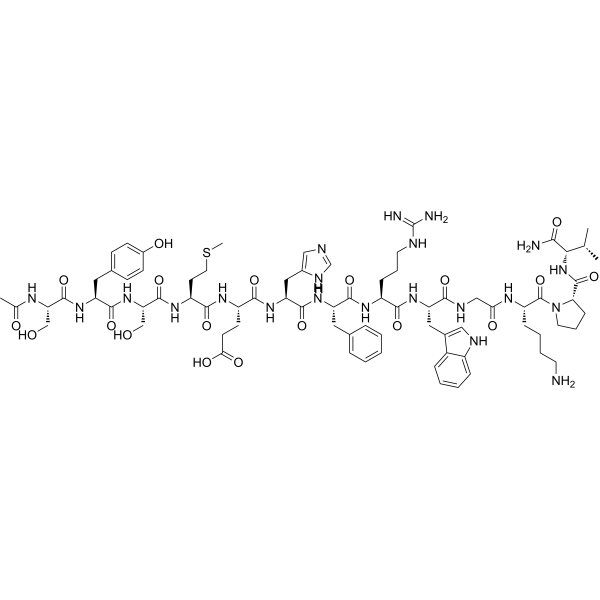
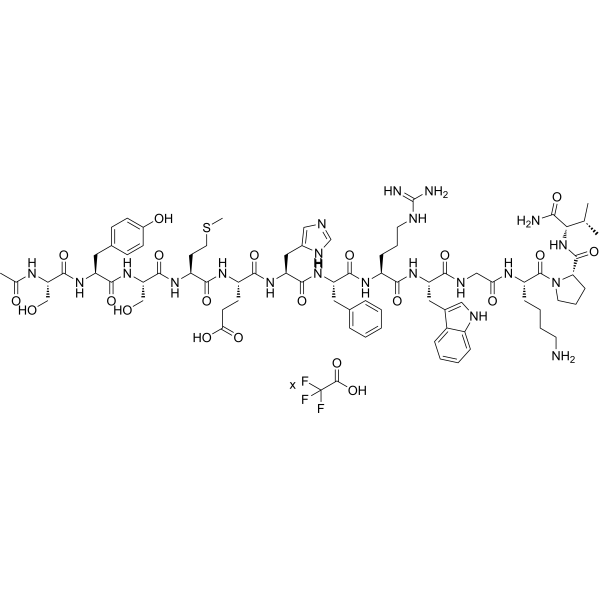
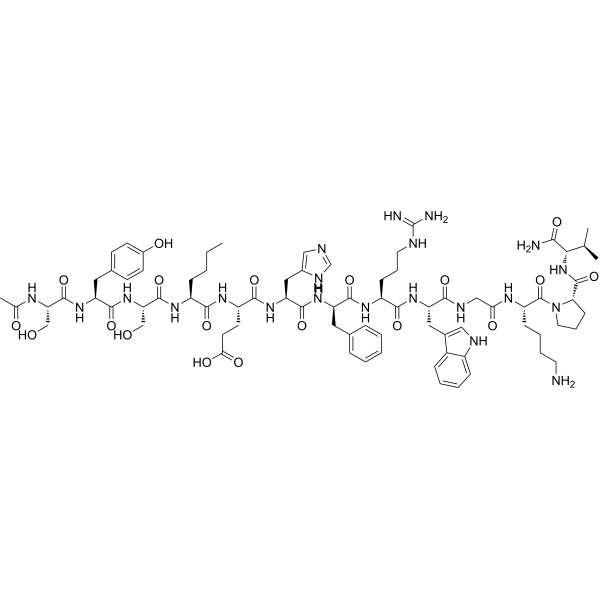
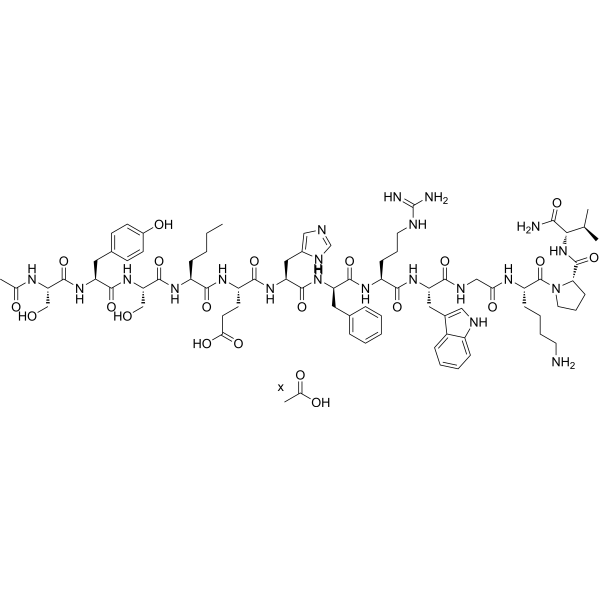
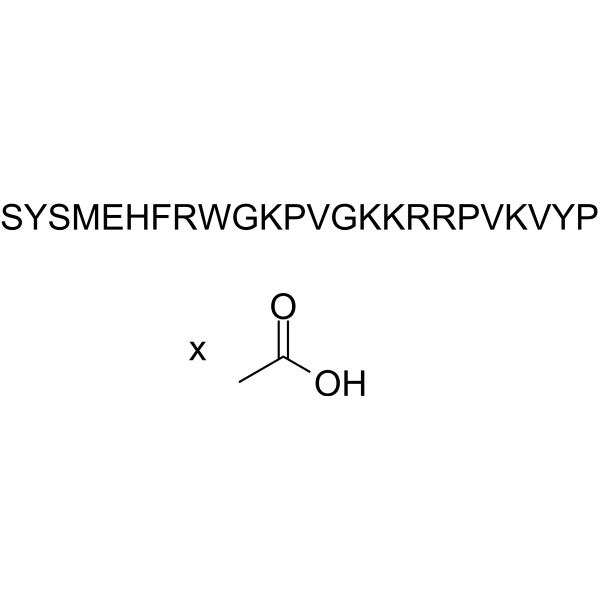
α-MSH (α-Melanocyte-Stimulating Hormone), an endogenous neuropeptide, is an endogenous melanocortin receptor 4 (MC4R) agonist with anti-inflammatory and antipyretic activities. α-MSH is a post-translational derivative of pro-opiomelanocortin (POMC) .
|
-
-
- HY-19870
-
-
-
- HY-10624
-
THIQ
1 Publications Verification
|
Melanocortin Receptor
|
Metabolic Disease
|
|
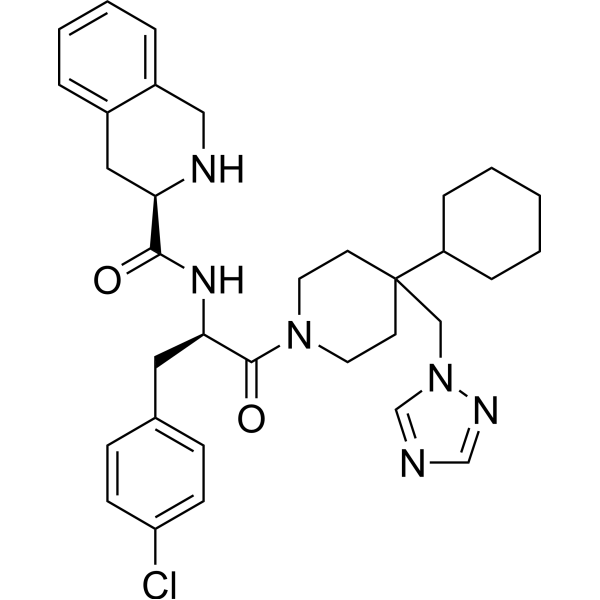
THIQ is the first selective agonist of the melanocortin-4 receptor (MC4R), with high affinity and potency for hMC4R (IC50=1.2 nM, EC50=2.1 nM) and rMC4R (IC50=0.6 nM, EC50=2.9 nM). THIQ maintains low potency at MC1R, MC3R and MC5R. THIQ plays a role in eliciting erectile activity in rodents. THIQ acts as a pharmacoperone of the MC4R rescuing the cell surface expression and signaling of some intracellularly retained MC4R mutants .
|
-
-
- HY-P1211
-
-
-
- HY-P0267
-
-
-
- HY-N2466
-
|
MT-I; [Nle4,D-Phe7]-α-MSH
|
Melanocortin Receptor
|
Neurological Disease
Cancer
|
|
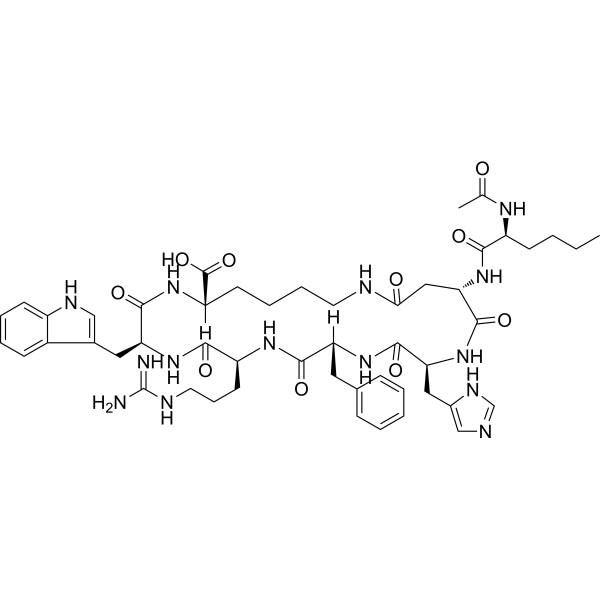
Melanotan I is a potent non-selective melanocortin receptor (MCR) agonist. Melanotan I is a synthetic analogue of α-melanocyte stimulating hormone (α-MSH) that stimulates melanogenesis. Melanotan I can induce skin tanning by mimicking the actions of a-MSH on the melanocortin type 1 receptors (MC1R) of melanocytes. Melanotan I can be used for the research of sun-induced skin cancer, melanoma, inflammation and male erectile dysfunction .
|
-
-
- HY-109114
-
|
MT-7117
|
Melanocortin Receptor
|
Metabolic Disease
|
|
Dersimelagon (MT-7117) is an orally active, selective melanocortin 1 receptor (MC1R) agonist with EC50 values of 8.16, 3.91, 1.14 and 0.251 nM for human (h), cynomolgus monkey (cm), mouse (m) and rat (r) MC1R, respectively. Dersimelagon shows good affinity for hMC1R and hMC4R with Ki values of 2.26, 32.9 nM, respectively. Dersimelagon can be used for the research of skin pigmentation .
|
-
-
- HY-18678A
-
|
PT-141 Acetate
|
Melanocortin Receptor
|
Metabolic Disease
|
|
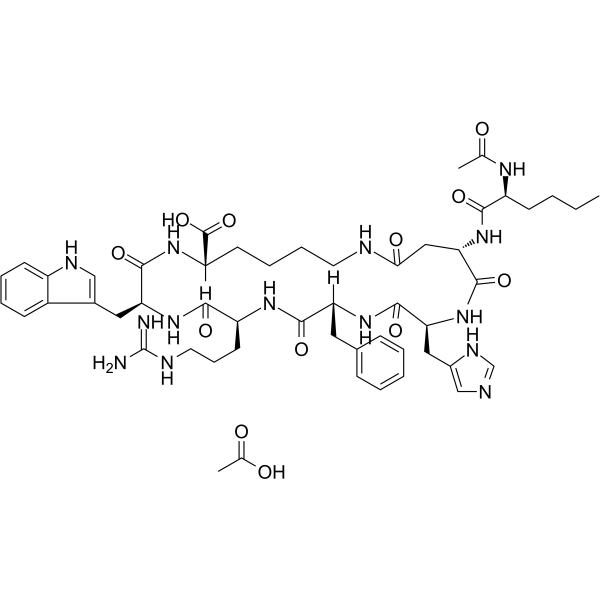
Bremelanotide (PT-141) Acetate is a melanocortin receptor agonist. Bremelanotide Acetate can activate MC4R and increases dopamine release. Bremelanotide Acetate induces appetitive sexual behaviors, female mounting behavior, and repetitive self-grooming. Bremelanotide Acetate can be used for the research of hypoactive sexual desire disorders .
|
-
-
- HY-P0227
-
|
|
Melanocortin Receptor
|
Metabolic Disease
|
|
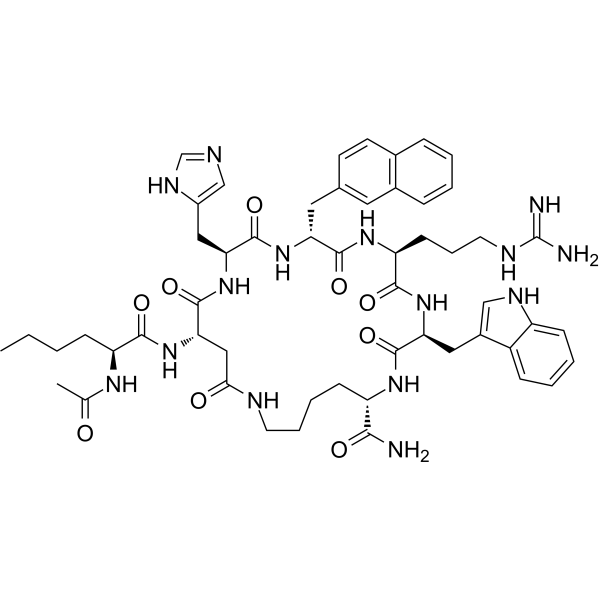
SHU 9119 is a potent human melanocortin 3 and 4 receptors (MC3/4R) antagonist and a partial MC5R agonist; with IC50 values of 0.23, 0.06, and 0.09 nM for human MC3R, MC4R and MC5R, respectively.
|
-
-
- HY-18678
-
|
PT-141
|
Melanocortin Receptor
|
Neurological Disease
Metabolic Disease
|
|
Bremelanotide (PT-141) is a melanocortin receptor agonist. Bremelanotide can activate MC4R and increases dopamine release. Bremelanotide induces appetitive sexual behaviors, female mounting behavior, and repetitive self-grooming. Bremelanotide can be used for the research of hypoactive sexual desire disorders .
|
-
-
- HY-10622
-
-
-
- HY-118930
-
|
|
Melanocortin Receptor
|
Metabolic Disease
|
|
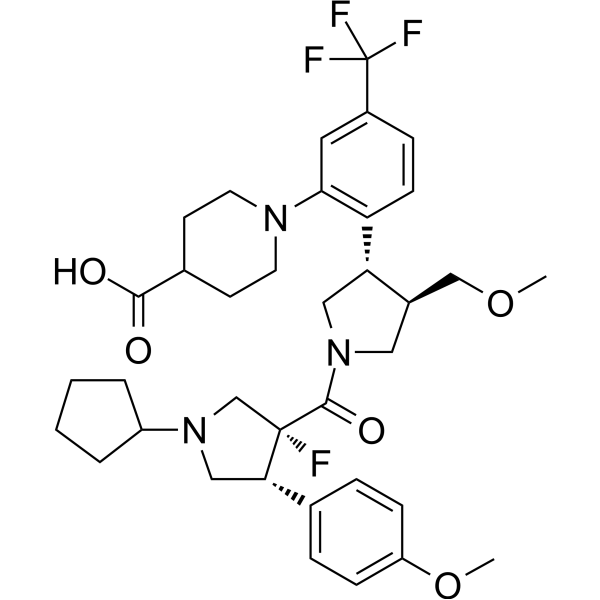
MK-0493 is an orally active melanocortin-4 receptor (MC4R) agonist. MK-0493 reduces food intake, suppresses weight gain, elevates blood pressure at high doses, and exhibits preclinical erectile regulatory activity. MK-0493 can be used in research related to obesity .
|
-
-
- HY-115644
-
|
|
Melanocortin Receptor
|
Inflammation/Immunology
|
|
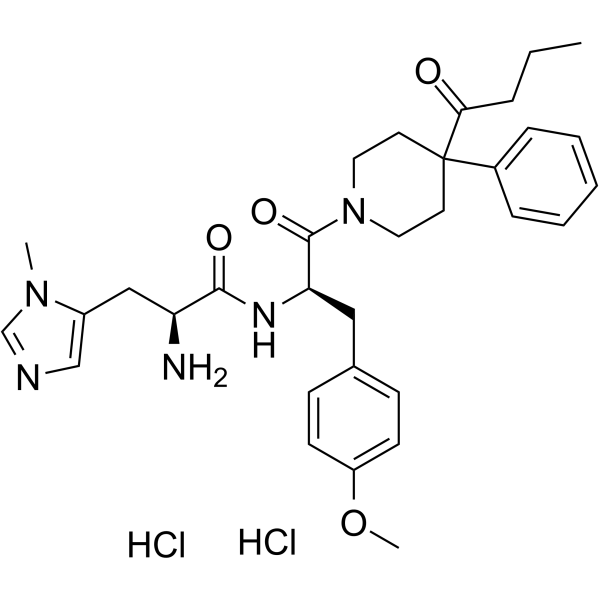
BMS-470539 dihydrochloride is a highly potent and selective melanocortin-1 receptor (MC-1R) agonist with an IC50 of 120 nM, an EC50 of 28 nM. BMS-470539 dihydrochloride does not activate MC-3R and is a very weak partial agonist at MC-4R and MC-5R. BMS-470539 dihydrochloride has potently anti-inflammatory properties .
|
-
-
- HY-118930A
-
-
-
- HY-P0060
-
|
Tetracosactrin; ACTH(1–24)
|
CRFR
Melanocortin Receptor
|
Neurological Disease
Inflammation/Immunology
|
|
Tetracosactide (Tetracosactrin) is an analogue of adrenocorticotrophic hormone (ACTH). Tetracosactide is the agonist for melanocortin-4 receptor (MC4R) that activates human MC4R with an EC50 of 0.65 nM. Tetracosactide can stimulate the release of corticosteroids such as cortisol from the adrenal gland. Tetracosactide is currently used for the research of ulcerative colitis and Crohn's disease, juvenile/adult rheumatoid arthritis and osteoarthrosis .
|
-
-
- HY-P0060A
-
|
Tetracosactrin acetate; ACTH(1–24) acetate
|
CRFR
Melanocortin Receptor
|
Neurological Disease
Inflammation/Immunology
|
|
Tetracosactide acetate (Tetracosactrin acetate ) is the acetate salt form of Tetracosactide (HY-P0060). Tetracosactide acetate is an analogue of adrenocorticotrophic hormone (ACTH). Tetracosactide acetate is the agonist for melanocortin-4 receptor (MC4R) that activates human MC4R with an EC50 of 0.65 nM. Tetracosactide acetate can stimulate the release of corticosteroids such as cortisol from the adrenal gland. Tetracosactide acetate is currently used for the research of ulcerative colitis and Crohn's disease, juvenile/adult rheumatoid arthritis and osteoarthrosis .
|
-
-
- HY-147301A
-
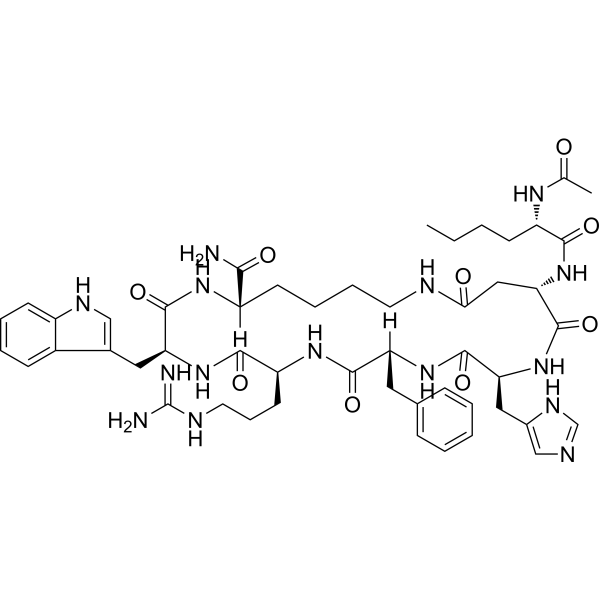
|
AP1189 acetate
|
Melanocortin Receptor
|
Metabolic Disease
Inflammation/Immunology
|
|
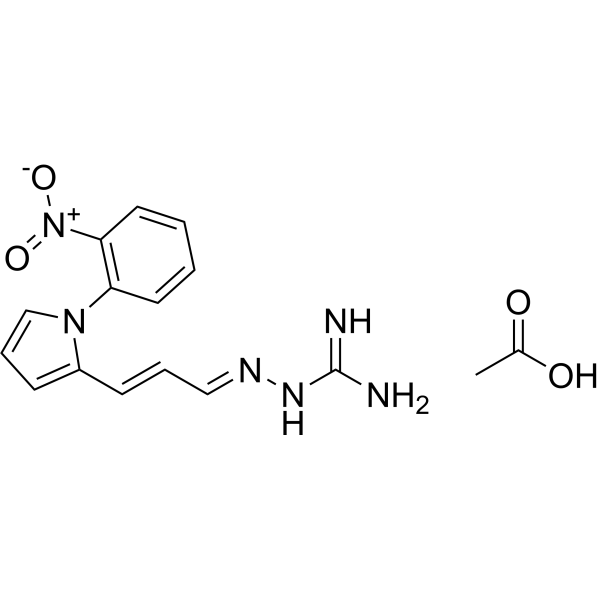
Resomelagon (AP1189) acetate is a potent, orally active melanocortin receptor (MR) agonist about MC1 and MC3. Resomelagon acetate induces ERK1/2 phosphorylation and Ca 2+ mobilization. Resomelagon acetate has anti-inflammatory activity. Resomelagon acetate can be used for obesity and chronic inflammation research .
|
-
-
- HY-P1477
-
-
-
- HY-P1477A
-
-
-
- HY-P3561A
-
|
|
Melanocortin Receptor
|
Neurological Disease
|
|
Agouti-related Protein (AGRP) (83-132) Amide (human) TFA is a fragment of agouti-related protein (AGRP) which is a protein found in abundance in the arcuate nucleus of the hypothalamus. AgRP primarily acts as an inverse agonist for the melanocortin-4 receptor (MC4R) to increase food intake .
|
-
-
- HY-P0252A
-
-
-
- HY-147301
-
|
AP1189
|
Melanocortin Receptor
|
Metabolic Disease
Inflammation/Immunology
|
|
Resomelagon (AP1189) is a potent, orally active melanocortin receptor (MR) agonist about MC1 and MC3. Resomelagon induces ERK1/2 phosphorylation and Ca 2+ mobilization. Resomelagon has anti-inflammatory activity. Resomelagon can be used for obesity and chronic inflammation research .
|
-
-
- HY-P1726
-
|
|
Melanocortin Receptor
|
Neurological Disease
Metabolic Disease
Inflammation/Immunology
Cancer
|
|
MSG606 is a selective melanocortin 1 receptor (MC1R) antagonist. MSG606 can abolish the neuroprotective effects of BMS-470539 (HY-15616) (MC1R agonist). MSG606 can inhibit cancer cell proliferation and transition from the G1 to the S phase. MSG606 can delay pain hypersensitivity and reduce cholesterol levels. MSG606 can be used for the researches of cancer, inflammation, neurological and metabolic disease, such as breast cancer and subarachnoid hemorrhage (SAH) .
|
-
-
- HY-P2242A
-
|
|
Melanocortin Receptor
|
Neurological Disease
Inflammation/Immunology
|
|
RO27-3225 TFA is potent and selective melanocortin 4 receptor (MC4R) agonist with an EC50 of 1 nM and 8 nM for MC4R and MC1R, respectively. RO27-3225 TFA shows ~30-fold selectivity for MC4R over MC3R. RO27-3225 TFA has neuroprotective and anti-inflammatory effects .
|
-
-
- HY-P1504
-
-
-
- HY-P1504A
-
-
-
- HY-P1478
-
-
-
- HY-P1545A
-
-
-
- HY-P1214
-
-
-
- HY-P1217
-
|
|
Melanocortin Receptor
|
Inflammation/Immunology
|
|
[D-Trp8]-γ-MSH is a potent and selective agonist of melanocortin 3 (MC3) receptor, with IC50s of 6.7 nM, 600 nM and 340 nM for hMC3, hMC4 and hMC5, respectively in CHO cells. [D-Trp8]-γ-MSH could provide protection against multiple inflammatory disorders such as rheumatoid arthritis and colitis .
|
-
-
- HY-P1208
-
|
|
Melanocortin Receptor
|
Inflammation/Immunology
|
|
PG-931, an analog of SHU 9119 (HY-P0227), is a potent melanocortin 4 (MC4) receptor (IC50=0.58 nM) agonist and is more selective than for the hMC3R (IC50=55 nM) or the hMC5R (IC50=2.4 nM). PG-931 can reverse haemorrhagic shock and prevent multiple organ damage in vivo .
|
-
-
- HY-N2466A
-
|
MT-I acetate; [Nle4,D-Phe7]-α-MSH acetate
|
Melanocortin Receptor
|
Cancer
|
|
Melanotan I acetate is a potent non-selective melanocortin receptor (MCR) agonist. Melanotan I acetate is a synthetic analogue of α-melanocyte stimulating hormone (α-MSH) that stimulates melanogenesis. Melanotan I acetate can induce skin tanning by mimicking the actions of a-MSH on the melanocortin type 1 receptors (MC1R) of melanocytes. Melanotan I acetate can be used for sunlight-induced skin cancers research .
|
-
-
- HY-P1922
-
|
|
Melanocortin Receptor
|
Endocrinology
|
|
γ-2-MSH (41-58), amide is derived from γ-2-MSH. γ-2-MSH is a twelve amino acid peptide that is derived from the N-terminal fragment of proopiomelanocortin (POMC) and contains the His-Phe-Arg-Trp motif common to all melanocortin endogenous agonist ligands .
|
-
-
- HY-U00396
-
-
-
- HY-P11238
-
-
-
- HY-P3561
-
|
|
Melanocortin Receptor
|
Neurological Disease
|
|
Agouti-related Protein (AGRP) (83-132) Amide (human) is a fragment of agouti-related protein (AGRP) which is a protein found in abundance in the arcuate nucleus of the hypothalamus. AgRP primarily acts as an inverse agonist for the melanocortin-4 receptor (MC4R) to increase food intake .
|
-
-
- HY-P2242
-
|
|
Melanocortin Receptor
|
Neurological Disease
Inflammation/Immunology
|
|
RO27-3225 is potent and selective melanocortin 4 receptor (MC4R) agonist with an EC50 of 1 nM and 8 nM for MC4R and MC1R, respectively. RO27-3225 shows 30-fold selectivity for MC4R over MC3R. RO27-3225 has neuroprotective and anti-inflammatory effects .
|
-
-
- HY-10623
-
|
|
Melanocortin Receptor
|
Endocrinology
|
|
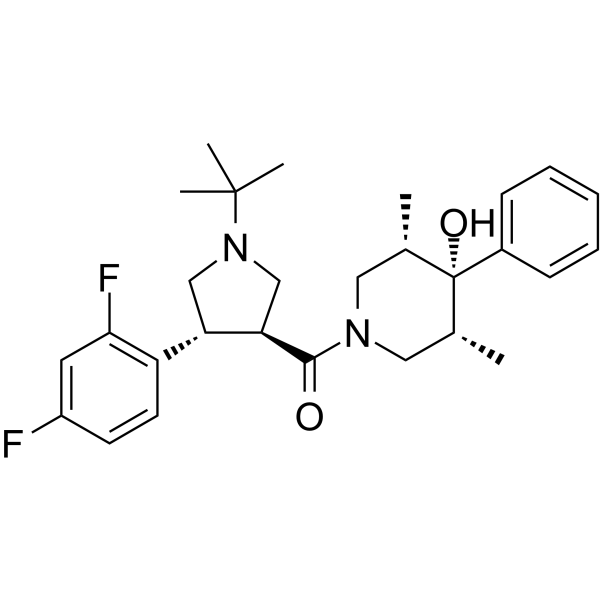
PF-00446687 hydrochloride is a potent, brain-penetrating, selective melanocortin 4 receptor (MC4R) agonist with an EC50 of 12 nM. PF-00446687 hydrochloride can be used in the research of sexual dysfunction .
|
-
-
- HY-19870A
-
-
-
- HY-P10985
-
|
|
Melanocortin Receptor
|
Metabolic Disease
|
|
CTX-1211 is a selective, orally effective melanocortin MC4R agonist (EC50=0.38 nM). CTX-1211 can enhance the feeding suppression and weight loss effects induced by liraglutide (HY-P0014), and promote anorexia and weight loss activity. CTX-1211 is mainly used in the study of obesity and other metabolic disorders .
|
-
-
- HY-109114A
-
|
MT-7117 phosphate
|
Melanocortin Receptor
|
Metabolic Disease
|
|
Dersimelagon phosphate is an orally active, selective melanocortin 1 receptor (MC1R) agonist with EC50 values of 8.16, 3.91, 1.14 and 0.251 nM for human (h), cynomolgus monkey (cm), mouse (m) and rat (r) MC1R, respectively. Dersimelagon phosphate shows good affinity for hMC1R and hMC4R with Ki values of 2.26, 32.9 nM, respectively. Dersimelagon phosphate can be used for the research of skin pigmentation .
|
-
-
- HY-P1726A
-
|
|
Melanocortin Receptor
|
Neurological Disease
Metabolic Disease
Inflammation/Immunology
Cancer
|
|
MSG606 TFA is a selective melanocortin 1 receptor (MC1R) antagonist. MSG606 TFA can abolish the neuroprotective effects of BMS-470539 (HY-15616) (MC1R agonist). MSG606 TFA can inhibit cancer cell proliferation and transition from the G1 to the S phase. MSG606 TFA can delay pain hypersensitivity and reduce cholesterol levels. MSG606 TFA can be used for the researches of cancer, inflammation, neurological and metabolic disease, such as breast cancer and subarachnoid hemorrhage (SAH) .
|
-
-
- HY-P11238A
-
-
-
- HY-P6176
-
-
-
- HY-P1545
-
-
-
- HY-168383
-
|
(E/Z)-AP1189 acetate
|
Melanocortin Receptor
|
Inflammation/Immunology
|
|
(E/Z)-Resomelagon acetate is an agonist of melanocortin receptor 1 (MC1R) and MC3R with anti-inflammatory activities. (E/Z)-Resomelagon can be utilized in inflammation research .
|
-
-
- HY-P1214A
-
-
-
- HY-147301B
-
|
AP1189 methanesulfonate
|
Melanocortin Receptor
ERK
|
Inflammation/Immunology
|
|
Resomelagon methanesulfonate (AP1189 methanesulfonate) is the methanesulfonate salt form of Resomelagon (HY-147301). Resomelagon methanesulfonate is an orally active melanocortin receptor (MR) agonist. Resomelagon methanesulfonate induces ERK1/2 phosphorylation and Ca 2+ mobilization. Resomelagon methanesulfonate exhibits anti-inflammatory activity in mouse peritonitis and peritonitis model. Resomelagon methanesulfonate can be used for obesity and chronic inflammation research .
|
-
-
- HY-P1217A
-
|
|
Melanocortin Receptor
|
Inflammation/Immunology
|
|
[D-Trp8]-γ-MSH TFA is a potent and selective agonist of melanocortin 3 (MC3) receptor, with IC50s of 6.7 nM, 600 nM and 340 nM for hMC3, hMC4 and hMC5, respectively in CHO cells. [D-Trp8]-γ-MSH TFA could provide protection against multiple inflammatory disorders such as rheumatoid arthritis and colitis .
|
-
-
- HY-P1208A
-
|
|
Melanocortin Receptor
|
Inflammation/Immunology
|
|
PG-931 TFA, an analog of SHU 9119 (HY-P0227), is a potent melanocortin 4 (MC4) receptor (IC50=0.58 nM) agonist and is more selective than for the hMC3R (IC50=55 nM) or the hMC5R(IC50=2.4 nM). PG-931 TFA can reverse haemorrhagic shock and prevent multiple organ damage in vivo .
|
-
- HY-10622R
-
|
|
Reference Standards
Melanocortin Receptor
|
Endocrinology
|
|
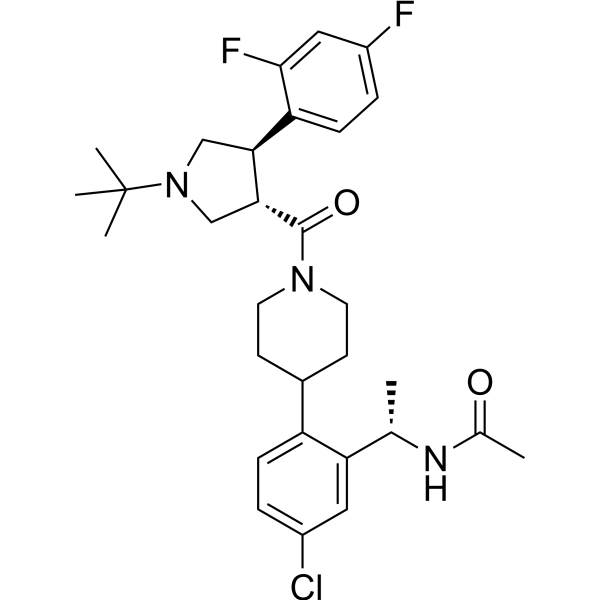
PF-00446687 free base (Standard) is the analytical standard of PF-00446687 free base (HY-10622). This product is intended for research and analytical applications. PF-00446687 is a potent, selective melanocortin-4 receptor (MC4R) agonist with EC50 of 12 ± 1 nM . Pf-446687 is brain penetrant .
|
-
- HY-P0267A
-
|
|
Melanocortin Receptor
|
Neurological Disease
Metabolic Disease
Endocrinology
|
|
Melanotan (MT)-II acetate is a melanocortin receptor agonist that crosses the blood-brain barrier. Melanotan (MT)-II acetate activates melanocortin receptor 3 and melanocortin receptor 4, and stimulates the release of central endogenous oxytocin. Melanotan (MT)-II acetate reverses recognition memory impairment, increased anxiety levels and reduced exploratory tendency in zebrafish exposed to short-term high-fat diet. Melanotan (MT)-II acetate improves impaired social behavior indicators in mouse models of autism spectrum disorder. Melanotan (MT)-II acetate induces weight loss, reduces food intake and exerts anorectic effects. Melanotan (MT)-II acetate increases intracavernous pressure and erectile activity in brown rats. Melanotan (MT)-II acetate can be used in studies related to memory impairment, anxiety, reduced exploratory behavior, autism spectrum disorder, obesity and erectile dysfunction .
|
-
- HY-10624R
-
|
|
Reference Standards
Melanocortin Receptor
|
Metabolic Disease
|
|
THIQ (Standard) is the analytical standard of THIQ (HY-10624). This product is intended for research and analytical applications. THIQ is the first selective agonist of the melanocortin-4 receptor (MC4R), with high affinity and potency for hMC4R (IC50=1.2 nM, EC50=2.1 nM) and rMC4R (IC50=0.6 nM, EC50=2.9 nM). THIQ maintains low potency at MC1R, MC3R and MC5R. THIQ plays a role in eliciting erectile activity in rodents. THIQ acts as a pharmacoperone of the MC4R rescuing the cell surface expression and signaling of some intracellularly retained MC4R mutants .
|
-
| Cat. No. |
Product Name |
Target |
Research Area |
-
- HY-P0252
-
α-MSH
Maximum Cited Publications
23 Publications Verification
α-Melanocyte-Stimulating Hormone
|
Melanocortin Receptor
|
Neurological Disease
Metabolic Disease
Inflammation/Immunology
|
|
α-MSH (α-Melanocyte-Stimulating Hormone), an endogenous neuropeptide, is an endogenous melanocortin receptor 4 (MC4R) agonist with anti-inflammatory and antipyretic activities. α-MSH is a post-translational derivative of pro-opiomelanocortin (POMC) .
|
-
- HY-19870
-
-
- HY-P1211
-
-
- HY-P0267
-
-
- HY-N2466
-
|
MT-I; [Nle4,D-Phe7]-α-MSH
|
Melanocortin Receptor
|
Neurological Disease
Cancer
|
|
Melanotan I is a potent non-selective melanocortin receptor (MCR) agonist. Melanotan I is a synthetic analogue of α-melanocyte stimulating hormone (α-MSH) that stimulates melanogenesis. Melanotan I can induce skin tanning by mimicking the actions of a-MSH on the melanocortin type 1 receptors (MC1R) of melanocytes. Melanotan I can be used for the research of sun-induced skin cancer, melanoma, inflammation and male erectile dysfunction .
|
-
- HY-18678A
-
|
PT-141 Acetate
|
Melanocortin Receptor
|
Metabolic Disease
|
|
Bremelanotide (PT-141) Acetate is a melanocortin receptor agonist. Bremelanotide Acetate can activate MC4R and increases dopamine release. Bremelanotide Acetate induces appetitive sexual behaviors, female mounting behavior, and repetitive self-grooming. Bremelanotide Acetate can be used for the research of hypoactive sexual desire disorders .
|
-
- HY-P0227
-
|
|
Melanocortin Receptor
|
Metabolic Disease
|
|
SHU 9119 is a potent human melanocortin 3 and 4 receptors (MC3/4R) antagonist and a partial MC5R agonist; with IC50 values of 0.23, 0.06, and 0.09 nM for human MC3R, MC4R and MC5R, respectively.
|
-
- HY-18678
-
|
PT-141
|
Melanocortin Receptor
|
Neurological Disease
Metabolic Disease
|
|
Bremelanotide (PT-141) is a melanocortin receptor agonist. Bremelanotide can activate MC4R and increases dopamine release. Bremelanotide induces appetitive sexual behaviors, female mounting behavior, and repetitive self-grooming. Bremelanotide can be used for the research of hypoactive sexual desire disorders .
|
-
- HY-P0060
-
|
Tetracosactrin; ACTH(1–24)
|
CRFR
Melanocortin Receptor
|
Neurological Disease
Inflammation/Immunology
|
|
Tetracosactide (Tetracosactrin) is an analogue of adrenocorticotrophic hormone (ACTH). Tetracosactide is the agonist for melanocortin-4 receptor (MC4R) that activates human MC4R with an EC50 of 0.65 nM. Tetracosactide can stimulate the release of corticosteroids such as cortisol from the adrenal gland. Tetracosactide is currently used for the research of ulcerative colitis and Crohn's disease, juvenile/adult rheumatoid arthritis and osteoarthrosis .
|
-
- HY-P0060A
-
|
Tetracosactrin acetate; ACTH(1–24) acetate
|
CRFR
Melanocortin Receptor
|
Neurological Disease
Inflammation/Immunology
|
|
Tetracosactide acetate (Tetracosactrin acetate ) is the acetate salt form of Tetracosactide (HY-P0060). Tetracosactide acetate is an analogue of adrenocorticotrophic hormone (ACTH). Tetracosactide acetate is the agonist for melanocortin-4 receptor (MC4R) that activates human MC4R with an EC50 of 0.65 nM. Tetracosactide acetate can stimulate the release of corticosteroids such as cortisol from the adrenal gland. Tetracosactide acetate is currently used for the research of ulcerative colitis and Crohn's disease, juvenile/adult rheumatoid arthritis and osteoarthrosis .
|
-
- HY-P1477
-
-
- HY-P1477A
-
-
- HY-P3561A
-
|
|
Melanocortin Receptor
|
Neurological Disease
|
|
Agouti-related Protein (AGRP) (83-132) Amide (human) TFA is a fragment of agouti-related protein (AGRP) which is a protein found in abundance in the arcuate nucleus of the hypothalamus. AgRP primarily acts as an inverse agonist for the melanocortin-4 receptor (MC4R) to increase food intake .
|
-
- HY-P0252A
-
-
- HY-P1726
-
|
|
Melanocortin Receptor
|
Neurological Disease
Metabolic Disease
Inflammation/Immunology
Cancer
|
|
MSG606 is a selective melanocortin 1 receptor (MC1R) antagonist. MSG606 can abolish the neuroprotective effects of BMS-470539 (HY-15616) (MC1R agonist). MSG606 can inhibit cancer cell proliferation and transition from the G1 to the S phase. MSG606 can delay pain hypersensitivity and reduce cholesterol levels. MSG606 can be used for the researches of cancer, inflammation, neurological and metabolic disease, such as breast cancer and subarachnoid hemorrhage (SAH) .
|
-
- HY-P2242A
-
|
|
Melanocortin Receptor
|
Neurological Disease
Inflammation/Immunology
|
|
RO27-3225 TFA is potent and selective melanocortin 4 receptor (MC4R) agonist with an EC50 of 1 nM and 8 nM for MC4R and MC1R, respectively. RO27-3225 TFA shows ~30-fold selectivity for MC4R over MC3R. RO27-3225 TFA has neuroprotective and anti-inflammatory effects .
|
-
- HY-P1504
-
-
- HY-P1504A
-
-
- HY-P1478
-
-
- HY-P1545A
-
-
- HY-P1214
-
-
- HY-P1217
-
|
|
Melanocortin Receptor
|
Inflammation/Immunology
|
|
[D-Trp8]-γ-MSH is a potent and selective agonist of melanocortin 3 (MC3) receptor, with IC50s of 6.7 nM, 600 nM and 340 nM for hMC3, hMC4 and hMC5, respectively in CHO cells. [D-Trp8]-γ-MSH could provide protection against multiple inflammatory disorders such as rheumatoid arthritis and colitis .
|
-
- HY-P1208
-
|
|
Melanocortin Receptor
|
Inflammation/Immunology
|
|
PG-931, an analog of SHU 9119 (HY-P0227), is a potent melanocortin 4 (MC4) receptor (IC50=0.58 nM) agonist and is more selective than for the hMC3R (IC50=55 nM) or the hMC5R (IC50=2.4 nM). PG-931 can reverse haemorrhagic shock and prevent multiple organ damage in vivo .
|
-
- HY-N2466A
-
|
MT-I acetate; [Nle4,D-Phe7]-α-MSH acetate
|
Melanocortin Receptor
|
Cancer
|
|
Melanotan I acetate is a potent non-selective melanocortin receptor (MCR) agonist. Melanotan I acetate is a synthetic analogue of α-melanocyte stimulating hormone (α-MSH) that stimulates melanogenesis. Melanotan I acetate can induce skin tanning by mimicking the actions of a-MSH on the melanocortin type 1 receptors (MC1R) of melanocytes. Melanotan I acetate can be used for sunlight-induced skin cancers research .
|
-
- HY-P1922
-
|
|
Melanocortin Receptor
|
Endocrinology
|
|
γ-2-MSH (41-58), amide is derived from γ-2-MSH. γ-2-MSH is a twelve amino acid peptide that is derived from the N-terminal fragment of proopiomelanocortin (POMC) and contains the His-Phe-Arg-Trp motif common to all melanocortin endogenous agonist ligands .
|
-
- HY-P11238
-
-
- HY-P3561
-
|
|
Melanocortin Receptor
|
Neurological Disease
|
|
Agouti-related Protein (AGRP) (83-132) Amide (human) is a fragment of agouti-related protein (AGRP) which is a protein found in abundance in the arcuate nucleus of the hypothalamus. AgRP primarily acts as an inverse agonist for the melanocortin-4 receptor (MC4R) to increase food intake .
|
-
- HY-P2242
-
|
|
Melanocortin Receptor
|
Neurological Disease
Inflammation/Immunology
|
|
RO27-3225 is potent and selective melanocortin 4 receptor (MC4R) agonist with an EC50 of 1 nM and 8 nM for MC4R and MC1R, respectively. RO27-3225 shows 30-fold selectivity for MC4R over MC3R. RO27-3225 has neuroprotective and anti-inflammatory effects .
|
-
- HY-19870A
-
-
- HY-P10985
-
|
|
Melanocortin Receptor
|
Metabolic Disease
|
|
CTX-1211 is a selective, orally effective melanocortin MC4R agonist (EC50=0.38 nM). CTX-1211 can enhance the feeding suppression and weight loss effects induced by liraglutide (HY-P0014), and promote anorexia and weight loss activity. CTX-1211 is mainly used in the study of obesity and other metabolic disorders .
|
-
- HY-P1726A
-
|
|
Melanocortin Receptor
|
Neurological Disease
Metabolic Disease
Inflammation/Immunology
Cancer
|
|
MSG606 TFA is a selective melanocortin 1 receptor (MC1R) antagonist. MSG606 TFA can abolish the neuroprotective effects of BMS-470539 (HY-15616) (MC1R agonist). MSG606 TFA can inhibit cancer cell proliferation and transition from the G1 to the S phase. MSG606 TFA can delay pain hypersensitivity and reduce cholesterol levels. MSG606 TFA can be used for the researches of cancer, inflammation, neurological and metabolic disease, such as breast cancer and subarachnoid hemorrhage (SAH) .
|
-
- HY-P11238A
-
-
- HY-P6176
-
-
- HY-P1545
-
-
- HY-P1214A
-
-
- HY-P1217A
-
|
|
Melanocortin Receptor
|
Inflammation/Immunology
|
|
[D-Trp8]-γ-MSH TFA is a potent and selective agonist of melanocortin 3 (MC3) receptor, with IC50s of 6.7 nM, 600 nM and 340 nM for hMC3, hMC4 and hMC5, respectively in CHO cells. [D-Trp8]-γ-MSH TFA could provide protection against multiple inflammatory disorders such as rheumatoid arthritis and colitis .
|
-
- HY-P1208A
-
|
|
Melanocortin Receptor
|
Inflammation/Immunology
|
|
PG-931 TFA, an analog of SHU 9119 (HY-P0227), is a potent melanocortin 4 (MC4) receptor (IC50=0.58 nM) agonist and is more selective than for the hMC3R (IC50=55 nM) or the hMC5R(IC50=2.4 nM). PG-931 TFA can reverse haemorrhagic shock and prevent multiple organ damage in vivo .
|
-
- HY-P0267A
-
|
|
Melanocortin Receptor
|
Neurological Disease
Metabolic Disease
Endocrinology
|
|
Melanotan (MT)-II acetate is a melanocortin receptor agonist that crosses the blood-brain barrier. Melanotan (MT)-II acetate activates melanocortin receptor 3 and melanocortin receptor 4, and stimulates the release of central endogenous oxytocin. Melanotan (MT)-II acetate reverses recognition memory impairment, increased anxiety levels and reduced exploratory tendency in zebrafish exposed to short-term high-fat diet. Melanotan (MT)-II acetate improves impaired social behavior indicators in mouse models of autism spectrum disorder. Melanotan (MT)-II acetate induces weight loss, reduces food intake and exerts anorectic effects. Melanotan (MT)-II acetate increases intracavernous pressure and erectile activity in brown rats. Melanotan (MT)-II acetate can be used in studies related to memory impairment, anxiety, reduced exploratory behavior, autism spectrum disorder, obesity and erectile dysfunction .
|
Your information is safe with us. * Required Fields.
Inquiry Information
- Product Name:
- Cat. No.:
- Quantity:
- MCE Japan Authorized Agent:

