




1. Search Result
Search Result
Results for "

Two dimensional chromatography

" in MedChemExpress (MCE) Product Catalog:

1018

Inhibitors & Agonists

30

Screening Libraries

90

Fluorescent Dyes

127

Biochemical Assay Reagents

69

Peptides

23

MCE Kits

20

Inhibitory Antibodies

140

Natural
Products

1

Recombinant Proteins

35

Isotope-Labeled Compounds

5

Antibodies

13

Click Chemistry

47

Oligonucleotides

Cat. No. Product Name Target Research Areas Chemical Structure
  • HY-128699

    Dethiobiotin

    Endogenous Metabolite Endocrinology
    D-Desthiobiotin is a biotin derivative. D-Desthiobiotin increases testosterone. D-Desthiobiotin is used in affinity chromatography and protein chromatography, also can be used for protein and cell labeling, detection and isolation .
    D-Desthiobiotin
  • HY-B0754A
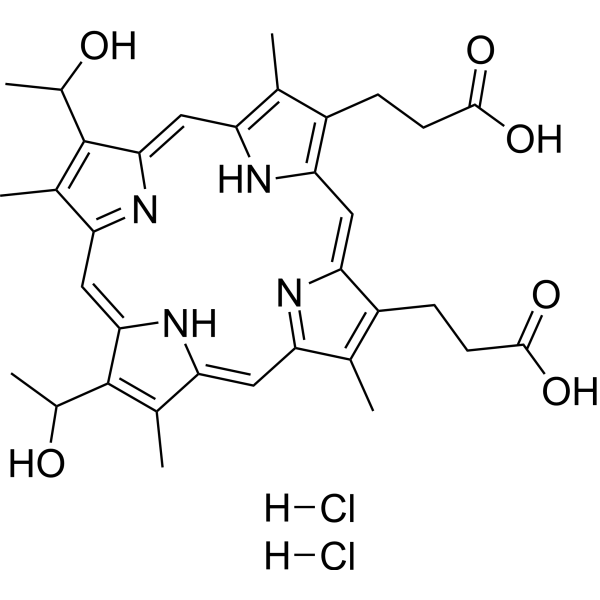
    Hematoporphyrin dihydrochloride
    Maximum Cited Publications
    15 Publications Verification

    Hematoporphyrin IX dihydrochloride

    Apoptosis Endogenous Metabolite Cancer
    Hematoporphyrin dihydrochloride (Hematoporphyrin IX dihydrochloride), a photosensitizer, is a substrate for affinity chromatography of heme-binding proteins. Hematoporphyrin dihydrochloride can induce apoptosis in U87 glioma cells and decrease tumor growth in vivo when exposed to red light .
    Hematoporphyrin dihydrochloride
  • HY-W011927

    Bisphenol S; Bis(4-hydroxyphenyl) sulfone

    Estrogen Receptor/ERR Histone Methyltransferase Thyroid Hormone Receptor PI3K Akt mTOR Androgen Receptor Drug Derivative Cardiovascular Disease Neurological Disease Metabolic Disease Inflammation/Immunology Cancer
    4,4'-Sulfonyldiphenol (Bisphenol S; Bis(4-hydroxyphenyl) sulfone), a substitute for Bisphenol A (HY-18260), is widely used in industrial and consumer products. 4,4'-Sulfonyldiphenol is an oally ative estrogen receptor (ER) agonist and can competitively bind to thyroid hormone receptors (TR) with IC50 values for TRα and TRβ are 2650 μM and 2294 μM respectively, thereby affecting breast development and reducing the expression of androgen receptor (AR) in fetal testes. 4,4'-Sulfonyldiphenol promotes the progression of glioblastoma by upregulating the EZH2 mediated PI3K/AKT/mTOR pathway. Under chronic exposure, 4,4'-Sulfonyldiphenol can cause significant lipid deposition and dyslipidemia in the mouse liver by upregulating JunB and Atf3, and has a role in causing obesity at low doses. 4,4'-Sulfonyldiphenol induces intestinal inflammation by altering the intestinal microbiome. 4,4'-Sulfonyldiphenol accelerates the progression of atherosclerosis in zebrafish embryo larvae .
    4,4'-Sulfonyldiphenol
  • HY-W017894

    Biochemical Assay Reagents Others
    TPO-L is a photoinitiator for the 3D printing of resin that promotes two-photon induced polymerization. The two-photon absorption cross-section spectrum of Lucirin TPO-L shows a maximum of 1.2 GM at 610 nm. Despite its small two-photon absorption cross-section, Lucirin TPO-L exhibits high polymerization quantum yields .
    TPO-L
  • HY-W027544

    7-Methoxycoumarin-4-acetic acid

    Fluorescent Dye Others
    MCA (7-Methoxycoumarin-4-acetic acid) is a Coumarin (HY-N0709) derivative. MCA quantitates platelet-activating factor (PAF) by high-performance liquid chromatography with fluorescent detection. MCA can modify FRET peptide substrates for analyzing protease activities .
    MCA
  • HY-N2436

    Tartaric acid

    Biochemical Assay Reagents Others
    2,3-Dihydroxysuccinic acid (Tartaric acid) is an organic acid containing two hydroxyl groups and two carboxyl groups. 2,3-Dihydroxysuccinic acid exists in various stereoisomers and is widely used in food, pharmaceutical, chemical, and other fields .
    2,3-Dihydroxysuccinic acid
  • HY-148139

    Biochemical Assay Reagents Others
    Cross-linked dextran G 75 is a Gel-filtration media. Cross-linked dextran G 75 also is a dextran-based matrix and used for Gel-filtration chromatography (Particle size range: 40-120 μm; Sphere protein separation range: 3K-80K Da; Polysaccharide separation range: 1K-50K Da) .
    Cross-linked dextran G 75
  • HY-W017446

    Tetraphthalaldehydic acid

    Biochemical Assay Reagents Others
    4-Formylbenzoic acid is an intermediate in the synthesis of terepthalic acid. 4-Formylbenzoic acid can react with barium carbonate to yield two-dimensional barium(II) coordination polymer. 4-Formylbenzoic acid can also be used in the synthesis of acid functionalized mesoporous silica catalyst via the condensation .
    4-Formylbenzoic acid
  • HY-W134328

    Dextran blue (MW 2000000)

    Biochemical Assay Reagents Others
    Blue dextran (Dextran blue) (MW 2000000) is a high-molecular-weight long-chain polymer of D-glucose. Blue dextran (MW 2000000) serves as an important model macromolecular drug and molecular weight estimation marker, and can be used as a standard for gel permeation chromatography. The release of Blue dextran (MW 2000000) from alginate microspheres is regulated by preparation conditions; its release rate in a pH 6.8 environment is significantly faster than that in pH 1.2, and it exhibits release characteristics close to zero-order kinetics under this condition .
    Blue dextran (MW 2000000)
  • HY-B2243A

    Sodium phosphate monobasic for HPLC; Monosodium dihydrogen orthophosphate for HPLC; Monosodium phosphate for HPLC

    Environmental Pollutants Biochemical Assay Reagents Others
    Anhydrous sodium dihydrogen phosphate, for HPLC is widely used in molecular biology, biochemistry and chromatography .
    Anhydrous sodium dihydrogen phosphate, for HPLC
  • HY-B0754

    Hematoporphyrin IX

    Apoptosis Endogenous Metabolite Cancer
    Hematoporphyrin (Hematoporphyrin IX), a photosensitizer, is a substrate for affinity chromatography of heme-binding proteins. Hematoporphyrin can induce apoptosis in U87 glioma cells and decrease tumor growth in vivo when exposed to red light .
    Hematoporphyrin
  • HY-W110542H

    PEGDA (MW 10000)

    Biochemical Assay Reagents Others
    Poly(ethylene glycol) diacrylate (PEGDA) (MW 10000) is a versatile polymer material that is widely used as a building material for hydrogel scaffolds, especially in the fields of tissue engineering and regenerative medicine. Poly(ethylene glycol) diacrylate (MW 10000) can be used to create a three-dimensional (3D) breast cancer cell culture model .
    Poly(ethylene glycol) diacrylate (MW 10000)
  • HY-148140
    Cross-linked dextran G 25
    1 Publications Verification

    Biochemical Assay Reagents Others
    Cross-linked dextran G 25 is a dextran chromatography medium. Cross-linked dextran G 25 separates from 1 to 5 kD (spherical proteins) and can be used for the separation of peptides as well as for the desalting and buffer replacement of large molecule proteins .
    Cross-linked dextran G 25
  • HY-NP175

    Biochemical Assay Reagents Integrin Discoidin Domain Receptor Others
    Collagen (bovine skin) is a three-dimensional cell culture matrix and morphoregulator extracted from bovine skin, which binds to integrins (such as α1β1, α2β1, α11β1) and discoidin domain receptors (DDR1 and DDR2). Collagen (bovine skin) can be reconstituted into a three-dimensional fibrous network to mimic the in vivo tissue environment. It can not only be modified through cross-linking or concentration adjustment, but also interact with fibronectin to enhance matrix-associated cellular activities. Collagen (bovine skin) mediates the proliferation, aggregation, durotactic migration and differentiation of fibroblasts, regulates the synthesis, remodeling and contraction of extracellular matrix, and modulates the expression, activation of MMP as well as cell apoptosis, etc. Collagen (bovine skin) can be used in studies related to the mechanisms of cancer occurrence and development .
    Collagen (bovine skin)
  • HY-123798

    Biochemical Assay Reagents Others
    N,O-Bis(trimethylsilyl)trifluoroacetamide with trimethylchlorosilane is a powerful silylating reagent and can be utilized in chromatography research .
    N,O-Bis(trimethylsilyl)trifluoroacetamide with trimethylchlorosilane
  • HY-W073501A

    2-Pentenedioic acid

    Drug Derivative Others
    Glutaconic acid is an organic compound with two carboxylic acid groups .
    Glutaconic acid
  • HY-138560
    Cross-linked dextran G 50
    2 Publications Verification

    Biochemical Assay Reagents Others
    Cross-linked dextran G 50 is a gel filtration medium. Cross-linked dextran G 50 can be used in gel permeation chromatography for fractionation of the glycopeptide mixture (Sphere protein separation range: 1.5K-30K Da; Polysaccharide separation range: 500-10K Da) .
    Cross-linked dextran G 50
  • HY-P10387
    RSM3
    1 Publications Verification

    METTL3 Apoptosis MDM-2/p53 NF-κB Caspase Cancer
    RSM3 is a METTL3-METTL14 complex inhibitor with a Kd of 3.10 μM for the METTL3-METTL14 complex. RSM3 reduces the m 6A modification level of SLC31A1 and the global RNA methylation level. RSM3 upregulates programmed cell death-related genes, enhances cell apoptosis, inhibits pro-cancer signals and suppresses tumor growth. RSM3 is applicable to the research of preeclampsia and cancer .
    RSM3
  • HY-N12931F

    Fluorescent Dye Others Cancer
    Maackia amurensis Lectin (MAA/MAL II)-Biotinylated is a plant lectin modified by biotin. Maackia amurensis Lectin (MAA/MAL II)-Biotinylated has the activity to recognize specific sugar structures, specifically the alpha-2, 3-linked sialic acid (HY-I0400). Maackia amurensis Lectin (MAA/MAL II)-Biotinylated has a very high affinity with avidin or streptavidin and this interaction can be used to fix it to solid surfaces or bind it to other molecules. Maackia amurensis Lectin (MAA/MAL II)-Biotinylated can be used to isolate and purify proteins or other molecules with specific sugar chain structures in affinity chromatography as well as for disease marker discovery and cancer research .
    Maackia amurensis Lectin (MAA/MAL II)-Biotinylated
  • HY-W094471

    Biochemical Assay Reagents Others
    Lithium acetate dihydrate is a compound with a one-dimensional structure that has various applications in industries such as pharmaceuticals, ceramics, and research laboratories. Lithium acetate dihydrate is often used as a source of lithium ions in chemical reactions and as a precursor in the synthesis of other lithium compounds .
    Lithium acetate dihydrate
  • HY-45609

    Drug Derivative Metabolic Disease
    L-Cysteine S-sulfate sodium hydrate is an S-sulfated derivative of L-cysteine (HY-Y0337). L-Cysteine S-sulfate sodium hydrate is the substrate for cystine lyase, it can be used in mass spectrometry and chromatography analyses .
    L-Cysteine S-sulfate sodium hydrate
  • HY-W011927S
    4,4'-Sulfonyldiphenol-d8
    1 Publications Verification

    Bisphenol S (4,4'-Sulfonyldiphenol)-d8

    Isotope-Labeled Compounds Estrogen Receptor/ERR Histone Methyltransferase Thyroid Hormone Receptor PI3K Akt mTOR Androgen Receptor Cardiovascular Disease Metabolic Disease Inflammation/Immunology Endocrinology Cancer
    4,4'-Sulfonyldiphenol-d8 (Bisphenol S (4,4'-Sulfonyldiphenol)-d8) is the deuterium labeled 4,4'-Sulfonyldiphenol (HY-W011927).4,4'-Sulfonyldiphenol (Bisphenol S; Bis(4-hydroxyphenyl) sulfone), a substitute for Bisphenol A (HY-18260), is widely used in industrial and consumer products. 4,4'-Sulfonyldiphenol is an estrogen receptor (ER) agonist and can competitively bind to thyroid hormone receptors (TR) with IC50 values for TRα and TRβ are 2650 μM and 2294 μM respectively, thereby affecting breast development and reducing the expression of androgen receptor (AR) in fetal testes. 4,4'-Sulfonyldiphenol promotes the progression of glioblastoma by upregulating the EZH2 mediated PI3K/AKT/mTOR pathway. Under chronic exposure, 4,4'-Sulfonyldiphenol can cause significant lipid deposition and dyslipidemia in the mouse liver by upregulating JunB and Atf3, and has a role in causing obesity at low doses. 4,4'-Sulfonyldiphenol induces intestinal inflammation by altering the intestinal microbiome. 4,4'-Sulfonyldiphenol accelerates the progression of atherosclerosis in zebrafish embryo larvae.
    4,4'-Sulfonyldiphenol-d8
  • HY-Y0332C

    Sodium phosphate dihydrate,≥99.0%

    Environmental Pollutants Biochemical Assay Reagents Others
    Sodium dihydrogen phosphate dihydrate,≥99.0% (Sodium phosphate dihydrate,≥99.0%) is used as a buffer capacity reagent in molecular biology, biochemistry, and chromatography. Sodium dihydrogen phosphate dihydrate,≥99.0% is also used as a laxative and pH buffer when combined with other sodium phosphates and also used as fuel and detergent additives .
    Sodium dihydrogen phosphate dihydrate,≥99.0%
  • HY-156045C

    Biochemical Assay Reagents Others
    Cross-linked dextran G 200 is a hydrophilic gel based on molecular size exclusion and targeted macromolecular separation. Cross-linked dextran G 200 works through the gel permeation mechanism, and the cross-linked structure forms a three-dimensional network with a specific pore size, achieving separation based on the molecular hydrodynamic volume. Cross-linked dextran G 200 can be used to adjust the osmotic solute distribution coefficient and the ability to maintain osmotic equilibrium, such as in gel filtration chromatography for purification and analysis of biomacromolecules such as proteins and nucleic acids . Cross-linked dextran G 200 can also be used as a gel filtration filler (particle size range: 40-120 μm; globular protein separation range: 5-600 kDa) .
    Cross-linked dextran G 200
  • HY-P2632

    RADA16

    Biochemical Assay Reagents Neurological Disease
    RAD16-I (RADA16) is a non-directed self-assembling peptide hydrogel. Under physiological conditions, RAD16-I spontaneously forms a three-dimensional nanofiber network that mimics the extracellular matrix, and possesses excellent properties such as high water content, biocompatibility and degradability. RAD16-I serves as an ideal scaffold for three-dimensional cell culture. RAD16-I not only maintains cell viability and induces self-organization, but also supports cell adhesion, proliferation, differentiation and insulin secretion, effectively stabilizes islet clusters and promotes directed differentiation of the cardiac lineage. RAD16-I can construct a cell-friendly nano-microenvironment for research related to diseases such as myocardial infarction and diabetes .
    RAD16-I
  • HY-N7861

    Methyl trans-9-Octadecenoate; (E)-Methyl octadec-9-enoate

    Biochemical Assay Reagents Others
    Methyl elaidate is a compound belonging to the class of fatty acid esters. It is derived from elaidic acid, a monounsaturated omega-9 fatty acid found in certain vegetable oils and animal fats. Methyl elaidate is commonly used as a reference compound for the analysis of fatty acids and their derivatives by gas chromatography.
    Methyl elaidate
  • HY-126316
    Zapalog
    1 Publications Verification

    FKBP Others
    Zapalog is a photocleavable small-molecule heterodimerizer that can be used to repeatedly initiate, and instantaneously terminate, a physical interaction between two target proteins. Zapalog dimerizes any two proteins tagged with the FKBP and DHFR domains until exposure to light causes its photolysis .
    Zapalog
  • HY-W103305

    Dibenzocyclobutadiene

    Biochemical Assay Reagents Others
    Biphenylene (Dibenzocyclobutadiene) is a two-dimensional allotrope of carbon. Biphenylene is a promising material with potential applications in many important fields, such as chemical catalysis .
    Biphenylene
  • HY-156045B

    Biochemical Assay Reagents Others
    Cross-linked dextran G 150 is a hydrophilic gel based on molecular size exclusion and targeted for the separation of macromolecules. Cross-linked dextran G 150 functions through the gel permeation mechanism, where the cross-linked structure forms a three-dimensional network with specific pore diameters, achieving separation based on the molecular volumetric flow. Cross-linked dextran G 150 can be used to regulate the distribution coefficient of permeating solutes and maintain the permeation balance, such as in gel filtration chromatography for the purification and analysis of biological macromolecules like proteins and nucleic acids. Cross-linked dextran G 150 can also be used as a gel filtration filler (particle size range: 40-120 μm; spherical protein separation range: 5-300 kDa) .
    Cross-linked dextran G 150
  • HY-W800793

    1,2-dipalmitoyl-sn-glycero-3-phosphoethanolamine-N-(succinyl)

    Liposome Cancer
    16:0 Succinyl PE is a carboxylic acid-functionalized lipid with a two carbon linker to a phosphoethanolamine bound to two palmitic acid tails.
    16:0 Succinyl PE
  • HY-113084

    Drug Derivative Metabolic Disease
    L-Cysteine S-sulfate is an S-sulfated derivative of L-cysteine (HY-Y0337). L-Cysteine S-sulfate is the substrate for cystine lyase, it can be used in mass spectrometry and chromatography analyses .
    L-Cysteine S-sulfate
  • HY-A0135

    Potassium Channel Neurological Disease
    Enflurane, a volatile anaesthetic, is a potent inhibitor of high conductance Ca 2+-activated K+ channels of Chara australis. Enflurane is an internal standard in monitoring halogenated volatile anaesthetics by headspace gas chromatography-mass spectrometry .
    Enflurane
  • HY-W012166

    NHS-Bromoacetate

    Biochemical Assay Reagents Infection
    N-Succinimidyl bromoacetate (NHS-Bromoacetate) is a heterobifunctional crosslinking reagent, mainly used to modify the ɛ-amino group of lysine side chains. By covalently linking its bromoacetyl moiety to the ɛ-amino group of lysine in peptidomimetics, N-Succinimidyl bromoacetate enables their conjugation with thiol-modified nanoparticles via thioether bonds. N-Succinimidyl bromoacetate also performs bromoacetylation modification on carrier proteins, which then forms stable thioether bonds with the thiol groups of cysteine in peptides, thus efficiently preparing soluble peptide-protein conjugates with high substitution ratios. N-Succinimidyl bromoacetate can be used to prepare activated Sepharose derivatives for affinity chromatography, protein affinity labeling reagents, and peptide-protein immunogen conjugates with non-immunogenic linkages. N-Succinimidyl bromoacetate is applicable to studies related to HIV-1 infection and glioblastoma multiforme .
    N-Succinimidyl bromoacetate
  • HY-W096989

    Sodium 1-heptanesulfonate monohydrate

    Biochemical Assay Reagents Others
    Sodium 1-heptanesulfonate monohydrate, for Ion-Pair Chromatography (Sodium 1-heptanesulfonate monohydrate) is an ion pair reagent for HPLC that can be used to analyze peptides and proteins..
    Sodium 1-heptanesulfonate monohydrate, for Ion-Pair Chromatography
  • HY-P10387A
    RSM3 TFA
    1 Publications Verification

    METTL3 Apoptosis Cancer
    RSM3 TFA is a METTL3-METTL14 complex inhibitor with a Kd of 3.10 μM for the METTL3-METTL14 complex. RSM3 TFA reduces the m 6A modification level of SLC31A1 and the global RNA methylation level. RSM3 TFA upregulates programmed cell death-related genes, enhances cell apoptosis, inhibits pro-cancer signals and suppresses tumor growth. RSM3 TFA is applicable to the research of preeclampsia and cancer .
    RSM3 TFA
  • HY-147251

    Drug Derivative Others
    SRI 6409-94 is an orally active Ro 13-6298 analogue that is teratogenic. SRI 6409-94 serves as a molecular tool to study the effect of the three-dimensional configuration of retinol on teratogenic activity .
    SRI 6409-94
  • HY-Y0332G

    Potassium phosphate monobasic, for molecular biology

    Biochemical Assay Reagents Others
    Potassium dihydrogen phosphate (Potassium phosphate monobasic), for molecular biology, ≥ 99% is used as a buffer capacity reagent in molecular biology, biochemistry, and chromatography. For the preparation of biological buffers. It is also used to purify antibodies, and in combination with other sodium phosphates .
    Potassium dihydrogen phosphate, for molecular biology
  • HY-116245

    Biochemical Assay Reagents Others
    Octanophenone is a substance used as a test compound in liquid chromatography research to study related properties such as particle diffusion within the column. A series of experiments showed that the Titan-C18 column in which it is located has some special property differences compared to other columns.
    Octanophenone
  • HY-W011927R

    Bisphenol S (Standard); Bis(4-hydroxyphenyl) sulfone (Standard)

    Reference Standards Estrogen Receptor/ERR Histone Methyltransferase Thyroid Hormone Receptor PI3K Akt mTOR Androgen Receptor Drug Derivative Cardiovascular Disease Metabolic Disease Inflammation/Immunology Endocrinology Cancer
    4,4'-Sulfonyldiphenol (Bisphenol S; Bis(4-hydroxyphenyl) sulfone) (Standard) is the analytical standard of 4,4'-Sulfonyldiphenol (HY-W011927). This product is intended for research and analytical applications. 4,4'-Sulfonyldiphenol, a substitute for Bisphenol A (HY-18260), is widely used in industrial and consumer products. 4,4'-Sulfonyldiphenol is an estrogen receptor (ER) agonist and can competitively bind to thyroid hormone receptors (TR) with IC50 values for TRα and TRβ are 2650 μM and 2294 μM respectively, thereby affecting breast development and reducing the expression of androgen receptor (AR) in fetal testes. 4,4'-Sulfonyldiphenol promotes the progression of glioblastoma by upregulating the EZH2 mediated PI3K/AKT/mTOR pathway. Under chronic exposure, 4,4'-Sulfonyldiphenol can cause significant lipid deposition and dyslipidemia in the mouse liver by upregulating JunB and Atf3, and has a role in causing obesity at low doses. 4,4'-Sulfonyldiphenol induces intestinal inflammation by altering the intestinal microbiome. 4,4'-Sulfonyldiphenol accelerates the progression of atherosclerosis in zebrafish embryo larvae.
    4,4'-Sulfonyldiphenol (Standard)
  • HY-NP144

    Biochemical Assay Reagents Neurological Disease
    Nerve Growth Factor 7S, murine submaxillary gland is an α2β2γ2 complex in which the β-NGF dimer (the active neurotrophin) is associated with two α-NGF and two γ-NGF subunits .
    Nerve Growth Factor 7S,murine submaxillary gland
  • HY-128699R

    Dethiobiotin (Standard)

    Endogenous Metabolite Reference Standards Endocrinology
    D-Desthiobiotin (Standard) is the analytical standard of D-Desthiobiotin. This product is intended for research and analytical applications. D-Desthiobiotin is a biotin derivative. D-Desthiobiotin increases testosterone. D-Desthiobiotin is used in affinity chromatography and protein chromatography, also can be used for protein and cell labeling, detection and isolation .
    D-Desthiobiotin (Standard)
  • HY-121735

    Biochemical Assay Reagents Others
    2α-Mannobiose is a disaccharide composed of two mannose molecules linked by a 1-2 glycosidic bond. 2α-Mannobiose can be used for affinity purification of mannose-binding proteins by column chromatography .
    2α-Mannobiose
  • HY-115773

    NMTPRO; N-Nitroso-2-methylthiazolidine 4-carboxylic acid; N-nitrosomethylthioproline

    Endogenous Metabolite Metabolic Disease
    NMTCA (NMTPRO) is a sulfur-containing N-nitrosamino acid. NMTCA can be used as an indicator of endogenous nitrosation by gas chromatography-thermalenergyanalysis .
    NMTCA
  • HY-P2996B

    Others Others
    Nitrate Reductase (NAD[P]H), Pichia pastoris (recombinant) is a simplified version of nitrate reductase S-NaR1 expressed and purified by Pichia pastoris. Nitrate Reductase (NAD[P]H), Pichia Pastoris (recombinant) contains sites binding molybdenum-molybdenopyridine (Mo-MPT) and nitrate reduction active sites and only contains two domains instead of the five domains of the complete NaR. This simplified form of nitrate reductase was expressed in high density in P. pastoris and purified to homogeneity in one step by fixed metal affinity chromatography (IMAC). Nitrate Reductase (NAD[P]H), Pichia Pastoris (recombinant) can be used in the development of biosensors and environmental monitoring .
    Nitrate Reductase (NAD[P]H), Pichia Pastoris (recombinant)
  • HY-W686763

    2,4,6-Triacetylphloroglucinol

    Drug Intermediate Infection
    Triacetylphloroglucinol (2,4,6-Triacetylphloroglucinol) is a C3-symmetric three-dimensional bridged ligand. It has been used in the synthesis of various compounds including trinuclear vanadium Schiff base complexes, copper complexes and anthelmintics.
    Triacetylphloroglucinol
  • HY-B0570A

    Biochemical Assay Reagents Others
    Decamethonium bromide(Reagent for Ion-Pair Chromatography,99%) is a biochemical reagent that can be used as a biological material or organic compound for life science related research.
    Decamethonium Bromide(Reagent for Ion-Pair Chromatography,99%)
  • HY-W097777

    4,4'-Dimethoxybenzoin; 4,4′-DMB

    Fluorescent Dye Others
    Anisoin (4,4'-Dimethoxybenzoin) is a pre-chromatographic fluorogenic labelling reagent for (liquid chromatography) analysis of guanidino compounds (Ex/Em = 325/435 nm) .
    Anisoin
  • HY-W009545

    1-Decanesulfonic acid sodium

    Biochemical Assay Reagents Others
    Sodium decane-1-sulfonate is an anionic surfactant used for the analysis of organic small molecule compounds by HPLC and ion-pair liquid chromatography.
    Sodium decane-1-sulfonate
  • HY-W017224

    Sodium 1-butanesulfonate

    Biochemical Assay Reagents Others
    Sodium butane-1-sulfonate (Sodium 1-butanesulfonate) is an ion-pair reagent. Sodium butane-1-sulfonate is often used in combination with tetramethylammonium hydroxide, malonic acid, etc. in reversed-phase ion-pair chromatography, and can improve the separation efficiency of species of elements such as arsenic and selenium .
    Sodium butane-1-sulfonate
  • HY-155983

    Nucleoside Antimetabolite/Analog Cancer
    E07 aptamer is an aptamer that targets human EGFR. E07 aptamer can compete with EGF for binding, binds to a novel epitope on EGFR. E07 aptamer binds to cells expressing EGFR, blocks receptor autophosphorylation, and prevents proliferation of tumor cells in three-dimensional matrices. E07 aptamer can be used for tomor disease research .
    E07 aptamer

Inquiry Online

Your information is safe with us. * Required Fields.

Salutation


Country or Region *

Applicant Name *


Organization Name *

Department *


Email Address *


Product Name *

Cat. No.


Requested quantity *

Phone Number *


Remarks

Inquiry Online

Inquiry Information

Product Name:
Cat. No.:
Quantity:
MCE Japan Authorized Agent:

