48 Results for "

XO

" in MedChemExpress (MCE) Product Catalog:
Products (48)

48 Results for "XO" in MCE Product Catalog:

12
12 Publications Verification
Cat. No.: HY-14268
CAS No.: 144060-53-7
Purity:  99.94%
Synonyms: TEI 6720; TMX 67
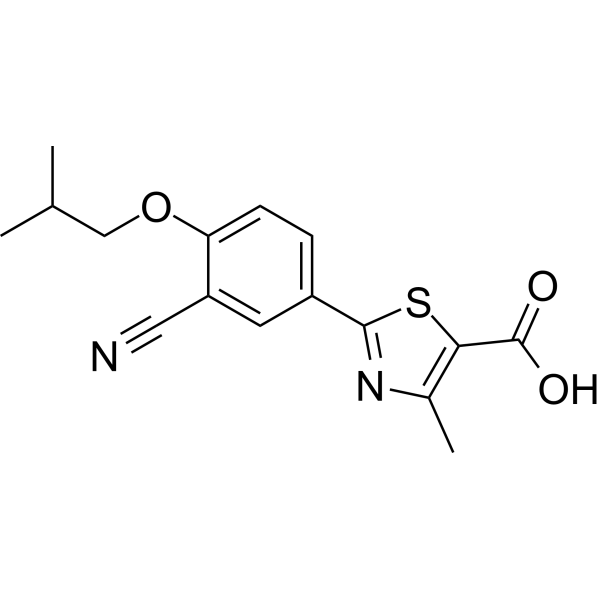
Febuxostat (TEI 6720) is a potent, selective and non-purine xanthine oxidase (XO) inhibitor with a Ki value of 0.6 nM. Febuxostat has the potential for the research of hyperuricemia and gout .
loading...
    loading...
6
6 Cited Publications
Cat. No.: HY-P2755
CAS No.: 9002-17-9
Synonyms: XO; XOD
Xanthine oxidase, Microorganism (XO) is a xanthine oxidoreductase enzyme that generates reactive oxygen species (ROS), catalyzes the oxidation of hypoxanthine to xanthine, and further catalyzes the oxidation of xanthine to uric acid .
loading...
    loading...
4
4 Cited Publications
Cat. No.: HY-12136
CAS No.: 569-77-7
Purity:  96.87%
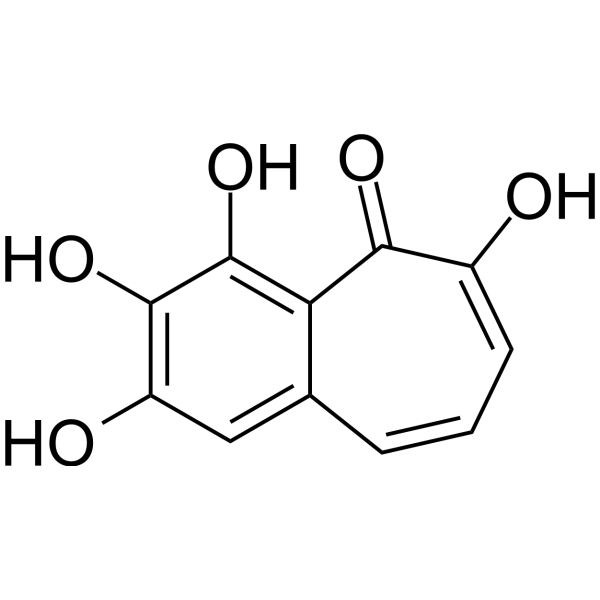
Purpurogallin is a naturally phenol extracted from the plants of Quercus spp, has potent xanthine oxidase (XO) inhibitory activity with an IC50 of 0.2 μM. Purpurogallin has antioxidant and anti-inflammatory effects .
loading...
    loading...
3
3 Cited Publications
Cat. No.: HY-D0837
CAS No.: 288-32-4
Synonyms: Glyoxaline; 1,3-Diaza-2,4-cyclopentadiene
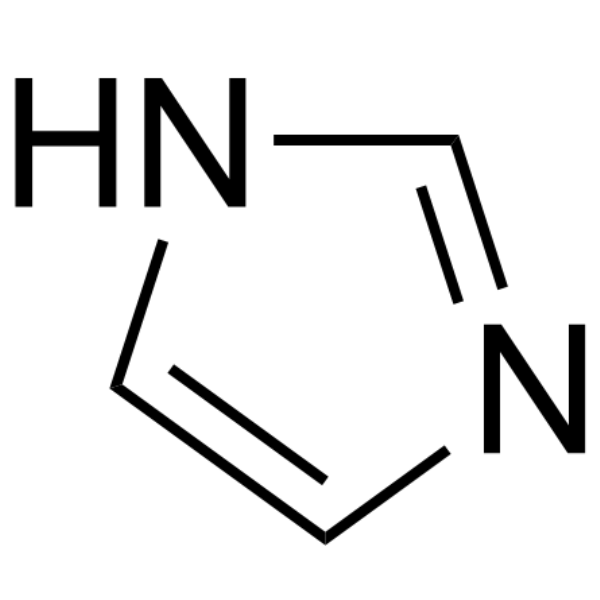
Imidazole (Glyoxaline; 1,3-Diaza-2,4-cyclopentadiene) is a heterocyclic aromatic compound. Imidazole bearing molecules have been used as corrosion, acetylcholinesterase (AChEI) and xanthine oxidase (XO) inhibitors, performing biological activities such as antifungal, antituberculosis, anti-inflammatory, antioxidant, and analgesic, amongst many others. Imidazole inhibits the enzymatic conversion of the endoperoxides (PGG2 and PGH2) to thromboxane A2 by platelet microsomes. Imidazole derivatives exhibits inhibition on SARS-CoV-2 3CL Pro enzyme, which is promising for research in the field of Alzheimer’s disease, gout, COVID-19 and thrombo-embolic disease .
loading...
    loading...
1
1 Cited Publications
Cat. No.: HY-Y1147
CAS No.: 141-05-9
Synonyms: Maleic acid diethyl ester
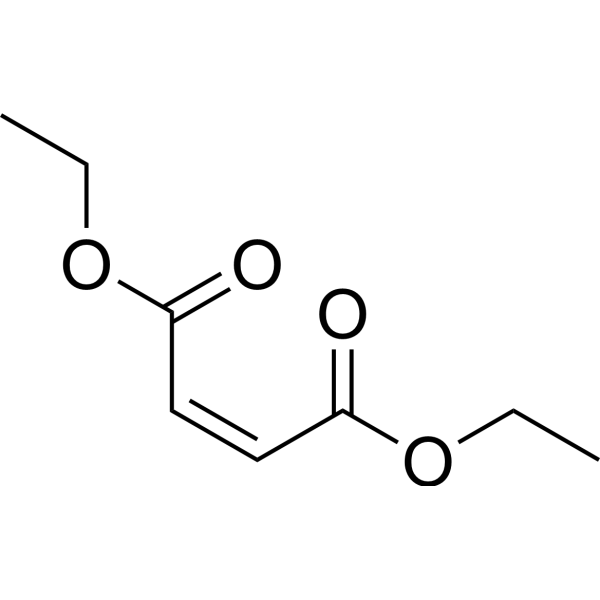
Diethyl maleate (DEM) is an orally available, effective glutathione (GSH) depletor that crosses the blood-brain barrier. Diethyl maleate covalently binds irreversibly to GSH via glutathione S-transferase with an in vitro IC50 of 0.1-0.5 mM. Diethyl maleate selectively depletes GSH in liver, lung, and brain tissues, exacerbating oxidative stress and enhancing hyperbaric oxygen toxicity. Diethyl maleate promotes precursor amino acid uptake and in turn promotes GSH synthesis by upregulating the activity of the cystine-glutamate transporter XO -. Diethyl maleate can be used to study redox homeostasis and GSH protection mechanisms in oxidative stress-related diseases such as hyperbaric oxygen injury and metabolic diseases[1][2][3].
loading...
    loading...
1
1 Cited Publications
Cat. No.: HY-N3220
CAS No.: 15648-86-9
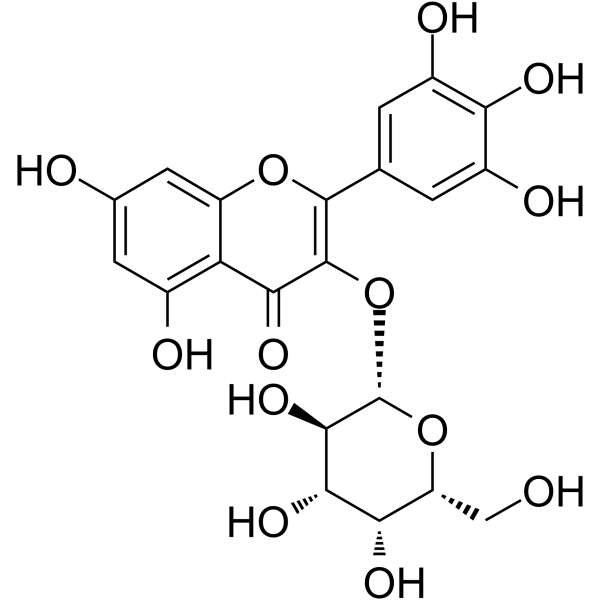
Myricetin 3-O-galactoside inhibits xanthine oxidase (XO) activity, lipid peroxidation and scavenges the free radical. Myricetin 3-O-galactoside inhibits lipid peroxidation with an IC50 of 160 μg/mL. Antioxidant activity .
loading...
    loading...
1
1 Cited Publications
Cat. No.: HY-N0814A
CAS No.: 123408-98-0
Synonyms: Inositol hexaphosphate dodecasodium hydrate; SNF472 dodecasodium hydrate
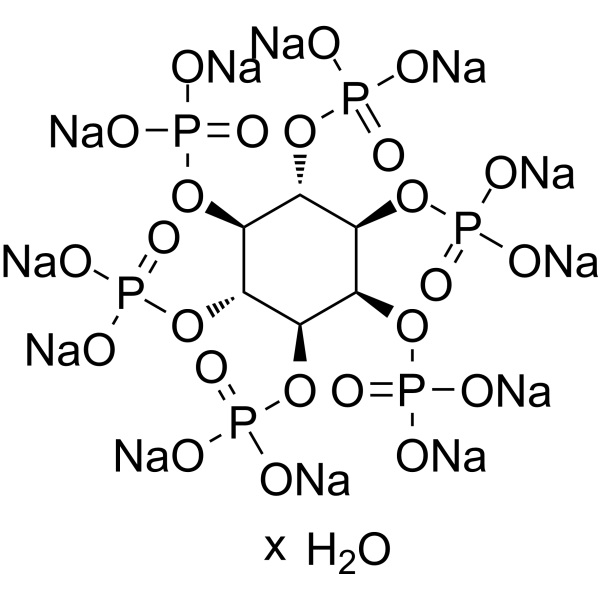
Phytic acid (Inositol hexaphosphate) dodecasodium hydrate is a phosphorus storage compound of seeds and cereal grains. Phytic acid dodecasodium hydrate is known as a food inhibitor, which has a strong ability to chelate multivalent metal ions, specially zinc, calcium, iron and as with protein residue. Phytic acid dodecasodium hydrate inhibits the enzymatic superoxide source xanthine oxidase (XO), and has antioxidative, neuroprotective, anti-inflammatory effects .
loading...
    loading...
1
1 Cited Publications
Cat. No.: HY-W110883
CAS No.: 3618-43-7
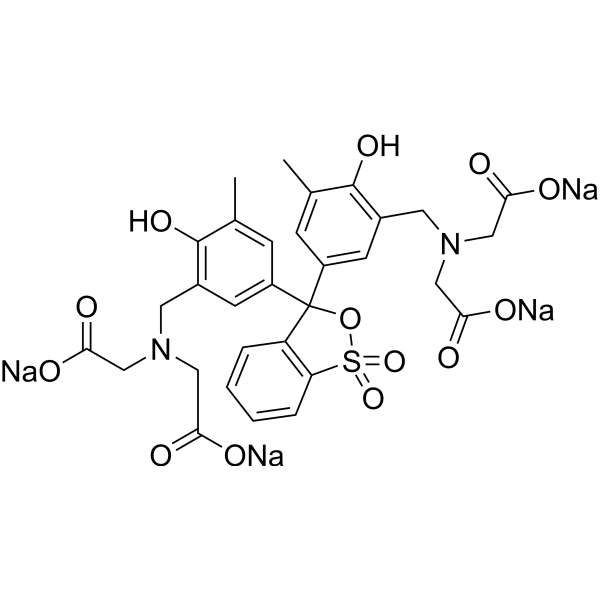
Xylenol orange tetrasodium salt, IND is commonly used as a colorimetric indicator for metal titration and possesses Zn 2+ chelating activity. Xylenol orange tetrasodium salt, IND binds Zn 2+ under physiological pH, and its Zn-XO complex allows visual differentiation between tartrate and malate ions. Xylenol orange tetrasodium salt, IND undergoes decolorization upon oxidation by hydrogen peroxide, undergoes a Co (II)-catalyzed pseudo-second-order reaction in a strong alkaline environment, and regulates the ferrous ion oxidation process mediated by peroxy radicals. Xylenol orange tetrasodium salt, IND forms colored ternary complexes with various anions, cations and iron-alanine, which is suitable for spectrophotometric quantification and can also be used for alanine irradiation dose detection. Xylenol orange tetrasodium salt, IND is applicable to EDTA metal titration analysis under acidic conditions .
loading...
    loading...
1
1 Cited Publications
Cat. No.: HY-N1547
CAS No.: 3443-28-5
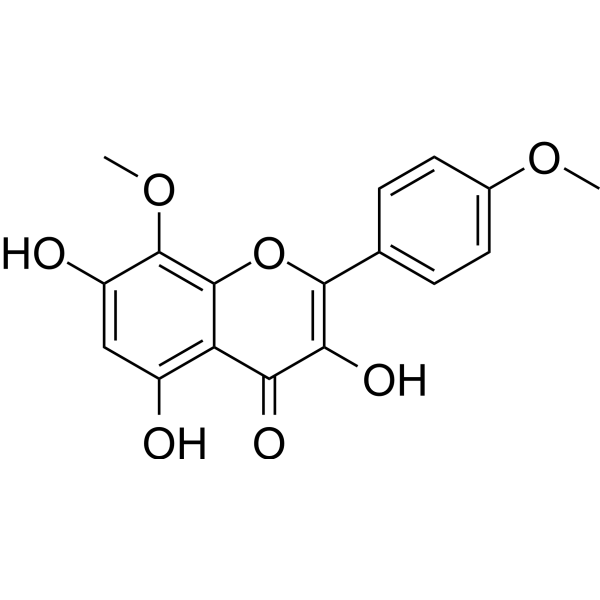
Prudomestin, isolated from the heartwood of Prunus domestica, shows potent xanthine oxidase (XO) inhibitory activity (IC50≈6 µM) .
loading...
    loading...
Cat. No.: HY-122609
CAS No.: 2088112-70-1
Purity:  99.38%
Synonyms: PF-6808472
Target:  

CDK

Research Areas:  

Cancer

XO44 (PF-6808472) is a broad-spectrum covalent kinase probe. XO44 can bind in CDK2 and CDK1. XO44 also labels CDK4 proteins in cells .
loading...
    loading...
Cat. No.: HY-W047187
CAS No.: 117405-51-3
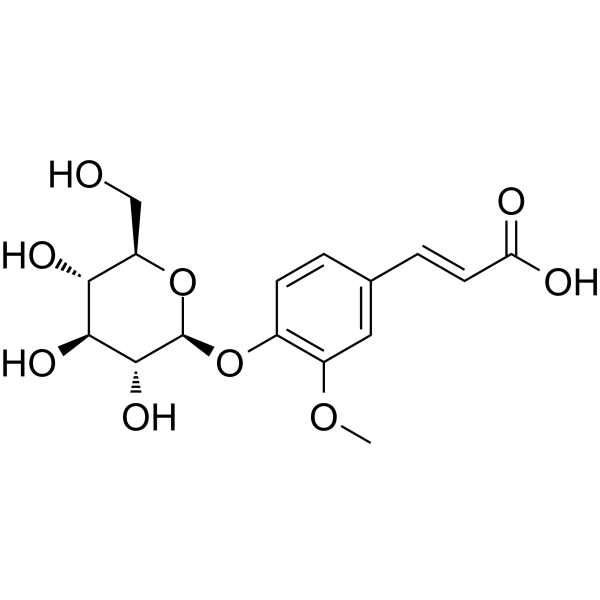
Lavandoside is an ABTS ?+ free radical scavenger and a moderate inhibitor of xanthine oxidase (XO), with an IC50 of 71.6 μM for inhibiting NO production in LPS-induced macrophages. Lavandoside exerts its antioxidant and potential anti-inflammatory effects by directly scavenging free radicals and inhibiting XO activity, a mechanism related to the hydroxyl groups in its molecular structure. Lavandoside can be isolated from lavender and can be used in the development of natural antioxidants and in research on oxidative stress-related diseases and inflammation-related diseases .
loading...
    loading...
Cat. No.: HY-14268R
CAS No.: 144060-53-7
Synonyms: TEI 6720 (Standard); TMX 67 (Standard)
Febuxostat (Standard) is the analytical standard of Febuxostat. This product is intended for research and analytical applications. Febuxostat (TEI 6720) is a potent, selective and non-purine xanthine oxidase (XO) inhibitor with a Ki value of 0.6 nM. Febuxostat has the potential for the research of hyperuricemia and gout .
loading...
    loading...
Cat. No.: HY-146273
CAS No.: 2411698-59-2
Target:  

Xanthine Oxidase

Research Areas:  

Metabolic Disease

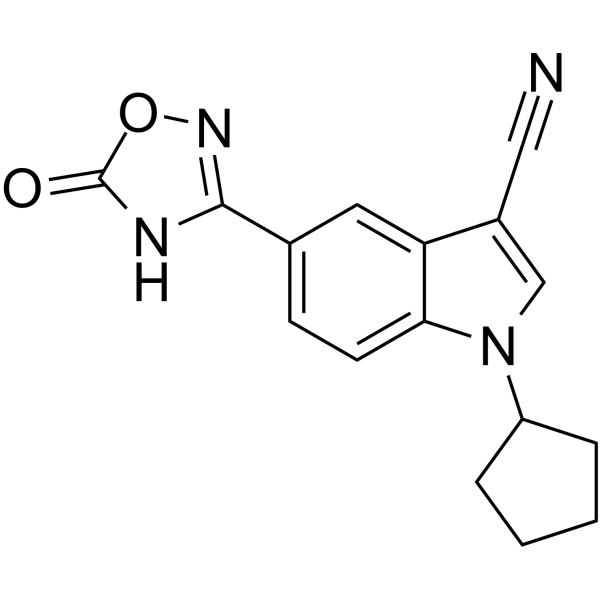
Xanthine oxidase-IN-7 (compound1h) is a potent andorally active XO (xanthine oxidase) inhibitor with an IC50 of 0.36 µM. Xanthine oxidase-IN-7 effectively reduces serum uric acid levels. Xanthine oxidase-IN-7 has the potential for the research of hyperuricemia and gout .
loading...
    loading...
Cat. No.: HY-N9783
CAS No.: 73086-04-1
Synonyms: B2-3′-G; Epicatechin-(4β,8)-epicatechin gallate
Procyanidin B2 3′-O-gallate (B2-3′-G), isolated from Rhodiola crenulata extracts, is a potent xanthine oxidase (XO) inhibitor (IC50 = 24.24 μM, Ki = 6.16 μM). Procyanidin B2 3′-O-gallate has antioxidant activity and reduces the formation of UV-induced α-tocopheroxyl. Procyanidin B2 3′-O-gallate can be used for hyperuricemia and gout research .
loading...
    loading...
Cat. No.: HY-151173
CAS No.: 2831329-35-0
XO/COX/LOX-IN-1 is a XO/COX/LOX inhibitor with an IC50 of 3.2 μM against rat XO, 10.83 μM against 5-LOX, 12.67 μM against COX-1, and 8.31 μM against COX-2. XO/COX/LOX-IN-1 binds to the active sites of XO, 5-LOX, COX-1 and COX-2, thereby blocking enzyme activities associated with uric acid, leukotriene, prostaglandin synthesis and inflammatory pathways. XO/COX/LOX-IN-1 can be used in the research of hyperuricemia and inflammation .
loading...
    loading...
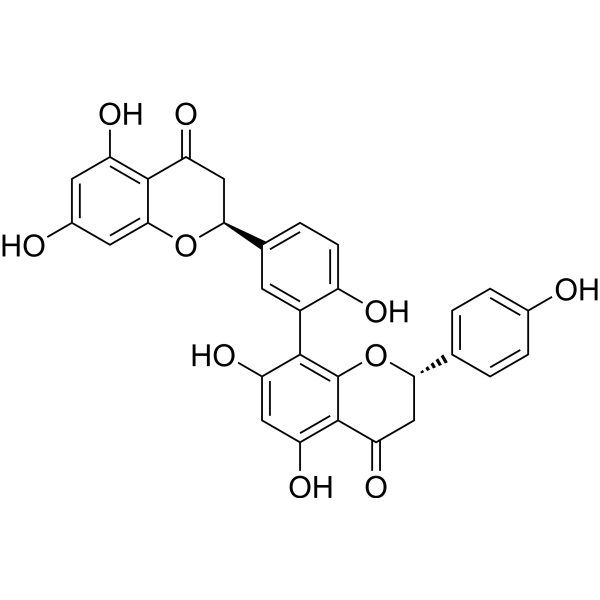
Cat. No.: HY-N1162
CAS No.: 48236-96-0
Synonyms: Amentoflavanone
Tetrahydroamentoflavone (Amentoflavanone) is a potent xanthine oxidase (XO) inhibitor. Tetrahydroamentoflavone has inhibitory activity for XO with IC50 and Ki values of 92 nM and 0.982 μM, respectively. Tetrahydroamentoflavone can be used for the research of inflammatory disorders and gout .
loading...
    loading...
Cat. No.: HY-D0837R
CAS No.: 288-32-4
Synonyms: Glyoxaline (Standard); 1,3-Diaza-2,4-cyclopentadiene (Standard)
Imidazole (Standard) is the analytical standard of Imidazole. This product is intended for research and analytical applications. Imidazole (Glyoxaline; 1,3-Diaza-2,4-cyclopentadiene) is a heterocyclic aromatic compound. Imidazole bearing molecules have been used as corrosion, acetylcholinesterase (AChEI) and xanthine oxidase (XO) inhibitors, performing biological activities such as antifungal, antituberculosis, anti-inflammatory, antioxidant, and analgesic, amongst many others. Imidazole inhibits the enzymatic conversion of the endoperoxides (PGG2 and PGH2) to thromboxane A2 by platelet microsomes. Imidazole derivatives exhibits inhibition on SARS-CoV-2 3CLPro enzyme, which is promising for research in the field of Alzheimer’s disease, gout, COVID-19 and thrombo-embolic disease .
loading...
    loading...
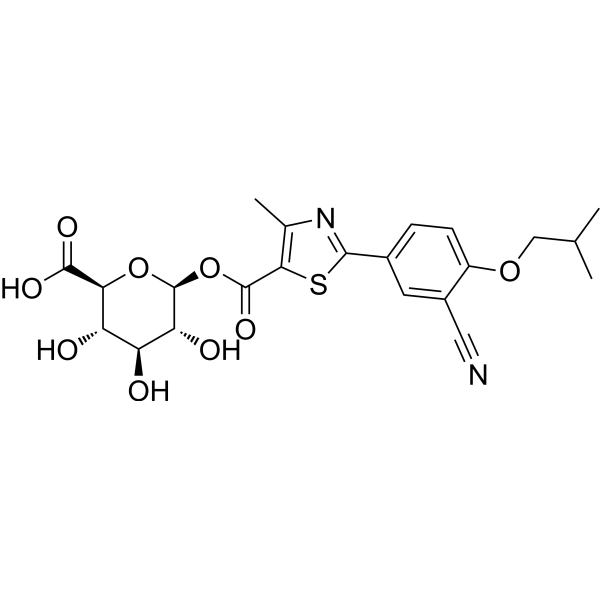
Cat. No.: HY-129889
CAS No.: 1351692-92-6
Synonyms: FebuXOstat acyl-β-D-glucuronide
Research Areas:  

Metabolic Disease

Febuxostat acyl glucuronide (Febuxostat acyl-β-D-glucuronide) is a metabolite of Febuxostat (HY-14268). Febuxostat is a potent, selective and non-purine xanthine oxidase (XO) inhibitor .
loading...
    loading...
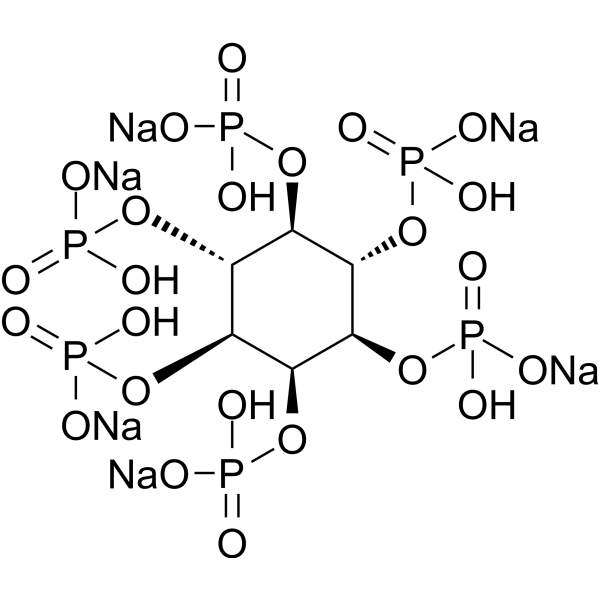
Cat. No.: HY-N0814B
CAS No.: 34367-89-0
Synonyms: Inositol hexaphosphate hexasodium; SNF472
Phytic acid (Inositol hexaphosphate) hexasodium is a phosphorus storage compound of seeds and cereal grains. Phytic acid hexasodium has a strong ability to chelate multivalent metal ions, specially zinc, calcium, iron and as with protein residue. Phytic acid hexasodium inhibits the enzymatic superoxide source xanthine oxidase (XO), and has antioxidative, neuroprotective, anti-inflammatory effects.
loading...
    loading...
Cat. No.: HY-178342
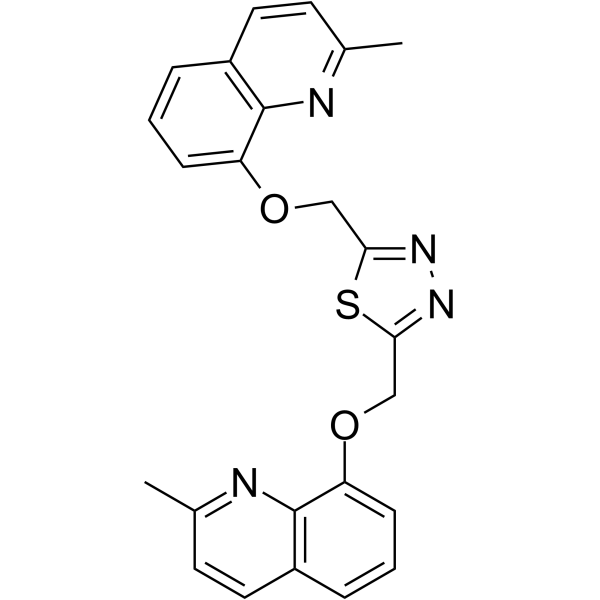
Xanthine oxidase-IN-18 is a potent orally activeXanthine oxidase (XO) inhibitor (IC50 = 0.263 μM). Xanthine oxidase-IN-18 exerts inhibition by directly and stably binding to the xanthine oxidase Mo-co active site. Xanthine oxidase-IN-18 exhibits reactive oxygen species (ROS) scavenging activity. Xanthine oxidase-IN-18 shows anti-hyperuricemia effects in a Potassium oxonate (HY-17511)-induced hyperuricemic rat model. Xanthine oxidase-IN-18 can be used for hyperuricemia, breast and lung cancer research .
loading...
    loading...

