
1. Search Result
Search Result
Results for "

blight

" in MedChemExpress (MCE) Product Catalog:

67

Inhibitors & Agonists

1

Peptides

13

Natural
Products

4

Isotope-Labeled Compounds

Cat. No. Product Name Target Research Areas Chemical Structure
  • HY-W004263

    Arachidyl alcohol

    Environmental Pollutants Fungal Infection
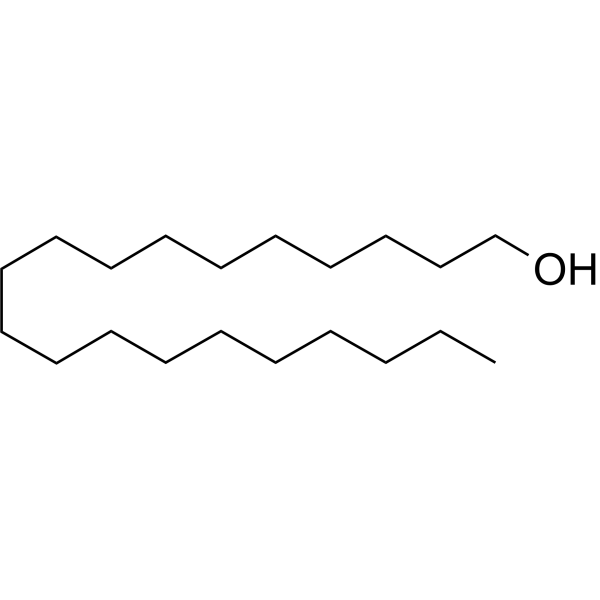
    1-Eicosanol (Arachidyl alcohol) is a long-chain fatty alcohol and volatile organic compound that can be isolated from the leaves of Leea indica and produced by Bacillus velezensis ZJ1. 1-Eicosanol inhibits mycelial growth of Alternaria solani and Botrytis cinerea. 1-Eicosanol is applicable to research related to tomato early blight and tomato gray mold .
    1-Eicosanol
  • HY-W009123

    cis-13-Docosenamide

    Endogenous Metabolite Bacterial Infection Neurological Disease
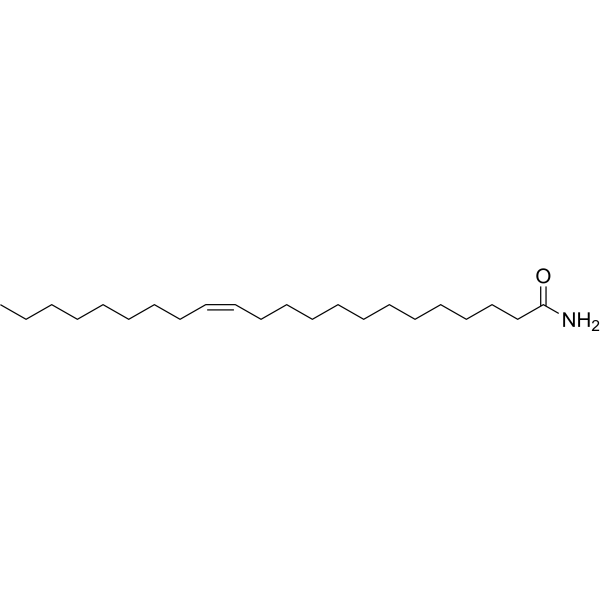
    Erucamide is an orally active, blood-brain barrier-permeable TMEM19 ligand and T3SS inhibitor. Erucamide exerts retinal neuroprotective effects in mouse models of retinal degeneration. Erucamide attenuates depression- and anxiety-like behaviors in mice.\n\nErucamide binds to the conserved hydrophobic pocket in HrcC, disrupts its outer membrane localization, and blocks T3SS-mediated effector protein secretion in Gram-negative pathogenic bacteria. Erucamide enhances the antimicrobial immunity of plants against pathogenic bacteria. Erucamide can be used in research related to retinitis pigmentosa, anxiety and depression, bacterial wilt, and bacterial blight .
    Erucamide
  • HY-112105

    BX-112

    Environmental Pollutants Biochemical Assay Reagents Others
    Prohexadione (BX-112) calcium is a plant growth regulator. Prohexadione inhibits gibberellin biosynthesis of plants .
    Prohexadione calcium
  • HY-W744966

    Environmental Pollutants Antibiotic Infection
    Mandipropamid displays outstanding activity against late blight diseases of potato and tomato, combined with excellent efficacy on downy mildew diseases of grape and cucumber .
    Mandipropamid
  • HY-W714076

    Fungal Infection Inflammation/Immunology
    Ametoctradin is a potent Qo site inhibitor of bc1 complex in mitochondrial respiration. Ametoctradin is a highly selective and effective Oomycete-specific fungicide that can be used against late blight and downy mildews .
    Ametoctradin
  • HY-B2008

    DPX-JE874

    Environmental Pollutants Fungal Infection
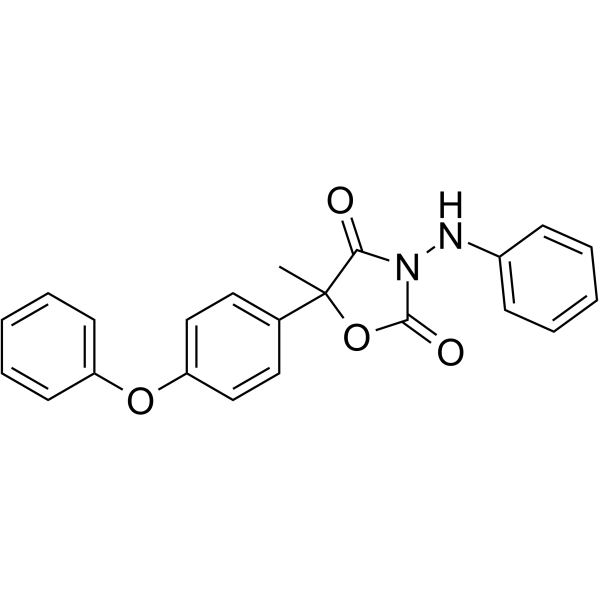
    Famoxadone is a fungicide active against various oomycetes. Famoxadone induces rapid lysis of zoospores of P. viticola and P. infestans, and inhibits sporangial differentiation, zoospore release, sporangial germination and mycelial growth. Famoxadone exerts a preventive control effect on plant diseases. Famoxadone can be used in research related to grape downy mildew, potato late blight, tomato late blight and plant oomycete diseases .
    Famoxadone
  • HY-111968

    Fungal Infection
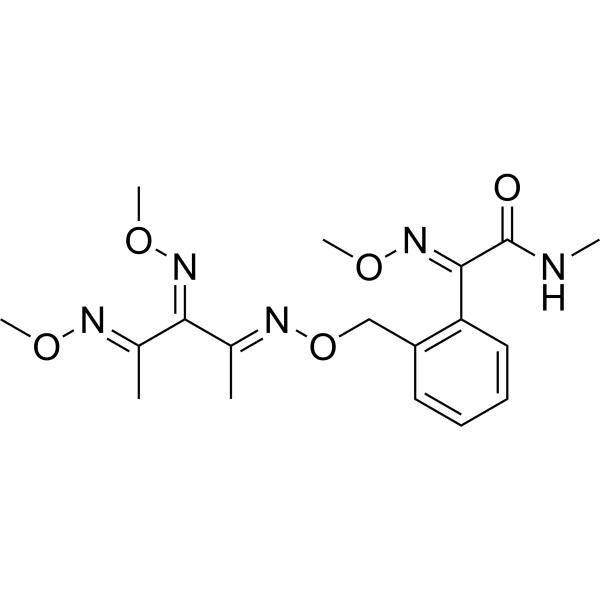
    Orysastrobin, a “quinone outside inhibitor” (QoI)-type fungicide, has excellent fungicidal efficacy against leaf and panicle blast and against sheath blight in rice .
    Orysastrobin
  • HY-139161

    Environmental Pollutants Fungal Infection
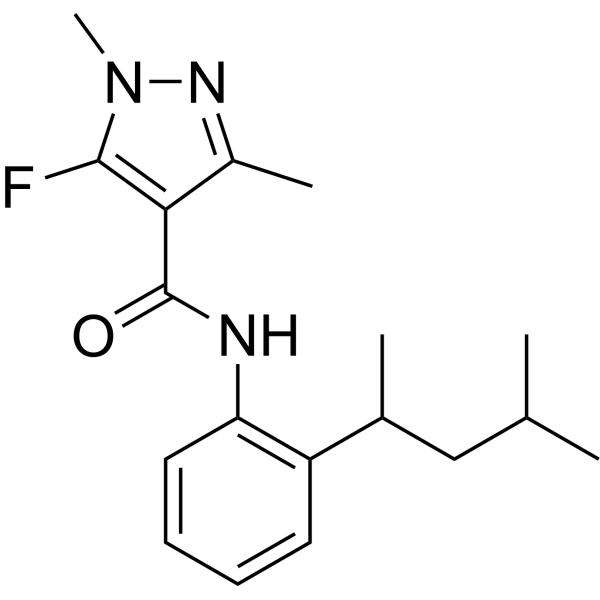
    Penflufen is a highly efficient, broad-spectrum succinate dehydrogenase inhibitor (SDHI). Penflufen can be used as a fungicide and has broad bioactivity against many fungal diseases, including potato black scurf, wheat sharp eyespot, rice sheath blight, and root rot in peanut and other similar fungal diseases .
    Penflufen
  • HY-N6243

    Fungal Cardiovascular Disease Others
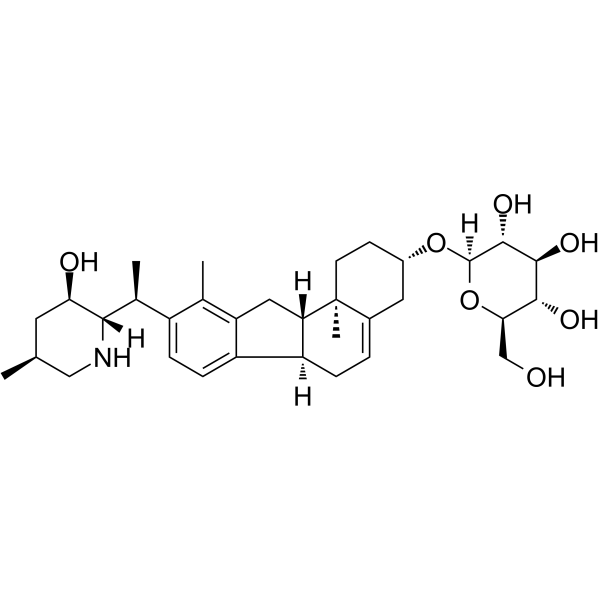
    Veratrosine is a Trihydroxynapthalene reductase (THR) inhibitor and fungal plant pathogen inhibitor with activity against Curvularia lunata THR. Veratrosine interacts with THR, an enzyme in the DHN melanin biosynthesis pathway of Curvularia lunata. Veratrosine can be used for the research of leaf blight of rice, brown spot of rice, and blast disease of foxtail millet .
    Veratrosine
  • HY-B2053

    Environmental Pollutants Bacterial Infection
    Tolclofos-methyl is a broad-spectrum aromatic hydrocarbon fungicide that is used as a see treatment for protection against soil-borne and seed borne fungal pathogens that caused seed decay and seedling blights.
    Tolclofos-methyl
  • HY-N14257

    Bacterial Antibiotic Acetyl-CoA Carboxylase Infection
    Andrimid is a peptide Antibiotic and acetyl-CoA carboxylase inhibitor. Andrimid is produced by symbiotic bacteria of the genus *Enterobacter* residing in the brown planthopper Nilaparvata lugens. Andrimid exhibits strong specific activity against Xanthomonas campestris pv. oryzae. Andrimid shows no or only weak activity against Gram-positive and Gram-negative bacteria, including most plant pathogenic bacteria. Andrimid can be used in studies related to bacterial infections and rice bacterial blight .
    Andrimid
  • HY-108988

    Antibiotic Bacterial Topoisomerase DNA/RNA Synthesis Infection
    Albicidin is a peptide antibiotic with phytotoxic activity. Albicidin potently inhibits bacterial and plant DNA gyrase at nanomolar concentrations, blocks DNA replication, and exhibits excellent antibacterial efficacy against multidrug-resistant bacteria. Albicidin possesses bactericidal activity against Gram-positive and Gram-negative microorganisms, and acts as a virulence factor for the systemic plant infection by Xanthomonas albilineans. Albicidin can be used in studies related to bacterial infections and sugarcane leaf blight .
    Albicidin
  • HY-17517

    Fungal Biochemical Assay Reagents Infection
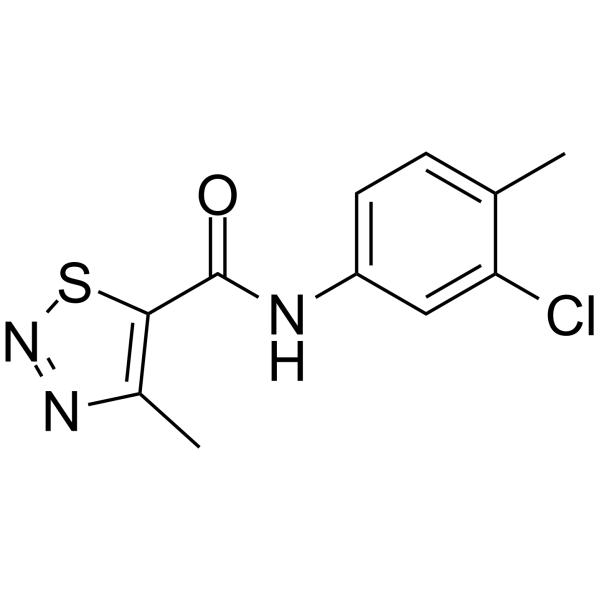
    Tiadinil is a systemic acquired resistance (SAR) inducer, plant elicitor and antifungal agent. Tiadinil promotes the production of herbivore-induced plant volatiles in Camellia sinensis (tea plant). Tiadinil inhibits mycelial growth, spore germination and germ tube elongation of Stagonosporopsis citrulli in vitro. Tiadinil can be used in studies related to vine blight .
    Tiadinil
  • HY-B2048S

    Isotope-Labeled Compounds Others
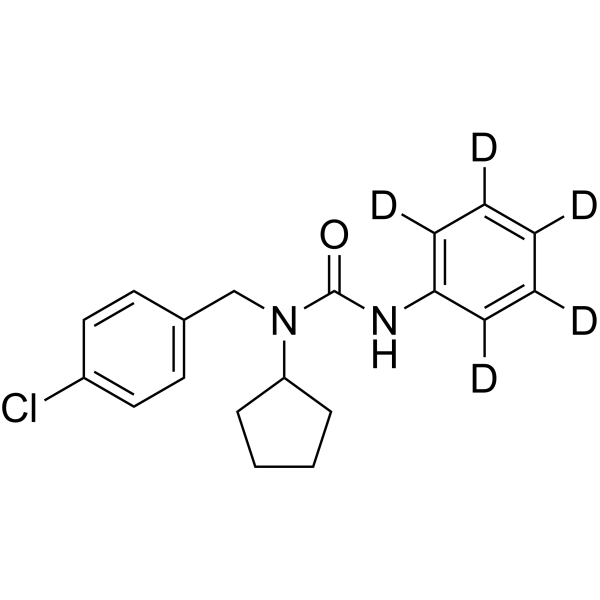
    Pencycuron-d5 is the deuterium labeled Pencycuron (HY-B2048). Pencycuron is a benzoylurea fungicide. Pencycuron kills fungi by inhibiting the synthesis of fungal cell walls.Pencycuron can be used in research on the control of fungal diseases on crops, such as sheath blight, powdery mildew and late blight .
    Pencycuron-d5
  • HY-W017611

    Environmental Pollutants Reactive Oxygen Species (ROS) Fungal DNA/RNA Synthesis Infection
    4-Propylphenol is a plant-derived phenolic compound. 4-Propylphenol causes an increase in ROS within the Fusarium graminearum cells, leading to damage to the DNA and cell membranes of the mycelia, effectively inhibiting the growth of the mycelia. 4-Propylphenol also has a growth inhibitory effect on walnut pathogenic fungi (C. gloeosporioides, C. siamense, A. alternata), with its EC50 ranging from 29.11 to 31.89 mg/L, and it also inhibits spore germination, with EC50 being 55.04-71.85 mg/L. 4-Propylphenol can be used in the research of fungal diseases in walnuts and wheat Fusarium head blight .
    4-Propylphenol
  • HY-155644

    Bacterial Reactive Oxygen Species (ROS) Infection
    ROS inducer 1 (compound I29) is a fungicide, with EC50 against Xanthomonas axonopodis pv. citri (Xac), Xanthomonas oryzae pv. oryzae (Xoo), and Pseudomonas syringae pv. actinidiae (Psa) of 5.73, 6.62 and 9.05 μg/mL. ROS inducer 1 can effectively induce the production of ROS in Xanthomonas cells and inhibit rice bacterial blight. ROS inducer 1 has the potential to study bacterial infection in crops .
    ROS inducer 1
  • HY-N12498

    Antibiotic Bacterial Infection
    Aureonuclemycin can be isolated from Staphylococcus aureus to obtain its biosynthetic gene cluster. Aureonuclemycin exists in two forms: Type A and Type B. Aureonuclemycin A is a nucleoside antibiotic that is structurally similar to herbicides and contains adenine. Aureonuclemycin B contains 5′-deoxyadenosine and exhibits antibacterial activity. Aureonuclemycin can be used in the research of bacterial leaf blight in rice, citrus canker, and bacterial leaf spot in rice. .
    Aureonuclemycin
  • HY-178162

    Fungal Cytochrome P450 Infection
    CYP51-IN-27 is a sterol 14α-demethylase CYP51 inhibitor with an IC50 of 0.3434 μg/mL. CYP51-IN-27 exhibits antifungal activity and inhibits the production of fungal ergosterol. CYP51-IN-27 can be used for the research of infection, such as rice sheath blight .
    CYP51-IN-27
  • HY-N14216

    Antibiotic Fungal Infection
    Polyoxin L is a nucleoside antifungal antibiotic and has significant effects on rice sheath blight .
    Polyoxin L
  • HY-N15107

    Antibiotic Fungal Infection
    Polyoxin M is a nucleoside antifungal antibiotic and has significant effects on rice sheath blight .
    Polyoxin M
  • HY-N14212

    Antibiotic Fungal Infection
    Polyoxin G is a nucleoside antifungal antibiotic and has significant effects on rice sheath blight .
    Polyoxin G
  • HY-N14208

    Antibiotic Fungal Infection
    Polyoxin E is a nucleoside antifungal antibiotic and has significant effects on rice sheath blight .
    Polyoxin E
  • HY-N14213

    Antibiotic Fungal Infection
    Polyoxin H is a nucleoside antifungal antibiotic and has significant effects on rice sheath blight .
    Polyoxin H
  • HY-N14211

    Antibiotic Fungal Infection
    Polyoxin F is a nucleoside antifungal antibiotic and has significant effects on rice sheath blight .
    Polyoxin F
  • HY-155096

    Bacterial Infection
    Antibacterial agent 149 (Compd 3j) is a laccase inhibitor with high fungicidal activity and can be used in the study of rice sheath blight .
    Antibacterial agent 149
  • HY-178717

    Fungal Infection
    WML-01 is a fungicide with EC50s of 0.079, 0.72 and 2.02 μg/mL against F. graminearum, F. fujikuroi and S. sclerotiorum. WML-01 disrupts the cell membrane of F. graminearum and induces deposition of lipid droplets. WML-01 inhibits Deoxynivalenol (DON) (HY-N6684) biosynthesis with no cross-resistance and strongly suppresses ribosomal subunit assembly, impairing protein synthesis. WML-01 effectively controls the fusarium head blight (FHB) epidemic .
    WML-01
  • HY-P10785

    Bacterial Antibiotic Infection
    Iturin A-2 is a cyclic lipopeptide discovered in B. subtilis and exhibits inhibitory activity against the plant pathogenic fungus P. expansum (MIC = 8 µg/disk). Iturin A-2 is cytotoxic to MCF-7 and BT474 breast cancer cells, as well as HeLa cervical cancer cells, with IC50 values of 66.81, 95.04, and 77.5 µg/mL, respectively. In greenhouse studies, Iturin A-2 at concentrations of 100 and 300 mg/kg Iturin A-2 reduces the lesion area of southern corn leaf blight caused by B. maydis, and in field studies, concentrations of 300 and 500 mg/kg Iturin A-2 reduce the incidence of the disease. Iturin A-2 (12.5 µg/mL) inhibits cell division, but not nuclear division, in isolated fertilized starfish eggs .
    Iturin A-2
  • HY-119540

    Fungal Infection
    Furametpyr is a fungicide used to control rice sheath blight. Furametpyr exhibits a wide variety of metabolites in rats, through recombinant human cytochrome P450 .
    Furametpyr
  • HY-W744966R

    Reference Standards Fungal Infection
    Mandipropamid (Standard) is the analytical standard of Mandipropamid. This product is intended for research and analytical applications. Mandipropamid displays outstanding activity against late blight diseases of potato and tomato, combined with excellent efficacy on downy mildew diseases of grape and cucumber .
    Mandipropamid (Standard)
  • HY-174125

    Bacterial Infection
    4-(Cyclohexyldisulfaneyl)pyridine is a Type III secretion system (T3SS) inhibitor that suppresses the promoter activity of T3SS-related genes (hrpA and hrpL) in Erwinia amylovora CFBP1430. 4-(Cyclohexyldisulfaneyl) pyridine can be utilized in study on fire blight disease .
    4-(Cyclohexyldisulfaneyl) pyridine
  • HY-163891

    Fungal Infection
    Antifungal agent 107 (compound b24) is an OSBP inhibitor with antifungal activity. Antifungal agent 107 can be used to control cucumber downy mildew and potato late blight in greenhouse .
    Antifungal agent 107
  • HY-W714076R

    Reference Standards Fungal Infection Inflammation/Immunology
    Ametoctradin (Standard) is the analytical standard of Ametoctradin. This product is intended for research and analytical applications. Ametoctradin is a potent Qo site inhibitor of bc1 complex in mitochondrial respiration. Ametoctradin is a highly selective and effective Oomycete-specific fungicide that can be used against late blight and downy mildews .
    Ametoctradin (Standard)
  • HY-139161R

    Fungal Reference Standards Infection
    Penflufen (Standard) is the analytical standard of Penflufen. This product is intended for research and analytical applications. Penflufen is a highly efficient, broad-spectrum succinate dehydrogenase inhibitor (SDHI). Penflufen can be used as a fungicide and has broad bioactivity against many fungal diseases, including potato black scurf, wheat sharp eyespot, rice sheath blight, and root rot in peanut and other similar fungal diseases .
    Penflufen (Standard)
  • HY-B2048

    Fungal Infection
    Pencycuron is a benzoylurea fungicide. Pencycuron kills fungi by inhibiting the synthesis of fungal cell walls.Pencycuron can be used in research on the control of fungal diseases on crops, such as sheath blight, powdery mildew and late blight .
    Pencycuron
  • HY-B2048R

    Reference Standards Fungal Infection
    Pencycuron (Standard) is the analytical standard of Pencycuron. This product is intended for research and analytical applications. Pencycuron is a benzoylurea fungicide. Pencycuron kills fungi by inhibiting the synthesis of fungal cell walls.Pencycuron can be used in research on the control of fungal diseases on crops, such as sheath blight, powdery mildew and late blight .
    Pencycuron (Standard)
  • HY-178212

    Bacterial Reactive Oxygen Species (ROS) Apoptosis Infection
    Antibacterial agent 292 is a 3-pyrazolylindole derivative. Antibacterial agent 292 is an anti-bacterial agent. Antibacterial agent 292 shows potent inhibitory activity against Xanthomonas oryzae pv oryzae (Xoo) and Xanthomonas axonopodis pv citri (Xac), with EC50 values of 2.54 and 3.49 μg/mL. Antibacterial agent 292 can suppress biofilm formation, bacterial motility, and extracellular polysaccharide production, induce morphological alterations and promote ROS accumulation, ultimately triggers bacterial apoptosis. Antibacterial agent 292 down-regulates the expression of genes associated with the type VI secretion system (T6SS). Antibacterial agent 292 can be used in rice bacterial blight and citrus canker .
    Antibacterial agent 292
  • HY-119657

    Bacterial Others
    Cellocidin is an agricultural antibiotic with preventive effects against rice bacterial leaf blight and is thought to work by inhibiting the α-ketoglutarate-succinate system in Xanthomonas sp.
    Cellocidin
  • HY-B2008R

    DPX-JE874 (Standard)

    Reference Standards Fungal Infection
    Famoxadone (Standard) is the analytical standard of Famoxadone. This product is intended for research and analytical applications. Famoxadone is a fungicide active against various oomycetes. Famoxadone induces rapid lysis of zoospores of P. viticola and P. infestans, and inhibits sporangial differentiation, zoospore release, sporangial germination and mycelial growth. Famoxadone exerts a preventive control effect on plant diseases. Famoxadone can be used in research related to grape downy mildew, potato late blight, tomato late blight and plant oomycete diseases .
    Famoxadone (Standard)
  • HY-N9720

    Antibiotic Bacterial Fungal Infection
    Herbarin is a quinone antibiotic. Herbarin complex has anti-Gram-positive bacteria, negative bacteria, Citrus Canker xanthomonas, potato early blight, Aspergillus Niger, Decaprous and other fungal activities .
    Herbarin
  • HY-173283

    Fungal Infection
    Antifungal agent 129 (Compound 4g) is an inhibitor targeting Rhizoctonia solani, with an EC50 value of 4.27 mg/L. It has a good control effect against rice sheath blight in in vitro and in vivo experiments. Preliminary exploration through scanning electron microscopy, molecular docking, enzyme activity determination, and cytotoxicity experiments has revealed that Antifungal agent 129 may exert its inhibitory activity by affecting the cell structure or physiological processes of Rhizoctonia solani. Antifungal agent 129 can be used in the research of plant diseases in the agricultural field, such as rice sheath blight, which are caused by Rhizoctonia solani .
    Antifungal agent 129
  • HY-111968R

    Fungal Reference Standards Infection
    Orysastrobin (Standard) is the analytical standard of Orysastrobin. This product is intended for research and analytical applications. Orysastrobin, a “quinone outside inhibitor” (QoI)-type fungicide, has excellent fungicidal efficacy against leaf and panicle blast and against sheath blight in rice .
    Orysastrobin (Standard)
  • HY-B0843S1

    Isotope-Labeled Compounds Fungal Infection
    Metalaxyl-d6 is the deuterium labeled Metalaxyl. Metalaxyl is a fungicide that inhibits protein synthesis in fungi. Metalaxyl inhibits the growth of potato blight (P. infestans) fungal isolates from Serbian potato fields (EC50s=0.3-3.9 μg/mL).
    Metalaxyl-d6
  • HY-B0843S

    Isotope-Labeled Compounds Fungal Infection
    Metalaxyl- 13C6 is the 13C-labeled Metalaxyl. Metalaxyl is a fungicide that inhibits protein synthesis in fungi. Metalaxyl inhibits the growth of potato blight (P. infestans) fungal isolates from Serbian potato fields (EC50s=0.3-3.9 μg/mL).
    Metalaxyl-13C6
  • HY-172363

    Succinate Dehydrogenase Fungal Infection
    Succinate dehydrogenase-IN-6 (Compound E23) is the inhibitor for succinate dehydrogenase that inhibits SDH in Rhizoctonia solani with an IC50 of 11.76 μM. Succinate dehydrogenase-IN-6 disrupts fungal cell membrane, exhibits board-spectrum antifungal activity that inhibits R. solani, V. dahliae, A. solani and C. gloeosporioides with EC50s of 0.41, 0.27, 1.15, 0.27 μg/mL, respectively. Succinate dehydrogenase-IN-6 exhibits no significant toxicity in rice and zebrafish (LC50 > 12.5 μg/mL) .
    Succinate dehydrogenase-IN-6
  • HY-130406

    Fungal Infection
    Benthiavalicarb isopropyl is a fungicide with specific activity against downy mildew and blight. Benthiavalicarb isopropyl is evaluated for use where necessary to control a serious threat to plant health that cannot be treated by other methods, including non-chemical methods. The use of Benthiavalicarb isopropyl can be considered representative of field applications in potatoes. Environmental and human exposures of Benthiavalicarb isopropyl are considered to be negligible .
    Benthiavalicarb isopropyl
  • HY-176746

    Fungal Infection
    CMLD009688 is a cationic amphiphilic antifungal agent. CMLD009688 selectively inhibits plant pathogenic fungi such as Fusarium graminearum. CMLD009688 interacts with biological membranes, perturbing vacuolar and mitochondrial membrane structures to induce fungal cell death. CMLD009688 is promising for research of plant fungal diseases (e.g., wheat head blight, gray mold) .
    CMLD009688
  • HY-112105R

    BX-112 (Standard)

    Biochemical Assay Reagents Reference Standards Others
    Prohexadione (calcium) (Standard) is the analytical standard of Prohexadione (calcium). This product is intended for research and analytical applications. Prohexadione (BX-112) calcium is a plant growth regulator. Prohexadione inhibits gibberellin biosynthesis of plants .
    Prohexadione calcium (Standard)
  • HY-112105A

    BX-112 free acid

    Phytohormone Others
    Prohexadione (BX-112 free acid) is a plant growth regulator. Prohexadione inhibits gibberellin biosynthesis of plants .
    Prohexadione
  • HY-B2011R

    Reference Standards Fungal Mitochondrial Metabolism Succinate Dehydrogenase Environmental Pollutants Infection
    Flutolanil (Standard) is the analytical standard of Flutolanil (HY-B2011). This product is intended for research and analytical applications. Flutolanil is a succinate dehydrogenase complex inhibitor and fungicide. Flutolanil blocks electron transfer between the redox center of succinate dehydrogenase and coenzyme Q, inhibits mycelial oxygen consumption, and suppresses mycelial growth. Flutolanil induces acute and sublethal toxicity in zebrafish at different life stages. Flutolanil can be used in studies on plant disease control .
    Flutolanil (Standard)
  • HY-162376

    Bacterial Infection
    T3SS-IN-4 (Compound Z-8) is a T3SS inhibitor that can inhibit the expression of Xanthomonas oryzae pv oryzae (Xoo) T3SS-related genes without affecting bacterial growth. T3SS-IN-4 can effectively reduce the hypersensitive response (HR) induced by Xoo in tobacco and lower the pathogenicity of Xoo in rice .
    T3SS-IN-4

Inquiry Online

Your information is safe with us. * Required Fields.

Salutation


Country or Region *

Applicant Name *


Organization Name *

Department *


Email Address *


Product Name *

Cat. No.


Requested quantity *

Phone Number *


Remarks

Inquiry Online

Inquiry Information

Product Name:
Cat. No.:
Quantity:
MCE Japan Authorized Agent:

