1. Search Result
Search Result
Results for "

brain ,systems

" in MedChemExpress (MCE) Product Catalog:

179

Inhibitors & Agonists

6

Screening Libraries

2

Fluorescent Dye

14

Peptides

7

MCE Kits

1

Inhibitory Antibodies

24

Natural
Products

31

Isotope-Labeled Compounds

Cat. No. Product Name Target Research Areas Chemical Structure
  • HY-17364
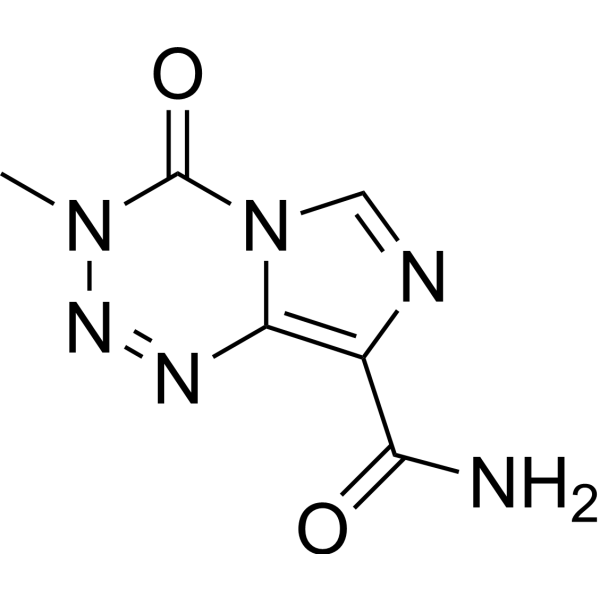
    Temozolomide
    Maximum Cited Publications
    189 Publications Verification

    NSC 362856; CCRG 81045; TMZ

    DNA Alkylator/Crosslinker Autophagy Apoptosis Cancer
    Temozolomide (NSC 362856) is an oral active DNA alkylating agent that crosses the blood-brain barrier. Temozolomide is also a proautophagic and proapoptotic agent. Temozolomide is effective against tumor cells that are characterized by low levels of O6-alkylguanine DNA alkyltransferase (OGAT) and a functional mismatch repair system. Temozolomide has antitumor and antiangiogenic effects .
    Temozolomide
  • HY-N0067
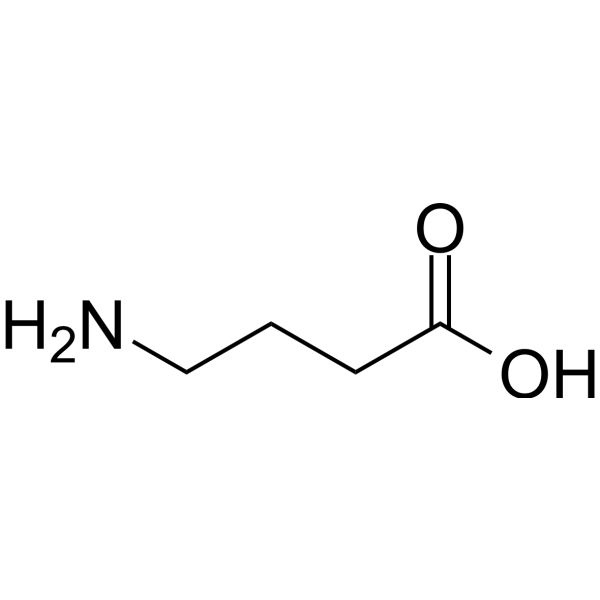
    γ-Aminobutyric acid
    5 Publications Verification

    4-Aminobutyric acid

    Environmental Pollutants Endogenous Metabolite GABA Receptor Neurological Disease Metabolic Disease
    γ-Aminobutyric acid (4-Aminobutyric acid) is a major inhibitory neurotransmitter in the adult mammalian brain, binding to the ionotropic GABA receptors (GABAA receptors) and metabotropic receptors (GABAB receptors. γ-Aminobutyric acid shows calming effect by blocking specific signals of central nervous system .
    γ-Aminobutyric acid
  • HY-B0315
    Vitamin B12
    3 Publications Verification

    Cyanocobalamin

    Environmental Pollutants Endogenous Metabolite Infection Neurological Disease Metabolic Disease Inflammation/Immunology Cancer
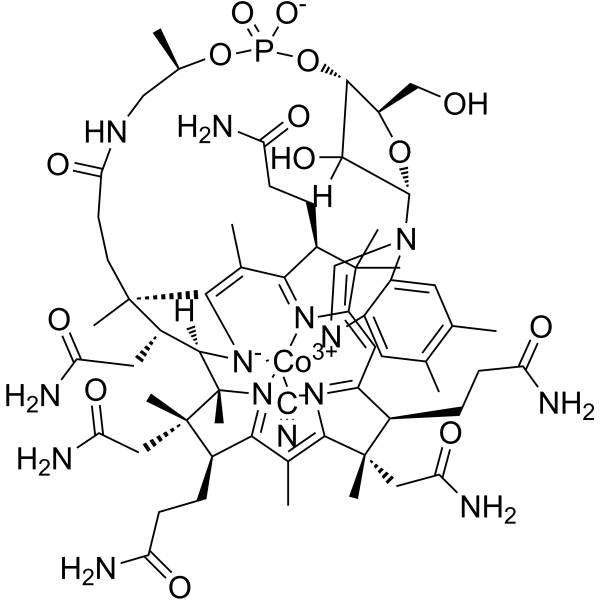
    Vitamin B12 is a vitamin that can pass through the blood-brain barrier. Vitamin B12 plays a key role in the normal functioning of the brain and nervous system, and for the formation of blood. Vitamin B12 is beneficial for many inflammatory diseases and also provides protection in oxidative-stress-associated pathologies .
    Vitamin B12
  • HY-N0229
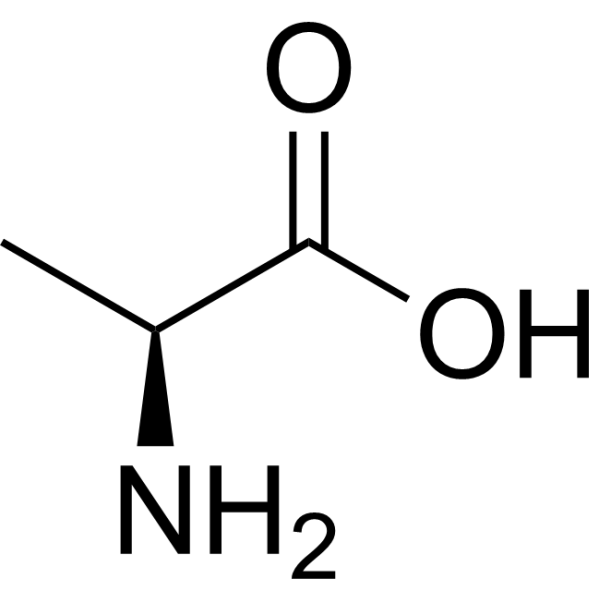
    L-Alanine
    4 Publications Verification

    L-2-Aminopropionic acid

    Endogenous Metabolite Neurological Disease Metabolic Disease
    L-Alanine is a non-essential amino acid, involved in sugar and acid metabolism, increases immunity, and provides energy for muscle tissue, brain, and central nervous system.
    L-Alanine
  • HY-D0186
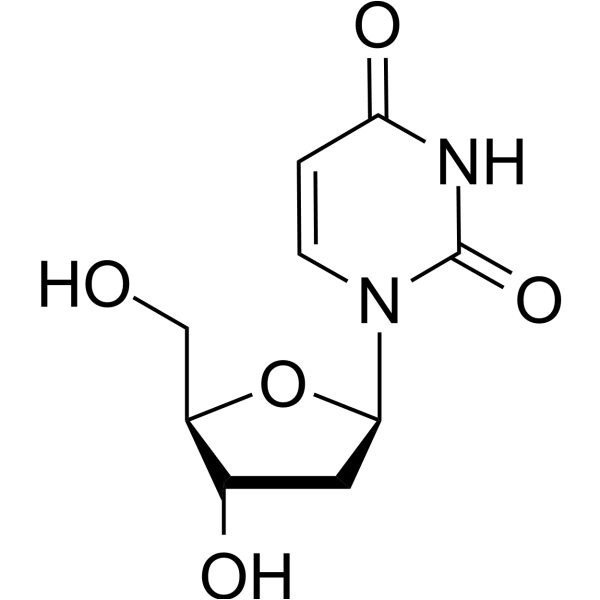
    2'-Deoxyuridine
    3 Publications Verification

    Endogenous Metabolite Thymidylate Synthase Infection
    2’-deoxyuridine is a brain-penetrant pyrimidines nucleotide that is associated with nervous system diseases. 2'-Deoxyuridine could increase chromosome breakage and results in a decreased thymidylate synthetase activity. 2'-Deoxyuridine is a precursor in the synthesis of Edoxudine (HY-B1011) and also an analogue of 5-ethynyl-2'-deoxyuridine, EdU (HY-118411). 2’-deoxyuridine reduces microglial activation and improve oxidative stress damage by modulating glycolytic metabolism on the Aβ25-35-induced brain injury, which is promising for research of Alzheimer’s disease (AD) .
    2'-Deoxyuridine
  • HY-P4073

    GRN1005; Paclitaxel trevatide

    Peptide-Drug Conjugates (PDCs) LDLR Cancer
    ANG1005 (Paclitaxel trevatide) is a brain-penetrating peptide-drug conjugate. ANG1005, a taxane derivative, consists of three paclitaxel (HY-B0015) molecules covalently linked to Angiopep-2, designed to cross the blood-brain and blood-cerebrospinal barriers and to penetrate malignant cells via low density lipoprotein receptor-related protein (LRP1) transport system .
    ANG1005
  • HY-111263
    NIAD-4
    1 Publications Verification

    Fluorescent Dye Amyloid-β Others
    NIAD-4 is a blood-brain barrier permeable fluorophore for optical imaging of amyloid-β () in the central nervous system (CNS) for Alzheimer’s disease (AD). NIAD-4 binds to the same Aβ site with the binding affinity (Ki) of 10 nM .
    NIAD-4
  • HY-P99797

    JR-141

    Transferrin Receptor Neurological Disease
    Pabinafusp alfa (JR-141) is a transferrin receptor-targeting antibody consisting of Iduronate 2-sulfatase (HY-P76399) and an anti-human transferrin receptor antibody. Pabinafusp alfa is blood-brain permeable and prevents heparan sulfate (HS) deposition in the central nervous system of mucopolysaccharidosis II (MPS II) mice. Pabinafusp alfa improves learning and prevents central nervous system neuronal damage in mice .
    Pabinafusp alfa
  • HY-B0315R

    Cyanocobalamin (Standard)

    Reference Standards Endogenous Metabolite Metabolic Disease Cancer
    Vitamin B12 (Standard) is the analytical standard of Vitamin B12. This product is intended for research and analytical applications. Vitamin B12 is a vitamin. Vitamin B12 plays a key role in the normal functioning of the brain and nervous system, and for the formation of blood .
    Vitamin B12 (Standard)
  • HY-B0206

    MK 462

    5-HT Receptor Neurological Disease
    Rizatriptan benzoate is the agonist for 5-HT1B and 5-HT1D. Rizatriptan benzoate has a peripheral vasoconstrictive effect, penetrates the intact blood-brain barrier, and inhibits pain neurotransmission in the central nervous system .
    Rizatriptan benzoate
  • HY-15722
    SB-222200
    5+ Cited Publications

    Neurokinin Receptor Neurological Disease Endocrinology
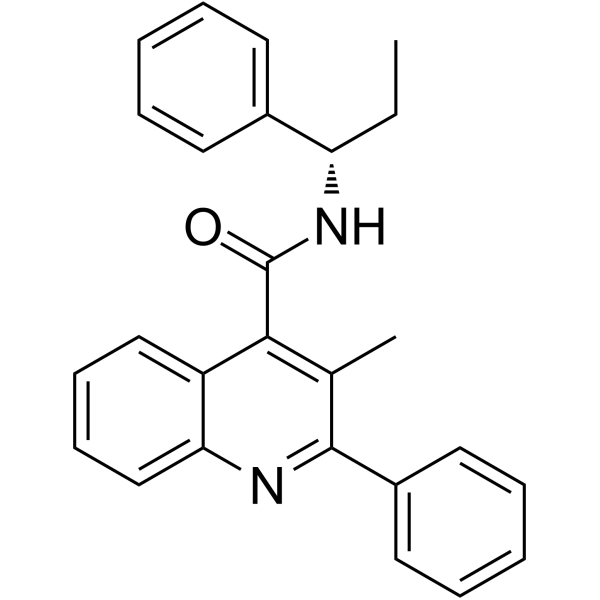
    SB-222200 is a potent, selective, orally active and blood-brain barrier (BBB) penetrant NK-3 receptor antagonist. SB-222200 is developed for central nervous system (CNS) disorders .
    SB-222200
  • HY-N0229S12
    L-Alanine-d3
    1 Publications Verification

    L-2-Aminopropionic acid-d3

    Endogenous Metabolite Neurological Disease Metabolic Disease
    L-Alanine-d3 is the deuterium labeled L-Alanine. L-Alanine is a non-essential amino acid, involved in sugar and acid metabolism, increases immunity, and provides energy for muscle tissue, brain, and central nervous system.
    L-Alanine-d3
  • HY-N0229S3

    L-2-Aminopropionic acid-d4

    Endogenous Metabolite Neurological Disease Metabolic Disease
    L-Alanine-d4 is the deuterium labeled L-Alanine. L-Alanine is a non-essential amino acid, involved in sugar and acid metabolism, increases immunity, and provides energy for muscle tissue, brain, and central nervous system.
    L-Alanine-d4
  • HY-113323
    3-Methoxy-4-hydroxyphenylglycol
    2 Publications Verification

    HMPG; MHPG; MOPEG

    Endogenous Metabolite Neurological Disease
    3-Methoxy-4-hydroxyphenylglycol (HMPG) is a metabolite of norepinephrine degradation in the brain. 3-Methoxy-4-hydroxyphenylglycol is an indicators of central nervous system noradrenergic activity. 3-Methoxy-4-hydroxyphenylglycol can be used for research of depression, chronic schizophrenia, etc .
    3-Methoxy-4-hydroxyphenylglycol
  • HY-B0315A

    Biotin-Cyanocobalamin B12

    Endogenous Metabolite Metabolic Disease
    Biotin-Vitamin B12 (Biotin-Cyanocobalamin B12) is the biotinylated Vitamin B12 (HY-B0315). Vitamin B12 is a vitamin that can pass through the blood-brain barrier. Vitamin B12 plays a key role in the normal functioning of the brain and nervous system, and for the formation of blood. Vitamin B12 is beneficial for many inflammatory diseases and also provides protection in oxidative-stress-associated pathologies. Biotin-Vitamin B12 can be used in researches on vitamin B12 transport, cellular uptake, targeted delivery, analytical detection, and other areas .
    Biotin-Vitamin B12
  • HY-N0067R
    γ-Aminobutyric acid (Standard)
    5 Publications Verification

    4-Aminobutyric acid (Standard)

    Endogenous Metabolite GABA Receptor Reference Standards Neurological Disease
    γ-Aminobutyric acid (Standard) is the analytical standard of γ-Aminobutyric acid. This product is intended for research and analytical applications. γ-Aminobutyric acid (4-Aminobutyric acid) is a major inhibitory neurotransmitter in the adult mammalian brain, binding to the ionotropic GABA receptors (GABAA receptors) and metabotropic receptors (GABAB receptors. γ-Aminobutyric acid shows calming effect by blocking specific signals of central nervous system .
    γ-Aminobutyric acid (Standard)
  • HY-105283

    Sodium Channel Neurological Disease
    PF 04531083 is an orally active and selective NaV1.8 blocker with an IC50 of 0.7 μM. PF 04531083 is a blood-brain barrier (BBB) penetrant compound. PF 04531083 can be used for the research of respiratory system and neuropathic/inflammatory pain .
    PF 04531083
  • HY-109192
    Tolebrutinib
    5+ Cited Publications

    SAR442168; PRN2246

    Btk Neurological Disease
    Tolebrutinib (SAR442168) is a potent, selective, orally active and brain-penetrant inhibitor of Bruton tyrosine kinase (BTK), with IC50s of 0.4 and 0.7 nM in Ramos B cells and in HMC microglia cells, respectively. Tolebrutinib exhibits efficacy in central nervous system immunity. Tolebrutinib can be used for the research of multiple sclerosis (MS) .
    Tolebrutinib
  • HY-P10502

    LDLR Infection
    L57 is a low-density lipoprotein receptor-related protein 1 (LRP1)-binding peptide. L57 exhibits high affinity for LRP1, with an EC50 of 45 nM. L57 possesses blood-brain barrier (BBB) permeability and plasma stability. L57 can serve as a carrier for central nervous system drug delivery .
    L57
  • HY-173591

    Formyl Peptide Receptor (FPR) Apoptosis Cardiovascular Disease Neurological Disease Inflammation/Immunology
    T0080 is a central nervous system-penetrant FPR1 inhibitor. By functionally blocking the FPR1 signaling pathway, T0080 effectively reduces neutrophil infiltration into ischemic brain tissue and maintains the integrity of the blood-brain barrier. T0080 alleviates tPA-associated hemorrhagic transformation, inhibits demyelination responses and the expression of NOX2. T0080 also possesses anti-apoptotic (apoptosis) and anti-inflammatory properties, thereby protecting myelin and reducing neurological deficits. T0080 is widely used in studies related to ischemic stroke complicated by hemorrhagic transformation after tPA thrombolysis, as well as multiple sclerosis .
    T0080
  • HY-B2065
    Scopolamine hydrochloride
    Maximum Cited Publications
    21 Publications Verification

    (-)-Scopolamine hydrochloride; Hyoscine hydrochloride

    mAChR 5-HT Receptor Neurological Disease
    Scopolamine (Hyoscine) hydrochloride is a high-affinity muscarinic antagonist that can cross the blood-brain barrier. Scopolamine hydrochloride competitively antagonizes 5-HT3 receptors with an IC50 of 2.09 μM. Scopolamine hydrochloride can induce cognitive and memory deficits in animals. Scopolamine hydrochloride can be used in the research of preventing postoperative nausea and vomiting, motion sickness, nervous system diseases, etc .
    Scopolamine hydrochloride
  • HY-16785

    INXN-1001; RG-115932

    Interleukin Related Inflammation/Immunology Cancer
    Veledimex (INXN-1001), a synthetic analog of the insect molting hormone ecdysone, is an orally active activator ligand for a proprietary gene therapy promoter system. Veledimex can be used to activate certain genes using the ecdysone receptor (EcR)-based inducible gene regulation system, the RheoSwitch Therapeutic System (RTS). Veledimex can cross blood-brain barrier (BBB) in both orthotopic GL-261 mice and cynomolgus monkeys .
    Veledimex
  • HY-B0315S

    Cyanocobalamin-13C7

    Endogenous Metabolite Metabolic Disease
    Vitamin B12- 13C7 is the 13C-labeled Vitamin B12. Vitamin B12 is a vitamin. Vitamin B12 plays a key role in the normal functioning of the brain and nervous system, and for the formation of blood .
    Vitamin B12-13C7
  • HY-W012848

    DL-α-Methylbenzylamine

    Endogenous Metabolite Neurological Disease Cancer
    1-Phenylethanamine is a potential central nervous system stimulant and a related compound of β-phenylethylamine. Due to the replacement of its benzene ring with an indole group, its brain glycogenolytic activity is significantly reduced. Therefore, 1-Phenylethanamine can be used to study the impact of the chemical structure of phenylethylamine derivatives on central nervous system activity. In addition, 1-Phenylethanamine can also be used to synthesize the tyrosine kinase (tyrosine kinase) inhibitor CLM3 (HY-164413) .
    1-Phenylethanamine
  • HY-17364S

    DNA Alkylator/Crosslinker Autophagy Apoptosis Cancer
    Temozolomide-d3 is the deuterium labeled Temozolomide. Temozolomide (NSC 362856) is an oral active DNA alkylating agent that crosses the blood-brain barrier. Temozolomide is also a proautophagic and proapoptotic agent. Temozolomide is effective against tumor cells that are characterized by low levels of O6-alkylguanine DNA alkyltransferase (OGAT) and a functional mismatch repair system. Temozolomide has antitumor and antiangiogenic effects .
    Temozolomide-d3
  • HY-B0315B
    Vitamin B12 hydrate
    3 Publications Verification

    Cyanocobalamin hydrate

    Endogenous Metabolite Metabolic Disease Inflammation/Immunology Cancer
    Vitamin B12 (Cyanocobalamin) hydrate is a vitamin that can pass through the blood-brain barrier. Vitamin B12 plays a key role in the normal functioning of the brain and nervous system, and for the formation of blood. Vitamin B12 hydrate is beneficial for many inflammatory diseases and also provides protection in oxidative-stress-associated pathologies .
    Vitamin B12 hydrate
  • HY-N0229S8

    L-2-Aminopropionic acid-13C3

    Endogenous Metabolite Neurological Disease Metabolic Disease
    L-Alanine- 13C3 is the 13C-labeled L-Alanine. L-Alanine is a non-essential amino acid, involved in sugar and acid metabolism, increases immunity, and provides energy for muscle tissue, brain, and central nervous system.
    L-Alanine-13C3
  • HY-N0229S2

    L-2-Aminopropionic acid-15N

    Endogenous Metabolite Neurological Disease Metabolic Disease
    L-Alanine- 15N is the 15N-labeled L-Alanine. L-Alanine is a non-essential amino acid, involved in sugar and acid metabolism, increases immunity, and provides energy for muscle tissue, brain, and central nervous system .
    L-Alanine-15N
  • HY-N0229S6

    L-2-Aminopropionic acid-3-13C

    Isotope-Labeled Compounds Endogenous Metabolite Neurological Disease Metabolic Disease
    L-Alanine-3- 13C is the 13C-labeled L-Alanine. L-Alanine is a non-essential amino acid, involved in sugar and acid metabolism, increases immunity, and provides energy for muscle tissue, brain, and central nervous system.
    L-Alanine-3-13C
  • HY-P5911

    iGluR Inflammation/Immunology
    GluN1 (359-378) is an anti-N-methyl-D-aspartate receptor (NMDAR) peptide. GluN1 (359-378) can cross the blood-brain barrier. GluN1 (359-378) can be used to study anti-NMDAR encephalitis therapy targeting the immune system .
    GluN1(359-378)
  • HY-100822

    (+)-HA-966

    iGluR Neurological Disease
    (R)-(+)-HA-966 ((+)-HA-966) is a partial agonist/antagonist of glycine site of the N-methyl-D-aspartate (NMDA) receptor complex. (R)-(+)-HA-966 selectively blocks the activation of the mesolimbic dopamine system by amphetamine . (R)-(+)-HA-966 can cross the blood-brain barrier and has the potential for neuropathic and acute pain .
    (R)-(+)-HA-966
  • HY-144330

    Histone Methyltransferase Cancer
    TDI-6118 (Compound 5) is a potent brain-penetrant inhibitor of EZH2. EZH2-IN-12 has the potential for the research of central nervous system malignancies .
    TDI-6118
  • HY-N0229S9

    L-2-Aminopropionic acid-13C2

    Endogenous Metabolite Neurological Disease Metabolic Disease
    L-Alanine- 13C2 is the 13C-labeled L-Alanine. L-Alanine is a non-essential amino acid, involved in sugar and acid metabolism, increases immunity, and provides energy for muscle tissue, brain, and central nervous system.
    L-Alanine-13C2
  • HY-P1238A

    Neuromedin U (rat) TFA; Rat neuromedin U-23 TFA

    Neuromedin U Receptor (NMUR) Neurological Disease
    Neuromedin U, rat TFA is a 23-amino acid brain-gut peptide. Neuromedin U (NMU), through its cognate receptor NMUR2 in the central nervous system, regulates several important physiological functions, including energy balance, stress response, and nociception.
    Neuromedin U, rat TFA
  • HY-N0229S10

    L-2-Aminopropionic acid-13C3,15N

    Isotope-Labeled Compounds Endogenous Metabolite Neurological Disease Metabolic Disease
    L-Alanine- 13C3, 15N is the 13C- and 15N-labeled L-Alanine. L-Alanine is a non-essential amino acid, involved in sugar and acid metabolism, increases immunity, and provides energy for muscle tissue, brain, and central nervous system.
    L-Alanine-13C3,15N
  • HY-164495

    FAAH Thyroid Hormone Receptor Inflammation/Immunology Endocrinology
    Sob-AM2 is a potent substrate (Km=1.3 μM) targeting fatty acid amide hydrolase (FAAH) expressed in the brain and has blood-brain barrier permeability. Sob-AM2 delivers high concentrations of Sobetirome (HY-14823) to the central nervous system with minimal peripheral systemic dose, thereby stimulating central thyroid hormone receptor β (TRβ). In addition, Sob-AM2 can prevent myelin and axon degeneration in experimental autoimmune encephalomyelitis (EAE) mice .
    Sob-AM2
  • HY-155111

    Phospholipase Neurological Disease
    nSMase2-IN-1 is an orally active Neutral sphingomyelinase 2 (nSMase2) inhibitor with an IC50 value of 0.13 ± 0.06 μM. nSMase2-IN-1 is metabolically stable in liver microsomes and orally available with a favorable brain-to-plasma ratio. nSMase2-IN-1 can be used for nervous system disease research .
    nSMase2-IN-1
  • HY-W987949

    Others Neurological Disease
    Z-4105 is an orally active nootropic agent. Z-4105 reverses the amnesic effects of electroconvulsive shock (ECS) and methylazoxymethanol acetate (MAM), and improves learning and memory functions. Z-4105 enhances the activity of the brain cholinergic system without affecting other neurotransmitter systems. Z-4105 significantly alleviates neuropathic pain in rats. Z-4105 can be used in the research of neuropathic pain and brain dysfunction .
    Z-4105
  • HY-116211

    WIN-25978

    Biochemical Assay Reagents Neurological Disease
    Amfonelic acid (WIN-25978) is a highly selective dopamine reuptake inhibitor. Amfonelic acid interferes with the in vitro neuronal uptake of norepinephrine in the iris of rats, but does not alter the concentrations of norepinephrine or dopamine in the whole mouse brain. Amfonelic acid can be used as a pharmacological tool to study the brain reward system, dopamine pathway and dopamine transporter .
    Amfonelic acid
  • HY-N0229S13

    L-2-Aminopropionic acid-d7

    Isotope-Labeled Compounds Endogenous Metabolite Neurological Disease Metabolic Disease
    L-Alanine-d7 is the deuterium labeled L-Alanine. L-Alanine is a non-essential amino acid, involved in sugar and acid metabolism, increases immunity, and provides energy for muscle tissue, brain, and central nervous system.
    L-Alanine-d7
  • HY-N0229S4
    L-Alanine-13C,d1
    1 Publications Verification

    L-2-Aminopropionic acid-13C,d1

    Endogenous Metabolite Neurological Disease Metabolic Disease
    L-Alanine- 13C,d is the 13C- and deuterium labeled L-Alanine. L-Alanine is a non-essential amino acid, involved in sugar and acid metabolism, increases immunity, and provides energy for muscle tissue, brain, and central nervous system.
    L-Alanine-13C,d1
  • HY-N0229S1

    L-2-Aminopropionic acid-1-13C

    Endogenous Metabolite Neurological Disease Metabolic Disease
    L-Alanine-1- 13C is the 13C-labeled L-Alanine. L-Alanine is a non-essential amino acid, involved in sugar and acid metabolism, increases immunity, and provides energy for muscle tissue, brain, and central nervous system.
    L-Alanine-1-13C
  • HY-N0229S16

    L-2-Aminopropionic acid-d3-1

    Endogenous Metabolite Metabolic Disease
    L-Alanine-d3-1 is the deuterium labeled L-Alanine . L-Alanine is a non-essential amino acid, involved in sugar and acid metabolism, increases immunity, and provides energy for muscle tissue, brain, and central nervous system .
    L-Alanine-d3-1
  • HY-165677

    Endogenous Metabolite Neurological Disease
    C22 Galactosylceramide is a sphingolipid present in the central nervous system, exhibiting elevated levels in the spinal cord of mice on a methionine-restricted diet, while not affecting the brain or liver; furthermore, it has been identified in the postmortem hippocampus of Alzheimer's disease patients.
    C22 Galactosylceramide
  • HY-P1303

    5-HT Receptor Neurological Disease
    CART(62-76)(human,rat) is a neuropeptide (62-76 residues of the CART peptide) with neurotransmitter-like effects. CART(62-76)(human,rat) can modulate the activity of striatal noradrenergic and corticostriatal and hypothalamic serotoninergic (5-HT) system in the rat brain .
    CART(62-76)(human,rat)
  • HY-113323A

    HMPG sulfate; MHPG sulfate; MOPEG sulfate

    Endogenous Metabolite Neurological Disease
    3-Methoxy-4-hydroxyphenylglycol sulfate (HMPG sulfate) is a metabolite of norepinephrine degradation in the brain. 3-Methoxy-4-hydroxyphenylglycol sulfate is an indicators of central nervous system noradrenergic activity. 3-Methoxy-4-hydroxyphenylglycol sulfate can be used for research of depression, chronic schizophrenia, etc .
    3-Methoxy-4-hydroxyphenylglycol sulfate
  • HY-144874

    PARP Neurological Disease Cancer
    AZ3391 is a potent inhibitor of PARP. AZ3391 is a quinoxaline derivative. PARP family of enzymes play an important role in a number of cellular processes, such as replication, recombination, chromatin remodeling, and DNA damage repair. AZ3391 has the potential for the research of diseases and conditions occurring in tissues in the central nervous system, such as the brain and spinal cord (extracted from patent WO2021260092A1, compound 23) .
    AZ3391
  • HY-177085

    Orexin Receptor (OX Receptor) Neurological Disease
    Fumiporexant (Compound Example 93) is an orally active, brain-penetrant and selective Orexin receptor 2 (OX2R) antagonist. Fumiporexant regulates the sleep-wake cycle and emotion-related pathways in the central nervous system. Fumiporexant is promising for research of nervous system diseases such as insomnia and major depressive disorder .
    Fumiporexant
  • HY-P1238

    Neuromedin U (rat); Rat neuromedin U-23

    Neuromedin U Receptor (NMUR) Neurological Disease
    Neuromedin U, rat is a 23-amino acid brain-gut peptide. Neuromedin U (NMU), through its cognate receptor NMUR2 in the central nervous system, regulates several important physiological functions, including energy balance, stress response, and nociception.
    Neuromedin U, rat
  • HY-155058

    Sodium Channel Neurological Disease
    Nav1.3 channel inhibitor 1 (compound 15b) is a state-dependent voltage-gated sodium channel Nav1.3 inhibitor (IC50=20 nM). Nav1.3 channel inhibitor 1 can penetrate the blood-brain barrier and can be used in the research of nervous system diseases .
    Nav1.3 channel inhibitor 1

Inquiry Online

Your information is safe with us. * Required Fields.

Salutation


Country or Region *

Applicant Name *


Organization Name *

Department *


Email Address *


Product Name *

Cat. No.


Requested quantity *

Phone Number *


Remarks

Inquiry Online

Inquiry Information

Product Name:
Cat. No.:
Quantity:
MCE Japan Authorized Agent:

