
95 Results for "

catalytic serine

" in MedChemExpress (MCE) Product Catalog:
Products (95)

95 Results for "catalytic serine" in MCE Product Catalog:

16
16 Publications Verification
Cat. No.: HY-11107
CAS No.: 477575-56-7
Purity:  99.86%
Research Areas:  

Cancer

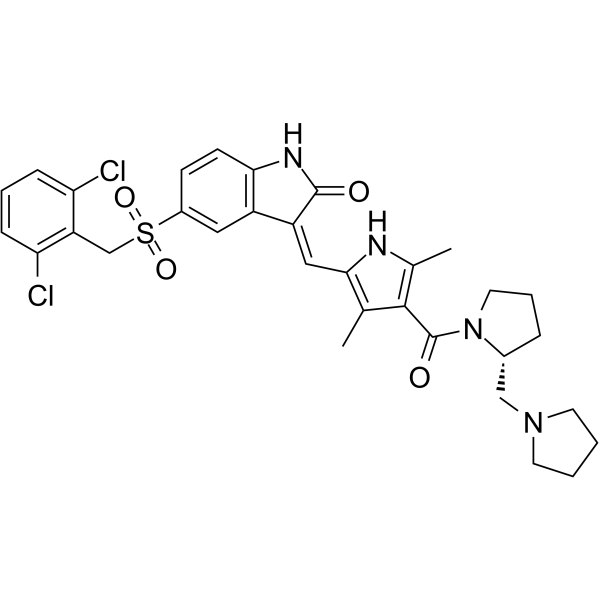
PHA-665752 is a selective, ATP-competitive, and active-site inhibitor of the catalytic activity of c-Met kinase (Ki=4 nM; IC50=9 nM). PHA-665752 exhibits >50-fold selectivity for c-Met compared with a panel of diverse tyrosine and serine-threonine kinases. PHA-665752 induces apoptosis and cell cycle arrest, and exhibits cytoreductive antitumor activity .
loading...
    loading...
1
1 Cited Publications
Cat. No.: HY-P76759
Purity:  ≥ 90%, as determined by reducing SDS-PAGE.
Synonyms: PPP3CA; Protein Phosphatase 2B, catalytic Subunit, Alpha Isoform; Prev. CALNA; Protein Phosphatase 3, catalytic Subunit, Alpha Isozyme; Prev. CALN; Protein Phosphatase 3 catalytic Subunit Alpha Isozyme; Calcineurin A Alpha; serine/Threonine-Protein Phosph
Species:  
Human
Source:  
Sf9 insect cells
loading...
    loading...
1
1 Cited Publications
Cat. No.: HY-P80284
Synonyms: serine/threonine-protein phosphatase 2A catalytic subunit beta isoform, PP2A-beta, PPP2CB

Host:  

Rabbit

Application:  

WB, ICC/IF, IHC-P, IP

Reactivity:  

Human, Mouse, Rat

loading...
    loading...
1
1 Cited Publications
Cat. No.: HY-P76263
Purity:  ≥ 90%, as determined by reducing SDS-PAGE.
Synonyms: CSNK2A1; Casein Kinase II Alpha 1 Polypeptide Pseudogene; Casein Kinase 2 Alpha 1; Non-Specific serine/Threonine Protein Kinase; Casein Kinase II Subunit Alpha; Casein Kinase II Alpha 1 Subunit; Cka1; CK2 catalytic Subunit Alpha; Cka2; Protein Kinase CK2
Species:  
Human
Source:  
Sf9 insect cells
loading...
    loading...
Cat. No.: HY-18081
CAS No.: 959151-50-9
Target:  

FAAH

Research Areas:  

Metabolic Disease

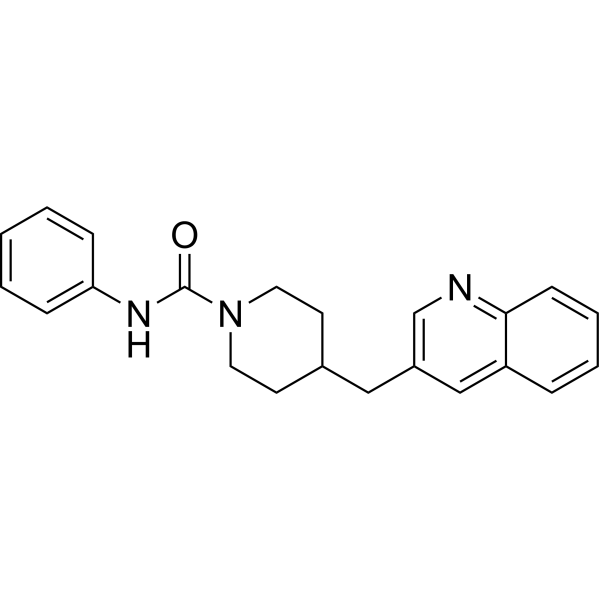
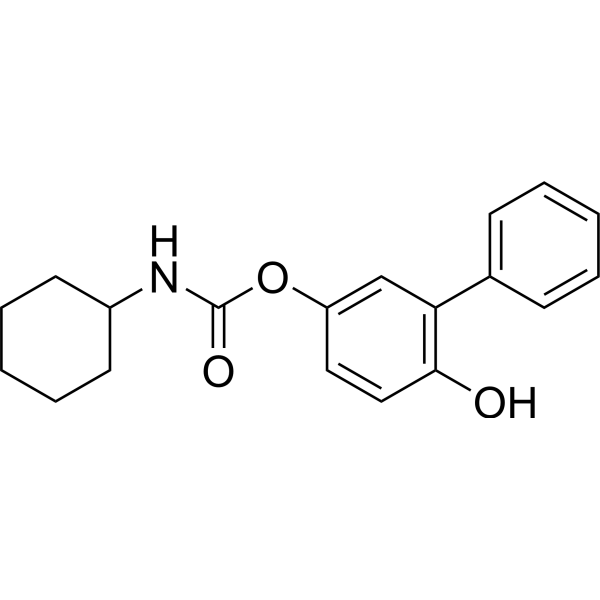
PF 750 is a selective, covalent and brain-penetrant fatty acid amide hydrolase (FAAH) inhibitor. PF 750 covalently carbamylates FAAH's catalytic serine nucleophile to inactivate the enzyme .
loading...
    loading...
Cat. No.: HY-126034
CAS No.: 51050-59-0
Purity:  99.72%
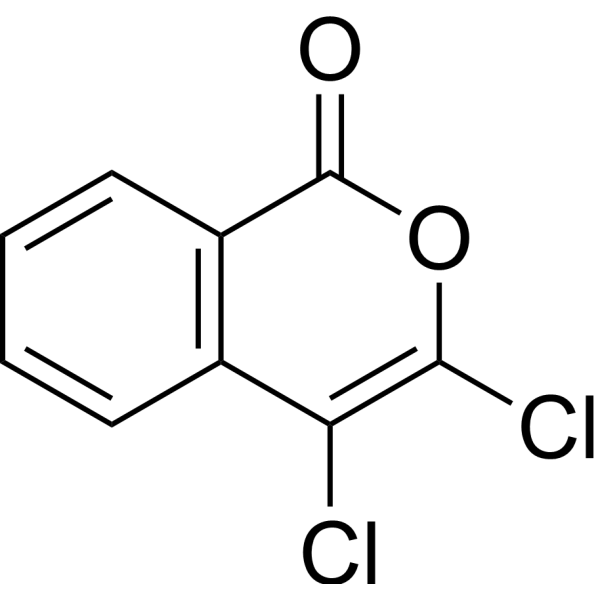
3,4-Dichloroisocoumarin is a potent serine-protease and SrLip inhibitor (Ki for SrLip: 26.6 μM). 3,4-Dichloroisocoumarin is opened by serine proteases and then undergoes acylation with the enzyme, thereby inhibiting protease activity. 3,4-Dichloroisocoumarin can induce DNA fragmentation and Apoptosis. 3,4-Dichloroisocoumarin can be used in the research of multiple fields such as tumors, cardiovascular disease and enzyme catalytic mechanisms .
loading...
    loading...
Cat. No.: HY-136276
CAS No.: 780009-55-4
Purity:  99.48%
Research Areas:  

Others

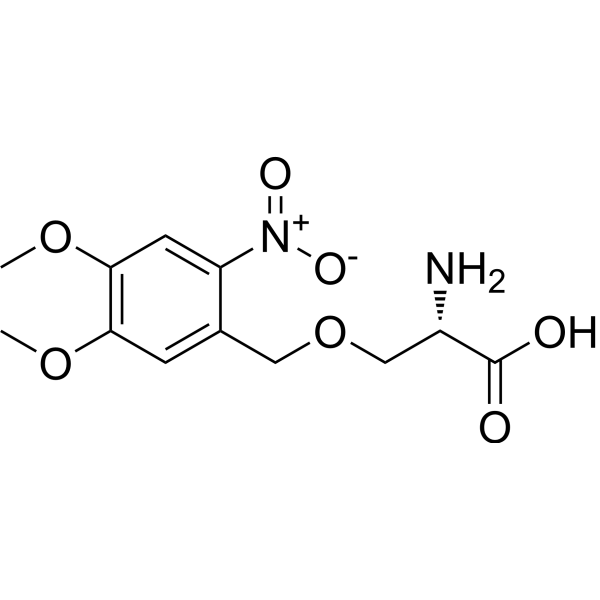
DMNB-caged-Serine is a photocaged amino acid. DMNB-caged-Serine can be used as a catalytic residue, hydrogen bonding partner or site of post-translational modification. DMNB-caged-Serine can be used for the control of protein phosphorylation .
loading...
    loading...
Cat. No.: HY-N10686
CAS No.: 61077-78-9
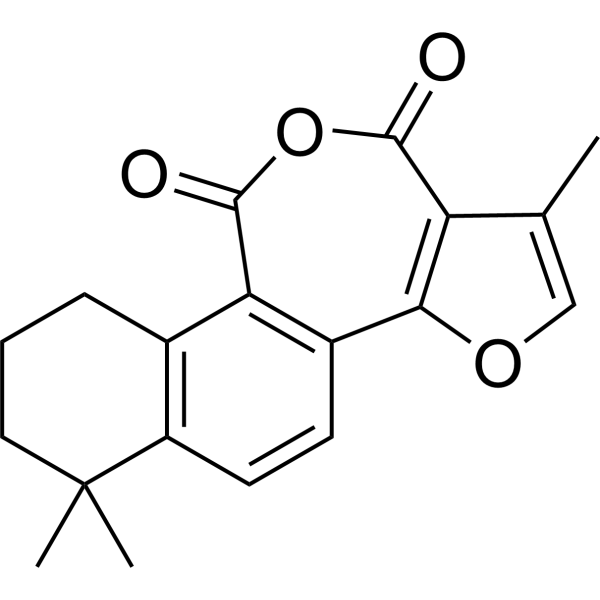
Tanshinone IIA anhydride, present in root extracts of Salvia miltiorrhiza, acts as an inhibitor of human carboxylesterase (CE). Tanshinone IIA anhydride has a Ki value of 1.9 nM against hCE1 and a Ki value of 1.4 nM against hiCE. Tanshinone IIA anhydride forms a stable covalent complex with serine Ser221 at the active site of hCE1, blocking the catalytic cycle of carboxylesterase, and the activity of the inactivated enzyme cannot recover spontaneously. Tanshinone IIA anhydride is applicable in metabolism-related studies .
loading...
    loading...
Cat. No.: HY-P2922
CAS No.: 9032-68-2
Target:  

Cathepsin

Research Areas:  

Cancer

Cathepsin C is a lysosomal cysteine protease essential for catalytic activation of many serine proteases, including proteinase 3 (PR3), neutrophil elastase (NE), cathepsin G (CTSG), granzyme A/B/C, and mast cell chymase .
loading...
    loading...
Cat. No.: HY-12733
CAS No.: 1254318-44-9
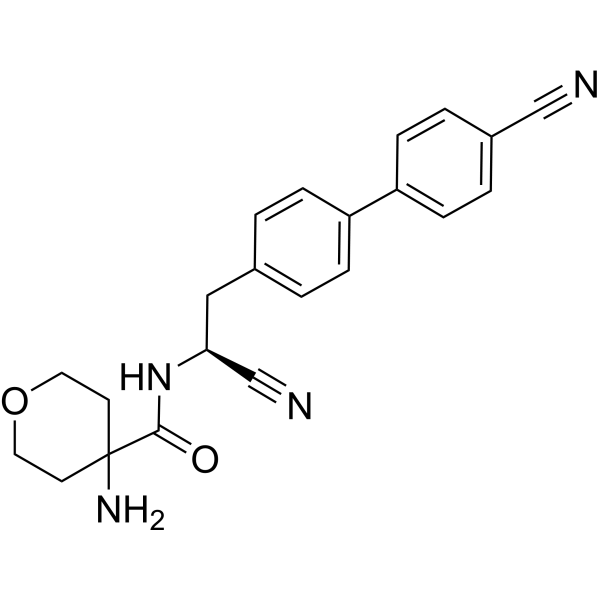
AZD5248 is an orally active, selective dipeptidyl peptidase 1 (cathepsin C) inhibitor, with IC50 values of 1 nM and 17 nM against human CatC, 44 nM against human DPP1, and 67 nM against rat DPP1. It exhibits low clearance and high bioavailability in animal models. AZD5248 forms an irreversible covalent bond with the catalytic Cys234 residue of CatC, exerts reversible inhibition via its nitrile moiety, blocks CatC-dependent amyloid formation, and reduces the activation levels of neutrophil serine proteases in bone marrow and blood. AZD5248 reacts with aortic elastin aldehydes to form stable 4-imidazolinones, induces ultrastructural changes in aortic tissue, and has an α-amino acid-based backbone. AZD5248 reduces the severity of acute pancreatitis in mouse models. AZD5248 can be used in research on chronic obstructive pulmonary disease, acute pancreatitis, neurodegenerative diseases, lysosomal storage disorders, acute lung injury, cystic fibrosis, and neutrophil-mediated inflammatory diseases .
loading...
    loading...
Cat. No.: HY-150085
CAS No.: 2393881-77-9
Target:  

Kallikrein

Research Areas:  

Inflammation/Immunology

GSK951 is a highly potent, selective, and reversibly covalent KLK5 inhibitor, with an IC50 of approximately 250 pM and a pIC50 of 9.6 against hKLK5. It exhibits over 100-fold selectivity over KLK7, KLK14, matriptase, and elastase. GSK951 binds to the catalytic site of KLK5 via covalent interaction with the catalytic serine, with a slow dissociation rate. GSK951 improves skin barrier function, reduces transepidermal water loss, decreases the expression of proinflammatory cytokines, and inhibits the elevated KLK5 protease activity in the stratum corneum. GSK951 can be used in studies related to skin barrier dysfunction.
loading...
    loading...
Cat. No.: HY-162094
CAS No.: 3027135-80-1
Research Areas:  

Infection

CMX410 is an orally active and selective Mycobacterium tuberculosis Pks13 acyltransferase domain inhibitor and anti-bacterial agent. CMX410 reacts with the catalytic serine of the Pks13-AT domain to form a stable β-lactam ring, disables the enzyme’s active site, reduces trehalose monomycolate and trehalose dimycolate levels, triggers cell lysis, and reduces intracellular bacterial burden. CMX410 can be used for the research of tuberculosis .
loading...
    loading...
Cat. No.: HY-117798
CAS No.: 149725-15-5
Target:  

Thrombin

Research Areas:  

Cardiovascular Disease

LY 806303 is a potent and selective inhibitor of human α-thrombin. LY 806303 specifically acylates Ser-205 within the catalytic triad of α-thrombin on the heavy chain and a key site involved in the enzymatic activity of thrombin. The mechanism of action of LY 806303 as an enzyme inhibitor is through the specific acylation of this catalytic serine residue .
loading...
    loading...
Cat. No.: HY-171248
CAS No.: 3034215-86-3
CDD-1115 is a BMPR2 serine/threonine kinase inhibitor with an IC50 of 1.8 nM against human BMPR2 kinase. CDD-1115 selectively inhibits the catalytic activity of BMPR2, and shows weak inhibitory effects on ALK1 and ALK2 .
loading...
    loading...
Cat. No.: HY-E70691
Target:  

CDK

Research Areas:  

Cancer

CLK1 is one of the dual specificity kinases and is the founding member of the 'LAMMER' family of kinases. CLK1 activity is positively regulated by phosphorylation on either tyrosine residues or serine/threonine residues, and is negatively regulated by steric constraints mediated by the N-terminal domain, as well as, by phosphorylation on a subset of serine/threonine residues within the catalytic domain. CLK1 Recombinant Human Active Protein Kinase is a recombinant CLK1 protein that can be used to study CLK1-related functions .
loading...
    loading...
Cat. No.: HY-W728451
CAS No.: 904672-77-1
Target:  

FAAH

URB694 is a carbamate FAAH inhibitor that irreversibly carbamoylate the nucleophile catalytic serine in FAAH active site. URB694 exhibits antidepressant-like activity and cardioprotective effects. URB694 can be used to prepare 11C-Carbonyl-URB694 for in vivo positron emission tomography (PET) imaging studies of the brain FAAH .
loading...
    loading...
Cat. No.: HY-173267
Research Areas:  

Metabolic Disease Cancer

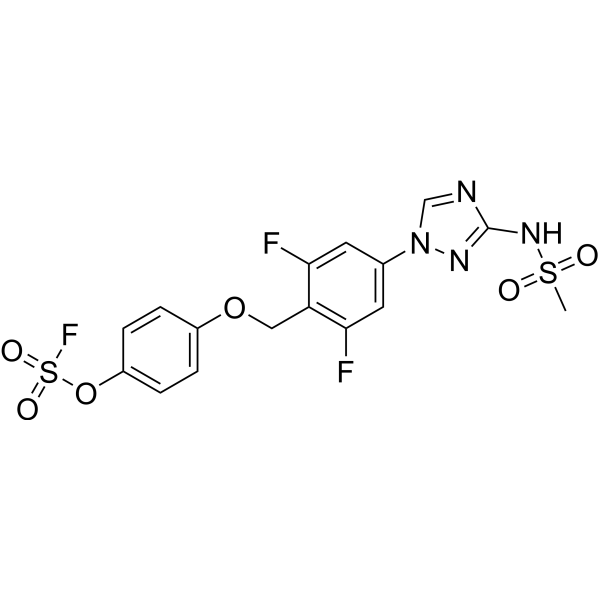
CES2A-IN-2 (compound 14n) is an orally active, highly specific, irreversible and covalent CES2A inhibitor with an IC50 of 0.04 nM for human CES2A. CES2A-IN-2 covalently binds to CES2A by specifically targeting the catalytic serine residue (Ser-228). CES2A-IN-2 can significantly ameliorate Irinotecan-triggered gut toxicity (ITGT) without diminishing the anti-tumor effects of Irinotecan (HY-16562) in tumor-bearing mice .
loading...
    loading...
Cat. No.: HY-185905
CAS No.: 1811556-64-5
Target:  

Ser/Thr Protease

Research Areas:  

Inflammation/Immunology

TTAMRA-FP is an activity-based probe for serine hydrolases (Serine Hydrolase) that irreversibly and covalently labels the active-site serine of catalytically active serine hydrolases. TTAMRA-FP can be used for activity-based protein profiling of serine hydrolases and related studies on the activity of osteoarthritis-associated proteases .
loading...
    loading...
Cat. No.: HY-P77693Y
Purity:  ≥ 95%, as determined by Bis-Tris PAGE.
Synonyms: serine protease hepsin; EC:3.4.21.106; Transmembrane protease serine 1; serine protease hepsin non-catalytic chain; serine protease hepsin catalytic chain; HPN; TMPRSS1
Species:  
Human
Source:  
HEK293
loading...
    loading...
Cat. No.: HY-L914
3,211 compounds

In the research of covalent inhibitors targeting serine and threonine, scientists have found that the nucleophilicity of these hydroxyl groups is significantly enhanced due to the influence of their surrounding environment. This results in higher activity during catalytic reactions. Aspirin, which targets the non-catalytic domain serine (Ser529 in human COX1) of cyclooxygenase, exerts its anti-inflammatory effect through covalent binding. β-lactam antibiotics, which targets the catalytic domain serine of penicillin-binding proteins, interferes with bacterial cell wall synthesis.

Through careful selection, we constructed a structural filter containing over 110 electrophilic groups. By analyzing the electrophilic fragments selected by the structural filter, we removed any molecules with trivial or undesirable structural features. Ultimately, we obtained 3,300 fragment molecules which can target serine and threonine residues and can be used for fragment-based covalent drug discovery.

