149 Results for "

elements

" in MedChemExpress (MCE) Product Catalog:
Products (149)

149 Results for "elements" in MCE Product Catalog:

26
26 Publications Verification
Referencia número: HY-135146
No. CAS: 2170136-65-7
Pureza:  99.95%
Synonyms: (R)-GSK3482364
Áreas de investigación:  

Cancer

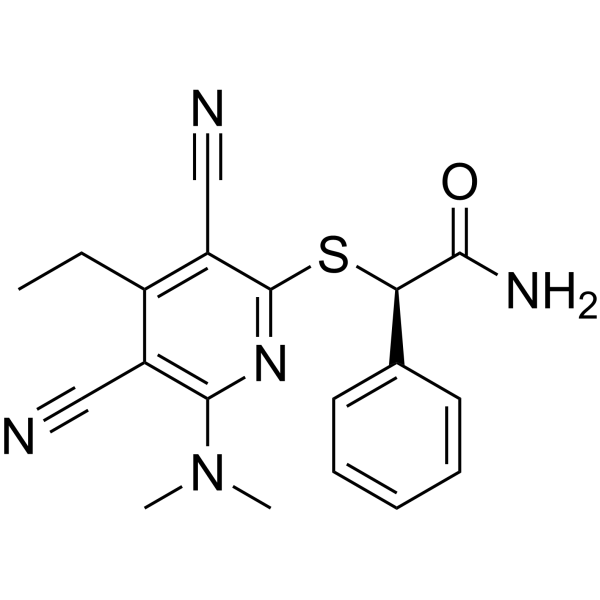
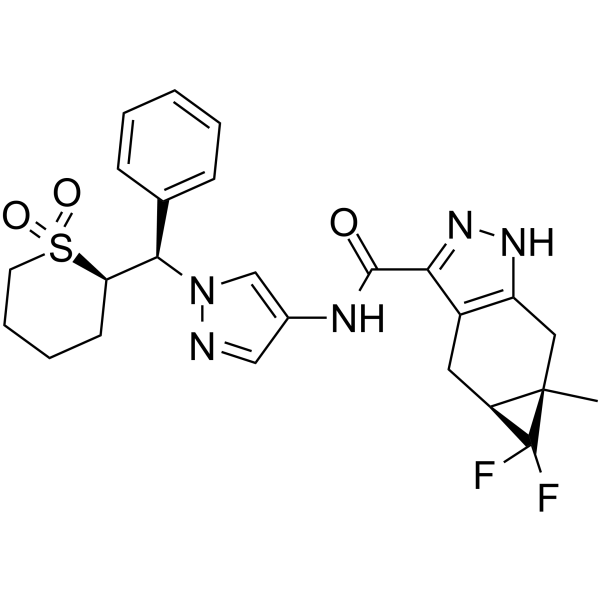
GSK-3484862 is a highly potent non-covalent inhibitor and demethylating agent of DNMT1. GSK-3484862 induces genome-wide DNA demethylation, including the regulatory elements of DNMT3B and the promoter region of TERT, and significantly inhibits cell viability, growth, proliferation and self-renewal. GSK-3484862 blocks the transformation of young AT2 cells, induces apoptosis, and generates transcriptomic features similar to those of senescent cells. GSK-3484862 is widely used in studies related to lung cancer, oral squamous cell carcinoma and lung adenocarcinoma .
loading...
    loading...
12
12 Cited Publications
Referencia número: HY-110258
No. CAS: 1432500-66-7
Pureza:  ≥99.0%
Synonyms: LH601A
Áreas de investigación:  

Cancer

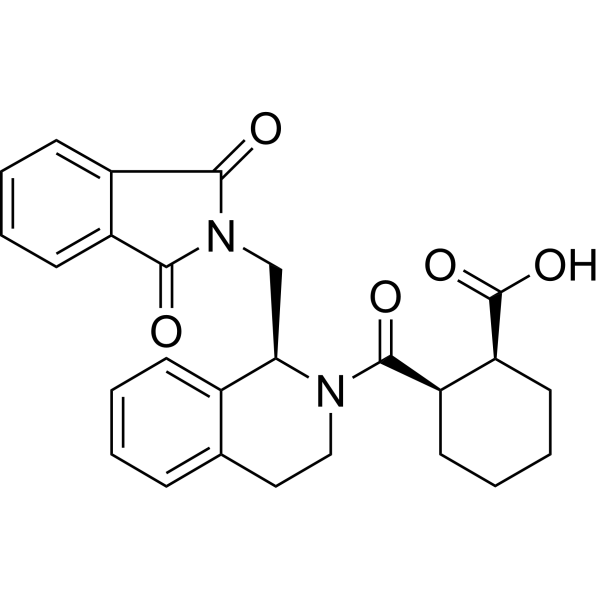
ML334 is a potent, cell permeable activator of NRF2 by inhibition of Keap1-NRF2 protein-protein interaction. ML334 binds to Keap1 Kelch domain with a Kd of 1 μM. ML334 stimulates NRF2 expression and nuclear translocation and induces antioxidant response elements (ARE) activity .
loading...
    loading...
3
3 Cited Publications
Referencia número: HY-B0327
No. CAS: 57381-26-7
Synonyms: Dicloguamine
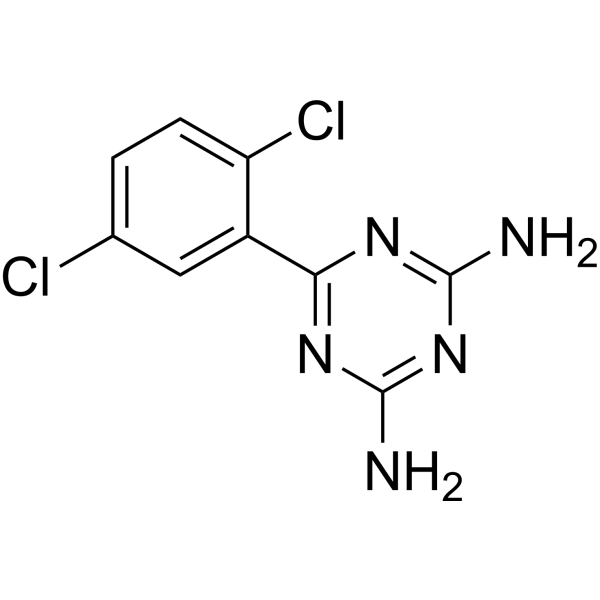
Irsogladine (Dicloguamine) is an orally active gastric mucosal protective agent. Irsogladine inhibits breast cancer recurrence and lung metastasis in nude mice . Irsogladine inhibits the transcriptional activities of NF-κB and AP-1, suppresses the activities of PDE and PDE4 to elevate intracellular cAMP levels, and activates TRPV1 and KATP channels. Irsogladine enhances iNOS expression, NO production, and the activation of cAMP-responsive elements. Irsogladine inhibits the development and progression of intestinal polyps in Apc-mutant mice. Irsogladine alleviates oxidative stress, increases gastric mucosal blood flow, and stimulates the production of endogenous prostaglandins. Irsogladine promotes insulin secretion in MIN6 cells. Irsogladine inhibits tumor angiogenesis, cancer cell proliferation, and the production of proinflammatory cytokines. Irsogladine exerts protective effects on astrocytes in ethanol/hydrochloric acid-induced gastric ulcers in mice. Irsogladine prevents colitis in IL-10 gene-deficient mice by reducing the production of IL-12 and IL-23. Irsogladine upregulates gap junction intercellular communication in pancreatic cancer cells via the PKA pathway. Irsogladine is applicable to research related to breast cancer, intestinal polyposis, gastric ulcer, spontaneous colitis, glioma, liver cancer, and pancreatic cancer [5][6] .
loading...
    loading...
2
2 Cited Publications
Referencia número: HY-124828
No. CAS: 958843-91-9
Pureza:  98.66%
Target:  

HuR

Áreas de investigación:  

Cancer

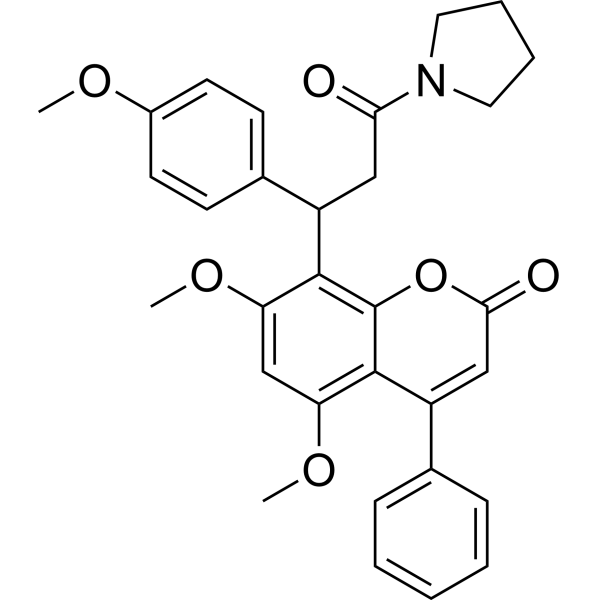
CMLD-2, an inhibitor of HuR-ARE interaction, competitively binds HuR protein disrupting its interaction with adenine-uridine rich elements (ARE)-containing mRNAs (Ki=350 nM). CMLD-2 induces apoptosis exhibits antitumor activity in different cancer cells as colon, pancreatic, thyroid and lung cancer cell lines. Hu antigen R (HuR) is an RNA binding protein, can regulate target mRNAs stability and translation .
loading...
    loading...
1
1 Cited Publications
Referencia número: HY-153083
Target:  

mRNA SARS-CoV

Áreas de investigación:  

Infection

COVID-19 Spike Protein mRNA (N1-Me-Pseudo UTP) is an mRNA encoding the SARS-CoV-2 spike protein with enhanced performance via chemical modification. COVID-19 Spike Protein mRNA (N1-Me-Pseudo UTP) replaces natural uridine (UTP) with N1-Me-Pseudo UTP, which effectively reduces immunogenicity and improves stability and translation efficiency. The 3' UTR of COVID-19 Spike Protein mRNA (N1-Me-Pseudo UTP) optimizes AU-rich elements through HuR anchor sites, exhibiting higher translation efficiency. COVID-19 Spike Protein mRNA is widely used in COVID-19-related scientific research and vaccine development .
loading...
    loading...
Referencia número: HY-P4052
No. CAS: 175175-23-2
Target:  

ROS Kinase

Áreas de investigación:  

Neurological Disease

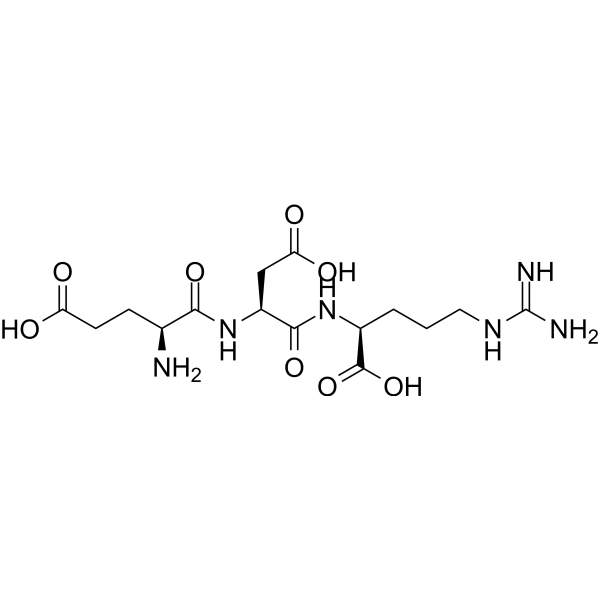
Pinealon is a 3-amino acid peptide and shows neuroprotective properties. Pinealon prevents reactive oxygen species (ROS) accumulation and suppresses the activation of ERK 1/2. Pinealon stimulates the functional activity of the main cellular elements of brain tissue, reduces the level of spontaneous cell death. Pinealon protects the rat offspring from prenatal hyperhomocysteinemia .
loading...
    loading...
Referencia número: HY-W1124925
No. CAS: 3066439-94-6
Áreas de investigación:  

Cancer

DOTA-GPC3 targeting peptide 2 (Sequence 30) is a RDC peptide targeting GPC3, with Kd of 0.3 nM. DOTA-GPC3 targeting peptide 2 is composed of DOTA and GPC3 targeting peptide 2. DOTA-GPC3 targeting peptide 2 can be labeled with radioactive elements .
loading...
    loading...
Referencia número: HY-P2663
No. CAS: 757942-88-4
Target:  

TNF Receptor

Áreas de investigación:  

Metabolic Disease

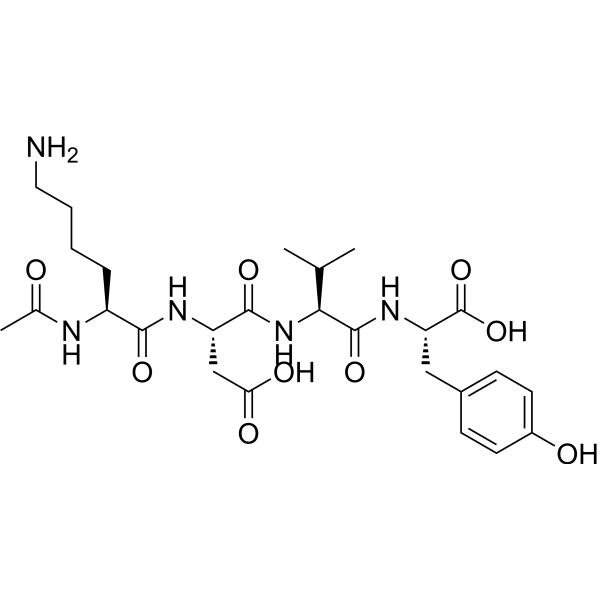
Acetyl tetrapeptide-2 is a bio-active peptide that exhibits anti-aging activity. Acetyl tetrapeptide-2 can reduce loss of thymic factors. Acetyl tetrapeptide-2 can increase the stiffness of HaCaT cells. Acetyl tetrapeptide-2 is a stimulator of structural skin elements including collagen and elastin .
loading...
    loading...
Referencia número: HY-134230
No. CAS: 42990-62-5
Pureza:  99.8%
Synonyms: L-α-aminooxy-β-phenylpropionic acid; AOPP
Áreas de investigación:  

Metabolic Disease

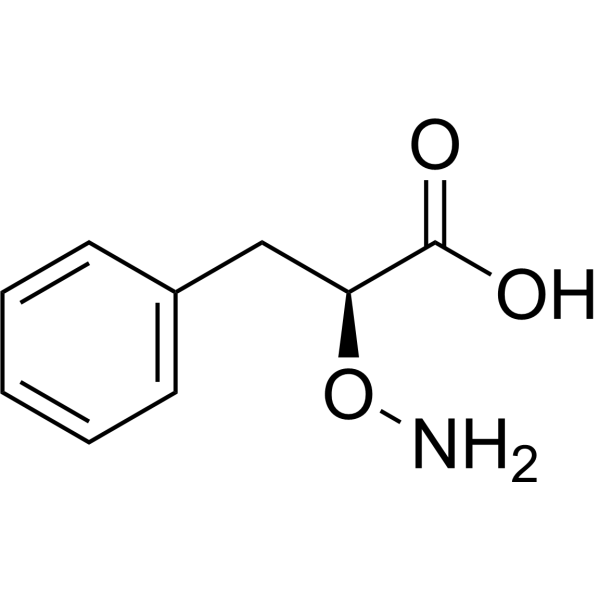
L-2-Aminooxy-3-phenylpropanoic acid (L-α-aminooxy-β-phenylpropionic acid; AOPP) is an inhibitor of L-phenylalanine ammonia-lyase (PAL). L-2-Aminooxy-3-phenylpropanoic acid inhibits lignification without reducing the number of tracheary elements formed .
loading...
    loading...
Referencia número: HY-P10729A
Áreas de investigación:  

Cancer

DOTA-Bombesin (1-14) TFA is composed of chelator DOTA and Bombesin (HY-P0195). DOTA-Bombesin (1-14) TFA is used for research of cancer through combination with radioactive elements. DOTA-Bombesin (1-14)TFA can be used for the synthesis/research of Radionuclide-Drug Conjugates (RDCs) .
loading...
    loading...
Referencia número: HY-112276
No. CAS: 51550-25-5
Pureza:  ≥98.0%
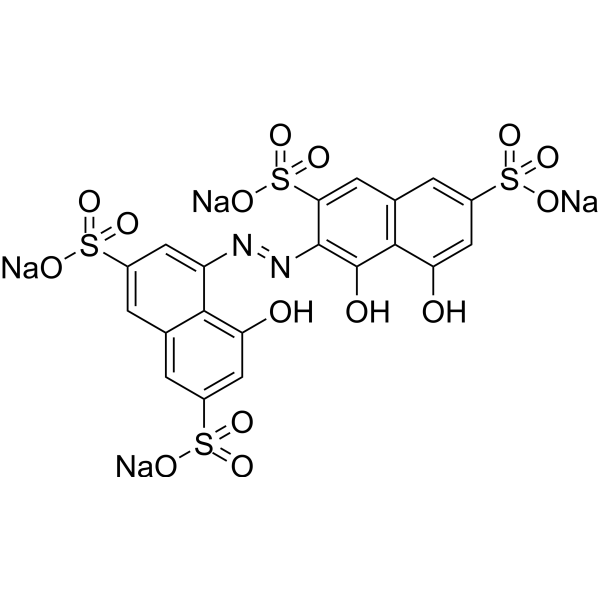
Beryllon II is a widely used chromogenic reagent that is used to determine many elements, such as Mo, Mg and Co, and also used for the determination of proteins.
loading...
    loading...
Referencia número: HY-158482
Synonyms: Mannose-3 N-linked oligosaccharide; Oligomannose 3 glycan
M3 glycan (Man3) (Mannose-3 N-linked oligosaccharide; Oligomannose 3 glycan) is a N-polysaccharide protein and a multifunctional fluorescent linker. The resulting conjugates exhibit high sensitivity and specificity by mimicking the antennal elements of N-glycans .
loading...
    loading...
Referencia número: HY-P10273A
Áreas de investigación:  

Cancer

DOTA-Octreotide TFA is composed of chelator DOTA and Octreotide (HY-P0036). DOTA-Octreotide TFA is used for research of cancer through combination with radioactive elements. DOTA-Octreotide TFA can be used for the synthesis/research of Radionuclide-Drug Conjugates (RDCs) .
loading...
    loading...
Referencia número: HY-179737
No. CAS: 3062599-51-0
Target:  

LYTACs

Áreas de investigación:  

Metabolic Disease

ASGPR ligand-2 (Compound 366) is an asialoglycoprotein receptor (ASGPR) binder. ASGPR ligand-2 can be coupled with recognition elements of target proteins (such as antibodies or antigen-binding fragments), and through the endocytosis mediated by ASGPR, the target protein is delivered to the lysosomes of liver cells, promoting the degradation of the target protein. ASGPR ligand-2 can be used for the research of metabolic disease .
loading...
    loading...
Referencia número: HY-110258B
No. CAS: 1432065-33-2
Pureza:  98.57%
Synonyms: (R,S,R)-LH601A
Target:  

Drug Isomer

Áreas de investigación:  

Cancer

(R,S,R)-ML334 is the isomer of ML334 (HY-110258), and can be used as an experimental control. ML334 is a potent, cell permeable activator of NRF2 by inhibition of Keap1-NRF2 protein-protein interaction. ML334 binds to Keap1 Kelch domain with a Kd of 1 μM. ML334 stimulates NRF2 expression and nuclear translocation and induces antioxidant response elements (ARE) activity .
loading...
    loading...
Referencia número: HY-16984
No. CAS: 1705602-02-3
Target:  

Itk

Áreas de investigación:  

Inflammation/Immunology

GNE-4997 is a potent and selective interleukin-2-inducible T-cell kinase (ITK) inhibitor with a Ki of 0.09 nM, and the correlation between the basicity of solubilizing elements in GNE-4997 and off-target antiproliferative effects reduces cytotoxicity .
loading...
    loading...
Referencia número: HY-138547
No. CAS: 3148-72-9
Synonyms: Diaminopropanoltetraacetic acid
Áreas de investigación:  

Others

DHPTA (compound 3) can directly combine with lanthanide elements (Tb 3+, Ho 3+, Lu 3+) to form a strong chelating effect,in aqueous solution with a pH of 2.0-7.0 .
loading...
    loading...
Referencia número: HY-P10273
No. CAS: 209277-09-8
Áreas de investigación:  

Cancer

DOTA-Octreotide is composed of chelator DOTA and Octreotide (HY-P0036). DOTA-Octreotide is used for research of cancer, through combination with radioactive elements. DOTA-Octreotide can be used for the synthesis/research of Radionuclide-Drug Conjugates (RDCs) .
loading...
    loading...
Referencia número: HY-158543
Synonyms: Mannose-9 N-linked oligosaccharide; Oligomannose 9 glycan
M9 glycan (Man9) (Mannose-9 N-linked oligosaccharide; Oligomannose 9 glycan) is a N-polysaccharide protein and a multifunctional fluorescent linker. The resulting conjugates exhibit high sensitivity and specificity by mimicking the antennal elements of N-glycans .
loading...
    loading...
Referencia número: HY-P10729
No. CAS: 593287-40-2
Áreas de investigación:  

Cancer

DOTA-Bombesin (1-14) is composed of chelator DOTA and Bombesin (HY-P0195). DOTA-Bombesin (1-14) is used for research of cancer through combination with radioactive elements. DOTA-Bombesin (1-14) can be used for the synthesis/research of Radionuclide-Drug Conjugates (RDCs) .
loading...
    loading...

