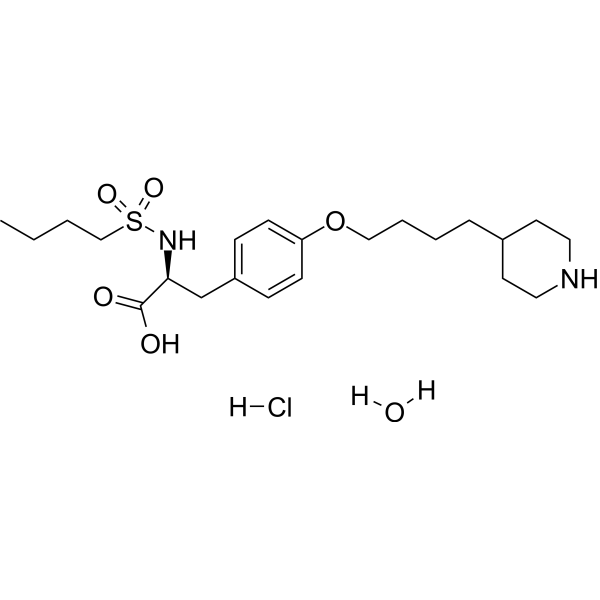
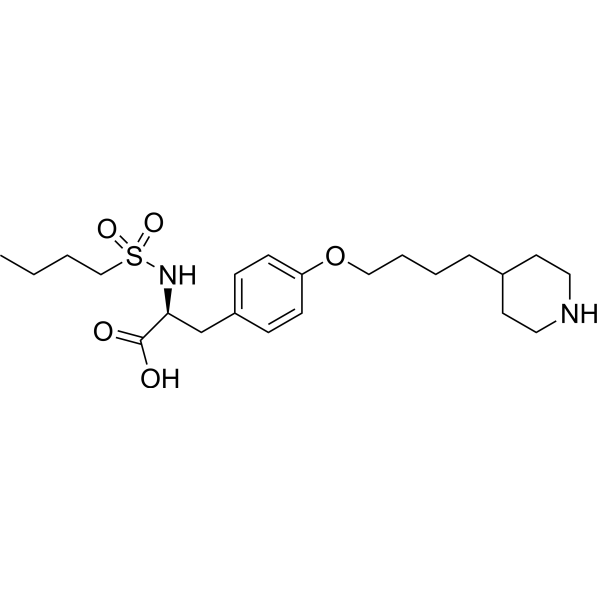
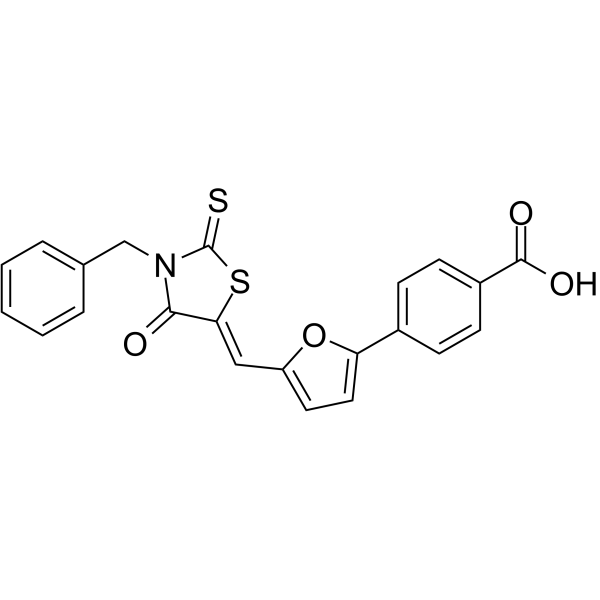
1. Search Result
Search Result
Results for "

fibrinogen

" in MedChemExpress (MCE) Product Catalog:

78

Inhibitors & Agonists

1

Screening Libraries

6

Biochemical Assay Reagents

33

Peptides

5

Inhibitory Antibodies

3

Natural
Products

31

Recombinant Proteins

1

Isotope-Labeled Compounds

12

Antibodies

1

Oligonucleotides

Cat. No. Product Name Target Research Area
  • HY-P1929
    Bivalirudin
    Maximum Cited Publications
    9 Publications Verification

    Thrombin Interleukin Related RSV Infection Cardiovascular Disease Inflammation/Immunology
    Bivalirudin, a hirudin analog and anticoagulant, is a direct thrombin inhibitor. Bivalirudin inhibits thrombin-mediated fibrinogen cleavage, coagulation factor activation, and platelet activation by reversibly binding to thrombin. In addition, Bivalirudin also has certain effects of anti-virus, anti-inflammation, and vascular endothelial barrier function protection. Bivalirudin can be used for the research of thrombotic diseases and others .
  • HY-123275A
    H-D-Phe-Pip-Arg-pNA hydrochloride
    1 Publications Verification

    S-2238 hydrochloride

    Fluorescent Dye Others
    H-D-Phe-Pip-Arg-pNA (S-2238) hydrochloride, a chromogenic substrate, is patterned after the N-terminal portion of the A alpha chain of fibrinogen, which is the natural substrate of thrombin. H-D-Phe-Pip-Arg-pNA hydrochloride is specific for thrombin and is used to measure antithrombin-heparin cofactor (AT-III). The AT-III assay using H-D-Phe-Pip-Arg-pNA hydrochloride is sensitive, accurate, and easy to perform .
  • HY-123275B
    H-D-Phe-Pip-Arg-pNA acetate
    1 Publications Verification

    S-2238 acetate

    Fluorescent Dye Others
    H-D-Phe-Pip-Arg-pNA (S-2238) acetate, a chromogenic substrate, is patterned after the N-terminal portion of the A alpha chain of fibrinogen, which is the natural substrate of thrombin. H-D-Phe-Pip-Arg-pNA acetate is specific for thrombin and is used to measure antithrombin-heparin cofactor (AT-III). The AT-III assay using H-D-Phe-Pip-Arg-pNA acetate is sensitive, accurate, and easy to perform .
  • HY-P0074
    GPRP
    3 Publications Verification

    Gly-Pro-Arg-Pro; Pefa 6003

    Thrombin Cardiovascular Disease
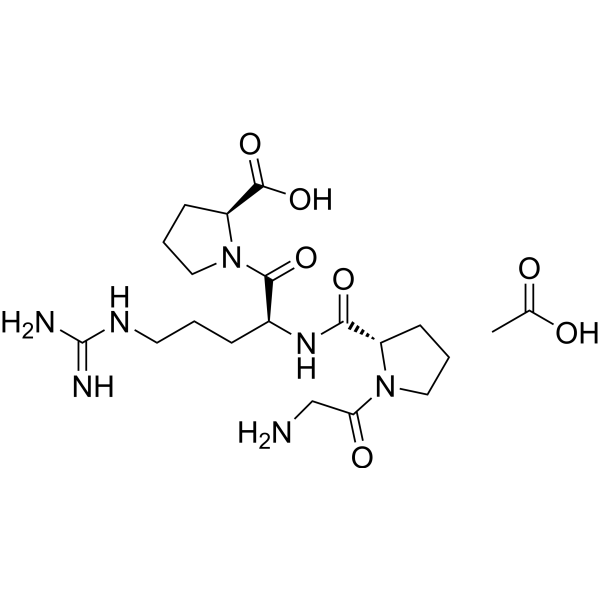
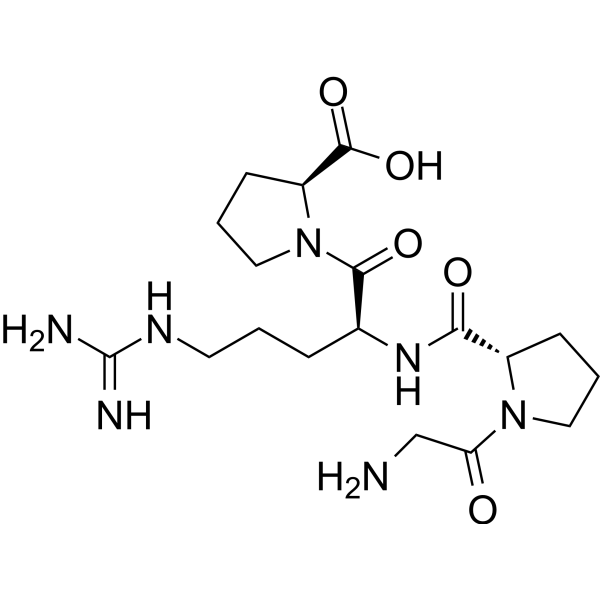
    GPRP (Gly-Pro-Arg-Pro; Pefa 6003) is a fibrin polymerization inhibitor that inhibits the interaction between fibrinogen and the platelet membrane glycoprotein Ⅱb/IIIa complex (glycoprotein IIb/IIIa receptor) . GPRP increases the level of free thrombin in activated platelet-rich plasma by reducing the adsorption of thrombin onto fibrin. GPRP inhibits platelet aggregation and prolongs the thrombin-initiated clotting time in plasma. GPRP is applicable for research related to thrombosis and thrombotic diseases .
  • HY-P0074A
    GPRP acetate
    3 Publications Verification

    Gly-Pro-Arg-Pro acetate; Pefa 6003 acetate

    Integrin Cardiovascular Disease
    GPRP acetate (Gly-Pro-Arg-Pro acetate) is a fibrin polymerization inhibitor that inhibits the interaction of fibrinogen with the platelet membrane glycoprotein IIb/IIIa complex (GPIIb/IIIa) .
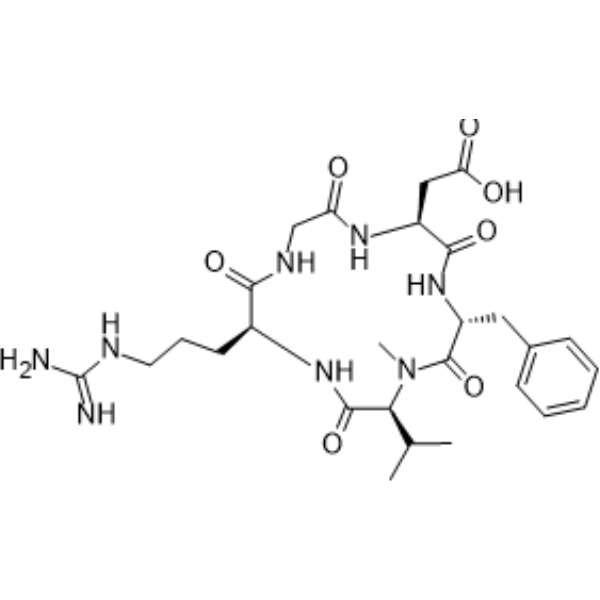
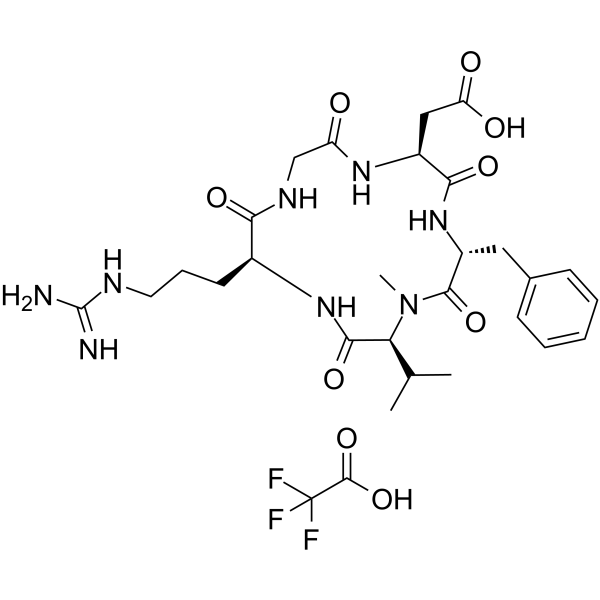
  • HY-P5098

    Integrin Neurological Disease Cancer
    E (c (RGDfK)) 2 is a αvβ3 integrin ligand and tumor-targeting agent. E (c (RGDfK)) 2 binds to αvβ3 integrin, mediates receptor-mediated endocytosis of conjugated payloads, and inhibits integrin-dependent cell adhesion to fibrinogen. E (c (RGDfK)) 2 inhibits the proliferation of cancer cells and endothelial cells. E (c (RGDfK)) 2 preferentially accumulates in orthotopic mouse breast tumors and human ovarian cancer xenograft tumors. E (c (RGDfK)) 2 can be used in research related to glioblastoma, lung cancer, breast adenocarcinoma and ovarian cancer .
  • HY-15664
    Bivalirudin TFA
    Maximum Cited Publications
    9 Publications Verification

    Thrombin Interleukin Related RSV Infection Cardiovascular Disease Inflammation/Immunology
    Bivalirudin TFA, a hirudin analog and anticoagulant, is a direct thrombin inhibitor. Bivalirudin TFA inhibits thrombin-mediated fibrinogen cleavage, coagulation factor activation, and platelet activation by reversibly binding to thrombin. In addition, Bivalirudin TFA also has certain effects of anti-virus, anti-inflammation, and vascular endothelial barrier function protection. Bivalirudin TFA can be used for the research of thrombotic diseases and others .
  • HY-P1741
    Fibrinogen-Binding Peptide
    1 Publications Verification

    Thrombin Cardiovascular Disease
    Fibrinogen-Binding Peptide (designed by anticomplementarity hypothesis) is a presumptive peptide mimic of the vitronectin binding site on the fibrinogen receptor. Fibrinogen-Binding Peptide binds fibrinogen and inhibits both the adhesion of platelets to fibrinogen and platelet aggregation, and also inhibits the adhesion of platelets to vitronectin .
  • HY-P0308

    Drug Intermediate Cardiovascular Disease
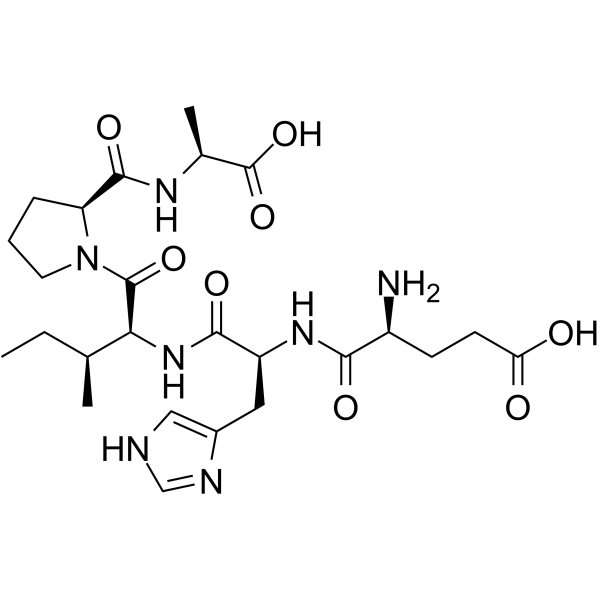
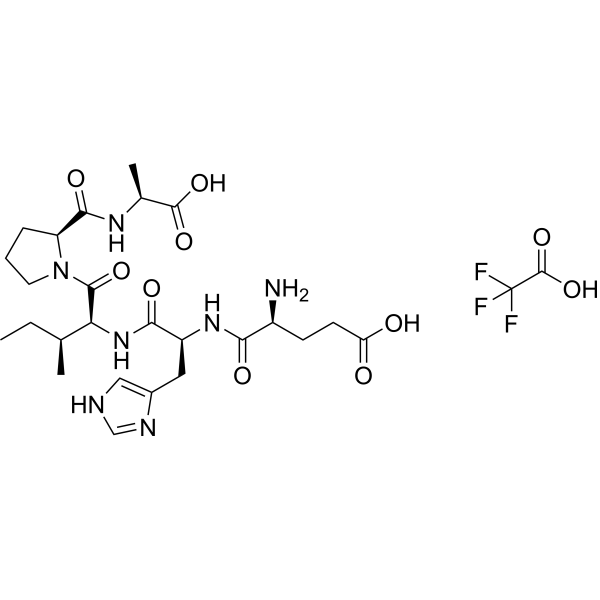
    [Glu1]-Fibrinopeptide B is derived from fibrinopeptide B amino acid residues 1-14. Human fibrinopeptide B (hFpB), a thrombin-derived proteolytic cleavage product of the fibrinogen B beta-chain, to stimulate neutrophils (PMN), monocytes, and fibroblasts.
  • HY-P3726

    Integrin Inflammation/Immunology Cancer
    Lys-Gln-Ala-Gly-Asp-Val (KQAGDV) is the six most carboxyl-terminal amino acids in the fibrinogen γ-chain sequence. Lys-Gln-Ala-Gly-Asp-Val is a cell adhesion peptide which is mediated through the α2bβ3 integrin. Lys-Gln-Ala-Gly-Asp-Val is a potent adhesion ligand for smooth muscle cells (SMCs) .
  • HY-123275C

    S-2238 dihydrochloride

    Fluorescent Dye Others
    H-D-Phe-Pip-Arg-pNA (S-2238) dihydrochloride, a chromogenic substrate, is patterned after the N-terminal portion of the A alpha chain of fibrinogen, which is the natural substrate of thrombin. H-D-Phe-Pip-Arg-pNA dihydrochloride is specific for thrombin and is used to measure antithrombin-heparin cofactor (AT-III). The AT-III assay using H-D-Phe-Pip-Arg-pNA dihydrochloride is sensitive, accurate, and easy to perform .
  • HY-P10045

    Integrin Cardiovascular Disease
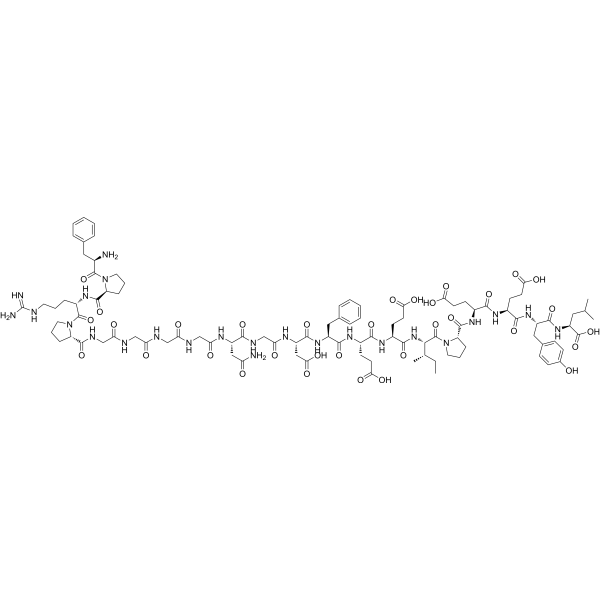
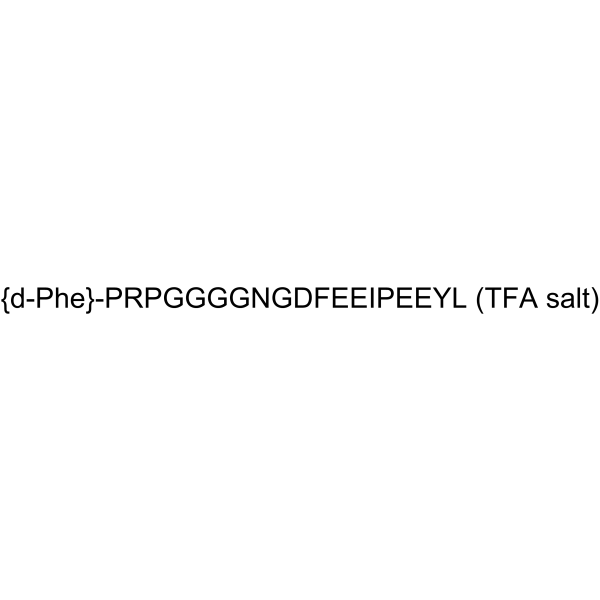
    Integrin signaling inhibitor, mP13 is an inhibitor of integrin signaling. Integrin signaling inhibitor, mP13 inhibits inside-out and outside-in signaling, including fibrinogen binding, platelet adhesion, and clot retraction .
  • HY-P1507

    Integrin Cardiovascular Disease
    Fibrinogen Binding Inhibitor Peptide is a dodecapeptide (HHLGGAKQAGDV, H12), which is a fibrinogen γ-chain carboxy-terminal sequence (γ400-411). Fibrinogen Binding Inhibitor Peptide is a specific binding site of the ligand for activated glycoprotein (GP) IIb/IIIa.
  • HY-P5121A

    Peptides Cardiovascular Disease
    γ-Fibrinogen377-395 TFA is a fibrinogen-derived inhibitory peptide, as well as fibrinogen epitope. γ-Fibrinogen377-395 TFA blocks microglia activation and inhibits fibrin-Mac-1 interactions in vitro, and suppresses experimental autoimmune encephalomyelitis (EAE) in mice in vivo. γ-Fibrinogen377-395 TFA can be used for research in multiple sclerosis (MS), and other neuroinflammatory diseases associated with blood-brain barrier disruption and microglia activation .
  • HY-P5991

    Peptides Cardiovascular Disease
    K-Casein (106-116),bovine is a peptide that inhibits platelet aggregation and fibrinogen binding, plays an important role in atherosclerosis .
  • HY-123275

    S-2238

    Fluorescent Dye Others
    H-D-Phe-Pip-Arg-pNA (S-2238), a chromogenic substrate, is patterned after the N-terminal portion of the A alpha chain of fibrinogen, which is the natural substrate of thrombin. H-D-Phe-Pip-Arg-pNA is specific for thrombin and is used to measure antithrombin-heparin cofactor (AT-III). The AT-III assay using H-D-Phe-Pip-Arg-pNA is sensitive, accurate, and easy to perform .
  • HY-P1741A
    Fibrinogen-Binding Peptide TFA
    1 Publications Verification

    Integrin Cardiovascular Disease
    Fibrinogen-Binding Peptide TFA (designed by anticomplementarity hypothesis) is a presumptive peptide mimic of the vitronectin binding site on the fibrinogen receptor. Fibrinogen-Binding Peptide TFA binds fibrinogen and inhibits both the adhesion of platelets to fibrinogen and platelet aggregation, and also inhibits the adhesion of platelets to vitronectin .
  • HY-P0314A

    Peptides Cardiovascular Disease
    Arg-Gly-Asp-Cys TFA is the binding motif of fibronectin to cell adhesion molecules. Arg-Gly-Asp-Cys TFA can inhibit platelet aggregation and fibrinogen binding .
  • HY-P1538A

    Human fibrinopeptide A TFA

    Peptides Cardiovascular Disease
    Fibrinopeptide A, human TFA is a 16-residue short polypeptide cleaved from fibrinogen by thrombin. Fibrinopeptide A, human locates at the NH2-termini of the Aα chain .
  • HY-P5121B

    Peptides Cardiovascular Disease
    γ-Fibrinogen 377-395 scrambled TFA is a control peptide that forms a structure similar to that of γ-Fibrinogen 377-395 TFA (HY-P5121A) but possesses a scrambled sequence in the target-binding region.
  • HY-P3531

    Peptides Others
    Fibrinogen γ-chain (397-411), a esidues 397-411 of the γ chain of fibrinogen, is a site recognizing the platelet receptor, which is distinct from the site(s) involved in polymerization of fibrin monomers .
  • HY-P1493

    FPB,human

    Thrombin Inflammation/Immunology
    Fibrinopeptide B, human is a 14-aa peptide, released from the amino-terminus of β-chains of fibrinogen by thrombin.
  • HY-P0314

    Peptides Others
    Arg-Gly-Asp-Cys is the binding motif of fibronectin to cell adhesion molecules, and can inhibit platelet aggregation and fibrinogen binding.
  • HY-P5121

    Peptides Cardiovascular Disease
    γ-Fibrinogen377-395 is a fibrinogen-derived inhibitory peptide, as well as fibrinogen epitope. γ-Fibrinogen377-395 blocks microglia activation and inhibits fibrin-Mac-1 interactions in vitro, and suppresses experimental autoimmune encephalomyelitis (EAE) in mice in vivo. γ-Fibrinogen377-395 can be used for research in multiple sclerosis (MS), and other neuroinflammatory diseases associated with blood-brain barrier disruption and microglia activation .
  • HY-P5767

    Integrin Cardiovascular Disease
    Fibrinogen γ-chain (117-133) is a selective intercellular adhesion molecule-1 (ICAM-1) inhibitor (IC50≈20-40 μg/mL). Fibrinogen γ-chain (117-133) blocks fibrinogen-mediated monocyte-endothelial adhesion. Fibrinogen γ-chain (117-133) is promising for research of thrombo-inflammatory diseases (e.g., atherosclerosis, organ transplant rejection) .
  • HY-P1538

    Human fibrinopeptide A

    Peptides Cardiovascular Disease
    Fibrinopeptide A, human is a 16-residue short polypeptide cleaved from fibrinogen by thrombin. Fibrinopeptide A, human locates at the NH2-termini of the Aα chain.
  • HY-P1493A

    FPB,human TFA

    Peptides Inflammation/Immunology
    Fibrinopeptide B, human TFA (FPB,human TFA), human is a 14-aa peptide, released from the amino-terminus of β-chains of fibrinogen by thrombin .
  • HY-P4278

    Peptides Others
    H-Gly-His-Arg-Pro-NH2 (GHRP-amide) is composed of L-prolinamide, glycine, L-histidine, L-arginine, and participates in the binding of desAB-NDSK to fibrinogen .
  • HY-P0038

    L-367073

    Integrin Cardiovascular Disease
    MK-852 (L-367073) is an effective GPIIb/IIIa receptor antagonist. MK-852 can significantly inhibit the binding of fibrinogen to platelets in vitro. MK-852can be used for the study of thrombosis .
  • HY-P11416

    Integrin Cardiovascular Disease
    Ac-RGDS-NH2, a tetrapeptide, is an integrin antagonist. Ac-RGDS-NH2 competitively binds to the GPIIb/IIIa receptor (Ki = 4.2 μM), inhibiting the binding of fibrinogen to platelets and thereby effectively suppressing platelet aggregation. Ac-RGDS-NH2 can be used for research on thrombosis .
  • HY-P1711

    Peptides Cardiovascular Disease
    L 366763 is a potent peptide that acts as a fibrinogen receptor antagonist, preventing collagen-induced platelet aggregation and adhesion. L 366763 inhibits platelet deposition and maintains blood flow in a baboon thrombosis model, significantly prolonging bleeding time. L 366763 has antithrombotic efficacy, whereas recombinant LAPP does not have the same effect .
  • HY-176277S

    FPB,human-(Val-13C5,15N, Arg-13C6,15N4) TFA

    Isotope-Labeled Compounds Inflammation/Immunology
    Fibrinopeptide B, human-(Val- 13C5, 15N, Arg- 13C6, 154) TFA is the 13C- and 15N-labeled Fibrinopeptide B, human (HY-P1493). Fibrinopeptide B, human is a 14-aa peptide, released from the amino-terminus of β-chains of fibrinogen by thrombin .
  • HY-P3335

    DOTA-RGDfK dimer

    Integrin Radionuclide-Drug Conjugates (RDCs) Cardiovascular Disease Cancer
    SU015 (DOTA-RGDfK dimer) is a Integrin αvβ5 and αvβ3 antagonist. SU015 exhibits comparable affinity for αvβ5 and αvβ3, with relatively higher potency and specificity compared to other integrins. SU015 inhibits αvβ3-mediated cell adhesion to fibrinogen, αvβ3-mediated adhesion of activated platelets to osteopontin, and αvβ5-mediated cell adhesion to vitronectin. SU015 shows potent inhibitory effects on FGF2-induced angiogenesis in the CAM model. SU015 carries a linker arm available for radioisotope conjugation, and acts as a target-specific radioreagent when labeled with 90Y (i.e., RP697) or 177Lu (i.e., RP688). SU015 can be used in studies related to tumor metastasis and tumors .

Inquiry Online

Your information is safe with us. * Required Fields.

Salutation


Country or Region *

Applicant Name *


Organization Name *

Department *


Email Address *


Product Name *

Cat. No.


Requested quantity *

Phone Number *


Remarks

Inquiry Online

Inquiry Information

Product Name:
Cat. No.:
Quantity:
MCE Japan Authorized Agent:

